
by Todd Wilkinson
Most are still living; some of the eminent giants have since passed on. But when they spoke together in unison, signing on to an advertisement that appeared in the Bozeman Daily Chronicle on Mother’s Day weekend in 2019, they shared the same passionate declaration: Save the world-class assemblage of American wildlife in the Gallatin Mountain Range of southwest Montana by protecting as much of its crucial public roadless lands as possible.
And do it by making it federal Wilderness.
Don’t repeat the destructive patterns of fragmented US Forest Service land management that prevailed in the past. Don’t road it, log it, mine it and in the face of rapidly expanding scientific evidence showing how industrial outdoor recreation and tourism displaces wildlife, stop claiming that outdoor recreation and its creeping infrastructure translates into better wildlife conservation on the ground.
Seldom in the history of the Greater Yellowstone Ecosystem—the highly-touted “cradle of American wildlife conservation”—had such a diversity of well-known conservation-minded people come together—a convergence that, collectively, has thousands of years of experience and perspective on how to keep public land healthy.
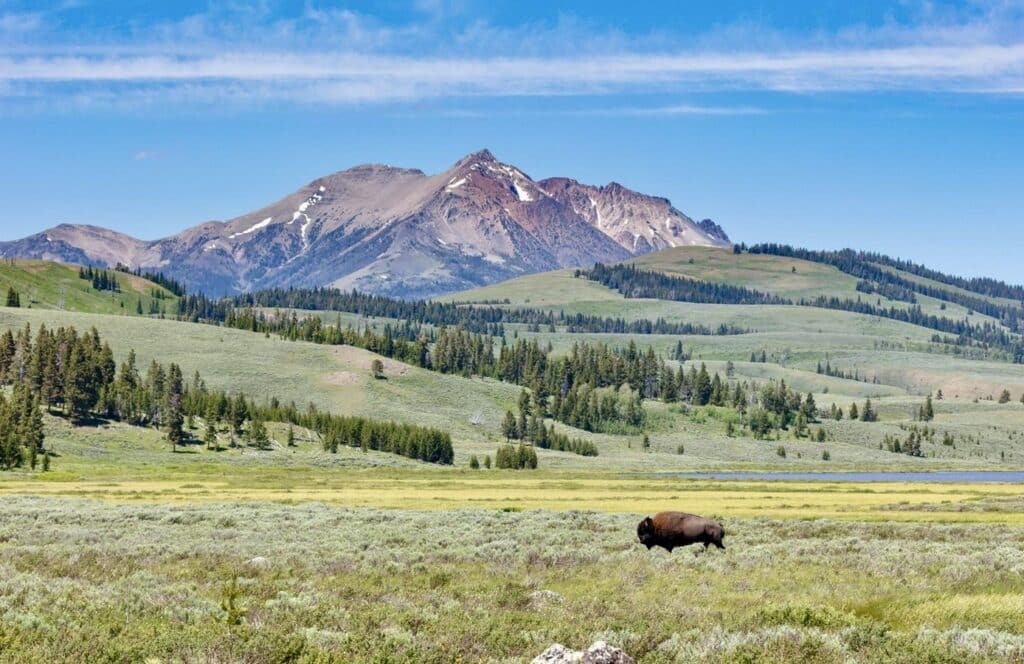
The Gallatin Range represents not only a rugged geographical extension of the protected habitat in adjacent Yellowstone National Park but it is a crossroad for the region’s famous migratory wildlife, a line of terrain inside the Custer Gallatin National Forest that provides refugia for many rare and imperiled species, and, similar to Yellowstone, has nearly all of the native animals and plants that were present there in 1491, the year before Europeans arrived on the continent.
That status is exceedingly uncommon and its value as habitat will only grow in importance as climate change dramatically turns conditions drier and hotter, which has implications for forests and vegetation, water levels in rivers and wetlands, and correspondingly the availability of wild natural foods for species that evolved there.
The newspaper advertisement was posted as a direct rebuttal to efforts by an entity called the Gallatin Forest Partnership that, working as a close ally of the US Forest Service, was proposing a plan that, in order to accommodate mountain bikers and the outdoor recreation industry, still is pushing for far less wilderness protection than exists in the Hyalite-Porcupine-Buffalo Horn Wilderness Study Area created by Congress in 1977. The partnership recently authored its own controversial bill, dubiously called the “The Greater Yellowstone Conservation and Recreation Act.”
It’s poignant now as Montana’s newest member of Congress, U.S. Rep. Sam Forstag, claims that he will champion the evidence of science in making important public land decisions. If Forstag is sincere, will he accept that the strongest scientific voices and other prominent individuals do not support the Gallatin Forest Partnership’s bill which its critics say ignores expanding impacts on public wildlife when it comes to increasing outdoor recreation?
Although the efforts of those signing the advertisement were largely ignored by leadership in the Custer Gallatin National Forest, the signatories also sent their message to members of Congress, calling upon lawmakers to step up and safeguard the last unprotected mountain range ringing the most famous national park on Earth. Their plea captured the attention of the late US Rep. Raul Grijalva, D-Ariz, who became chair of the House Natural Resources Committee after Democrats took control of the House in 2018 during the mid-term elections of the first Trump Administration. How do I know this? Because Grijalva mentioned it during an interview I had with him in his office on Capitol Hill in January 2019.
The health of public lands integral to the health of Yellowstone and Grand Teton national parks, two crown jewel preserves, need to be taken seriously, Grijalva told me as we stood together in Washington DC chatting, next to his colleague US Rep. Jared Huffman of California. Huffman is expected to assume the chair of the House Resources Committee when the 120th Congress convenes in January 2027. Both Grijalva and Huffman said Greater Yellowstone is an important focal point, not only in the living legacy of wildlife which belong to all Americans, but as a symbol.
The letter sent to Congress a few months later, below, was organized by Dr. Reed Noss, a pioneer of conservation biology and a researcher who has studied the Greater Yellowstone Ecosystem, even delivering a report along with ecologist George Wuerthner decades ago to The Nature Conservancy and Greater Yellowstone Coalition on vulnerable biological hotspots in the region.
Among those joining Noss: Patagonia clothing company founder Yvon Chouinard, Dr. Cathy Whitlock, a climate change scientist in Montana and member of the National Academies of Sciences, former Interior Secretary Bruce Babbitt, former Yellowstone Park Superintendent Mike Finley and a long list of prominent others—including eminent ecologists (with literally hundreds of peer-reviewed scientific journal articles to their credit) as well as retired federal public land managers.
As one signee said, “given the importance of the Gallatins to the health of Yellowstone, this ought to be a national issue, just as protection of national monuments and trying to keep oil and gas development out of the Arctic National Wildlife Refuge are issues of national importance to the conservation legacy of our country.”
Noteworthy, scientists who signed the letter below say the Gallatin Forest Partnership plan has never taken into account the significant converging impacts of sprawl that are impairing the natural function of private lands in southwest Montana and affecting the health of the adjacent Custer Gallatin Forest. Nor has the agency undertaken any serious analysis of the documented cumulative effects of outdoor recreation that have affected wildlife populations across the West, nor does it highlight the findings of new reports on climate change, prepared by Dr. Whitlock and others, and analysis by Bozeman ecologist Andy Hansen, who predict wildlife will need a lot more safe secure habitat in the future, not less.
For that matter, neither did authors of the recently implemented Custer Gallatin National Forest Management Plan address those realities and thus modify its strategy in a foresighted way that anticipates challenges for wildlife ahead. The Custer Gallatin Forest Plan, finalized in 2022, is filled with vague generalities and superficial references to wildlife but nothing which demonstrates that providing secure habitat for wildlife was a priority over accommodating outdoor recreation and other multiple use activities. Whether of material relevance or not, one of newly-elected Congressman Forstag’s confidants during his campaign in shaping his thinking about public land policy is Mary Erickson, former Custer Gallatin Forest supervisor, who worked closely with the Gallatin Forest Partnership and under whose watch the new forest plan was written.
No one says Erickson isn’t a nice, likable person but she is not by training a wildlife person, nor is Forstag, whose college degrees are in political science and philosophy. Erickson received her BA and Master’s degrees from Oregon State University in forestry and forest economics. She often invokes the word “balance” but what does it mean, many wonder, within the context of extraordinarily high value wildlife habitat being negotiated away and never to be replaced?
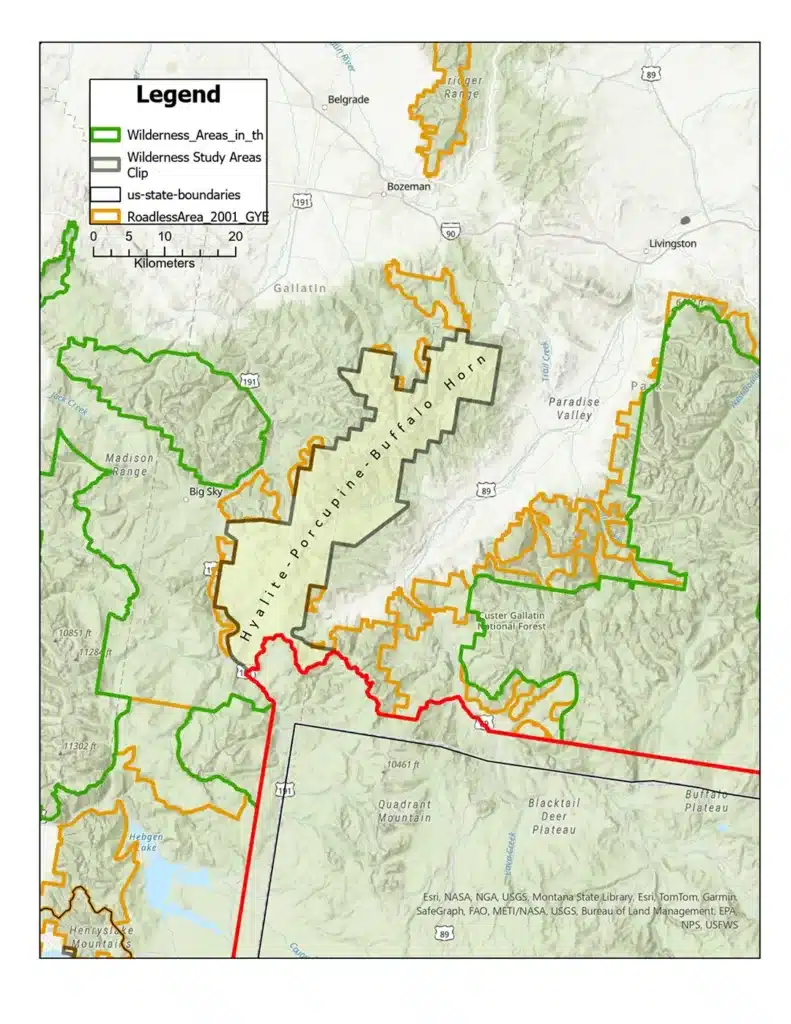
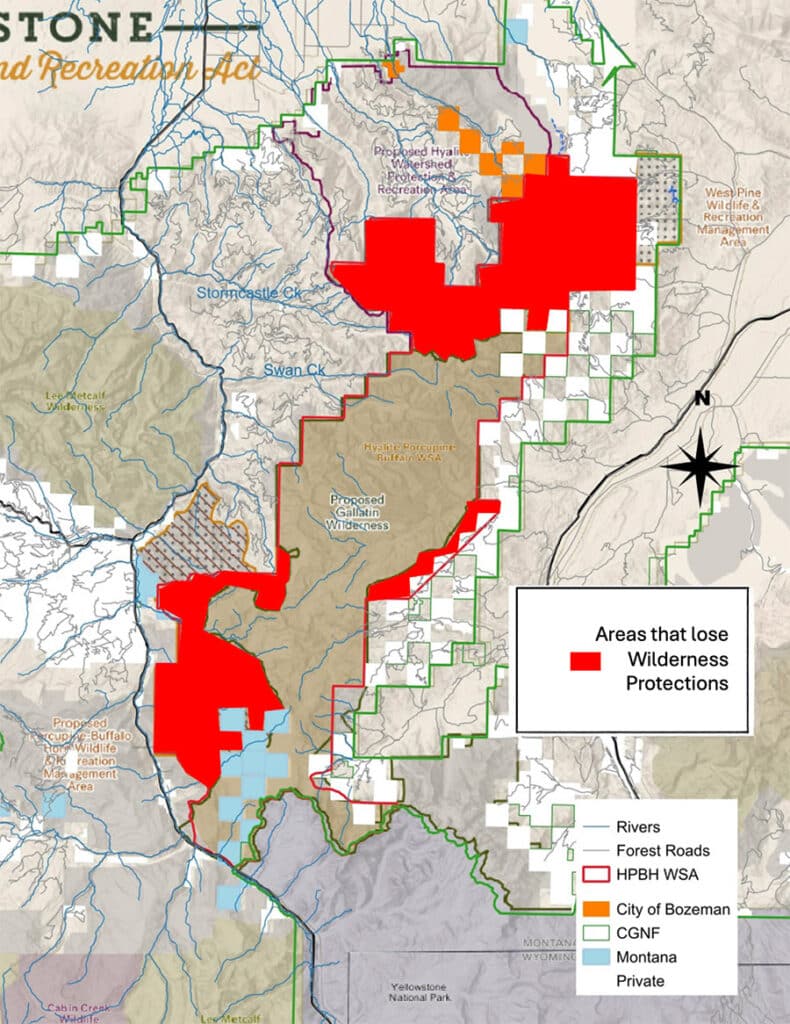
Under Erickson’s direction as forest supervisor, the Custer Gallatin recommended that just 78,000 acres of the 155,000-acre Hyalite-Porcupine-Buffalo Horn Wilderness Study Area be elevated to Wilderness. Only Congress can designate Wilderness. What few realize today is that creation of the WSA in 1977 was itself a compromise. It was envisioned as a cornerstone by its co-author US Sen. Lee Metcalf of Montana for bigger, not smaller, thinking in safeguarding the attributes of the Gallatin Range’s wilderness-caliber lands. Moreover, as Metcalf recognized, it isn’t that “new” wilderness is being “created;” it’s just that what remains of finite, high-caliber lands free of roads and fast-paced recreation is, through better protection, prevented from being lost forever.
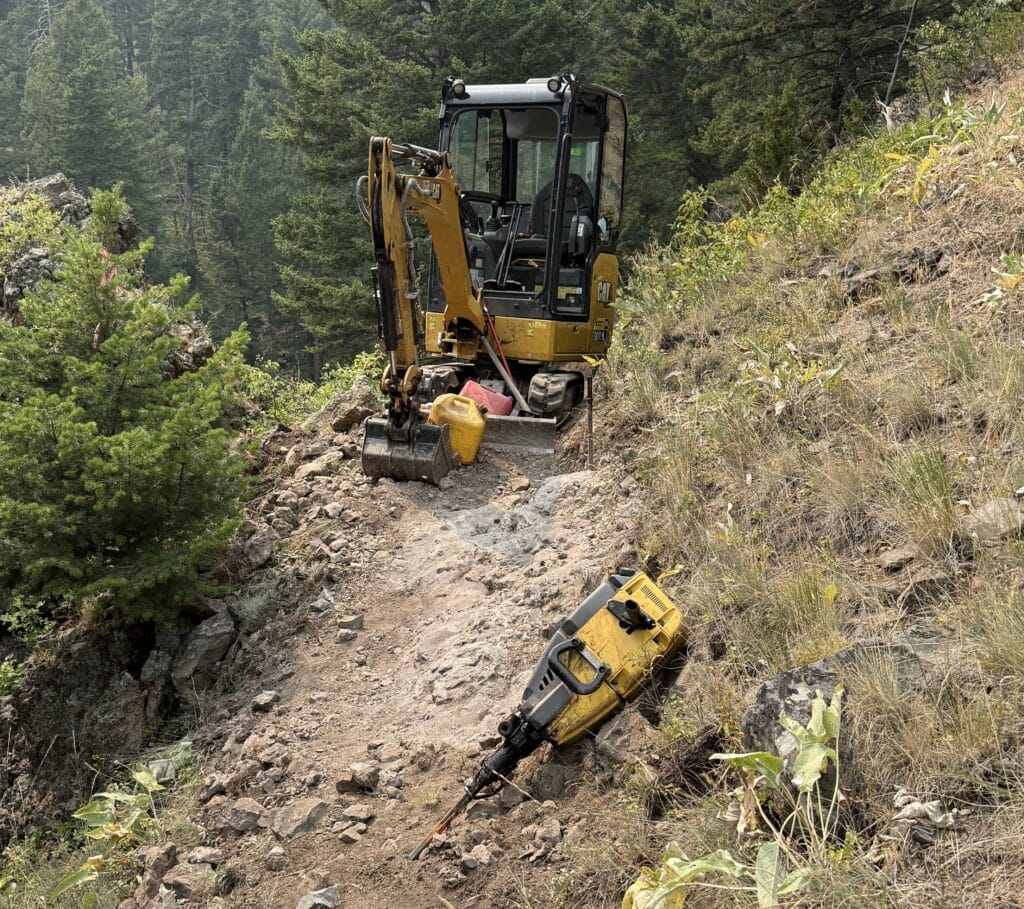
It should also be pointed out, to readers who are unaware, that the Custer Gallatin National Forest had for years knowingly allowed illegal and unauthorized mechanized recreation to trespass in the Hyalite-Porcupine-Buffalo Horn Wilderness Study Area and the Forest Service had to be sued by EarthJustice to prevent further incursion. The agency was excoriated, in fact, by a panel of justices with the US Ninth Circuit Court of Appeals which said managers acted arbitrary and capriciously in allowing mechanized use deemed incompatible with federal law pertaining to WSAs to happen. Thus, it allowed their quality to be eroded. WSAs, in order to protect their high level of solitude—important to humans and wildlife—must be managed according to guidelines of the Wilderness Act that prohibits motorized recreation, mountain bikes and e-bikes.
Gallatin officials claimed theirs was an honest error, but the court found that allowing those uses to take hold, and without having the will or resources to assess their impacts, the forest also violated the National Environmental Policy Act. “As explained above, the [Forest] Service’s failure to consider the impact of increased [recreation] use volume on the study area’s wilderness character caused it to ignore an important aspect of the problem before it,” the court wrote. The Custer Gallatin was called out for not possessing data to justify its claim there were not negative consequences for the wild character of the Gallatin Range. Critics of the Gallatin Forest Partnership and Forest Service today point to a similar absence of data in supporting their assertion that ballooning outdoor recreation pressure isn’t a serious issue for wildlife. What they cannot ignore is the expanding body of evidence and reports which call their blithe assertions into question.
Scientists also say wilderness provides the best long-term predictability in benefitting wildlife. Scattershot development is not only impeding the movement of wildlife heading seasonally in and out of the national forest but home construction in the wildland-urban interface and winter ranges is reducing secure habitat and forcing the Forest Service, e.g. US taxpayers to spend billions of dollars thinning forests and battling blazes to save the dwellings of those who unwisely built in fire-prone areas. In addition, rising levels of outdoor recreation pushes animals out of optimal seasonal habitat. The late ecologist Dr. David J. Mattson, whose peer-reviewed scientific journal articles are among the most cited of any former members of the Interagency Grizzly Bear Study Team, went into vigorous detail citing flaws of the new Custer Gallatin Forest Plan and, indirectly, assertions made by the Gallatin Forest Partnership. His words were prescient.
US Rep. Huffman, in response to the Trump Administration pressing to simultaneously overturn the Forest Service Roadless and Travel Rules (the latter which restricts motorized recreation to established trails), as well as weakening the Endangered Species Act, allowing cattle grazing numbers to markedly rise on national forests and gutting science funding for land management agencies, has called for creation of a national strategy for protecting biodiversity. As House Resources chair, he will have his bully pulpit. “From pollution to ecosystem degradation and emissions-fueled climate change, reckless human activity is driving a rapid decline in biodiversity. This is not just a crisis for ecosystems and wildlife, but for the well-being of our communities and planet as a whole,” Huffman said.
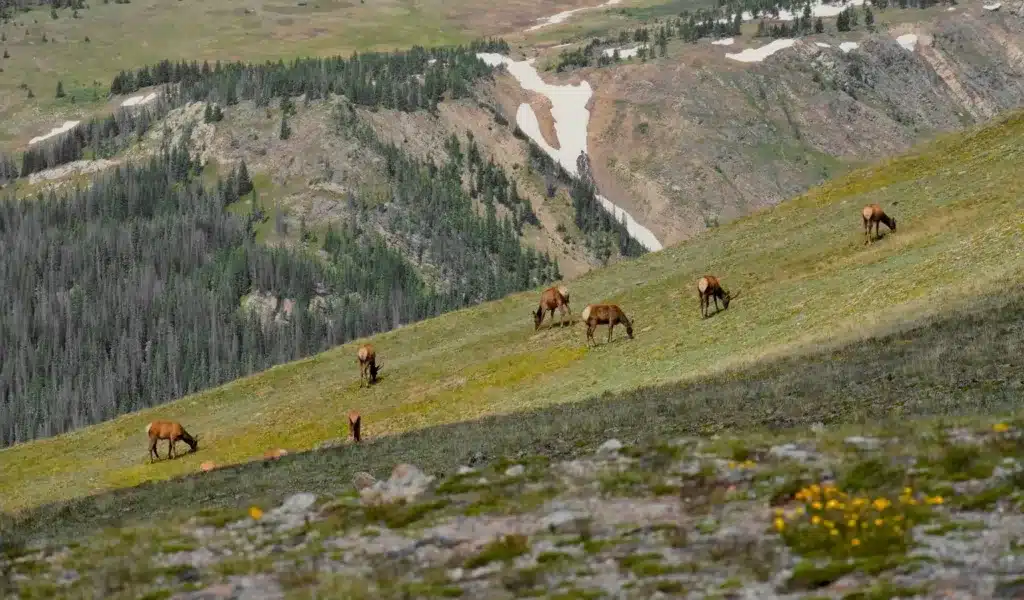
Stretching from the flanks of Mt. Holmes in Yellowstone northward to the outskirts of bustling Bozeman, the north-trending Gallatins have no roads crossing their crest. From migrating elk herds to grizzly bears, wolves, bighorn sheep, mountain goats, moose and someday soon, maybe even wild bison moving more freely out of Yellowstone, they hold an extraordinary roster, encompassing hundreds of species large and small.
Amazingly, the ad in the Bozeman Chronicle appeared a year before the arrival of the Covid pandemic which fueled an unprecedented wave of sprawl occurring in private valleys at the edge of public lands and bringnig outdoor recreation pressure, the likes of which had never been seen before. No one today denies that Greater Yellowstone isn’t under siege by transformative human pressure. Perhaps an indication of how the three conservation organizations at the center of the partnership—The Wilderness Society, Greater Yellowstone Coalition and Wild Montana—shifted their positions from once being strong and outspoken wilderness advocates, Wild Montana decided to rebrand itself and change its name from being the Montana Wilderness Association. It ruffled the feathers of many longtime members. Recently, a longtime advocate affiliated with that organization, Bill Schneider, wrote a critique.
As far back as 1910, Gifford Pinchot, then chief of the Forest Service, wanted to turn the southern Gallatins into a special wildlife refuge. How much of the Gallatin Range should receive wilderness protection is a source of passionate debate. Mountain bikers, whose interests are represented by the Gallatin Forest Partnership, have fundamentally made wildlife protection less of a priority. The three major members of the partnership received significant funding to engage in consensus and collaboration with the outdoor recreation industry and encouragement from the Forest Service. The outcome is advocating for less of the mountains to be placed under the umbrella of capital W wilderness.
Interestingly, right now in southern reaches of Greater Yellowstone, on the 3.4-million-acre and wildlife-rich Bridger-Teton National Forest which includes Jackson Hole and the Wind River Mountains, expanding recreation has been declared a forest priority. It is now in the process of writing a new management plan. Accusations abound of the Forest Service ignoring science when it comes to considering the negative impacts of outdoor recreation on wildlife as it writes a new management plan.
On the Custer Gallatin, it isn’t as if wheeled recreationists suffer from not having places to ride. As Erickson noted in her written 2022 Record of Decision for the forest plan, there are 1,445 miles of national forest roads and 1,140 miles of trails to ride on, plus 500 miles of winter trails for snowmobiles. That’s enough mileage that, if laid end to end, is equal to the distance between Washington DC and Los Angeles. And this doesn’t include illegal trails. How much is enough?
On the Custer Gallatin, it isn’t as if wheeled recreationists suffer from not having places to ride. As Erickson noted in her written 2022 Record of Decision for the forest plan, there are 1,445 miles of national forest roads and 1,140 miles of trails to ride on, plus 500 miles of winter trails for snowmobiles. That’s enough mileage that, if laid end to end, is equal to the distance between Washington DC and Los Angeles. And this doesn’t include illegal trails. How much is enough?
Erickson noted that her plan authorizes 707 more miles of trail for mountain bikers and in the future that could be expanded. Missing is any serious reflection on impacts, including ongoing illegal trail building and admitting that once trails are established it’s not that they engender more empathy for wildlife, but just the opposite. Even if science chronicles impacts on wildlife, user groups often fight to prevent loss of access. Motorized groups affiliated with the Wise Use Movement have protested with litigation.
“I’ve been an avid outdoor recreationist my whole life, but outdoor recreation does not equate to wildlife conservation,” the late Rick Reese said. Reese was once a storied member of the Jenny Lake Climbing Rangers in Grand Teton National Park. He later served as co-founder and first board president of the Greater Yellowstone Coalition. He and his wife, Mary Lee, were also co-directors of Yellowstone Institute (today Yellowstone Forever) that offered conservation and wildlife education programs in Yellowstone National Park. “The groups affiliated with the Gallatin Forest Partnership have not staked out the best conservation position, certainly not for wildlife,” he added during an interview in 2019. Reese passed away in early 2022. “For whatever reason they are pandering to the foundations giving them money and pushing the outdoor recreation agenda at the expense of wilderness,” he added. “I tried many times to get them to show me what scientific justification they had and all they gave me were talking points, which isn’t good enough.”
° ° ° °
° ° ° °
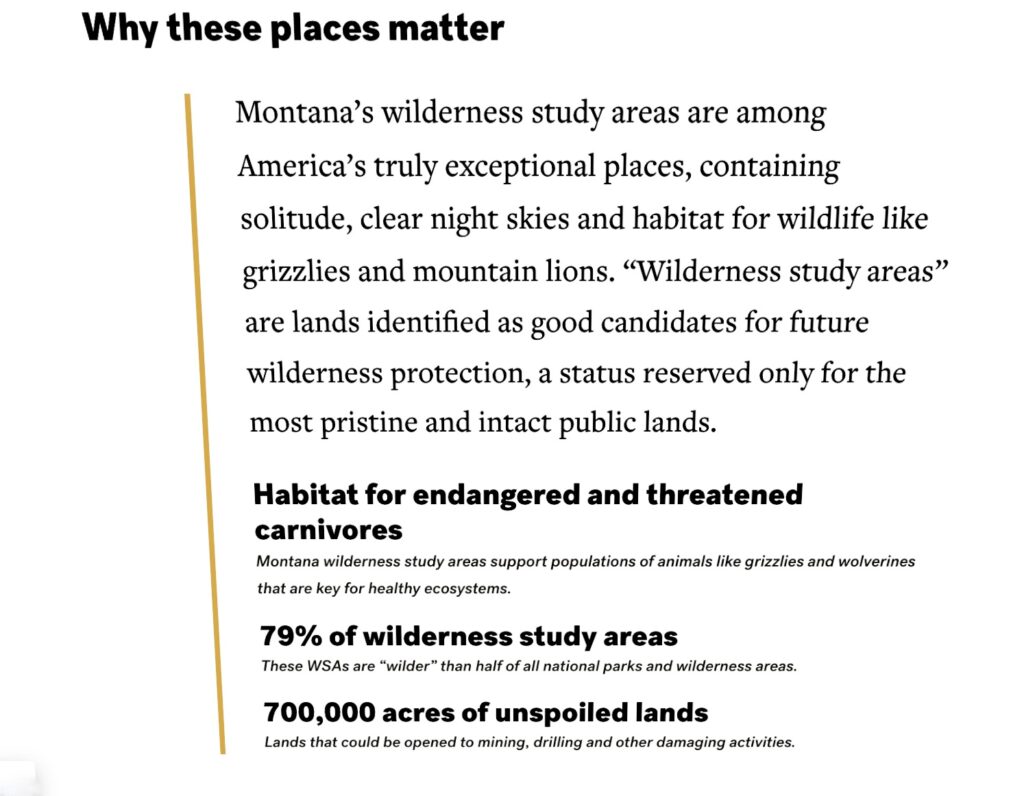
Reese and others who gave their imprimatur to the newspaper advertisement and letter to Congress favor a plan that calls for protecting at least 230,000 acres as Wilderness—which is really not that much given the wildlife values at risk and the fact that it does not hold high timber values or minerals, they say). The Gallatin Forest Partnership plan only seeks 102,000 acres of wilderness designation and with the Forest Service has together invented other designations in order to accommodate outdoor recreationists. Critics call the partnership’s plan “wilderness lite” and say it favors the short-term interests of recreationists as the expense of longterm needs of wildlife and future human generations valuing solitude. A major opponent of more expansive wilderness protection in the Gallatins has been the business community, including mountain bikers, in Big Sky.
Ground zero in the clash of perspectives is how to protect not only the Cottonwood drainage fronting the Gallatin Valley south of Bozeman, and the ecologically-diverse Porcupine and Buffalo Horn drainages. The latter are located close to Big Sky. In general, the Gallatin Range is coming under increasing pressure from Big Sky on the west side of the mountains, sprawling Bozeman on the north and growth swelling in Paradise Valley between Yellowstone Park and Livingston on the east
Erickson inferred in her Record of Decision that less Wilderness needs to be designated because of the presence of Custer Gallatin lands protected by the 2001 Forest Service Roadless Rule but that rationalization might soon be moot. The Trump Administration is about to strip those protections away, and part of the justification is to build not only more roads to accommodate logging but increase access for mechanized recreation. Such a move would violate regulations that are part of a federal conservation strategy, put in place, and agreed to by the Forest Service and states, to protect grizzly bears and the habitat they need.
Steve Gehman, who completed wildlife censuses throughout Greater Yellowstone and Montana, is alarmed by how much wild country, formerly thought secure, has been impacted. “We have this amazing wildlife treasure right here … We can see grizzly bear and wolverine habitat from town,” he told the Bozeman Daily Chronicle. “The thing I come back to is how do we impress upon people that move here and want to use the Gallatin Range, that if we keep whittling away at it with more and more use, that there is a certain threshold out there for those animals. How do you balance that desire for recreation and the stronghold that the Gallatins are for these species?”
Given how elk populations and other species near sprawling ski resort towns in Colorado have been negatively affected by rising human use, is it wise to promote more industrial-strength recreation in the Buffalo Horn and Porcupine drainages literally across US Highway 191 from Big Sky?
Louisa Willcox, for years the program director of the Greater Yellowstone Coalition, penned an op-ed that raised questions about GYC’s position as a member of the partnership. “What is the scientific basis of the partnership’s legislative proposal that would allow activities harmful to wildlife in 40 percent of the Hyalite-Porcupine-Buffalo Horn Wilderness Study Area? Its online materials do not explain. But opposition to the bill from world-class scientists speaks volumes. Why is the partnership pushing this proposal now, when the government is poised to rescind the Roadless Rule and unleash harmful activities in over half a million acres, or about one-third of the Gallatin Forest — not to mention 45 million acres of national forest lands across the country? At this juncture, the partnership should stop pushing its proposal and address what is missing: Science. A broader, science-based conversation will help clarify the choices we face if we want to ensure that species flourish in a rapidly changing world.”
“What is the scientific basis of the partnership’s legislative proposal that would allow activities harmful to wildlife in 40 percent of the Hyalite-Porcupine-Buffalo Horn Wilderness Study Area? Its online materials do not explain. But opposition to the bill from world-class scientists speaks volumes. Why is the partnership pushing this proposal now, when the government is poised to rescind the Roadless Rule and unleash harmful activities in over half a million acres, or about one-third of the Gallatin Forest — not to mention 45 million acres of national forest lands across the country? At this juncture, the partnership should stop pushing its proposal and address what is missing: Science.”
Greater Yellowstone wildlife conservationist Louisa Willcox
But Willcox, a signee of the letter below, noted that recognition of how important the Gallatin Range is for wildlife isn’t anything new.
Some 68 years ago, in 1958, the renowned Jackson Hole elk biologist and American conservation leader Olaus J. Murie wrote a letter to the Forest Service following a camping trip he took with his wife, Mardy, and others via horseback into the Gallatin mountains. Murie, who had been national director of The Wilderness Society, reminded that the Forest Service had historically been central to safeguarding wilderness for future generations and no citizen ever regretted it.
Murie was struck by the high caliber of terrain in the Gallatins, home to a famous elk herd, and he encouraged forest managers to put it off limits to traditional multiple use management. He never could have imagined how outdoor recreation would grow into its own industry of constantly pressing for more terrain. “I have traveled in many wilderness areas, and while I feel that public wilderness use is a perfectly legitimate use of national forest lands and needs no apology, this Gallatin area impressed me strongly as being preeminently suitable for such designation without encroachment on other interests,” he wrote.
A major advocate for creation of The Wilderness Act, Murie died in October 1963 just months shy of that landmark bill’s passage and signing into law in 1964. Below is an incomplete list of those individuals whose names appeared in the letter to Congress and newspaper ad. Given the trends concerns among the living have only deepened since the ad appeared. Will they be heeded when members of the 120th Congress convene in January 2027?
Dear Members of Congress
As biologists, wildlife advocates, and members of the scientific community, we are writing to express our strong support for maintaining the ecological integrity of the Gallatin Range by establishing a 230,000-acre or larger wilderness under the 1964 Wilderness Act. Wilderness designation is recognized as the “Gold Standard” for preserving wildlands and ecological values.
The scientific community recognizes that large protected areas with connectivity to other large protected patches is the best way to preserve high-quality wildlife habitat and permit the continued influence of ecological processes like wildfire, predation, migration, and other natural influences.
The Gallatin Range is the most significant unprotected wildlands in the northern Greater Yellowstone Ecosystem. In particular, the Buffalo Horn and Porcupine (BHP) drainages that lie immediately north of Yellowstone National Park are critical to the biotic fidelity of the Yellowstone Ecosystem.
The Buffalo Horn-Porcupine was recognized early on for its wildlife values. In 1910 Forest Service Chief Gifford Pinchot advocated protecting the southern Gallatin Range as a wildlife refuge. A year later, the state of Montana created a wildlife refuge in the Buffalo Horn and Porcupine portion of the Gallatin Range. In recognition of the inherent wildlands values of the range, in 1977, some 155,000 acres, including the BHP drainages, were designated the Hyalite-Porcupine-Buffalo Horn Wilderness Study Area by Congress.
The Buffalo Horn Porcupine area has some of the best grizzly bear habitat outside of Yellowstone National Park. It is also vital elk winter range and a migration corridor. These drainages also support bighorn sheep, moose, mountain goat, wolverine, cougar, wolf, and mule deer.
Both of these drainages also possess native Westslope cutthroat trout, a species once proposed for listing under the ESA. According to the Montana Heritage Program, 18 birds, eight mammals, three fish, three amphibians, and one reptile as “at risk” or declining in numbers, demonstrating the need to provide the most durable protection possible for this area. It has long been recognized by the scientific community that protected areas in isolation fail to preserve species and ecosystem processes adequately. Wildlife corridors provide connectivity, sustaining vital natural processes, wildlife populations, and biodiversity while allowing species to move in response to climate change.
The Gallatin Range is a recognized wildlife corridor linking YNP to the Northern Continental Ecosystem.
(Signed, May 2019):
Reed Noss, Ph.D., Conservation Biologist, Visiting Scholar Duke University, President Florida Institute for Conservation Science, Oviedo, FL
Bruce Babbitt, JD, Former Secretary of the Interior, 1993- 2001, and former Governor of Arizona, Washington, DC
Dr. James A Bailey, Retired Wildlife Biologist Colorado State University, Fort Collins, CO
Joel Berger PhD, Three-time finalist for Indianapolis Prize, co-architect Path of the Pronghorn, Wildlife Conservation Society Cox Chair of Conservation Biology Colorado State University, Fort Collins, CO
Robert L Beschta PhD, Professor Emeritus, Forest Ecosystems and Society Oregon State University, Corvallis, OR
Norman A. Bishop, National Park Ranger, 1961-1997, authority on Yellowstone Wolf Reintroduction, Bozeman, Montana
Denise Boggs, Executive Director, Conservation Congress, Billings, MT
Brent Brock, MS, Conservation biologist, founder of HoloScene Wildlife Services, and author or co-author of studies looking at impacts of development and roads on wildlife in the Madison Valley and Big Sky, as well as assessments of wolverines, tribal bison restoration, power lines and outdoor recreation.
Lou Bruno, Founder, Glacier Two Medicine Alliance, East Glacier, MT
Dale Burk, Journalist, founder Stoneydale Press and Lifelong Wilderness Advocate, Stevensville, MT Stoney Burk JD, Choteau, MT
Franz Camenzind PhD, former Executive Director, Jackson Hole Conservation Alliance, retired award-winning filmmaker and wildlife researcher, Jackson, WY
John G. Carter PhD, Ecologist Yellowstone to Uintas Connection, Paris, ID
Douglas H. Chadwick MS, Wildlife Biologist and Writer, Whitefish, MT
Wayne Chamberlin, Helena MT
Yvon Chouinard, founder Patagonia, Ventura, CA
Mike Clark, Former Two-Time Executive Director, Greater Yellowstone Coalition, Bozeman, MT
Susan Clark PhD, founder Northern Rockies Conservation Cooperative Jackson, WY Adjunct Professor, School of Forestry & Environmental Studies, Yale University, New Haven, CT
April Craighead, MS, Conservation biologist, expert on pika and road ecology, researcher on recreation impacts, and co-founder Craighead Institute, Bozeman, MT
Lance Craighead PhD, Executive Director, Craighead Institute, son and nephew of famous grizzly researchers and brothers Frank and John Craighead, Bozeman, MT
Thomas “Tim” Crawford, Businessman, wilderness advocate, sportsman, farmer, photographer, prolific letter to the editor writer, Bozeman, MT
Scott Creel PhD, Professor, Conservation Biology and Ecology Montana State University, Bozeman, MT
Bill Cunningham, Outfitter, retired field rep The Wilderness Society, MWA retired, Choteau, MT
John Davis, Executive Director, The ReWilding Institute, Albuquerque, NM
Capt. William B Davis and Marsha Carter Davis, Helena MT
Natalie Dawson PhD, Former Director, Wilderness Institute WA Franke College of Forestry and Conservation University of Montana, Missoula, MT
Ann Debolt MS, Sagebrush Restoration Specialist, Boise, ID
Dominick DellaSala PhD President & Chief Scientist Geos Institute, Ashland, OR
Diane Debinski PhD, Department Head of Ecology, Montana State University, Bozeman, MT
David Delehanty PhD, Professor, Ornithology, Animal Behavior, Conservation Biology Idaho State University, Pocatello, ID
Michele Dietrich, Friends of the Bitterroot, Butte, MT
Debra Donahue JD, Professor Emeritus, College of Law University of Wyoming, Laramie, WY
Dick Dorworth Author, Bozeman MT
Dick Ellis, Montana Department Fish, Wildlife Parks, retired Billings, MT
Arnold D “Smoke” Elser, Retired Wilderness Outfitter, Bob Marshall Wilderness Area, Missoula, MT
Al Espinosa MS, USFS Fisheries Scientist, retired Moscow, ID
Mary Fay, Wilderness Supporter, Helena, MT
Mike Finley, former superintendent of Yellowstone, Yosemite and Everglades national parks, former President/CEO of The Turner Foundation, and former Chairman of the Oregon Fish & Wildlife Commission, Medford, OR
Jerry Freilich PhD, Retired National Park Service, Olympic National Park and Grand Teton National Park, Port Angeles, WA
Christopher Frissell PhD, Affiliate Research Prof., Flathead Lake Biological Station, University of MT Principal Scientist, Frissell & Raven LLC Polson, MT
Steve Gehman, Longtime wildlife field researcher, co-founder of Wild Things Unlimited, and wildlife guide, Bozeman, MT
Barrie Gilbert PhD. Senior Scientist, retired, Department of Wildland Resources, Utah State University, Logan, Utah
Dennis Glick MS, 40-year Conservationist in Greater Yellowstone and Central America where he helped lead protected area conservation for the World Wildlife Fund, Livingston, MT
Joe Gutkoski, Retired Forest Service Landscape Architect and first landscape architect in Region One, Smoke Jumper, conservation leader, Bozeman, MT
Rick Halsey, Director, Chaparral Institute, Escondido, CA
Andrew Hansen PhD, Landscape Biodiversity Lab Montana State University, Bozeman, MT
Kathy Hansen Crawford, PhD, retired geographer, Department of Earth Sciences, Montana State University, Bozeman
Ann Harvey, Research Associate, Northern Rockies Conservation Cooperative, Jackson, WY
Randy Hayes, Executive Director, Foundation Earth Founder, Rainforest Action Network, Washington, DC
Ned Hettinger PhD, Professor Emeritus, Philosophy College of Charleston, Charleston, SC
Glenn Hockett, Rangeland Ecologist and former President, Gallatin Wildlife Association, Bozeman, MT
Steve Hoffman PhD, Founder, Hawkwatch International, Bozeman, MT
Brian L Horejsi, Speak Up for Wildlife Foundation, Penticton, BC, Canada
Donald W Johnson, PhD Fisheries Scientist, retired Libby Creek Watershed Association, American Falls, ID
Carole King, singer-songwriter, inductee Rock and Roll Hall of Fame, Grammy Award Winner, wilderness advocate, 50-year resident of Idaho, Stanley, Idaho
Phil Knight, Gallatin Yellowstone Wilderness Alliance, Longtime conservationist, outdoor recreationists, writer and wildlife watching guide, Bozeman, MT
Angela Kociolek, MS, conservation biologist, former road ecology research scientist, Montana State University
Bart Koehler, M.S. Natural Resource Sciences and Planning, University of Wyoming; former Senior Wilderness Campaigns Director, The Wilderness Society; former Director of The Wilderness Society’s Wilderness Support Center; former Associate Program Director, Greater Yellowstone Coalition; co-founder, Wyoming Wilderness Association
Matthew Koehler, Wilderness Watch, Missoula, MT
Derek Lee PhD Principal Scientist, Wild Nature Institute Assoc. Research Professor Pennsylvania State University, State College, PA
Harvey Locke Co-Founder Yellowstone to Yukon Conservation Initiative, Banff, AL, Canada
Jesse Logan PhD, retired Forest Service ecologist, professor and one of the foremost experts on whitebark pine ecosystems, with over 100 scientific articles to his credit.
Thomas E Lovejoy PhD, Professor Environmental Science Policy George Mason University, Fairfax, VA
Al Luebeck, Stream Access Law Beaverhead and Pioneer Mountains, Butte, MT
Ara Marderosian, Executive Director, Sequoia ForestKeeper, Kernville, CA
Vance G Martin, President, Wild Foundation Boulder, CO
David J. Mattson PhD, Retired leader, CO Plateau Research Station; Research Wildlife Biologist USGS, Lecturer & Senior Visiting Scientist, Yale University, former member Yellowstone Interagency Grizzly Bear Study Team, Livingston, MT
Ralph Maughan, Professor Emeritus, Department of Political Science Idaho State University and one of the original founders of the Greater Yellowstone Coalition, Pocatello, ID
Bruce Maxwell, PhD, Land Resources and Environmental Scientists, Montana State University, Bozeman, MT
Don and Margarita McLarty, Founders, Yellowstone Guidelines, Inc; former backcountry wilderness guides, Paradise Valley, MT
Brian Miller PhD Wind River Foundation, Las Vegas, NMG Wayne Minshall PhD, Professor Emeritus, Ecology Idaho State University, Pocatello, ID
Erik Molvar MS, Wildlife Biologist Laramie, WY
Glenn Monahan, former science teacher and National Park Service ranger, Member Geological Society, Bozeman, MT
Joan Montagne, Madison Gallatin Alliance, former board member Montana Wilderness Alliance and Greater Yellowstone Coalition, Bozeman, MT
Blaine Mooers PhD, Associate Professor, Biochemistry & Molecular Biology, University of Oklahoma, Norman, OK
Susan Morgan PhD, The Rewilding Institute, Albuquerque, NM
George Nickas, Executive Director, Wilderness Watch, Missoula, MT
Barry R Noon PhD, Professor Emeritus, Department of Fish, Wildlife and Conservation Biology Colorado State University, Fort Collins, CO
Dennis Odion PhD, Earth Research Institute, UC Santa Barbara Santa Barbara, CA
Marilyn Olsen, Wilderness Guide/ Outfitter Big Wild Adventures Emigrant, MT
Nancy Ostlie, Great Old Broads for Wilderness, Bozeman, MT
David Parsons MS, Carnivore Conservation Biologist The Rewilding Institute, Washington, DC
Debra Patla MS, Northern Rockies Conservation Cooperative and independent wildlife researcher, Moran, WY
Doug Peacock, retired Green Beret Medic, Author and Grizzly Bear Advocate, Livingston MT
James Peek PhD, Fish and Wildlife Science, University of Idaho, Moscow, ID
Charles Peterson, PhD, Professor of Biology at Idaho State University, Research Associate with the Northern Rockies Conservation Cooperative, and specialist in Greater Yellowstone herpetofauna and application of GIS ecological monitoring, Pocatello, ID
Mike Phillips, Co-leader of Yellowstone wolf reintroduction, co-founder Turner Endangered Species Fund, Aldo Leopold Memorial Award recipient from The Wildlife Society and re-elected member of both the Montana House and Senate, Bozeman, MT
Kenneth L Pierce, Affiliate Professor of Geology, USGS, Emeritus Montana State University, Bozeman, MT
Jim Posewitz, Montana Fish Wildlife and Parks retired, Cinnabar Foundation, Helena, MT Thomas Michael Power PhD, Professor of Economics, Emeritus University of Montana, and author, Helena, MT
Thomas Michael Power, former chair of the Economics Department at the University of Montana-Missoula and a leading voice is discussing the economy of “the New West”
Thomas Pringle PhD, Sperling Foundation, Tucson, AZ
Kevin Proescholdt, Conservation Director, Wilderness Watch, Minneapolis, MN
Richard P Reading PhD, Director of Research & Conservation, Butterfly Pavilion Affiliate Faculty, Colorado State University Fort Collins, CO
Rick Reese, Mountain climber, Principal Founder and three-term president, Greater Yellowstone Coalition board, former director, The Yellowstone Institute, Bozeman, MT
Barry Reiswig, Backcountry horseman and former manager of the National Elk Refuge in Jackson Hole for the US Fish and Wildlife Service, Cody, WY
Rick Ridgeway, Mountaineer and longtime leader with Patagonia, Ventura, CA
William Ripple PhD, Distinguished Professor of Ecology, Dept of Forest Ecosystems and Society Oregon State University, Corvallis, OR
Ross Rodgers, former president, Montana Wilderness Association
Teddy Roe, Legislative Assistant to the late U.S. Sen. Lee Metcalf, who created the Hyalite-Porcupine-Buffalo Horn Wilderness Study Area in 1977, Billings MT
Jim Rokosch, Water Resource Specialist Former Ravalli County Commissioner, Stevensville, MT
Roger Rosentreter PhD, BLM State Botanist, retired Boise, ID
Joseph Scalia, Psya.D, Psychoanalyst, conservationist and former board leader with the Montana Wilderness Association before it changed its name to Wild Montana, Livingston, MT
Gene Sentz, Key conservationist involved with effort to protect the Rocky Mountain Front and longtime member Montana Wilderness Association, Choteau, MT
Shelley Silbert, Executive Director, Great Old Broads for Wilderness, Durango, CO
Bruce Smith PhD, Former Senior Wildlife Biologist, National Elk Refuge, and author of several wildlife books, Bozeman, MT
Linda Stoll, Montana Wilderness Alliance member, former Montana state legislator, Helena, MT
Michael Soulé, often called “the founder of conservation biology” and professor emeritus at the University of California-Santa Cruz
John “Jack” Turner, International mountaineer, famous climbing guide, former university philosophy professor, and author of acclaimed essays and books such as The Abstract Wild, Teton Village, Wyoming
John D. Varley, chief research scientist and founding director of the Yellowstone Center for Resources in Yellowstone National Park, co-founder of journal Yellowstone Science, 33 year career in government science, with early focus on aquatic conservation, Bozeman, MT
Michael Vandeman PhD, Lecturer, San Ramon, CA Carena Van Riper PhD, Assistant Professor Department of Natural Resources and Environmental Sciences, University of Illinois at Urbana-Champaign, Champaign IL
Dick Walton, PhD, The Pryors Coalition Billings, MT
Gary Weiner MS, Retired National Park Service,, Landscape Architect, Bozeman, MT
Cathy Whitlock PhD, Department of Earth Sciences. Montana State University, and Member of National Academy of Sciences, Bozeman MT
David Wilcove PhD, Professor, Ecology and Evolutionary Biology, Princeton University, Princeton NJ
Louisa Willcox MS, Founder, Grizzly Times, former Program Director, Greater Yellowstone Coalition; and grizzly bear specialist with Natural Resources Defense Council and Sierra Club, Livingston, MT
Howie Wolke, Wilderness Guide/ Outfitter, Former President of Wilderness Watch, co-founder Wyoming Wilderness Association, Emigrant, MT
George Wuerthner, Ecologist, Public Lands Media, former senior strategist with The Foundation for Deep Ecology, founder of Mountain Bikers for Wilderness, Livingston, MT
For further reading: