
EDITOR’S NOTE: The US Forest Service under the direction of Chief Tom Schultz and Acting Regional Forester Troy Heithecker has begun authorizing what some call “a blitzkrieg” of proposed logging and roadbuilding projects throughout the Northern Rockies, advanced in the name of allegedly promoting “forest health” and reducing wildfire risk. With new rules in place that allow local national forests to skirt formerly rigid environmental review, the agency is attracting intense scrutiny not only for its debatable assertion that more roads will halt forest fires but also what fragmentation means for species like grizzly bears. In the opinion and guest essay below, Michael Garrity of the Alliance for the Wild Rockies explains why his group joined others in filing a lawsuit to oppose the “Larabee Hat Vegetation Project” inside the Helena-Lewis and Clark National Forest headed by supervisor Emily Platt.
by Michael Garrity
The Larabee Hat logging and burning project is located in a critical wildlife corridor connecting grizzly bears from the Northern Continental Divide Ecosystem with the grizzlies in the Greater Yellowstone Ecosystem.
If that corridor is seriously degraded, which this project will do, it will prevent natural genetic exchange between bears in those two isolated ecosystems leading to irreversible inbreeding. That’s why the Alliance for the Wild Rockies, Native Ecosystems Council, and Council on Wildlife and Fish in challenging the project in federal court. We would like to thank the Western Environmental Law Center for representing us.
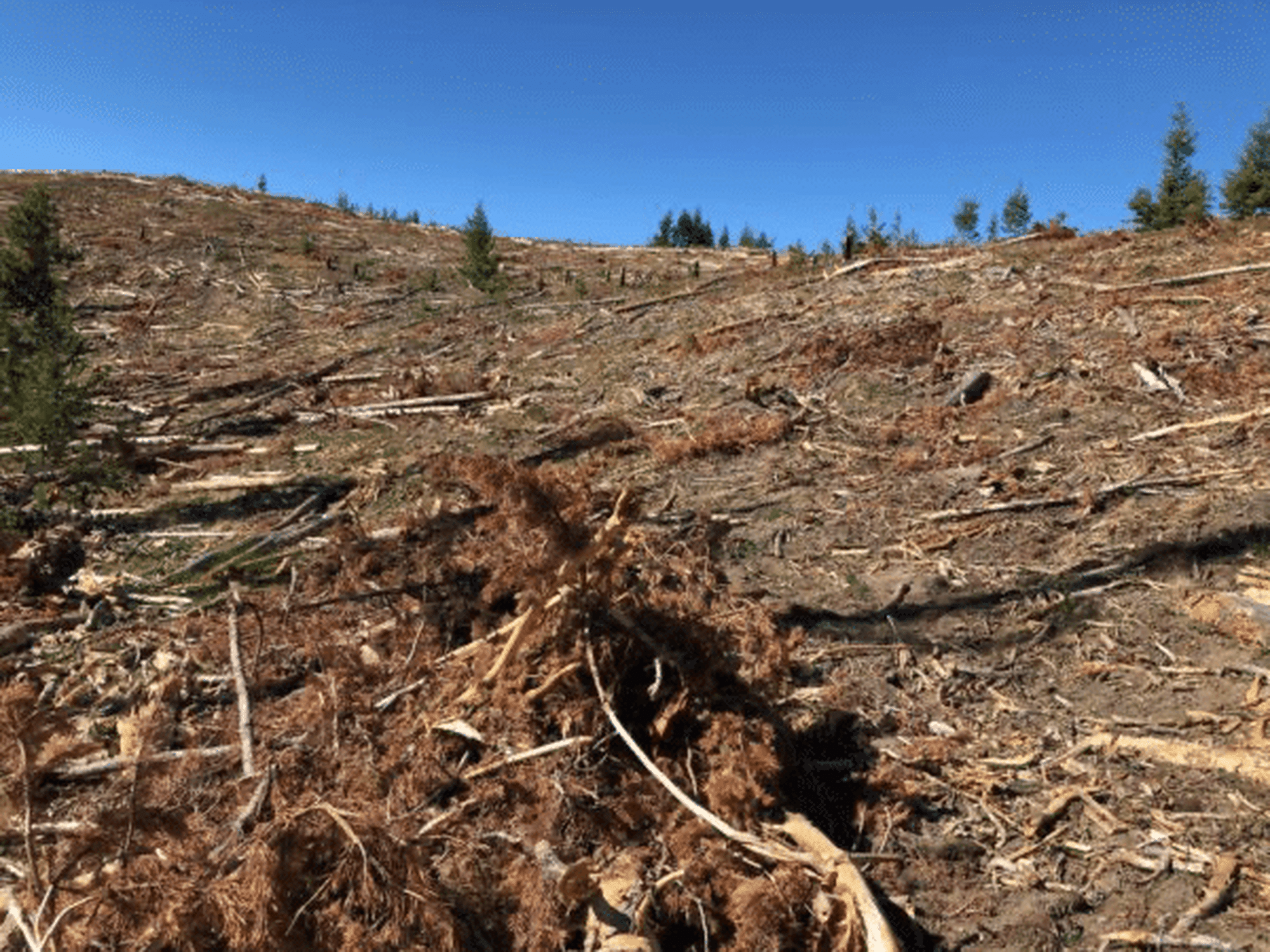
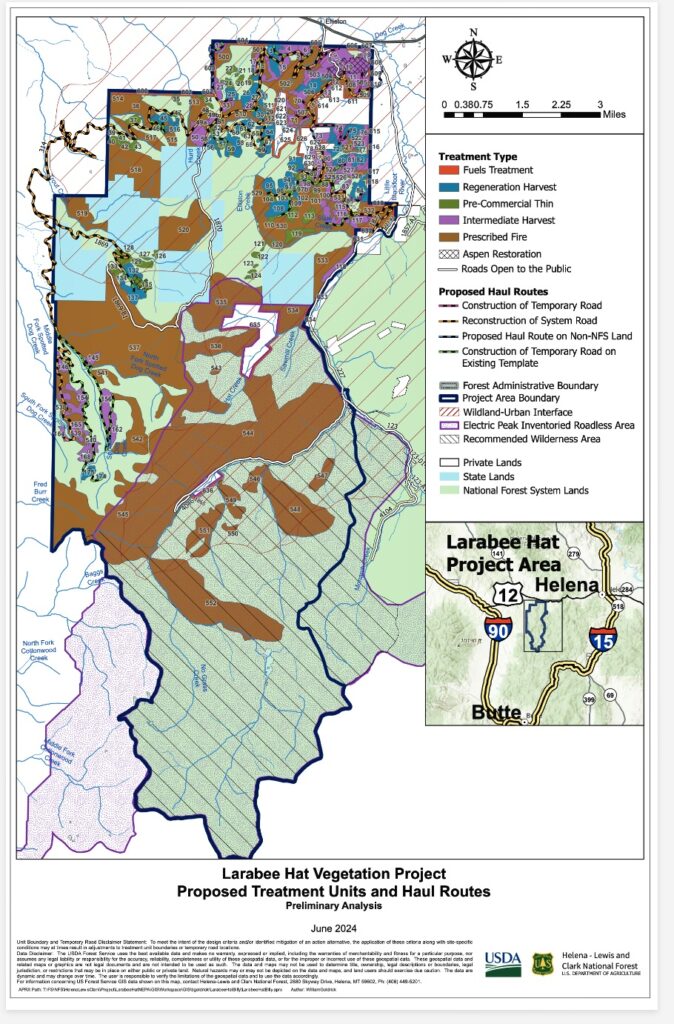
The deforestation is planned on the Helena Ranger District from the Continental Divide headwaters of the Little Blackfoot River to the western border of the Helena-Lewis and Clark National Forest near Elliston, Montana on the south side of MacDonald Pass. The project encompasses 43,158 acres (67 square miles) including bulldozing 16.8 miles of new roads to log 17,696 acres of forest, including clearcutting 3,120 acres, 706 acres of non-commercial logging and 13,791 acres of intentional burning throughout the project area.
This is another of the Forest Service’s huge deforestation disasters the agency is conducting across the West. These enormous projects seriously impact existing habitat for a number of threatened and endangered species, including grizzly bears, which cannot recover without sufficient secure habitat.
Yet the US Fish and Wildlife Service and the Helena-Lewis and Clark National Forest secretly decided to shrink the longstanding definition of grizzly bear secure habitat from 2,500 acres to a mere one acre and the agencies did it without telling the public or providing opportunity for review and comment.
For decades, science has established that secure habitat patches must be at least 2,500 acres in size and at least 1/3 of a mile from a road to give an individual female grizzly adequate space to safely forage for 24 to 48 hours without crossing or venturing near motorized routes since most grizzlies are killed within 1/3 mile of roads.
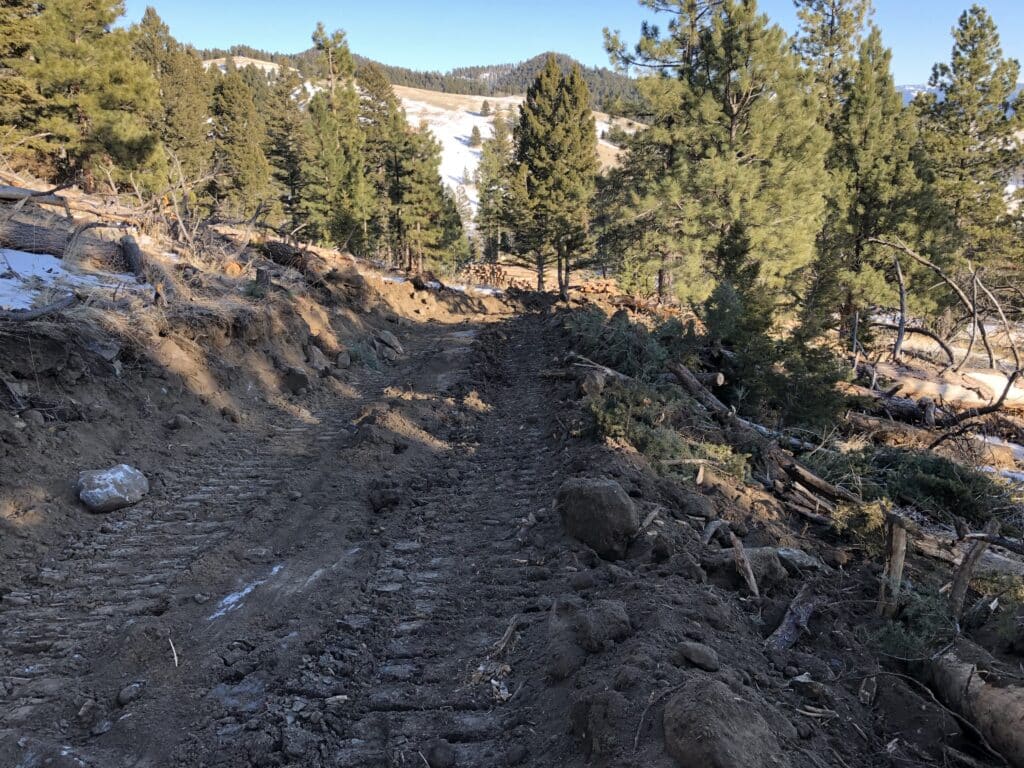
It is strange why the Forest Service would try this again since we won a court case late last year halting the proposed South Plateau Landscape Area Treatment Project on the Custer-Gallatin National Forest near the western border of Yellowstone National Park. There, the agency tried to shrink the definition of secure habitat for grizzlies to 10 acres which is ridiculous for these wide-ranging bears.
The Court ruling was very clear. It stated, “In relying on a 10-acre patch size to define grizzly bear secure habitat in the absence of any scientific evidence showing that such acreage provides adequate habitat, the Fish and Wildlife Service failed to use the best available science in violation of the Endangered Species Act,” adding that “grizzly bears in other ecosystems have been found to need upwards of 2,500 acres of secure habitat.”
Changing what qualifies on paper as secure habitat doesn’t make more secure habitat. A one-acre island of forest surrounded by roads isn’t secure habitat—it’s a death trap for a bear trying to survive. It just makes it easier to approve more logging and bulldozing more logging roads while ignoring the real consequences for grizzly bears. The law doesn’t allow it, and we are not afraid to be the people who say no to the federal government.
The adverse cumulative impacts of this project would be devastating to wildlife and wildlife habitat, native plants, and aquatic species. It makes no ecological or financial sense to convert—degrade—irreplaceable, untrammeled native forest into failed tree plantations and marginal pastureland for subsidized livestock at great taxpayer expense which demonstrates why this logging and burning project makes no sense.
The court already rejected this approach once. Yet the agencies are trying the same thing again and we intend to stop it again and force the Forest Service to follow the law, just like the rest of us have to. We would like to thank the Western Environmental Law Center for representing us.
NOTE: Map of proposed vegetative treatment area prepared by the Helena-Lewis and Clark National Forest that Garrity says does little to convey the scale of impacts that would be manifested on the ground.
.