
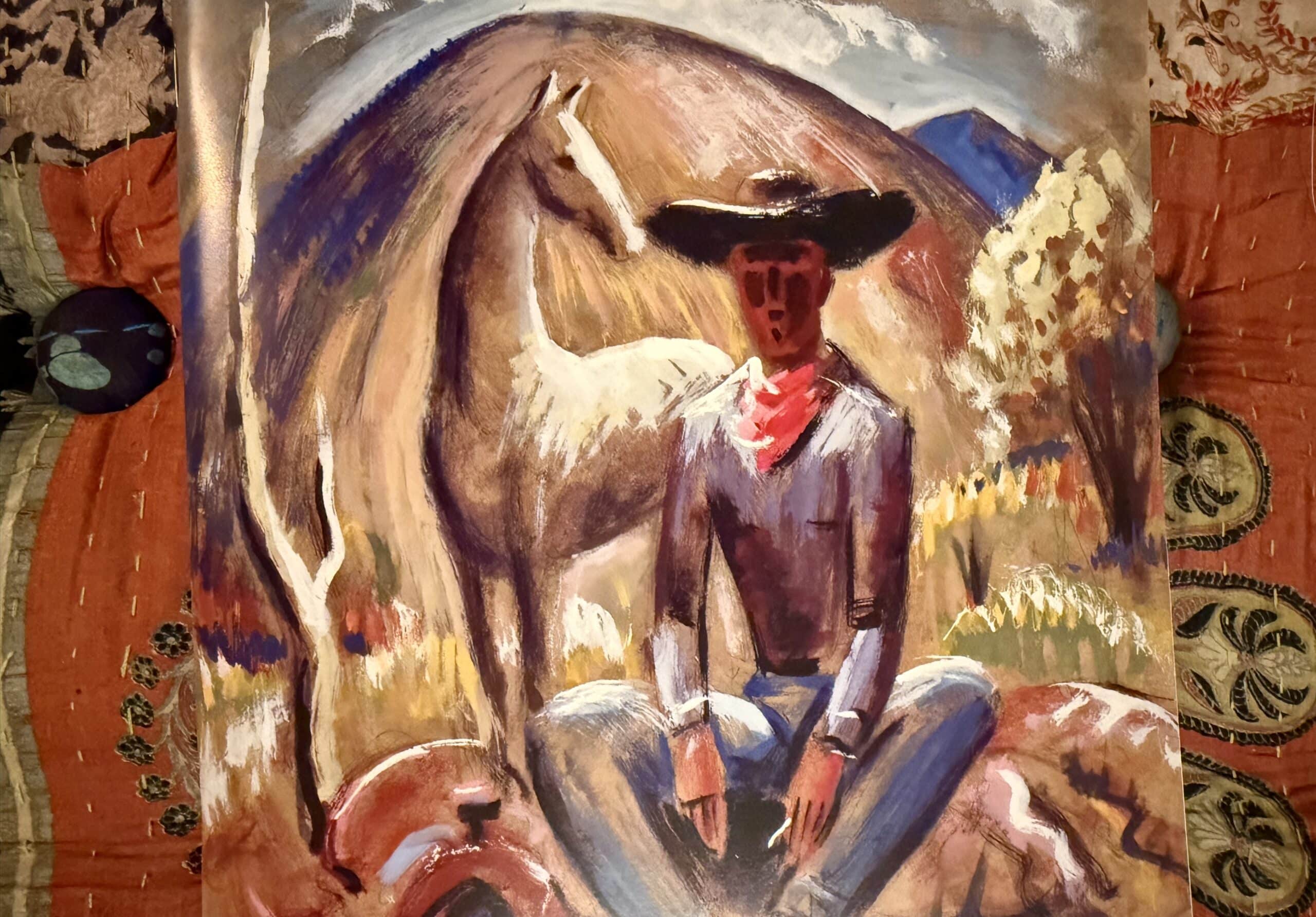
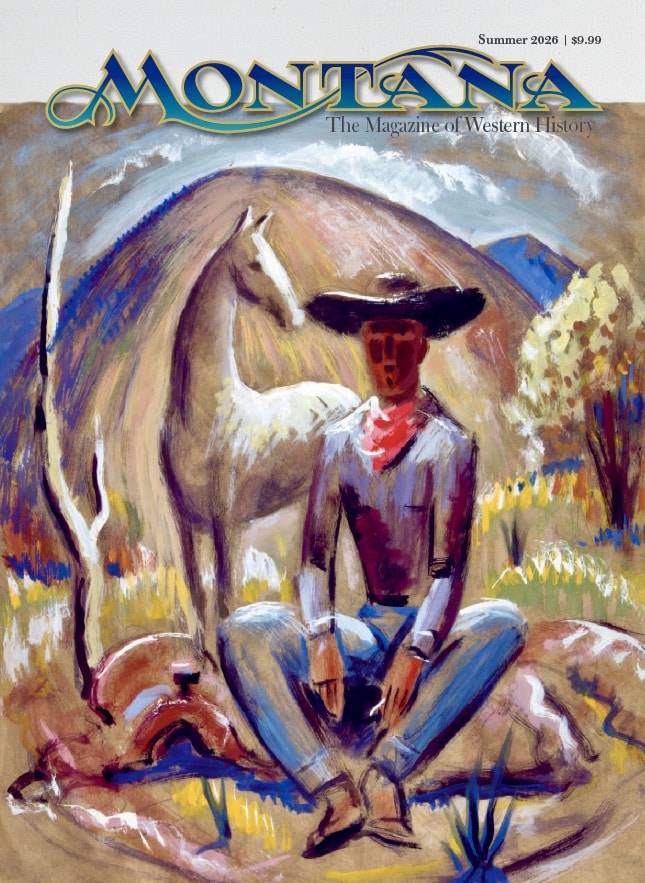
EDITOR’S NOTE: The conversation below about the thinking that went into an essay written by Mark Fiege and Todd Wilkinson, titled “Whose Montana Is It?” published recently in Montana: The Magazine of Western History that has been widely circulated and sparked a conversation about citizens can do confronted unwanted change that is transforming the Northern Rockies. You can read that piece, re-published exclusively in Yellowstonian by clicking here.
by Todd Wilkinson with Mark Fiege
At the polls, Americans nationally voted overwhelmingly for a change in direction. Much of it has to do with an overwhelming and disorienting sense of change happening in our lives—whether it’s weightier economic pressures, concerns about health care, the implications of AI and data centers’ impact on jobs and environment, the future of our kids, or just uncertainty caused by erratic behavior at the top of government with little accountability.
In Montana, election results followed in the wake of years of consistent signals being sent by a variety of opinion polls and surveys of citizen attitudes. Every single one, without exception, has highlighted that Montanans are concerned about the pace of change being brought by growth and its impact on things people across the board hold dear: jobs and housing affordability and, on the environmental front, the character of communities being lost to subdivision sprawl, threats to public lands, the influence of big outside development money showing no deference to our culture, along with the loss of other things such as mom and pop farmers and ranchers, open space, and the rise of both water worries and property taxes.
Another area of concern that polls consistently show to be a matter of shared public interest—and part of our quality of life—is wildlife. Be one a hunter/angler, wildlife watcher or someone who values wildlife presence as an intangible that sets Montana apart, we know the diversity of species here is something special but which has been squandered across most of the Lower 48.
In autumn 2025, Dr. Mark Fiege, professor emeritus of history and the recent Wallace Stegner Chair in Western American Studies at Montana State University in Bozeman, and I gave a keynote address at the Montana Historical Society’s annual convention in Helena. Fiege spoke of the state’s political/socio-economic/cultural history and I tended, in a slide show, to the kinds of visible things that have made the transformation happening in our Northern Rockies communities blatantly obvious and against which we react viscerally.
The packed audience, filled with people from across the state, sat in rapt attention and then served up some great questions related to points we made that are irrefutable. Montanans have a choice: either they step forward to protect the things they love most about the state and put in place regulations and other tools to safeguard them, or they will be lost. Either they act, or decisions will continue to be made by well-funded outside development firms exploiting weak land use planning and turning the state into something we no longer recognize.
As a result of our talk, we were invited to pen an essay for the award-winning Montana The Magazine of Western History, which we encourage you subscribing to. You can read our essay that is re-published here at Yellowstonian at this link. Meantime, I had the pleasure of engaging Fiege, a widely respected Western historian about the tidal wave of change sweeping across mountain valleys and on the prairie.
Todd Wilkinson: I’ve been a fan of your scholarship for several years and we became good friends after I attended a few amazing Stegner Chair events at Montana State and was invited to give lectures before some of your graduate-level classes you were teaching. We share a level of kindredness on a lot of things and one of them is a deep level of affection for southwest Montana and the natural splendor of the Greater Yellowstone Ecosystem. Am curious about the feedback you’ve received from our collaboration and the piece appearing in Montana: The Magazine of Western History that has been widely circulated. People continue to reach out saying the message really resonated with them.
Mark Fiege: Both of us have been talking about the relentless growth and destructive changes we have been witnessing in southwest Montana and the threat to wildlife and Greater Yellowstone that they pose. You brought to my attention your knowledge about what Montanans value in their state and its landscapes, including especially wildlife, and how growth and change is violating what Montanans hold dear. That has been a powerful experience for me, and of course a historian’s reaction to such insights is to ask where those values come from, what the history of those values is. And we ended up writing about those values and their deeper historical background in the article.
TW: You and your fellow scholar and spouse Dr. Janet Ore, who recently oversaw the Ivan Doig Center at MSU and grew up in Montana and graduated from high school in Madison County, live in Pony. In addition to being located in an important part of Greater Yellowstone, it’s a community where Janet’s family has deep roots. Prior to being hired to oversee the Stegner Chair, you were based at Colorado State University and worked amongst an extended community of big picture thinkers there and at neighboring universities around Denver, touted for pondering issues shaping this thing called “the New West.” What brought you back here?
FIEGE: I have my own decades-long experience of Montana that gave me a context or standard for assessing what I see happening to the state. I first began to think about the state and what it represents, what makes it what it is, in 1983, when I visited it in the company of the young woman whom I would marry the following year—in Montana. I lived in Montana for three years and worked for a consulting company, as a historian, which took me to various places around the state, including Butte, and then I came back virtually every year for extended visits for the next 29 years until moving back here permanently in 2016. I have owned property in Madison County and paid taxes on that property for over a quarter-century. My hard-working, in-law family have been in the state for several generations going back to the homesteading days, and I talked to them at length and learned how they see themselves and the state that they love.
TW: The Front Range of the Colorado Rockies and the Wasatch Front in Utah, both which have experienced hyper-growth that have had huge deleterious effects on the character of place, and, in the case of Salt Lake City, the destruction of its namesake lake. They are foils in saying that if we don’t deal with growth by progressively protecting the things we value they will be lost. Share your perspective, which includes understanding historic boom and bust cycles of communities of that chased growth and development without thinking about the future.
FIEGE: I have a pretty good basis for sizing up the changes that have been going on. I witnessed a shift from a relatively lightly settled landscape to intense development of all kinds, especially in Gallatin County surrounding Bozeman and now increasingly in Madison, Park, Missoula and other counties. The changes are disturbing. When I travel at night between Three Forks and Bozeman, for example, I would say that ninety percent of the lights and ninety-percent of the traffic were not there forty years ago or even fifteen or even ten years ago. I heard—and hear—long-time Montanans complain bitterly about what is happening and the self-centeredness, rudeness, thoughtlessness, and avariciousness of newcomers. The changes, and the reactions against those changes, have been manifest, impossible to ignore, and my awareness of all this shaped our conversation and what we wrote in the article.
TW: There is a level of angst present in people who have lived in Montana all of their lives or for a long while. I’ve been in Greater Yellowstone more than 40 years and present today is a wild West mentality brought by newcomers focused on real estate development and getting rich, touting newness at almost any cost and not appreciating “the things that make Montana Montana” which was what we explored in our talk before the annual convention sponsored by the Montana Historical Society.
FIEGE: I’ve gotten to know some of those newcomers, the ones who don’t care, and what strikes me about them is their rootlessness, their lack of connection to place and their lack of a sense of place. They are not inherently bad people—many of them are good people. But they have almost no experience with how to become part of a community and learn about place and develop a relationship to it that conserves the very best things about it that initially draws them to it. And as you’ve pointed out in your reporting at Yellowstonian and some of the national publications you write for, they most certainly are not prepared to live in a wild ecosystem and among wildlife that is not found anywhere else south of Canada.
My wife believes it is a kind of social sickness—people are so rootless yet desperately want roots, and when they try to sink those roots they do it thoughtlessly and based on stereotypes of Montana rather on people’s actual lived experience of it. As we worked on the article, I kept thinking about how we could inform these newcomers and invite them into living in Montana in ways that are more sustainable and that conserve what we all most value about this incredible place.
TW: Place, and sense of place, were crucial aspects of our conversation as we developed our essay that grew out of our talk. It’s my feelings of attachment to Bozeman and its environmental qualities, its historic buildings and familiar neighborhoods, the people I know who live here in Greater Yellowstone—urban and rural whom I have known for a long time; these are the things that give me meaning. It’s what you learned about how your in-law family feels about the state and the locality in which they now live. “Place” was central to what we were thinking and to our conversations.
FIEGE: Wallace Stegner, the namesake of the chair that I held at MSU, and who had his own ties to the Montana, often referred to what he called “stickers,” the people who stayed when others left, who learned to accept the environmental realities and limits of their chosen home, and who learned to follow its natural rhythms instead of ruthlessly and unsustainably extracting wealth from it before moving on. He wrote a thought-provoking essay, “The Sense of Place,” in which he reflected on the destruction that accompanied the expansion and development of the United States and what we need to do about it. One sentence among the many beautiful sentences that make up his essay speaks directly to the problem that we wrote about, and it is so relevant to Montana today: “Neither the country nor the society we built out of it can be healthy until we stop raiding and running, and learn to be quiet part of the time, and acquire the sense not of ownership but of belonging.”
“Neither the country nor the society we built out of it can be healthy until we stop raiding and running, and learn to be quiet part of the time, and acquire the sense not of ownership but of belonging.”
—Wallace Stegner, who loved the Greater Yellowstone Ecosystem
TW: So often discussions about public and private lands center on how much can take or extract from them, how can I profit from them as fast as possible, or what can they do for me or my ego? This is different from the kind of community values, which included a lack of elitism and an aversion to shamelessly flaunting of one’s wealth. It didn’t exist prior to the inundation of urban transplants that was underway in recent decades but reached another level with Covid in these years since. You have said we need to have better conversations in which elected officials listen to the desires of local people to keep their towns and landscapes intact.
FIEGE: I am a historian of the modern world, the United States, and the American West, and so much of the modern world is about mobility and relentless and destructive change. The conservation movement in America arose in reaction against those changes, and as a citizen and scholarly historian I am committed to drawing the attention of my fellow citizens to facts which might make them uncomfortable but which if heeded can help us work together to make life better for us and for the wildlife and landscapes that we love. I believe that you and I share a deep and emotional commitment to the very best aspects of life in this state, and that is what motivated us to write our article.
TW: I know you want to make one more pitch for the Montana Historical Society that publishes Montana: Magazine of Western History and a membership gets you a subscription. Hold forth, good friend,.
FIEGE: Our commentary originally appeared in the summer 2026 edition of the magazine. Readers interested in the sources we cited should consult the original. For more articles and commentaries on Montana and western American history, and to support the Montana Historical Society, its annual Montana History Conference, and the Montana Heritage Center, please consider becoming a Historical Society member at https://mhs.mt.gov/JoinGive/Membership to receive Montana and other benefits. Montana is only as strong as its landscapes and wildlife, its people, and its institutions, including Montana The Magazine of Western History. I really hope readers will support Yellowstonian. It has a caliber of diverse content about the intersection of people and nature in our region found nowhere else.
Further Reading: