by Todd Wilkinson
It’s often said, and many believe it to be true, that forces of fate do not appear in our lives randomly, by accident or simply coincidence. There are insights to be divined, floating in the air, waiting to be pulled into our conscious awareness.
In mid-November a pair of seemingly unrelated events happened—each with personal connections to the Greater Yellowstone Ecosystem.
The day after Cody Roberts pleaded not guilty to animal cruelty charges in connection with his alleged 2024 killing and torture of a young wolf in Wyoming, Dr. Jane Goodall was memorialized at the Washington National Cathedral in our nation’s capital.
Both events provide an opportunity for reflection on two very different human approaches to engaging the natural world. One borne of unreconciled hostility; the other empathy and kindness.
Each has its own legacy, inviting us to ponder what’s more worthy of public emulation and which is more representative of forward-thinking values we aspire to project as a society and nation, using actions to become teaching moments for young people.
In her professional standing as an ethologist, Goodall often spoke of sentience, based on both her research with chimpanzees in the wild and from animal interactions she had through the nine decades of her life.
Her first impressionable encounter, she said, came from a canid Goodall called her great teacher—a pet dog named Rusty—who gave her comfort as she grew up the daughter of a single mother in the seaside town of Bournemouth, England, in the years before WWII. From there, of course, she went to East Africa as a determined, pathfinding young person who studied chimps under the mentorship of Louis Leakey.
Goodall did not deify chimps nor perpetuate the romanticized myth of them being “noble apes.” As she noted, chimps express a similar range of behaviors and emotions as us, their primate cousins. In her observations, she saw tenderness and love exchanged between parents, family and extended clan members, loyalty, worry, disappointment, sadness, envy, jealousy, hurt, fear, grief, the whole range, and also, intimidation, aggression and occasionally “warfare,” more often instigated by dominant males. The most brutal conflicts were those waged over territoriality and attempts by one group to appropriate the resources of another.
We can’t read Mr. Roberts’ mind. But, by his alleged actions, he may be less inclined to accept Goodall’s contention that animals have intelligence and emotions; that they feel physical and mental pain just as we humans do, and that, when placed into certain situations, they are capable of suffering.
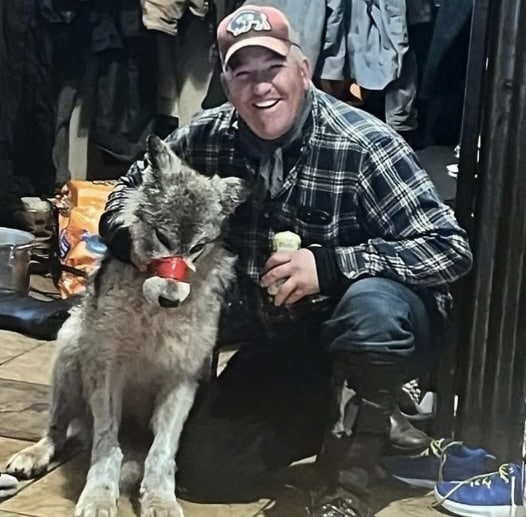
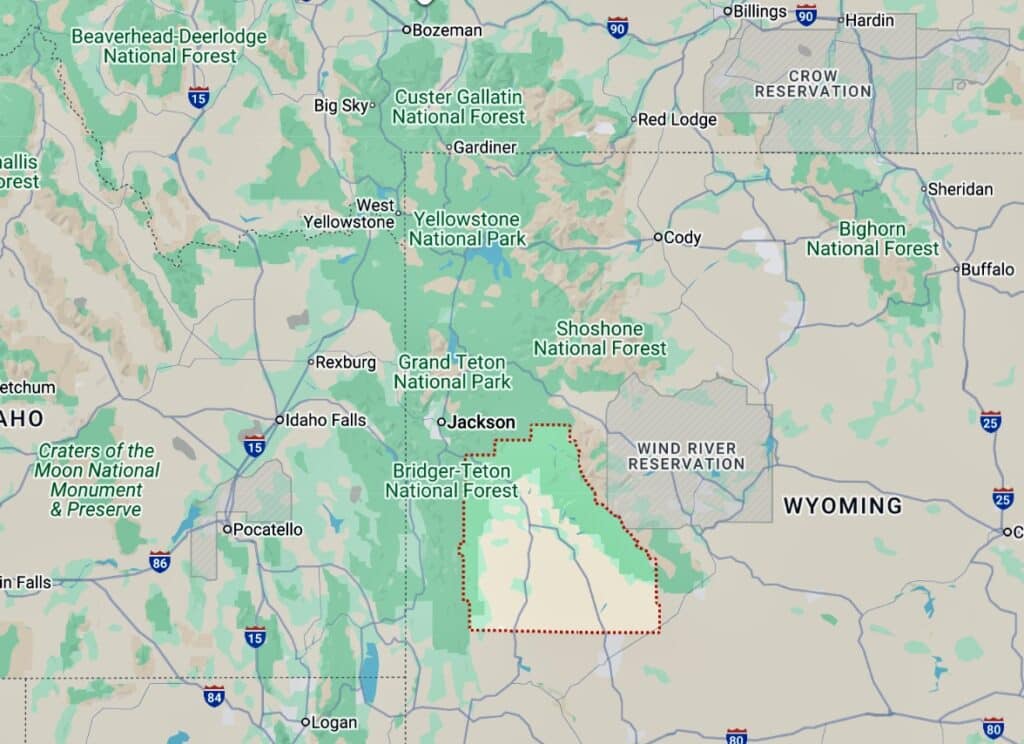
How much reflection Roberts gave to that possibility before, during and after his alleged notorious interaction with the wolf in Sublette County, again, we do not know. According to authorities—and to Clayton Melinkovich, the courageous Sublette County Attorney who, risking social backlash, presented evidence before a Grand Jury that resulted in a charge—we know this:
Roberts allegedly ran down a wolf with a snowmobile, badly injuring it. He took control and custody of the wounded animal and wrapped its muzzle with duct tape and put a shock collar around its neck. Eventually, he brought it into a saloon in the tiny town of Daniel to show off what he had done to other patrons, and then, allegedly, he killed it. While the entire episode was shocking to many, each individual aspect raises questions.
After Roberts was interviewed by investigators with the Wyoming Game and Fish Department, and apparently allegedly confessed to at least some of those actions, he was given a minor fine of $250 for illegally possessing a warm blooded animal. Although the director of the Wyoming Game and Fish Department, Brian Nesvik, said he determined in the aftermath that no further charges were warranted, including those involving animal cruelty, Melinkovich kept investigating.
At his recent arraignment, Roberts pleaded not guilty to a charge of animal cruelty that, if convicted of, could earn him up to two years in jail and $5,000 fine. Media have written that people in Sublette County, Wyoming “are divided” in their opinions about whether Roberts’s deeds were wrong and whether he should face any charges.
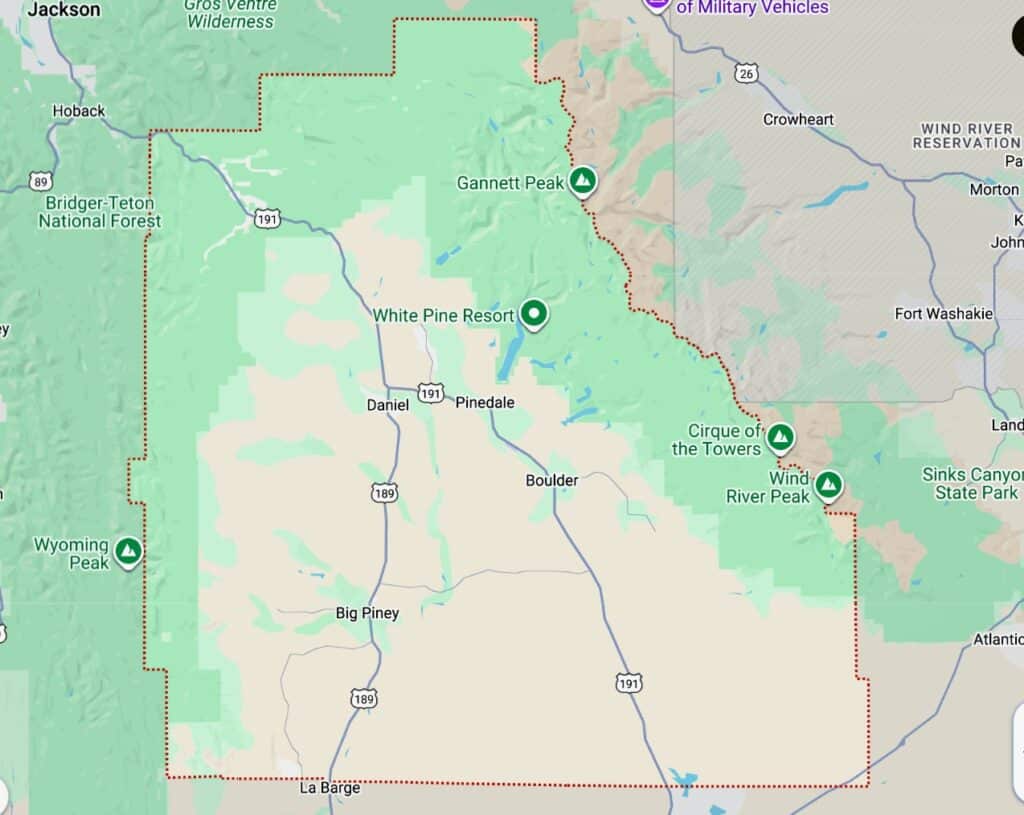
There’s a little backstory to this. In 2018, I wrote a lengthy investigative report about the activity known as “coyote whacking” in Wyoming and it featured video footage actually taken by participants who were running down animals in Sublette County and who then proudly posted them on YouTube. It’s telling that while Facebook deemed sharing them in my story to violate its content standards, YouTube allows such content to proliferate. There are hundreds of videos showing animals ranging from prairie dogs to grizzly bears in Alaska being shot, sometimes in promotion of commercial products or earning fame for the participants.
My story spoke to the broader theme of ethics in hunting and how once inviolate lines governing honorable behavior were being blurred, with many longtime hunters pinning part of the blame on social media. You can read that updated piece by clicking here; the amended piece that included to a reference to the Roberts incident was among the first published when Yellowstonian was launched in April 2024.
As I was doing my research and reporting on coyote whacking, I phoned the person then serving as Chief Game Warden in the Wyoming Game and Fish Department, a man who spent 29 years with the agency. That person, who, yes, went onto become Director of Wyoming Game and Fish and who earlier this year became confirmed as national director of the US Fish and Wildlife Service, was Mr. Nesvik.
In my conversation with him for the 2018 story, he said he seriously doubted that running down animals with snowmobiles was anything but a rare fringe activity and he expressed a clear wariness in wanting to come across publicly as saying it was wrong. At first, he dismissed what I said as hearsay and rumor, until I presented him with the videos.
It’s telling the final goodbye to tree hugger Goodall was staged in one of America’s most venerated churches and that many of the songs and poems at her service—all speaking to human love for the natural world, respect for God and each other—were among her favorites in life. One of the closing Christian hymns was “All Things Bright and Beautiful,” that features the refrain: “All things bright and beautiful, all creatures great and small, all things wise and wonderful, the Lord God made them all.”
I asked Nesvik if wolves in Wyoming were also being chased by snowmobilers in the state, given that wolves then and today can be killed legally any time of day, 24 hours a day, by almost any means, in 85 percent of the state. He told me “wolves were too big” for snowmobilers to run down but he didn’t condemn it as a recreational activity if it really occurred.
The Roberts incident six years later proved his assessment wrong and we’ve since learned that in the rural hinters of the West carnivore whacking with snowmobiles isn’t so rare, especially with new machines able to throttle across snowy terrain faster and more effectively. And, if the activity were really so fringe, as Mr. Nesvik once characterized it, then why, in the wake of the Roberts incident, has so much effort been made in the state to defend it, and resist it from being prohibited?
Poignant is that it wasn’t then, and still isn’t today, illegal in Wyoming (and some other states) to run down wolves, coyotes and other animals to their deaths or serious injury with snowmobiles. The same animals are also targeted in local predator shooting contests that offer prizes of various kinds to participants who kill the most and biggest animals. Objectively, zero compelling scientific evidence exists confirming that whacking carnivores with snowmobiles or killing them in contests appreciably results in better livestock protection or healthier big game herds of elk, mule deer and pronghorn. Further, zero evidence suggests that condoning such activities engenders more respect and tolerance for target animals.
Why would it be animal abuse if the subjects of Roberts’ alleged actions had been elk, deer, domestic and feral horses, cattle and pet dogs? Why would it be an absurdity to allow killing contests to happen for those species?
It would have been most interesting had a conversation ever occurred between Goodall and Roberts. In her gentle manner, she would have encouraged Roberts to open up on why he had such attitudes toward wolves, how he learned them, and what kind of validation he was seeking from community members when he took the injured wolf to the bar. She might have, in kindness, offered Roberts the cathartic opportunity, which does not exist in the glaring hoo-ha of media attention, to express remorse and achieve peace and redemption.
One would think that, given its new high profile, “coyote whacking” would be a topic addressed in hunter safety classes, which exist to teach legal and ethically responsible behavior, but it is not.
Since the Roberts incident played out, there has been, for many observers, a certain level of ridiculousness surrounding the fitful way leaders in Wyoming have done all they can to evade writing state laws that require citizens to be morally and ethically responsible. The obvious remedy would be to ban outright the practice and treat it the same way poaching crimes are.
That was the resounding message sent in an unprecedented letter to Wyoming by active and former leadership of The Wildlife Society, the leading organization devoted to science-based professional wildlife management in the US. The signees are among the most respected wildlife biologists in the world with over 1,100 years of combined experience. The letter’s lead author was Bob Lanka, then president of the Society and a former longtime biologist with the Wyoming Game and Fish Department. He and his colleagues implored Wyoming to reform its wolf management policies, including allowing anything-goes wolf killing in 85 percent of the state, permitting actions like Roberts, and said they violate standards of ethics and fair chase. The letter landed on the desk of Wyoming Governor Mark Gordon.
To his credit in the eyes of observers, Gordon earlier called Roberts’ actions “ absolutely unacceptable” and said that humans should not be running down animals with vehicles. When pressed, Nesvik uttered similar repulsion. But the two also noted they don’t write laws; legislators do, which served as a convenient form of deflection.
State Sen. Fred Baldwin of Kemmerer, to his credit, said months after the incident as part of a nine person “Treatment of Predators Working Group” comprised of legislators and state wildlife and ag officials: “I don’t think there’s anybody in the state – legislators and non-legislators included— that didn’t look on this and say, ‘Oh my gosh. What was he thinking? It was unethical, immoral and a bad deal. It shouldn’t have happened.”
The case, however, is about more than a mere optics problem involving embarrassment for the state. Instead of following Gordon’s lead or listening to Baldwin, lawmakers in Cheyenne couldn’t as legislative bodies bring themselves together to characterize what Roberts did as outright shameful animal cruelty. Rather, they balked, maintaining their seeming contempt for what hunting, wildlife management and animal rights groups said.
As as “compromise,” a separate bill, House Bill 275, was passed by the legislature and signed into law by Gordon that allegedly stiffens penalties for “undue acts” of animal torture and cruelty. Specifically, it outlaws “knowingly, and with intent to cause undue suffering, tortures, torments or mutilates living wildlife, including predatory animals and predacious birds, after reducing the living wildlife to possession.”
That might sound like a remedy, except that wolves and coyotes are conspicuously excluded. They can still be legally run down by snowmobilers to the point of exhaustion and flattened, as long as the rider kills the animals being chased. Is that not torture and torment? Wyoming’s action is an example, critics say, of attempting to be way too clever by half and looking even more absurd.
(Warning: image and caption information below might be disturbing, and if you wish to avoid skip over, but it reflects the stark ongoing reality for coyotes and wolves in Wyoming. )
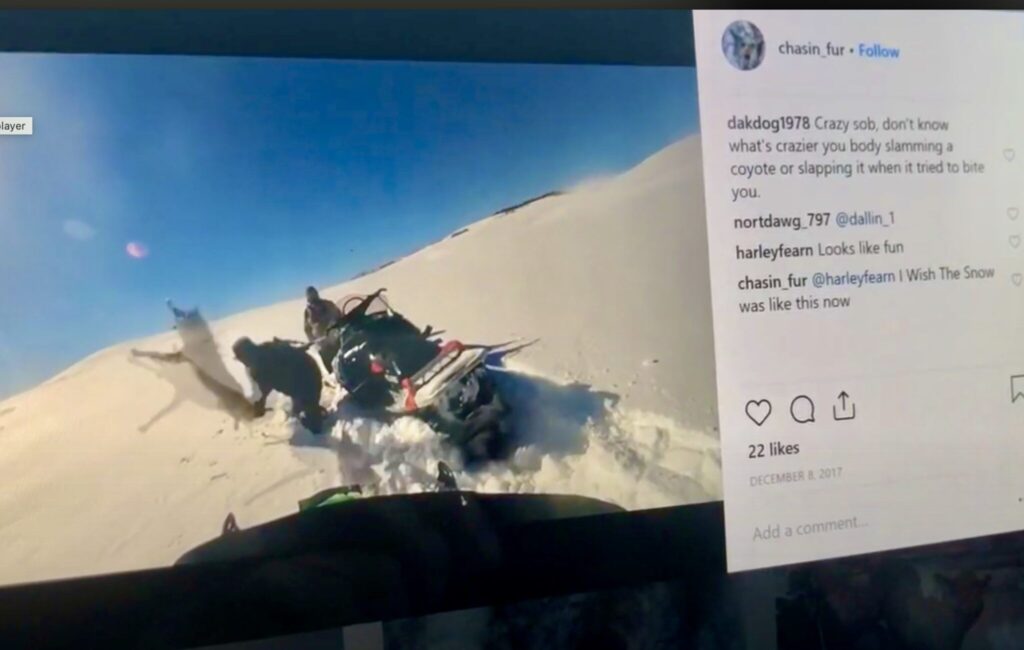
But the failure also illustrates the power of those in the agriculture industry who cannot under any circumstances admit that native public wildlife species they openly despise, because they are competitors for space, forage to their livestock and a potential financial liability, are deserving of any empathy, compassion, and humane treatment.
Livestock operators in Wyoming insist that predator control is necessary to maintain the viability of their industry and that running down predators with snowmobiles is a necessary tool to achieve that end. Again, there is zero evidence to support the contention yet they cling to it with a religious-like zeal.
Part of the prevailing political rhetoric in America these days involves declaring that we are “a Christian Nation” and that God’s laws are superior to any other. While there are some uninformed people who like to (mis)portray tree-hugging conservationists as God-less pagans, most wildlife advocates were raised within various religious faiths or denominations.
Enter one of them, the late Jane Goodall.
Set aside some time with your loved ones today, and instead of watching a movie, view Goodall’s memorial service at the Washington National Cathedral below. You are guaranteed to be moved, even if one is predisposed to be cynical. You will witness a rare display of humanity’s higher nature.
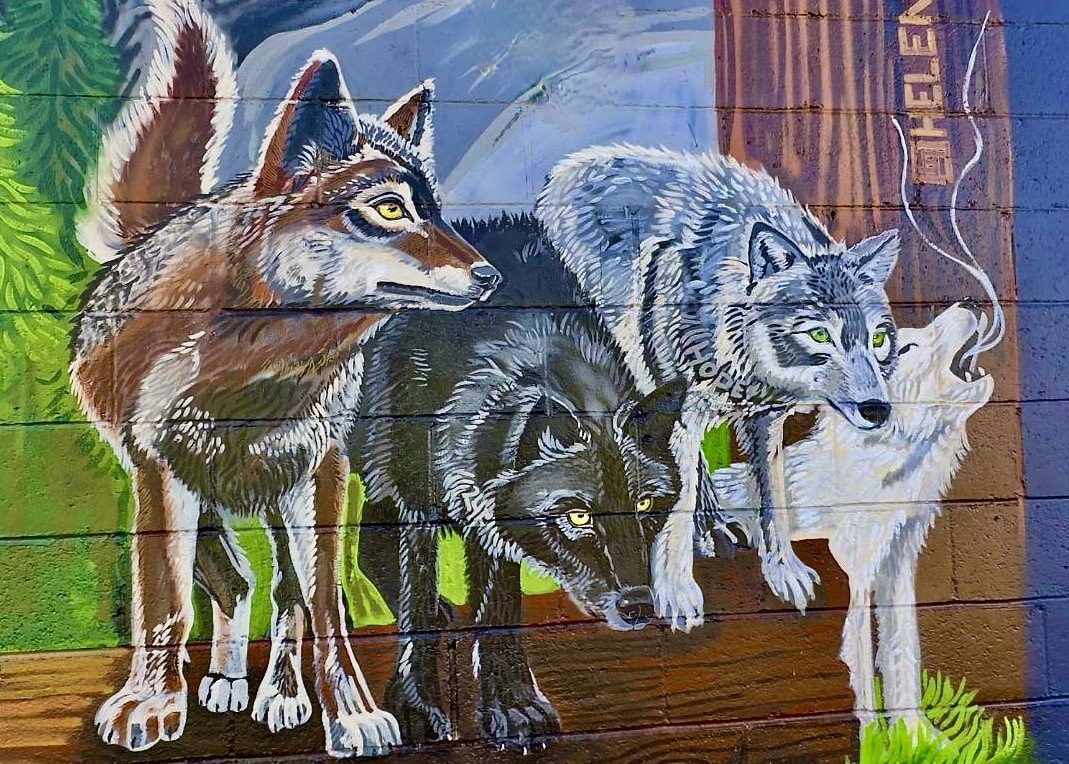
It’s poignant that Goodall’s aspirational polestar was having hope that we humans can be better. Goodall believed foremost in positively engaging young people and encouraging them to believe their actions matter by doing the right thing. It’s also poignant and purely coincidental that the posthumous nickname given to the wolf allegedly killed by Roberts was “Hope,” which is also featured on the wildlife mural in downtown Jackson, Wyoming.
When Goodall was alive, she condemned wanton cruelty, be it between humans or human on animal. One expression of this was her unapologetically and with pluck challenging the practitioners of animal research to stop experimenting on chimps and other primates, noting that while it might have once been a tradition, it was cruel and unnecessary. This was even referenced at her memorial.
Goodall was appalled and saddened upon hearing of the Cody Roberts incident. How do we know this? Because she said so. She loved the great state of Wyoming and spending time here, but was disappointed by how its politicians subjectively rationalized killing of animals for no reason other than it served as entertainment or as an outlet for venting frustration, and few leaders had the courage to stand up to livestock interests. Along these lines, she was openly opposed to the delisting of grizzly bears in Greater Yellowstone being carried out so that bears could be hunted for sport as trophies mounted for display.
It’s telling the final goodbye to tree hugger Goodall was staged in one of America’s most venerated churches and that many of the songs and poems at her service—all speaking to human love for the natural world, respect for God and each other—were among her favorites in life. Members of the clergy and her own family referenced a few of Goodall’s cherished Bible verses, which she drew upon in times of trial.
One of the closing Christian hymns at the service was “All Things Bright and Beautiful,” that features the refrain: “All things bright and beautiful, all creatures great and small, all things wise and wonderful, the Lord God made them all.”
It would have been most interesting had a conversation ever occurred between Goodall and Roberts. (It didn’t). Goodall had a graceful ability to talk respectfully and compassionately with almost anyone. In her gentle manner, she would have encouraged Roberts to open up on why he had such attitudes toward wolves, how he learned them, and what kind of validation he was seeking from community members when he took the injured wolf to the bar. She might have, in kindness, offered Roberts the cathartic opportunity, which does not exist in the glaring hoo-ha of media attention, to express remorse as a way of achieving peace and redemption.
The trial is scheduled to begin in March 2026. Any prosecution, potential guilty plea, verdict, fine or jail time handed down by a judge in the Roberts case, and this includes calls for vengeance from supposedly wildlife-loving people, matters less in the long run than the guiding message Wyoming leaders send to citizens, which remains ambiguous at best. Is Wyoming a state where leaders are too afraid to draw lines of right and wrong that transcend self-interested allegiance to their social tribes?
In the case of this story, if it is being read on social media, a related test is whether people who comment are capable of having pointed but civil exchanges carried out in the name of respecting other beings. A longtime friend of Roberts told reporter Mike Koshmrl of Wyofile that Roberts “wasn’t a psychopath” and that the incident happened because he got drunk. The friend said that among the menacing responses Roberts received was a threat that his daughter would be raped. That’s obviously appalling and worthy of prosecution.
Some see Roberts, having become a villain rather than would-be hero as he might have supposed, trying now to make himself out to be a victim. Blood alcohol content doesn’t explain away his actions. If he is contrite, many wonder then why did he plead not guilty and they ask why hasn’t he made a public statement admitting wrongdoing? On the other hand, some would prefer that he remain their proxy for cultural defiance.
Since the Roberts incident occurred nearly two years ago, I’ve ruminated on what might happen if the following scenario could play out.
Imagine it’s Thanksgiving or Christmas in Wyoming. The governor, majority leaders of the state house and senate, current director of Wyoming Game and Fish, head of the stockgrowers association and maybe a couple of ministers are gathered together around a holiday dinner table—along with a group of smart, impressionable Wyoming kids.
After the customary prayer, somehow the topic of the Roberts incident comes up and one of the young people looks at those adult Wyoming leaders, who are supposed to be their role models, and asks them one by one this question: “Honestly, swearing to be true before God, was it right what happened to that wolf?”
No doubt the first response would be a loud uncomfortable hush filling the room. But it’s a question that deserves to be answered, for it defines their character as leaders, human beings and the reputation they claim to stake for Wyoming in the world.
For further reading:
This story originally appeared on April 15, 2024. (Headline remains timely).
This story originally appeared in 2018 but was updated in 2024
Other related stories you might have missed in Yellowstonian: