
EDITOR’S NOTE: Dr. Paul C. Rogers is an ecologist, professor and leading American researcher specializing in quaking aspen ecosystems, one of the most important for wildlife and imperiled forest types in the West.
by Dr. Paul C. Rogers
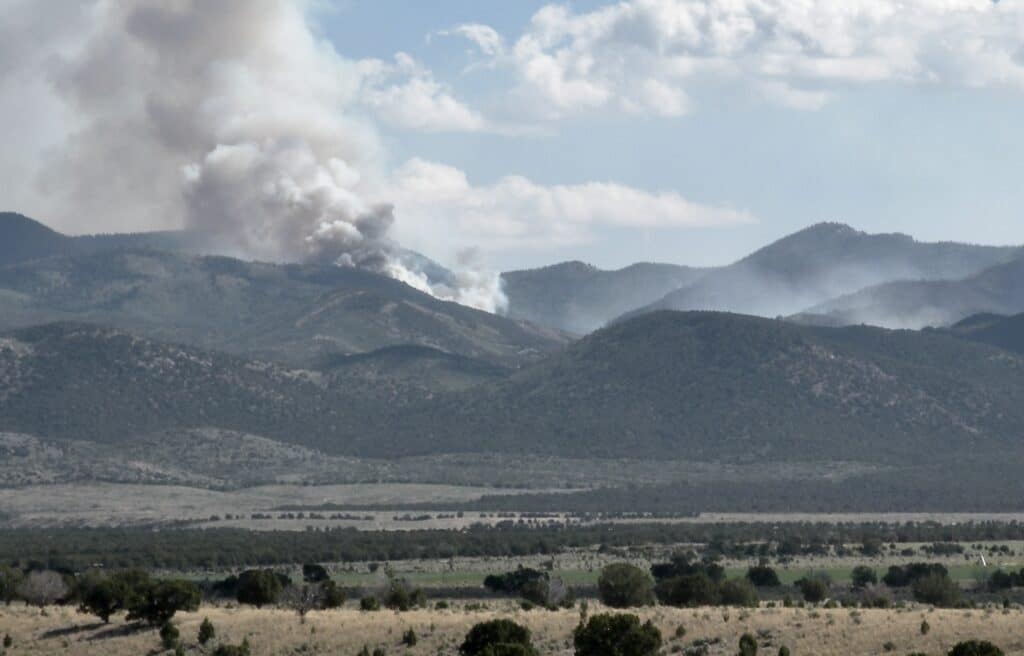
LOGAN, Utah—After centuries of Euro-American settlement in North America, we continue to be flummoxed about our relationship with wildfire. Part of that confusion stems from ancient notions of “dominion” over nature, but over the past century practitioners have convinced the public that wildlands aflame (unlike other disasters) can be tamed. It’s as if wildfire, in the family of catastrophes, stands alone like a distant relative.
Billions of dollars are spent on wildfire wars, though “victory” is a fool’s errand. Performative footage of conflagration and paramilitary responses perpetuate. But we don’t hire hurricane-, tornado-, or volcano- fighters, so why do we treat fire as an unrelated element? We don’t arrest heat waves (our biggest killer) or tsunamis, yet we persist in spraying tax dollars from proverbial hoses to, ostensibly, “protect” forests, grasslands, homes, and lives.
Can we take a pause and see wildfire for what it really is: not the removed stepchild, but a natural force among many that requires cohabitation over combat? Fire is something I’ve devoted an enormous part of my career as an ecologist to pondering, on the ground and in mounds of research, particularly within the context of healthy forests in the West.
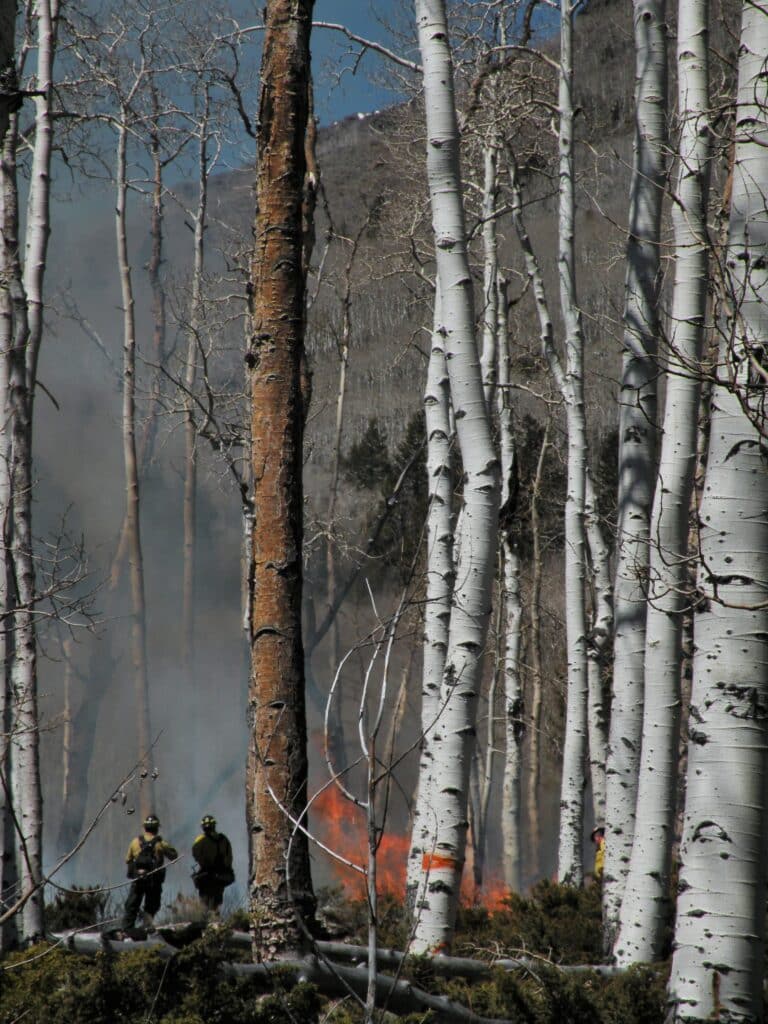
Before we tackle earth, wind, and fire let’s dispense with human conventions that impede needed change. Forestry practice is grounded in cutting trees to solve most forest “problems” and wildfire is a problem if trees are primarily a commodity. Thus, foresters prescribe “thinning” trees out so there will be less “fuel” to burn. D
But wait. Reduced tree density means more oxygen to feed fire, plus high-intensity fires with ample wind will easily scorch forests of any density. Ditto for common tactics like hand scraped lines in the dirt, industrial dozer lanes, or aerial water or chemical assaults. Even highways, rivers, and larger non-flammable “barriers” won’t stop a fast-moving firestorm.
Most fires are ultimately put out because they exhaust available fuels or late-season precipitation arrives. Another common argument is that today’s forests are “unnaturally” thick. Tree density, the claim goes, is due to our great success at fire suppression “over the past 100 years.”
Some forests, particularly at low elevations, exhibit increased crowding. However, this is more likely explained by 20th-century climate patterns—warm and very moist overall—and not by firefighting’s triumph. This raises a policy paradox: if slaying fires (queue Smokey) has yielded today’s “overly dense forests,” then why is the current administration pledging to put out every fire. Won’t that make the problem worse? Shouldn’t we understand climate-fire connections and enact smarter planning instead?
Another common argument is that today’s forests are “unnaturally” thick. Tree density, the claim goes, is due to our great success at fire suppression “over the past 100 years.” This raises a policy paradox: if slaying fires (queue Smokey) has yielded today’s “overly dense forests,” then why is the current Administration pledging to put out every fire. Won’t that make the problem worse? Shouldn’t we understand climate-fire connections and enact smarter planning instead?
Are we chasing our own tail? Can we acknowledge that fires will persist regardless of our actions? These concerns suggest needed course corrections. But thoughtful, scientifically informed, policy is antithetical to the Trump way. In fact, the “put out all fires” mandate is more of the same, but faster. This kneejerk response to wildfire, not unlike a slapdash Iran war, has cost human lives.
Moreover, the tragically misnamed “Fix Our Forests Act” (FOFA; H.R. 471 / S. 1462) wending its way through congress is primed to stoke future misfires. On the surface, FOFA aims to “expedite the review of certain forest management projects.” In practice, that means cut the American public out of public lands by fast-tracking for-profit logging to “fix forests.” This legislation tramples endangered species, scenic vistas, and myriad environmental and policy reviews. Prudent fire and forest policies protect public lands against the free-wheeling might of wealthy interests. These prescriptions will do little to “cure” today’s wildfires or those in our warmer future.
Many claims are made about climate warming and increased fires. There is certainly some truth to this, and there is no doubt that slashing our carbon diet is job #1 for planetary health. While assigning climate causality to individual fires isn’t a reality, the probability of increased fire is mounting.
Often overlooked is placing today’s fires in the context of past climates – both recent and ancient. In much of the West, the 20th century was the wettest period of the preceding 2,000 years. There are many ramifications to this: pointedly, this region has seen very wet periods and prolonged drought before. Apparent successes of fire suppression owe more to precipitation patterns than tactical triumphs. More firefighting and forestry are unlikely to produce similar results in the next century.
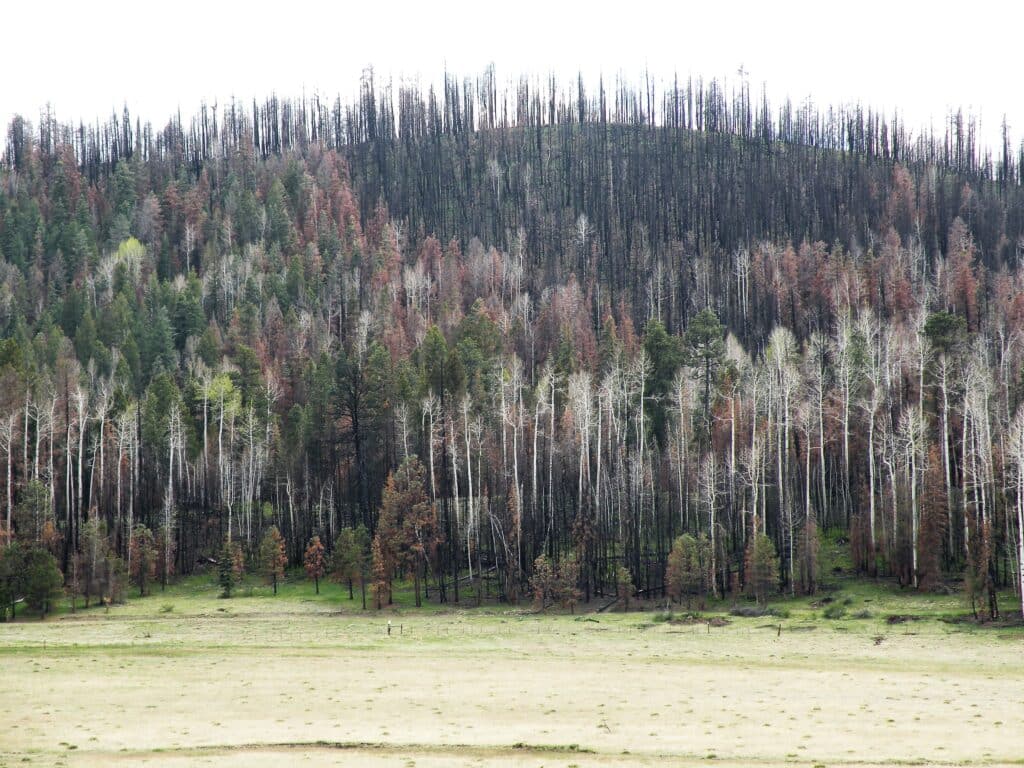
So, what’s to be done? If cutting, raking, bulldozing, and aerial bombardments are not the answer, then what’s the alternative to dumping money on this national pyre? When that distant relative arrives should we accept or attack them? In truth wildfire, though long denied, is an untamed phenomenon.
As such, rather than incessant wildland wars—the very definition of futility—we should learn to live with wildfire. As a society and as individuals, we can make informed decisions about where we dwell. Obviously, some locations are riskier than others (remember what builders say about flood plains?). The insurance industry has already reached this conclusion; many locales are now uninsurable.
It is debatable whether the past century of combating fire has helped people or wildlands. Continuing these same ‘command and control’ approaches under warming conditions will cost us dearly. To be clear, if vegetation is parched and winds are up, it’s best to get out of the way regardless of forestry or political prescriptions. Like floods breaching the levy, simple engineering solutions are not going to halt nature.
The myth that we haughty humans can “prevent forest fires” has persisted for too long. Smart planning, strong science, political will, and a large dose of humility will be required for the next branch of this family tree.
For Further Reading: