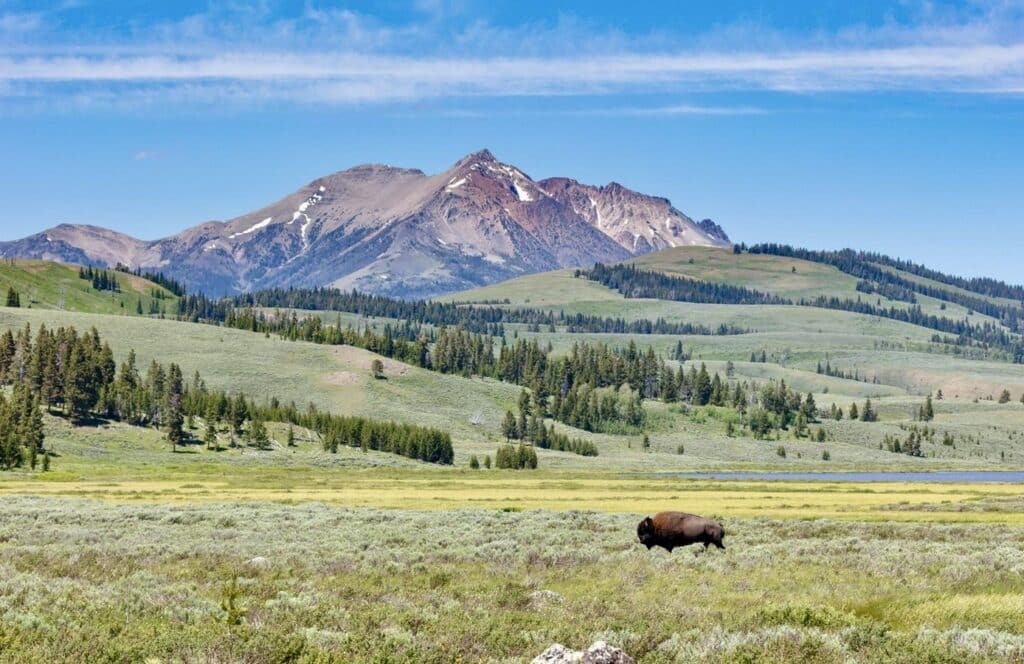

EDITOR’S NOTE: Seasons once again are turning as Super El Nino churns in the Pacific Ocean. Up where Lois Red Elk lives in Wolf Point, in north-northeast Montana, the Mighty Missouri turns into an ocean of freshwater at Fort Peck. Late November means the coming of wind and snow across the open prairie. The bison herd at Fort Peck is accustomed to brutal cold and sideway flurries blasting at gale force strength. It is time to hunker down. In fact, buffalo don’t need a meteorologist to tell them which way the wind blows; they turn into its direction. In this Red Elk sees a metaphor for how to confront perceived adversity. But first heed the hawk’s cry. It makes us happy in our hearts to have her back and able bodied as our elder poet in residence. Enjoy this piece from a Montana treasure. —Todd Wilkinson

November Spirits
by Lois Red Elk
It was while I was driving into town
that I saw them, four spirits,
silhouettes resembling someone I knew,
or was related to,
someone I’m always concerned about,
like a pitiful drunk uncle,
or a wasted stoned cousin,
or those two from a long time ago
who lost themselves in an untimely fire,
but still claim their right to be,
to occupy a space with ghostly energy.
I had to look twice.
I had to make sure it was real.
You know, like when eyes betray
or when this drifting mind
is not synchronized with sight.
But, yes, there they were.
They looked to be waiting for someone,
like the coming of a savior,
to bring them good news
or good fortune, a handout of coins.
I had to look away because their time
was long gone, they didn’t have to be there.
Again I looked and saw that it was just the
local bunch of street people, standing under
bare winter trees. It wasn’t my judgment.
I quickly searched the direction they were
facing. There was no one. But, yet it seemed
like there was an energy heading their way,
coming to satisfy a thirst that needed to be
quenched sooner than later. The air was full of
fog, drifting breath caught by the frost forming
on upturned collars and caps, some evidence
of life spilling from quiet forms. I had to pray,
had to send some healing in behalf of our
common spirits, had to remember the blood,
the birthright we shared. Just as I opened my
mouth to utter a quiet word, I heard a whistle,
a large bird. Where had it come from, why was
it so cold, in the middle of town. I circled the
block to try and catch a glimpse of the hawk
in flight. As I rounded the corner I saw other
people looking in the air at the unusual site.
All of a sudden it came to me, a lesson from
culture was shared. When we hear hawks cry
someone will ask for help. I decided to stop,
pulled my car into the nearby parking lot.
Just as I opened my door a local preacher
asked if he could pray with them. While they
all prayed another person brought coffee and
sandwiches. What I saw was the legend of the
hawks cry, people asking for help and others
answering the call of November spirits.
©Lois Red Elk