Column and Photos by Brad Orsted
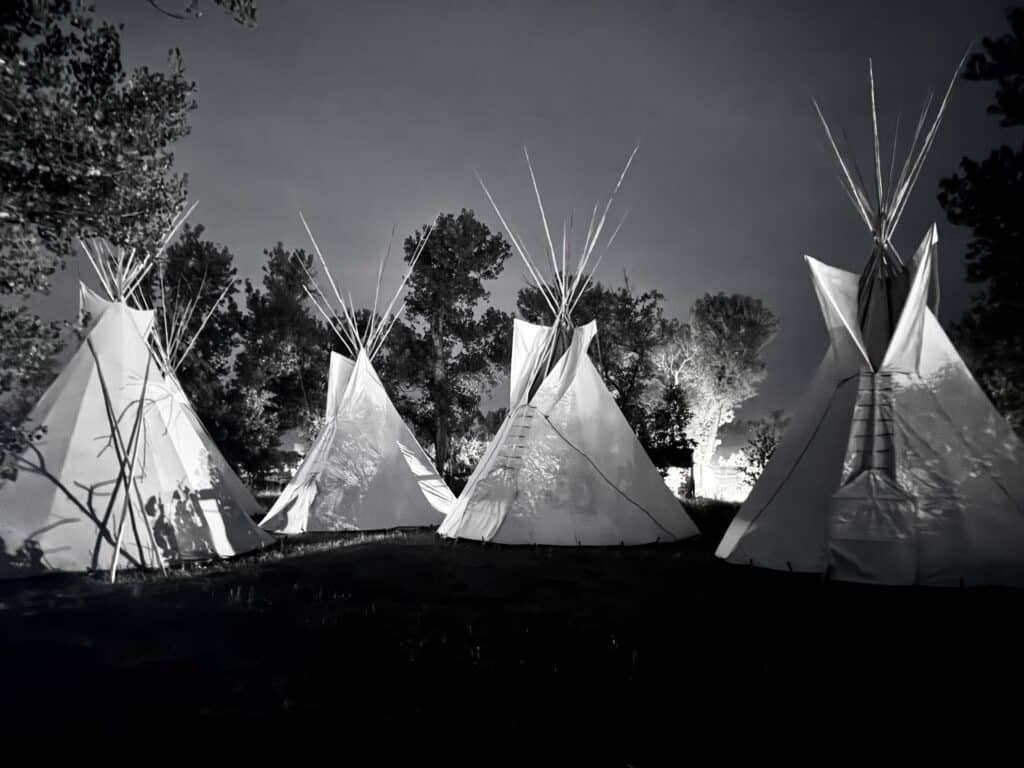
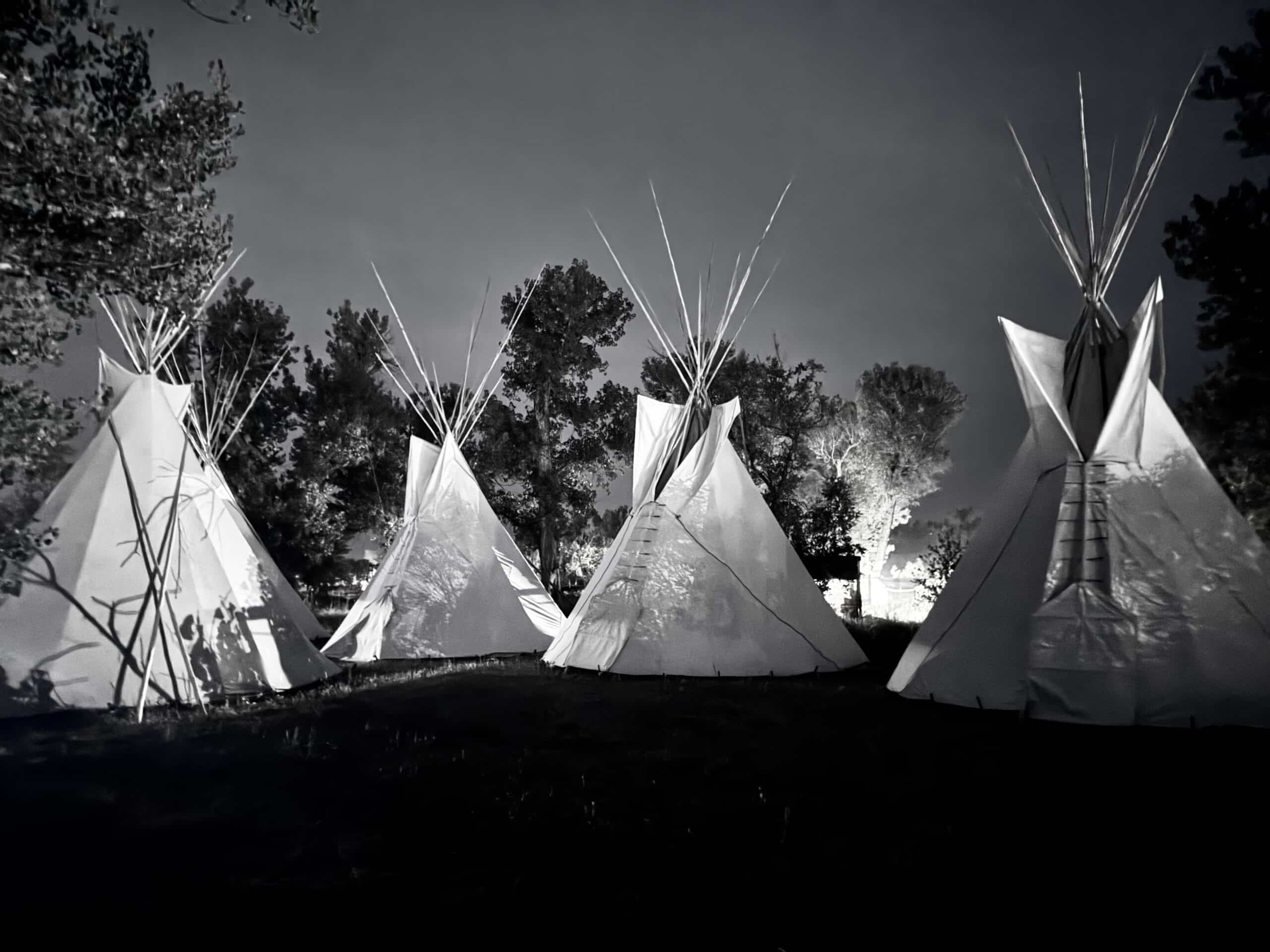
Crow Fair started that day the way it always does, with a camp crier moving through the tipi village before sunrise, speaking in Apsáalooke to wake the people. I don’t speak the language. I’m told he was telling everyone to get up and get ready for the day. The night before, I had lain on my back in a tipi after my first sweat lodge ceremony and looked up at the stars through the smoke hole, emptied out and drained in a way I didn’t have words for yet.
It had been two years since our daughter, Marley, died at fifteen months old, and I had come to Crow Agency in southern Montana half by invitation and half out of desperation, because nothing else was working.
I was there because of Sweeney, a white man who’d been a fixture on the reservation for half a century, adopted into the tribe, holding a master’s in Native American Studies, and trusted enough that the few Crow I knew mostly just considered him one of their own. He’d brought me down for Crow Fair not knowing exactly what I needed, only that I needed something.
After the parade of horses and riders in regalia, when everyone else was heading down to the river to cool off in the triple-digit heat, Sweeney pulled me aside.

“Our friends have organized another sweat for you today,” he said. “To help you with your grief from losing Marley. Unlike yesterday’s, this one is being done specifically for you.”
My first sweat the day before had been intense enough. I didn’t want to seem like I was imposing myself on a culture that wasn’t mine, and if I’m honest, I was nervous about going back in, especially with the focus on me this time. Sweeney wouldn’t hear my hesitation. Grab a towel and gym shorts, he said. That’s all you’ll need. And not the shorts for very long.
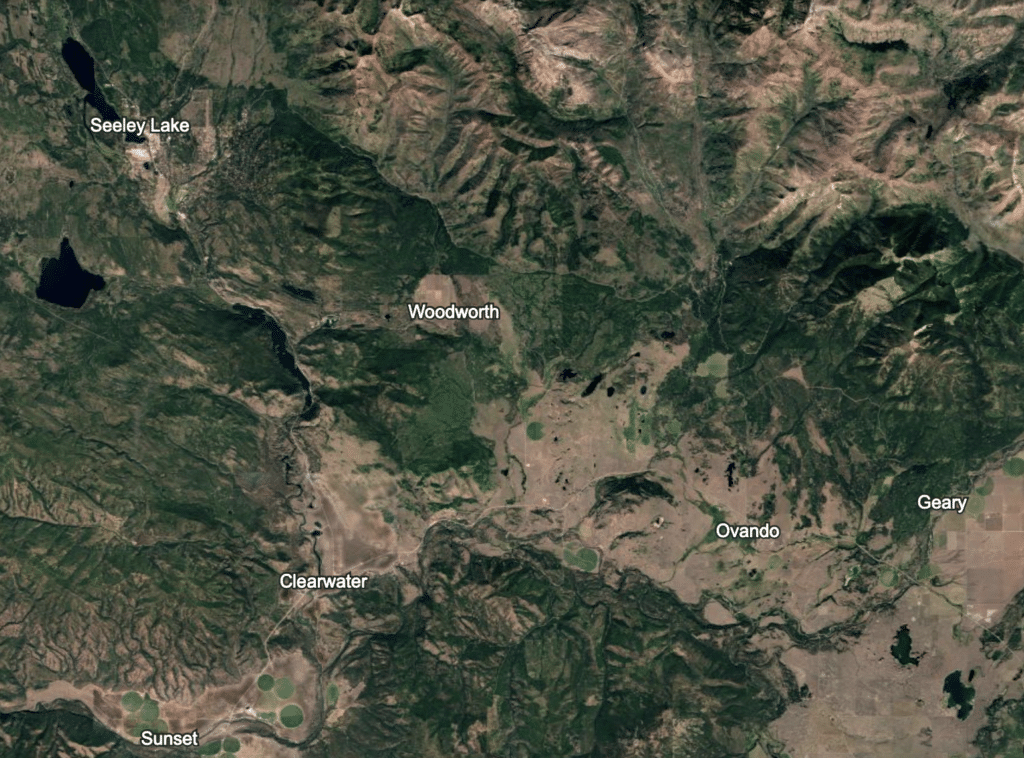
We drove out in his forest-service-green Suburban — near Garryowen, possibly the last song Custer heard before he got what he deserved — past hogback ridges and coulees draining toward the Little Bighorn and back through the cottonwoods to where the lodge stood waiting, tarped and blanketed, the fire pit white-hot.
There were more men there than the day before — more than I expected could possibly fit inside. Backbone, the man leading the ceremony, was in his forties, barrel-chested, with green eyes and the kind of walk that comes from a life spent on the land, like the earth rose slightly to meet his feet. As the men gathered, he told everyone, flatly, without ceremony or softness, that we were there to pray for me. That I had lost my daughter and was struggling. Everyone nodded. He said “Ahó.” Everyone said it back.
As men undressed, I saw raised scar tissue on the backs and chests of some of the Lakota men — sun dance scars, from a ceremony that involves staring into the sun and tearing tethered flesh from the body to free themselves from the sun dance pole. Sacrificing the only thing we have that’s truly ours, to heal the people and land. These were men who understood suffering in a way I didn’t. Now they were going to pray with me.
We crawled into the lodge single file and knelt on the bare ground, packed shoulder to shoulder with bear root smoldering. I was wedged between a heavyset young man I’d helped cut chokecherry branches with and a large, intense sun dancer, with no real room for me to sit. It was already a scorching day before the rocks even came in. Once Backbone closed the flap and the light went out, the heat built in waves — water on the rocks, steam, a chorus of “Ahó” as men acknowledged the medicine moving through the lodge. When it became too much, the only relief was to go face-down against the dirt floor, and there wasn’t room enough for that either. I remembered what Sweeney had told me the day before: when it gets hotter than you think you can stand, remember why you’re in there. You’re in there for your daughter. Focus on the words even if you don’t understand them. They are prayers.
Backbone’s Apsáalooke invocations filled the lodge, and every so often I heard my own name inside it. Then he asked each man to pray out loud for what I needed. Every single one of them prayed for me by name. I won’t repeat what they said — those words weren’t given to me to pass along; they were offered to the unknowable. I can only say that I have never felt so held by a group of people. Not church. Not therapy. Not any recovery meeting I’ve sat in. We were sweating together on ground near where Sitting Bull sweat before the Battle of the Greasy Grass — on land where the worst things ever done to indigenous people were done by others who looked just like me — and yet, they had pulled me into a holy place anyway and prayed like I belonged there.
When it ended, we filed out in reverse and wrapped ourselves in towels for the walk down to the river. I had just gotten mine snugged around my waist when a hand closed hard, like a vice around my bicep.
Backbone. He squeezed my arm and looked at me without blinking. Depth of field narrowing behind him.
“Your time of mourning is over.”
I just stared at him. I must have looked confused. He said it again.
“Us Crow believe your time of mourning is over. When you hold your daughter too tightly with grief, you keep her here in this world and prevent her from making her journey. Your time of mourning is over.”
Then he let go and walked away.
I dropped my towel on the bank and stepped into the river with the rest of the men. The current was cool, coming down off the last of snowmelt high in the Bighorn Mountains, and I let it take me under, let my body go slack and be carried by the water. It had been just over two years since Marley died, and every therapist, minister, and well-meaning friend up to that point had told me the same thing: take all the time you need, there’s no timeline for a parent losing a child. Backbone hadn’t offered that kind of permission. It didn’t land like a suggestion.
We floated on our backs, threw a bottle of soap around, talked and joked the way men do after something hard is finished. It was the first time since Marley died that I felt like I fit in somewhere besides the wild. Nighthawks, in their duck-like flight, came out low over the water to feed as the light went gold and then blue. When we dressed on the bank, every man there offered me something before we left — pray, one told me, ask Creator to take pity on you. Learn from the animals you photograph, another said from behind grey braids, watch the bears, watch the buffalo. Some just gave me a hug and a long look, the kind that says more than words do between two men who both know something about loss.
When it came time to thank Backbone, he had almost nothing to say. A long stare, a small nod, a slight smile, and he turned and walked off, his feet finding the ground the same way they had all day.
I didn’t understand what he meant, not really, not that day. He gave no timeline for when my mourning was supposed to have ended, only that it had. As much as I wanted that to be true, I had no idea how you turn a thing like that off.
But there was something underneath Backbone’s words that wasn’t in the words themselves. Something in how he held the ground, in the stillness between one thing he said and the next, like he was trying to pass something to me that couldn’t survive being spoken openly.
I worried, driving back into the dusk with Sweeney, that I’d missed it — whatever it was he was actually trying to give me. Some things don’t land like a hand drum beat. They live in the space between the beats. It would be years before I understood what Backbone had left unspoken. He’d been telling me grief and love aren’t required to stay in the same place forever — that I could let her go and keep loving her at the same time, that one didn’t cancel out the other.