
EDITOR’S NOTE: Writer Ted Kerasote, who makes his home in Kelly, Wyoming, is a good friend of ours. His writing over the years about the ethics of hunting and his best-selling books on relationships with dogs (and how we can help them live longer) are must reads for anyone who loves and respects animals. When Ted feels compelled to write an essay about topical conservation concerns, it’s always worth our while. Here, in a piece for Writers on the Range, Ted offers a critical perspective on efforts to keep lead ammunition, shown to be toxic to humans and wildlife, in circulation. —Todd Wilkinson
by Ted Kerasote
Writers on the Range
There are about 15 million hunters in the United States (I’m one of them), and an estimated 13 million of us still use bullets made of lead despite its toxic effects on wildlife and human health, which is why I switched to nontoxic ammo years ago.
Hunters are not alone in loving lead. The Romans employed lead in their plumbing, Gutenberg made printing type from a lead-tin alloy, and lead-acid batteries worldwide start our cars. Lead is especially suitable for making bullets. Because of its low melting point, lead is easy to pour and cast; it retains its kinetic energy over long distances; and it deforms on impact.
But even in tiny dosages, lead is toxic to all living organisms, damaging nervous systems, impairing the creation of blood, harming kidneys and liver, impeding reproduction, and diminishing the cognitive development of children. The amount of lead discharged by hunters isn’t trivial. We spew an estimated 12-to-20 million pounds of lead across America’s fields and forests each year. Imagine 444 fully loaded semi-trucks stretching for six miles. That’s 20 million pounds of lead.
Most of this massive tonnage falls in the shape of shotgun pellets discharged by bird hunters in pursuit of doves, pheasant, grouse and quail. (Waterfowlers were required to switch to nontoxic shot in 1991.) Since birds have no teeth, they pick up grit to grind seeds and plants in their gizzards. Thus, while foraging, they ingest shotgun pellets and can die from consuming as little as one of them.
The balance of lead falling upon the American countryside is composed of bullets that have brought down big game animals and prairie dogs. On impact, these bullets shed dozens and sometimes hundreds of microscopic lead shards. A substantial number of these fragments may end up in our steaks and burgers; the rest are left behind in big-game gut piles or in the carcasses of prairie dogs.
The amount of lead discharged by hunters isn’t trivial. We spew an estimated 12-to-20 million pounds of lead across America’s fields and forests each year. Imagine 444 fully loaded semi-trucks stretching for six miles. That’s 20 million pounds of lead.
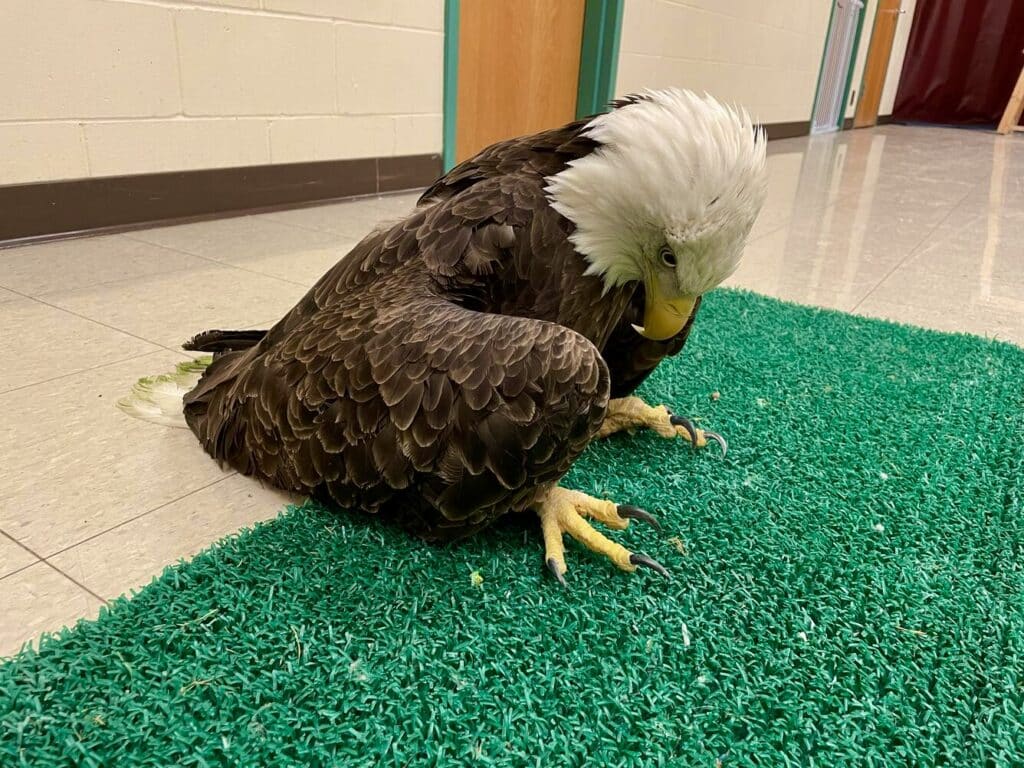
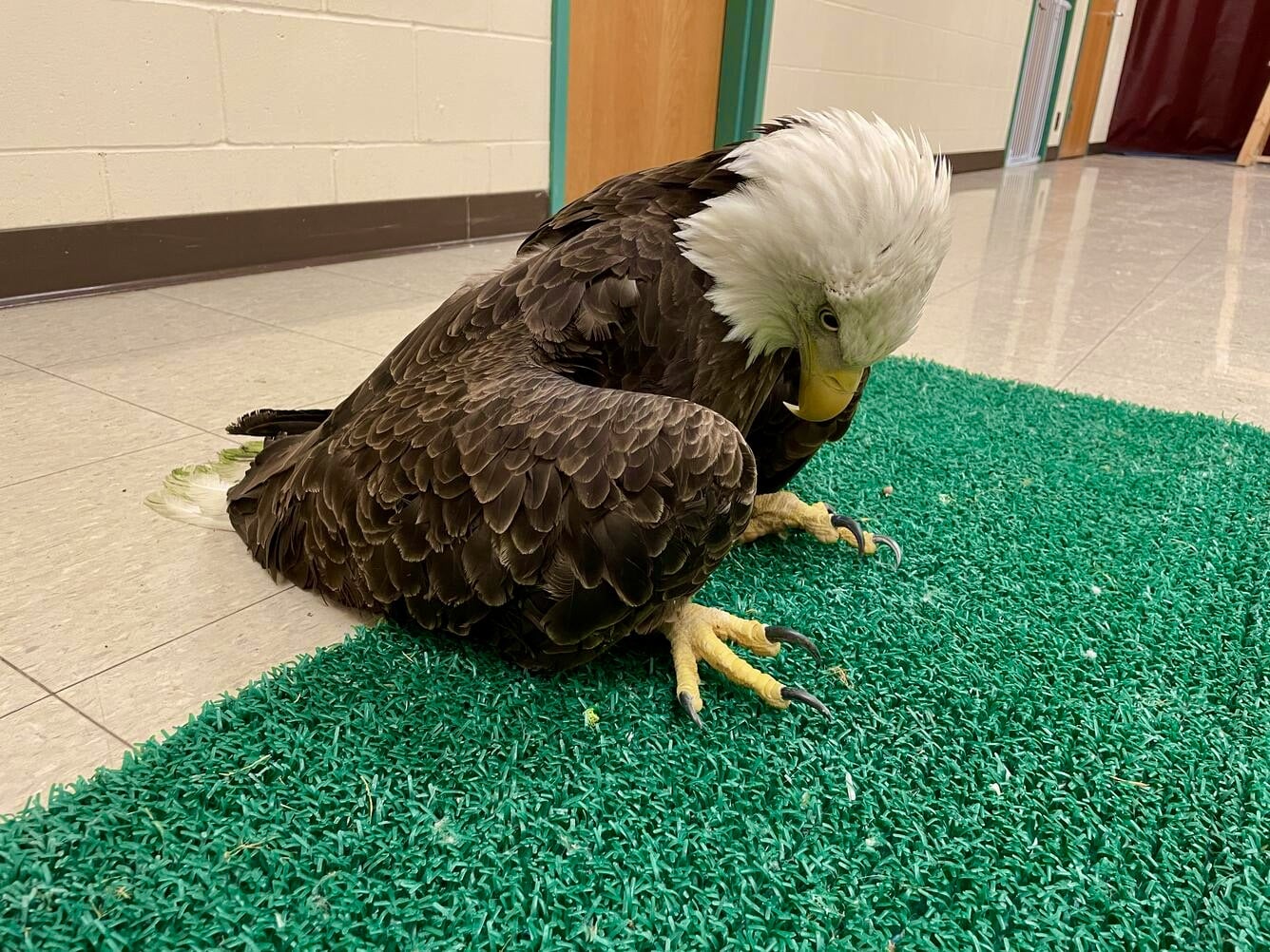
This feast of lead-scattered remains is subsequently eaten by a wide variety of scavengers. All told, this annual jetsam of lead causes 10-to-20 million wildlife deaths, perhaps 15 million doves and other upland birds, tens of thousands of raptors, and countless mammals, such as ferrets, coyotes, badgers, weasels and bobcats.
When it comes to human beings, no one knows how many Americans are harmed by eating meat contaminated by lead bullets. Recently, synchrotron X-ray imaging, which can detect far smaller particles than standard X-rays, has revealed that deer and birds downed with lead bullets or lead shot are seeded with nanoparticles of lead that far exceed levels set by the federal Centers for Disease Control and Prevention for lead poisoning, especially lead poisoning in children.
There is also no safe level of lead exposure, a reality that has led to national bans on lead paint in 1977, lead plumbing in 1986, lead shot for waterfowl hunting in 1991, leaded gasoline in 1996, and the U.S. Army’s transition to lead-free ammunition in 2003.
Taking all this into account, I made the switch to nontoxic ammunition and have now shot 13 elk and a bison with a variety of Barnes X copper bullets, all of the animals dropping in their tracks, as well as many dozens of upland birds with bismuth shot. I am not alone in thinking that these bullets provide superior accuracy and one-shot kills. American Hunter, one of the NRA’s flagship publications, has unabashedly praised the Barnes line, saying, “Every now and then a new bullet comes along that redefines what we think we know about hunting projectiles.”
It’s true that copper ammunition is more expensive than lead (about a dollar more per round than premium lead ammo), but how many shots do hunters need to fill their tag — one or two? And nontoxic shotgun shells are now priced cheaper than some equivalent lead-shot loads.
In this light, I can’t think of a single reason not to switch to nontoxic bullets and birdshot for hunting while we continue to use lead ammunition at rifle ranges, and at trap and skeet fields, where lead won’t enter the food chain. It’s the right thing to do for wildlife and for our own health and that of our families.
Yet on September 17, 2026, President Trump grandfathered hunting with lead ammunition on 640 million acres of federal lands. The NRA cheered his executive order as a “historic moment.”
ENDNOTE: If you have a few minutes and want to learn more, watch this short documentary produced by The Peregrine Fund called Lead It Go about the impact of lead on wildlife and the responsibility of hunters to not do things that harm the places they go.