by Todd Wilkinson
Do special places on Planet Earth need more publicity and human attention drawn to them?
It’s been a question hovering globally for years as sensitive travel destinations buckle from over-tourism, crushing their essence and destroying quality of life for humans in local communities.
Scientists say it’s an especially acute and urgent matter when it involves sensitive habitat for wildlife species seeking out remote backcountry haunts away from hordes of people. Problems arise when those places have their unbothered cover blown by promoters touting their allure on social media yet unconcerned about the consequences of their hyping.
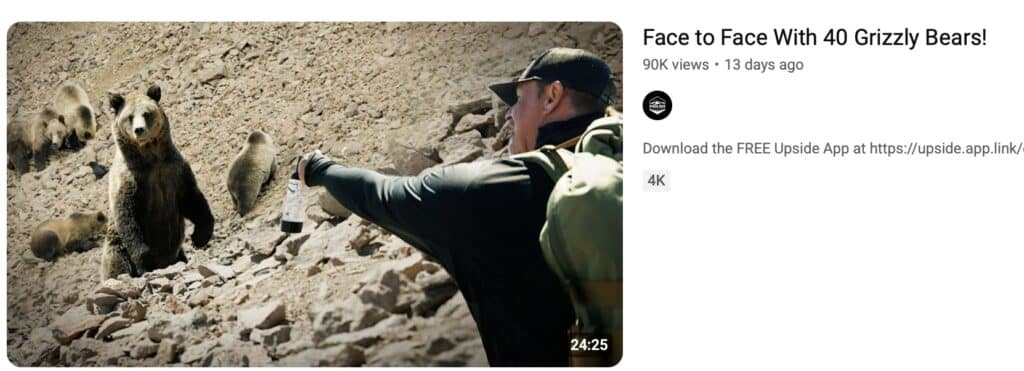
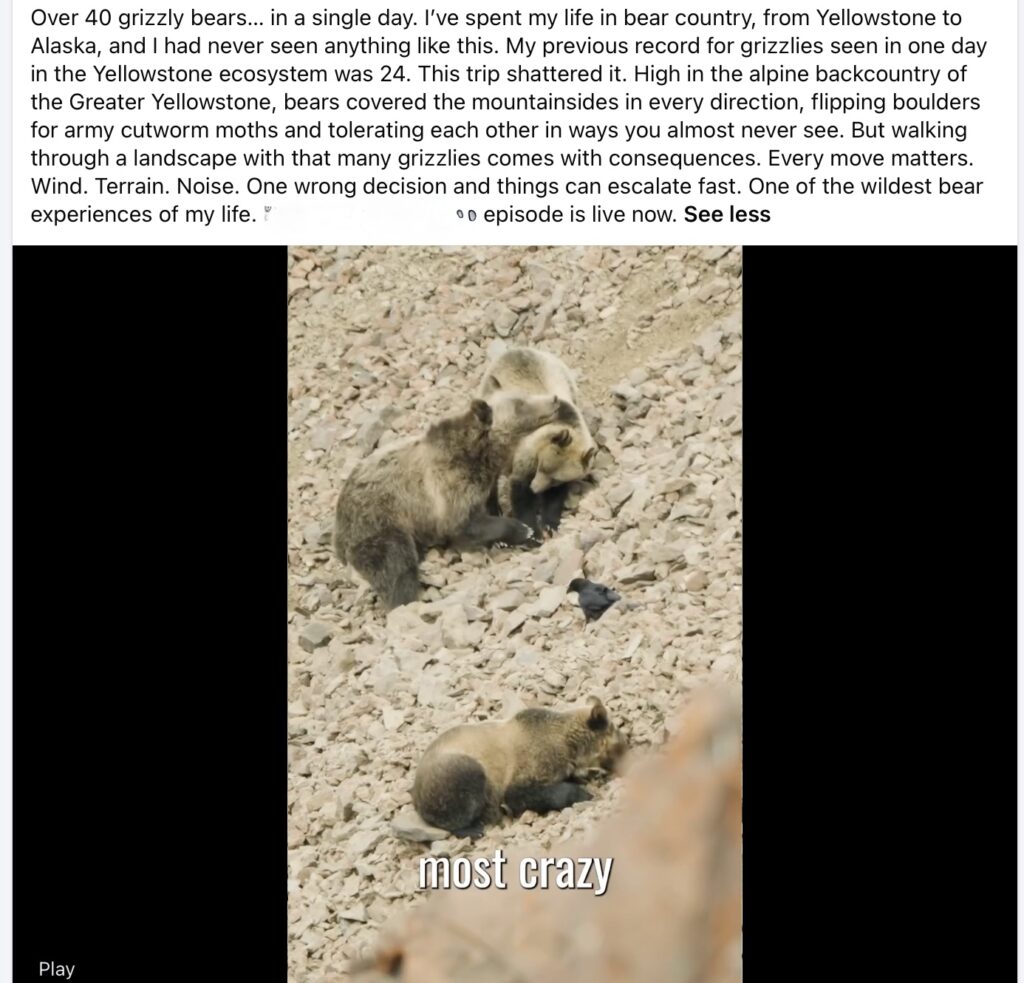
This issue flared recently when a well-known and widely respected Greater Yellowstone cinematographer made what he called educational videos that highlighted the location of Army cutworm moth sites high in the Absarokas of Wyoming east of Yellowstone National Park. There, grizzly bears feed voraciously on moths in large numbers and gain crucial nutrition to get them through the year. The videos were posted this spring on social media channels where they went viral and then were highlighted in a story that appeared in Cowboy State Daily.
Almost instantly, commenters seeing the videos shared them along with remarks such as: “We need to get there. It’s now on my bucket list!”
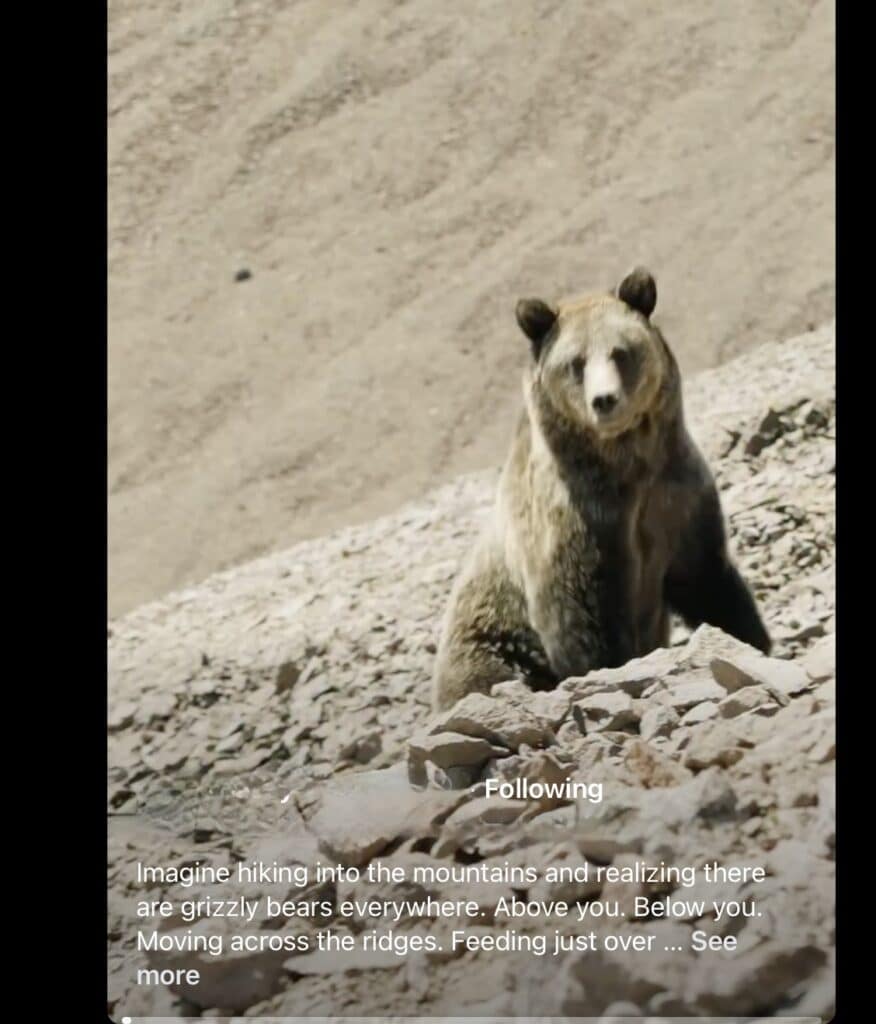
The name of the filmmaker is not being mentioned here to protect him from harassment. We aren’t mentioning the specific locations of major moth sites either. You can, however, see screen shots of some of the posts made by the cinematographer, below, written as introductions to the videos.
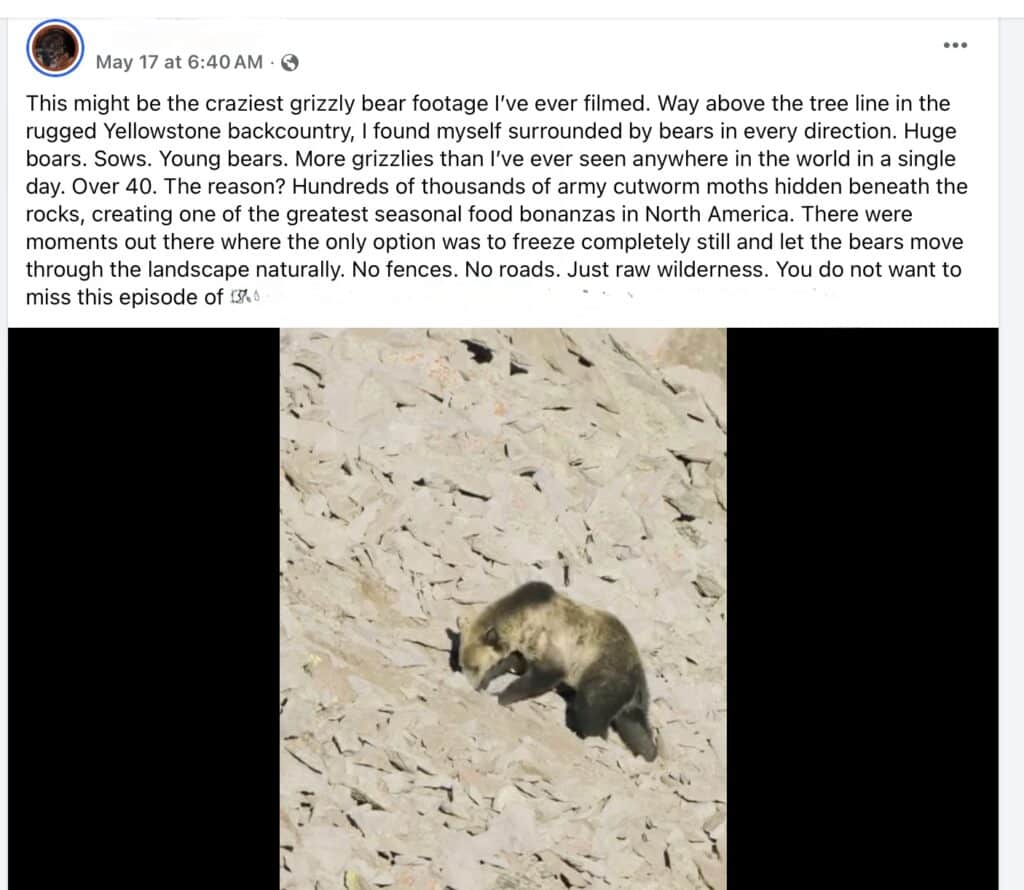
Not long after they appeared, they also attracted a buzzsaw of criticism from scientists and wildlife advocates who say these videos made for social media, compared to instructional videos circulated by agencies, had crossed a line and would exacerbate a growing problem.
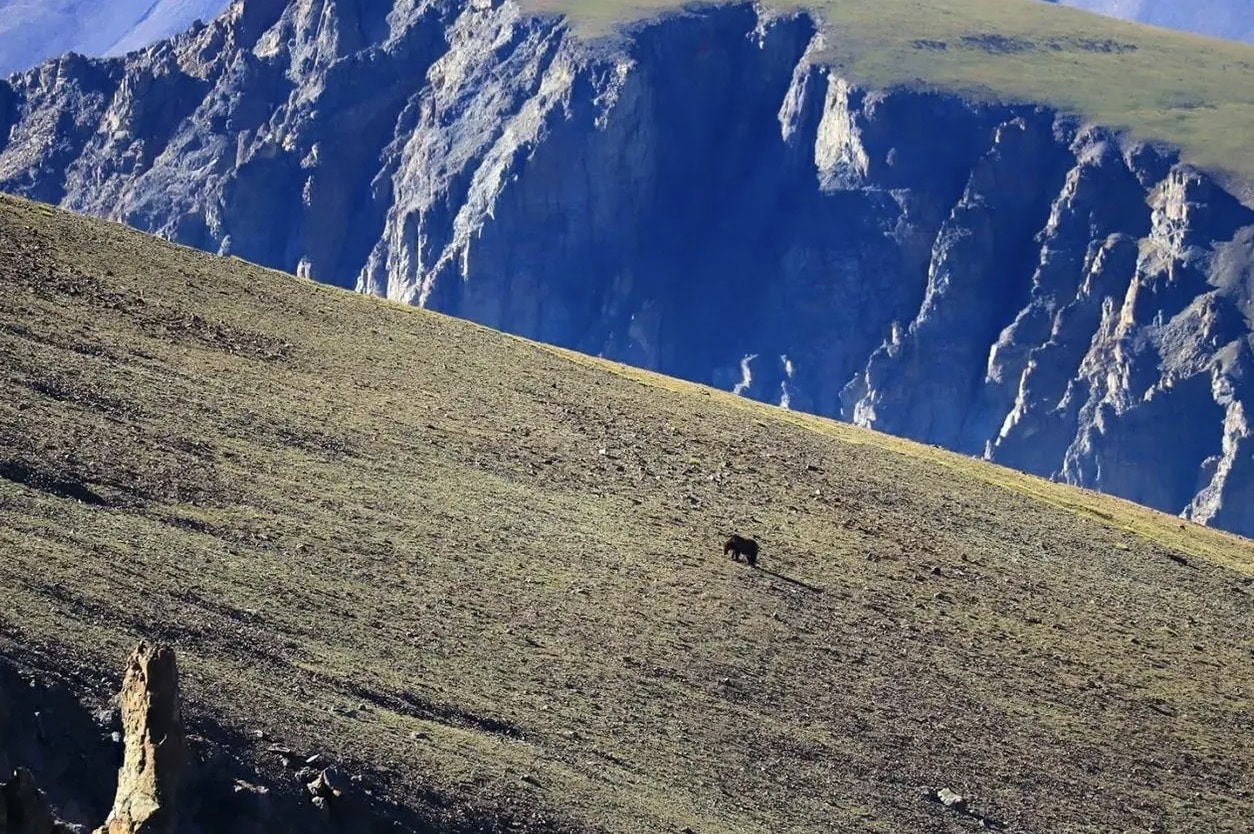
Grizzlies head to moth sites in late summer and early fall. Army cutworm moths that spend much of their life cycle at lower elevations in agricultural valleys migrate hundreds of miles into the mountains where they drink nectar from montane wildflowers and cluster in the crevices of rocky scree slopes.
Some have likened their arrival in the mountains, and bears depending on them to be there, to salmon returning from the sea to spawn in their ancestral freshwater streams and brown bears lying in wait. Of concern, with regard to the moths themselves, is use of pesticides in agricultural areas that can kill moths when they’re at lower elevations and/or climate change diminishing wildflowers in the alpine that produce nectar moths need.
The late David J. Mattson described the history of how moth sites were documented in Greater Yellowstone 40 years ago and how they fit into the puzzle of grizzly conservation and possible delisting. He wrote this insightful piece for The Grizzly Times that he co-managed with his wife, the noted Paradise Valley-based conservationist Louisa Willcox. He passed in winter 2025.
Mattson, who published more scientific papers while with the Interagency Grizzly Bear Study Team than any other researcher, said moths rank among four foods that play a key role in nutrition for the Greater Yellowstone bear population—the other three being seeds from the cones of whitepark pine trees, spawning cutthroat trout, and meat from ungulates. Moths, whitebark and trout all were available in largely remote locations that in addition to contributing to their fitness and reproduction helped keep bears away from human hazards. Whitepark pine are critically imperiled and the phenomenon of cutthroat trout spawning in Yellowstone Park has been dramatically diminished by the presence of invasive lake trout.
Mattson worried about rising numbers of people flocking to moth sites and he wasn’t alone.
More than a quarter century ago, Don White Jr., Kate Kendall and Harold Picton published a paper in The Wildlife Society Bulletin titled “Potential Energetic Effects of Mountain Climbers on Foraging Grizzly Bears” and the focus area was Glacier National Park in northern Montana.
“We compared the activity budgets of climber-disturbed bears to those of undisturbed bears to estimate the energetic impact of climber disturbance. When bears detected climbers, they subsequently spent 53% less time foraging on moths, 52% more time moving within the foraging area, and 23% more time behaving aggressively, compared to when they were not disturbed,” the researchers wrote. “We estimated that grizzly bears could consume approximately 40,000 moths/day or 1,700 moths/hour. At 0.44 kcal/moth, disruption of moth feeding cost bears approximately 12 kcal/minute in addition to the energy expended in evasive maneuvers and defensive behaviors. To reduce both climber interruption of bear foraging and the potential for aggressive bear-human encounters, we recommend routing climbers around moth sites used by bears or limiting access to these sites during bear-use periods.”
Things that disturb bears and prevent them from loading up on calories at certain times of year can add up.
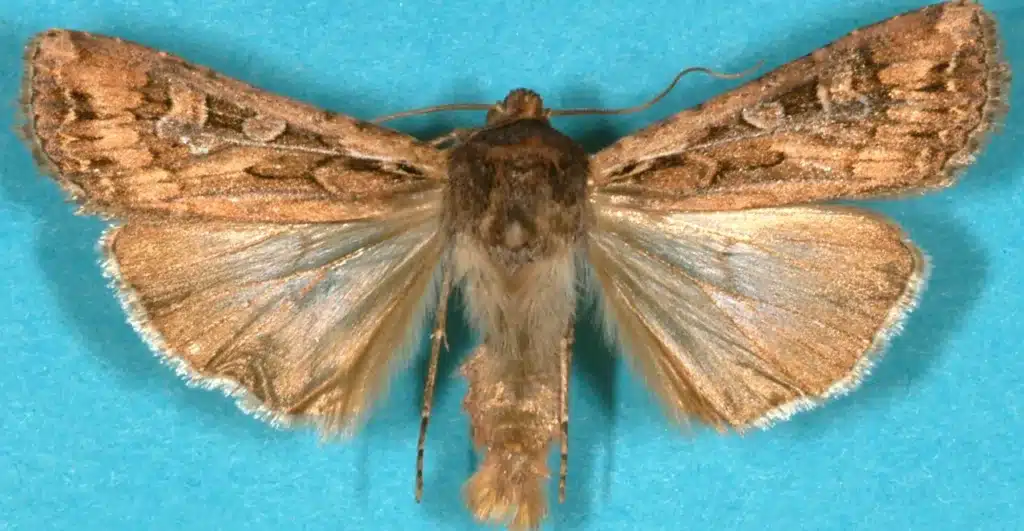
In a 2022, Wyofile reporter Mike Koshmrl wrote a story titled “Mysterious moth-eating grizzlies have a people problem.” He referenced a two-year study conducted by Erika Nunlist, carried out through her tenure at Montana State University.
We’re presenting that study above and you can click on the link. It examined the impacts of humans invading two known moth sites, including the one highlighted this spring by the cinematographer. During interactions, bears avoided people 80 percent of the time. “We confirmed significant human safety and bear disturbance management concerns. Human safety concerns were most apparent in uneducated, and consequently unprepared, mountain climbing groups with small groups sizes,” Nunlist wrote. “Bear disturbance concerns were apparent from numerous interactions that resulted in bear displacement. Overall, we suggest that the concern expressed by managers over human and bear use overlap… is warranted.”
Wildlife officials with Wyoming Game and Fish and the Shoshone National Forest have taken the growing problem seriously and there’s a debate over how to address it.
As Koshmrl pointed out in his reporting, Nunlist said 60 percent of the backcountry users she interviewed were headed into the area for wildlife photography or bear viewing, which is not currently regulated. So far rising numbers of humans have not, as best as researchers can tell, caused severe disruptions but that day could be fast approaching. Andy Pils, a wildlife biologist with the Shoshone National Forest last year made a presentation to members of the Interagency Grizzly Bear Yellowstone Subcommittee meeting in Cody and laid out possible options for managing people, not bears. At present humans gathering around moth sites wander off established trails and there’s no limit to number of people who can converge there.
The impacts on grizzlies by people headed to moth sites is yet another example of how outdoor recreation is affecting wildlife around the ecosystem in both front country and back, and in obvious and subtle ways. As scientists note just because impacts might be subtle or not fully understood yet does not mean they are insignificant. In surprisingly few places is wildlife able to escape us.
On a Bozeman-based listserv comprised of a large community of wilderness advocates, Livingston, Montana conservationist Dennis Glick weighed in. He has been in the Absarokas numerous times on long distance treks near where the moth sites are located but never to visit them. He wrote this recently in response to the circulation of videos on social media showing bears at moth sites: “I have to say, I have very mixed feelings about these sorts of outdoor adventure films that put a spotlight on a wildlife phenomena that, in my opinion, should remain best kept secrets. This is perhaps the most important ‘mothing site’ for grizzly bears in the Greater Yellowstone Ecosystem. Sorry, but the filmmaker’s little advocacy message at the end of his video does not, in my opinion, make up for the potential negative impact that this might have on one of the most important grizzly habitats left in the region.”
Glick was joined by dozens of others who expressed similar criticism. One of them is Dr. Christopher Servheen, former national leader of grizzly bear recovery for the US Fish and Wildlife Service.
The impacts on grizzlies by people headed to moth sites is yet another example of how outdoor recreation is affecting wildlife around the ecosystem in front country and back, and in obvious and subtle ways though just because they might be subtle or not fully understood yet does not mean they are insignificant. In surprisingly few places is wildlife able to escape us.
Servheen worked in that role for 35 years and understands keenly how secure habit and food are essential to sustaining a grizzly population. In his retirement he’s been working as a conservation consultant and is freer to speak his mind than when in government service.
“Humans consume grizzly bear habitat security [just by their presence],” he wrote on the listserv. “In this day and age, advertising that there is a place people can go and see lots of grizzly bears will result in way too many people going there and, I imagine, commercial guiding efforts created to bring people to such sites. Many people who go to these sites will want to tell others about their ‘adventure’ resulting in increasing numbers of people displacing these bears. It will cascade out of control unless such places are closed to human entry.”
Servheen noted that he worked on bear conservation in the Mission Mountains of Montana where grizzlies fed on moth concentrations in the alpine. “This place was on the reservation of the Confederated Salish and Kootenai Tribe. When the tribe learned that people were climbing the peaks to see moth feeding bears or just to hike and the bears were fleeing, they closed the moth feeding areas and the mountains around them for months during the time the bears were there,” he said. “This closure is still in place. The tribe was the first management entity to close grizzly moth feeding sites for the benefit of the bears.”
I was eager to hear more of Servheen’s thoughts and our regular discussions will become grist for a new offering at Yellowstonian.
Going forward and every other week, Yellowstonian and Servheen will address topical issues shaping wildlife conservation in Greater Yellowstone and the Northern Rockies. They will appear under the banner “Conversations from the Green Thicket.” This first installment centers on the ruckus generated about the cinematographer who gathered some footage at distances obviously very close to insect-foraging bruins.

Todd Wilkinson: You believe public education is important in teaching people to give bears space and how to act responsibly if they are near moth sites, but you think the recent videos on social media crossed a line that is beyond education. Why?
Chris Servheen: I was dismayed to see it wasn’t educational but more of an advertisement, obviously shared on social media to entice more people to head up to moth feeding sites. The whole video was done in a way that will lure people up there to do it themselves. It is unfortunate that many people have no concept of the fact that grizzly bears, that seem to be so powerful and invincible, are in fact totally vulnerable to what we do as humans.
Bears at moth feeding sites have a human visitor problem. They are very vulnerable at these sites and the bears using them need solitude, and to be left alone. They have no visual cover and cannot find habitat security when people are there and approaching them. Increasing numbers of people at such sites will displace bears, increase stress levels for the bears that do not immediately run, and drive the most vulnerable bears off these sites.
TW: Some far-away urban human denizens who are fans of voyeuristic social media entertainment might watch the videos and conclude, “What’s the big deal? How can something like this be problematic?”
Servheen: Well, it is a big deal and could lead to a big problem. Moth use at these sites provides a rich natural food source for the bears. It means grizzlies using moth sites are not down at lower elevations where they face higher survival risks from potential conflicts with people, expanding human settlements, agriculture and livestock. Moth sites with little or no human presence provide not only a rich and important source of nutrition but such sites used to be secure from humans. Promotion of human visitation at moth sites will displace bears, reduce intake of moths that are rich in fats, and result in energetic loss as bears are stressed when humans are present at such sites.
° ° ° °
° ° ° °
TW: To accentuate those points, could you help readers here better understand why this is an important issue, in light of the fact that dozens of grizzlies lost a major food source in the center of the ecosystem in spring when lake trout decimated spawning cutthroat trout at Yellowstone Lake and we’re experiencing an ongoing loss of whitebark pine trees that produce highly nutritious seeds bears eat.
Servheen: Concentrated natural foods for grizzly bears are vitally important because grizzlies are big eating machines. They need to put on layers of fat to go into their dens with sufficient stored energy as fat for the females to produce cubs and for all bears to get through the winter. Army cutworm moths are an especially important food for grizzly bears because they contain more energy per gram than butter does. Bears can eat tens of thousands of moths per day when left undisturbed by people. This intake of fatty moths is critically important for these bears to gain sufficient weight to overwinter in their dens. Other concentrated foods like whitebark pine nuts in squirrel caches are also important to bears, but the moths are currently a stable food source for grizzlies unless people, lured by videos like this, go there and through their presence or aggressive behavior push them off the moth feeding sites.
° ° ° °
° ° ° °
TW: How is this different, say, from calling attention on social media, sometimes in real time, to the late Jackson Hole Grizzly 399 and other bears frequenting roadsides in Yellowstone and Grand Teton parks?
Servheen: Bears along roadsides are often adult females with young or subadults. These females choose to be close to roads to be safe from attack by adult male bears. Adult males tend to avoid roads and humans and thus select more secure habitats away from humans. Adult females with offspring and subadults are usually more wary of adult male grizzlies than they are of humans along roads. This is because adult males are known to try and kill cubs and sometimes subadults. They kill the cubs to get their mother to come into estrus so they can be bred by the male.
So adult bears like 399 and her cubs were close to roads at least in part to be safe from adult male grizzlies. Bear use of moth sites is different because these bears are there because the food is there. Humans going to these sites will disturb these bears, raise their stress levels, and some bears will abandon these sites rather than be close to humans who come to see them. This human avoidance is more pronounced at moth sites because the bears are out in the open and have no visual cover to be secure from human disturbance.
TW: Many wildlife managers and conservationists I know are calling attention to the destructive trends of so-called “social media influencers,” adventure and travel magazine writers, and even state tourism bureaus paying clueless ad agency people in distant cities to bring mass attention to fragile areas in ways they never did before. For the tourism industry, there are never too many people or thoughts of saying enough is enough. We journalists who have been writing about Greater Yellowstone for decades and known about the moth sites have kind of adhered to a code of honor by not calling attention to them.
Servheen: The tendency for people, whether as individuals or for commercial reasons, to want to “advertise” adventures and special natural places they have visited like moth feeding sites and, in reality do it to call attention to themselves, is very harmful to wildlife and the places that are “advertised.” We seem to live in a time when revealing some special place or natural event bestows some perverse recognition on the revealer. Thus, we see articles or YouTube media telling people about something that will actually be harmed by public exposure.
° ° ° °
° ° ° °
TW: Magazines and websites still tout “the best wild trails you’ve never heard about,” and “the 10 best fishing holes where you can escape the crowds,” and even “the 10 best places where you need to buy real estate now in order to live your dream life on a ranchette in the wild countryside.” The deluge of people those things set off doesn’t leave them unspoiled for long. How does this bode for a species you dedicated your career to understanding, and needs space free from mobs of people in order to persist?
Servheen: There are way too many people now that subscribe to these sources of information and, seeing videos like the ones we’re discussing, who will flock to such places because they have seen “advertisements” for such special places. They are impressionable but not informed. The influx of people is harmful to the animals and the natural systems themselves.
TW: What worries you most in this case?
Servheen: There could be thousands of people who are now planning to go to moth feeding sites in the Yellowstone ecosystem to see grizzly bears and see if they can exceed or rival the “record number of bears” that the promoter boasted of counting. These people will then make their own social media posts telling of their adventure with a result that means catastrophic numbers of people will be going to these places. If this happens, it will be disastrous for these grizzly bears and will spell the end of these special places.
TW: What’s the remedy? You mentioned the Confederated Salish and Kootenai preventing conflicts by closing access to moth sites in the Mission Mountains out of respect for bears.
Servheen: The remedy is that people should use common sense, take personal responsibility to not cause harm, and not advertise special places used by wildlife. In lieu of that, the land management agencies could close the roads that allow people to drive very close to these special places so getting there requires hiking 7,000 feet up and many rough trail miles. That should thin out some of those who have seen these media posts. But it won’t stop a problem that doesn’t need to be made worse.
Question for Yellowstonian readers: What do you think about highlighting the moth sites. Does it help educate the public to be more respectful or cause trouble? Share your thoughts and we might publish them below. Comments should be on point to the topic of this discussion, be respectful and supported by fact. Send them to us by clicking here.
About Dr. Christopher Servheen: For 35 years, he was the US Fish and Wildlife Service’s national Grizzly Bear Recovery Coordinator for 35 years. He retired from the agency in 2016. He is presently the co-chair of the North American Bears Expert Team of the IUCN Bear Specialist Group, and has served as President and Board Chair of the Montana Wildlife Federation. In 2025, he was inducted into the Montana Outdoor Hall of Fame. He lives in Missoula, Montana