by Franz Camenzind
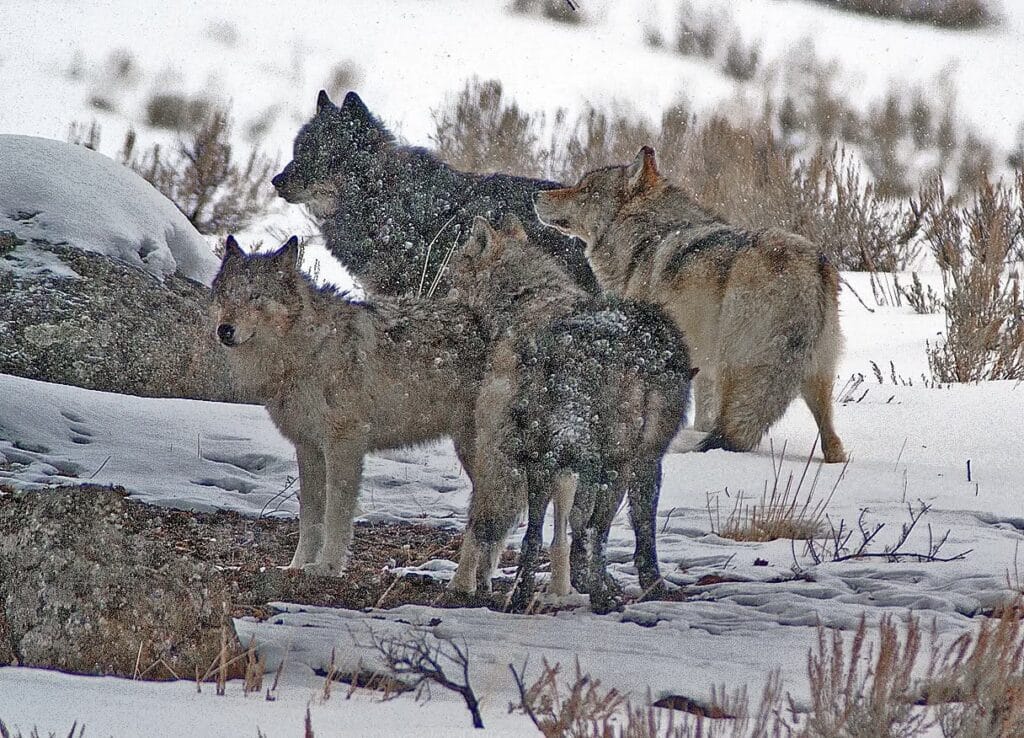
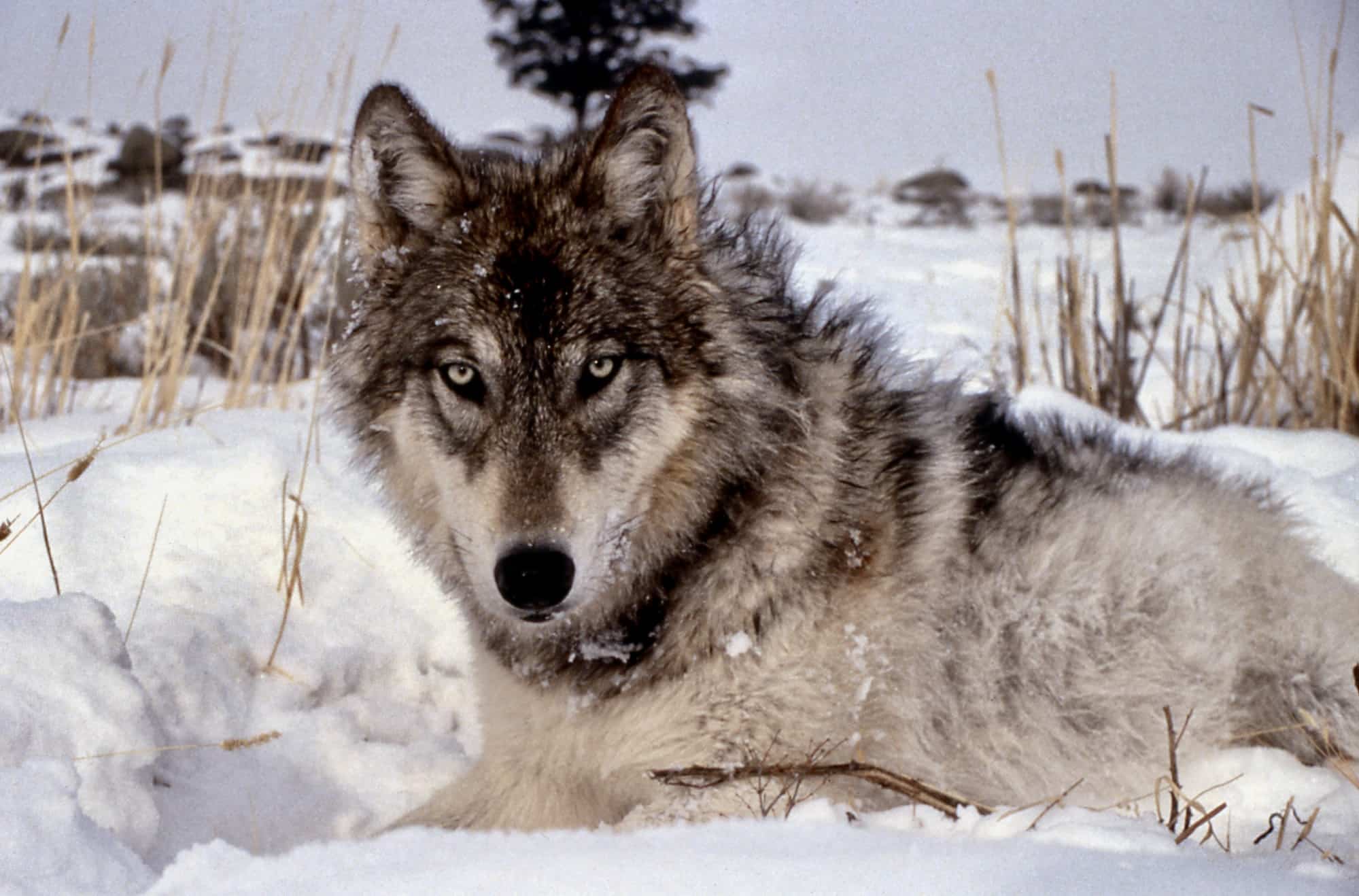
With the sentencing of Cody Roberts, his heinous “wolf whacking” incident near Daniel, Wyoming appears to be behind us, and with Wyoming Legislator’s subsequent passage of an “animal cruelty” law, we have to ask: what, if anything has changed?
Unfortunately, not much.
Anyone can still take their snowmobile and run down a wolf, a coyote, a fox and even a hapless jackrabbit across most of federal Bureau of Land Management, Forest Service, and state lands in Wyoming. t’s still legal to chase the animal to exhaustion and then crush it with a snowmobile. All this remains legal in Wyoming and throughout too much of the West.
The only thing that has changed in Wyoming is that instead of prolonging the life of the tortured animal—for example, putting the broken but live wolf on display at the local bar as occurred in the Daniel incident. The new law says the perpetrator must immediately dispatch the victim. Inflict a quick kill. Forget the torturous miles it ran for its life through deep snow before the quick kill.
And let us not forget that for the rest of the year, these same animals can be shot, trapped, and pursued at any time on most of these same public lands by nearly anyone, and without license or bag limits. This is not fair chase; this is not ethical or moral behavior. This is the deliberate destruction of our wildlife for the perverse joy of it—carried out by zoosadists in the guise of recreation and bolstered by the delusional belief that the killing may benefit someone or something else. It doesn’t. This predator prejudice is not what wildlife management agencies should condone. It’s certainly not accepted by the majority of the pubic.
From its inception, wildlife management has aimed to ensure that desirable species don’t become extinct, and that their populations remain at levels enabling the public to hunt for—to “harvest” an annual surplus of these “game animals.”
Traditionally, harvesting is done by an authorized public in pursuit of free-ranging wild animals and by means that ensures the animal has a fair chance of escape, creating a “fair chase” dynamic. Fair chase also discourages relying on technologies such as thermal technology devises, manned and unmanned aircraft, automatic weapons, and exceptionally long-range firearms, and is mostly restricted to day light hunting. This fair chase code of conduct is meant to produce an ethical hunt. It’s meant to treat the hunted with respect.
All western state wildlife agencies, including the Wyoming Game and Fish Department belong to The Association of Fish and Wildlife Agencies and have formally endorsed the North American Model of Wildlife Conservation. Its members proudly promote fair chase and embrace management strategies which yield an annually predictable, harvestable surplus of game animals- a sustained yield philosophy.
This right-minded approach has been refined to seven fundamental principles which form the foundation of the Model. In part, the principles affirm that wildlife is held in trust by states for all citizens, that best science guides management, that wildlife may only be killed for a legitimate, non-frivolous purpose, that commerce in dead wildlife is eliminated (except for furbearers), that every person has an equal opportunity under the law to participate in hunting and fishing, that wildlife is allocated according to democratic rule of law, and that wildlife is an international resource.
As forthright as this appears, the Model falls short in that it does not emphasize enough that all native wildlife be treated equally. Although the Model’s intent includes all wildlife, it focuses almost exclusively on the merchantable “game” species, those which provide a sustained cash flow for the agencies. By default, this approach leaves the door open for states to place the non-game species on a secondary management tier, at best to be surveilled and when necessary, to initiate management actions when their numbers drop to levels where their disappearance seems likely.
But even within this non-game group, states single out the pests; the predators and those others called varmints and vermin, collectively considered nuisance species. These native animals are for all practical purposes abandoned by the very agencies entrusted with stewarding our wildlife, all our wildlife. Recent reviews of the Model recognize this short-coming, but little has been done to make the necessary changes. Without clear action, states have continued with their tiered approach to wildlife management.
In line with this long-held attitude that nuisance species are just that, Wyoming passed legislation declaring coyotes, jackrabbits, porcupines, raccoons, red fox, skunks, stray cats, and gray wolves as “Predatory Animals.” Under this status, wolves can be killed by any means in over 85 percent of the state and not even managed by the Wyoming Game and Fish Department, excluding the northwest corner near Yellowstone and Grand national parks where they are classified as “Trophy Game.”
Because of these legislated, non-scientific dual designation, the fate of predators has been transferred to the Animal Damage Management Board, which is overseen by the Wyoming Department of Agriculture, whose primary focus is to protect agriculture interests. As legislated , these species are now beyond the reach of the much-touted Conservation Model. Consequently, wolf and coyote whacking and the insidious coyote killing contests can and will continue—just as long as the pursuit ends with a quick kill.
Wyoming also considers native prairie dogs, ground squirrels and marmots throughout much of their range as pests and varmints—nuisance species, leaving their fate to the varmint hunters who care not for science-based management or any semblance of fair chase, but only for the days body count. This “nuisance” designation facilitates the most grotesque killing activities imaginable; the carnival-like atmosphere of prairie dog shooting, celebrated on-line as “Exploding Varmints”, “Red Mist Shooting”, and “Prairie Dog Armageddon.”
This egregious killing of wildlife, this unethical, if not immoral activity continues to occur because the one agency responsible for the wellbeing of our diverse wildlife populations, the Game and Fish Department with support of the majority of our state legislators continues to look the other way. This must change. It reflects horribly on Wyoming, our society, and on the ethical hunting community.
This egregious killing of wildlife, this unethical, if not immoral activity continues to occur because the one agency responsible for the well-being of our diverse wildlife populations, the Game and Fish Department with support of the majority of our state legislators continues to look the other way. This must change. It reflects horribly on Wyoming, our society, and on the ethical hunting community.
A 2012 internal review of the North American Model acknowledged that these heinous activities cannot be reconciled within the principle of legitimate use: “Wildlife may only be killed for a legitimate, non-frivolous purpose,” the review stats. Efforts to positively address this have thus far failed largely due to push-back from a small segment of the shooting public pressuring already reluctant state game agencies. In the meantime, these abandoned species exist under the dark cloud of an unjustified and perpetual death sentence.
Of course, as long as the Model doesn’t adopt 21st century science-based policies, our agencies will continue treating these species as a nuisance and this indiscriminate massacre will continue, even though another of the Model’s principles states that “wildlife is held in trust by states for all citizens.”
It’s the Public Trust Doctrine, a common law doctrine requiring the state to manage wildlife for the long-term benefit of the public, not private interests. Although some land owners welcome wholesale prairie dog shooting, doing so on public lands should not be condoned. A significant portion of Wyomingites oppose these atrocious actions and expect all wildlife to be respected and maintained just as certainly as we do our deer, antelope, moose and elk.
Within the agencies, these native nuisance species exist as the unwanted, even though science clearly shows that they comprise an integral part of functioning ecosystems and should be accepted and respected as such. What occurs today is ethically and scientifically indefensible and contrary to another of the Model’s principles: “that science is the proper means for wildlife conservation.” But again, the Model is largely tone deaf to the wildlife not considered as game species, a convenient opportunity for our wildlife agencies to continue the status quo.
Clearly, what is missing from the Model’s foundation is an eighth principle: “All native species are an integral part of the ecosystem they inhabit and shall be recognized and managed as such.” Herein lies the disconnect between today’s reality and a comprehensive, science-based management of all wildlife. Until Wyoming and the Model’s other agency members recognize and adopt this principle, this wild-West killing will continue.
Clearly, what is missing from the Model’s foundation is an eighth principle: “All native species are an integral part of the ecosystem they inhabit and shall be recognized and managed as such.” Herein lies the disconnect between today’s reality and a comprehensive, science-based management of all wildlife. Until Wyoming and the Model’s other agency members recognize and adopt this principle, this wild-West killing will continue.
In the last chapter of Aldo Leopold’s seminal conservation book, A Sand County Almanac, he presents his famous ”Land Ethic” thesis which emphasizes that man is a part of nature, and not apart from. And that ethical behavior should go beyond human-to-human interactions and should include our attitudes toward our land, the soil, our waters, native plants and our native wild animals- including predators. Leopold famously stated that we “can’t love game and hate predators.” He described ethical behavior as “doing the right thing when no one else is watching—even when doing the wrong thing is legal.” How fitting for today’s wildlife dilemma.
He went on to say that “A thing is right when it tends to preserve the integrity, stability, and beauty of the biotic community. It is wrong when it tends otherwise.” The abandonment of our so-called nuisance species by our wildlife agencies is a de facto and perpetual death sentences for these animals; it does not “preserve the integrity, stability, and beauty of the biotic community, it tends otherwise. It is wrong.
Although it appears Leopold never used the word ecosystem, he clearly understood the concept, the structure and importance of the interactions of all the elements of the environment and that man’s role should be as an equal part of, and not the dominator of the natural world. He famously argued that “to keep every cog and wheel is the first precaution of intelligent tinkering.” Meaning all species, including predators, and vermin are vital to our functioning ecosystems and each piece, each cog should be retained even if we don’t understand the intricacies of their roles. What now exists is an ignorance-based, prejudicial and unmanaged wholesale killing of vital cogs. How long can this go on and expect to have functioning ecosystems and healthy environments?
Aldo Leopold is widely considered the father of modern wildlife management. His words and values ring as true today as they did nearly a century ago when his first-of-its-kind book: Game Management was published. When will our wildlife agencies treat and steward all wildlife as necessary cogs of functioning ecosystems? When will the ethical hunting community demand an end to the unregulated and unethical blood bath now occurring on our public lands? When will we manage our land and all its life forces on an ecosystem basis?
Clearly, a caring and vocal public must promote and live Leopold’s principles and ethics. And only then, with the comfort of knowing we are living our own sermon, can we honestly challenge our appointed agencies and elected officials to do the same. As the late Ruth Bater Ginsberg said: “Fight for the things that you care about. But do it in a way that will lead others to join you.” With science and ethics, we must persist, or many of our fellow beings will perish.
NOTE TO READERS: Do you agree with the points made in this essay? If you have a comment, we’d like to hear from you. We will consider publishing your thoughts below as long as you are responding to the essay, stay on point, are accurate, respectful and make assertions that can be fact-checked. Send your comment here. For those who believe Wyoming’s legal codes justifying the killing of wolves over 85 percent of the state, please explain the rationale.
For further reading: