EDITOR’S NOTE: We are publishing this essay by George Wuerthner below as a perspective piece in which he critiques a bill written by the Greater Yellowstone Coalition, The Wilderness Society and Wild Montana that would seal the fate of the wildlife-rich Gallatin Mountain Range that extends between Yellowstone National Park and Bozeman. Fewer acres would be protected as wilderness so that, essentially, mechanized recreationists would be guaranteed access. Wuerthner says the legislation has little scientific basis. We invite those groups, arrayed around the Gallatin Forest Partnership, to write a piece in response that offers an explanation and lays out the science.
by George Wuerthner
The Greater Yellowstone Coalition (GYC) and two other groups have a new media campaign (that you can also view here on Instagram) advocating support for a piece of legislation it has co-authored called the Greater Yellowstone Conservation and Recreation Act. They say it would “protect” 250,000 acres of public land in the northwest corner of the Greater Yellowstone Ecosystem, but, as with all things, readers here need to understand what really resides—and doesn’t reside— behind that declaration.
Details matter.
The Act, if passed and signed into law, would designate wilderness for a portion of the Gallatin Range, south of Bozeman. But it would also significantly reduce potential wilderness protection for the Gallatin Range and increase recreational use of these mountains that is soaring now and will surely intensify in multiple forms in the years and decades ahead..
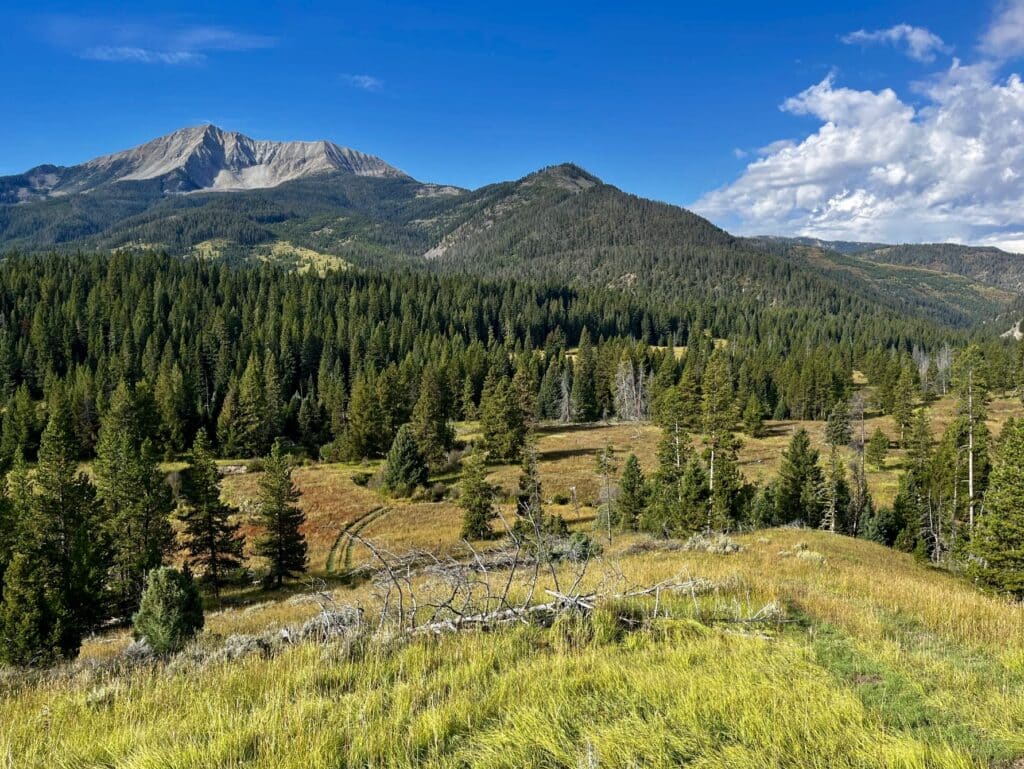
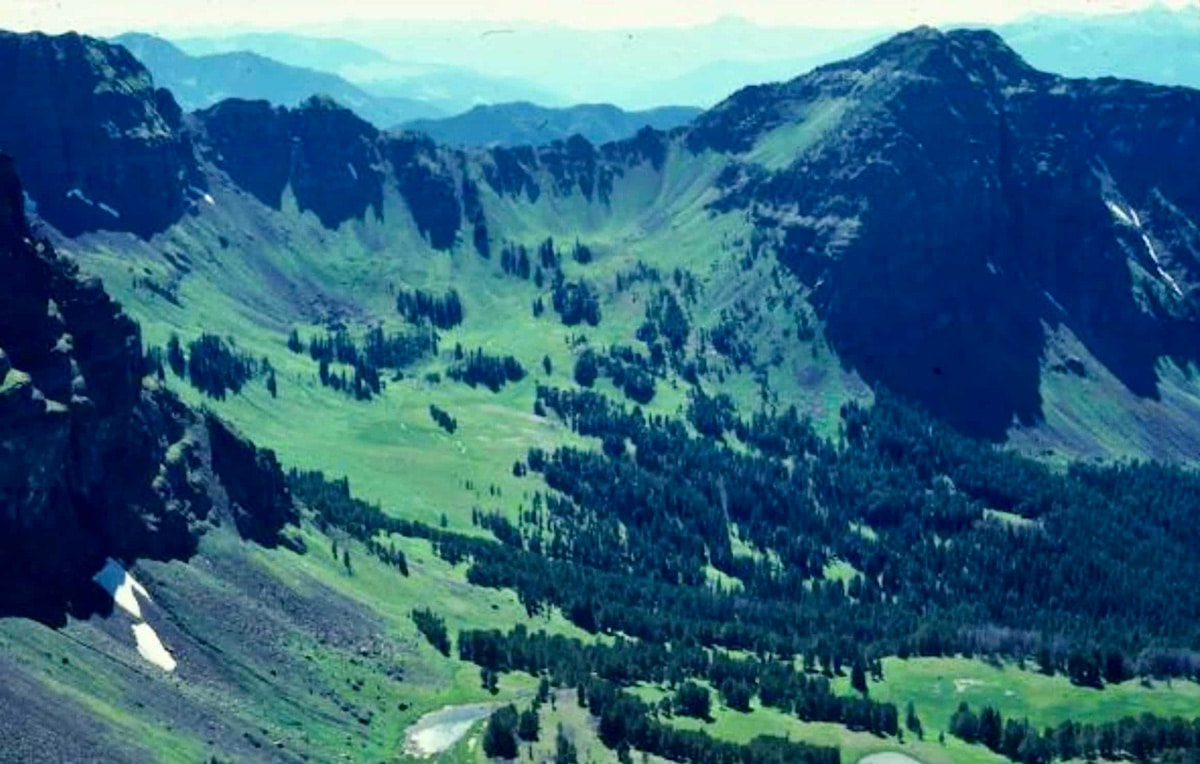
The Gallatin Range is a spectacular glaciated mountain range that runs south from Bozeman to Yellowstone National Park. These mountains are the last major unprotected landscape in the northern Greater Yellowstone Ecosystem. Refer to the 250,000 acre figure that GYC uses, and compare it another estimate of 250,000 that would have a far more favorable outcome for wildlife.
A minimum of 250,000 acres of the Gallatin Range should be designated wilderness under the 1964 Wilderness Act, as advocated earlier by the Gallatin Yellowstone Wilderness Alliance and joined now by a new movement of scientists, citizens from across the political spectrum, business people, outdoor recreationists, hunters, anglers and former land managers. They are joining on because it is truest to wildlife conservation.
GYC, by comparison, is part of an entity behind the Greater Yellowstone Conservation and Recreation Act called the Gallatin Forest Partnership, which includes mountain bikers, ORV users, some sportsmen, the Blackfeet Tribe, and the big three conservation groups in the Bozeman area: GYC, The Wilderness Society, and Montana Wildlands (formerly Montana Wilderness Association), among others.
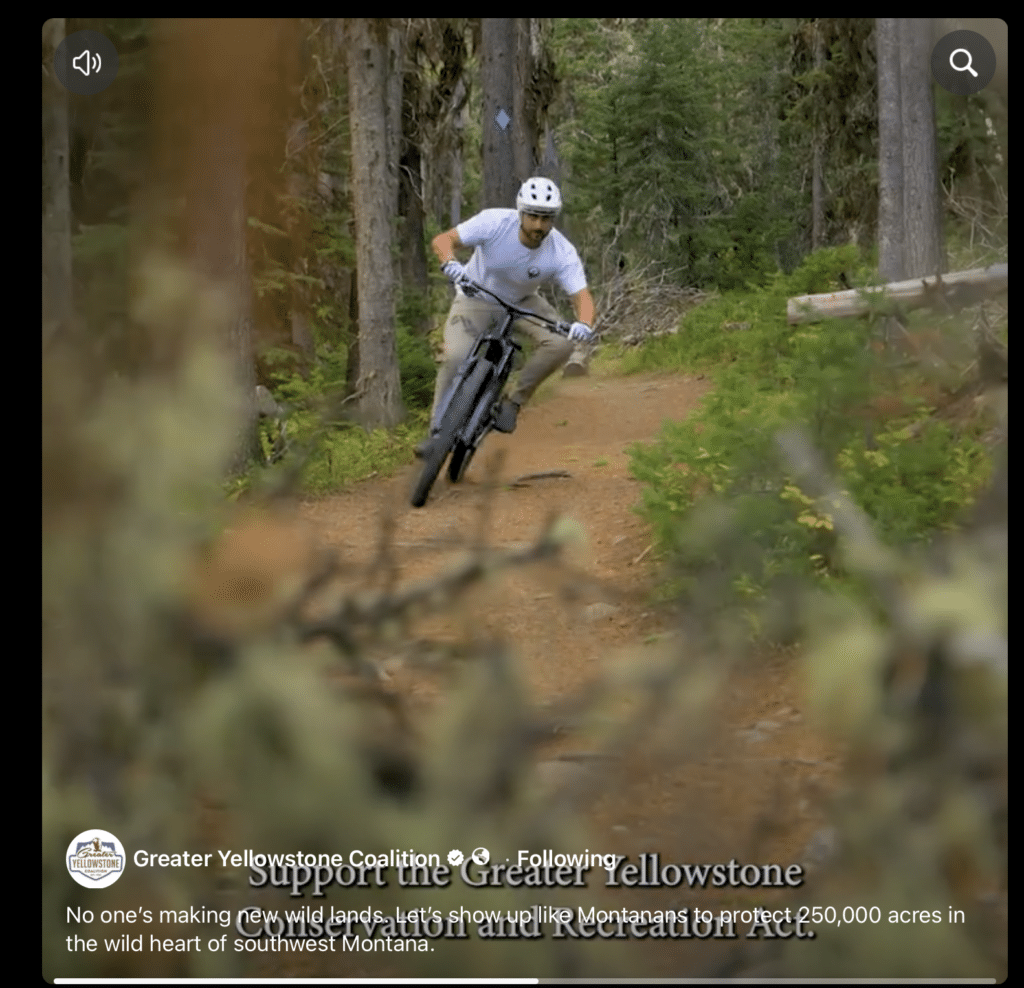
The slick ad of GYC, representing its collaborators, features a series of recreational users, including a speeding mountain biker, a fly fisherman, a couple on horses, and a runner. The ad says the Gallatin Forest Partnership legislation will protect access to the range. Given that the legislation names recreation as one of its key features, it’s not surprising that GYC says nothing in the ad about preserving non-human values such as wildlife habitat, biodiversity, carbon storage, or wildlands. It’s all about human recreational use.
In fact, the image of a wild animal doesn’t appear anywhere in the ad.
Though GYC’s name mentions the ecosystem, this ad says nothing about ecosystem integrity or wilderness or how protecting roadless lands from all forms of exploitation is critical considering climate change. The Greater Yellowstone Conservation and Recreation Act is all about making the Gallatin Range a playground, like others you would find along the Front Range of sprawling metro Denver.
The ad shows how far the organization, for which I once served as its communication director, has strayed from its initial origins and mission. Back in the early days, GYC focused primarily on real threats to the ecosystem, such as logging, mining, oil and gas development, stopping rural subdivisions, and, to a limited degree, even livestock grazing that had created conflict zones. A chief purpose of its efforts was protecting wildlife. Wildlife was always front and center.
Nevertheless, back then, the organization consistently advocated for scientific analysis to portray the ecosystem’s ecological values and to make its case. One of its primary messages was that the cumulative effects of all these activities pose a threat to the ecosystem’s landscape integrity.
Given that the legislation written by the Greater Yellowstone Coalition, The Wilderness Society, Wild Montana and mountain bikers names recreation as one of its key features, it’s not surprising that they say nothing in their new ad about preserving non-human values such as wildlife habitat, biodiversity, carbon storage, or wildlands. It’s all about human recreational use.
—George Wuerthner
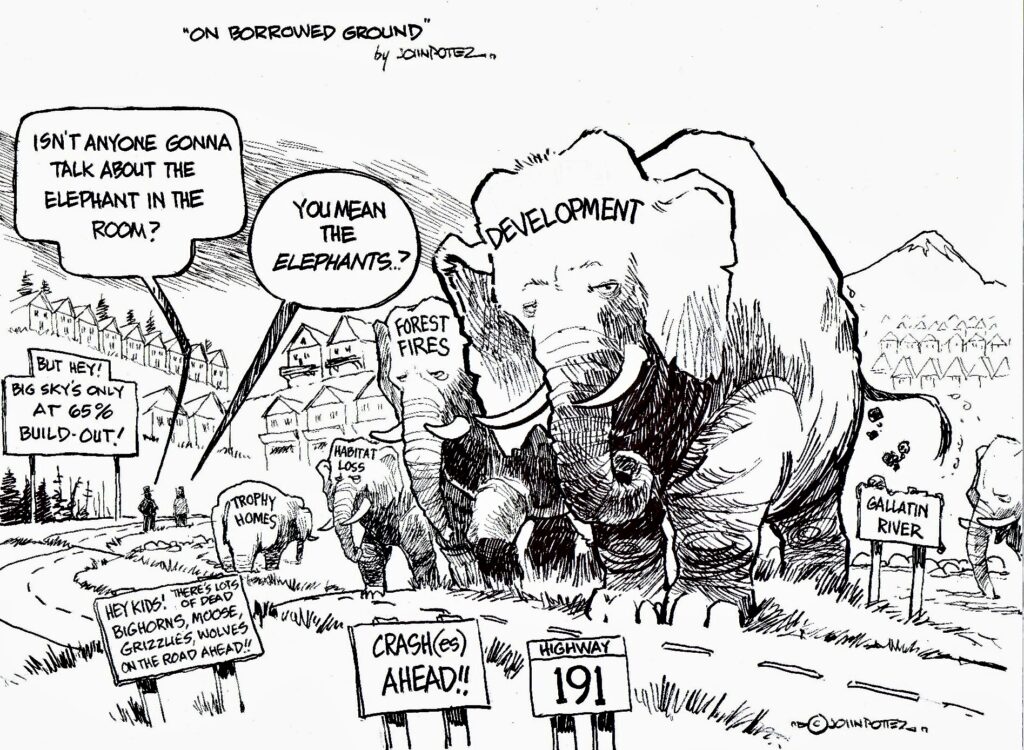
Today, one of the most troubling cumulative impacts comes from recreational use—and yet this is the very activity featured in their ad. No mention of how this might affect sensitive wildlife, such as grizzlies or elk. Nothing about the cumulative effect of new trails or the new roads being built for forest logging in Hyalite Canyon and elsewhere.
And, of course, there is nothing about how the legislation will diminish, wildland protections, deemed critical for maintaining wildlife in the future, and that were recognized as necessary in the past, prior to Greater Yellowstone being inundated by record numbers of visitors, recreation pressures and rural development.
The 1977 Montana Wilderness Act (S. 393) protected the Gallatin Range by designating/creating the 155,000-acre Hyalite-Porcupine-Buffalo Horn Wilderness Study Area, which mandates that the Forest Service manage the landscape for potential inclusion in the National Wilderness Preservation System.
That legislation, authored by US Sen Lee Metcalf of Montana, from half a century ago, says, “The Wilderness Study Areas designated by this Act shall, until Congress determines otherwise, be administered by the Secretary of Agriculture to maintain their presently existing wilderness character and potential for inclusion in the National Wilderness Preservation System.”
It isn’t that its intent is obsolete. In fact, just the opposite. Dedicated wildlife advocates in recent decades, many of whom are in the Montana Outdoor Hall of Fame, did not fumble the ball in efforts to get the Wilderness Study Area over the goal line to new wilderness, but that resource extraction interests, joined by the Custer Gallatin National Forest stymied attempts to make it happen.
The term “shall” is critical language. It means the Forest Service has no discretion but to preserve the wildland character of the area. In my view and that of many others, the Custer Gallatin National Forest has violated this mandate repeatedly by allowing motorized and mountain bikes (wheeled vehicles are prohibited in wilderness) in the Gallatin Range. Now the illegal trespass is not only being rewarded, but those interests are setting the terms for what acceptable conservation is.
In recognition of its wildlands values, the Gallatin Range was initially included in the legislation creating the Lee Metcalf Wilderness in the Madison Range in the 1980s. However, during the legislative debate, the Gallatin Range was removed due to a legacy of railroad checkerboard sections of land that some felt would complicate wilderness protections. It is referenced as checkerboard because that’s what it looked like—alternating private and public sections of land side by side.
In the 1990s, this issue in the core of the Gallatin Range was resolved by several legislative efforts that led to the removal of railroad checkboard squares of private land with the express purpose that the added roadless lands would eventually be designated wilderness, too—in addition to the 155,000 acres identified as Wilderness Study in 1977.
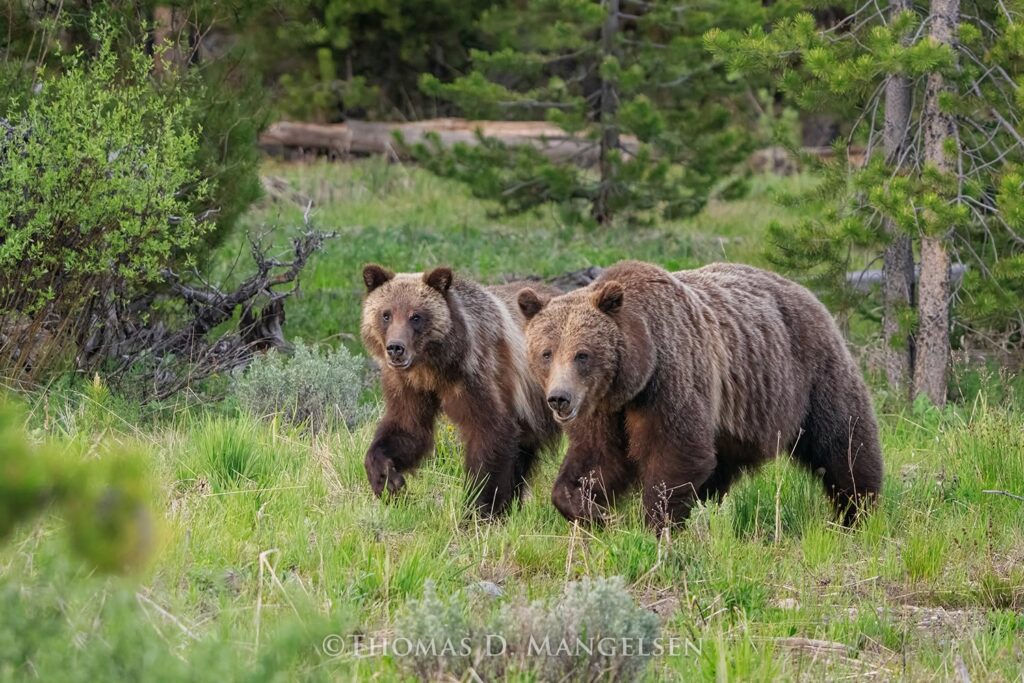
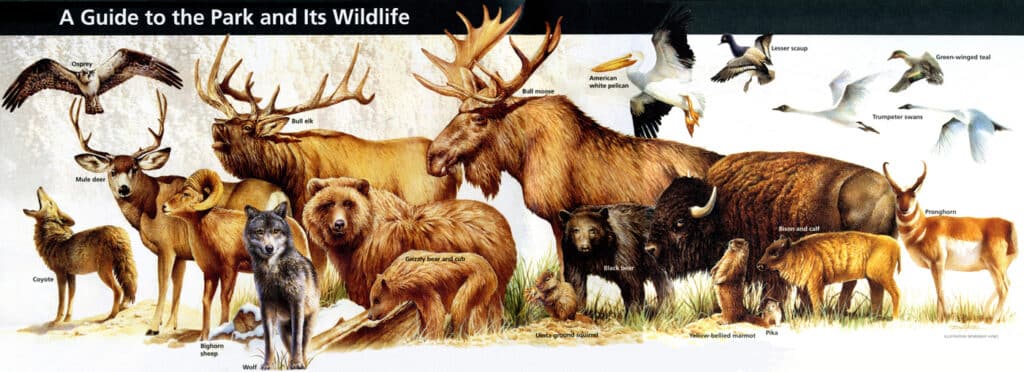
Again, the Gallatin Range contains some of the best wildlife habitat in Montana and Greater Yellowstone, which means the entire Lower 48. In particular, the Buffalo Horn and Porcupine drainages that rise into the mountains from US Highway 191 near Big Sky are critical lands for elk migration, grizzly bears, and numerous other species. They encompass a range of important seasonal habitat. In the northern part of the range, just south of Bozeman, the South Cottonwood drainage is an essential northern extension and wildlife corridor of the larger wildlands.
Inexplicably, all of these drainages are removed from the original S. 393 WSA boundaries by the Gallatin Forest Partnership legislation supported by GYC, The Wilderness Society and Wild Montana.
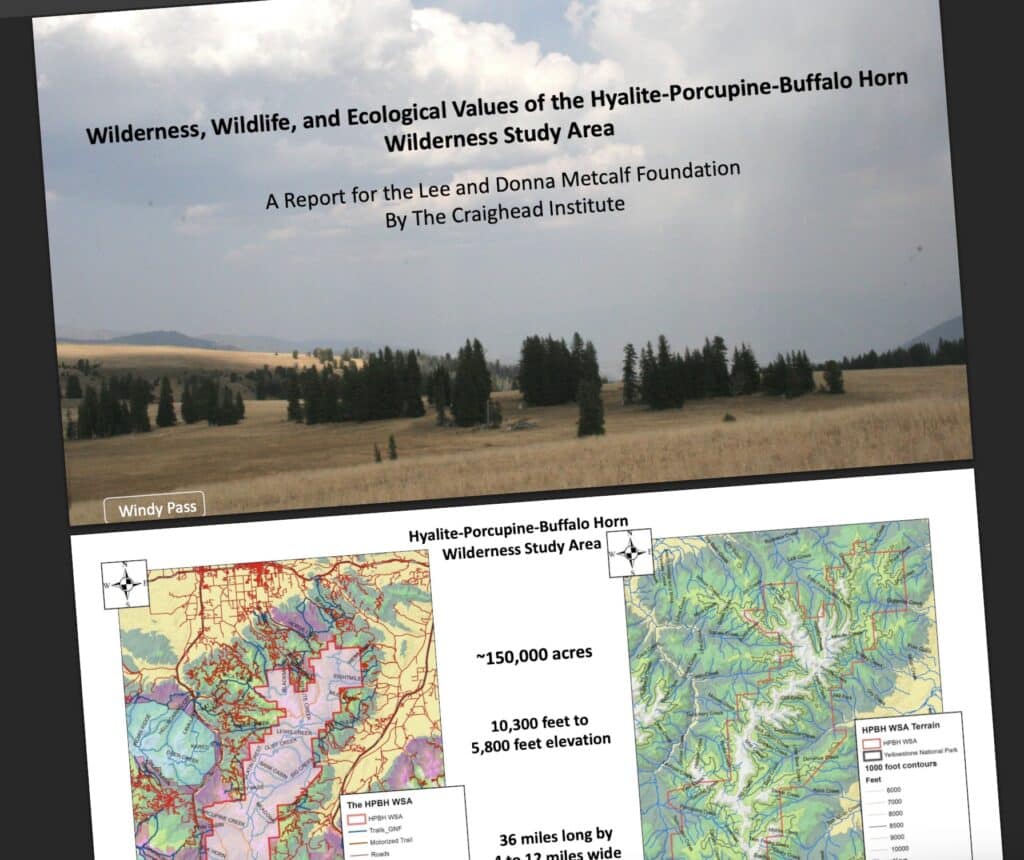
For more on the biological values of the Gallatin Range, see biologist Lance Craighead’s report that was underwritten by a grant from the Lee and Donna Metcalf Foundation The Craighead overview not only identifies the high wildlife values, but how important protected secure habitat will be in the face of intensifying human pressures and climate change.
Apparently, GYC, The Wilderness Society and Wild Montana have not bothered to consult many ecologists or biologists, or they would have a difficult time rationalizing why they are proposing that the best wildlife habitat in the entire range be open to more recreational uses that were foreseen when the Wilderness Study Area was established. Numerous requests have been made, asking those groups to produce the science on which their assumptions of promoting recreation and ignoring its impacts on wildlife are based. So far, we have have not seen it.
Here is what’s noteworthy. Remember, the Hyalite-Porcupine-Buffalo Horn Wilderness Study Area is 155,000 acres. Many more crucial acres of roadless less, as part of land swaps in the 1990s, were in that vicinity moved from being private to public. And there are other roadless lands adjacent, meaning the number of high quality Forest Service lands that qualify for wilderness today is higher, not fewer, than what was imagined by Sen. Metcalf in 1977. And they’re more vital than ever to species like grizzly bears.
The “Greater Yellowstone Conservation and Recreation Act” proposes that only 102,000 acres be considered for wilderness out of a potential 250,000 acres that qualify for wilderness designation, which would offer the best level of protection for wildlife. And again, it doesn’t hold the line but significantly reduces the 155,000 Hyalite-Porcupine-Buffalo Horn WSA (HPBH) by 53,000 acres.
Even more egregious, legislation removes WSA status for the Buffalo Horn and Porcupine drainages, the most important wildlife habitat in the entire range, and creates weak protection as a “wildlife and recreation management area.” It also removes another portion of the original Wilderness Study Area in West Pine Creek south of Livingston by designating a new West Pine Wildlife and Recreation Management Area, in deference to mountain bikers who have been illegally riding inside it, without enforcement from the Forest Service.
Even more egregious, legislation removes WSA status for the Buffalo Horn and Porcupine drainages, the most important wildlife habitat in the entire range, and creates weak protection as a “wildlife and recreation management area.” It also removes another portion of the original Wilderness Study Area in West Pine Creek south of Livingston by designating a new West Pine Wildlife and Recreation Management Area, in deference to mountain bikers who have been illegally riding inside it without enforcement from the Forest Service.
—Wuerthner
Further, the legislation removes Wilderness Study Area status from the South Cottonwood drainage by creating a 70,000 Hyalite Canyon watershed and recreation area that includes the Cottonwood drainage without supporting it with any scientific basis.
While the Act does add 22,000 acres of wilderness designation to the Lee Metcalf Wilderness and 15,000 acres in the Cowboys’ Heaven area of the Madison Range, it’s what it gives up that is concerning. I can tell you that if you survey citizens in Custer-Gallatin gateway towns, few people are conversant about the legislation the slogans in the Gallatin Forest Partnership’s PR campaigns.
Though as a conversation biologist I am an advocate for maximum wilderness everything in response to how much is rapidly being lost—neither of those areas that the the groups tout in their legislation are seriously in jeopardy from any resource exploitation.
The Gallatin Forest Partnership says never fear, it doesn’t matter that the wild acreage it removes from wilderness protection will somehow be safeguard another way—through the creative invention with the Forest Service of new classifications called “recreation” and “backcountry” that have never existed before. Their purpose is not to improve wildlife protection but accommodate representatives of the outdoor recreation industry. And it gives cover to the Forest Service, that through a succession of forest supervisors on the Custer Gallatin, and even after the land exchanges, has been too timid to make the case for wilderness as a gift to future generations.
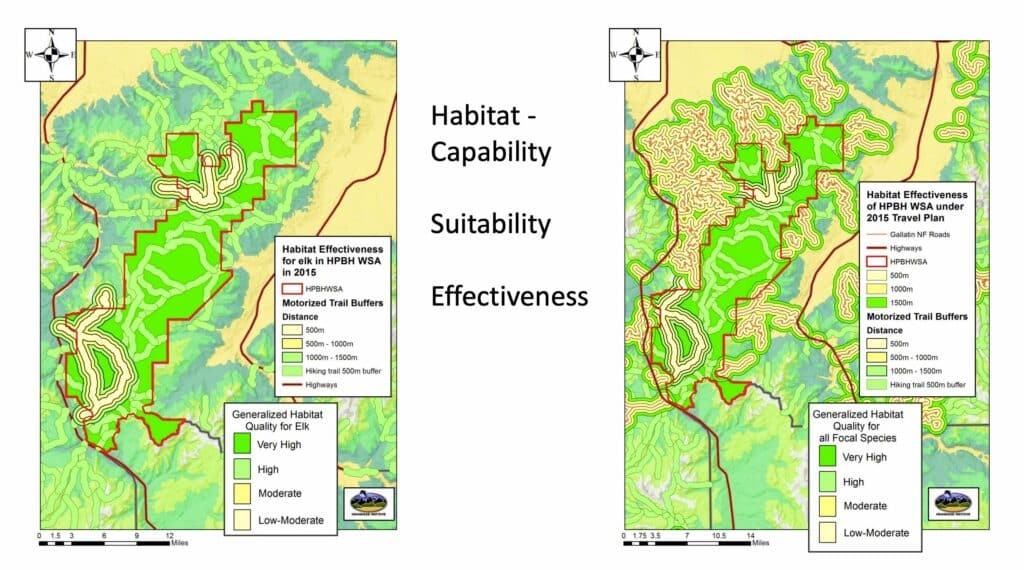
The problem with all these new designations is that we have little idea how well they would/willl work—or not —to preserve wildlands and wildlife, despite their names. They claim that in the Porcupine and Buffalo Horn, for instance, that they will “freeze” the current system in place. But as they well know, the Forest Service on the Custer Gallatin has demonstrated a poor track record of doing just that, of protecting Wilderness Study Areas and other areas from incursion by recreationists. Now, with the agency having a shortage of staff, neither the Forest Service nor these conservation groups who are part of the Partnership can explain how enforcement of any regulations will work when it’s not happening now.
Their new designations complicate enforcement. Wilderness simplifies it.
What we do know is that designation as wilderness under the 1964 Wilderness Act is the Gold Standard for conservation—real conservation that has wildlife conservation as a core value. Anything less than a wilderness designation, when it comes to the future of high quality Wilderness Study Area and roadless protection is a diminishment of protection.
We aren’t creating any more large roadless areas. Indeed, due to the Trump Administration’s many recent management decisions, including rescinding the Roadless Rule, advocating for more logging, reopening closed grazing allotments, and other executive decisions, we need wilderness designation more than ever.
The emphasis on recreation rather than biological protection is emblematic of the shift in values and mission that many so-called conservation organizations have undergone over the past couple of decades. Biodiversity and wildlands preservation are secondary to other values, including advocacy for recreational access, which apparently is now the main goal of GYC, The Wilderness Society and Wild Montana.
We need something that protects the entire ecosystem, both ecological and evolutionary processes and we need to think big. To show how small our present vision is, imagine something momentous, like a Greater Yellowstone National Park. Meantime, let’s not squander what we will never get back if we give it away with the defense it deserves.
Next, in Part 3: Does outdoor recreation really result in more support for more wildlife conservation and, if so, then why aren’t more recreationists having an impact on stopping the rescission of the Forest Service Roadless Rule, the BLM’s Public Lands Rule, gutting of the Endangered Species Act and National Environmental Policy Act, halting proposed hardrock mining on the front door of Minnesota’s Boundary Waters, moves to eliminate wilderness study areas, and preventing energy development from occurring inside documented wildlife migration corridors in Greater Yellowstone, among a much longer list of examples.
For further reading: