
by Todd Wilkinson
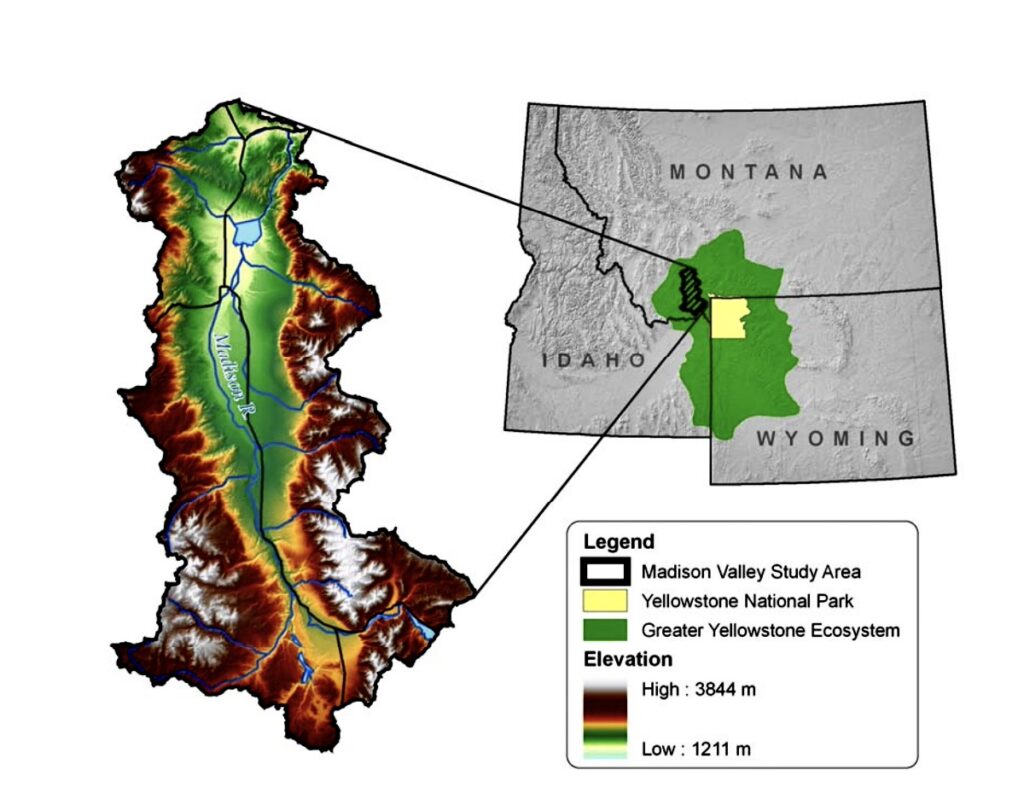
The Madison River Valley of Montana, considered one of the most scenic pastoral dells in the Northern Rockies and home to a true world-class assemblage of wild megafauna and large protected ranchlands, could have a major new interstate running through it in honor of President Donald J. Trump.
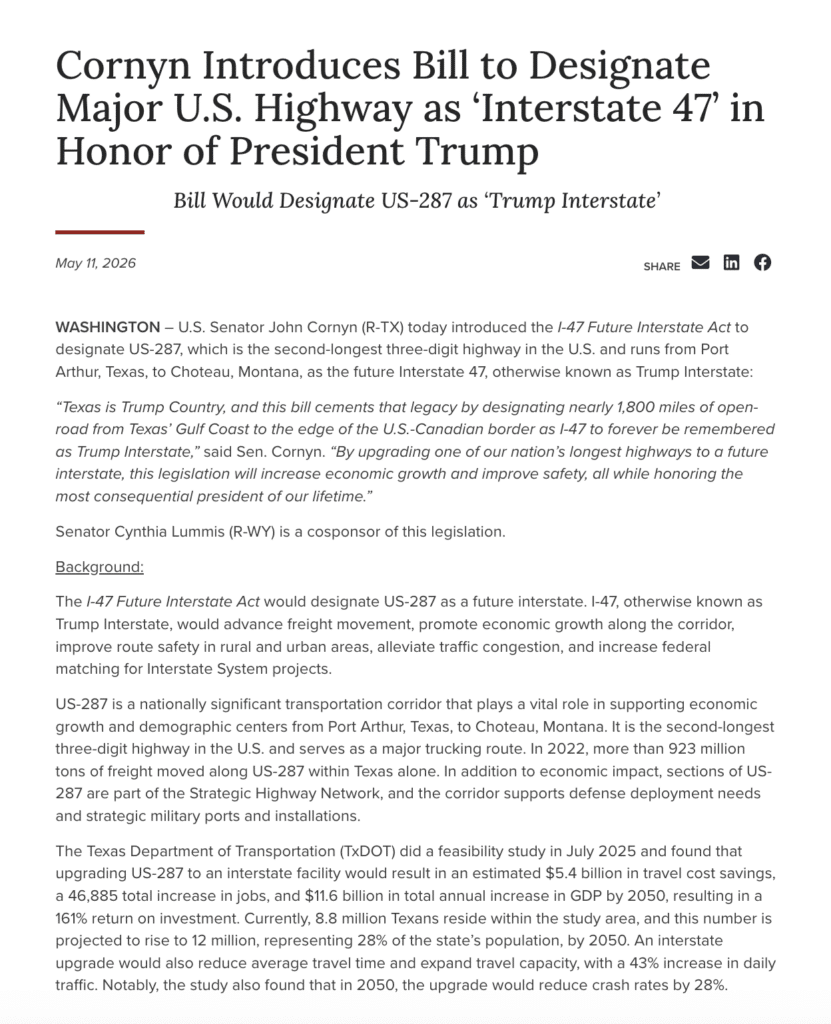
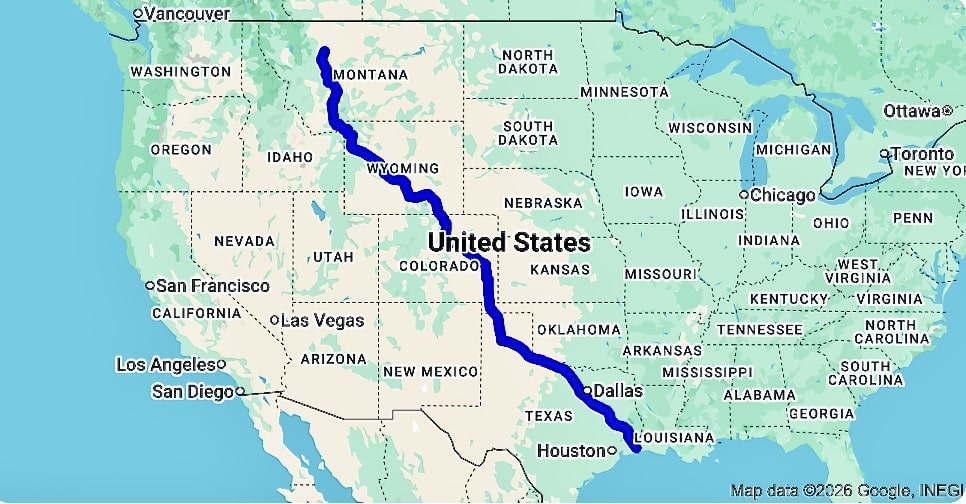
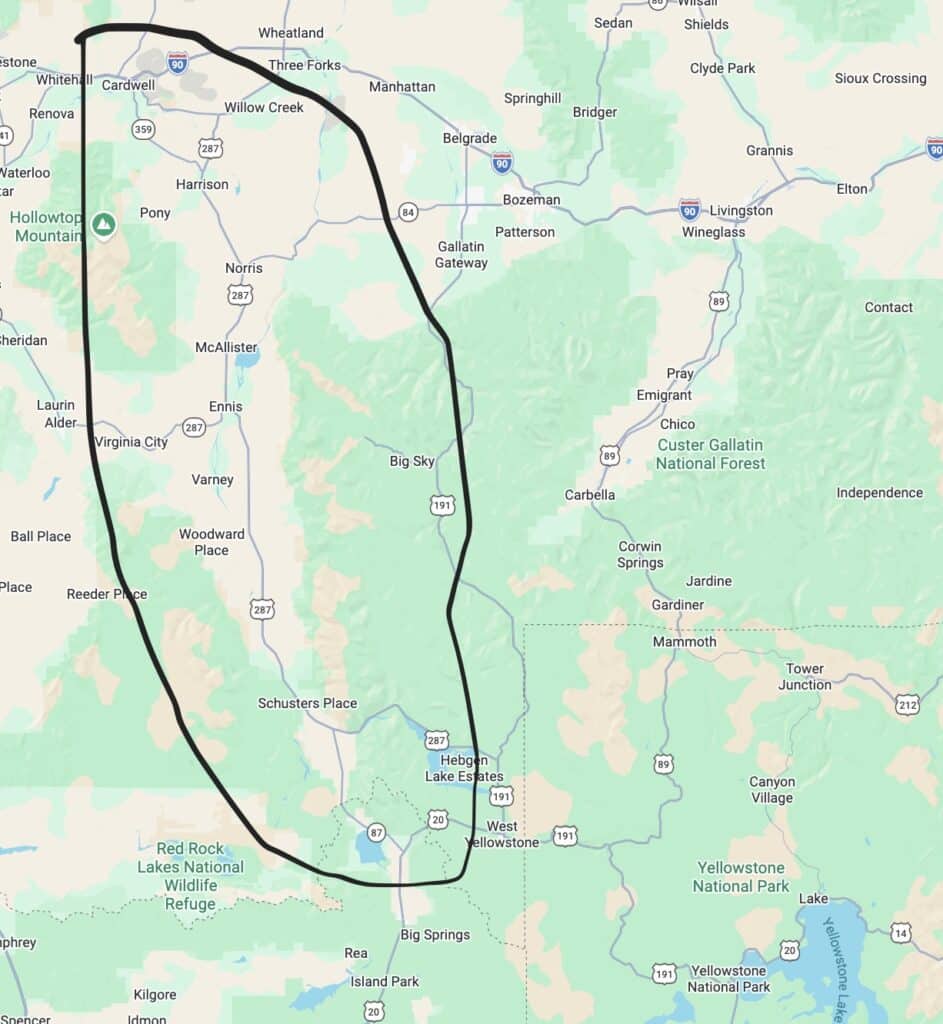
A bill authored by US Sen. John Cornyn of Texas, with support from US. Sen. Cynthia Lummis of Wyoming, would officially identify US Highway 287 as “a future interstate.” Part of a new federal commercial corridor, renamed I-47, it would extend nearly 1,800 miles from Choteau, not far from the Canadian border, southward along Montana’s Rocky Mountain Front, into southwest Montana, through eastern Idaho, Wyoming, Colorado, Oklahoma and Texas to the Gulf Coast city of Port Arthur. The “47” in the new route is a tribute to Trump being the 47th president.
When the bill was announced by Cornyn’s office on May 11, 2026, Madison County residents and wildlife conservationists were sent scrambling to determine if it was some kind of joke. But as it turns out, the “I-47 Future Interstate Act” that would create the “Trump Interstate,” is indeed real and a serious proposal. You can read the official press release from Cornyn’s office below.
When the bill was announced by Cornyn’s office on May 11, 2026, Madison Valley residents and wildlife conservationists were sent scrambling to determine if it was some kind of joke. But as it turns out, the “I-47 Future Interstate Act” that would create the “Trump Interstate” is indeed real and a serious proposal
Yellowstonian reached out to a variety of individuals and all expressed shock. As ecologist Dr. Reed Noss says, nothing is more transformatively devastating to a rural or wild landscape than an interstate routed through it. In fact, billions of dollars in federal spending, aimed at building expensive wildlife overpasses/underpasses and re-engineering highways are an attempt to undo destruction to wildlife habitat and animal movement caused by interstates. Plus, members of Congress, including US Rep. Ryan Zinke of Montana, claim to be champions of keeping wildlife migration corridors intact.
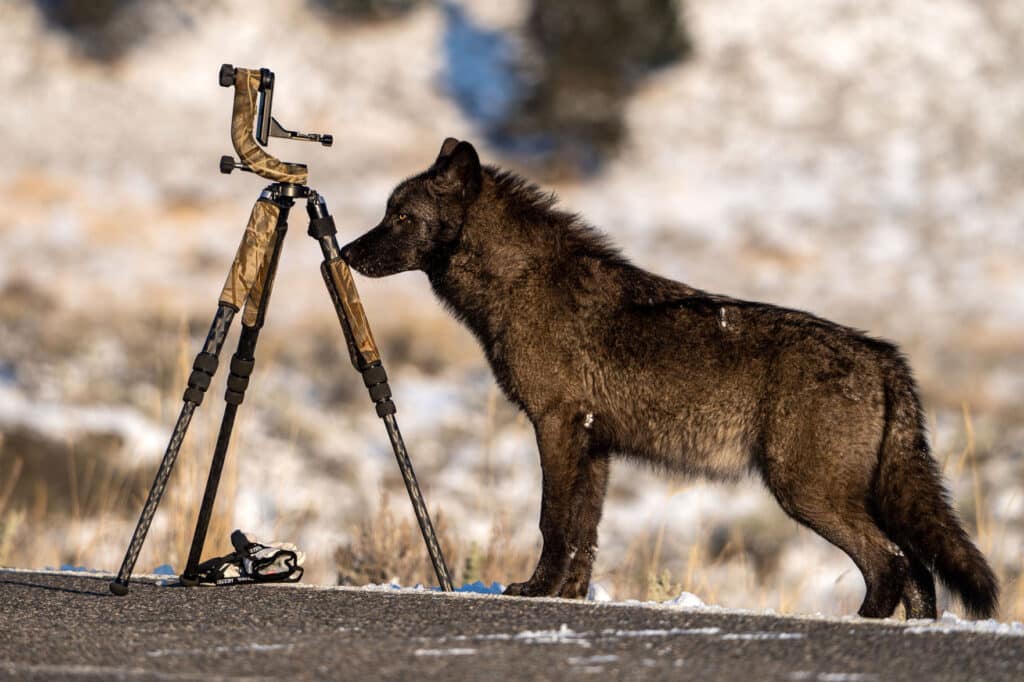
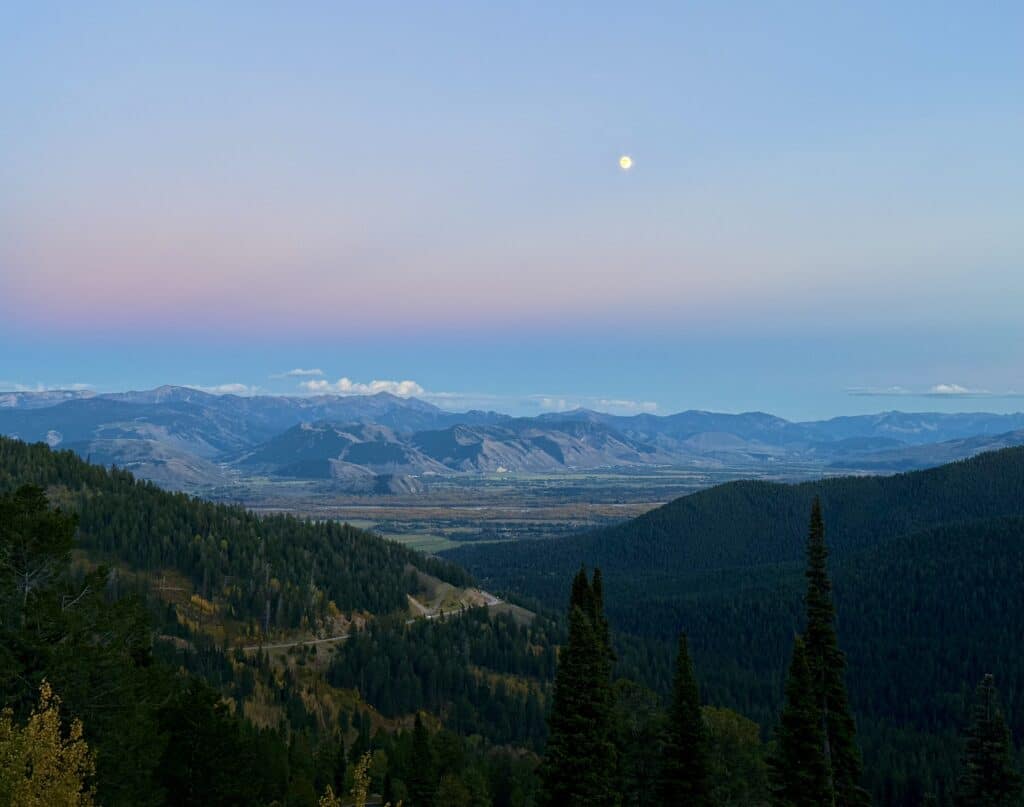
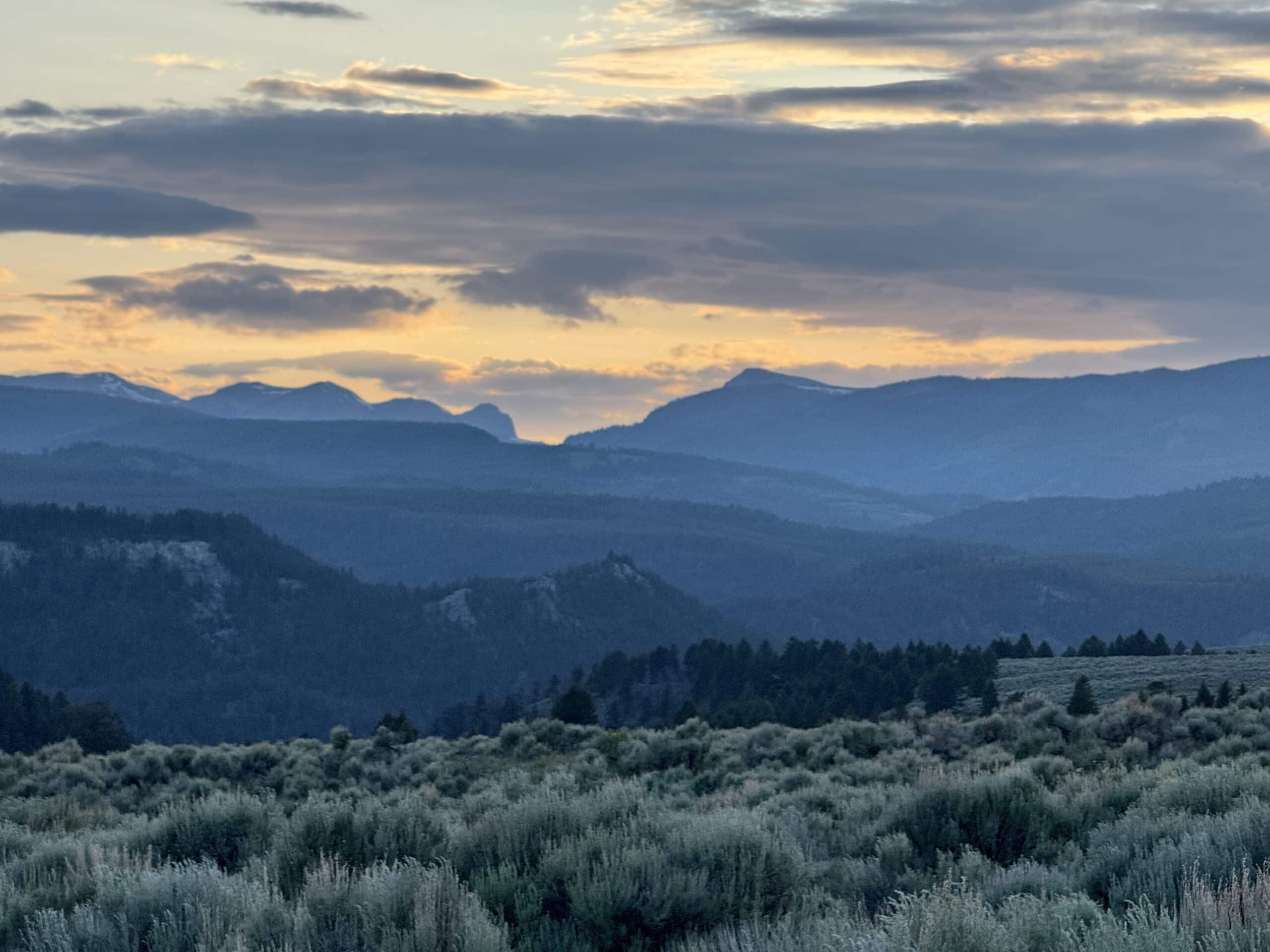
The attributes of the Madison Valley, given its role as a crossroads for wildlife movement in the Greater Yellowstone Ecosystem, have attracted global attention. Around 60 percent of the private land in the valley, which flanks the blue-ribbon Madison River, is protected by conservation easements and it has been identified as a vital wildlife corridor for thousands of elk, pronghorn, mule deer, moose, bighorn sheep as well as carnivores such as wolves, grizzly bears, mountain lions, wolverines and birds. Some of the animals move seasonally from Yellowstone National Park.
All of the above already are threatened by an unprecedented onslaught of rural sprawl, with the nearby Gallatin Valley surrounding Bozeman serving as an example of what happens with there is weak countywide land use planning and no ecologically-informed zoning. Elk and mule deer herds are suffering. Sprawl is fast outpacing private land protection being achieved through conservation easements.
Those who have read Cornyn’s justification say he, Sen. Lummis and their staffs obviously do not understand the fragility of the Madison nor why it’s an important, irreplaceable part of the most iconic wildlife ecosystem in the Lower 48. In the press release, Cornyn said, “By upgrading one of our nation’s longest highways to a future interstate, this legislation will increase economic growth and improve safety, all while honoring the most consequential president of our lifetime.”
With one of the goals being to attract and accommodate a lot more commercial semi-trailer truck traffic and the likelihood that the current Highway 287 roadway would increase from two to four lanes and accommodate higher vehicle speeds, one of the obvious concerns would be disruptions to wildlife and higher rates of animal collisions with vehicles that could not be fixed easily by installing a few wildlife crossings.
“Senator Cornyn’s I-47 Interstate Act is myopic and performative. “A roadway does not guarantee economic growth especially at a time of war and record diesel prices. Montana’s Madison Valley is one of the most intact natural ecosystems in our country,” said Jeff Laszlo, a rancher whose Granger Ranches along US 287 is under a conservation easement and his restoration of O’Dell Creek and its nearby wetland complex are held up as a national model for the dividends of protecting nature. It’s been a reference point for elected officials on both sides of the political aisle.
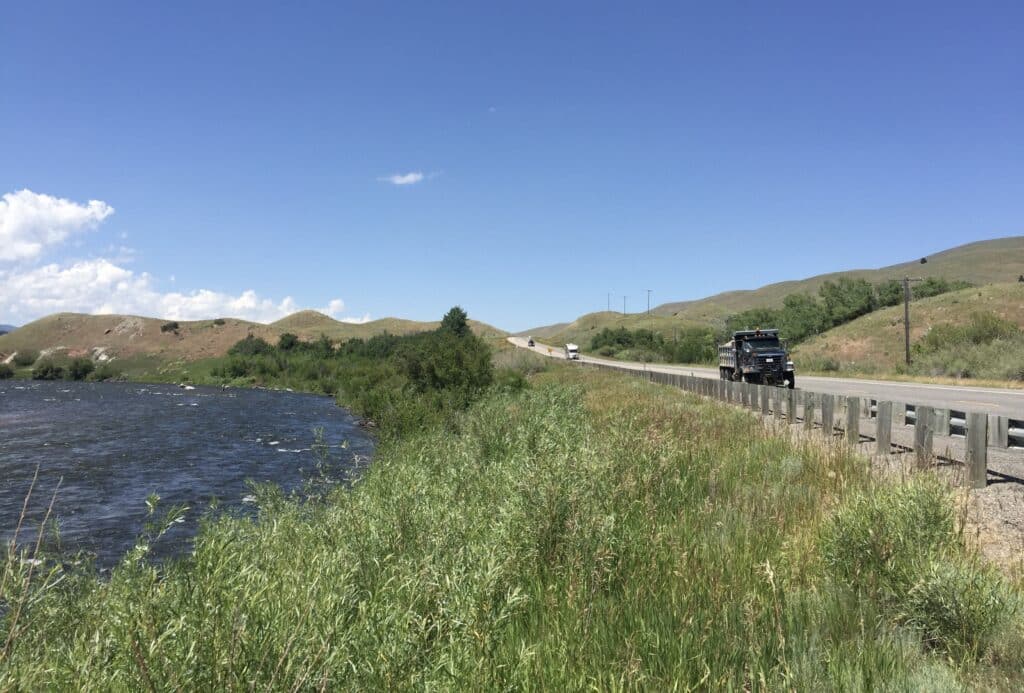
Laszlo said the interstate would severely negate private land conservation efforts. “The last thing that is needed here is an interstate impacting a half century of collaboration to preserve the health and grandeur of the Madison for future generations. The funding that would support this bill would be much wiser spent on addressing climate change that is causing record drought, water shortages and wildfire.”
Laszlo also took a jab at Cornyn’s naivete or ignorance of what’s at stake.”Texas may be Trump Country but the Madison Valley consists of something much larger, going back to Theodore Roosevelt and before,” he said. “The idea that ‘progress at all costs’ is a positive is entirely wrong. Investing in what is left of our natural landscapes is an idea of greater vision and power. I-47 should be rejected as an unneeded and wrongheaded stunt.”
For several years there has been growing concern about rising traffic levels on Highway 287 as it is, prompting an analysis more than a decade ago from the Craighead Institute and Western Transportion Institute at the Montana State University for the Montana Department of Transportion. Authors involved with the study were Lance and April Craighead, Angela Kociolek and the late Brent Brock. They identified a number of collision hotspots. Noteworthy is that the range of large mammals that have been struck and killed along US 287 and nearby roads has more biodiversity than is found in most of the other states outside of Alaska.
A separate study led by Brock, A Wildlife Conservation Assessment of Madison Valley, Montana features a species by species analysis of threats. It identified roads as the top threat to wildlife in the Madison because of their perpetual deepening effects of bringing more people and development into the valley.
“It is painful for me to envision what a new interstate would mean for the area in which I live, in which I have owned property and on which I have paid taxes for a quarter century, and the communities to which I owe my loyalty. Neighbors and family members losing property or suddenly finding their homes adjacent to continual noise, lights, and exhaust. Wildlife corridors severed. Elk, deer, and other animals obliterated by trucks. Acre upon acre, mile upon mile of subdivisions. Increased traffic into my town, Pony, as people from distant places come looking to carve up the landscape so they all can get their tiny piece of paradise.”
—Mark Fiege, a scholar in Western history and local Montana resident who would be negatively impacted by the Cornyn/Lummis bill to create a new interstate through Greater Yellowstone
Mark Fiege spent 40 years in academia pondering how waves of thoughtless development have destroyed the character of many corners of the West. Recently, Fiege retired after being the Wallace Stegner Chair of Western History at Montana State University in Bozeman. The I-47 proposal to him is not an abstract contemplation of consequences. It literally would run within a few miles of his quiet life in Pony, Montana, serving as a shortcut for truckers moving between Interstate 90 to the north and Interstate 15 at Idaho Falls.
“This proposed pork-barrel debacle would be ruinous to beautiful stretches of rural and small-town Montana. The traffic, development, crime, and filth that accompany the interstate system would destroy the quality of life that so many people in Madison County treasure. It would be catastrophic for small communities such as Harrison, Pony, Norris, McAllister, and Ennis. It would be disastrous for fish and wildlife and would wreck water quality,” he said. “Property owners would lose land and homes–quiet refuges from the congestion of modern life—to eminent domain. As has happened before, wealthy, powerful outsiders are lining up to fleece Montana of its land and resources.”
Fiege said development pressure is relentless from proposed AI data centers to sprawl that the Montana legislature, Gov. Greg Gianforte and free-market thinktanks have promoted by hobbling the ability of counties and towns to regulate development.
“It is painful for me to envision what a new interstate would mean for the area in which I live, in which I have owned property and on which I have paid taxes for a quarter century, and the communities to which I owe my loyalty,” he said. “Harrison turned into a giant truck stop accessible by on- and off-ramps. Garish lights of convenience stores and the continual din of traffic destroying peace and tranquility. Neighbors and family members losing property or suddenly finding their homes adjacent to continual noise, lights, and exhaust. Wildlife corridors severed. Elk, deer, and other animals obliterated by trucks. Acre upon acre, mile upon mile of subdivisions. Increased traffic into my town, Pony, as people from distant places come looking to carve up the landscape so they all can get their tiny piece of paradise.”
Fiege said the only people who would benefit from turning US 287 into I-47 are the wealthy and the powerful, and at the expense of hard-working, tax-paying, ordinary American citizens. “And to top it off, the unmitigated gall to name the excrescence after the most unpopular president in all of American history,” he added. “No surprise that decency is lacking in Texas. But now Wyoming and maybe Montana? Merciful God! Where is the governor, the legislature, and our congressional delegation when we need them to now stand up and say no!!
There is certain to be a large eruption of public opinion about the bill and it is unclear where US. Sen. Steve Daines and Tim Sheehy, Reps. Zinke and Troy Downing and Gov. Gianforte, all Republicans, stand. Will they listen to opposition from Montanans or will they support the bill to show their unwavering devotion to Trump? Were I-47 to happen, it would undoubtedly accelerate development not only in the Madison Valley and the critical Raynolds Pass-Island Park, Idaho areas, but in western reaches of Teton Valley.
The Cornyn-Lummis bill obviously would need to win approval in both bodies of Congress before going to President Trump for his signature and any proposal to build a new interstate would be subjected to scientific analysis and public review, provided that laws like the National Environmental Policy Act, Endangered Species Act and other codes remain intact.
Yellowstonian stories on the Madison Valley
Below is the press release issued by US Sen. John Cornyn’s office