by Todd Wilkinson
We at Yellowstonian are rapid fans of God’s game—hockey—and in deference to Wayne Gretzky, let us invoke one of The Great One’s truisms that applies as much to long-term success in land conservation as it does to scoring goals and the heroics of winning games on the ice.
Gretzky said: “I skate to where the puck is going to be, not to where it’s been.”
What the prolific goal scorer and playmaker meant is that opportunity, urgency, and wisdom reside in anticipating the future by taking stock of multiple moving parts and knowing where the flow of action is headed. Where are things headed in the Greater Yellowstone Ecosystem?
Arguably, unless Greater Yellowstone conservationists and land managers are pondering the trendlines of multiple factors, then any notion of wildlife advocates gaining control of the metaphoric puck and scoring goals that insure survival of species are folly. To recap, the inarguable forces shaping the future of wildlife in America’s greatest wildlife ecosystem on a landscape level are: the growing human footprint of development on private land, rising tourism that includes intensifying outdoor recreation pressure plus natural resource extraction, weakening of environmental protection laws and climate change.
There is, however, one industry, manifesting itself in myriad ways, that relates to all of the above.
At the end of the 20th century, Greater Yellowstone and most of the Rockies transitioned away from logging, boom-and-bust hardrock mining, and livestock grazing, which were all “multiple use” industries that came at the expense of native species.
After World War II, ski resorts became the first form of industrial outdoor recreation tethering real estate development with opportunities to play in nature.
Resort development has been bolstered by the prevailing belief, promoted by the manufacturers of gear, that outdoor recreation economies represent a better, more benevolent alternative to resource extraction that pulled stuff from the ground. Is that true? In Taylor Sheridan’s recent Yellowstone prequel, 1923, the main villain tormenting the Dutton clan is a mining magnate named Donald Whitfield who realizes fortunes of the future would be made selling outdoor recreation, real estate and material goods associated with how we spend our leisure time.
In recent years, some mainstream conservation organizations who cut their teeth, and established their reputations, trying to halt clearcutting of old-growth forests and scrutinizing energy development, mining and grazing on public lands have forged an alliance with varying parts of the outdoor recreation industry. Together they have advanced three basic arguments treated as unquestionable gospel.
1. Outdoor recreation advances education, respect for nature and financial support for “conservation.”
2. Greater access for user groups to public lands translates into both more positive “conservation outcomes” and more land protection. This assertion can be summarized in three words: “more outdoor recreation the merrier.”
3. When recreation happens in landscapes vital to the survival of certain species, it improves public support for “conservation” of those species in those places and betters their lives.
In part 1 of this series, “Are Funhogs Loving America’s Wild Country to Death?”, we began with a general observation from novelist Richard Ford, who gave a talk in Bozeman. Ford said humans present assertions as fact over and over again and then if they go unchallenged such claims are accepted as truth, even if they are not. The West still struggles with the consequences of many ill-informed public policy decisions based on such mythology.
What is the evidence supporting the claim that outdoor recreation results in the “conservation” of public lands and, by extension, is it conservation that champions the well-being and survival of wildlife that have been on the land as long as any humans?
Often, some conservation organizations arrayed with the outdoor conservation industry or serving as their silent allies tout vague, sanguine-sounding terms like “balance” and “sustainability” without defining them. We also see these words mentioned routinely in product catalogs for major outdoor brands, likely penned by nature-illiterate copywriters living in cities. They encourage customers to seize their piece of the infinite great outdoors, defy anything that limits their behavior, treating terra firma as if it were a blank slate of emptiness just waiting for them to conquer or colonize it.
° ° ° °
° ° ° °
But sustainability, in application, really comes down to asking “what is being sustained, to the benefit of whom, and at the expense of what?” The same applies to conservation: what is being “conserved,” to the benefit of whom and at the expense of what?
Does “sustaining” the insatiable appetite of the outdoor recreation industry and its customer minions result in achieving “sustainable” and healthy wildlife ecosystems? Further, what kind of “conservation” is being achieved through outdoor recreation? And when talking about “balance”—balance between what exactly?
More precisely, how does putting more humans into finite spaces populated by sensitive species that have limited places as refugia improve their prospects for survival? This also applies to industrial strength nature tourism where horror stories exist in places like the famous African Serengeti with out of control safari guides, delivering their clients to venues to get better photographs, have actually impeded the mass movements of mega-fauna.
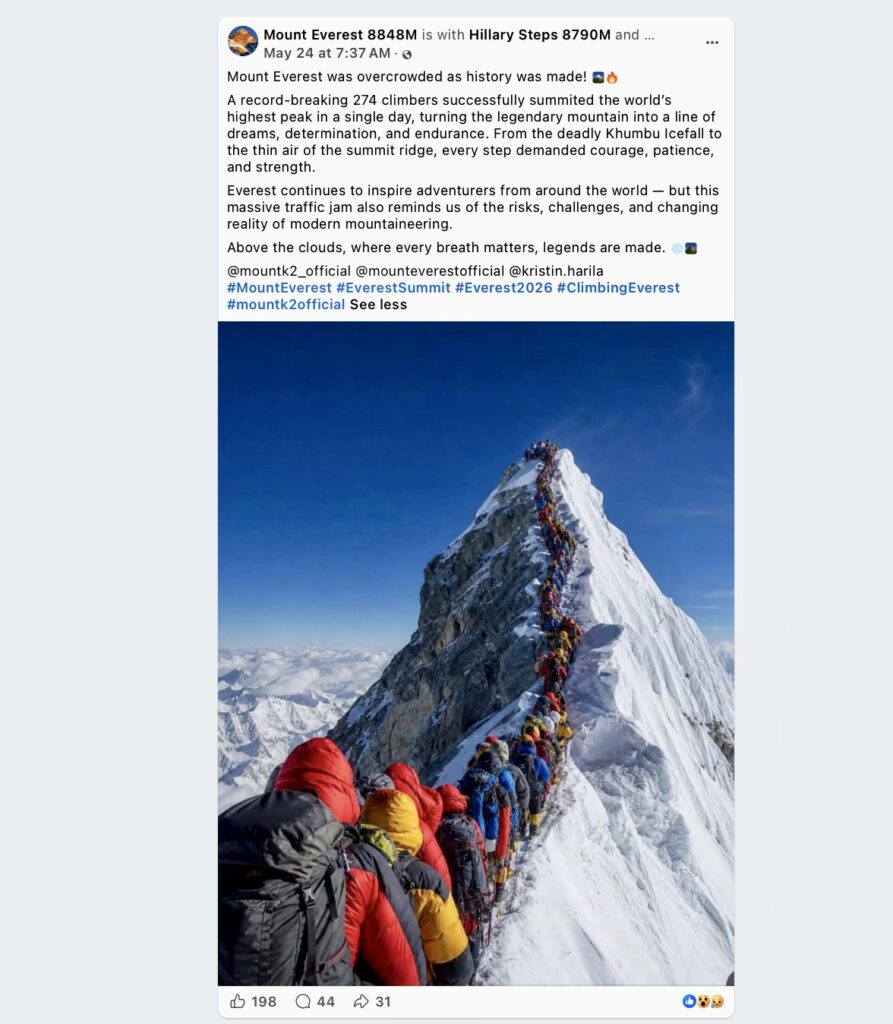
Or, to cite an example of interest to adventure-minded souls in mountain towns, consider the mess on the slopes of Mt. Everest, tallest peak in the world, viewed by locals in Nepal as sacred yet transformed into the ultimate icon of earthly indulgence for those with big egos and bank accounts. Recently, author and ardent proponent of the climbing industry, Jon Krakauer, has acknowledged on book tour for an update to his best-selling Into Thin Air that there’s a huge problem with the way adventure is monetized at the expense of place.
° ° ° °
° ° ° °
Is this the reason why the outdoor recreation industry and partnering conservation organizations often downplay wildlife in consensus and collaboration efforts and almost never are able to produce science supporting their push for more public access or settling for less protected status?
Looming large is this curiosity: how often are we recreationists, who zealously insist upon claiming more public access for ourselves, willing to then give it up if it becomes clear those activities are having deleterious impacts on wildlife? By indulging our insistence for more terrain today, are we enabling wildlife to to exist in the future of our descendants? In an iconic wildland bioregion like Greater Yellowstone, if “wildlife conservation” is not the cornerstone of “conservation” then what, exactly, is being sustained? What is a wildland absent its wildlife?
Looming large is this curiosity: how often are we recreationists, who zealously insist upon claiming more public access for ourselves, willing to then give it up if it becomes clear those activities are having deleterious impacts on wildlife? In an iconic wildland bioregion like Greater Yellowstone, if “wildlife conservation” is not the cornerstone of “conservation” allegedly being achieved, then what, exactly, is being sustained?
Many recreation specialists working for federal and state land management agencies, as well as lobbyists for the outdoor recreation industry and leaders of some conservation organizations, evade these questions. When I’ve brought them up as a journalist, they’ve treated the inquiries with hostility or suggested that even raising them is an act of betrayal—even though the agencies that conservation groups exist to hold accountable have a public trust duty and in many cases legal responsibility to protect and preserve public wildlife.
The premise that “recreation equals conservation” has been spoken often and yet rarely has it been challenged or scrutinized by conservation organizations or, for that matter, by the largely urban media. Right now, I can name a few media outlets which purportedly call themselves advocates for “protecting public lands,” but which, with board members connected to outdoor recreation, will not touch investigating impacts on wildlife.
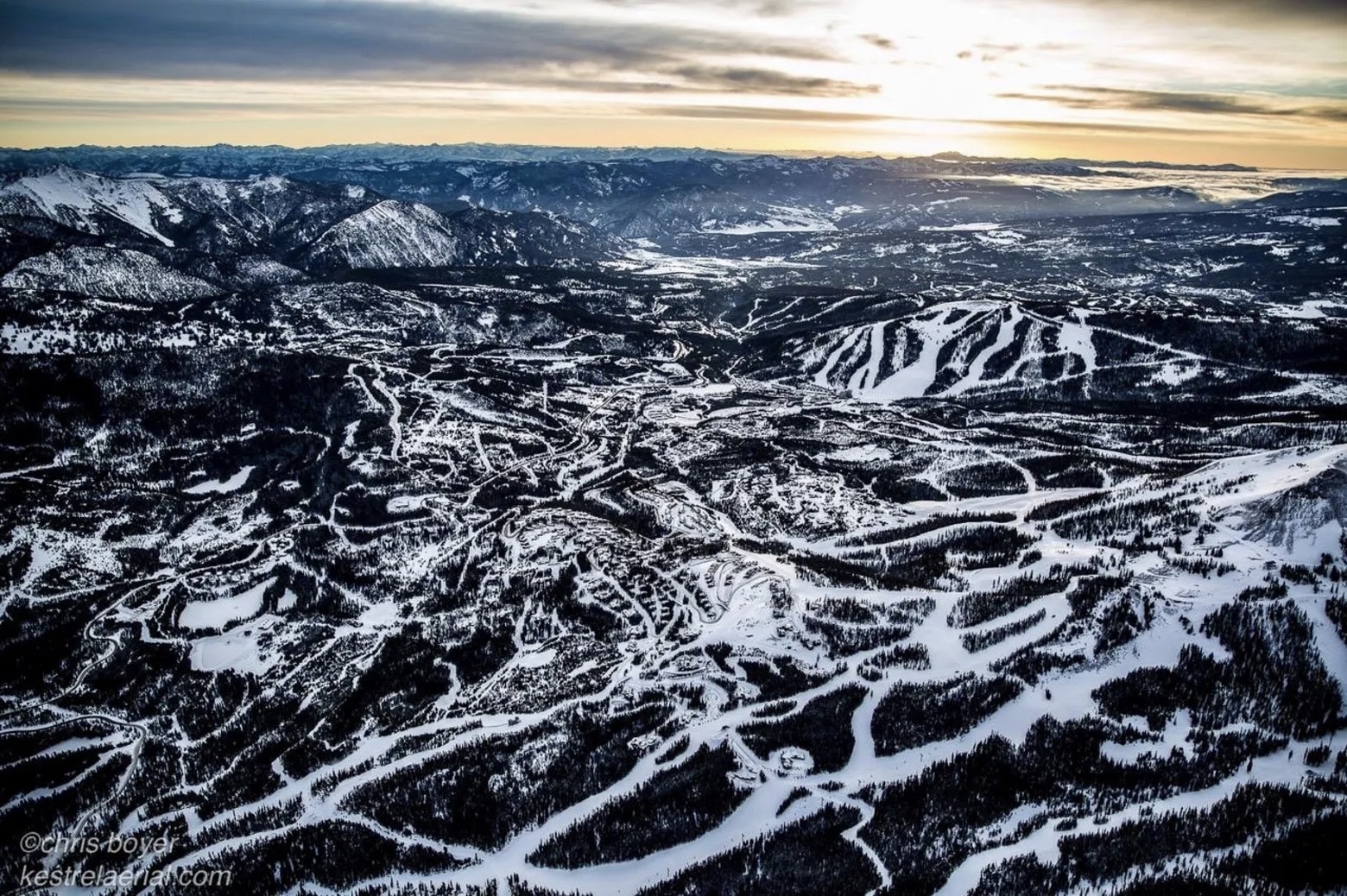
Examples in Greater Yellowstone abound—in Jackson Hole, the outdoor recreation capital of the region, where the Forest Service had stood accused for years of deflecting on impacts of outdoor recreation on wildlife it knows exists; in Bozeman where recreation impacts on wildlife have been ignored by the Forest Service and developers in the Bridgers and where clashes within the conservation movement itself are flaring over how much wilderness should be protected in the Gallatin Range; in Paradise Valley, between Yellowstone Park and Livingston, where some have pushed for more boat put-ins in response to crowding on the Yellowstone River; in Teton Valley, with proposed expansion of Targhee Resort’s footprint on Forest Service land; in potential transformation of Sleeping Giant Ski Area in the North Fork of the Shoshone River drainage between Yellowstone and Cody; in growing recreation pressure in the Wind River Range; in ongoing recreation-related development in Island Park, Idaho; in expanding resort pressures to the Crazy Mountains; and visible in the ultimate cautionary tale, Big Sky, Montana.
° ° ° °

° ° ° °
Within the last few years, developers of a proposed recreation resort, River Bend Glamping Getaway on the banks of the Gallatin River west of Bozeman, utilized the rhetoric of recreation equals conservation. The Gallatin River is a revered Western trout stream that begins in Yellowstone Park and courses northward as one piece of a triumvirate that gives birth to the Missouri River near the town of Three Forks. The Gallatin was featured as the backdrop for the 1992 movie poster of Robert Redford’s film adaptation of Norman Maclean’s novella, A River Runs Through It.
In a full-page ad in the Bozeman Daily Chronicle on Feb. 9, 2022, River Bend developers, heeding the advice of PR mavens and mimicking phrases used previously by conservation organizations, declared in bold letters that “Recreation Encourages Conservation.” This left many wondering how saddling a development along a river and increasing river usage could accomplish that goal—in this case conserving the wildlife and essence of a renowned river. Is such recreation-related development indeed a catalyst for conservation? Meanwhile, upstream in Big Sky, behemothian development is not being intensively scrutinized by the same groups who fought River Bend.
° ° ° °
Here’s a crucial bit of context: Yellowstone Park in recent years notched nearly five million tourist visits for the first time ever— and since the new millennium began, tens of millions of visits in total have been recorded. Grand Teton National Park in Jackson Hole also has seen record numbers crowding natural areas. During the years of the Covid pandemic, parts of the Greater Yellowstone region were inundated with recreation-minded visitors and development like never before. Has this translated into a general appreciation for the conservation of nature? Are recreationists more willing to curb their use of wildlife-rich wildlands?
Relatedly, has there been a groundswell of citizens rising up to stop sprawl that is simultaneously destroying vital habitat for wildlife on private land and having negative spillover effects on public land? Combined, unmitigated private land sprawl and soaring outdoor recreation, scientists say, is squeezing wildlife at a time when the effects of climate change mean species will need more habitat to survive—habitat that the outdoor recreation industry sees as a vacant opportunity to exploit.
Yellowstone National Park’s former science chief David Hallac warned more than a decade ago that the natural fabric of the ecosystem is not just facing death by 1,000 cuts, but death by 10,000 scratches. Small impacts that seem trivial in themselves erode the ability of the land to support wildlife. Outdoor recreation, a substantial number of scientists and studies suggest, brings its own form of lacerating effects.
Yellowstone National Park’s former science chief David Hallac warned a decade ago that the natural fabric of the ecosystem is not just facing death by 1,000 cuts, but death by 10,000 scratches. Small impacts that seem trivial in themselves erode the ability of the land to support wildlife. Outdoor recreation, a substantial number of scientists and studies suggest, brings its own form of lacerating effects.
Interestingly, the glampground mentioned above as well as recreation resorts and luxury guest lodges and zillions of lesser ventures built or proposed to service recreationists by developing real estate, demonstrate how the footprint of outdoor recreation is both an accelerator of private land sprawl while also exacting impacts on public land. Big Sky is the emblem of that.
After Gallatin County, Montana commissioners approved the glampground along the Gallatin River, a number of conservation groups sued, some of whom have been avid boosters of increasing outdoor recreation on public land. One of the plaintiffs, American Rivers, and its Northern Rockies Director Scott Bosse, understands the dilemma. Bosse has openly questioned the legitimacy of the recreation-encourages-conservation mantra.
Bosse has earned praise among wildlife advocates around the region who believe that growing levels of industrial-strength outdoor recreation are out of control and for daring to say it. “We used to think of, and tout, recreation as a non-consumptive gateway to conservation, but we seriously need to revisit that,” Bosse told me. “All we need to do is look around at the impacts coming to bear on public and private land. Things have changed quickly and we need to wake up.”
What Bosse says is corroborated by both science and by the fact that in many places where people are, sensitive wildlife species are not. Bosse condemned the Gallatin River glampground in a commentary which appeared in the Bozeman Daily Chronicle. But he also turned heads by broaching a topic that most conservation groups in the region have largely ignored or treated as taboo. “Let’s explore the claim that ‘recreation encourages conservation,’” he wrote. “As a lifelong outdoorsman who lives to fish, hunt, paddle and ski, I’ll be the first to admit that recreating in the outdoors played a huge role in turning me into a conservationist. Many of America’s most celebrated conservationists — people like Teddy Roosevelt, Aldo Leopold and Mardy Murie — got their inspiration to preserve wild country from immersing themselves in the outdoors. So yes, recreation can encourage conservation.”
Bosse then addressed newspaper readers directly: “Ask yourself this — has the explosive recreational development around Big Sky over the past few decades conserved the area’s forests, wildlife and once-pristine streams?” he asked. “Has industrial recreation around Moab, Utah conserved the surrounding red rock canyons and created more opportunities for solitude? Of course not. While they are often linked, there’s a fundamental difference between recreation and conservation. Recreation is about taking. It’s a form of hedonism. Conservation is about giving. Sometimes that means giving up the opportunity to recreate in certain places or at certain times of the year to protect wildlife. Sadly, far too many recreationists take without giving anything back. That’s why our conservation deficit is worsening in Greater Yellowstone and our wildlife is increasingly under siege.”
“Ask yourself this — has the explosive recreational development around Big Sky over the past few decades conserved the area’s forests, wildlife and once-pristine streams? Has industrial recreation around Moab, Utah conserved the surrounding red rock canyons and created more opportunities for solitude? Of course not. While they are often linked, there’s a fundamental difference between recreation and conservation. Recreation is about taking. It’s a form of hedonism. Conservation is about giving. Sometimes that means giving up the opportunity to recreate in certain places or at certain times of the year to protect wildlife. Sadly, far too many recreationists take without giving anything back. That’s why our conservation deficit is worsening in Greater Yellowstone and our wildlife is increasingly under siege.”
—Scott Bosse, Northern Rockies Regional Director of American Rivers
Curiously, in the summer of 2025, American Rivers, the Greater Yellowstone Coalition, American Whitewater, the Gallatin River Task Force based in Big Sky, and a Big Sky realtor, gathered with US. Rep. Ryan Zinke of Montana in touting new legislation called “the Greater Yellowstone Recreation and Tourism Enhancement Act.” The intent, its backers say, is to bring federal Wild and Scenic River protection to several dozen miles of the Upper Gallatin and Upper Madison rivers. Supporters called it “a very big deal” and claimed it will bring “more permanent protection” to those rivers but what is actually being protected?
We will explore this in more detail in a future story, but here are some facts. In the case of the Upper Gallatin, Wild and Scenic River designation would do nothing to better protect the river from the biggest, ongoing threat to the river’s health: development in Big Sky where the Gallatin has faced a number of different water quality challenges, some of which are linked to green algae blooms in the river. Developers at Big Sky boast that the area is only at two thirds of full build out. What good is Wild and Scenic designation if it doesn’t confront the biggest threat?
Relatedly, given the name of the bill from Congressman Zinke, who has a dubious track record as a champion of conservation, do the Gallatin and Madison really need federal legislation that brings “recreation and tourism enhancement”—eg more human pressure—to bear on both of those rivers whose ecosystem is already stressed by use levels? While Jack Buban, columnist for the newspaper Explore Big Sky and community engagement manager for the Gallatin River Task Force claims that trout populations on the Upper Gallatin are “thriving,” read this story about the Madison by longtime outdoor writer Don Thomas.
° ° ° °
In September 2024, a study was published in The Journal of Wildlife Management co-authored by two wildlife scientists who have had a high profile working on conservation in Greater Yellowstone—Dr. Joel Berger who helped lay the groundwork for protecting the Path of the Pronghorn wildlife migration corridor and investigating the cause of moose declines; and Kira Cassidy, who has gained renown for her work as a wolf biologist in Yellowstone.
The pair have teamed up in recent years to study the effects of recreation on wildlife in southern Utah, especially on sensitive desert bighorn sheep. Their paper is titled Play is a privilege in both humans and animals: how our recreation influences wildlife. Besides chronicling the litany of threats, they write, “Conservation gains for wildlife and biodiversity come about because of nameless advocates who believe that our human footprint needs to be dampened and are bolstered by research on effects of nature-based recreation.”
It’s ironic how American conservationists often accuse the skeptics of human-caused climate change of willfully ignoring evidence that connects burning of carbon fuels with the greenhouse effect and rising temperatures. Can’t it be argued that American conservationists are doing the same thing with the depth of scientific evidence linking outdoor recreation intensity to impairment or destruction of secure habitat for wildlife? Critics of the movement call this a major blind spot that opens it to charges of hypocrisy and having its own inherent bias about the outdoors existing foremost to serve human desires. The bias is that tolerance for wildlife is highest when wildlife does not interfere with human insistence to be in a place.
° ° ° °
° ° ° °
Shortly after she was hired to be the first director of the Montana Office of Outdoor Recreation, Rachel VandeVoort appeared at a conference on outdoor recreation organized by the Greater Yellowstone Coalition at Montana State University in Bozeman. At the time, Forest Service and Park Service officials, conservation organizations, and a coalition of advocacy groups for outdoor recreation called the Outdoor Alliance claimed there was a huge gap of understanding related to the impacts of outdoor recreation on wildlife.
In fact, it’s been staring them in the face all along. They said this as the Forest Service was rallying behind efforts to expand access to public lands in Greater Yellowstone and as the outdoor recreation industry was pushing through bills to dramatically expand infrastructure and allow federal land management agencies to approve it with less environmental scrutiny. Their vague argument was that there was no proof of harm to wildlife. But an unwillingness to look for evidence does not mean evidence is lacking.
“I’ve heard recreationists remark that because they never saw a grizzly bear sow and cubs flee while they were riding their bikes down a trail, it means they’re not having impact on bears or other species,” says Dr. Christopher Servheen, who for 35 years was the federal government’ national grizzly bear recovery coordinator for the US Fish and Wildlife Service. “That kind of thinking is not only ignorant; it’s absurd.” (Servheen also is the father of son, Calvin Servheen, an avid mountain biker who rode trails around Bozeman while at Montana State University and wrote a story about recreationist responsibility for Yellowstonian).
But VandeVoort, at the conference, dismissed worries about impacts: “I have zero, zero, zero, zero, zero, zero tolerance for anybody using the term consumptive vs. non-consumptive. That is a huge bugaboo of mine and it is only creating division because every form of recreation, and recreation itself, is a renewable, sustainable use of our resources.”
Again, the relevant question is “what is being sustained or renewed, to the benefit of whom, and at the expense of what?” Servheen says if wildlife is forced to flee or abandon habitat due to intensity of human users of a given space, that is a “consumptive” activity because it displaces animals from habitat they need.
“I’ve heard recreationists remark that because they never saw a grizzly bear sow and cubs flee while they were riding their bikes down a trail, it means they’re not having impact on bears or other species. That kind of thinking is not only ignorant; it’s absurd.”
—Dr. Christopher Servheen, who for 35 years was the federal government’ national grizzly bear recovery coordinator for the US Fish and Wildlife Service and is the father of an avid mountain biker
Ms. VandeVoort’s assertions did not align with the conclusions of leading scientists who say industrial-strength recreation is neither renewable nor sustainable for wildlife—nor is it reciprocal nor balanceful when it comes to species having to deal with ever shrinking and fragmented habitat. In fact, plenty of evidence existed before she made her declaration at the Greater Yellowstone Coalition conference (which by the way went largely unchallenged). Just a year after VandeVoort spoke, a major peer reviewed study titled “A Meta-Analysis of Recreation Effects On Vertebrate Species Richness and Abundance” was published in the journal Conservation Science and Practice.
The findings were no surprise to the lead author. Three years earlier Dr. Courtney L. Larson, a conservation biologist, had been part of that landmark study with Sarah Reed, Adina Merenlender, and Kevin Crooks. The research team completed the largest summary of studies gauging the effects of recreation and human activity on wildlife. Some 93 percent of the studies found at least one significant effect of recreation on wildlife, most of which were negative: “…there is growing recognition that outdoor recreation can have negative impacts on biological communities. Recreation is a leading factor in endangerment of plant and animal species on United State federal lands and is listed as a threat to 189 at-risk bird species globally.”
Scientists caution against sweeping over-generalization, as impacts are often site specific, species specific, based on kind and volume of users and time of year.
Recently, Larson, who now works for The Nature Conservancy in Wyoming, was lead author in a brand new study titled “Neighbors to nature: A Case study of recreation-wildlife co-existence in the Greater Yellowstone Ecosystem” that seems to downplay the impacts of intense recreation pressure on wildlife in the Cache Creek drainage east of Jackson on the Bridger-Teton National Forest. Results of the multi-year, multi-season study, published in the journal Conservation and Science and Practice in April 2026, used 27 trail cams and accumulated 1.89 million images to gauge wildlife response. Some species were not averse to the presence of people.
The study even challenged the view, widely held by scientists, that dogs off leash cause wildlife to flee. Larson’s co-authors are Trevor Bloom, Ashley Egan, Tim Farris, Kate Gersh, Linda Merigliano, Chris Owen, Renee Seidler, and Hilary Turner.
Larson told reporter Jenna McMurtry in an interview with KHOL public radio in Jackson that “we can conclude that this is an area (Cache Creek) that, despite its high levels of human use, it’s being used by a really diverse suite of wildlife as well. That’s something that is really cool for people that are out there recreating to know. Despite all the people and dogs that are there, there’s still a really intact wildlife community that uses that area. Even if you’re not seeing them while you’re out there recreating, they’re there using the trails and using the area. It might just be at a time of day when you’re not there or they’re good at hiding in plain sight.”
Relating to dogs, given that Jackson, like most Greater Yellowstone communities are places where people love to get outside with their canines: “Positive correlations between wildlife habitat use and dog activity were surprising since dogs are often expected to amplify human impacts,” the authors wrote. “Moose and red foxes had higher habitat use in areas with higher dog activity, although red foxes were mostly active at night when they would not encounter many dogs. For moose, we expect that habitat needs are stronger than the need to avoid people and dogs, and we may also be detecting a few individuals who have become habituated to trail use. However, we could not examine the effects of off-leash dogs that ventured beyond the trail, so the true effect of dogs on wildlife in this system may be much greater.”
Some of the findings in the study are being met with skepticism by veteran wildlife biologists who worry it will be misinterpreted by outdoor recreationists who will claim user impacts are minor or nonexistent. They say it cuts against a preponderance of evidence found elsewhere, and raises questions about how some habituated animals, with high tolerance to people, may give a false impression about co-existence at a wildlife population level.
Still, if conservation were ice hockey, and one of the game’s greatest players ever, Wayne Gretzky, was a wildlife advocate, he would be asking loudly where the puck (wildness) is going with so much happening on the ice. However, in this game, it can sometimes appear that many of the players may not want to know.
° ° ° °
In the next installment of this series, we will examine the phenomenon of how “weedy species” are adapting to intense human pressures affecting wildlands—pressures that resulted in the displacement or loss more discreet species.
Other stories in this series, or related: