Skullduggery: Right Before Our Eyes, Public Lands Are Still Being Privatized
Even amid the battle cry of keeping American "public lands in public hands," free market influencers are at work pushing to privatize the assets of those lands only to let future generations deal with the unwanted consequences
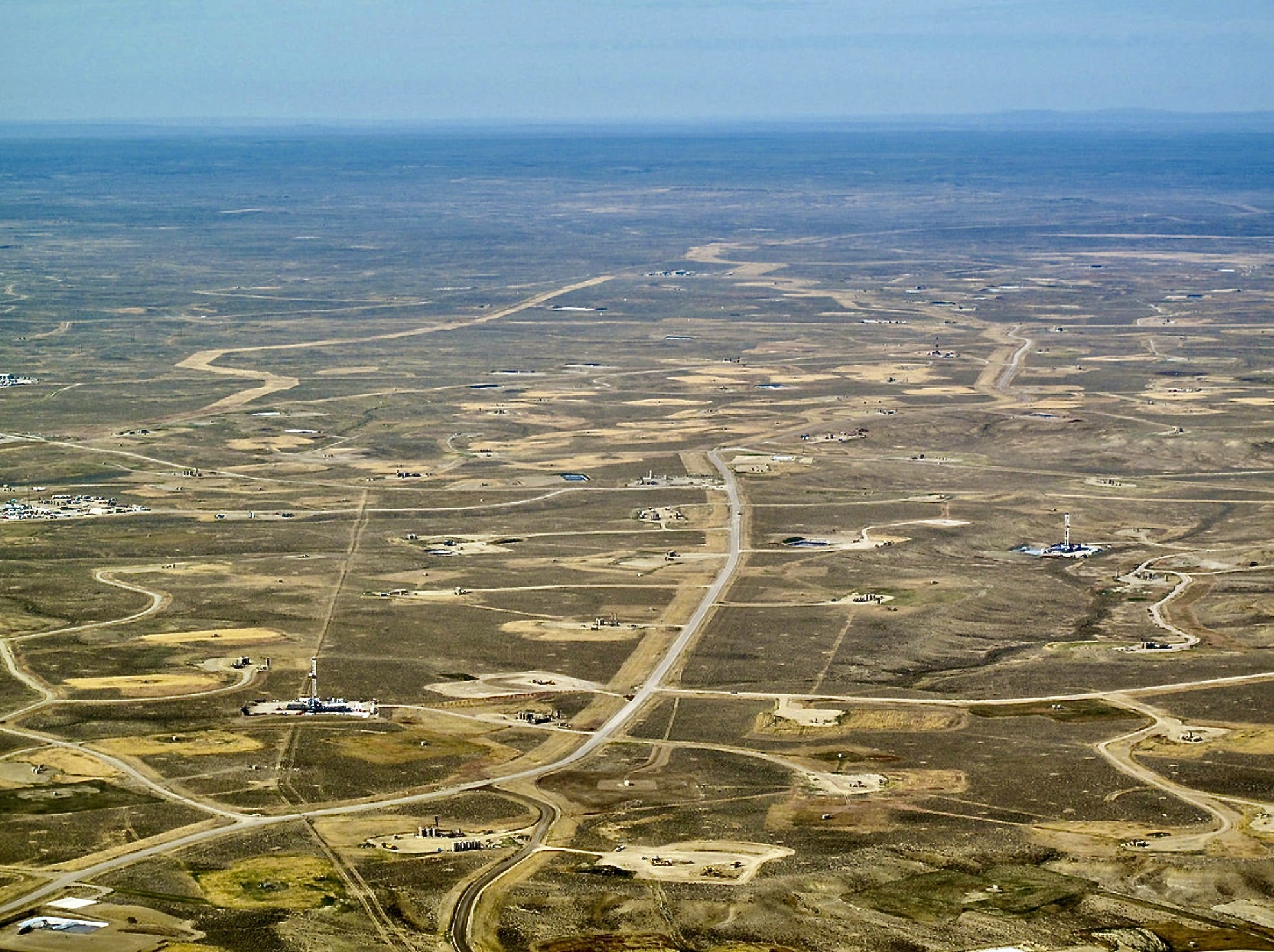
Behold "public lands in public hands." While the stretch of federal BLM land wasn't divested to the state of Wyoming nor sold to the highest private bidder, it didn't have to be. Full-field energy development making profits for private enterprise is its paramount use. Where is the "balance" in this "multiple use" scenario? No one recreates or hunts on this public land because pronghorn, mule deer. sage-grouse and other species have been displaced and the land blighted. The Trump Administration is pushing to allow energy development to occur in migration corridors here in the Greater Yellowstone Ecosystem deemed essential for deer and pronghorn. Photo courtesy EcoFlight (ecoflight.org)
EDITOR’S NOTE: We suggest you print a copy of this and read it at your leisure, rather than on a digital screen.
by Todd Wilkinson
“President Donald J. Trump is ushering in America’s Golden Age—protecting our nation’s rich history, safeguarding our landscapes that tell our nation’s story, and securing a brighter future for every American. President Trump is a visionary for our country just like President Theodore Roosevelt.”
In early March 2026, roughly a year after Montana Congressman Ryan Zinke climbed onto his figurative high horse, declaring that dispossessing large amounts of federal public lands was non-negotiable—and something he would readily oppose—he made a new unexpected announcement. Zinke will not be running for re-election to Congress this November.
What does it mean to have the biggest, alleged, self-proclaimed “defender of public lands” in the West soon to be walking away from Capitol Hill?
In a press release, Mr. Zinke explained that non-life-threatening health matters were in need of attention, related to years he spent earlier as a Navy Seal. As a result of forthcoming surgeries, he’s have to spend a lot of time recuperating and therefore be unable to fulfill his public servant duties if he ran for another term and won. Missing votes on Capitol Hill in 2027 could be a serious issue if indeed there’s a razor-thin margin between Republican and Democratic control of the House.
It could also be an issue if radicals in Zinke’s own party, like US Sen. Mike Lee of Utah, make another run at trying to divest hundreds of millions of acres federal public land, which rumors floating around Washington DC these days suggest is a very real possibility. One of the biggest catalysts could be the epically erratic President of the United States.
Just a few days later after Zinke’s decision, his cohort and another of Montana’s four-member Congressional Delegation, US Sen. Steve Daines, announced he, too, would not seek re-election in 2026. Long considered one of President Trump’s most loyal political allies and friends, Daines indicated in his own press release that he was tired and wanted to spend more time in Bozeman with his wife, grown kids and grandkids.
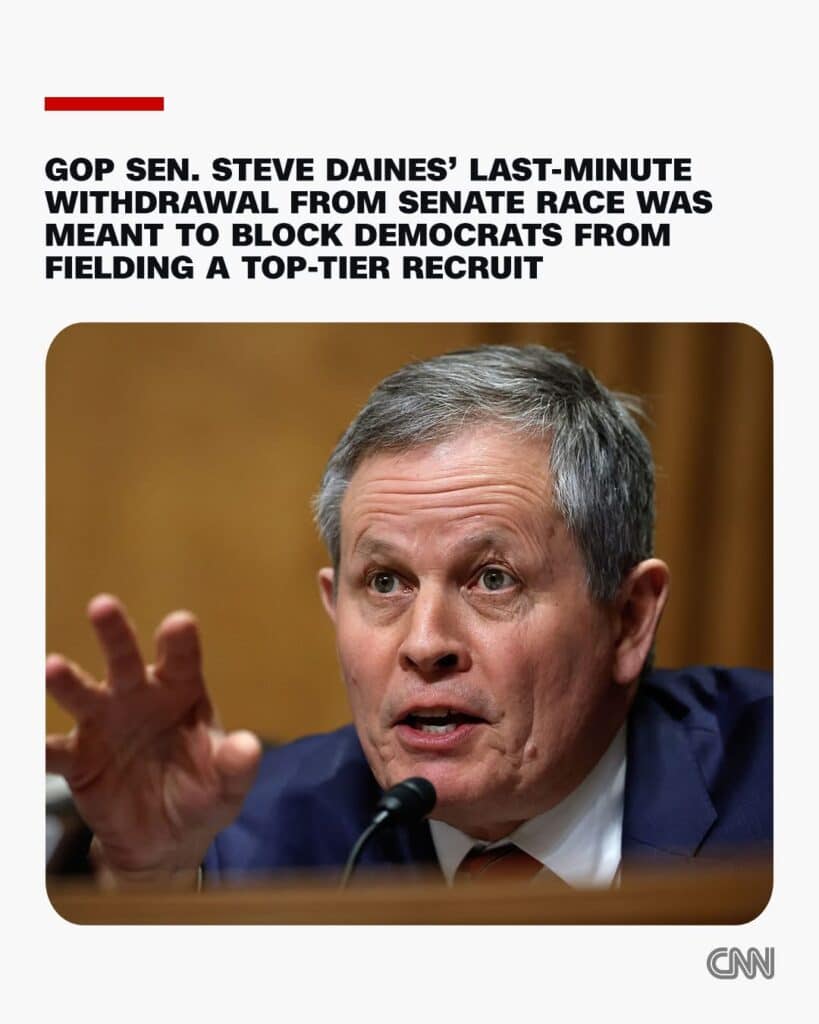
Screenshot from news story about Daines’ announcement he wasn’t seeking re-elected but handpicked a potential successor.
Beyond the sanguine explanation he offered, Daines’ motives, it turns out, were far craftier. Because he timed his announcement to happen on the very last day in the very last minutes that a candidate can, by law, run, the maneuvering caught both parties in the state off guard.
Daines and his small circle of advisors obviously had been pondering a strategy. With the clock ticking down before the 5 pm filing deadline arrived, he withdrew his candidacy and nearly simultaneously threw his endorsement behind former federal prosecutor and then-current US Attorney Kurt Alme to run as his hand-picked replacement. Lack of advance warning prevented either party from having time to consider suitable candidates. It is said from people in the know that most of Daines’ young staffers weren’t notified what he was up to and felt betrayed by his lack of upfront candor. One person Daines likely did seek approval from was Trump.
Is what Daines did legal? Yes. Did it also violate the democratic norms of tradition that give citizens the biggest say in deciding who their representative in Washington DC will be? Absolutely, observers we interviewed noted. Did it also provide yet another reason for citizens to believe the process is, to quote the current President, “rigged?” That, too.
The move has been described as the same kind of self-centered arrogance Joe Biden was accused of employing when he bowed out of the presidential race and coronated Vice President Kamala Harris to face Trump.
“There’s a lot of speculation happening now on Sen. Daines’ true motivation and what’s really behind it,” says Western history scholar and retired university professor Mark Fiege, who lives in Montana. “One could argue that Daines did it because he was afraid Democrats might have fielded a strong candidate—maybe retired US senator Jon Tester or former governors Steve Bullock or Brian Schweitzer—to win back the seat. On the Republican side, Daines wanted to personally ordain someone who follows in lockstep with him—never mind this little thing called ‘the voters.’”
Reminiscent of the era when Montana copper king William Clark sought to control variables in getting himself selected to a US Senate seat, Fiege says what Daines did is its own example of hubris. “The decision of who succeeds him in Montana shouldn’t come down to him and him alone,” he suggests. “What he did is tawdry and deceitful. It’s another example of how the public trust is being violated, the same as we’ve seen with ongoing undemocratic efforts to exclude the larger public from involvement in important land decisions in the West.”
“The decision of who succeeds [Sen. Steve Daines] in Montana shouldn’t come down to him and him alone. What he did is tawdry and deceitful. It’s another example of how the public trust is being violated, the same as we’ve seen with ongoing undemocratic efforts to exclude the larger public from involvement in important land decisions in the West.”
—Western historian Mark Fiege
There’s much to unpack. But so, too, is there much to process now about the possible fate of more than 600 million acres of US public lands, the federal land management agencies overseeing them, how those lands will be protected or exploited, and the all-important big ponderance: to whose ultimate benefit will they be “stewarded,” for whose individual profit and at the expense of what?
Is this the dawning of America’s new Golden Age? Some readers here might disagree with Interior Secretary Burgum’s assessment of Trump at the top of this piece.
With Zinke, Daines and Wyoming’s US Sen. Cynthia Lummis (who also announced a few months ago she will not seek re-election after a long tenure in Washington DC) becoming lame ducks, they are more liberated to be free-wheeling in demonstrating where their own true values lie and what they want their legacy to be.
They don’t have to worry about incurring the wrath of, say, the radical Freedom Caucus in their own states that is reshaping and arguably obliterating the Republican Party of old. It was responsible for primarying out former US Rep. Liz Cheney of Wyoming thought unbeatable because of the status her late father had in the GOP as a former Congressman, Defense Secretary and Vice President. Still, the positions the three above take between now and January 2027 will have huge ramifications for the West.
° ° ° °
As reported in an earlier installment of this series, yes, Mr. Zinke and others on Capitol Hill insist they “want to keep public lands in public hands.” In Zinke’s case, he also proclaims that he’s a champion of sportsmen, carrying the banner of Theodore Roosevelt’s land ethic. It’s a theme Burgum also chimes, even as he issues secretarial orders and implements policies that are overtly contrarian to the Roosevelt approach to conservation.
As former Yellowstone Park Superintendent Mike Finley and many other non-partisans with decades of experience in professional federal land management point out, there’s important context that Americans must consider. What good are public lands, which belong to present and future generations of citizens, Finley asks, if the outcome of public land management and policy shifts now being promoted by Zinke, Daines, Lummis and others results in them being essentially privatized in a de-facto way with less oversight and dramatically heightens the risk of environmental degradation?
In the Greater Yellowstone Ecosystem, what if proposed expanded energy development on BLM land in Wyoming negatively impacts sensitive navigation corridors for famous herds of migrating pronghorn and mule deer? What if eliminating protection of Forest Service lands and allowing bulldozers, logging and mechanized rzcreationists penetrates secure habitat for grizzlies violates legal agreements set in place by federal agencies to protect bears as a condition for removing them from federal protection?
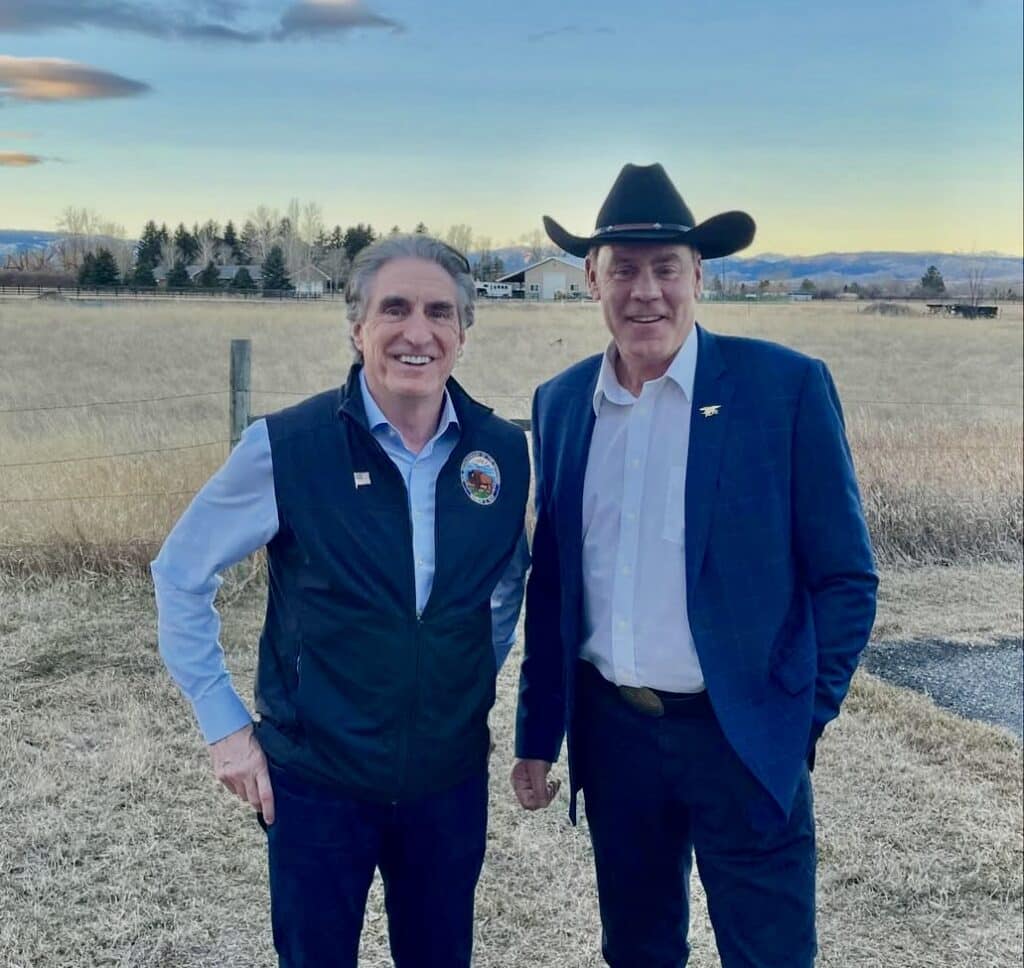
Meet the new boss at Interior, same as the old boss? Interior Secretary Doug Burgum and former Interior Secretary Ryan Zinke, now a lame duck Congressman, together recently in Montana. Both are devoted to carrying out President Trump’s agenda of seeking energy dominance on public lands and weakening federal laws and government agencies in order to carry it out. Their maneuvers, according to polls, are hugely unpopular with Westerners, including sportsmen whose interests they claim to represent. Photo courtesy US DOI
Notably, the person who had been at the forefront of convincing House members to overturn the ban implemented during the Biden Administration, was, yes, Rep. Zinke and US Rep. Pete Stauber, R, Minn. There’s also a connection to the Trump family in the battle over protecting the Boundary Waters.
For Zinke, the Roosevelt letter represents more than just a kind of stinging public rebuke that colors the way the public views him; it could also be a tainting factor if Zinke launches a comeback following convalescence. “Will he be a defender of having healthy public lands as promised to sportsmen? Will he run again for public office or will he decide to pull in a huge salary as a lobbyist or board member of a natural resource extraction company seeking to exploit his connections?” Fiege asks.
The letter from the Roosevelts regarding the Boundary Waters sent a signal to Republicans, including free market economists advising the Trump Administration and who also have tried, in their own way, to [mis]-appropriate the Roosevelt name. Beginning with the Heritage Foundation and extending to other think-tanks, they are aligned with, and closely advising Interior Secretary Burgum. He recently visited Big Sky, Montana and attended a meeting and there he repeated there’s trillions of dollars in value to be unlocked by opening up more public lands to coal, mining, energy, timber and other extraction industries.
A deeper truth is hanging in the air, and it’s one that young people and others, who favor amnesia, ignorance of history and/or who want to cancel figures from the past when pondering conservation, don’t consider. The battle over public lands against efforts to liquidate them or privatize their assets and pass the costs of despoilation onto the public, is age old and its central to the story of why Greater Yellowstone is considered the cradle of American conservation not created by soft non confrontational strategies of citizens politely requesting land protection but passionately going to the mat when it mattered.
A deeper truth is hanging in the air, and it’s one that young people and others, who favor amnesia, ignorance of history and/or who want to cancel figures from the past when pondering conservation, don’t consider. The battle over public lands against efforts to liquidate them or privatize their assets and pass the costs of despoilation onto the public, is age old and its central to the story of American conservation.
Dismissed as fringe in the past, free-marketeers now are wielding unprecedented influence to literally re-shape the American landscape and the civic relationship of citizens with it. They claim that market forces, based on signals sent from Wall Street, corporate board rooms and the kind of transactional thinking that dominates the Trump Administration ought to drive decision-making and plotting the highest and best use of public lands. Not acknowledged is that under that kind of market capitalism, public lands as we know them now—and but for the likes of Roosevelt and others— would likely never have existed; nor parks like Yellowstone and Grand Teton and wilderness areas and protected coastlines, nor the richness of native species otherwise sacrificed to livestock and monoculture crop production that eliminated any animals deemed to be competitors for grass and space or that could not be monetized.
How has the political Left contributed to the current dilemma? Skillfully, observers say, the right wing in recent years has convinced progressives and foundations to embrace “consensus and collaboration,” which some reference as conflict-averse “conservation lite” and “voluntary conservation” claiming it would be more palatable to the public—as well as to favored resource extraction industries.
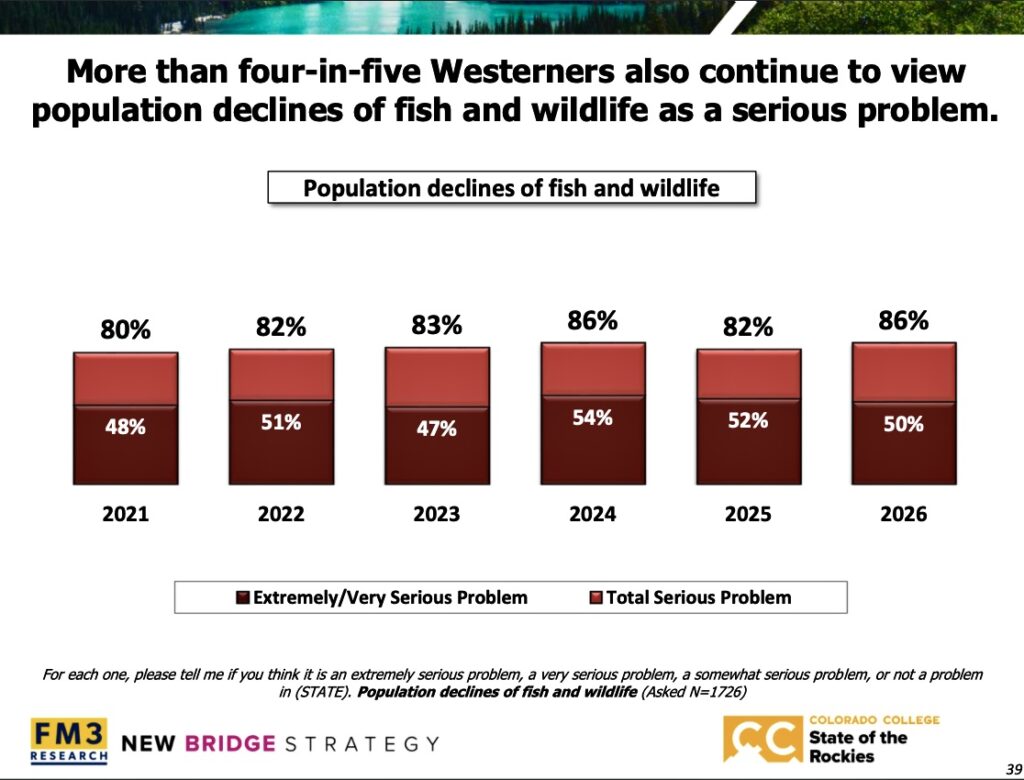
They claim, without evidence, that this is sufficient to safeguard public lands and hold onto the last wild places. That strategy has arguably been a folly and the public, as demonstrated in year on year polls by Colorado College’s State of the Rockies reports, suggests citizens want conservationists to be more forceful advocates.
Many proponents of conservation lite today have actually formed alliances and “partnerships” with free-marketeers who are promoting re-regulation of federal lands, weak land use planning and zoning on private lands, and adopting policies favored by the same special interests backing the Heritage Foundation and its controversial Project 2025 document that calls for outright dispensing of some federal public lands.
One former member of two different Presidential administrations told me bluntly, “the environmental movement’s getting owned by corporate free-market interests and doesn’t even realize what’s happening.”
During the last decade, I had conversations with senior grant makers at major foundations which fund environmental organizations. Some of them have awarded large amounts of money to groups working with the Forest Service on consensus and collaboration initiatives. Formerly those groups used to be formidable watchdogs of that agency. One foundation representative pooh-poohed litigation, while also saying protecting public lands as wilderness was passe and unrealistic.
Who decides what is “passe” and “unrealistic,” I inquired. I added that every still-protected and healthy public land, from parks to BLM lands, is that way today because litigation was necessary to force agencies to uphold environmental protection codes.
Obviously, holding meetings with local “stakeholders,” listening and identifying areas of common ground is worthwhile no matter what the issue, but does it fix threats, or instead dodge and delay hard choices? One of which is the admission that the multiple use paradigm that claims lots of different uses, including ones in opposition to each other, can blithely occur without serious negative consequences. That is a fallacy. For a glimpse of this, readers should have a look again at the lead photo to this story and caption.
Obviously, holding meetings with local “stakeholders,” listening and identifying areas of common ground is worthwhile no matter what the issue, but does it fix threats, or instead dodge and delay hard choices? One of which is admitting that the multiple use paradigm that claims lots of different uses, including ones in opposition to each other, can blithely happen without serious negative consequences. That is a fallacy. For a glimpse of this, readers should have a look at the lead photo to this story and caption.
Senior civil servants and political appointees working in federal land management agencies have a track record of being timid about advocating for meaningful conservation. They only answer to public pressure and sometimes to legal decisions. They don’t want to rock the boat of politicians, beholden to resource extraction interests, because it might impact their own career advancement.
The Forest Service and BLM, for example, have seldom allowed its field managers to advocate for greater wildlands protection, with the only exception in recent years being Forest Service Chief Mike Dombeck allowing forest supervisors to help the public understand why the Roadless Rule was important.
To be sure, there are anecdotal examples of where consensus and collaboration approaches have, to some degree, brought accords, such as with the Blackfoot Challenge (which is now confronting huge problems with over-recreation) and removing dams in the Klamath River Basin but in fact they are unicorns. Many consensus and collaboration efforts either fall apart or become vehicles for further landscape fragmentation.
Here is a case study for why a consensus and collaboration effort failed in the Northern Rockies and it could be applied to other efforts. Here is a frank analysis about how science and public involvement was absent in earlier Forest Service decision making and it portends trouble ahead, observers say, with the Trump Administration streamlining approval for questionable logging projects that stand to harm fish, wildlife, and water. And here was a critique of consensus and collaboration written by former national Sierra Club board chairman Michael McCloskey.
When I asked one of the foundation representatives a few years ago if consensus and collaboration had proven to be effective and durable in holding the line against rising threats from resource extraction industries on public land and development on private land, they smugly told me, “We measure our success on number of acres of public land that is permanently protected.” I then asked, “What does protected mean?”
The Biden Administration claimed that it, unbeknownst to most Americans, protected more land and water—674 million acres—than any President in history through its America the Beautiful/30 X 30 conservation initiatives. But the accomplishments proved to be ephemeral since the Trump Administration has already rolled back many of those claimed victories and it vows to negate many more. The only way a deeper sense of permanency exists with land protection is if maintaining laws, and upholding them insures protection isn’t revoked and that often require litigation. As if litigation is bad. Every day in the West developers take people to court over land deals and property owners sue each other over water rights.
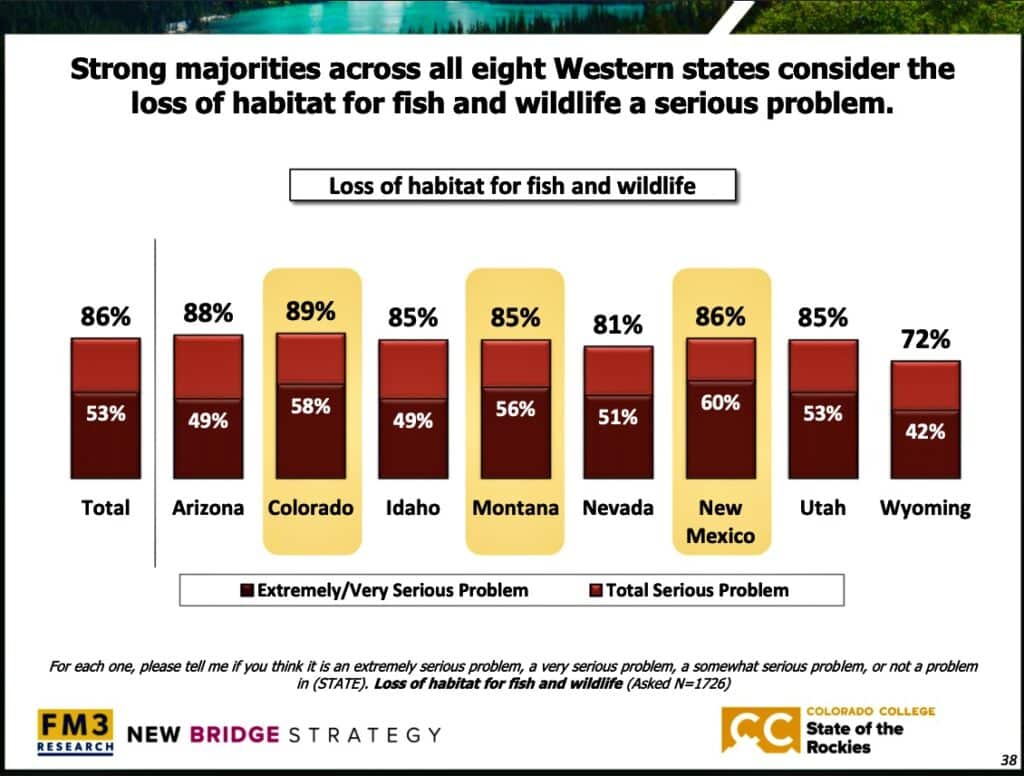
Results of the 2026 Colorado College State of the Rockies polling pertaining to Westerners’ concern about loss of fish ana wildlife habitat and corresponding declines in their populations.
In interviews with a dozen different university professors, I was told that students, in general these days, seem to have less empathy and compassion for the plight of wildlife than previous generations, less understanding of what animals need to survive, and less appreciation for the value of public lands unless the topic is recreation. I’ve heard similar sentiments expressed by leaders of conservation organizations.
Accompanying this, the rise of consensus and collaboration in the conservation movement shifted in recent years to focusing on championing diversity, equity and inclusion over wildlands and wildlife protection. An objective read shows that, according to statistics, this era of advocates has actually delivered a net loss of protected public land and, correspondingly, natural private lands in most mountain valleys of the Rockies are fast becoming fragmented by sprawl. Some of that sprawl is being driven by the false claim that covering natural and public lands with more supply will yield more housing affordability.
This era also has resulted in some groups supporting the cancellation of icons like John Muir, Theodore Roosevelt, Charles Bird Grinnell, John James Audubon, Aldo Leopold, and even Jackson Hole naturalist Olaus Murie, asserting that they were racists in their time and therefore their status as protectors of nature and the public land conservation they advanced should be negated or overturned. Like cancelling Thomas Jefferson and his words about democracy because he owned slaves.
A well respected professor told me: There’s really a lot of problematic thinking involved with this, an assumption by some that they possess moral clarity and an arrogance that they can judge people according to modern standards, and failing to understand how much foresight they possessed, how farsighted they were to imagine a common good that would benefit people in the future beyond their time.”
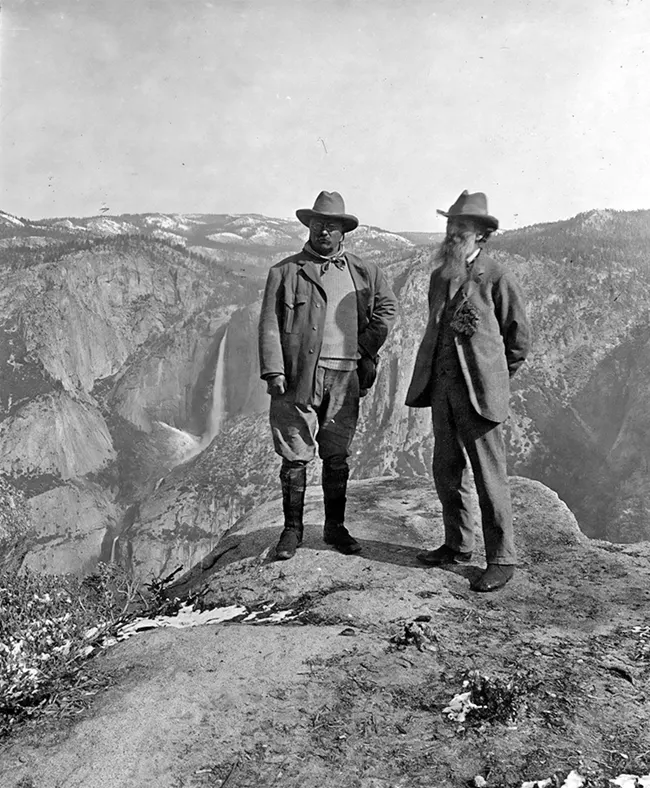
President Theodore Roosevelt and John Muir stand together at Glacier Point, Yosemite National Park, during their historic 1903 rendezvous with the breathtaking Yosemite Falls in the background. Prior, TR had camped in Yellowstone with American naturalist John Burroughs. Were Roosevelt and Muir alive today and pushing back against the Trump Administration, as surely they would, they would likely be labeled extremists and unpatriotic enemies. Photo courtesy Library of Congress.
The irony, of course, is that those early conservationists stood up against forces of Manifest Destiny and many expressions of colonialism when it was unpopular for them to do so. Were they perfect? No. But they established protected areas where plunder was not allowed to happen. They created the notion that public lands belong to all and whose value has become inestimable to future generations over time. It’s further ironic that urban progressives sitting in judgment and who have less appreciation for protection of wildlands and wildlife have been active in undermining the legitimacy of conservation at the same time the Trump Administration has been trying to do much the same but from another direction.
Not long ago, I ran into another foundation representative who had left the organization after the start of the second Trump Administration forced a change in the organization’s “tactical thinking.” I asked how they would assess the virtues of consensus and huge investments in DEI now that Trump et all are succeeding in removing protections from more public land than any President in modern US history? When I asked if such approaches have built a more resilient and better educated land protection movement or helped facilitate its demise, he admitted, “Well, I guess we were wrong about some things. We live in strange times.”
The Trump Administration, in its anti-Woke campaigns, has ordered that any information telling the full nuanced story of white male historical figures and related events be scrubbed from national parks and other public lands—along with references to the irrefutable scientific evidence of human-caused climate change. That’s obviously outrageous.
On the other hand, if the goal of an enlightened society and conservation movement is overcoming bias, bigotry, hatred, injustice and exclusion that’s based on ignorance and intolerance, shouldn’t emphasis also be directed toward educating Americans on why its important to have respect, empathy, compassion and sensitivity for the natural world and other sentient beings inhabiting it? And, to acknowledge how humans, even righteous ones, are having impacts? In many ways, factions of the Left, especially recreationists, treat wildlife as if it doesn’t exist and its wellbeing doesn’t matter. That’s not the kind of holistic thinking it claims to be championing.
If the goal of an enlightened society and conservation movement is overcoming bias, bigotry, hatred and injustice that’s based on ignorance and intolerance, shouldn’t emphasis also be directed toward educating Americans on why its important to have respect, empathy, compassion and sensitivity for the natural world and other sentient beings inhabiting it? In many ways, factions of the Left, especially recreationists, treat wildlife as if it doesn’t exist and its well-being doesn’t matter. That’s not holistic thinking.
In my earlier conversation with the foundation officer, I shared a sentiment I had heard often from many old-guard conservationists who said proponents of “new conservation” lacked the spine of former advocates who succeeded in rallying citizens to pressure politicians into setting aside more protected public lands. I shared the observation passed onto me that the American conservation movement had shifted from once being outspoken advocates for wildlife protection to instead promoting industrial-strength outdoor recreation which has, according to scientific studies, actually resulted in dewilding of wildlands and displacement of wildlife.
In some cases, outdoor recreationists who claim to be conservationists have enlisted help from anti-conservation lawmakers to undo protection for wilderness or prevent more wilderness lands from being created because they say their right to use public lands should take precedent over wildlife concerns, which is similar to the argument being made by resource extraction industries, including those trying to now undo the Forest Service’s Roadless Rule and the agency’s Travel Rule that restricts motorized users to trails and does not allow cross-country travel that was known to cause many documented impacts to landscape and wildlife.
No one I interviewed said broadening the diversity of Americans who embrace public lands as part of their heritage isn’t important but many expressed concern that the conservation movement portray public lands as only having value if they serve human needs. That attitude has created an adversarial attitude toward protection that can only be achieved in a fully intact wildlife ecosystem like Greater Yellowstone by limiting intense levels of human exploitation.
Jon Tester, the former long-serving US Senator from Montana told me during a visit to his senate office in Washington DC in 2019 that he had more regard for conservationists who made their case, pushing for maximum protection especially of public lands and the cause of future generations. Rather than entering a room telling him what they thought he wanted to hear, he admired people with conviction and could back up their arguments with facts.
“With conservation, as with anything, it’s a given that I as a politician am going to consider differing perspectives. That includes listening to industries that don’t want any more land protected,” he said. “We in Montana have obviously profoundly benefitted from having public lands and having many of them in a higher status of protection. I always respected advocates making the strongest case possible for protecting wildlife and water and things like hunting opportunity and using science to convince me to vote for protecting as much as they thought was necessary. It’s important when you walk into a room knowing there will be compromise involved, and that as an advocate you are trying to get as much as you can because the opportunity to protect it might never come around again.”
“I always respected advocates making the strongest case possible for protecting wildlife and water and things like hunting opportunity, and using science, to convince me to vote for protecting as much as they thought was necessary. It’s important when you walk into a room knowing there will be compromise involved, that as an advocate you try to get as much as you can because the opportunity to protect it might never come around again.”
Former US Sen. Jon Tester in an interview in 2019
As the massive 2025 eruption of public sentiment nationwide against proposed divestment of public lands demonstrated—and as the record of history shows—confrontation and forceful, non-timid conservation advocacy have been the only reliable forces that have worked over the years. Drawing hard lines in the sand, tenaciously saying no to major threats, in fact, are the very reason why national parks, protected national forests, wildlife refuges, wilderness areas, BLM lands and undammed rivers—all of which have corresponding laws preventing despoilation—even exist today on the American landscape.
But many are in danger of being unraveled by a calculated and meticulous strategy to disassemble agencies and laws piece by piece. Consensus and collaboration, based on a strategy of conflict aversion and not holding land managers’ and politicians’ feet to the fire, have been no match against extraction interests tenaciously playing to win at almost any cost.
Theodore Roosevelt understood this at the dawn of the 20th century. The public interest needed to be a check against greed. At the dawn of the 21st century, that realization was also shared by one of the forerunners of large landscape conservation, the late Dr. Michael Soule, who was among a group of visionary men and women who founded the Society for Conservation Biology. The intent was to protect ecosystems that support biodiversity and move beyond focusing on trying to save species one at a time. For Soule, pragmatic biocentrism needed to be a check against every decision being made to advance the desires of humans.
Poignantly, polls after polls today show that Americans, and Westerners in particular who will be most affected, favor conservation that considers both.
° ° ° °
Public lands legal scholar and professor John Leshy, who previously served as Solicitor General (lead lawyer) at the Department of Interior during the Clinton Administration, reminded me in spring 2025 how long Utah has been a fulcrum pushing for state acquisition or sell off of millions of acres of federal public lands. It didn’t begin with Sen. Lee.
During a recent conversation with Ted Roosevelt IV, he noted how American historians, conservationists and civil rights advocates Bernard and Avis DeVoto, among others, fought against corporate interests and free marketeers trying to divest federal public lands in the 1940s and 1950s. Much of that is explored in Nate Schweber’s excellent book on the DeVotos and you and read an interview Yellowstonian did with Schweber here.
Leshy, along with Robert Keiter, law professor at the University of Utah, and the late water law professor Charles Wilkinson at the University of Colorado-Boulder, are considered eminent policy experts on public land matters in the West. The trio are counted among authorities I’ve turned to in researching many stories over the years. They each reminded me how the legacy of protecting public lands is messy and the result of unavoidable conflict. Protection were not forged by people blithely gathering in a circle and strumming Kumbaya on their ukeleles. Conservation and democracy are contact sports in what Roosevelt characterized as the arena of opposing ideas and clashing values. Lands are never safe and citizens must continuously re-ratify their commitment to defend them.
I reached out to Leshy after reading again a text version of his important speech, “Debunking Creation Myths about America’s Public Lands.” It was delivered as a keynote address at a 2018 symposium sponsored by the Wallace Stegner Center for Land, Resources and the Environment at the University of Utah’s Quinney School of Law. (Watch it below).
Leshy’s experience in advising federal agencies and members of Congress from both parties about the actual letter of US environmental laws goes back 50 years. A distinguished professor at the University of San Francisco law school, he’s an expert on the National Environmental Policy Act (considered the Magna Carta of environmental law in the world), the controversial General Mining Law of 1872, the National Park Service Organic Act of 1916, the Migratory Bird Treaty Act of 1918, the Wilderness Act of 1964, the National Forest Land Management Act of 1976, the federal Land Policy and Management Act of 1976 (applying to BLM lands), the Endangered Species Act of 1973, and others.
Every one of the laws, above, with the exception of the Park Service Organic Act, have been targeted for “reform” and “improvement” by the Trump Administration so that scrutiny of the impacts of energy development, mining, pollution and climate change are swept away. In the case of NEPA, the current Interior Department boasts that more than 80 percent of its core tenets governing oversight of natural resource extraction, have been eliminated to not only enable development to happen but to ensure larger profits for industries which, in every case, have also been major contributors to political candidates. Read this analysis titled “NEPA Reform Is A Scam.“
At his lecture in Salt Lake in 2018, Leshy cited federal codes and the irrefutable history of public lands, debunking false claims and fairy tales advanced by everyone from free marketeers to Sagebrush Rebels, militias, and the clan of Cliven Bundy. Instead of them being liabilities in need of being given a purpose, he demonstrated how public lands really came into being, why they matter ever more with each passing generation as pillars of our democracy, and how they can be a force for public good and national unity or used as a weapon to divide and confuse citizens so that entities with ulterior motives can capitalize upon them.
Presciently, Leshy told me in spring 2025 how important it was to keep an eye on the Congressional Review Act. Indeed, over the last year, the CRA has been invoked by Trump political appointees and members of the House and Senate to undo protection for a wide array of public lands, including national monuments, roadless lands and the Boundary Waters of Minnesota.
Whether one is a life-long Westerner or a citizen from elsewhere who loves to visit public lands, the address by professor Leshy should be mandatory viewing as a history lesson. It illuminates why Theodore Roosevelt took unprecedented actions in his day, and it casts light on why the mavens of de-regulation are acting in ways contrarian to the public interest and ideals of TR.
One former member of two different Presidential administrations told me, “the environmental movement’s getting owned by corporate free-market interests and doesn’t even realize what’s happening.”
Zinke rose to national prominence in spring and summer of 2025 when he vowed to fight legislation authored by Sen. Lee who had drafted legislation to sell off millions of acres of federal public lands or turn over their management to states. It was attached to the One Big Beautiful Bill Act that Trump vowed to sign, Ultimately, public lands divestiture was stripped out of that bill.
What the public may not realize or remember is how the radical push to transfer federal lands to states or sell them off has been gaining momentum in radical corners of the party. In 2016 it became a priority at the Republican National Convention when it was adopted as part of the national GOP platform. In recent years, courts have rejected persistent attempts by Utah and other states to force federal public land divestiture. Allies affiliated with the right-wing Heritage Foundation have advocated for disposing of public lands, and libertarian free market thinktanks have long pressed for civil service functions to be privatized made moree accommodating to industry.
To counter Lee, Zinke introduced the bipartisan “Public Lands in Public Hands Act” along with Congressman Gabe Vazquez, a Democrat, from New Mexico. According to a press release assembled by Zinke’s office, the legislation would ban “the sale or transfer of most public lands managed by the Department of the Interior and U.S. Forest Service except under specific conditions and where required under previous laws. The bill also requires Congressional approval for disposals of publicly accessible federal land tracts over 300 acres and for public land tracts over five acres if accessible via a public waterway.”
As Leshy told me, common sense land swaps and sales of small tracts of public lands didn’t need legislation. They have happened in the past, in order to accommodate consolidation of public lands or have public lands in urban/suburban areas made available for development. But not at the scale proposed by Sen. Lee. So far, the Zinke/Vasquez bill has not passed out of the House and moved over to the Senate. In March 2026, the Wyoming legislature passed a joint resolution opposing any state or federal proposal that attempts to promote the broad or indiscriminate sale or exchange of public land. That was momentous.
Does Zinke warrant the glowing praise he courted as an alleged protector of federal public lands?
One former moderate Republican politician, who does not want their name used, said what Zinke did in 2025 is a little like one member of a fire department (Lee) starting a four alarm blaze in a 10-story apartment building and then a colleague (Zinke) steps forward to put out the conflagration, winning praise for being a paragon of courage and sound judgement. Will Zinke push his bill through to passage in the House with the same vigor he employed recently to get the mining ban on the edge of the Boundary Waters undone?
Many who are skeptical of Zinke argue his grandstanding has really been a diversionary ploy to provide cover for an agenda to give resources extraction industries much of what they want without federal lands having to be disposed of. Private companies get to monetize public resources and amid de-regulation weakening environmental protection, taxpayers will be stuck paying for the costs of cleaning up messes if they occur. This is what free marketeers call an unfortunate “negative externality.” Others call it a form of socialism, with the public paying for costs to subsidize the profits of powerful self-interests.
Historians say the status of public lands should never have been jeopardized in the first place—that even pondering their divestiture was long considered heresy, a violation of the sacred trust American people have placed in their elected officials for generations.
° ° ° °
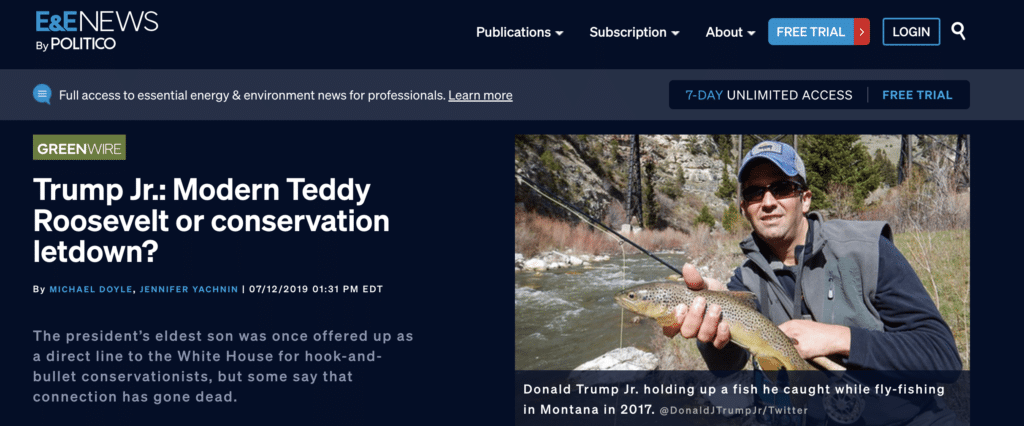
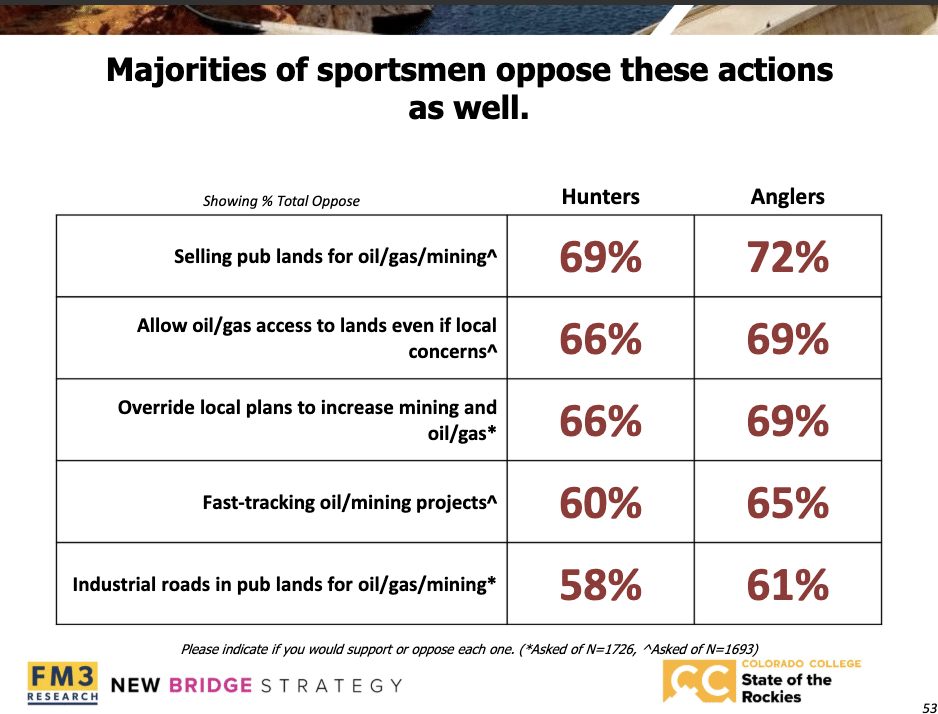
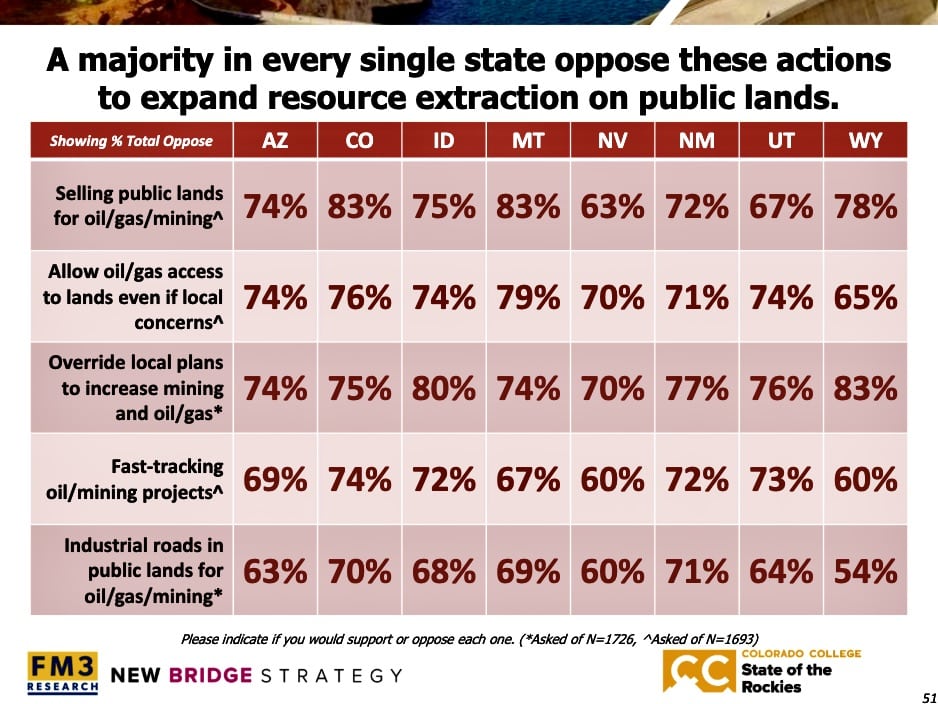
Top image: A decade ago, Donald Trump Jr. boasted that he was a modern Theodore Roosevelt, that he was responsible for Ryan Zinke being named Interior Secretary and that his dad knew absolutely nothing about environmental issues he would make sure that lands valued by sportsmen would be protected. By many measures, hunters and anglers see him as being missing in action and a disappointment to outdoors people counting on him. Just above: results of the 2026 Colorado College State of the West poll that expresses the sentiments of sportsmen and it shows that most are opposed to what the Trump Administration, members of Congress and free market think tanks are pushing for public lands.
° ° ° °
Unwavering ideological fidelity is obviously thee coin of the realm for the Trump Administration. The President expects GOP politicians to defend whatever position he stakes out. In his rhetorical flourishes, Trump has been all over the place with regard to environmental matters. He has described coal—known for the air pollution it causes— as “beautiful, clean, clean coal,” and public lands as being “completely and totally unused.”
During Trump’s first run for The White House, America’s most infamously impetuous chief of state told a reporter for Field & Stream magazine, when asked about the potential of selling off federal land: “I don’t like the idea because I want to keep the lands the way they are.” He didn’t clarify what he meant by saying the way they are.
The President has advocated for having government regulators step aside and letting energy development proliferate which means lands will not remain the way they are. Interior Secretary Burgum has said natural resources should not be wasted by being left in the ground. Openly, Trump has daydreamed about creating a Sovereign Wealth Fund modeled after those of Saudi Arabia and the United Arab Emirates based on revenue generated from full throttle oil and gas extraction.
Development of energy on the Arabian Peninsula obviously does not occur in sensitive environments with a lot of freshwater and wildlife at stake as the American West, but largely in vast expanses of treeless sandscapes where temperatures can reach 120 degrees. The Middle East has nothing that comes close to our soul-enriching system of national parks, forests and public lands that belong to all the people. For the trillions of dollars that Arabs have amassed in their Sovereign Wealth Funds, no amount of money could ever re-create the kind of landscapes in the US. Nor are there laws in place that enable citizens to challenge the status quo.
The President has advocated for having government regulators step aside and letting energy development proliferate which means lands will not remain the way they are. Interior Secretary Burgum has said natural resources should not be wasted by being left in the ground. Openly, Trump has daydreamed about creating a Sovereign Wealth Fund modeled after those of Saudi Arabia and the United Arab Emirates based on revenue generated from full throttle oil and gas extraction.
Trump’s perspective, scientists note, reflects a deep and total lack of understanding of ecology, and grasping the toll resource exploitation takes which he doesn’t seem interested in pondering. He also seems to have little appreciation for the value of maintaining healthy natural landscapes that are a bedrock of human quality of life and that protecting them, as Teddy Roosevelt noted, requires regulation.
Both of Montana’s US senators, Daines and rookie Tim Sheehy, who proudly count themselves as Trump loyalists, have seldom said anything discouraging about the President’s most outrageous utterances, nor did they immediately rise to condemn Lee’s bill. Lee is chair of the Senate Energy and Natural Resources Committee on which Daines, US Sen. John Barrasso of Wyoming, and US Sen. Jim Risch of Idaho also sit.
In a strange bit of gamesmanship, Daines did convince Lee to have Montana excluded from having its federal lands potentially divested but he did not immediately vow to block Lee’s larger efforts pertaining to the rest of the West until after a public uproar ensued.
Based on contacts with Republicans and Democrats on Capitol Hill, there is said to be personal tensions between Lee and Congressman Zinke but there’s also circumstantial evidence that refutes it. As mentioned in the first part of this series, the question is not whether Zinke is likable or not, or whether he has an R or D behind his party affiliation, but is his espoused dedication to the conservation of nature sincere and trustworthy?
Recently, the National Park Service was ordered by Trump appointees to remove public education information kiosks in Glacier National Park, situated next to Zinke’s hometown of Whitefish, Montana, that explaine why human-caused climate change is accelerating the loss of ancient ice sheets responsible for the name of that national park. Zinke has said nothing to protest the scrubbing of the truth.
° ° ° °
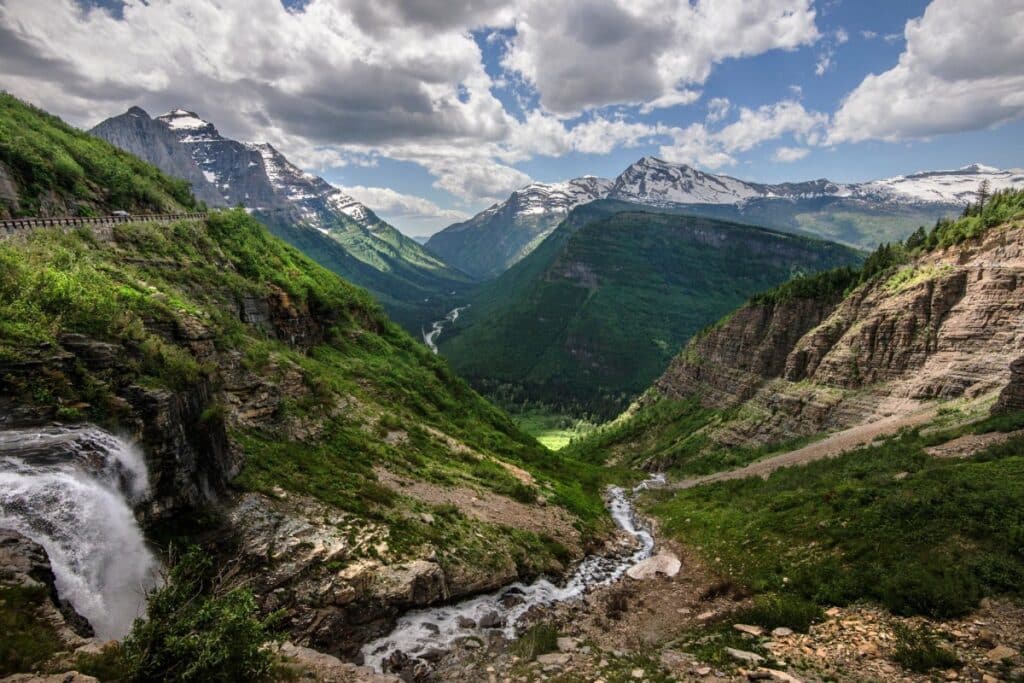
Haystack Falls in Glacier National Park, Montana. At a rate far outpacing change owed to natural conditions, glaciers are disappearing fast. In 1850 around 150 glaciers were counted there. Today there are around 25 remaining and between 1966 and 2015, as human-related carbon emissions rose, every named glacier shrunk, some losing over 80 percent of their mass. It’s an indicator of how conditions are warming and snowpack is winnowing, indicating huge water challenges coming in the years ahead. The Trump Administration has order the National Park Service to not have any public education displays that suggest humans need to adjust their behavior to confront climate change. Photo courtesy NPS
° ° ° °
In comparison to Zinke, Sen. Lee is said to be among the most unpopular lawmakers on Capitol Hill and that includes his status in the Republican Party. His agenda, once considered extreme, mirrors that of the Heritage Foundation’s Project 2025 which has served general outline for action in the second Trump Administration.
Lee’s efforts have attracted concern from some MAGA faithful in Congress who see them as a liability in courting crucial moderate swing voters. Again, according to a consistent stream of opinion polls including the 2026 Colorado College State of the West poll, his positions at odds with the desires of Americans who in overwhelming number say they value the conservation of public lands. Lee’s bills have created rare vulnerability for Republicans, even in red states like Montana.
The truth is, as Leshy noted, Mike Lee was/is hardly a mere outlier. For many years, members of Utah’s Congressional Delegation—led earlier by the now-retired US. Rep. Rob Bishop and who at one point was chair of the House Resources Committee—drafted bills to sell public land. Bishop’s predecessor was US Rep James Hansen who in 1995 proposed turning all 270 million acres of BLM land over to states “to bring management closer to the people.”
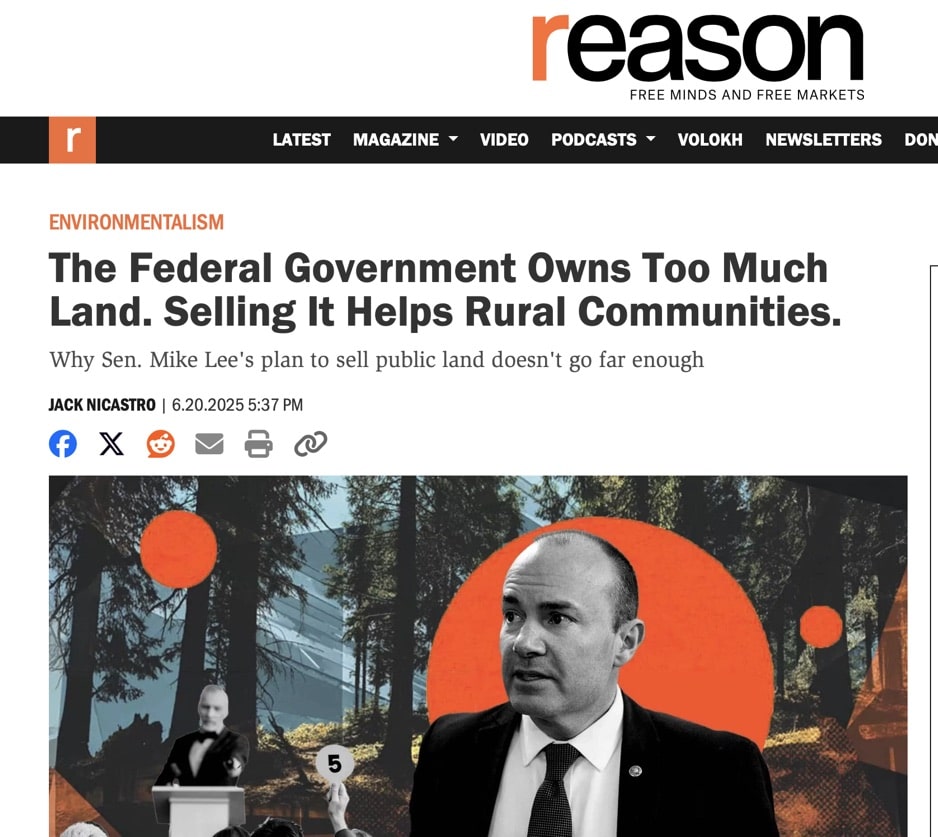
A headline from a story that appeared in Reason, the magazine of the libertarian and free-market Reason Foundation, in summer 2025. Reason has had close ties over the years to free-market think tanks in the West. Sen. Mike Lee may be advocating policies that most Westerners deem extreme and wacky, but in 2020, President Trump at the end of his first term, had Lee on his short list for potential nominees to the US Supreme Court.
Joining them from the think tank realm in 1999 was Terry Anderson, then president and executive director of the Bozeman-based Property and Environment Research Center (PERC), a bulwark for “free market environmentalism.” Anderson and two others co-authored a paper for the Cato Institute titled How and Why to Privatize Public Lands. They suggested breaking up the ownership of public lands and distributing it broadly so that citizens and others in the private sector could be direct economic stakeholders and cash in on the proceeds of resource extraction. Of course, the fragmentation of ownership and land would mean losing the ecological function of many corners of the West forever.
Today, subsequent leaders at PERC say, they are opposed to the sale of public lands but they are allied closely with Interior Secretary Burgum and US Sen. Sheehy of Montana who was a recent board member and is on record favoring rescinding the Forest Service Roadless Rule, preventing American Prairie from running bison instead of cattle on its BLM allotments, having the EPA no longer recognize carbon generated by fossil fuel burning as a contributor to climate change and greasing the skids so public lands are a paradise for natural resource extraction. Public lands don’t need to be privatized in order for that dream to be a reality.
In 2017, Bishop, Lee and the late US Sen. Orrin Hatch invited Trump’s first Interior Secretary—yes, Ryan Zinke—down to southern Utah and, at their behest, Zinke said he would conduct a review of national monuments created by Obama and Clinton, a maneuver seen as a pre-ordained prelude to Trump shrinking back their size much to the delight of mining, energy and motorized recreation interests.
Notably, those efforts attracted condemnation from Ted Roosevelt, not the ghost of the president, but his great grandson, TRIV, a life-long card-carrying Republican businessman, sportsman, and wilderness advocate who, during his days of college, had been a grunt field worker for the BLM in Wyoming.
Apart from hunters and anglers opposing Lee’s disposal of federal public lands, another key constituency of public lands defenders are politically-conservative ranchers, who are able to lease hundreds of millions of acres of national forests and BLM lands in the West, where they graze tens of millions of their privately-owned cattle and sheep, at rates far below, in many cases, what they’d be charged to rent if it were private ground.
Findings of bi-partisan polling recently released in Colorado College’s 2026 State of the Rockies report
In 2025, many ranchers were furious at Lee’s actions, realizing that were public lands privatized new owners might hike their grazing rates and/or attempt to boot them off grasslands.
Was Zinke really being defiantly courageous, staking himself as a conservationist, or calculated in taking on Lee? Zinke knew that in Montana his own re-election bid in 2026, if he stayed in the race, would be more difficult if Lee’s bills gain traction in the Senate as part of any omnibus package President Trump would never veto.
Here’s a bit more stark reality: public lands are arguably more popular among voters today in red state Montana than Democrats. A Republican who stands in favor of keeping public lands in public hands may have a better chance of prevailing in the Treasure State going head to head against a Democrat holding the same position.
This is a thought that takes the breath away for many: Had Trump impetuously weighed in, in favor of Lee and backed wholesale public land divestiture, would Zinke and the all-GOP Congressional Delegations in Montana, Wyoming and Idaho have possessed the guts to break with the President or bent a knee to his whim?
Mike Lee shows few signs of being chastened by Zinke’s resistance and he continues to draft bills that approach public land divestiture from a variety of possibilities. Whose side is Zinke on?
During the Gulf War years when Gen. Colin Powell was serving as US Secretary of State, he told President George W. Bush to be careful with the force being brought to bear on Iraq and be clear about what he was getting into. Referencing what he called the Pottery Barn Rule, Powell told Bush, “you break it, you own it.”
If the architects of Trump’s approach to conservation and public lands end up breaking many beloved aspects of the West, they will own responsibility, and the public to whom it belongs will likely never forget or forgive.
Whether federal public lands get sold to the highest private bidders or privatized in a de-facto way as the government authorizes companies to pursue energy dominance and monetize as many public natural resource assets as quickly as possible, a bleak outcome, with the President’s blessing, could still happen either way.
Todd Wilkinson, co-founder of Yellowstonian, has been an award-winning American journalist for almost 40 years, known foremost for his writing about the environment and his knowledge of the Greater Yellowstone Ecosystem. In addition to his books on topics ranging from scientific whistleblowers and Ted Turner to Grizzly 399 (that book featuring images by photographer Tom Mangelsen) and coffee table volumes on a number of prominent fine artists, Wilkinson has written for National Geographic, The Guardian, The Washington Post, Christian Science Monitor and many other publications. He started his career as a violent crime reporter with the City News Bureau of Chicago. He is also a writing fellow of the Northern Rockies Conservation Cooperative based in Jackson Hole.
Jon Fossel climbed a towering ladder of success in New York City but his greatest feat was embracing restraint to save a magical corner of the wild West from ruin
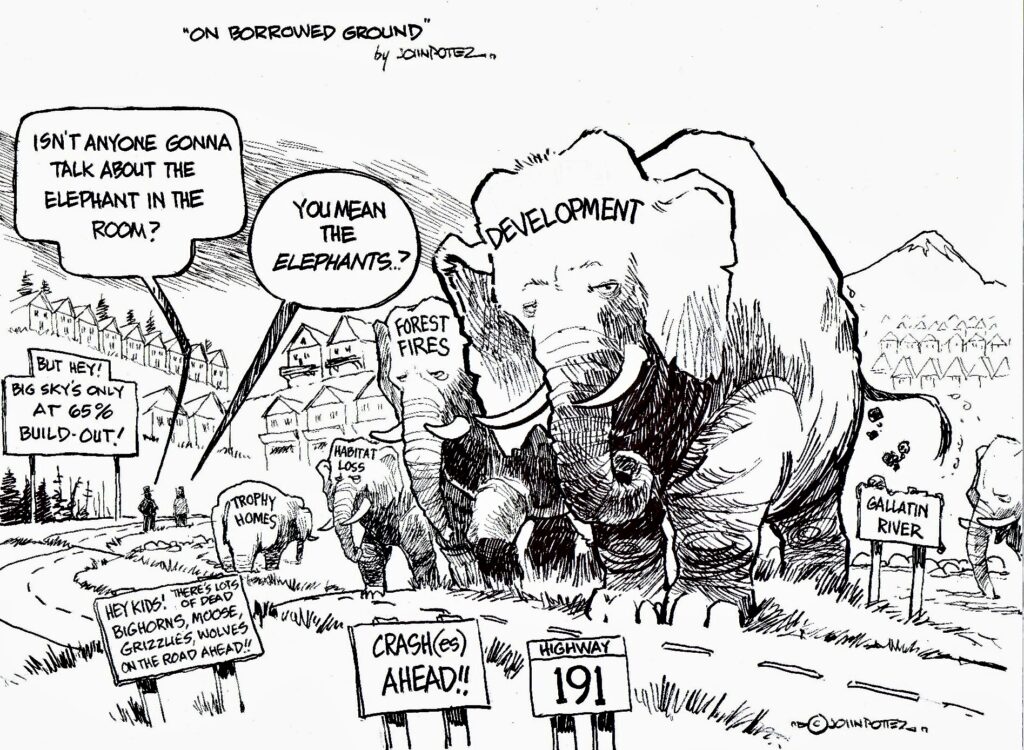
Welcome to Big Sky: In his latest cartoon, John Potter sheds light on the real cause of rising wildlife roadkills along US 191, pollution threats to the Gallatin River and the loom of catastrophic wildfire. Developers, he says, would rather pretend these elephants in the room don't exist
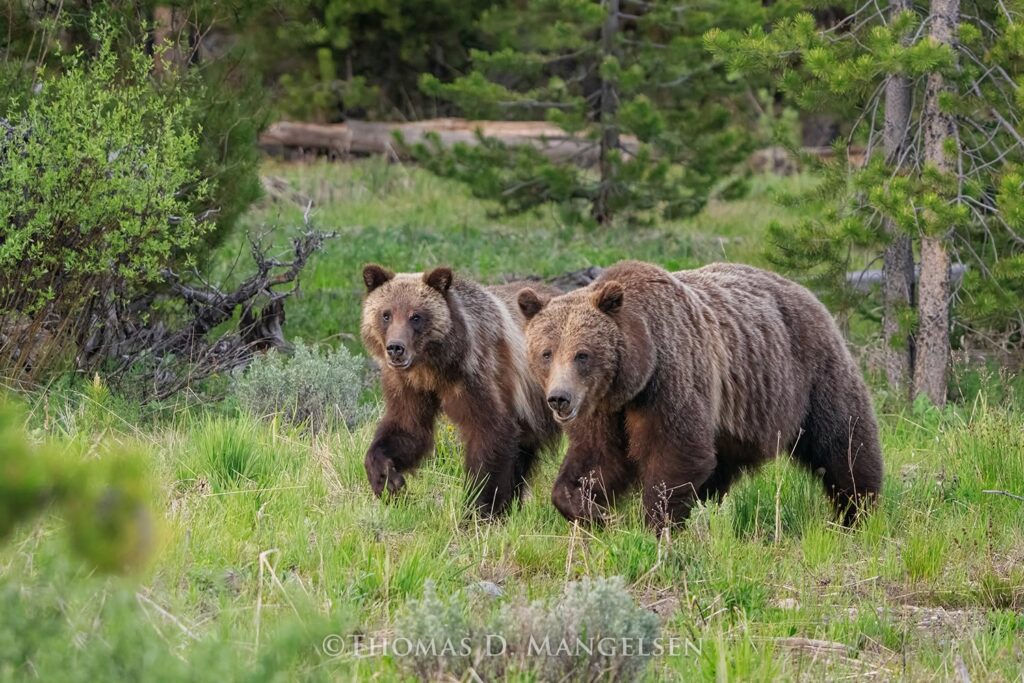
What lessons, if any, did Jackson Hole Grizzly 399, the most famous mother bear in the world, teach us about co-existence? New book by Susan Clark and Ana Lambert explores the question—and in this story you can download a free digital copy!