EDITOR’S NOTE: In his most recent column for Yellowstonian, Steven Fuller, well known for being a “winterkeeper” in Yellowstone for over 50 years, took readers back to his early tenure in the national park and ended that piece with an allusion to a grizzly bear coming through the kitchen window. This picks up where that left off.
By Steven Fuller
Outside a few inches of snow lay on the ground. The night was cold and black. Our nearest neighbors, four of them, were 18 miles up-river on the shore of Lake Yellowstone. Angela, seven months-plus pregnant, our toddler Emma, nearly two and a half years old, and I sat eating dinner around the table.
The steamy aroma of elk stew filled the kitchen. (No, we did not “harvest” the wapiti “locally). Angela got up to close the small window ajar next to the stove. As she turned to return to the table, a grizzly bear broke out the window and scattered its wreckage and a clattering of glass spice jars across the floor.
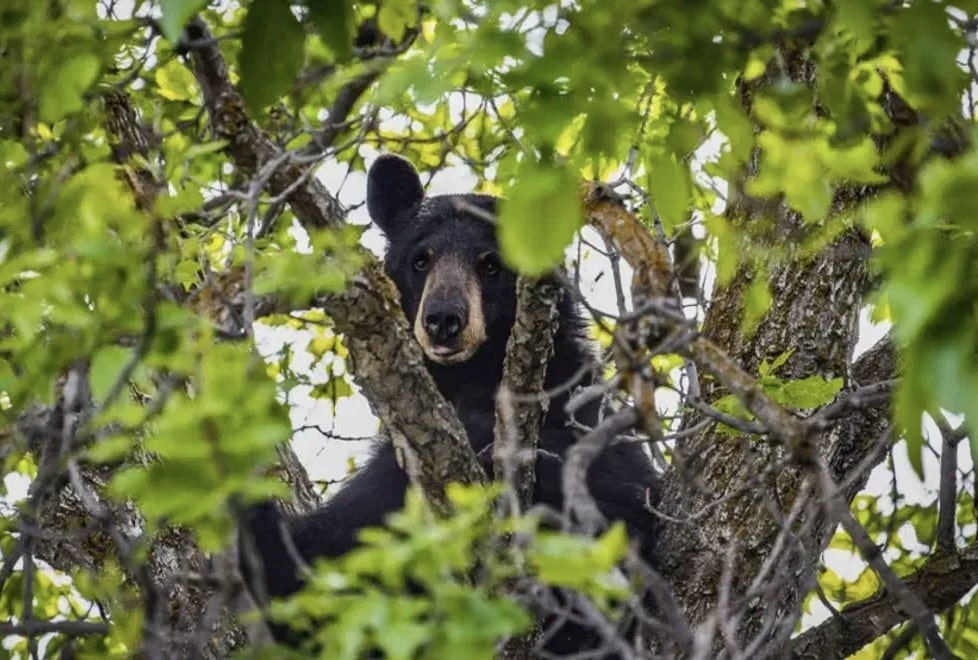
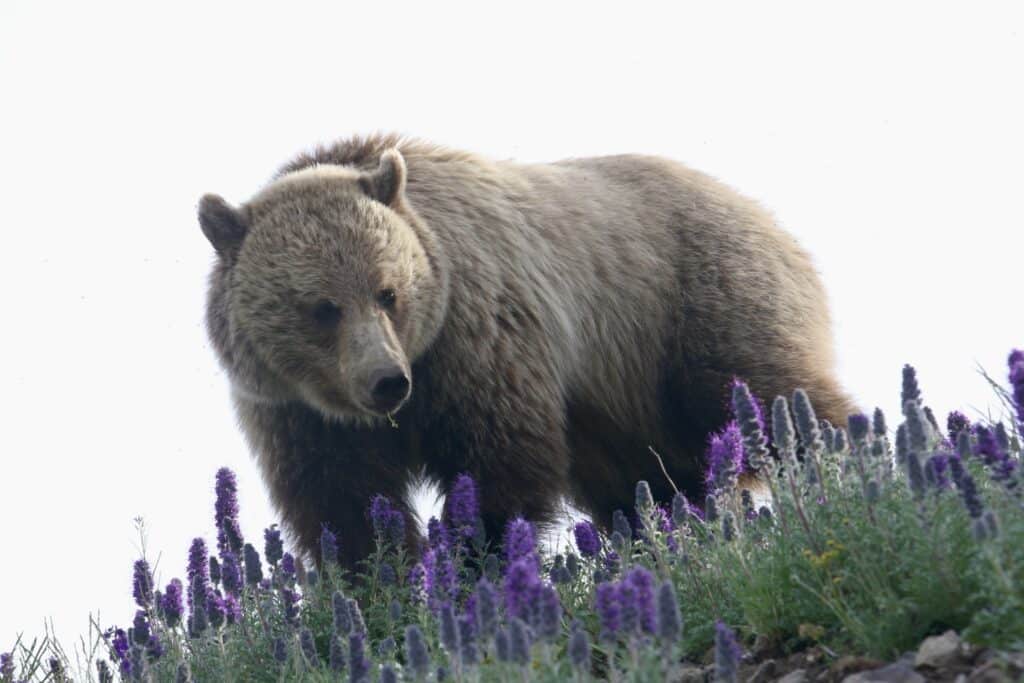
Angela snatched Emma and ran for the bedroom, the remotest room in the house. I stood face to face with the window filled head of “Miss Piggy.” Our responses were spontaneous and primeval. Appropriately both pigs and bears are called boars and sows. I shouted and waved my arms and she responded with indifference.
I fetched my .22 Cal French pistol that I had not fired for years, not with any intention of shooting the bear but with the idea that even a .22 fired inside the confines of the kitchen might spook her especially if she had any previous experience of firearms. I moved closer, pointed the pistol at the ceiling above her head, pulled the trigger, and heard a dud click.
I ejected the cartridge while the bear continued her efforts to get inside. I examined the base of the brass case which had been well struck by the firing pin, but misfired. I re-inserted the cartridge into the pistol and pulled the trigger for a second disappointment. Miss Piggy kept coming. She was hungry.
Afterward I kept the cartridge with the two strikes on it as an amulet, a reminder of the fickleness and of my ill-founded faith in technology. “Oil-fouled,” I later surmised, was the technical explanation, but more importantly the farce of the experience was a life lesson and likely relevant to others who inhabit the “wild West.”
While I fiddled, Miss Piggy had made some progress at the window. Second thought: I had a 12-gauge shotgun loaded with #5 birdshot at hand, and again I had no intention of shooting the bear, but briefly I did consider firing the shotgun over her head. Sensibly, I thought of the mess it would make of the ceiling.
While I fiddled, Miss Piggy had made some progress at the window. Second thought: I had a 12-gauge shotgun loaded with #5 birdshot at hand, and again I had no intention of shooting the bear, but briefly I did consider firing the shotgun over her head. Sensibly, I thought of the mess it would make of the ceiling.
How many pounds was Miss Piggy? The necropsy report would say, but I’ve not found a copy of it.
People have asked me: Did I notice any distinct markings in the flash of the encounter? No, a big brown bear and I saw only her face in the window. The color of her eyes? Dark. The shape of her face? A big triangle face shape with a piggy nose intruding through the window frame into the room. The condition of her teeth? No, she never opened mouth The smell of her breath? No pig smell. Her claws? Before I abandoned the scene I never saw her paws nor claws, just her head/face. There were tear marks on her ears perhaps from other battles? Were they (her ears) turned backward? She never showed the slightest signs of aggression nor of intimidation; she was all business focused on the stew. Did she growl, roar or apologize for the home invasion and say, “A bear’s got to eat?” No, though in retrospect that was obvious and nurtures my empathy for her innovative desperation that night. This would be a perfect spot for a bit more descriptive detail relating to that, but for another time.
Having exhausted a folly of options and expecting the bear to successfully get into the house, I moved to the bedroom where Angela and I climbed out through the window handing Emma from one to the other in the process. We ran down through the snow and darkness to the car. Once I succeeded in getting the key into the car door lock and we were safely inside I excitedly called the Lake Yellowstone Ranger on my Park Service radio. (This was, for youngsters reading this, 40 years prior to the advent of cell phones).
Shortly after we saw the flashing lights of his patrol car racing six miles away across Hayden Valley toward us. (The park was closed down for the year to tourists). When Jerry arrived and after determining the bear was not inside he and I approached the back of the house—he with his flashlight and revolver in hand. Rumor had it he was the pistol shooting champion of the Wyoming State Peace Officers Association which gave me confidence following behind him.
The bear was nearby. She woofed at us then moved away. We found the cooking pot on the ground licked shiny clean. We went inside and Jerry telephoned his superior, the district ranger at park headquarters in Mammoth 38 miles north to convey details of the incident. The whole time our dog Gautama was barking compulsively under our bed in the back room where she had taken refuge.
In those days it was forbidden for residents to keep a dog in the interior of the park. A few days later the district ranger made a dedicated visit—not to inform us about the bear, but to order us, without a preamble, to “get that f’ing dog out of the park.”
But that was later.
Following Jerry’s advice, Angela, Emma, and I drove to Lake and stayed the night. Next day Jerry set a live culvert trap in front of the house while we drove 40 miles to West Yellowstone to buy some last chance groceries before we were snowed in for the winter. Upon returning as we pulled up to the house the bear bluff charged the car. Her eyes reflected orangish-red in the headlights.
During the excitement of the intrusion to her credit Angela was an all focused female mammal mother, no panic, no hysteria …she never showed any sign of fear, just the immediate excitement we shared immediately afterward. When the event was resolved she carried on with the life, always showing an acceptance that this was a part of “normal” in our life in Yellowstone. Never “No!, we gotta move!”)
As we watched she ran into the culvert trap and out again; the door was frozen open. Jerry came back from Lake, re-baited the trap (with peanut butter) and sorted out the frozen door. Before he left he gave me four 12-gauge shotgun shells, a pair each of 00 buck shot and a pair of slug shells and left.
The Park was different then.
The coming of winter marked the restoration of the Yellowstone Plateau to an unpeopled frontier world where self-reliance was expected.
After thinking through several scenarios, each of which I hoped would never come to pass, I slept with the loaded shotgun next to our bed. We didn’t know it then but we were living the last vestiges of old-time winter in Yellowstone. None of this story could ever unfold in this way again.
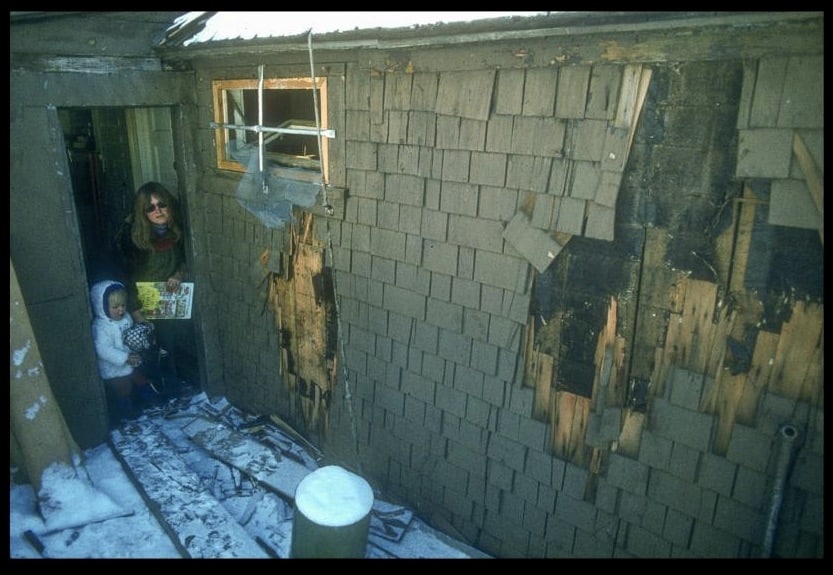
Next morning the bear was in the trap, transported 30 air miles north-west and released. After she was gone we inspected the outside of the house. Spectacularly she had clawed all the cedar shingles near the kitchen window off the outside wall. There was blood on the broken glass of a small window in the front door, snot, spit and blood smears on several other windows, but she hadn’t gotten in any of them.
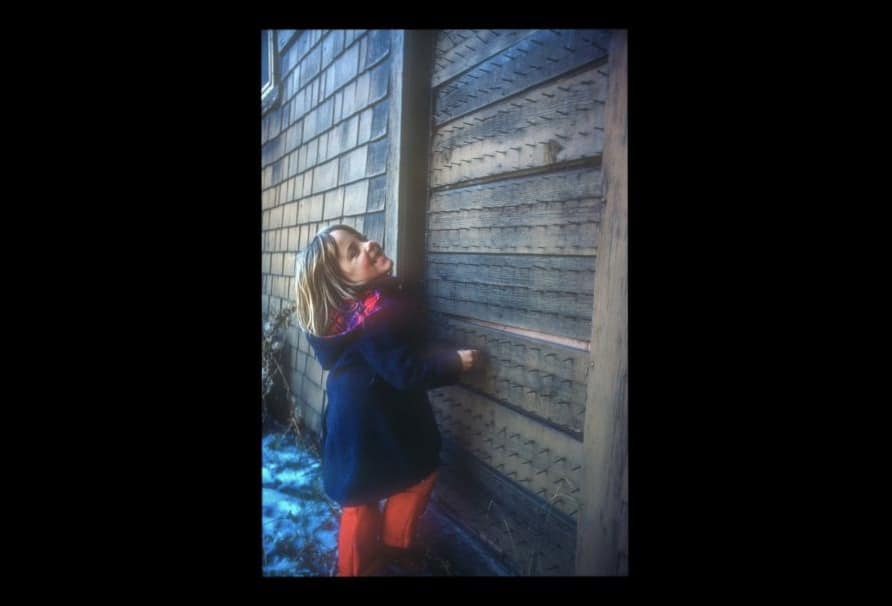
A long-ago winterkeeper, harassed by similarly determined grizzlies, had hammered scores of large nails all the way through to the outside of the back door so as to discourage grizzlies from pawing and clawing to get inside, just as “Miss Piggy” had done to our shingled wall around our kitchen window.
Two days and 35 air/cross-country miles later she was back. She was live-trapped (peanut butter again) in front of the house and transported 125 miles down to a wildlife veterinary lab in Bozeman.
We learned that earlier that autumn she had broken into other buildings 20 miles north of us, thus she was deemed to be a dangerous bear.
With no good options available to her captors she was “terminated,” killed, aka euthanized. According to her necropsy report she exhibited a low body mass relative to the size of her skeleton…she was skinny. She was 24 years old, geriatric and likely infertile. She was unlikely to emerge alive from her den come spring which somewhat eased our feelings about her death.
Our arrival in Yellowstone coincided with the implementation of a controversial new bear management plan in 1970 that caused an unprecedented surge in the deaths of grizzlies in the park.
At the time a philosophical battle was raging over what to do about grizzly and black bears that became habituated to eating human garbage at open pit dumps in the park—places where watching bears arrive to feast upon discarded good waste from the hotel restaurants was considered entertainment. It was not good for bears, nor for human safety and it resulted in generations of bears associated people and dwellings as sources of food.
The plan required the abrupt closing of man-made garbage dumps throughout the park where grizzlies had congregated to feed for decades. Vocal opponents, including the brother bear researchers, John and Frank Craighead, who warned that sudden closure of the dumps, as opposed to gradual, would yield a spike in conflicts, dead bears and potential injuries of people.
Park officials opted for abrupt closure to accelerate the weaning. Denied access to the abundance of high-energy garbage food the bears moved into human enclaves in search of their accustomed haute cuisine which accelerated people/bear clashes and resulted in the management killing of unprecedented numbers of “nuisance and dangerous “ bears. This, in turn, provoked a tempestuous public debate about the wisdom of the policy and raised questions among some as to the ultimate genetic viability of the shrinking population in Yellowstone.
Isolated inside the “information desert” of our Canyon world of the early 1970s and focused on the nitty gritty of the everyday life of work and family the impassioned debate in the outside world about the proper management and existential fate of the American grizzly was a distant noise, despite our living in the biological center of the controversy. A few years later, the Yellowstone grizzly population was listed as threatened under the Endangered Species Act and it retains that status today, though states are aggressively pushing to have those protections removed, ostensibly so bears can be sport hunted as trophies outside the park.
Six weeks after Guy Fawkes night, and two days after the Winter Solstice when the winter is young and the central plateau world is brilliantly crystalline Angela got up before dawn to do some displacement housework. She knew today was the day. There was no discussion.
We called dispatch to arrange seats on a tourist snow coach for the ride to the doctor’s office in West Yellowstone. Throughout the ride the circumstances of the trip trumped our several fellow passengers’ attention to the wonders of the Yellowstone they had come to see.
We arrived in West Yellowstone after dark and visited the young doctor in her office for a brief evaluation and conversation. A couple hours later Angela, Emma and I joined the doctor in her office and all of us shared the evening hours fascinated with every detail of new daughter, Skye’s, birth. Emma was as close-by as the rest of us and equally engaged but as an adult has no recollection of the birth of her sister. Skye Canyon came into the world an hour before midnight.
The next day we rode a snowcoach shuttle to Old Faithful, recently open to the public in winter, and spent the night there. Then we rode a second snow coach back to Canyon where we arrived late that afternoon for the recommencement of our second winter at Canyon.
Without a thought we took for granted that a several day’s long siege by a grizzly bear and a mid-winter frontier style birth came with the territory. It was an assumption that served us well for both the routine challenges of the life to come as well as for the unexpected trials of the next fifteen years.
NOTE: Below is Fuller’s piece that preceded this one and a few others.