by Andrew Hansen
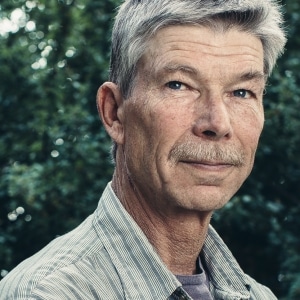
Ph.D. Landscape Ecologist Professor Emeritus
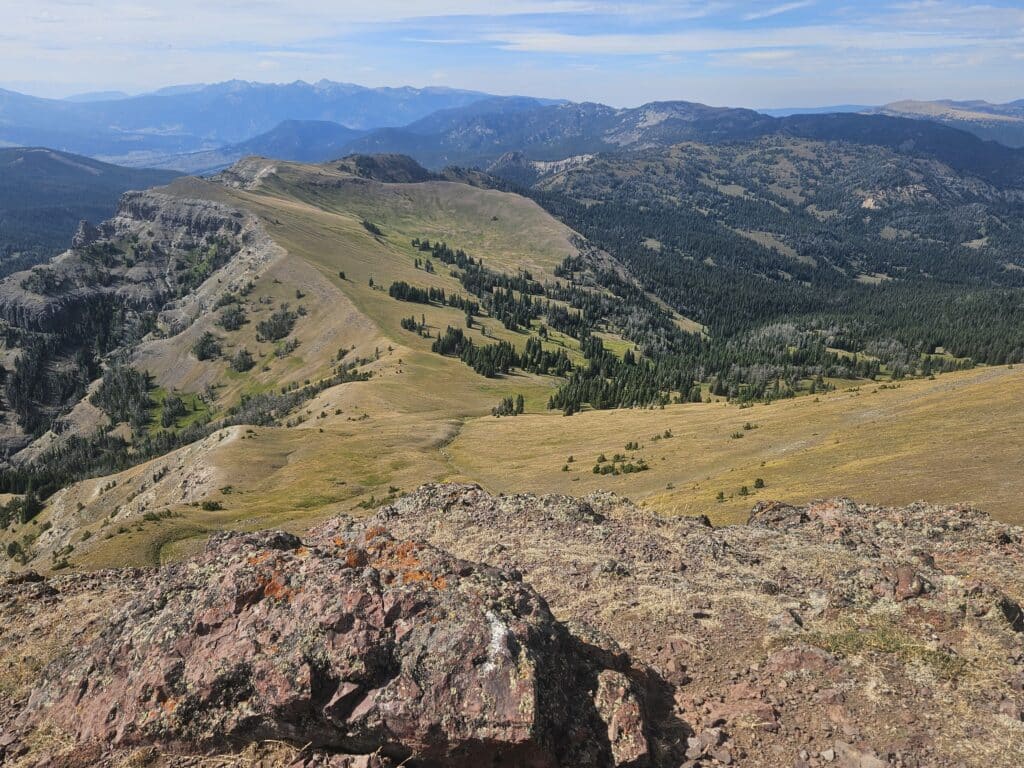
Yellowstone is famous for geysers, wolves, elk migrations, and world-class trout rivers. What is not widely appreciated is that these wonders are possible because of the vast wildlands that comprise the Greater Yellowstone Ecosystem (GYE).
The total area of Greater Yellowstone is larger than each of 10 US states. If the region were centered on New York City and tilted to the east, it would extend from Washington, DC to Boston.
For wildland ecosystems, bigger is indeed better. Human impacts radiate into wildlands from roads, homes, and farms; large areas are needed to preserve core regions of low human modification. Large wildlands are also necessary in the Yellowstone region because climate, soil quality, plant productivity, and prey densities vary by location and season across the landscape.
° ° ° °
° ° ° °
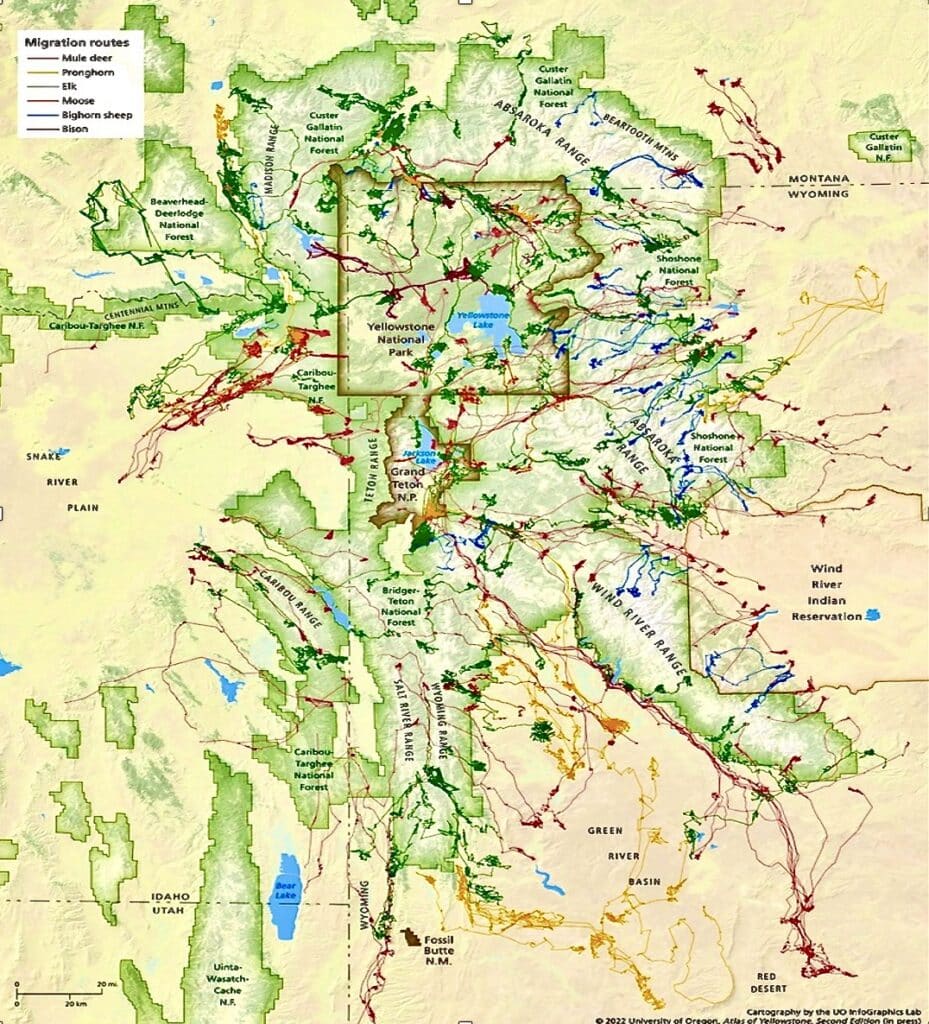
Many wildlife species must move seasonally across vast distances to survive. Male grizzly bear home ranges average 337 square miles. A pronghorn population in southern Greater Yellowstone migrates about 160 miles each way between summer and winter ranges. Cutthroat trout in Yellowstone Lake swim an average of 26 miles upstream to spawn.
The spacious forests of Greater Yellowstone maintain the deep-winter snowpack that feeds its rivers, lakes, and hydrothermal basins. The network of grasslands and shrublands stretching from high mountains to valley bottoms supports the seasonal migrations of elk, mule deer, and pronghorn. These extensive, un-roaded lands provide security for wildlife sensitive to human disturbance, such as grizzly bears, wolverines, and wolves.
What the Trump Administration is currently carrying out with its radical changes of landmark environmental laws and longstanding public land policies will devastate the Greater Yellowstone Ecosystem.
—Dr. Andrew Hansen
Ecology professor emeritus, Montana State University
If this expanse of wildlands underlies so much of what we love about Yellowstone, we should be deeply concerned that these lands are shrinking. Since around 1990, as my own research has documented, waves of people have moved here to enjoy these natural assets. Consequently, land development and intensifying outdoor recreation have destroyed and fragmented natural habitats, and placed far more people in close contact with wildlife.
Currently, more than 31 percent of the ecosystem has been degraded or lost to development. At the same time, data shows the local climate has warmed by 2.3°F since 1950, and snowpack has declined by 25 percent. Rivers have warmed so significantly that summer fishing is routinely restricted to “hoot owl” hours.
Often described as “death by 1,000 cuts,” rural subdivisions, roads, and climate warming have steadily degraded Yellowstone’s nature and wildlife. Some 30 percent of songbird species have declined in abundance. Many mule deer and trout populations sit at 40-year lows. Numerous elk herds have abandoned long-distance migrations to reside year-round on irrigated hayfields, where forage remains reliable during summer droughts. In addition, invasive species like cheatgrass degrade wildlife range.
° ° ° °
Human-caused grizzly bear mortality has increased. Wolverines are increasingly displaced from winter habitats by snowmobiles and backcountry skiers. Meanwhile, the keystone whitebark pine has suffered 90 percent mortality due to insect outbreaks enabled by warmer winters. Looking ahead, an increased frequency of severe fires is forecast to convert intact forests to degraded shrublands and further reduce the snowpack.
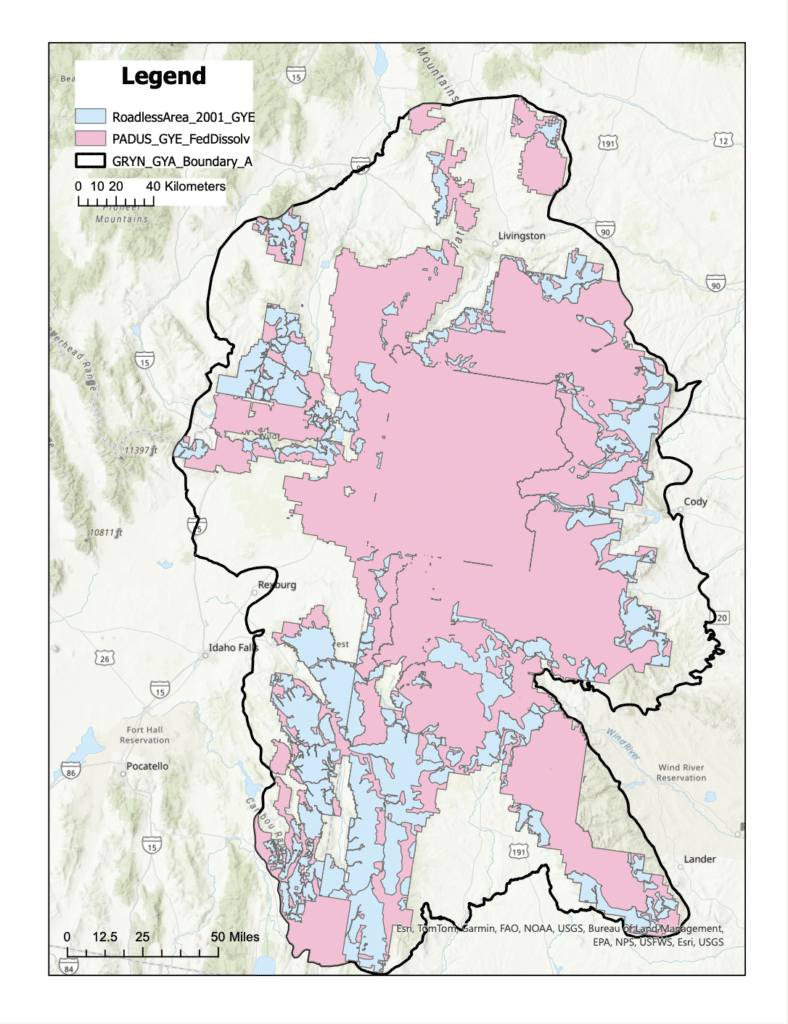
In 2025, shortly after US Agriculture Secretary Brooke Rollins first announced the Trump Administration’s intention to roll back protections for national forest lands protected by the Roadless Rule, scientist Hansen put together this graphic. The light blue areas show the location of officially inventoried roadless lands that not only provide vital habitat for a wide array of wildlife in Greater Yellowstone and are in the headwaters of major river systems, but allowing them to be invaded by roads, logging and motorized recreation would dramatically negatively affect the caliber of habitat adjacent to them, Hansen says. Ignoring this, Rollins in August 2026 said the Administration would proceed and, notably, the move is supported by a number of free-market organizations that claim to be driven by conservation but instead have demonstrated their loyalty to the President on this and other controversial policy decisions that reverse a century of land protections dating back to the era of Theodore Roosevelt.
° ° ° °
The “cuts” inflicted on Greater Yellowstone have been far less severe on protected public lands. Quantifying trends in vital signs of ecological health across the ecosystem from 1970 to 2015, Linda Phillips and I found in our research assessment that while five out of nine vital signs were deteriorating on private lands, seven vital signs remained stable or improved within national parks and wilderness areas. This is compelling evidence that vast, contiguous wildlands are fundamental to ecosystem health.
These indispensable wildlands persist because of bedrock federal protections: the Wilderness Act, which created Designated Wilderness; the Federal Land Policy and Management Act of 1976, which established Wilderness Study Areas; the Endangered Species Act, which safeguards imperiled species and their habitats; and executive protections like the 2001 Roadless Area Conservation Rule, which secured Inventoried Roadless Areas. These protected federal lands form the backbone of conservation success across the American West.
Yet Greater Yellowstone and the nation now sit on the cusp of the unthinkable: the potential loss of these foundational protections. The current presidential directives move toward:
- Rescinding the Roadless Rule and opening Inventoried Roadless Areas to road-building, commercial logging, and mining;
- Redefining “harm” under the Endangered Species Act to exclude habitat destruction, undermining habitat protections for imperiled species;
- Accelerating domestic timber production, broadening industrial clear-cutting into mature and old-growth forests while bypassing standard Endangered Species Act reviews;
- Conducting a sweeping nationwide review of Wilderness Study Areas aimed at rolling back protections;
- Relaxing Travel Rules on national forests to expand access for motorized vehicles and e-bikes.
Executing these directives would devastate Greater Yellowstone.
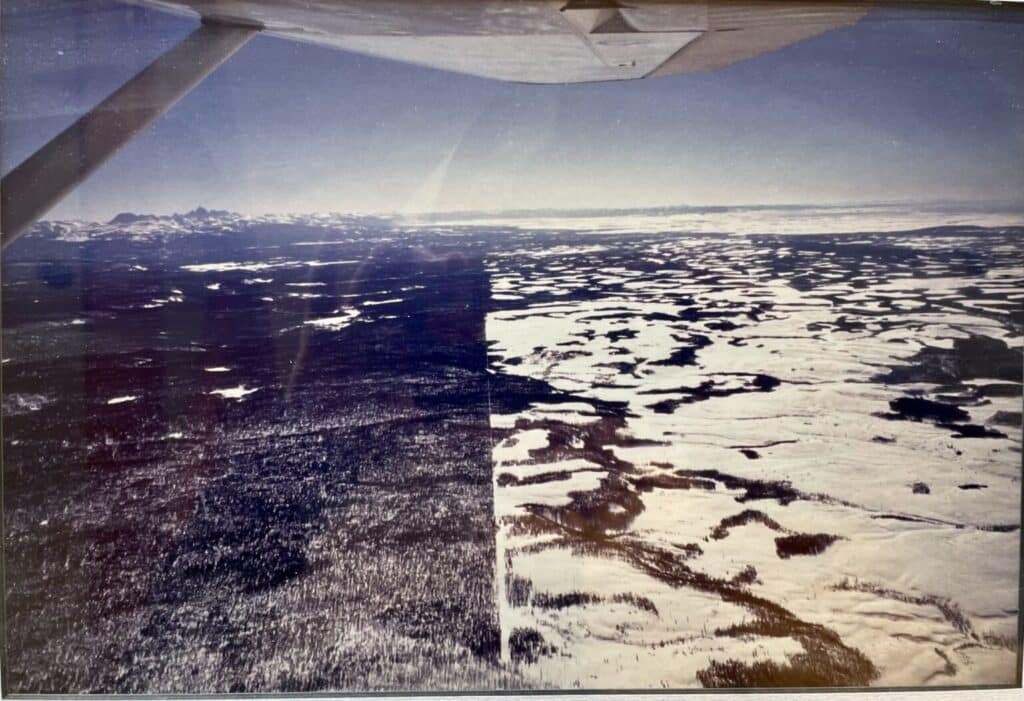
Increased industrial logging on general forest lands would erode the buffer that currently shields core wildlands from human pressure. In my local area in northern Greater Yellowstone, the Custer Gallatin National Forest has proposed four major projects over the past five years that would log 12,600 acres on the fringe of Yellowstone National Park and an adjacent Wilderness Study Area.
Two of those projects were halted by lawsuits to protect grizzly bears, lynx, wolverines, and whitebark pine—all listed under the Endangered Species Act—and a third lawsuit remains pending. Such projects chip away at the edges of the GYE’s remaining wildlands.
° ° ° °
° ° ° °
Situated between general national forest lands and core Wilderness Areas or National Parks, Inventoried Roadless Areas and Wilderness Study Areas account for 41 percent of all Greater Yellowstone wildlands. Their ecological value far exceeds their acreage because they sit at lower elevations, offering exceptional wildlife habitat. Furthermore, they radiate outward from core protected zones, providing crucial connectivity and gene flow across the broader ecosystems of the northwestern US.
Stripping protections from roadless areas and wilderness study areas would degrade elk and mule deer winter range, drive up grizzly bear mortality, sever wildlife corridors within and beyond Greater Yellowstone, further harm trout populations, and push human pressure into critical climate refugia where wildlife currently find relief from warming and drying trends.
Weakening habitat protections under the Endangered Species Act opens the door to expanded road-building, logging, and mining inside key habitats for grizzly bears, lynx, wolverines, and whitebark pine.
If population growth, land development, and recreation represent “death by 1,000 cuts,” stripping federal protections would “deliver a knife to the heart”. Under compound pressures from human expansion, climate change, and loss of federal protections, Greater Yellowstone will lose its standing as the largest intact ecosystem in the Lower 48. It risks following the path of the Colorado Front Range, the Wasatch Front, and the Sierra Nevada—where wildlands and wildlife gave way to human expansion.
What can be done? Citizens must speak up loudly against these rollbacks on public land protections and urge Congress to codify these safeguards into law. By averting this threat, we can return to working collaboratively—across ranchland associations, land trusts, conservation groups, local governments, residents, and visitors—to preserve the ecological health of both private and public lands throughout the Greater Yellowstone Ecosystem.
NOTE: Dr. Hansen and others are among Yellowstonian‘s extensive network of scientific researchers, land managers, thought leaders and others with whom we regulatory have conversations about Greater Yellowstone’s future. The following stories are just a few of a long roster we’ve published informed by those conversations and, moreover, they are corroborated by hard scientific evidence provided to us by scientists.