
By Todd Wilkinson with Chris Servheen
The Trump Administration’s systematic dismantling of American-style environmental protection, which made this nation the envy of the world, continues apace with a suite of moves that have huge implications for wildlife and landscape conservation in the West.
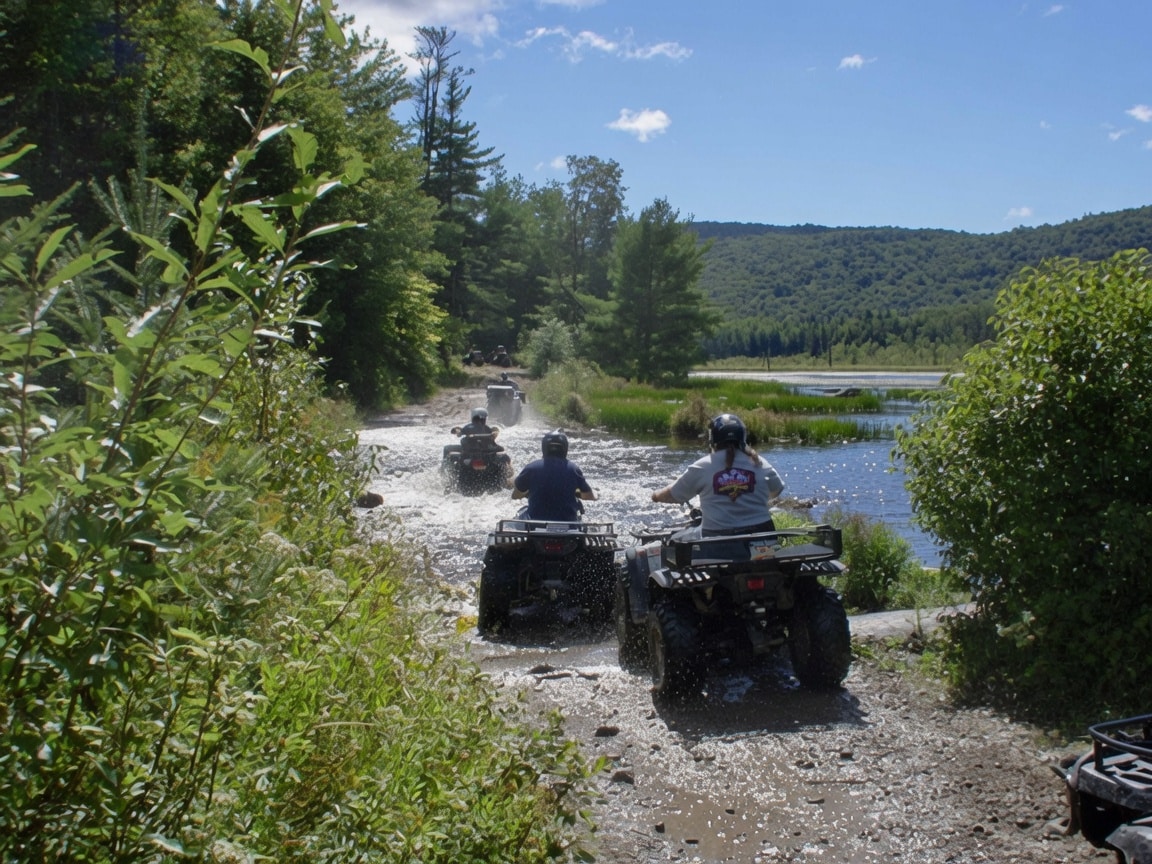
President Trump has issued two new executive orders, done on behalf of the motorized recreation industry and anti-regulation free-market thinktanks, to overturn the long-standing Forest Service “Travel Rule” that confined ATV users, dirt bike riders, and snowmobilers to using established roads and designated trails.
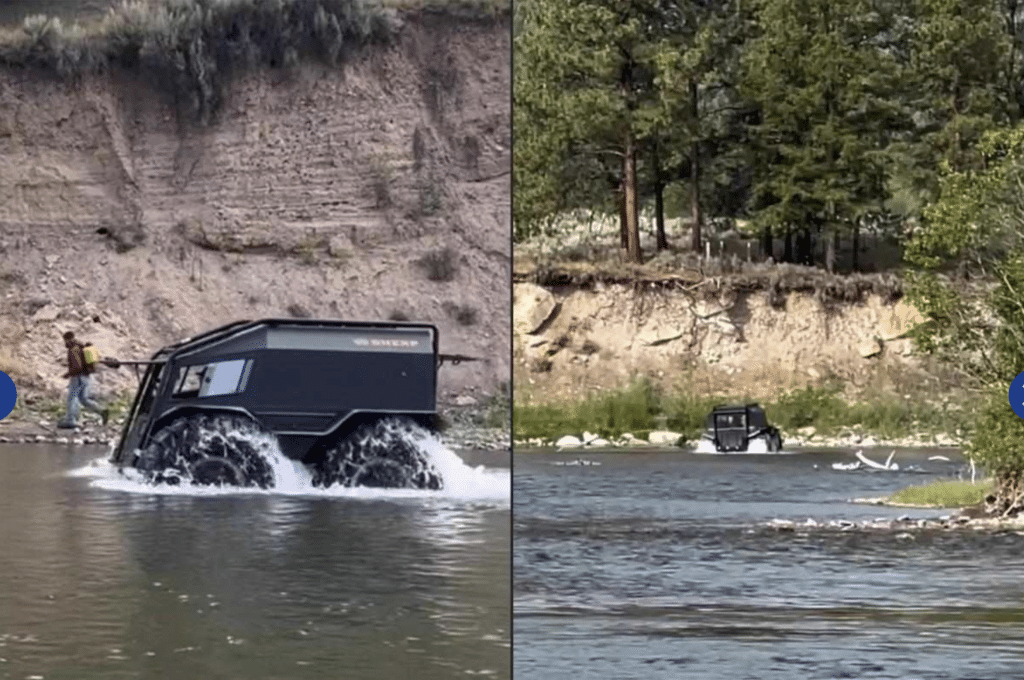
If Trump’s new edict goes into effect, policy experts say, it will open a potential “free for all” whereby motorized recreationist can throttle their machines cross-country virtually anywhere that their vehicles can take them. There will be no stopping e-bikers and mountain bikers either. Combined with the push by US Secretary of Agriculture Brooke Rollins to rescind the Forest Service Roadless Rule, the undoing of the Travel Rule by executive order and which applies to other land agencies, could severely negative impact undisturbed wildlife habitat on tens of millions, if not hundreds of millions of public lands in the West.
“What is happening now with this Administration is unprecedented. In my more than 45 years as a federal wildlife and natural resources manager, I have never seen the current level of willful and organized damage to and destruction of public lands and natural systems being inflicted on our public lands, wildlife, waters and air. It used to be that we thought of the Reagan administration and President Reagan’s Secretary of Interior James Watt as the worst possible federal administration for natural resources. But the current Secretary of Interior Doug Burgum and his counterpart Secretary of Agriculture Brooke Rollins make James Watt look like Henry David Thoreau.”
—Dr. Chris Servheen
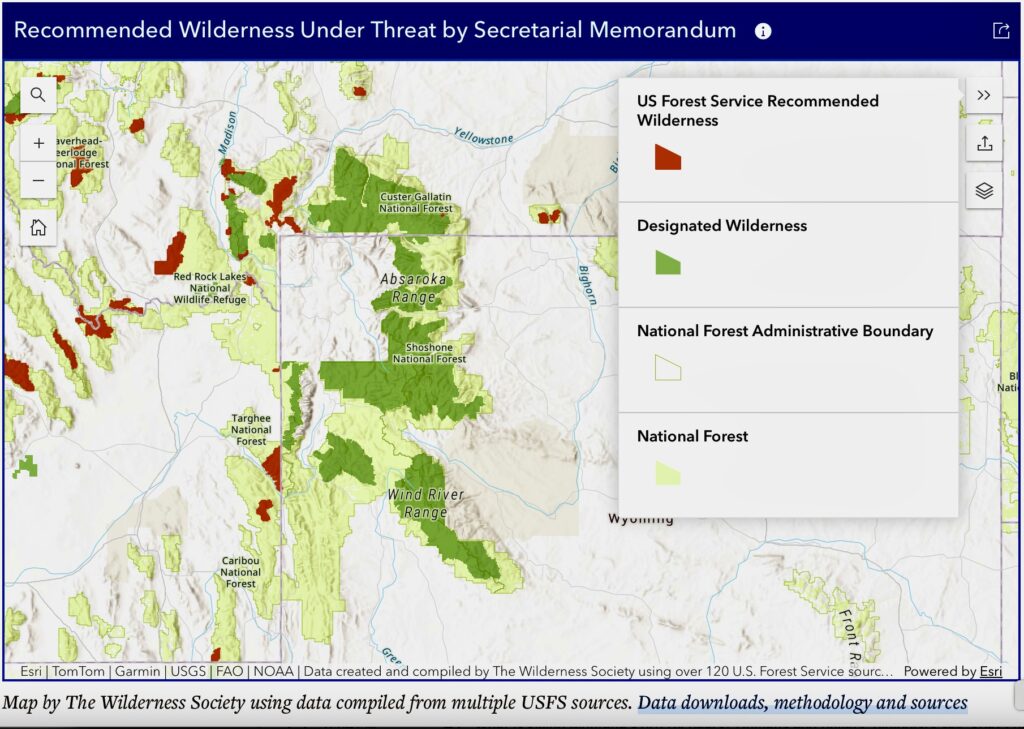
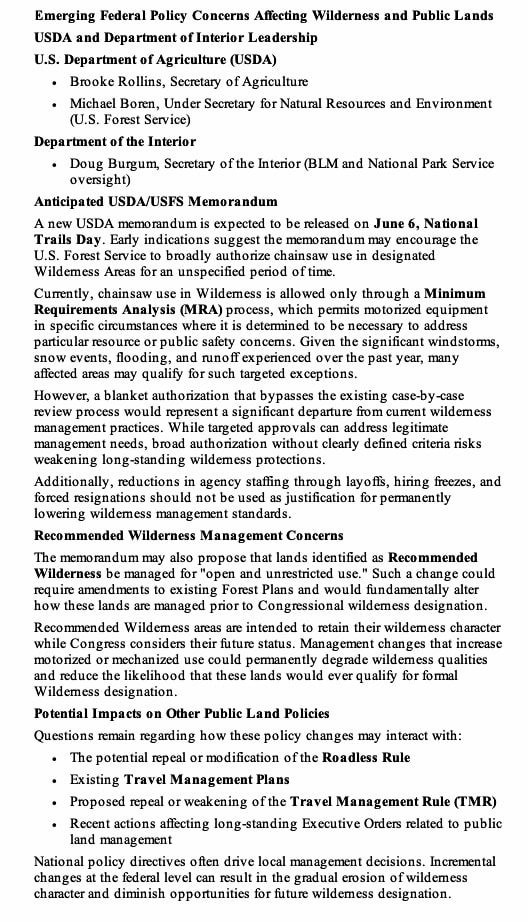
In addition, and now in circulation is what appears to be a leaked internal memorandum in which the Trump Administration discusses policy changes that would allow multiple use activities such as roadbuilding, logging and motorized recreation to invade around five million acres of national forest lands proposed for federal Wilderness status, where those activities are forbidden. It includes lands in Greater Yellowstone.
According to The Wilderness Society, such actions would preclude those high-caliber wildlife rich wildlands from ever being considered for future Wilderness status. Those lands, the organization’s scientific analysts say, provides habitat for 30 endangered and threatened species, 2.3 million acres deemed critical for conserving biodiversity, 2.6 million acres deemed critical to maintaining biological connectivity, and 1.5 million acres that provide clean drinking water.
The memo that focuses on wilderness study areas also would allow chainsaws to be used in existing Wilderness. Under federal law, only Congress has the authority to determine the fate of lands inside wilderness study areas.
Together, the tri-fecta of actions represent the greatest administrative assault on protection of known high quality wildlife habitat on public lands in US history.
The Travel Rule, meanwhile, was first explored for inaction during the last years of the Clinton Administration following decades in which rapidly expanding motorized use resulted in scars from vehicles tearing across landscapes, displacement of wildlife and loss of solace. Although not implemented until 2005, it dates to the same time that Clinton’s chief of the Forest Service, Mike Dombeck, assembled a team resource experts safeguard 58.5 million acres of national forests where no roads had ever been built. It resulted in the Roadless Rule whose intentions were protecting wildlife habitat, watersheds that deliver water for 60 million Americans, superb hunting and fishing terrain, and serve as places where citizens could escape mechanized society.
° ° ° °
° ° ° °
Just as an overwhelming majority of Americans, invited to submit comments, supported implementation of the Roadless Rule, the same was true with the Travel Rule.
But under the directive of Trump’s Agriculture Secretary Rollins and Forest Service Chief Tom Schultz, those roadless lands could soon be open to roadbuilding, logging and never before seen waves of motorized users. The ending of the Travel Rule, however, represents a menace of equally large magnitude to the health of wildlife and sensitive public lands. Besides concerns expressed about impacts to areas in the Rockies, conservationists worry about wildlife and vegetation being affected in deserts and nesting shorebirds and sea turtles along the ocean coasts, where ATV riding is tightly controlled. Read the news release from the Southern Utah Wilderness Alliance.
With these rules put in place that overturn old safeguards, it means that any undisturbed meadow, mountain foothill or forest could be approached as a blank slate for riders to create new trails. Apparently, the Forest Service isn’t heeding warnings highlighted by agency researchers who delivered a report in 2008 that, after the Travel Rule had been implemented, highlighted the need to control where motorized recreationists can go and not go.
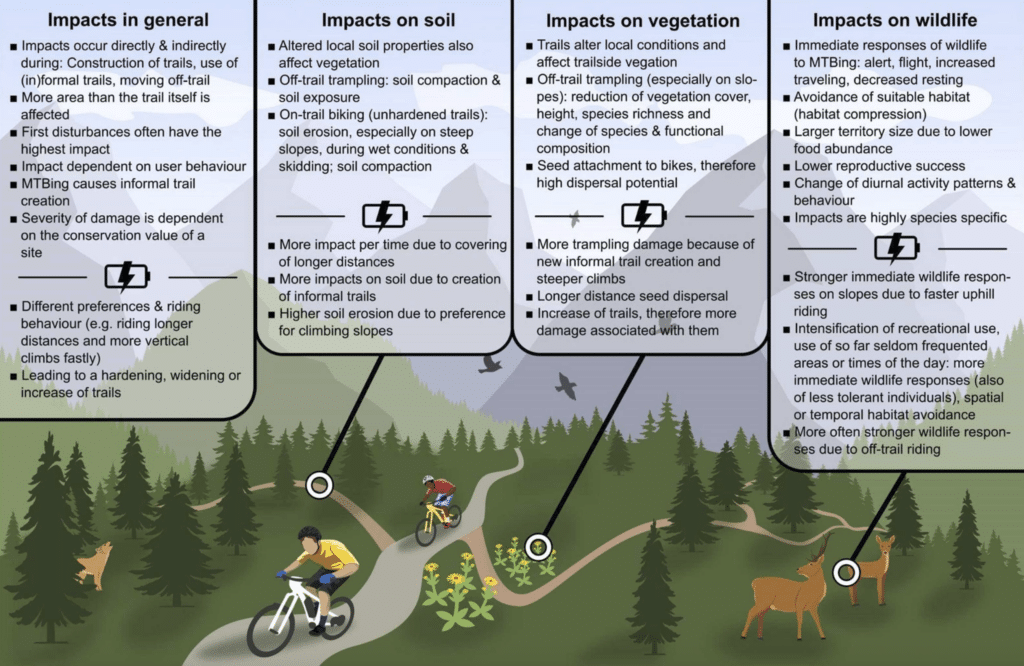
“Unauthorized trails from motorized use cause much of the natural resource [impacts] and some of the public safety concerns on national forests. Unauthorized trails are a major problem for forest managers,” authors wrote. “The magnitude of effects varies depending on local characteristics of the landscape including slope, aspect, soil susceptibility to erosion, and vegetation type. The land may be able to rehabilitate itself after the effects from a few ATV rides across a meadow, but multiple passes across the same area often result in a reduced or complete loss in the capacity for natural rehabilitation.”
This week, as part of Yellowstonian’s regular offering, “Conversations from the Green Thicket,” we sit down to discuss the implications of those actions on wildlife in Greater Yellowstone and other portions of the West.

Todd Wikinson: Chris, it sure feels like the late 1990s all over again when the Forest Service had to issue the “Travel Rule” to address negative impacts from motorized recreation that were deemed then to be out of control. What’s different today is that the machines now possess a lot more horsepower and maneuverability that enable them to reach places they never could before yet now would be given a green light by the Trump Administration. What’s your reaction?
CHRIS SERVHEEN: The idea of opening the few areas where motorized vehicles are not allowed to have free and unregulated cross-country use is going to be incredibly harmful to wildlife and to the fundamental nature of these places. The reason we still have healthy populations of wildlife in many areas of the Northern Rockies today is because we have regulations on where motorized use is possible.
If these regulations are eliminated and these formerly secure areas are flooded with motorized vehicles, the wildlife populations in these areas will suffer and will decline in numbers. This will occur with both summer and winter motorized use of these currently non-motorized use areas.
Let’s not forget the damage that unregulated motorized over snow use can have on wintering wildlife. Animals in winter are already stressed and if we put unregulated snowmachine and snow bike (snow bikes offer the agility of a dirt bike combined with the flotation of a snowmobile, making them highly maneuverable in deep powder and tight backcountry terrain) use on top of these stressed wintering wildlife, many species will suffer and their winter survival will be compromised.
° ° ° °
Will motorized snow bikes soon be proliferating across public mountain lands in the West? The Trump Administration is considering allowing them to ride cross country almost anywhere that horsepower can take them. What about impacts on wildlife and winter serenity? They’re not given much consideration in executive orders coming out of The White House nor from cabinet secretaries. Screenshot of an outfitter’s public website.
° ° ° °
Wilkinson: The Trump Administration and those pushing for these changes have been severely criticized for claiming such lands are “underutilized” and “locked up.” The most poignant argument I’ve heard is that they are ecologically ignorant and don’t care.
SERVHEEN: This executive order allowing mechanized users to go cross-country is completely unnecessary because there are already hundreds of thousands of miles of roads and motorized trails available to people who would like to access public lands with motorized vehicles. The Forest Service states there are more than 265,000 miles of roads on Forest Service lands and that does not count the tens of thousands of miles of motorized trails on public lands in addition to these roads. Add in the network of roads and trails on BLM lands.
Wilkinson: An important part of the wild character of public lands, especially in the Rockies, is having places where people and wildlife can escape the incursion of motorized vehicles.
SERVHEEN: The few places left where motorized use is not allowed are incredibly important to wildlife who seek these non-motorized areas for feeding, resting and sanctuary from human disturbance. To open these few remaining areas to motorized use will displace and disturb elk, deer, sheep, bears, moose and all the species who use these non-motorized areas. There are vast amounts of solid science demonstrating about how motorized use harms wildlife by increasing stress levels, causing them to flee the approach of motorized users, displacing wildlife from preferred feeding and bedding areas to less desirable habitat, and permanently displacing wildlife entirely from areas of motorized use.
These displaced animals like elk will move to areas where motorized use is not present such as private lands, in some places where they aren’t welcomed. It is exceedingly selfish of the people who came up with this idea to assume that the few areas left that are non-motorized must be opened to motorized human use with all the harm this will do to the resident animals who try to make a living in these areas.
Wilkinson: While some hunting and fishing groups are outspoken in their opposition, there are some organizations, like the Blue Ribbon that cheered the move. There are also free-market thinktanks, like the Heritage Foundation and another in Bozeman that claim to be an “advocate for conservation” that seem to have morphed into defenders of MAGA no matter what the policies. They are conspicuously silent, even though the downsides are irrefutable.
SERVHEEN: Hunters should be particularly concerned because the impacts of opening currently secure habitats to motorized use will reduce big game numbers, reduce numbers of larger bulls who currently seek security in non-motorized areas (every elk hunter knows that the big bulls are found in secure habitats away from motorized use areas), and displace animals to private lands where hunting is forbidden. Eliminating regulation of motorized use on public lands will reduce big game populations, and result in shorter hunting seasons and fewer special permits.
Wilkinson: Over the years, you as the national grizzly bear recovery coordinator for the US Fish and Wildlife Service, and thanks to the rigorous work of the Interagency Grizzly Bear Study Team, were highly attuned to the science of how logging road densities affect bears and other species. The suitability of habitat for grizzlies declines dramatically when you have more roads and correspondingly more people. This brings disruption to a whole new level. How did the Targhee National Forest (today the Caribou-Targhee National Forest) in eastern Idaho just west of Yellowstone National Park become a flashpoint?
SERVHEEN: The past high road densities on the Targhee, due to intense logging and minimal road removals, were a high risk to any resident grizzly bears. For grizzly bears, roads and motorized trails have significant and damaging impacts on bears and habitat including:
- Increased mortality due to humans, usually due to shooting from the road for the grizzly bears that do not avoid the vicinity of roads and motorized trails.
- Displacement from important habitats and loss of the resources in near roads for the grizzly bears that do avoid roads and motorized trails.
- Fragmentation of habitat due to avoidance of roads or increased mortality near roads resulting in reduced or interrupted movement and isolation.
Roads built for logging, if left on the landscape after the logging is complete, are very harmful to wildlife. Roads are detrimental to all wildlife as animals either avoid such roads or suffer increased mortality close to roads if they do not flee and avoid roads. Opening public lands to unregulated motorized use will dramatically compound these problems for grizzly bears and will result in increased grizzly deaths on public lands.
Wilkinson: Let us remind readers that record numbers of grizzlies died in Greater Yellowstone last year from a variety of human related causes and experts like yourself and others say it’s about more than just having more bears. We are dealing with the countervailing phenomenon of having a lot more people moving into Greater Yellowstone and having impacts on both public lands and formerly rural private lands. For readers who might know what you mean by “grizzly bear deaths” as it relates to this issue, could you be more explicit?.
SERVHEEN: Almost all bears killed illegally or mistakenly by humans are shot. It’s well established that grizzly bears suffer high human-caused mortality in roaded portions of their habitat and where motorized trails exist because there are many more people with guns in roaded/motorized trail environments.
The reasons for these killings of grizzly bears close to roads and motorized trails include illegal malicious kills; mistaken identity kills by black bear hunters; self-defense kills due to human-bear encounters at ungulate kill sites or in surprise encounters with bears close to roads/motorized trails; bear encounters with unsecured attractants such as human-related foods, garbage and game animal meat in roadside and motorized trail camps; and legal grizzly hunting if such hunting ever occurs.
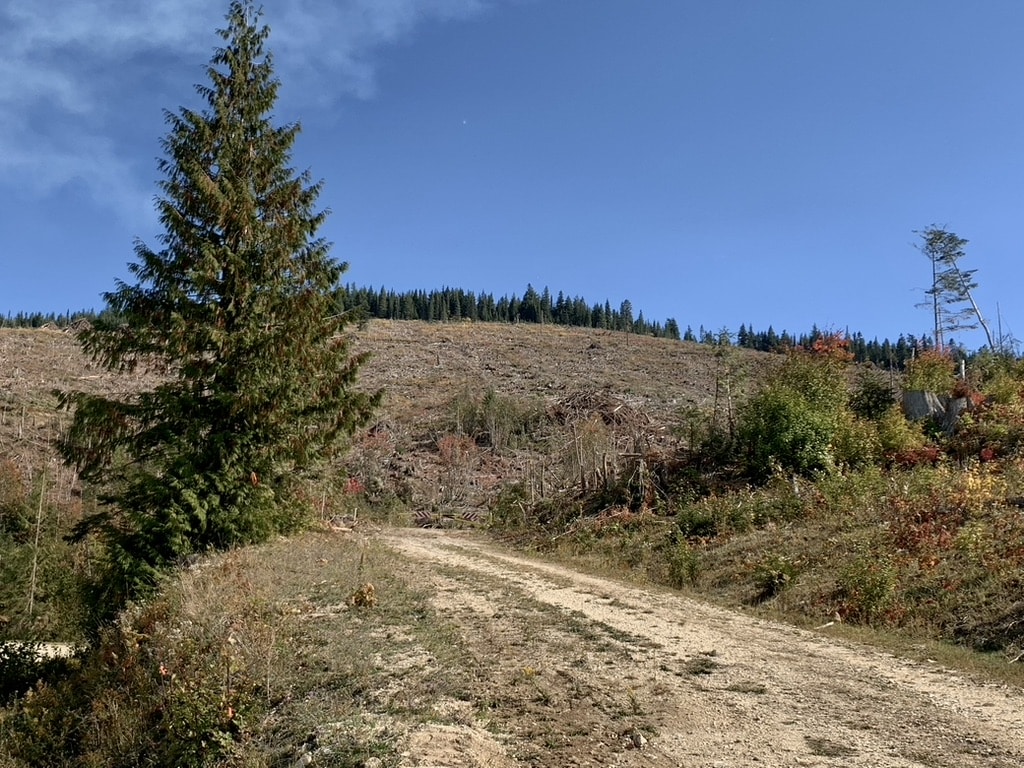
Wilkinson: You’re also a person who, like everyone else, enjoys getting outdoors into wild country for peace, quiet and rejuvenation brought by the aesthetics of being immersed in beautiful places, which are finite. If agencies open up more front and backcountry through road building and allowing ATVs, motorcycles, snowmobiles and mechanized recreation to occur cross country, what are the implications for favorite places outside of national parks that the public enjoys?
SERVHEEN: One of the fundamental properties of wild country where motorized use is regulated is the quiet and solitude offered by places where motorized use is not happening. A person can listen to the birds sing, enjoy the sounds of the wind through the trees and listen to the sound of water as it flows over the rocks in a stream bed. One can also just enjoy the silence of some of the few places where human activities are not present. Opening these non-motorized places to motorized use will destroy that solitude and that silence. There are very few places left with no motorized use and that makes these places so very valuable.
“Unauthorized trails from motorized use cause much of the natural resource [impacts] and some of the public safety concerns on national forests. Unauthorized trails are a major problem for forest managers. The land may be able to rehabilitate itself after the effects from a few ATV rides across a meadow, but multiple passes across the same area often result in a reduced or complete loss in the capacity for natural rehabilitation.”
—Forest Service report on impacts of ATVs on forests and grasslands
Wilkinson: I want to ask you a question about professionalism and ethics in the civil service ranks. Career field professionals, be they forest supervisors, district rangers, park superintendents, BLM area managers or members of the rank and file, know what “the right thing is” for the stewardship of public lands. Citizens put faith in them, that they take seriously the commitment to leave them unimpaired by damage that results from short-term thinking. At least the public hopes that is the case.
What the Trump Administration is doing, many people I’ve interviewed say, contradicts generations and decades of progress that’s been made in advancing better, more thoughtful stewardship of public lands. Do the actions of Trump and political appointees now put civil servants in a dilemma, forcing them to carry out things they know are wrong? And is this not a litmus test of their own personal level of conscientiousness?
SERVHEEN: Yes, such radical policies as eliminating regulations on non-motorized use and rescinding the Forest Service Roadless Rule are transformations of long-term and carefully crafted public policies put in place to balance the needs of some people who want to ride motorized vehicles on public lands with the needs and interests of other people who chose to use some areas of public lands without motorized vehicles.
Such radical policies are corrupting to the public servants whose careers are dedicated to careful stewardship of our public lands. Making such radical policy shifts will put public land managers in such a difficult position and make them question what they are doing and why.
Wilkinson: Unfortunately, many competent people with lots of experience in public land management are fleeing government service. They say the message is clear, from political appointees on down, that if one’s commitment to conservation interferes the interests of resource extraction, you’re no longer welcome. I’ve never witnessed a greater sense of fear inside all land management agencies.
SERVHEEN: Surely anyone with common sense can understand that we need to balance the uses of our public lands to meet the needs of most people, which includes having inspiring landscapes where wildlife persists, not to eliminate that balance and demolish the interests of a certain and substantial percentage of public land users to favor some other public users. For those who think this is a good idea to eliminate the regulation of motorized use on public lands so these vehicles can go anywhere any time, I ask them what they would think if the tables were turned 180 degrees and an administration, without any public input, put in place an executive order to close all public lands to motorized ORV use. What would they think then?
Wilkinson: Well, one of the things that’s becoming increasingly broken is the democratic part of public land management in America, and which was envied around the world, where citizens were encouraged to tell the government what they wanted their public lands to be. I’ve seen no legitimate major public opinion poll, in decades of being a journalist, that validates what this administration is doing.
SERVHEEN: We all need to work together to be a civilized society. This unjustifiable executive order erodes not just wild lands and important wildlife use areas, but it corrodes public discourse and polarizes the American public against each other. It also places federal land managers in the middle of that public strife.
Wilkinson: We’ve spoken about this before, that rescinding the Forest Service Roadless Rule puts the government in a bind because in an ecosystem like Greater Yellowstone, protecting roadless lands was part of the legally-binding agreement made by the Forest Service and individual forests in their management plans to safeguard these areas if bear delisting is going to proceed. Now, add on top of this other sweeping actions, like overturning protections that were in place when you wrote the Grizzly Bear Conservation Strategy many years ago. What does the public need to know and be paying attention to?
SERVHEEN: If this policy to allow unregulated use of public lands by motorized vehicles proceeds, it will invalidate the commitments made by public land management agencies, primarily the Forest Service, to maintain a certain percentage of secure habitat on public lands for grizzly bears. Secure habitat is everything more than 500 meters from a motorized access route. This secure habitat standard is a signed commitment by the Forest Service in the post-delisting management plans called the Conservation Strategies. Removing the regulation of motorized use on public lands in grizzly range will make it impossible for the Forest Service to meet their commitment to maintain a certain percentage of secure habitat free of motorized use for grizzly bears.
Wilkinson: Between allowing roadbuilding in current roadless lands and anything goes riding it would seem to be the end of secure habitat, which really brings into doubt the promise from states and the federal government that they’re committed to the foundation of grizzly recovery.
SERVHEEN: This commitment to maintain secure habitat is fundamental to demonstrate that adequate habitat regulatory mechanisms will remain in place post-delisting. This policy to no longer regulate motorized use on public lands will nullify this Forest Service commitment and will invalidate the post-delisting management plans. Allowing unregulated use of motorized vehicles on public lands will make delisting grizzly bears impossible.
Wilkinson: Lastly, you spent upwards of four decades working on grizzly recovery and interacting with a wide cohort of renowned wildlife biologists. How does what’s happening with the Trump Administration in consultation with its political, industry and free-market advisors to destroy the ability of land management agencies to function compare with what you witnessed over the course of your career?
SERVHEEN: What is happening now with this administration is unprecedented. In my more than 45 years as a federal wildlife and natural resources manager, I have never seen the current level of willful and organized damage to and destruction of public lands and natural systems being inflicted on our public lands, wildlife, waters and air. It used to be that we thought of the Reagan administration and President Reagan’s secretary of Interior James Watt as the worst possible federal administration for natural resources. But the current Secretary of Interior Doug Burgum and his counterpart Secretary of Agriculture Brooke Rollins make James Watt look like Henry David Thoreau. I am not sure that our country will ever recover from the willful damage being done by this administration to America’s public lands, wildlife, waters and air, all in the name of increased profits for industry.
Let us all remember that we are not making any new wild country, we are just losing it. We are not making any new wildlife habitat for the rare animals who struggle to survive, we are just destroying it. We are not making any new clean cold waters for our beloved cold water fish, we are just losing and warming those waters. We are not creating any new secure habitat for those rare wildlife that need some level of security from humans to continue to survive, we are just eroding it and reducing it. This senseless policy to allow unregulated use of public lands by motorized vehicles will be disastrous to the wild lands so many of us value and the rare wildlife that live in these places. This is one more brick in the wall of ecosystem destruction being inflicted on America by the current anti-environment administration.
° ° ° °
Also read: