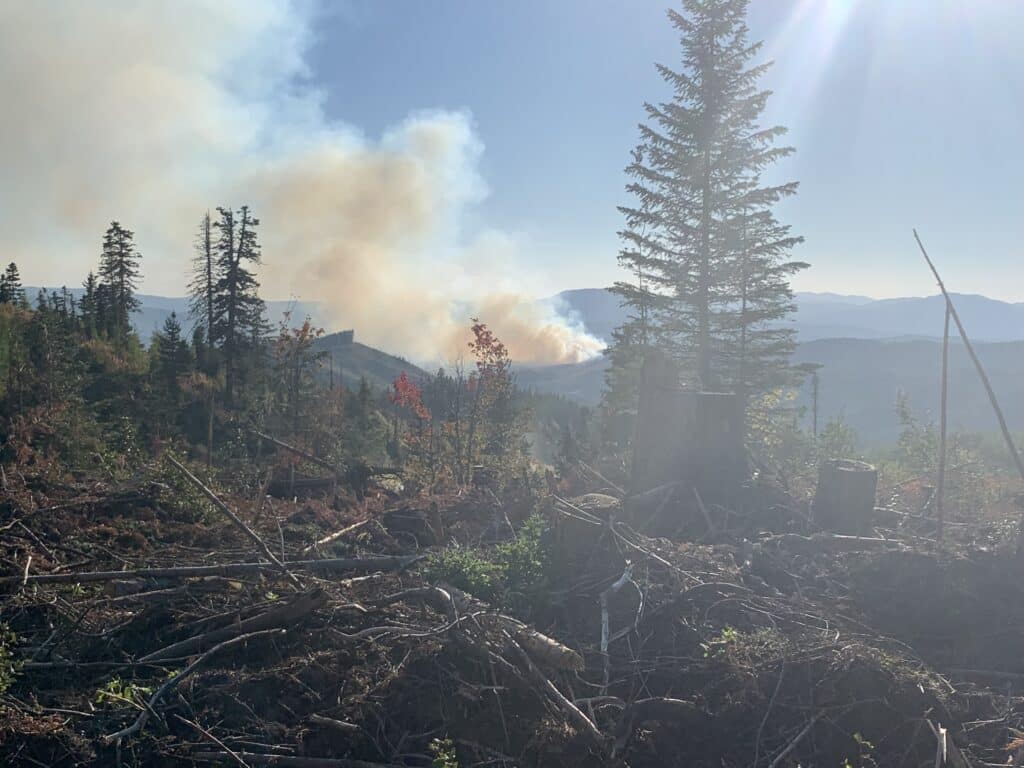
EDITOR’S NOTE: US Secretary of Agriculture Brooke Rollins, with backing by US Forest Service Chief Tom Schultz, announced this week they are moving forward with proposed revocation of the Forest Service’s so-called “Roadless Rule” that protected 45 million acres of public land nationwide from roads, logging and motorized recreation. The public comment period also generated one of the highest outpourings of citizen sentiments on a conservation issue in history and, notably, more than 90 percent of opinion voiced disapproval with the move. What do scientists say in the Northern Rockies, where public wildlands and wildlife are likely to be most negatively affected by logging and roadbuilding expedited under the dubious claim that it will prevent wildfire? Below is a statement from nearly four dozen professional scientists with nearly 1,500 years of experience who spent their careers involved in managing public lands and wildlife on behalf of the public interest. Many have won the highest awards of recognition from their agencies or professional societies and are members of the Montana Outdoor Hall of Fame. Yellowstonian welcomes a response from the Trump Administration, its political appointees, members of Western Congressional Delegations and those in free-market think tanks urging them to end roadless protections to respond, citing the science that informs their position, and we will publish it after the piece below.
Our Response To Destroying One Of The Most Important Conservation Rules In History
We are 45 Montana professional wildlife biologists and habitat managers with 1,480 years of experience. We worked hard for many years to assure healthy wildlife populations in Montana. The Forest Service is planning to rescind the Roadless Rule. We want Montanans to understand exactly what rescinding the Roadless Rule would mean.
When we built the long-term management plans to recover grizzly bears, we depended on the Roadless Rule to assure that adequate habitat standards on Forest Service lands would remain in place as required to delist the grizzly.
If the Roadless Rule is rescinded, thousands of square miles of grizzly bear habitat will open to roading, and grizzly bear management plans will be invalidated. They will be gone. Let us repeat: if the Roadless Rule is rescinded, then the management plans that are necessary to delist grizzly bears are invalid and grizzly bears cannot be delisted.
Remember how the Roadless Rule was developed. The Forest Service held over 600 public meetings to create the 2001 Roadless Rule. Tens of thousands of people commented, and the vast majority were in support of the Roadless Rule.
The fact that the Forest Service is preparing to rescind the Roadless Rule without a single public meeting tells you that they don’t care what the public thinks. It is the politicians in Washington who now run the Forest Service who are making this decision.
We depended on the Roadless Rule so that healthy wildlife populations will be here in the future for our kids and our grandkids. If the Roadless Rule is rescinded, all our wildlife like grizzlies, black bears, lynx, wolves, wolverines, lions, and fishers will be at risk and elk populations on public land will decline.
Speak up. Support the Roadless Rule.
Christopher Servheen, Ph.D. 35 years US Fish and Wildlife Service as Grizzly Bear Recovery Coordinator (retired). Missoula, MT.
Tom Puchlerz, M.S. 38 years US Forest Service as Wildlife Biologist, District Ranger, and Forest Supervisor (retired). Stevensville, MT.
Greg Munther, M.S. 32 years US Forest Service as Biologist and District Ranger (retired). Missoula, MT.
Mary Maj, M.S. 32 years US Forest Service as District and Regional Wildlife Biologist, Resource Staff Officer, and District Ranger (retired). Bozeman, MT.
Marion Cherry, M.S. 30 years U.S. Forest Service as Wildlife Biologist (retired) Bozeman, MT.
Brian Marotz, M.S. 34 years as Montana Fish, Wildlife, and Parks as Fisheries Biologist. Kalispell, MT.
Richard Mace, Ph.D. 31 years Montana Fish, Wildlife and Parks as Research Biologist (grizzly and black bears) (retired). Primarily responsible for grizzly bear population ecology research in the Northern Continental Divide Ecosystem. Kalispell, MT.
Diane Boyd, Ph.D. 23 years: 8 years Montana Fish, Wildlife and Parks as wolf and upland bird biologist (retired), 15 years University of Montana as large carnivore researcher (retired). Kalispell, MT.
Kate Kendall, M.S. 36 years National Park Service and US Geological Survey as research ecologist (retired). Columbia Falls, MT.
Douglas H. Chadwick, M.S. 43 years: author of The Wolverine Way; 3 years wildlife technician with NPS, 40 years independent wildlife biologist collaborating with various university and agency researchers. Whitefish, MT.
Jim Vashro, M.S. 39 years. Montana Fish, Wildlife, and Parks as Fisheries Biologist (retired). Kalispell, MT.
Mike Phillips, Ph.D. 45 years in professional wildlife conservation, led first stage of Yellowstone National Park wolf recovery, co-founded Turner Endangered Species Fund, re-elected to terms in Montana House and Senate, winner of Aldo Leopold Award from The Wildlife Society, Bozeman, MT.
Douglas Smith, Ph.D. 28 years National Park Service as Wolf Biologist, Yellowstone National Park (retired). Bozeman, MT.
Keith Aune, M.S. 41 years: 31 years Montana Fish, Wildlife, and Parks as Wildlife Research Biologist, Laboratory Supervisor, Chief of Wildlife Research (retired); and 10 years as a wildlife biologist at the Wildlife Conservation Society (retired). Bozeman, MT.
Tim Thier, M.S. 32 years: 27 years Montana Fish, Wildlife and Parks as Wildlife Biologist (retired); 5 years US Fish and Wildlife Service as Wildlife Biologist (retired). Trego, MT.
Scott Rumsey, 32 years Montana Fish, Wildlife and Parks as fisheries biologist (retired). Kalispell, MT.
Don Peters, M.S. 25 years Montana Fish, Wildlife, and Parks as Fisheries Biologist (retired). Missoula, MT.
Anne Vandehay, 22 years US Fish and Wildlife Service as Wildlife Biologist (retired). Helena MT.
Mike Madel, 40 years, Montana Fish, Wildlife and Parks in grizzly bear research and as Grizzly Bear Management Biologist (retired). Choteau, MT.
Mack Long, B.S. 31 years Montana Fish, Wildlife, and Parks as game warden and regional supervisor. Charlo, MT.
Dale Becker, M.S. 39 years: 7 years as a private wildlife consultant; 32 years Confederated Salish and Kootenai Tribes as Tribal Wildlife Program Manager. Kalispell, MT.
Joe Fontaine B.S. 28 years: 6 years U.S. Bureau of Reclamation Wildlife Biologist,18 years U.S. Fish and Wildlife Service as Deputy Wolf Recovery Coordinator (retired), 4 years as Deputy Project Leader National Wildlife Refuge Complex (retired). Helena, MT.
Kerry R. Foresman, Ph.D. author of The Mammals of Montana; 37 years University of Montana as Professor of Biology and Wildlife Biology (retired). Missoula MT.
Bruce Sterling, M.S. 38 years Montana Fish, Wildlife, and Parks as Management Biologist (retired). Thompson Falls, MT.
Sterling Miller, Ph.D. 21 years Alaska Fish and Game as Wildlife Management Biologist (retired). Affiliate Professor, University of Montana (retired). Lolo, MT.
Tim Manley, B.S. 37 years Montana Fish, Wildlife and Parks in grizzly bear research and as Grizzly Bear Management Biologist (retired). Bigfork, MT.
Dan Vermillion, B.S. 13 years as Commissioner on the Montana Fish and Wildlife Commission. Livingston, MT.
Dale Harms, 28 years US Fish and Wildlife Service as Wildlife Biologist (retired). Helena MT.
Glenn Elison, M.S. 25 years: U.S. Fish and Wildlife Service as Assistant Regional Director for Refuges and Wildlife (retired). Lewistown, MT.
Harvey Nyberg, M.S. 26 years Montana Fish, Wildlife and Parks, last position as Regional Supervisor (retired). Lewistown, MT.
Gary Wolfe, Ph.D. 42 years: 4 years as a Commissioner on the Montana Fish and Wildlife Commission, 12 years Vermejo Park Ranch Wildlife Biologist/Manager and big game Hunting Outfitter and Guide; 15 years Rocky Mountain Elk Foundation, Wildlife Biologist/Field Director, Director of Field Operations, Chief Operating Officer, President & CEO (retired); 11 years Vital Ground Foundation, Wildlife Biologist/Executive Director (retired). Missoula, MT.
Edward Bangs, M.S. 36 years US Fish and Wildlife Service as Wildlife Biologist on Kenai NWR and Northern Rocky Mountain Wolf Recovery Coordinator (retired). Helena, MT.
Dan Carney, M.S. 31 years Blackfeet Tribe as Senior Wildlife Biologist (retired). East Glacier, MT.
Kristi DuBois, M.S. 34 years: 28 years Montana Fish, Wildlife and Parks as a wildlife biologist (both game and nongame) (retired); and 6 years US Fish and Wildlife Service as a wildlife biologist (retired). Missoula, MT.
Bob Henderson, M.S. 30 years Montana Fish, Wildlife, and Parks as Management Biologist (retired). Missoula, MT.
Gayle Joslin, M.S. 32 years Montana Fish, Wildlife, and Parks as Wildlife Management Biologist and Research Biologist (retired). Helena, MT.
Larry Peterman, 36 years Montana Fish, Wildlife, and Parks as Fisheries Biologist (retired). Helena, MT.
Mike Jimenez, M.S. 20 years US Fish and Wildlife Service as Grey Wolf Research and Management Biologist (retired). Big Arm, MT.
William H. Geer, M.S. 40 years: 16 years as a fisheries research biologist, chief of fisheries and director of Utah Division of Wildlife Resources (retired); 24 years as a biologist with the National Fish & Wildlife Foundation, Rocky Mountain Elk Foundation and Theodore Roosevelt Conservation Partnership (retired). Lolo, MT.
Jack Stanford, Ph.D. 36 years Flathead Lake Biological Station as Director (retired). Bigfork, MT.
Lee H. Metzgar, Ph.D. 29 years University of Montana as Professor of Biology (retired). 13 years as independent wildlife consultant. Missoula MT.
Chris Smith, M.S. 27 years with Montana Fish, Wildlife, and Parks (retired). Helena, MT.
Jay Gore, M.S. 30 years: 10 years US Forest Service as Wildlife Biologist (retired); 13 years US Fish and Wildlife Service as Wildlife Biologist (retired); 7 years Corps of Engineers as Wildlife Biologist (retired). Missoula MT.
Gary Olsen, M.S. 34 years Montana Fish, Wildlife and Parks as Area Biologist (retired), Conrad, MT.
Steve Gniadek, M.S. 30 years National Park Service, U.S. Forest Service and Fish and Wildlife Service as biologist (retired). East Glacier, MT.
END NOTE: Below are a few original stories from Yellowstonian over the last year on the importance of roadless lands to America’s world-class fish and wildlife populations that depend on highest levels of protection. Please share them with your friends and, if you wish, members of your respective Congressional delegations on social media and let us know how they respond.