by Todd Wilkinson with Christopher Servheen
It’s not legal to hunt grizzly bears in the Lower 48 states yet, but one of the prime motivations for Montana, Wyoming and Idaho having the species removed from federal protection is to allow sport hunting again.
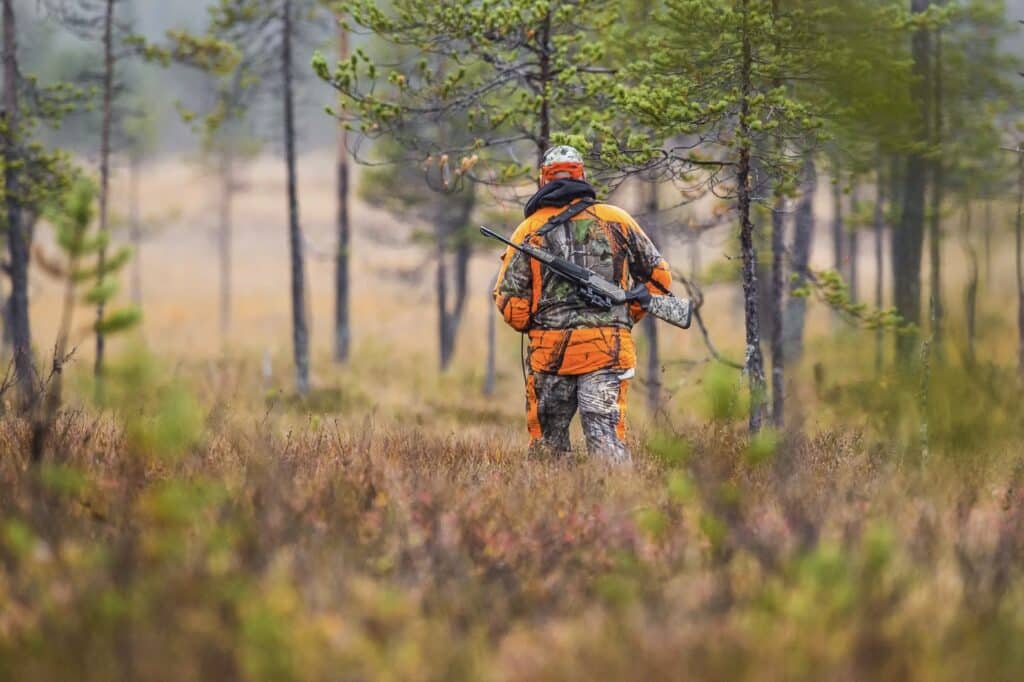
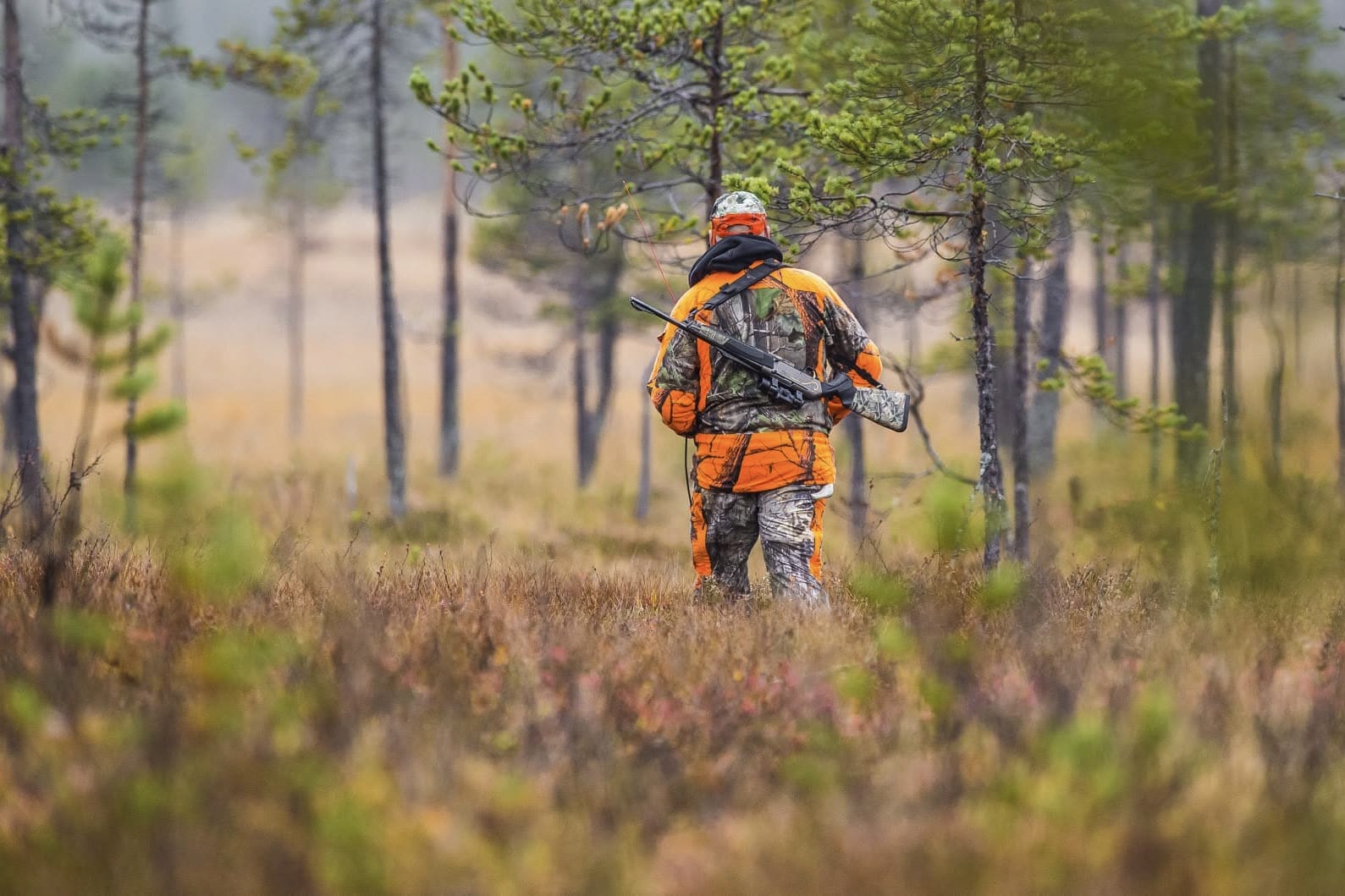
Even so, even without allowing grizzlies to be hunted as trophies, many bears are killed every year in the Northern Rockies on public lands outside national parks when they cross paths with big game hunters and elk, deer, moose and other ungulate carcasses.
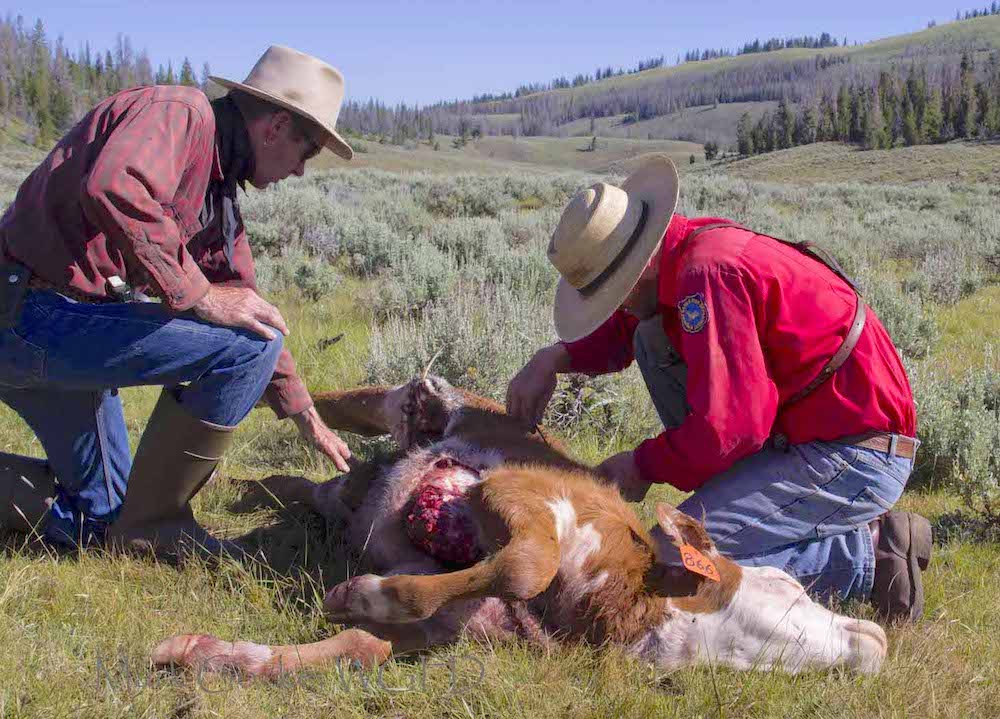
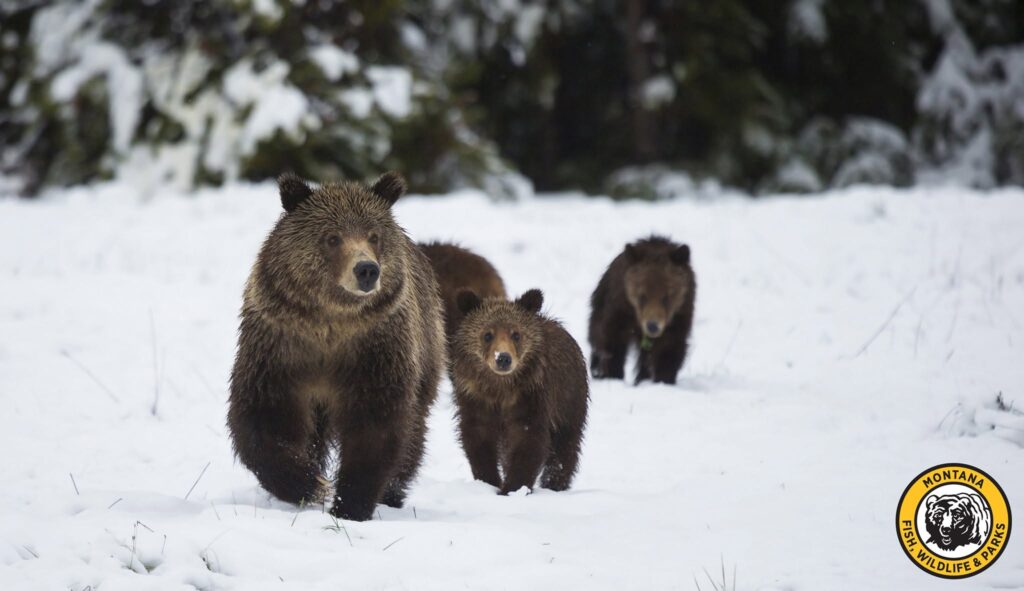
Grizzlies are killed for claimed reasons of self-defense most often the result of surprise encounters or bears arriving upon a freshly shot animal. Last year yielded a record number of bear deaths in the Greater Yellowstone Ecosystem for this century, so far. Wildlife biologists and advocates noted that nearly one quarter of all bear deaths in the Northern Rockies was due to “defense of life” but it’s important, they said, that the circumstances be understood and the killings justified.
Late summer and autumn bring bears into an evolutionary metabolic condition known as hyperphagia when they are trying to ingest as many calories as possible prior to denning. This puts them on a quest to find as many high-quality fat and protein dense food as possible—beyond Army cutworm moths, the seeds found in whitebark pine cones and sugary berries.
The meat from wild game animals is a important staple, pursued by both bears and people. So, too, for bears, are “gut piles” left behind after hunters have harvested meat from an ungulate.
Autumn can be a perilous time even for bears that spend most of their time in Yellowstone and Glacier national parks as research shows bears will move out of those protected areas to adjacent public and private lands, drawn to carcasses and gut piles. Grizzlies in Grand Teton National Park, at the heart of Jackson Hole, also can get into conflict with hunters allowed to take part in a longstanding and controversial “elk reduction program” inside the park itself.
In this installment of “Conversations from the Green Thicket, Yellowstonian co-founder Todd Wilkinson talks with Dr. Christopher Servheen, the longtime and now retired national grizzly bear recovery coordinator for the US Fish and Wildlife Service.
Servheen himself has been a lifelong hunter and angler. He offers perspective and safety tips for hunters of big game and birds heading into the mountains and forests. And he shares statistics and studies that contradict many false assumptions about bears and the alleged roles that hunting plays in “bear management.”

Todd Wilkinson: By now, most hunters have their big game tags in hand and know which hunt zones they’re heading into. As a lifelong hunter and wildlife scientist yourself, what is top of mind for you as another autumn season approaches putting thousands of people with guns into grizzly country?
CHRIS SERVHEEN: Hunting season is a challenge to everyone – the agency folks who try to tell people how to be safe in grizzly country, the hunters, the bear managers, the public in general and the bears. We always want to remind people how to be safe in grizzly country and especially how hunters need to act to be safe.
Wilkinson: Each year, without fail, a sizeable number of grizzlies get shot. Is this something that will always occur as long as there’s big game hunting and bears out there on the same landscape—with bears in hyperphagia, trying to bulk up on as many calories as possible prior to denning?
SERVHEEN: It is a challenge to have hunters and bears on the landscape together. There will always be a few actual conflicts and some perceived threats between bears and hunters. It is important to remember that most bears avoid hunters and hikers successfully if they know people are around. It’s those surprise encounters that are the source of most conflicts.
Wilkinson: In terms of crucial people on the front lines making a big difference in keeping people and bears safe and alive, who comes most immediately to mind—and why?
SERVHEEN: Well, the most experienced people hunting in grizzly country are usually the guides and outfitters. That is not to say they never have problems, but they do know the basics about being aware of bears and safety in bear country and they are with people to help them stay safe. I have never used an outfitter myself, but I imagine that most of the time guides and hunters are together. Groups like this are much safter in grizzly country because they tend to make more noise and more people means more eyes and ears paying attention to the landscape to avoid surprise encounters.
Wilkinson: Have you found there’s more danger for bow, rifle or bird hunters with dogs and shotguns in bear country, and why?
SERVHEN: I am not sure I can say what group of more at risk. Hunters using cow or calf calls on elk may end up drawing in a grizzly who might be interested in that sound. I would always recommend calling with a buddy so two people are looking around for an interested bear. There have been bear conflicts with bow hunters, rifle hunters and bird hunters. Any of them can surprise a bear and they all venture into bear country doing the things we tell people not to do like not making noise and all too often hunting alone.
Wilkinson: Here’s something we hear regularly: Recreationists—from hikers and trail runners to mountain bikers—often complain by venting this lament: “We’re criticized for displacing wildlife. We’re told to travel in groups of four or more, carry bear spray and make a lot of noise on the trail. But hunters do just the opposite. They’re stalking big game animals quietly with guns and off trail, they’re rattling antlers and calling elk in and the animals that respond attract hungry bears. Hunting even invites conflict by teaching them to associate the sound of a rifle with a dinner bell.” Do they have a point? And what do you say in response?
SERVHEEN: You ask tough questions. Yes, hunters usually do exactly what we tell people not to do in grizzly country. They often hunt alone, and off trail, and they are quiet, and they are often out at first light and at dusk, and then, if successful, they are around meat and blood, which are strong attractants to bears during the fall because of hyperphagia. I always recommend that people hunt with a buddy in grizzly country. A companion can help look and listen for bears and two people are more visible and hearable and smellable for a bear than a single person. You double the probability that a bear will sense your presence and avoid you when you are with a buddy. Of course, another benefit of a buddy is that you have help packing out your elk quarters.
Wilkinson: You’ve been part of many inquests into fatal human-bear encounters in which a person died. With the incidents involving hunters what are the common variables that contributed to serious injury?
SERVHEN: Since 2001, there have been 14 people killed by grizzly bears in the Northern U.S. Rockies. Only two of these people were involved in hunting and both of those encounters were hunters gutting out elk when they were approached by grizzlies attracted to the smell of meat and blood. In one case, the hunter was alone and probably had his head down gutting the elk when the female and cubs approached. The bears probably did not see or smell him because he was down gutting the elk and the blood and meat smell of the dead elk overpowered the human scent.
No one was there keeping watch because he was alone, and he was surprised at close range and attacked. The cubs may have been ahead of their mother approaching the elk and they perhaps encountered the hunter first. That may have triggered a defensive attack by the female.
The other case was similar. A hunter gutting out an elk but there were two people present. In both cases it was a female grizzly with young. As I said, I would always recommend being with another person to keep a lookout and making lots of noise while you are gutting your animal, so any bears drawn to the smells of the dead animal know you are there before they see or smell you. Make noise!
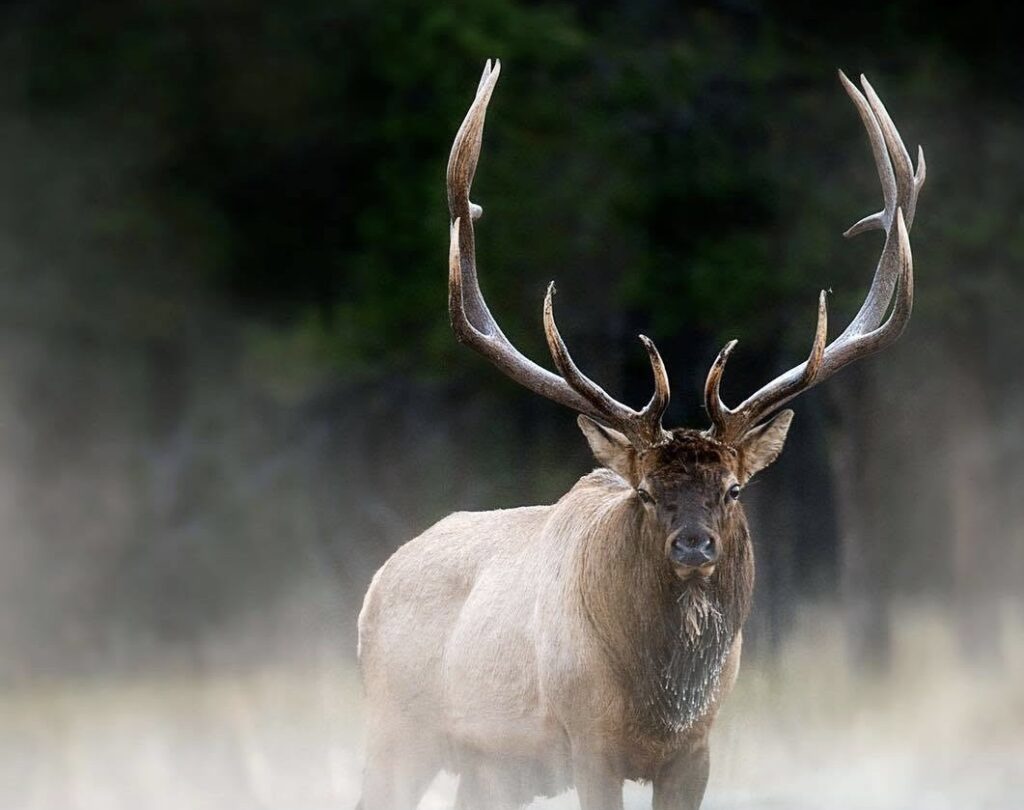
Wilkinson: Help readers navigate this hypothetical. There’s half an hour of daylight left. You’re in the backcountry, in the middle of terrain known to have grizzlies, and then an elk steps out of the trees into a meadow at relatively close range. Do you take the shot? And, if you kill the animal, what should be going through your mind?
SERVHEEN: My answer is easy. No, you do not take the shot and in fact you should not be hunting with an hour of daylight left. You should be on your way back to camp in mid-afternoon. If you are with 3 to 4 friends you might be ok, but if you’re alone, you should not be shooting elk or deer in the evening with little light left in grizzly country.
Wilkinson: Say, instead, that you wounded the elk, moose or deer. You find a blood trail, but darkness falls. What’s your legal obligation? Your ethical obligation?
SERVHEEN: You should not be following a blood trail in grizzly country as darkness falls for obvious reasons. The safest thing to do is to mark your position on the blood trail so you can find it the next morning and then go back to camp. Then return with at least one partner and take up the search again. As you are following the trail make noise because a bear may have found the animal already and be on the carcass.
Wilkinson: Okay, now it’s morning. You’re out looking for the carcass. What should your priorities be and what happens if you discover a bear is on the carcass?
SERVHEEN: Be with at least one companion and make noise so you do not surprise a bear on the carcass. Proceed very cautiously looking ahead of you all the time while making noise like clapping your hands. If you see a carcass, stop and use binoculars from a distance to carefully look for any sign that a bear is there or has been there. If a bear has found the carcass, it will be disturbed and may be opened or covered with dirt and debris. If it appears that the carcass has been disturbed or it is covered with debris, leave the area immediately and let the bear have it.
Wilkinson: Regarding a large dead ungulate that hasn’t yet attracted a bear or cougar or even wolves, your suggestion?
SERVHEEN: If you have a downed animal and you cannot get it all out in one day and you must come back the next day, mark the carcass location with flagging so you can see it from a distance. You should leave a shirt or something that smells strongly of humans on the carcass to deter animals from it. When you approach the next day, carefully examine the area from a distance with binoculars for any sign a bear has been there. If there is any sign the carcass has been disturbed, it is likely a bear and you should leave the area. Never try and drive a bear off a carcass. That is very dangerous and you set the stage for a bear conflict.
Wilkinson: This is neither a pro-hunting nor anti-hunting question but an inquiry about likely cause and effect. If grizzlies are delisted and sport hunting is brought back to Montana, Wyoming and Idaho after being prohibited now for over half a century, do you think that more grizzlies will die than are getting killed today—beyond what the states will set for hunting quotas?
SERVHEEN: If there is a hunting season for grizzlies, the bears killed in such a season will be in addition to bears killed for other reasons, so yes, a hunting season will increase the number of grizzlies killed by people.
Hunting grizzlies, despite what some claim, will not reduce human-bear conflicts. Hunting of bears has been documented in the peer-reviewed scientific literature to not reduce human-bear conflicts as stated by M.E. Obbard et al. (2014) who found in their study published in Ursus: “Human-bear conflict was not correlated with prior harvests, providing no evidence that larger harvests reduced subsequent human-bear conflicts. Given that variation in natural foods, harvest is unlikely to prevent elevated levels of human-bear conflicts in years of food shortage unless it maintains bears at low densities – an objective that might conflict with maintaining viable populations and providing opportunities for sport harvest.”
Wilkinson: You and I both value studies over un-scrutinized windshield biology. Any other you wish to cite?
SERVHEEN: Another recent study by J.M. Northrup et al. published in the Journal of Wildlife Management also demonstrated that bear harvest did not reduce human-bear conflicts even though bear harvest increased significantly. The authors stated: “Human–bear interactions, incidents, and harvest were strongly related to the availability of natural foods in all analyses. Regulated, presumably sustainable harvest was ineffective at reducing human–bear interactions and incidents in the near‐term and might have increased both. Our results support a long history of research showing that natural food availability is a primary driver of human–wildlife conflict. Programs promoting coexistence between people and wildlife, including education, capacity building, and management of unnatural food sources are likely to be the most successful at reducing conflicts between people and bears.”
Wilkinson: Another favorite argument of bar flies, seldom contested in the media, is that we “need to make grizzlies afraid of us” and the best way to do this is to hunt them to teach them a lesson of who’s in charge. The late biologist David Mattson addressed it head on.
SERVHEEN: Hunting bears will not reduce bear attacks on people. Most grizzly bear attacks on people are due to surprise encounters with bears or to bears that have become food conditioned to human-related foods, especially garbage. This according to analysis by Kerry Gunther, the lead senior bear scientist in Yellowstone National Park. Most bears that are not food conditioned are very wary of people and try to avoid humans. It is surprise encounters that cause most conflicts. Hunting will not make any difference in surprise encounters unless it is not a sustainable hunt and is designed to eliminate most bears and drastically reduce the number of bears on the landscape. That is not sport hunting.
“Hunting bears will not reduce bear attacks on people.”
Wilkinson: It’s been said by professionals like you that for very bear known to die, there’s another killed illegally by poachers and practitioners of shoot, shovel and shut-up. This means at least twice as many bears are dying each year than being reported. Why does this matter?
SERVHEEN: The number of unknown and unreported grizzly mortalities are important because grizzly bear populations are very sensitive to overharvest. Therefore, it is important to carefully limit human-caused mortality to population- sustaining levels. There is a calculation of the number of unknown human-caused mortalities made very year by bear managers based on the number of GPS collared bears that die due to humans that are only known because the dead bear was found using the collar.
That is assumed to apply to the general bear population even though less than 5 percent of the wild grizzly population wears an active collar at any time. That means our sample that we use to assume that unknown unreported kills is a small part of all the bears out there. If we did not figure in some additional unknown and unreported mortalities caused by humans, there is a real possibility that the known mortality numbers, i.e. actually annual tally of killed bears, will be above sustainable numbers.
Wilkinson: If bears are delisted, do you think there will be an increase or decrease in illegal killing of grizzlies and what’s the best way to prevent it?
SERVHEEN: If grizzlies are delisted, I suppose some people will view that as meaning bears can now be killed without violating a federal law, but grizzlies would still be protected under state law. It is relatively easy to kill a wild animal if you are unscrupulous and just leave it in woods. Most people would not illegally kill a grizzly no matter what its listed status. However, since grizzlies are so sensitive to overharvest, it would be easy for even a few unscrupulous people to change the trajectory of a grizzly population from a stable population to a declining population.
The best way to prevent illegal mortality is to build ethical and honest sportsmen who do not tolerate illegal activity and make it known that such illegal activity is not ever tolerated. People who illegally kill animals are not sportsmen; they are poachers who steal from the rest of the public.
Other installments of “Conversations from the Green Thicket:”