“My solitary hikes into those hills have been the best kind of medicine through the years, never failing to bring me a certain peace and balance that is otherwise hard to find down here among the clamoring population…I have found a calm inner center by visiting the hills and canyons where I can settle into unci maka, grandmother earth, and communicate directly with the source of all things.” —The late Ben Sherman (Lakota)
by Todd Wilkinson
A quarter century ago this September, just days after the psychically-rending events of 9/11, I found myself driving across the treeless peneplain of eastern Montana and Wyoming in a Subaru station wagon.
Bound for the badlands of the Pine Ridge Indian Reservation, I was thinking about my young kids and the new, more-unstable world dawning. Among the visuals still hovering in my memory is the absence of jet contrails so typically abundant in the western flyover—the result then of air traffic being temporarily suspended nationwide.
My plan was to meet up with Bozeman-based photographer Anne Sherwood in South Dakota on assignment for a magazine published under the umbrella of the National Geographic Society. The purpose of my story: rendezvousing with two Lakota brothers, Ben and Richard Sherman, who had grown up at Pine Ridge and were developing custom-made itineraries for tourists interested in Indian County.
I had known the Shermans for a few years and to this day am grateful for their gentle, kind ways of opening my eyes to ideas I gladly cannot unsee or unthink.
Richard Sherman, holding an advanced college degree in wildlife ecology, had overseen management of the Oglala Sioux Tribal Bison Paddock, one of the first tribally-managed buffalo herds in the country. He’s also respected as an indigenous ethnobotanist for his knowledge of native plants.
Ben, his older brother, had his own impressive credentials. After gaining a degree in engineering and geology, he worked during his 20s and 30s in the defense/aerospace industry—including having a stint at Cape Kennedy among teams putting rockets into orbit. In mid-life, returning home to the West, he reflected on the prevailing racist perceptions of white society about the traditions and lifeways of indigenous cultures.
As a modest and impactful way of addressing it, he began designing tours featuring knowledgeable indigenous guides. During the 1990s and until his passing in 2024, he emerged as a global figure in helping other countries develop culturally-sensitive tourism, with a main emphasis on preventing local communities from getting exploited and crushed by mass, industrial-strength travel trends even then wreaking havoc around the world.
“I know it’s strange,” he said, “but Europeans seem to know more, and have a greater curiosity in our history [Native Americans] than most US citizens do. What they often tell us is they’re drawn to learning more about cultures that are genuine and old, that evolved across deep time on this continent.”
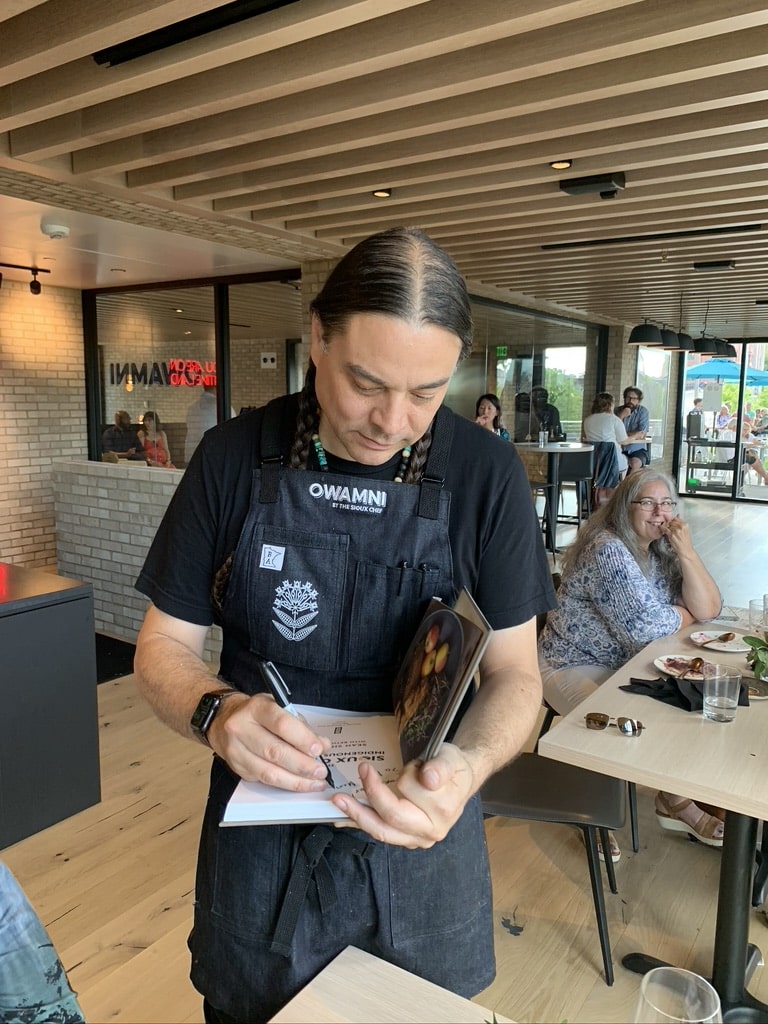
As a poignant side note, Ben and Richard are brothers of Gerald Sherman, who lives in Bearcreek, Montana with his wife, Jael Kampfe. Gerald is father to the famous “Sioux Chef” Sean Sherman. Sean has been a Minneapolis-based restaurant innovator and “slow local food” guru who also learned much from his uncle Richard and stepmom Jael about the bounty of “wild” foods that proliferate in “the natural supermarket and pharmacy of nature.” In 2022, Sean’s eatery, Owamni, was named best new restaurant in the Twin Cities and in 2018 he and Beth Dooley won a prestigious James Beard Award for best cookbook with The Sioux Chef’s Indigenous Kitchen.
Equally impressive—and formidable—are women in their extended family line. Marilyn Pourier, sister of Ben and Richard, served as an executive at Oglala Lakota College, and her daughter Lori Pourier founded First Peoples Fund, that helps indigenous artists across the continent thrive and find a way to meet collectors.
“Like every family, we’ve had our share of struggles,” Ben said while noting that he was descended from people who valued education in multiple forms. Citing both his patri- and matrilineal heritage, the Shermans are descended from Makes The Song, also known as Crazy Horse I, father of the freedom-loving Oglala warrior, Crazy Horse II, who fought in the battle of Rosebud and eight days later, the Little Bighorn.
° ° ° °
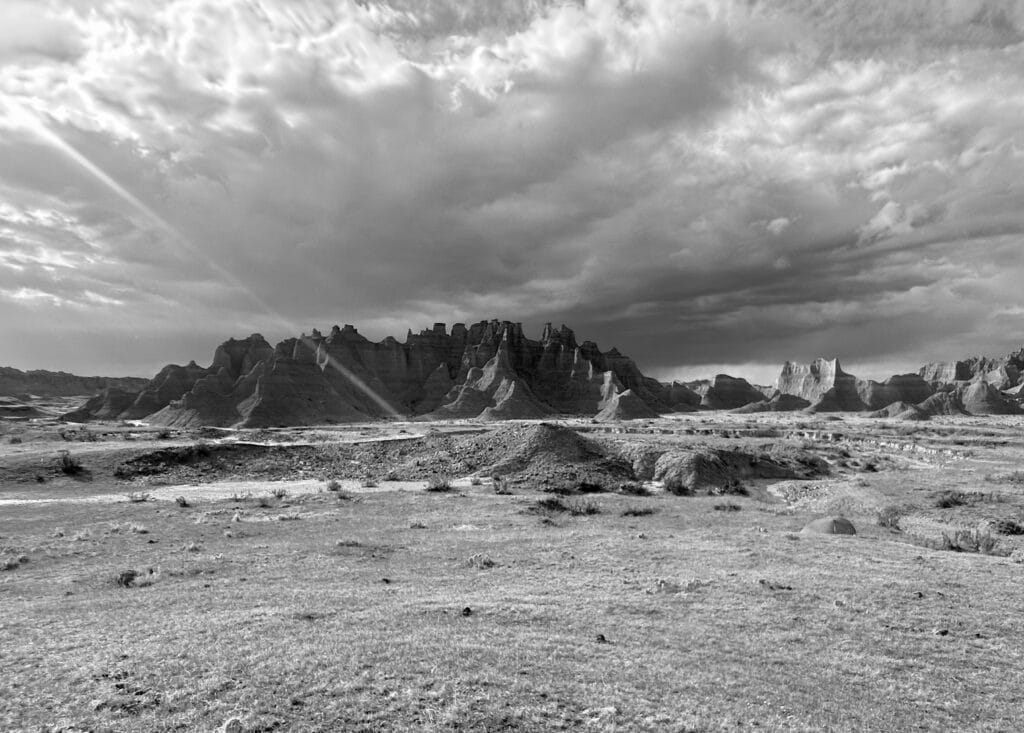
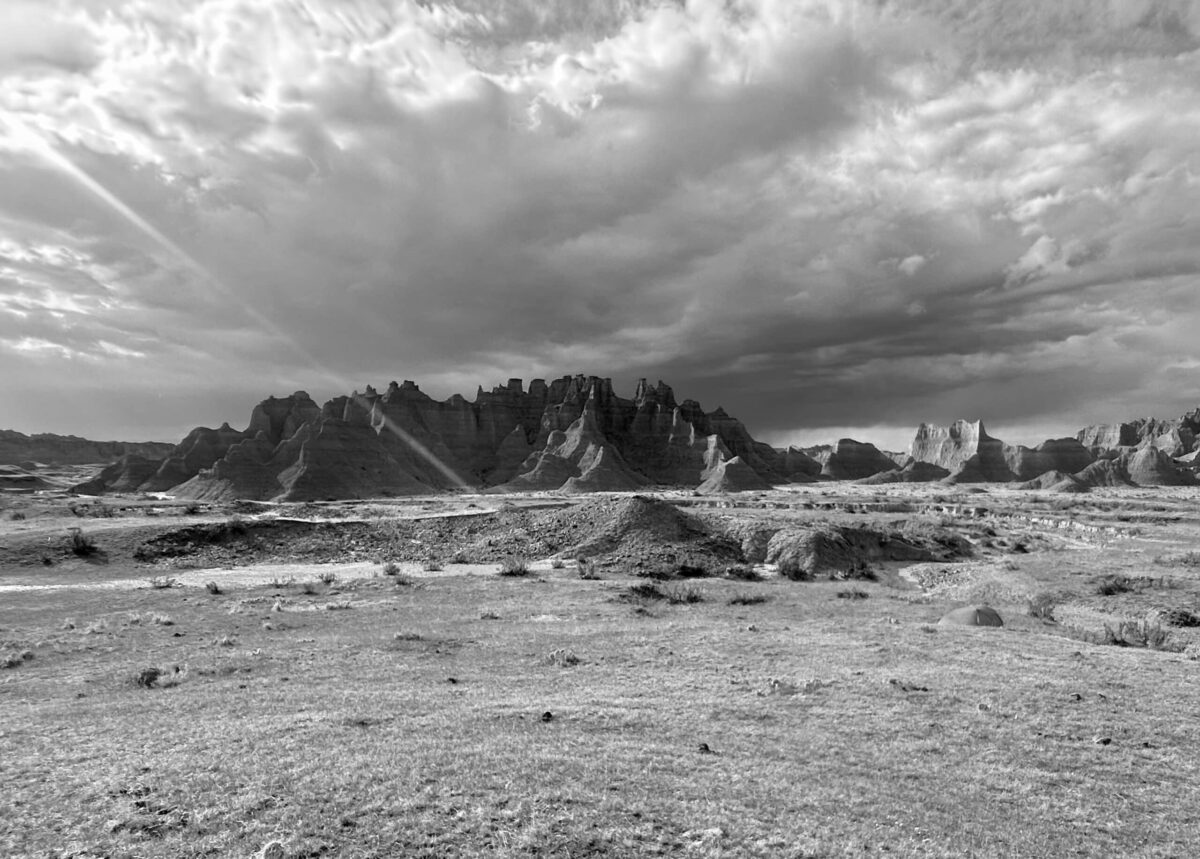
At Pine Ridge, we met at the Sherman’s homestead near Kyle. Setting out, we drove north and left the interior highway system, venturing deeper into a maze of surreally-eroded landforms far from any pavement. Beyond the end of a two track path that in rain and snow turns to impassable gumbo, we made camp not far from a landmark called Stronghold Table. There, in 1890, traumatized Lakota, starving to death when the US government cut off food rations to force “free Indians” into submission, had ghost-danced at The Stronghold in bitter cold December weather with the desperate hope that buffalo and the old traditional ways would return.
At the end of that month 136 years ago, after being marched 30 miles through a blizzard, one of the most notorious massacres of indigenous people in US history happened when Cavalry troopers opened fire on innocent and mostly unarmed men, women and children at nearby Wounded Knee 30 miles away. Hundreds died on the spot and dozens later succumbed to injuries. While Wounded Knee and its mass grave represent a touchstone of eternal infamy, and, according to some historians, “signaled the end of the Indian Wars” in the West, its relevance can never be entombed. To see it is to never forget.
For me, in my long tenure as a journalist, it’s one of the most powerful spots for reflection on the true meaning of “co-existence.” It invites this still-relevant question: who and what are the enemies? If we have such difficulty getting it right between members of our own species, then is it really possible to achieve harmony and reciprocity in our interactions with wildlife and the natural lands they need to survive?
(Note to readers unfamiliar with the 575 federally recognized tribes and Alaska Native entities in the US and 634 First Nation bands in Canada: every single indigenous origin story in the Western Hemisphere venerates wildlife and treats non-humans as relatives. Some may wonder: why is that?)
Back in 2001, our get-together in the Pine Ridge outback was focused on a related subject, that of time-tested know-how and the way its cultural values are oriented toward unci maka, the Lakota reference for “grandmother earth.”
Rolling out sleeping bags beneath the stars, we grabbed a little shut eye before Ben awoke us at 2 am. Vivid, even as I think about it now, is the ambiance of quietude and the piquant smell of late summer plants, along with the pitched-black darkness that became filled by eruptions of coyote yip-howling all around us. In his soft voice, Ben shared insights into Lakota cosmology—stories behind the constellations that hovered above and were known to his ancestors by different names. Over thousands of years, such wisdom—not compartmentalized into “science”—helped direct the Lakota and other tribes moving seasonally across the prairie.
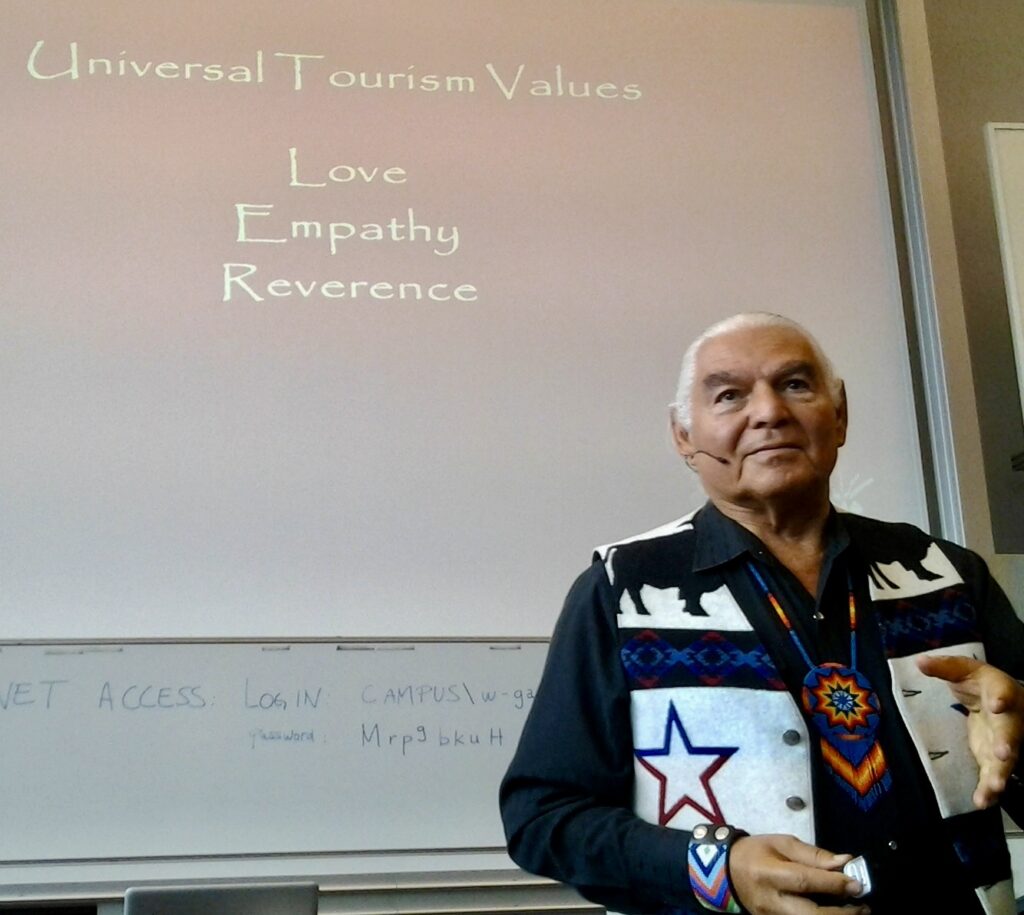
These sophisticated mental sky charts, visible to the naked eye (no telescope required), were passed along via oral storytelling for untold hundreds of generations. Ben shared a perspective on the universe home-grown in North America, older than the Egyptian pyramids, connecting dots between stars with the same acumen employed by mariners in other cultures, the ancient Greco-Romans, Assyrians and Babylonians, and before Galileo touted the sun-centered solar system during the Renaissance.
One teaching, he said, sounding a lot like Carl Sagan or Neil deGrasse Tyson, is that our spirits are born in the stars and return there when we pass.
For the Lakota, being able to read the patterns of shifting star placement correlated, in turn, to when certain plant species were seasonally abundant and for the essential insight of extrapolating where buffalo would be. There was no separation between all-important physical sustenance for the body and savoring the land from whence their primary source of protein came.
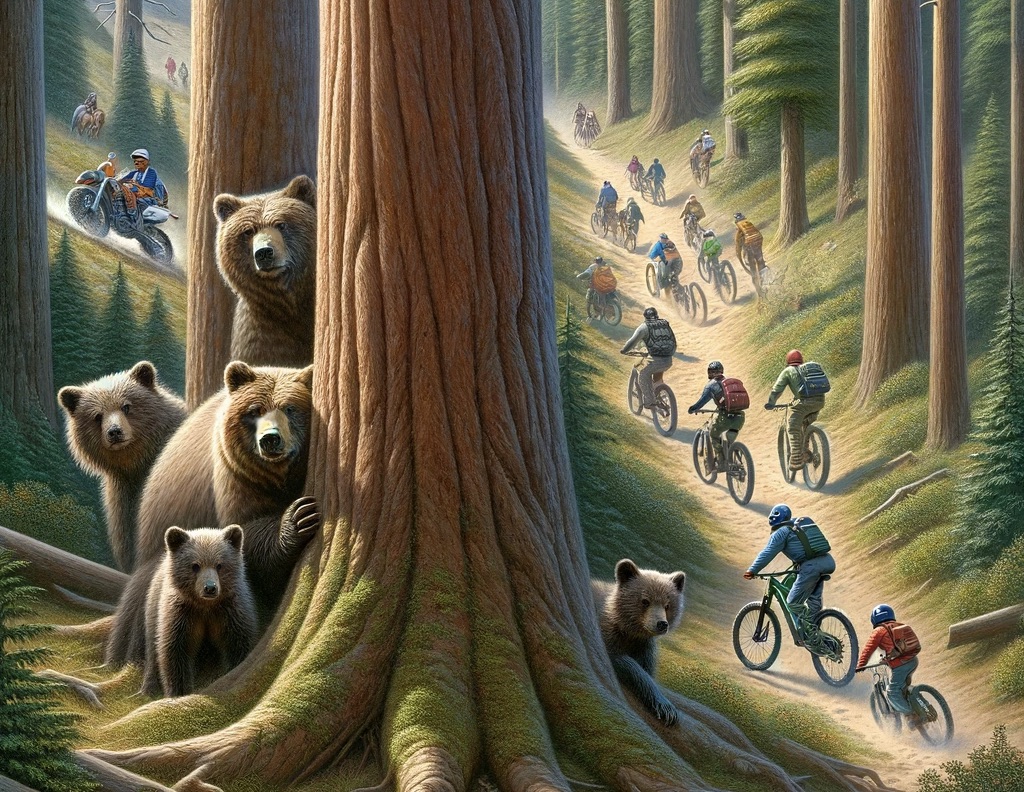
Such perspective is lost, he said, in the modern fickle obsession with spending leisure time playing, often surrounding ourselves with toys of luxury instead of paying attention. And, he pointed out, it represents a marked point of departure shaping how elements of the 21st century conservation movement/recreation industry approach the concept of “wilderness.” Like urban air travelers, unaware in our journey through the flyover of what’s below, Ben said, many modern Americans fail to comprehend how “the difference between passing quickly through a place as if on a race, and standing still, in reflection, of what’s actually there.”
° ° ° °
As the sun rose on that now-distant September morning, confirming why the prairie is loveliest at the edges of day and night, Ben and I continued to converse about a theme that we visited about often during our friendship and has stayed with me all these years. It involves the contrast between “recreating” in nature and the personal daily discovery of “re-creation”—of which, Sherman said, the two should never be confused.
The former, he explained, is often marketed as appealing to ego and adrenalin-pumping self-indulgence, hedonism, monetization and, on social media, exhibitionism; the other rooted in thanksgiving, humility, empathy for others beyond self and walking-speed respect for the spirit of place—being able to meditate upon it and be present in the moment.
Regarding the latter, Ben referenced the ancient ceremonies of sun dance and vision questing in which individual seekers venture solo, without food or much water, to remote locations and wait for guidance to arrive while submitting minds and bodies to the elements. He said there were places at Pine Ridge and throughout the West known for being holy ground no less than mentioned in the Bible.
For the Lakota, some are part of a circuit that includes Bear Lodge/Mato Tipila, better known as Devil’s Tower in Wyoming; Bear Butte/Mato Paha; and, of course, Paha Sapa (the Black Hills) in South Dakota. In the case of Mato Tipila—note the association with an animal—there has been ongoing conflict between the tribes and recreational climbers refusing to honor the sanctity of the monolith, even sneering at temporary voluntary closures to accommodate vision questers. Today there is a push being made by climbers, in general, to have federal wilderness regulations waved to allow for fixed anchors to be cemented into walls of rock.
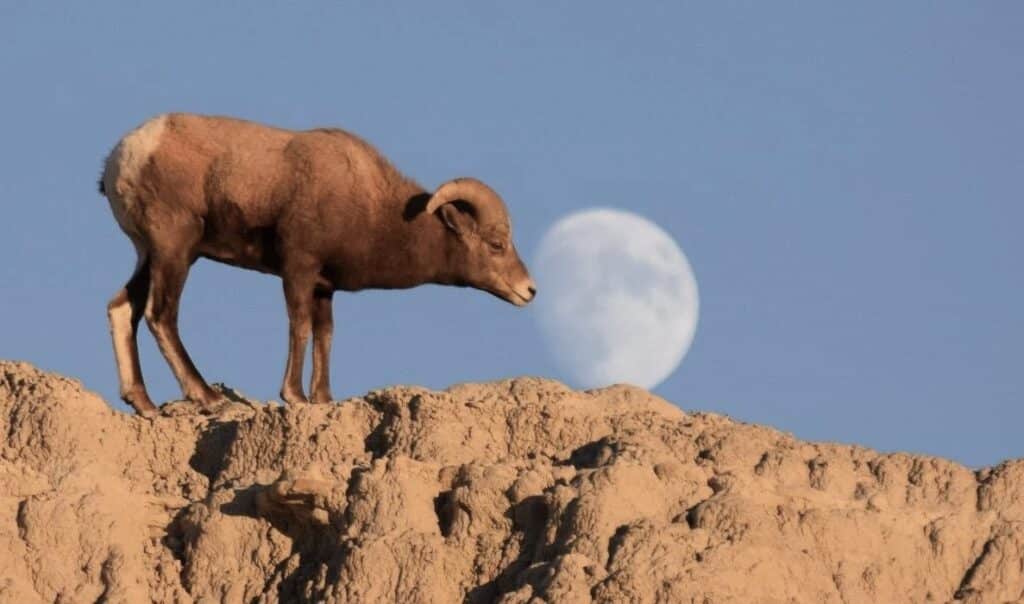
Sherman spoke with added emphasis when he said: “Vision quest and sun dance locations are not found where a lot of people or human towns are present. They are places of solitude and isolation where humans do not permanently live. There’s not a Forest Service trail leading to them. These are places where certain kinds of animals can still exist because they’re where large numbers of human takers are not. Europeans have a different way of relating to the divine. When was the last time you had Christian churches doing double duty as climbing gyms or training grounds for extreme athletes?”
Vision quests and the sun dance are therapeutic rituals of grounding, but especially important for young people seeking direction and dealing with forms of adversity their contemporaries in hip mountain towns of the Rockies cannot imagine.
Our chat in the year of 9/11 occurred before the arrival of iPhones and social media platforms where Selfies mass broadcast locations of fragile places, when boastful posts are made by “influencers” who feed a pathology of narcissism and shorter attention spans. That’s why tribes forbid the taking of photographs during ceremony, Ben said.
Over the years, I’ve had conversations about wilderness, ceremony non-transactional relationships to nature with the late Curly Bear Wagner (director of cultural programming for the Blackfeet) as we sat on a slope in the Sweetgrass Hills of Montana and later while watching bison together at Ted Turner’s ranch outside Bozeman. Listen to him in the short video below.
I had the good fortune of engaging the late George Horse Capture in conversation at Fort Belknap and when we floated the Upper Missouri River. Mr. Horse Capture (Gros Ventre) played an integral role in helping to establish the National Museum of the American Indian in Washington DC; with the late Joe Medicine Crow (Crow), writer, historian, war chief and Presidential Medal of Freedom recipient for his service, as a scout, in World War II; in chatting with Josiah Black Eagle Pinkham in Lapwai on the Nez Perce Reservation in Idaho; being in the company of the late Bill Tall Bull, the renowned Northern Cheyenne historian and elder, when we were camped near the Medicine Wheel in Wyoming as he was pushing to protect that ancient place from growing recreation pressure; and when I met with the late Blackfeet banker and economic justice crusader, Elouise Cobell in Browning.
I spoke, too, to Oren Lyons, thanks to our shared friendship with the late Bob Staffanson, founder of the Bozeman-based American Indian Institute. Today, Oren is 96 years old and legendary for being the Haudenosaunee Faithkeeper of the Turtle Clan of both the Onondaga Nation and Seneca Nation. Oren has been a strong voice representing indigenous peoples on the Human Rights Commission of the United Nations. Sports fans will delight knowing that Lyons was a star All-American goalie and co-captain of the vaunted Syracuse University lacrosse team. Thanks to his persistent nudging, lacrosse (an indigenous invention) will debut at the 2028 Olympics in Los Angeles).
In 1989, Lyons delivered an edifying speech titled “Wilderness in Native American Culture” at the University of Idaho Wilderness Research Center that we’ll be highlighting in stories ahead.
Lyons made reference to Luther Standing Bear (Lakota) and he noted how it’s not the word “wilderness” that is outdated but how it was originally conceived. He wasn’t alluding to the Wilderness Act signed into law in 1964 —or to parsing the words of individual people—but to when Europeans arrived on the continent 500 years earlier and who ignorantly and pejoratively looked upon uncontrolled nature as being “’infested’ with ‘wild’ animals and ‘savage people.’”
In his evocative essay, “Blundering to Plymouth: What the Pilgrims Should Have Known,” writer James Ring Adams with the Museum of the American Indian, quotes as passage of William Bradford, one of the first colonizing leaders to come ashore: “What could they see but a hideous and desolate wilderness, full of wild beats and wild men? And what multitudes there might be of them, they knew not.”
Those new Puritan arrivals brought with them primitive beliefs, detached from living intimately within the laws of nature and obviously lacking a deeper sense of ecological holism. The elders I spoke with said Europeans forced spirituality indoors, reducing it to existing only in human-built edifices (intended to rival those of creation) but not communing in the outside firmament of all living beings.
One place where the firmament still shines brightly is in wilderness-caliber roadless areas.
More recently, I reached out to Jason Baldes, (Eastern Shoshone), who oversees the Wind River Tribal Bison Initiative on the Wind River Reservation in Greater Yellowstone, and Tom McDonald, a member of the Confederated Salish and Kootenai Tribal Council, governing agency for the Flathead Indian Reservation in Montana. McDonald has served as tribal chairman and for several years was division manager overseeing Flathead’s fish, wildlife and recreation management. Read about them in our next story.
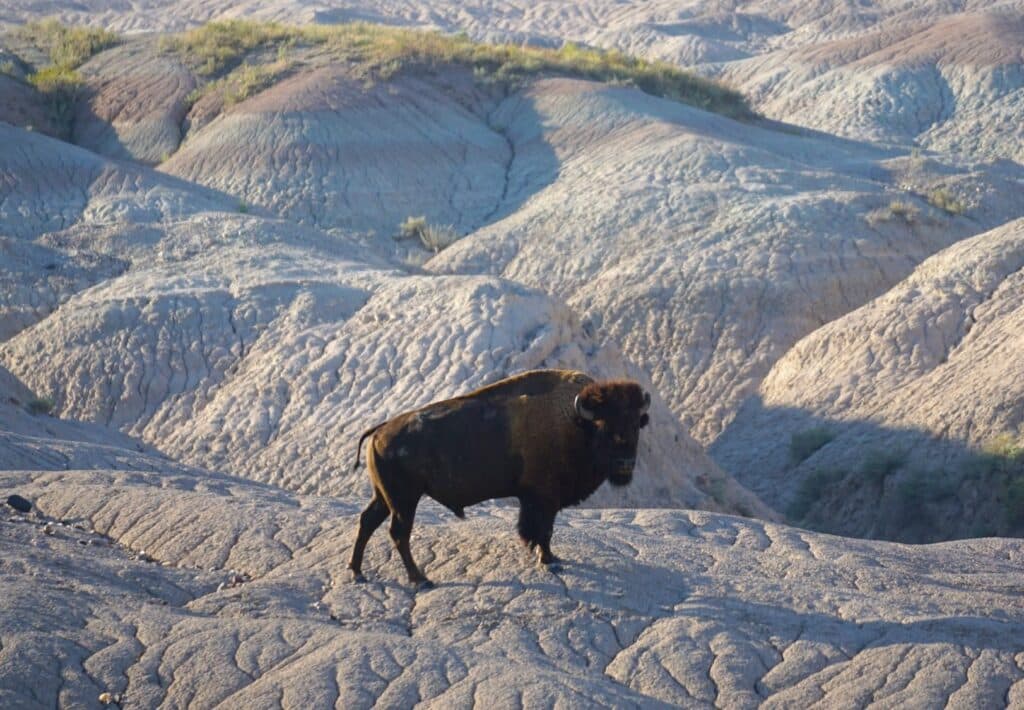
Mitákuye Oyás’iŋ: if you don’t know the Lakota/Dakota term for “all our relations,” it’s a vital unifying principle to learn. Every tribe has its own version. Yet within the modern mainstream conservation community, whenever concepts such as “balance” and “stakeholders” are invoked in discussions about how wilderness and public land will be “equitably distributed” to “users groups,” wildlife which factors at the center of mitákuye oyás’iŋ almost never enters the picture.
The late Vine Deloria Jr. (Standing Rock Sioux) eloquently wrote and spoke about the difference between “Western” thinking that treats wildlife generically as “objects” to be manipulated and controlled vs. the indigenous view of seeing the individuality of animals—their free and self-willed nature, having equal rights to exist. The true meaning of reciprocity is to thank animals for providing sustenance while not inflicting deliberate harm on their kind to survive.
Poet, writer, and elder Lois Red Elk is an enrolled member of the Fort Peck Assiniboine and Sioux tribes in Montana. Of Dakota and Lakota heritage, Isanti (Dakota) roots on her mother’s side and Ihanktonway (Ytanktonai Dakota) and Hunkpapa in her father’s history, with a branch intersecting with Sitting Bull. (Red Elk is a writer/poet in residence at Yellowstonian and an advisor).
“We don’t have a word for ‘animals. What we say is wamákashkaŋ, which means beings of the earth. That’s the four legged, the winged ones, the ones that crawl and the ones that swim. They are the other beings of the earth. We are not the only beings that live on earth. Since we are all beings. All are related,” Red Elk says. “They are brothers, sisters, children, aunts and uncles. Especially older buffalo, they are our grandfathers and uncles. Being able to call them relatives, we all dream at the same level.”
In recent years, Red Elk closely followed the life of matȟó 399 (Grizzly 399). “I have dreamt with her. We can receive messages and communicate with other animals. We receive message from birds in our dreams. We communicate with many others, like the spider and butterflies,” she explained. “And I don’t mean only nighttime dreams but daytime dreams. We can do that with other humans too but we’re losing that knowledge and ability to do it. With animals they always remind us who we are and put us back in our place.”
When I asked her to share thoughts on wilderness, she said, “It’s like your grandmother. Do you love your grandmother? How much do you love her? Would you like to see the veins stripped out of her body, to see her covered in scars? That’s how we regard the earth. She is mother and grandmother. The animals feel the same way. They are nurtured, they come from her and they love her and receive the gifts from her the same way we do.”
When I asked Lois Red Elk to share thoughts on wilderness, she said, “It’s like your grandmother. Do you love your grandmother? How much do you love her? Would you like to see the veins stripped out of her body, to see her covered in scars? That’s how we regard the earth. She is mother and grandmother. The animals feel the same way. They are nurtured, they come from her and they love her and receive the gifts from her the same way we do.”
Much has been said in recent years about “co-management” of public lands and collaboration between tribes and the federal government. Some are fearful of the outcome. In fact, where we were camped at Pine Ridge a quarter century ago was inside a US national park—the South Unit of Badlands. For 50 years, since 1976, the Lakota have been partners in overseeing the national park.
To a person, unwaveringly, all of the above evinced reverence for the rare untarnished spots of grandmother earth still remaining that non-Indians call “wilderness.” While no tribe has a specific term for lands that deliberately are left alone, they do not see protection of such places as being in conflict with their values. If anything, roadless lands that include formal federal Wilderness represent the last vestiges of places where humans can still learn the humbling lessons of non-conquest.
The Badlands are a geologic wonder and the remoteness of the South Unit insulates its sanctity. Unlike other parks, the Lakota have resisted installing industrial infrastructure or capitulating to outside mountain biking interests wanting to build “flow trails” across the surreal landforms. Solace is preserved, for the humans seeking it, and the deer, antelope, bison, bighorn sheep, black-tailed prairie dogs and rare black-footed ferrets, swift fox, and array of raptors and others.
“You wasi’chus,” Ben half-jokingly said as we laid on our backs in the Lakota badlands, “can’t seem to help yourselves. Everything needs to be assigned a purpose for exploitation, be a way to make money, or it is said to not have value or legitimacy.” (While wasi’chu is today a common colloquial reference to white people, it åtranslates traditionally to those who are greedy takers of fat off the carcass of a harvested animal—the most coveted part).
“How do you put a value on ‘home for living things?’” Ben asked with a sense of humor that could be wickedly stinging. “Little regard is given to thinking about how some ‘uses’ can become a desecration. I’m sure there are some whacky developers you know who would try to put a real estate value on a cemetery and replace the plot lines with plat lines if the property had decent marketable views and could be repurposed for condos.”
He then asserted this point: “We [indigenous people] didn’t need to have a word that means ‘wilderness’ as some would define it and are arguing over now for how to exploit. We understood the concept because we lived it but not necessarily on it. Other religions have their own versions of what it means to ‘head into the wilderness.’ What it symbolizes today are places where we accept limits on the human impulse to impose our will—and instead to sit in respect to things that cannot be replaced if they are spoiled. I don’t have a problem with the concept of wilderness or the word. The kind of places we’re talking about need to have a reference point, a name, and wilderness works as well as any other.”
NEXT: Two tribal leaders in the Northern Rockies talk about why people in their Indigenous communities, especially now in the 21st century, value having lands without roads, managed as homelands for wildlife and are free from industrial outdoor recreation.
First story in the ongoing wilderness series: