by Todd Wilkinson with Chris Servheen
For more than a century, government scientists have known that docile domestic livestock are problematic when turned loose to graze on America’s public lands. Having not evolved with the land, they are far less adaptable than native ungulates like bison, elk, moose, mule deer and pronghorn. Cattle and sheep require more pampering and a lot of resources to manage.
But what forerunning modern ecologists Olaus Murie and Adolph Murie of Jackson Hole, and the seminal proponent of the modern land ethic Aldo Leopold pointed out, is that domestic livestock are utterly incompatible with landscapes of native meat-eating carnivores. While it’s possible for them to co-exist, if vigilant caretaking and non-lethal methods of livestock stewardship are employed, history has shown that balance almost always has been dramatically tipped in favor of accommodating private cattle and sheep on public land over the well-being of grizzly and black bears, wolves, cougars and coyotes.
So much so that many were targeted, at taxpayer expense for annihilation in order to deliver better profitability to private interests, including to absentee owners who didn’t even live in the region where they derived lots of benefits from the subsidies.
Since grizzly bears in the Greater Yellowstone and Northern Continental Divide ecosystems were listed as federally threatened in themed 1970s, one thrust essential to their recovery has been the removal or retirement of livestock grazing allotments from critical habitat areas in national forests for bears. And it has delivered dramatic positive results in reducing bear losses and conflicts.
But now, President Donald Trump, US Secretary of Agriculture Brooke Rollins, and US Forest Service Chief, already under fire for issuing a number of executive orders deemed anti-wildlife and anti-conservation have issued another. It is an order allowing more livestock grazing to occur on Forest Service and Bureau of Land Management lands and, potentially, to return to public lands where allotments have been retired.
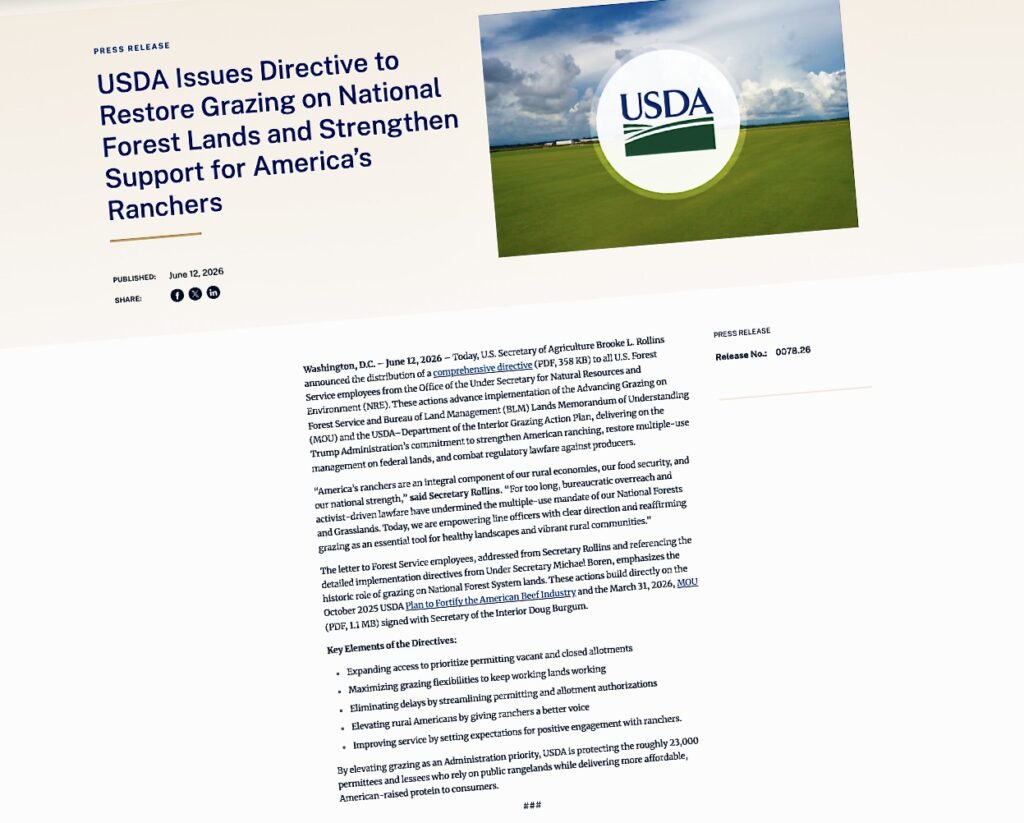
“America’s ranchers are an integral component of our rural economies, our food security, and our national strength,” Rollins stated in a press release. “For too long, bureaucratic overreach and activist-driven lawfare have undermined the multiple-use mandate of our National Forests and Grasslands. Today, we are empowering line officers with clear direction and reaffirming grazing as an essential tool for healthy landscapes and vibrant rural communities.”
The press release said the intent is laid in a directive from Agriculture Undersecretary for Natural Resources and Environmental Michael Boren—a tech company founder from Boise who has cattle operations in Idaho’s Sawtooth Valley—to “Fortify the American Beef Industry.” Boren is a controversial figure.
Rollins says the new grazing directive complements a parallel plan to dramatically increase logging on national forests and restore capacity for existing and new timber mills that might come on line. One new controversial edict, just issued, will “momentously” increase logging on the Custer-Gallatin, Beaverhead-Deerlodge, and Helena-Lewis and Clark national forests, with timber targets exponentially greater than what experts consistently defined as being “sustainable” and not harmful to wildlife and watersheds.
“We estimate that over the first 10 years, the three forests [Custer-Gallatin, Beaverhead-Deerlodge and Helena-Lewis and Clark] will offer between 350-500 million board feet to local processing facilities in central Montana,” Schultz said. “That predictable supply not only helps to carry out forest restoration work but also supports local economies in an area where national forests make up a considerable part of the land base.”
“We estimate that over the first 10 years, the three forests [Custer-Gallatin, Beaverhead-Deerlodge and Helena-Lewis and Clark] will offer between 350-500 million board feet to local processing facilities in central Montana. That predictable supply not only helps to carry out forest restoration work but also supports local economies in an area where national forests make up a considerable part of the land base.”
—Forest Service Chief Tom Schultz laying out timber goals that, in addition to having logging invade roadless areas, will be disastrous for wildlife and the aesthetic appeal of national forests
At the same time, the President, Rollins, Schultz and Interior Secretary Doug Burgum have implemented measures that give forest supervisors and BLM area managers more discretion in pushing for new timber sales and the same will apply to greenlight more grazing and opening up old problematic allotments.
Scientists I spoke with, including a couple of active and former grazing specialists with the Forest Service and BLM, told me it’s obvious that whoever wrote the press release doesn’t understand how stressed “line officers” are managing allotments as it is, nor recognition of the toll that livestock grazing has had at the expense of wildlife, riparian areas, clean water and human resources in those agencies. In addition, several former Forest Service professionals told me that if those timber targets are met, or even close, there will be visual blight and negative transformation of the Forest Service experience, the likes of which younger generations have never seen.
Plus, one longtime range specialist told me, Rollins’ aspersion to “lawfare” lacks context because in many suits brought against agencies regarding grazing abuses, victories have come on the merits. Read about a recent decisive court victory pertaining to livestock grazing approved by the Custer-Gallatin National Forest in the Absaroka Mountains on the east side Paradise Valley, Montana just north of Yellowstone National Park.
This week, Dr. Christopher Servheen and I, as part of our regular Yellowstonian column, “Conversations from the Green Thicket,” take up the issue and what it could mean for grizzly bears, their recovery and environmental conditions on public lands going forward.
Todd Wilkinson: Another week of wow and I must say it’s truly “awe-some” but not in a way that conforms with what we’ve come to know as conservation stewardship fit for the 21st century.
Dr. CHRISTOPHER SERVHEEN: Couldn’t agree more.
Wilkinson: So, let’s get to the topics at hand for this week and first offer a primer for those who haven’t been tracking grizzly bear recovery in the Northern Rockies. Next to halting of hunting of bears outside national parks, reducing illegal killing, getting land management agencies to better protect habitat and, of course, marshaling an aggressive campaign to do away with open pit dumps and making humans more fastidious with how we dispose of trash to prevent food conditioned bears, what else was vitally important in recovering grizzly bears in Greater Yellowstone?
SERVHEEN: Changing the way public lands are “used” and an example is becoming smarter about where cattle and sheep are grazed and where they are not, if the objective is conserving wildlife. Livestock on public lands in grizzly habitat can be the source of conflict when bears start to kill such livestock. When we refer to livestock on allotments on public lands we almost always are referring to cattle and sheep.
Most grizzly bears do not kill livestock, but when livestock kills occur, there usually is a response by the management agencies to relocate or kill the offending bear. Thus, livestock allotments on public lands and bears killing livestock on private lands is an issue for grizzly bears in the Yellowstone ecosystem.
Wilkinson: The statistics are significant. In the last five years alone, we’ve had record or near record years of bear mortality in Greater Yellowstone.
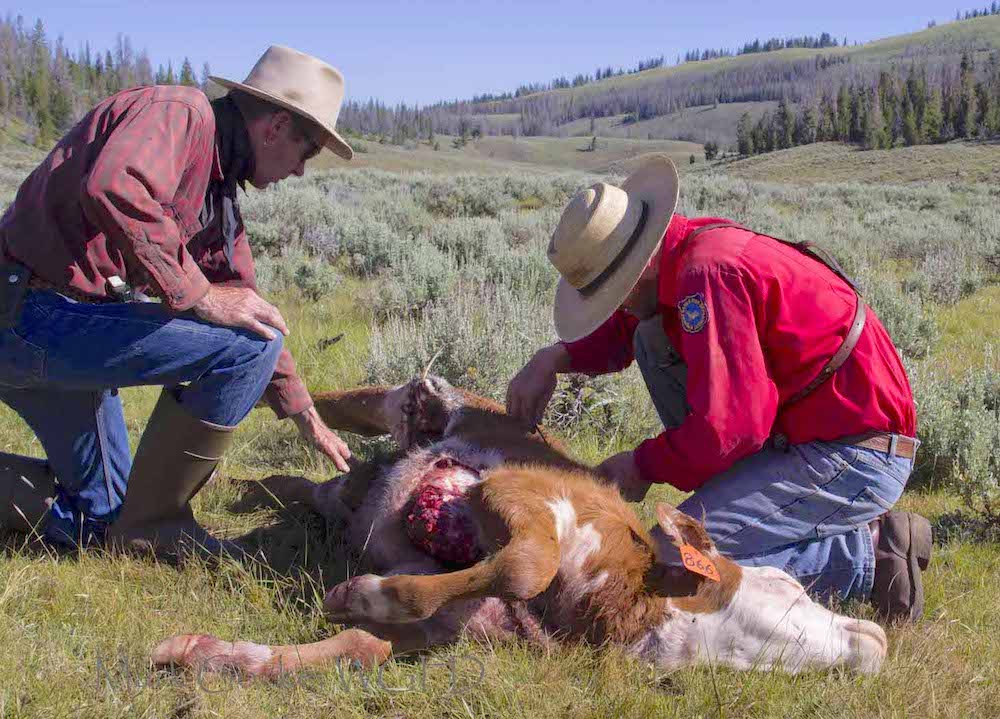
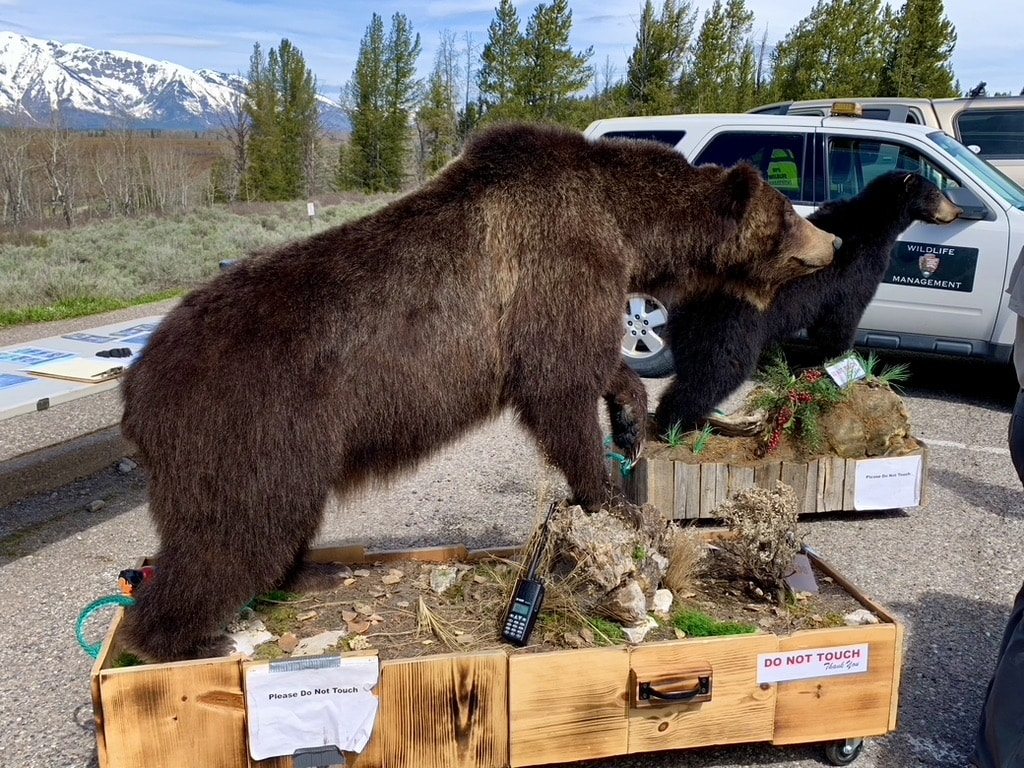
SERVHEEN: In 2024, then a record year in modern times and the most recent year data are available, there were 72 known and probable grizzly mortalities in Greater Yellowstone. Of these 72, 70 were attributable to people. Of these, 28 or 40 percent of the total were due to management removals for livestock depredations, making livestock conflicts the primary cause of grizzly deaths in 2024. Of the 28 bears removed for livestock depredations, two were on domestic sheep and 26 were on cattle.
In 2024, there were 72 known and probable grizzly mortalities in Greater Yellowstone. Of these 72, 70 were attributable to people. Of these, 28 or 40 percent of the total were due to management removals for livestock depredations, making livestock conflicts the primary cause of grizzly deaths in 2024. Of the 28 bears removed for livestock depredations, two were on domestic sheep and 26 were on cattle.
Wilkinson: With that mortality figure, let’s remind readers of something that grizzly conservationist Louisa Willcox always points out and it’s something you believe to be important about actual likely number of dead bears.
SERVHEEN: The general thinking among those in professional bear management is the for every known bear mortality there is likely at least another we don’t know about.
Wilkinson: Please riff a bit on what that entailed. Readers here may not realize how serious a problem it was and that it involved both cattle and sheep allotments.
SERVHEEN: Historically, domestic sheep grazing on public lands in grizzly habitat was a serious concern for grizzly bear recovery. There were thousands of domestic sheep on allotments on the Targhee National Forest west of Yellowstone Park and on the Gallatin north of Yellowstone. Domestic sheep are especially vulnerable to bears and other carnivores, and many bears were drawn into these sheep herds. Back when grizzly recovery began, we knew that there were grizzly bears being killed on these sheep allotments, and we also suspected that there were likely many bears that were killed and never reported. It was general practice that bears were shot on these allotments before the listing of the grizzly. There was a transition period between the time before grizzly bears were listed under the ESA and after listing when successful mortality management began.
Domestic sheep on public lands require intensive predator control to keep losses at low levels. Domestic sheep and grizzly bears are basically incompatible unless the sheep are placed inside electric fencing every night. The solution to the domestic sheep problem on the Targhee and the Gallatin was a combination of buying out the allotment or relocating the sheep to another allotment outside of grizzly bear range. Several conservation groups like the National Wildlife Federation bought out livestock allotments by paying the allottee compensation give up their grazing permits. In some cases, the Forest Service then permanently retired these allotments after the allottee vacated them. A prime example of such a system was the retirement of the 77,000-acre Blackrock-Spread Creek allotment on the Bridger-Teton National Forest in Jackson Hole east of Grand Teton National Park.
Wilkinson: Indeed, that latter allotment in Jackson Hole is one that Olaus Murie identified as being a problem a century ago, and with cattle protection receiving priority on public lands, it’s one of the reasons why grizzlies disappeared from Jackson Hole and points south for much of the 20th century. How concerned are you about the new Forest Service directive that sanctions more livestock grazing and a massive increase of logging on its lands, including on allotments that the public and private groups paid to retire and were thought forever halted. What could this mean?
SERVHEEN: Yes, I am very concerned. If this new policy will bring livestock grazing and industrial logging back into grizzly bear habitat, it will result in increased conflicts with grizzly bears (and wolves) and will increase the number of dead grizzly bears on public lands. This would be totally counterproductive to grizzly bear recovery, the interests of livestock producers and will dramatically increase the workload of the Fish and Game agency bear managers who would have to respond to these conflicts.
“Irresponsible opening of public lands to more livestock and intensive logging and roadbuilding in grizzly habitat are radical policies that will destroy grizzly bears and negate decades of progress in recovering grizzly bears. What the Trump Administration is doing contradicts generations and decades of progress that’s been made in better stewardship of public lands. Again, we Americans are better than that.“
—Servheen, who oversaw federal grizzly bear recovery for the US government for 35 years
Wilkinson: One factor was that some ranchers took buyouts because of the high financial costs associated with grazing in remote areas and that it didn’t make any sense. What do you think the motivation is?
SERVHEEN: Obviously, the livestock producers who took these buyouts, which were completely voluntary, did this because it made financial sense to them. They likely looked at this as a win-win situation for them.
Wilkinson: In the Upper Green River area on the Bridger-Teton National Forest a few ranchers have claimed there was chronic depredation by grizzlies and if you remember the US Fish and Wildlife Service wanted to allow the killing of up to 72 grizzlies over 10 years in order to give ranchers more leeway in protecting their livestock. The 10th Circuit Court struck it down. That seemed like a lot of bears—native threatened species—to be dispatched in order accommodate nonnative cattle on public land. Your thoughts?
SERVHEEN: There has been a lot of livestock-bear conflict in the Upper Green as Greater Yellowstone grizzly bears have recovered. Grizzly bears were all but gone from the public lands in that area by 1975. Now the grizzly bears and cattle overlap on these historic livestock allotments on the Upper Green. There has been a lot of effort to reduce conflicts in this area and remove chronic conflict bears. The Upper Green is an example of what can happen if the administration decides to open new livestock allotments or re-open retired allotments on public land in grizzly habitat. There will be dead bears and more dead livestock, and no one will be happy.
“The Upper Green is an example of what can happen if the administration decides to open new livestock allotments or re-open retired allotments on public land in grizzly habitat. There will be dead bears and more dead livestock, and no one will be happy.”
Wilkinson: Do you consider the Forest Service move a step backwards and isn’t the presence of grazing really a habit security issue for bears?
SERVHEEN: If the Forest Service opens new livestock allotments or re-opens retired allotments in grizzly habitat it will be a huge step backwards. Remember that recovery and delisting require that adequate regulatory mechanisms be in place and remain in place after delisting. If the USFS reneges on their commitment to close and retire livestock allotments in grizzly range, that will make delisting impossible because it will demonstrate that adequate regulatory mechanisms are NOT in place as required by the ESA to delist a species.
Wilkinson: Of course, this isn’t happening in isolation from other things. The US Department of Agriculture is moving to overturn protection for tens of millions of Forest Service roadless lands, including in parts of Greater Yellowstone that the agency promised to protect as road as a condition of listing and complying with a conservation strategy you wrote. Plus, there are moves to facilitate more logging and roadbuilding and allow cross country motorized recreation, roll back protections for wilderness study areas and perhaps even wilderness. What does all of this add up to?
SERVHEEN: All this adds up to a disaster for grizzly bears. Somehow, there are people in this Administration who want to go back in time to when exploitation for profit was the primary consideration for decisions on public lands with far-reaching impacts on the wild animals who depend on these public lands to survive.
Livestock, mostly domestic sheep, used to be run in many areas of public lands that today are wild country like much of the Bitterroot ecosystem and the present-day Scapegoat Wilderness. Domestic sheep were right up to the Park boundary along the west side of YNP. The result of all this past grazing was the annihilation of the native carnivores using every means possible, especially poison.
We Americans are better than that. There are tens of millions of Americans who view public lands and public wildlife as a resource that is worth cherishing and nurturing rather than exploiting for short-term political gain and the profits of a select few.
Wilkinson: Apart from attractants—docile and in many cases, unguarded meat on the hoof— that will invite conflicts between bears and livestock, how do you feel as a public land user encountering a lot more cows getting into campgrounds and visiting backcountry campsites and affecting your overall experience?
SERVHEEN: Well, I have been camping several times in Utah on BLM public land where the cows drove us out of our campsites in the middle of the night. I think there are places for livestock and there are places where livestock should not be. I’ll repeat something I said about the policy on roads on public lands. There is a need for carefully crafted public policies put in place to balance the needs of some people who want to graze livestock on public lands with the stewardship of public property and public wildlife in other areas to assure that there is a balance in place.
Wilkinson: As we’ve tried to point out in our reporting at Yellowstonian, it’s not as simple as just “keeping public lands in public hands,” which has been a simple mantra of conservationists. The tough part is preventing public lands from being privatized in a de-facto way and returning management to the era that necessitated all kinds of modern environmental protection laws to prevent destruction and abuse by multiple use industries.
SERVHEEN: The tens of millions of Americans who view public lands and public wildlife as a resource that is worth cherishing and nurturing must be considered in any policy to increase livestock grazing and logging on public lands and removing protections for roadless lands. Irresponsible opening of public lands to more livestock and intensive logging and roadbuilding in grizzly habitat is a radical policy that will destroy grizzly bears and negate decades of progress in recovering grizzly bears. What the Trump Administration is doing contradicts generations and decades of progress that’s been made in better stewardship of public lands. Again, we Americans are better than that.
NOTE: Below are recent installments of “Conversations from the Green Thicket”