by Todd Wilkinson
Paris between World War I, through the Roaring Twenties, the carnage of the second global conflict and on into the 1960s. Berlin. NYC. Dublin. London. Buenos Aires and Mexico City. San Francisco/Palo Alto/Berkeley and the Beats.
Great modernist hubs for literature and poetry, all. And then there was the rise of the outdoors-oriented set, the post Hemingway-ites whose writing about adventure was always tinged with lessons learned from submersion in nature.
For a while, as a hideout from the urban hubbub, for writers who wanted access to a wilder rawer unpretentious place and simply, more or less, wanted to be left alone, there was Paradise Valley, Montana, county seat of Park County being the Yellowstone River town of Livingston.
McGuane, Brautigan, Hjortsberg, Chatham; many divided their time between here and Key West, the latter appropriately having been a haunt of Hemmingway. Throw in some of the Hollywood connected—Fonda, Oates, Bridges, Kidder with occasional sightings of Peckinpah and more recently, Keaton. Mixed into those at top of this paragraph, filing dispatches for Sports Illustrated, Esquire, The New Yorker and Paris Review in its heyday, were Plimpton, H.S. Thompson, Matthiessen, Buffett, De la Valdène and even Brokaw. We would be remiss not mentioning the magazine writing of Goltz, dispatches from Tim “the wild man” Cahill and the fiery conservation screeds of Peacock. (I would also throw Quammen, who dwells on the other side of Bozeman Pass, in for good measure).
They were the heart of Park County’s golden age of literary expression and joined by an incoming stream of talented others—yes, amply represented by both genders— who resettled here too numerous to name. (To get a sense, read this overview prepared by poet/playwright Marc Beaudin and journalist Andrea Barnett Peacock co-owners of Elk River Books in Livingston).
But no one exuded a kind of elusive ethereal mystique more than novelist, poet and essayist Jim Harrison (1937-2016)—a Michigander who came West to join his pal, McGuane, who was the first to encourage him to be a writer. Peacock grew up in the Wolverine State, too. The magazine Literary Hub offered this remembrance off the McGuane-Harrison friendship after Harrison passed and here, in The New Yorker, McGuane himself penned a most touching homage.
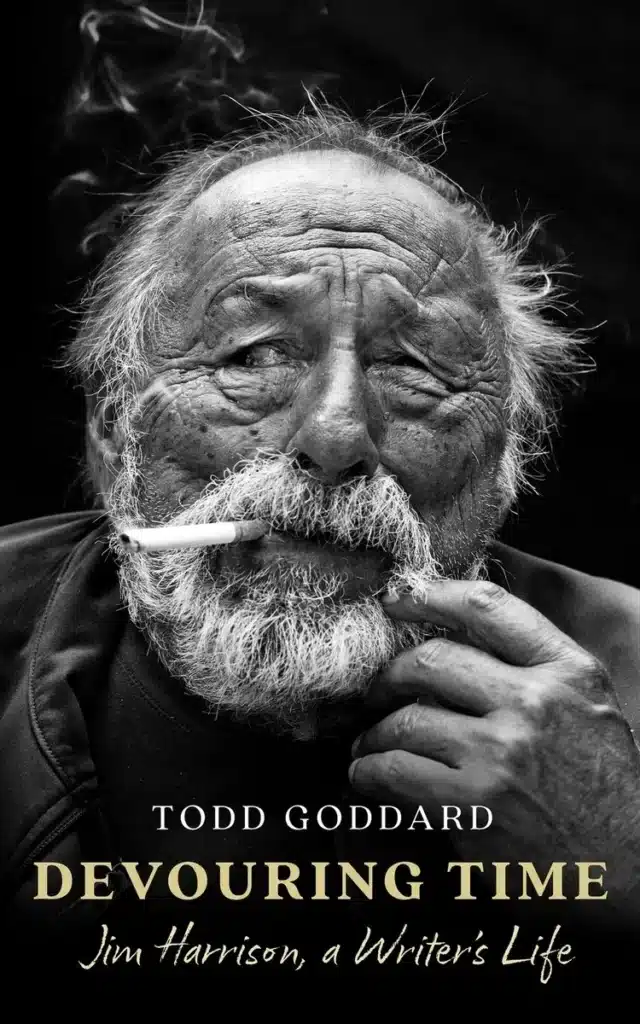
Literary scholar Todd Goddard, who divides his time between Utah and Livingston, spent five years exploring the origin, work and impact of Harrison. His book, Devouring Time: Jim Harrison, a Writer’s Life is out— a perfect read for digesting in the summer warmth of the Rockies.
Goddard is an associate professor of literary studies at Utah Valley University in Orem, Utah. He received his doctorate from the University of Wisconsin–Madison. His work has been funded by the Mellon Foundation and a Bordin-Gillette Fellowship from the University of Michigan.
An indication of his universal appeal as an uncommon American, the French government awarded him Chevalier de l’Ordre des Arts et des Lettres (Knight of the Order of the Arts and Letters). Harrison died of heart failure at his writing desk in Patagonia, Arizona. He once said, “The dream that I could write a good poem, a good novel, or even a good movie for that matter, has devoured my life.”
Devouring Time is available wherever great books are sold. We suggest you order your copy from an independent bookseller which are part of the lifeblood of local community.
Not long ago, Goddard and I had a back and forth about how the book came to be.
The Yellowstonian Interview with Jim Harrison Biographer Todd Goddard
Todd Wilkinson: Writing about giants can be daunting, especially if they’re a well-known writer and still living. When did Jim Harrison first grace your awareness, what was the vehicle, and what impact did it have on you?
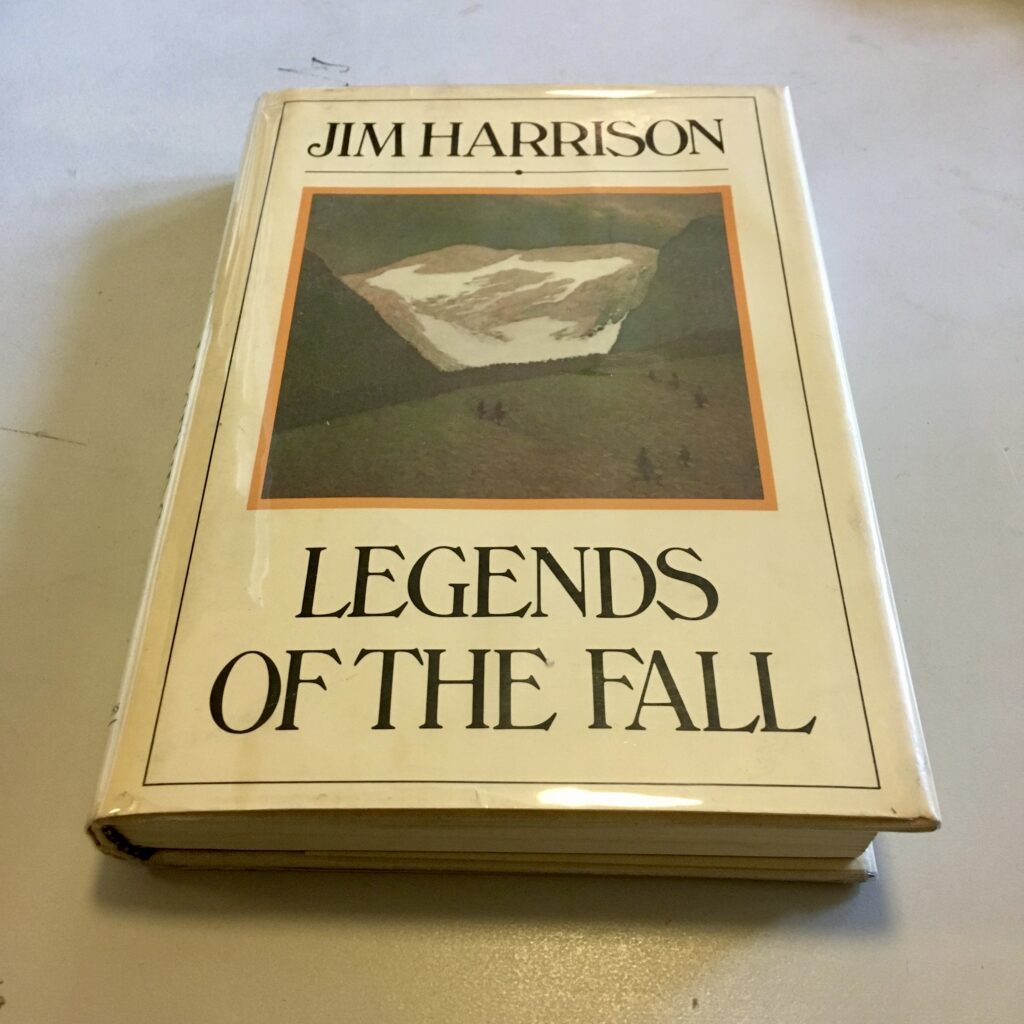
TODD GODDARD: I first encountered Harrison’s Legends of the Fall when I was in college at NYU. A friend turned me on to the book, and I was so impressed, I set about reading almost everything Harrison had written to that point, beginning with the fiction and then moving on to the poetry and nonfiction. Harrison was on my mind ever since, and I read his new works as they came out over the years. When I finally felt ready, career-wise, to take on a biography, Harrison felt like a very natural choice for me.
Wilkinson: For those coming into this cold and have only a vague sense of who he was, please place him within the right context of American literature and poetry, and what it says about the time when he and his cohorts rose to cultural status.
GODDARD: Although Harrison is best known for his 1979 collection of novellas Legends of the Fall, he began his career as a poet, and he considered poetry the “true bones” of his life. Harrison was heavily influenced by the Beats and the Black Mountain poets—Denise Levertov, who served as an important mentor to him, Robert Duncan, Robert Creeley, Charles Olson, and Gary Snyder, among others, as well as a host of international. He would go on to publish roughly eighteen volumes of poetry, twelves novels, and nine collections of novellas. Harrison is widely considered a master of the novella form.
Harrison’s fiction is often set alongside various Western, Midwestern, and environmental writers, like Tom McGuane, Peter Matthiessen, Norman Maclean, Rick Bass, and so on. But he generally disliked literary labels, finding them generally reductive and at times insulting, and he thought that everything written outside of New York City was considered regional by the East Coast literary establishment. If you wrote about the outdoors, you were pigeonholed as a nature writer. That said, Harrison’s good friend, Tom McGuane, once described him as a nativist writer, presumably because Harrison’s work is intensely place-based and tends to focus on regional, local, and indigenous identities of places like Michigan (especially the Upper Peninsula), Nebraska, and Montana. As with his poetry, Harrison’s prose influences were broad and diverse and ranged from William Faulkner and James Joyce to Isak Denison, Knut Hamsun, Katherine Anne Porter, Flann O’Brien, John D. MacDonald, and Henry Miller.
Harrison’s “cohorts” straddle various overlapping groups. But Jim and his literary friends and his close contemporaries rose to cultural status on the basis of their shared sensibilities and interests in place-based, regional, ecological-oriented prose and poetry; a general rejection of academic and postmodern writing; and often a rough, rural, wild, and hard-living approach to their lives and work. Irony fuels no trajectories, Harrison once wrote.
Wilkinson: Tom McGuane praised Harrison as being “touched,” meaning he channeled a way of seeing things that flowed out of his pure innateness, enhanced by the hard work of writing prose and poetry. Similar, in some ways, to the outpouring of energy and perspective on things possessed by another denizen of the Upper Midwest, Bob Dylan. What effect did Montana have on him, and his pals, and how has it affected the way you see the state?
GODDARD: Harrison began visiting Montana in the late 1960s, and he’d eventually live in Paradise Valley for roughly a decade and a half until the end of his life. For many years, I think Montana was a great escape for him. He’d get away from Michigan and various obligations (the demands of Hollywood, among them) and spend time with friends for a month or so out of each year, and he’d do so for some forty years before he packed up and moved to Paradise Valley with his wife, Linda. So it was partly about freedom and fun. He’d visit with Tom McGuane and a growing cast of characters who would settle in the Livingston area, including Russell Chatham, Gatz and Marian Hjortsberg, Richard Brautigan, and a list of regular visitors.
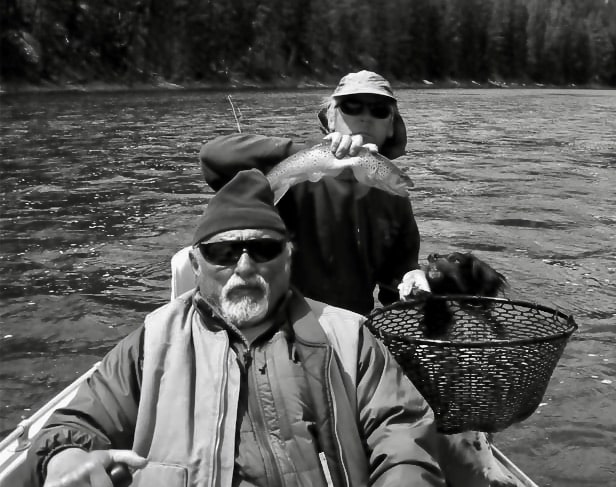
You might say that Montana helped to freshen Harrison’s feeling of being alive, as Jim would say of fishing in Key West. He floated the Yellowstone, fished for brown trout, hunted Hungarian partridge or “huns,” cooked elaborate meals of fish and game with his friends, and stayed up late drinking, listening to music, and telling stories. It was a yearly ritual. Harrison deeply enjoyed the wildness of Montana with its massive, rugged mountains and remoteness.
Later, when it became his and Linda’s home, they were closer to their grandchildren and daughters and sons-in-law, who had made Livington their home, and Jim was able to regularly fish the Yellowstone, the Big Hole, the Missouri, and so on. Floating rivers and fishing became a regular routine and allowed him to recharge from the mounting demands of his work and life. And I think he found in Montana’s rivers and wilderness the metaphors that would charge his poetry and prose, as well. He furthered his own knowledge of “the theory and practice of rivers,” the title of a collection of his poems.
It’s hard for me not to see Montana through Harrison’s eyes (or eye). He was the reason I began coming to Livingston. Because of him and his pals, I think often of the area’s history, literary and otherwise, and as a member of the board of Elk River Arts and Lectures, I enjoy helping the organization support not only its literary heritage but its literary present and future.
“You might say that Montana helped to freshen Harrison’s feeling of being alive, as Jim would say of fishing in Key West. He floated the Yellowstone, fished for brown trout, hunted Hungarian partridge or “huns,” cooked elaborate meals of fish and game with his friends, and stayed up late drinking, listening to music, and telling stories. It was a yearly ritual. Harrison deeply enjoyed the wildness of Montana with its massive, rugged mountains and remoteness.”
—Todd Goddard on Harrison
Wilkinson: How daunting was it to take on a biography of Harrison because you weren’t only presenting him through resume but searching for his essence while he was still alive! And you were poking around in the antic of his life, interviewing other larger than life people who were his friends and contemporaries.
GODDARD: At times, it was very daunting. I was interjecting myself into a complex world of networks of friends and relationships that, at least at first, I knew little about. When I began the book in 2018, a few years after Harrison had passed away, I sometimes felt like I was learning a new language. Harrison led such a big life: He visited or lived in many places, and he knew many people. At first, I’d interview friends and family, and they’d be spouting off names and places, and it would sometimes take me months and even years to put all the pieces together, to the see the connections and webs of relationships in his life.
There was also the important task of gaining people’s trust. Harrison had a protective group of friends and associates, and they were naturally wary of a biographer poking around. I’d spend time with people, go to lunch with them, talk about everything but Harrison, at times, and then eventually get around to talking about their friend.
And then there was the task of interviewing larger than life people, which could be intimidating. I’d need to set that feeling aside and focus on the work. Probably the hardest part, though, was getting people to sit down and talk, and this process was often a painstaking waiting game that involved a mix of unreturned emails and phone calls. As a biographer, you need to have a tremendous amount of patience, perseverance, and perspective to not get discouraged. I didn’t get to everyone, but I eventually got to many people—maybe most.
I even bought a house in Livingston, a move that never would have happened without the book, and I believe it provided me with a greater sense of his world, and it helped me to search out his essence, as you say. In an almost literal sense, I was following in his footsteps. Indeed, a good portion of the biography was written in the Paradise Valley, at Glenn’s in Livingston, at the Murray Bar—Harrison’s hangouts. I was embedded in the narrative, so to speak.
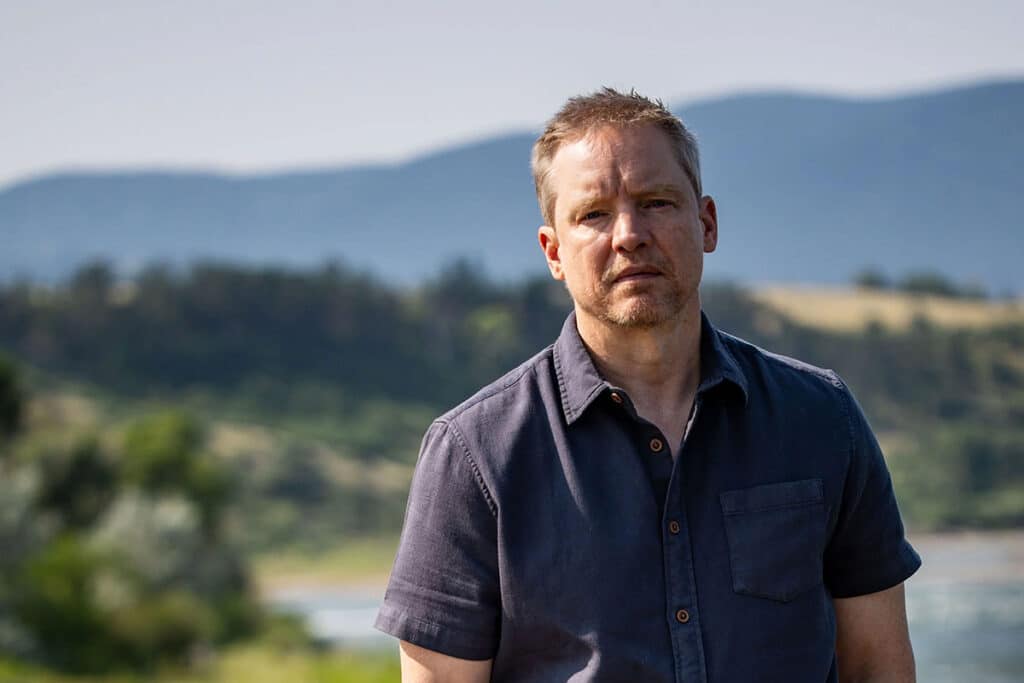
Wilkinson: A couple of quick, inter-related questions: Obviously, “place” meant everything to Harrison. The immediacy of experience is there in his poetry and natural locations are foundational to his storytelling. Was he a conservationist and an advocate the same way some of his friends and contemporaries, like McGuane, were? Did he feel an obligation to try and protect the Montana he loved? (If the answer is no, then why not?)
GODDARD: I think Harrison was a conservationist at heart. He was an avid birder, fisherman, and hunter, and he was deeply committed to the well-being of the natural world. He was highly critical of many forms of environmental exploitation. But he wasn’t inclined to political activism, and he didn’t write about and advocate on the environment’s behalf the same way that, say, Gary Snyder, Peter Matthiessen, and Ed Abbey did.
But the natural world was extremely important to him, and he realized that it had its own reasons for being apart from the human. Montana’s lands, like Michigan’s and Arizona’s, were places for him to re-create himself, observe and participate in its sacredness—like the “small gods” he wrote about in his poems. These places nurtured his life and work.
If Harrison felt an obligation to protect the Montana he loved, and I think he did, he believed he could do so through his fiction and poetry. From a young age, he felt strongly that a writer should remain detached from political activism and causes. A writer could achieve an elevated state of consciousness only by an immersive, total commitment to one’s art. It was through his writing that Jim thought he could bear witness to the world and best serve it.
As for the label “conservationist,” I think the only label Harrison fully accepted was that of “POET.”
Wilkinson: How did your perception of Harrison shift and evolve, particularly as you became acquainted with a person who wasn’t an oracle but a human replete with human qualities who possessed an amazing ability to help us see ourselves in other people and perhaps have more sympathy, empathy and compassion?
GODDARD: My perceptions of Harrison were always shifting and evolving. Harrison didn’t hide many of his perceived flaws, and he tended to write openly about them. What struck me most was his remarkable dedication to his writing–his work ethic—and the amount of writing (correspondence, essays, screenplays, novels, novellas, and poetry) he managed to accomplish. He wrote when he was hungover and deeply depressed. At times, he went without sleep. He wrote when he travelled and when he was sick. At other times, he worked himself sick.
Despite this intense labor, he still made time to walk, fish, cook, hunt, float a river, walk his dogs, and spend time with friends, and he went out of his way to make new friends. He made friends with publishers, editors, film producers, and even his psychiatrist. He managed to collapse the distance between the professional and the personal and draw people closer to him through his warmth and humor.
My admiration for these characteristics of Jim’s grew and evolved over time, as did my appreciation for his seemingly endless stores of humor. In the darkest of times and amidst the deepest depressions, Jim always managed to conjure some levity. I often found myself laughing aloud while reading his correspondence. That’s something I’ll miss.
Wilkinson: Have to ask you this: What’s your favorite Harrison novel, short story and poem?
GODDARD: The first Harrison book I read was Legends of the Fall, and it remains my favorite. Right behind it is the novella The Woman Lit by Fireflies and the novels Farmer and Returning to Earth. I find his poetry is tougher to rank, but I’m partial to In Search of Small Gods and Saving Daylight. My favorite poem is “Counting Birds.”
Also read: