by Todd Wilkinson
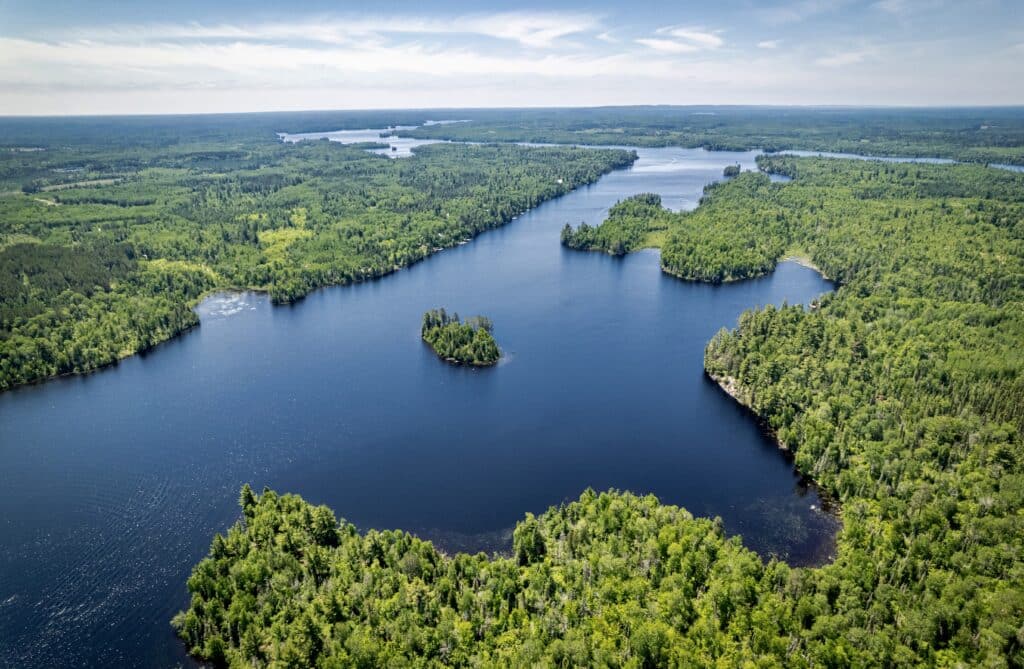
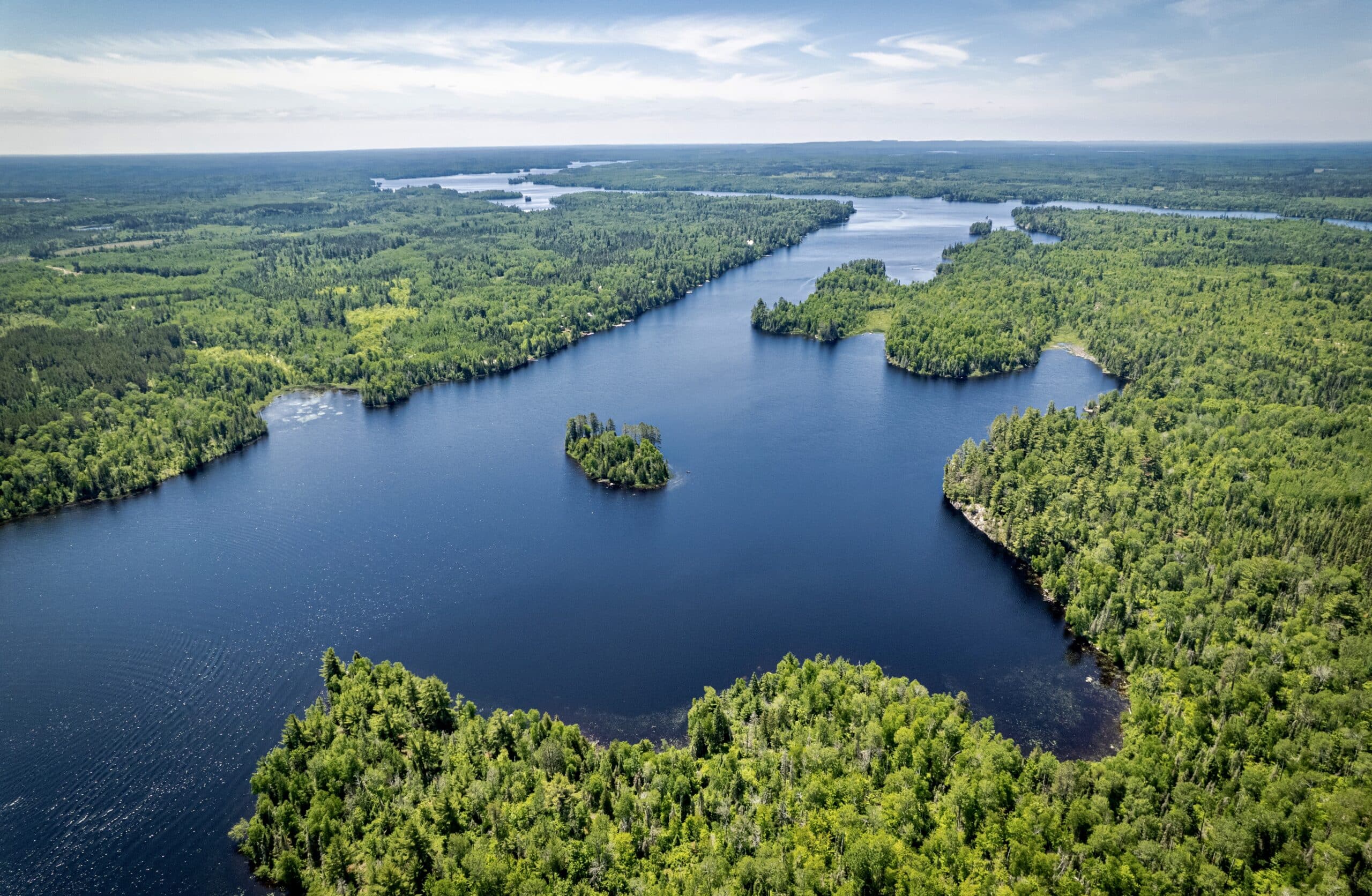
Of any shimmering reach in the Land of 10,000 Lakes, the Boundary Waters in northern Minnesota is considered by many to be a holy place.
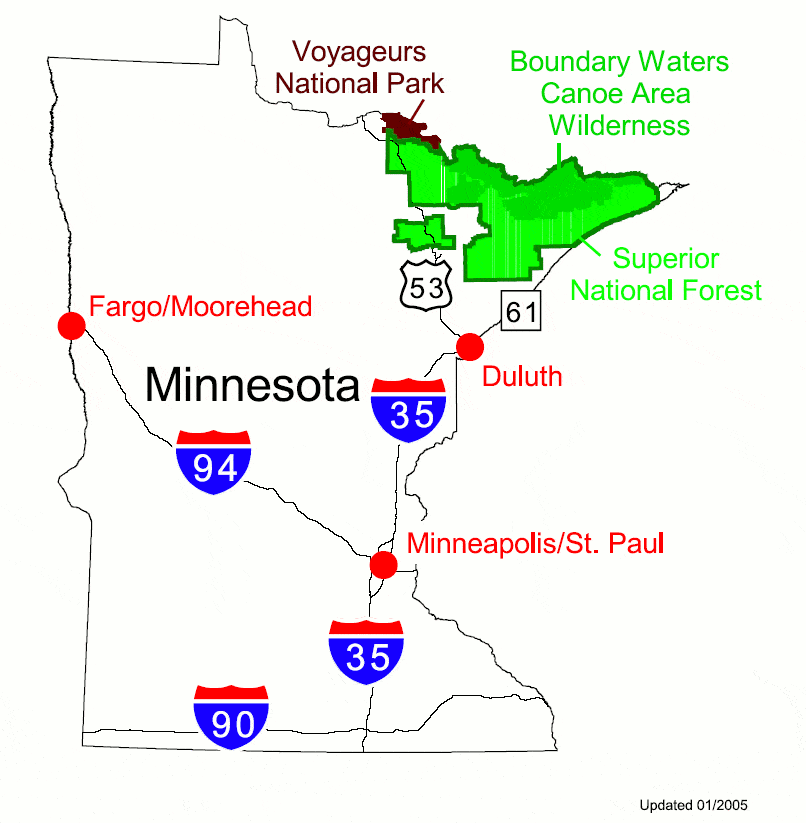
Located inside the Superior National Forest and officially called “the Boundary Waters Canoe Area Wilderness” or BWCAW, it is the most visited non-motorized federal wilderness in America and largest wilderness east of the Rockies.
Moving through it you wear a life vest, use your arms, not legs, and travel slowly not via jet ski nor other form of artificial horsepower. Nowhere do you smell the scent of gasoline from an outboard motor.
As a different kind of natural crown jewel, the BWCAW is as venerated in Minnesota as Yellowstone is synonymous with the great state of Wyoming; Glacier Park and the Bob Marshall Wilderness are with Montana and what the Grand Canyon represents for Arizona.
A road-free, post-glacial outback of fluid interconnection, this unbroken chain of water and forest links the 1,090,000-acre BWCAW to Voyageurs National Park in the US and Quetico Provincial Park in Canada, 150 miles downstream, just on the other side of the international border. Between the BWCAW and Superior National Forest, it holds 20 percent of all the freshwater in the entire National Forest System.
Yes, the water here flows northward into the basin holding the Rainy Lake Watershed and onward toward Hudson Bay.
The Boundary Waters is as venerated in Minnesota as Yellowstone is synonymous with the great state of Wyoming; Glacier Park and the Bob Marshall Wilderness are with Montana and what the Grand Canyon represents for Arizona. It is the most visited non-motorized wilderness in America and largest east of the Rockies
In terms of accolades, the centerpiece of the BWCAW is something exceedingly uncommon in the 21st century and it speaks to surprisingly how little of it remains in the Lower 48: clean water.
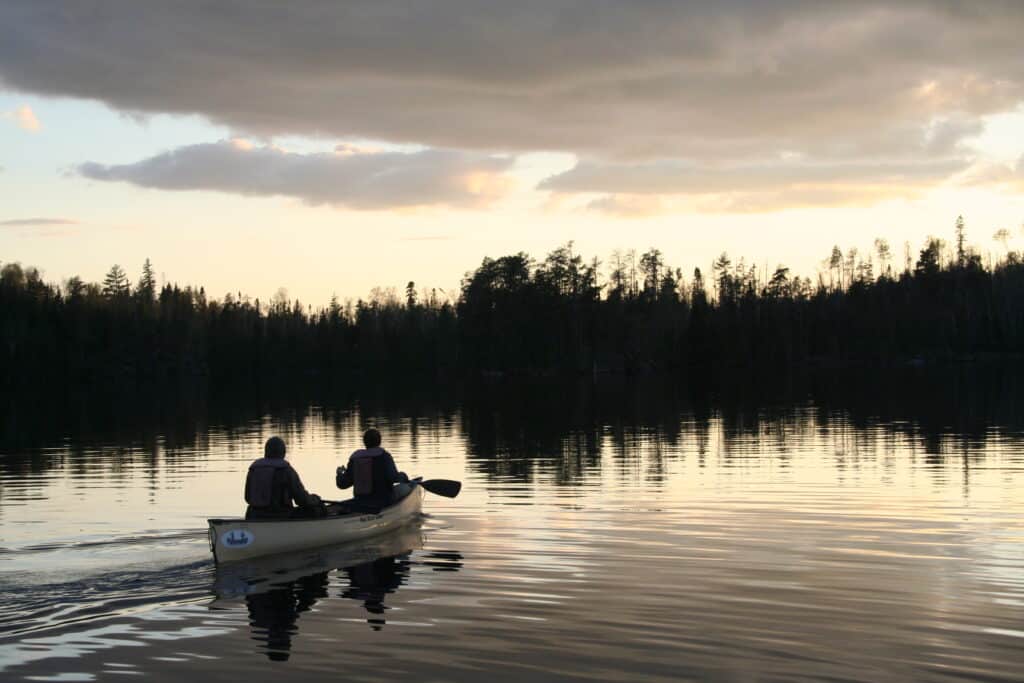
One can be paddling along, listening in contented solace to trilling loons, casting for northern pike and maybe hearing a wolf pack howling at dusk. Thirsty, you can dip a cup into the current and take a drink without having to worry that your refreshment is sullied by agricultural chemicals, treated urban effluent or tainted by mining waste. Regarding the latter, the caveat of the moment is at least not yet.
For this writer, born and raised in the state before moving West many decades ago, it is impossible to adequately express in words what the BWCAW means to the identify and pride of Minnesotans who themselves have a strong affinity for our part of the wild West, also prized for its wildness.
In my travels as a writer over the years, I’ve met countless people, around the world, who count paddling trips taken to the BWCAW, when they were young, as being among the most memorable in their lives. Universally, they think anyone who would even entertain the prospect of putting it at risk to peril as being guilty of committing sacrilege.
Do Ryan Zinke, his Minnesota colleague in the US House of Representatives Pete Stauber of Duluth, and the US Senate think they’re beyond thinking of such places as being sacred? In a way, it’s as absurd a notion as condoning an invasion of the US Capitol by violent self-described patriots protesting the peaceful transfer of power.
Certainly, America’s greatest conservation president, Theodore Roosevelt, wasn’t above recognizing the inviolate nature of some places; nor was the legendary outdoorsman, wilderness conservationist and writer Sigurd Olson, who once observed from his cabin in Ely, Minnesota on the edge of the BWCAW: “Without love of the land, conservation lacks meaning or purpose, for only in a deep and inherent feeling for the land can there be dedication in preserving it.”
“Without love of the land, conservation lacks meaning or purpose, for only in a deep and inherent feeling for the land can there be dedication in preserving it.”
—Legendary Minnesota outdoorsman, conservationist and writer Sigurd Olson
When Zinke, a Congressman from Montana, seemingly out of the blue took to the floor of the House in winter 2026 and, on behalf of Stauber, whipped up support among the GOP majority for overturning a ban on proposed copper and nickel mining adjacent to the Boundary Waters, millions of Americans who savor federal wilderness lands were stunned.
On March 1, Zinke announced, as a shock to many, that he would not be seeking re-election this November. Still, hovering over him now, and forever, is the question of what kind of lame duck will he choose to be for the remainder of his tenure on environmental issues—and what kind of person does he wish to be remembered as?
Zinke, who often self-flaunts credentials for allegedly being a champion of hunters and anglers inspired by Roosevelt, suddenly found himself the target of wrath vented by sportspeople from across the country. Not only that, but what he and Stauber did attracted scorn from four living descendants of the Republican president. Read the letter they wrote.
Here was an elected official—Zinke— who in 2025 had basked in praise for blockading the proposed sale of US public lands only to take a position deemed a threat to the ongoing ecological health and goodness of what is essentially a wild national watery cathedral.
In February 2026, he, together with Stauber, implored his House colleagues, mostly GOP MAGA adherents, to pass House Joint Resolution 140 that, by invoking an obscure law called the Congressional Review Act (CRA), would overturn a 20-year ban on mining imposed by the Biden Administration.
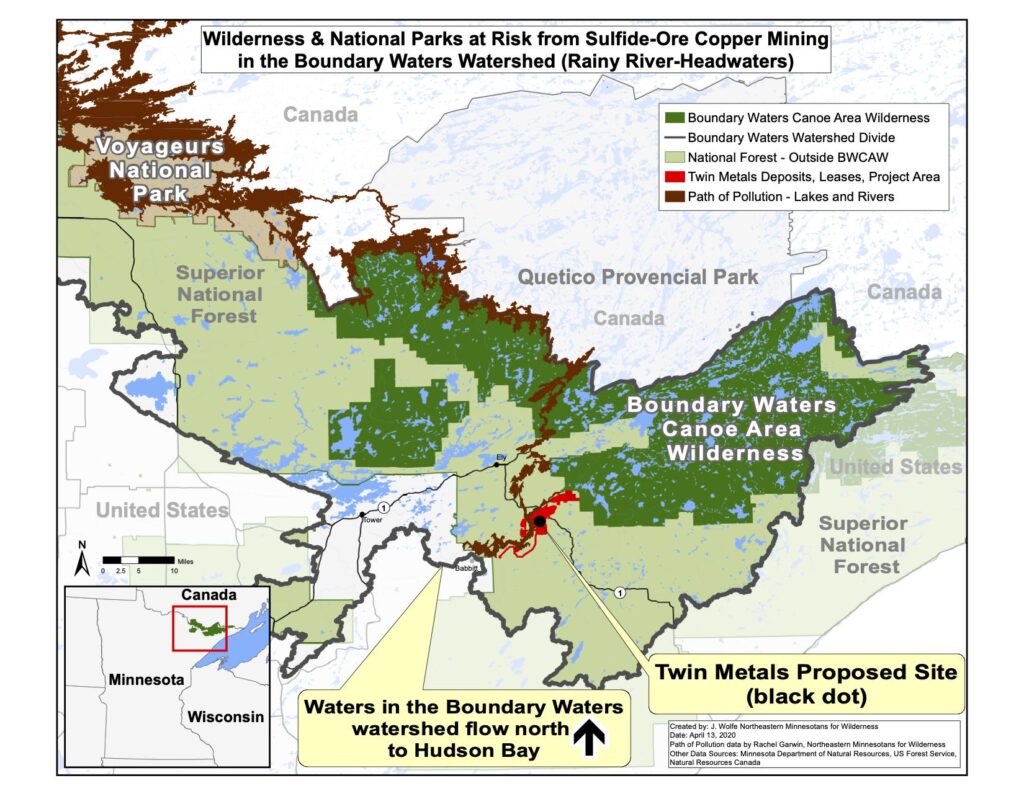
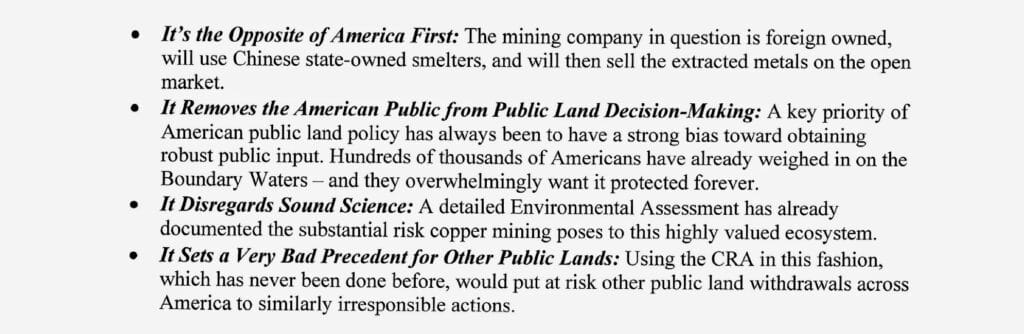
The maneuver, having passed out of the House, is now in the hands of the Senate and, if passed there, would open the door for Twin Metals Minnesota, a subsidiary of a Chilean firm, Antofagasta, to move through the mine approval process. Worthy of note is that both of Minnesota’s US senators, Amy Klobuchar and Tina Smith, stand in opposition to using the CRA as a tool for the Trump Administration giving a foreign mining company the greenlight it seeks. Smith in 2025 introduced the Boundary Waters Wilderness Protection Act that would permanently end the mining threat.
Many observers, who include hunters and anglers, now believe Zinke’s actions might actually be motivated by a scheme even bigger and farther reaching. By invoking the CRA to get the mining ban removed, he and others stand accused of using it as a Trojan Horse.
Their intent: to not only reverse protection for the headwaters of the Boundary Waters but undo conservation status applying to a panoply of other federal protected areas, including laws and regulations which exists as a kind of armor shielding them from potential harm. It’s part of a published playbook written by the Heritage Foundation with support from people working in free market thinktanks. They are advising Interior Secretary Doug Burgum and Agriculture Secretary Brooke Rollins behind the scenes and yet claiming, publicly, to be conservationists. What they’re up to, however, is visible for all citizens to see.
A high profile example out West is the invocation o the CRA by Utah Congresswoman Celeste Maloy to weaken protection for a beloved national monument, Grand Staircase-Escalante, and abandon what is called its Resource Management Plan, which the Bureau of Land Management uses as a template for setting conservation priorities.
A detailed accounting of the saga surrounding Twin Metals can be read here, but at the end of the day it comes down to something simple: values such as non-transactional selflessness, the ability to think beyond one’s time as Roosevelt did, to know there are priceless things should be treated as inviolate and not exposed to needless risk. Or, as many things seem to be in MAGA world, is everything for sale, for the right price, and is the fate the Boundary Waters being determined, in part, observers asks, because of a President’s petty desire to erase anything momentous carried out by his predecessors? One of whom is TR who has his face chiseled into Mount Rushmore.
According to the citizens’ group, Save the Boundary Waters, President Roosevelt established the Superior National Forest in 1909 from previously withdrawn public domain lands while the Minnesota Legislature created a 1.2 million acre Superior Game Refuge, similar in area to the Superior National Forest and including most of the present Boundary Waters. TR knew the area was extraordinary.
Roughly half a century later, on September 3, 1964, the federal Wilderness Act was signed into law by President Lyndon B. Johnson. The Wilderness Act established the National Wilderness Preservation System (NWPS) and is considered one of the most pivotal conservation efforts for America’s public lands. The Boundary Waters and its 1200 miles of lakes and streams was included in the Wilderness Act as one of the original nine million acres of federal public land. Over time, pre-existing industrial activities, including motorboats, mining and logging were phased out but a few nettlesome mining claims remained just outside the wilderness. Among them new leases on 225,000 acres of public land inside the Superior Forest in January 2023 by the Biden Administration to prevent the Twin Metals project from happening.
° ° ° ° °
In the 1940s and 1950s, as the economics of removing copper ore from underground shafts on the flanks of Butte, Montana—the “richest hill on Earth became more challenging, out-of-state business titans in charge of the company told the good citizens of that city that if they wanted to keep having jobs, they needed to embrace a trade-off.
The trade-off was this: Using the same kind of mountain top removal techniques perfected in the coal country of Appalachia, a giant open pit would be opened in Butte that required the demolition, forever, of many of Butte’s proud hard-working ethnic neighborhoods. Gone.
Over time, jobs in the short-term went away, too, leading to unemployment, economic suffering and, more importantly, a massive toxic legacy. It included public health and water pollution concerns inside the city and degradation downstream of the once-mighty Clark Fork River—all part of the largest federal Superfund cleanup in the West.
What Twin Metals proposes is not analogous in its physical execution and dimension to Butte, but it does involve the same kinds of questions relating to tradeoffs. Such things as short-term gain vs. long-term risks; the motivations of a foreign company and its partners vs. understanding of local pride and value of a national treasure; the trustworthiness of free-market regulation principles vs. preservation; and the Rooseveltian notion of elected officials’ highest duty thinking beyond their own self-interest to behold a higher public good.
Kathy Graul, director of public affairs for Twin Metals, told a public radio reporter that, once operational, the mine would create around 750 direct jobs and another 1,500 in related spinoffs. Over a quarter century, the company at full operation hopes to unearth, on average, 20,000 tons of ore per day.
“The mine will be transformational for northeastern Minnesota,” Graul said. “We would produce about a hundred million pounds of copper per year, 23 million pounds of nickel per year. And about 1.2. million pounds of cobalt.” She added that in addition to creating jobs, it would generate hundreds of millions of dollars in royalties for the state and federal governments over the quarter century life of the mine.
Randy Newberg, a northern Minnesota native who grew up near the Boundary Waters and today lives in Bozeman, hosts one of the most popular public land podcasts in the country. In autumn 2025, he helped Ted Roosevelt IV, great grandson of TR and a lifelong Republican, undertake a successful elk hunt in Montana. They say the push to allow mining near the Boundary Waters and invoking the CRA, is a bold demonstration of how callous the Trump Administration and its allies in Congress are to conservation widely supported by the American public. Listen below to what Newberg said recently about the ordeal in a special edition of his Fresh Tracks podcast
Congressmen Zinke and Stauber, variously, have claimed that producing these minerals “is critical to America’s national security interests,” though they admit that, at present, there is not a smelting facility that can handle nickel ore in the US and that Antofagasta could likely ship the raw materials to a processing facility in China.
To reap the volume of useable minerals mentioned by Graul requires a lot of ground moving. Sulfide ore bodies left behind as tailings can, if exposed to water, create sulfuric acid waste that is highly toxic to aquatic life and unhealthy for humans to drink. In some cases, contamination can happen while a mine is in operation or it can suddenly appear a century into the future and be difficult to isolate and contain.
Industry says the odds of such a disaster are remote given better technology compared to years ago. The same arguments about technology, job creation and royalties were invoked by a Canadian mining company in thee 1990s to seek approval from the Bureau of Land Management and Forest Service for the proposed New World gold mine on the doorstep to Yellowstone, but that project was stopped because “there are places more priceless than goldand not worth taking the risk.”
Two of the groups most vocal in criticizing Zinke and Stauber, and elevating awareness as the issue moves to the Senate, have been Save the Boundary Waters and Sportsmen for the Boundary Waters. Even if a copper and nickel smelter were built on US soil, Lukas Leaf, executive director of Sportsmen for the Boundary Waters say, it still does not alleviate the concern related to the massive amounts of sulfur-rich tailings that would be unearthed. Nor does it resolve worries about pollution escaping containment over time, including emanating from the underground mine itself and leaching into the BWCAW watershed.
Leaf notes that at least 2,000 sustainable jobs are tied to tourism in the BWCAW, which generates more than $70 million in economic activity, including $35.5 million in local taxes. Those numbers are only expected to keep rising. What’s not considered is the existential value of knowing an unsullied place like the BWCAW will be there, like an heirloom, passed on.
Tom Tidwell, the former Forest Service chief, favored the ban on mining and, based on conversations with scientists, concluded it wasn’t worth the gamble. The National Park Service also has opposed the Twin Metals mine saying that it poses an unacceptable threat to the watery ecosystem to which Voyageurs National Park is connected. So have Canadians who say Americans often complain about resource extraction threats on their side of the border but have a double standard when promoting their own. Members and groups affiliated with the International Joint Commission have noted that any pollution would violate the 1909 Boundary Waters Treaty. Indigenous nations in the US and Canada have also expressed worries.
Lending support to Save the Boundary Waters and Sportsmen for the Boundary Waters is a long list of national, regional and local conservation and sportsman’s groups, comprising millions of members and supporters, plus tourism entities. Proponents of the mine, in addition to Zinke and Stauber include Interior Secretary Burgum and Ag Secretary Rollins, as well, of course, as the Heritage Foundation and its free market economist allies.
Leaf points out that mining proponents have tried to, erroneously, paint conservationists as being anti-mining altogether, which he says isn’t true. In and around the town of Ely, which is a gateway to the Boundary Waters, resides the famed Iron Range where iron ore and taconite have been extracted for over 100 years but because of where its found and the type of geology involved does not pose a threat to water quality.
“We are not opposed to ongoing iron ore and taconite mining which has a rich heritage on the Iron Range,” Leaf said. “We are focused on Twin Metals because the copper and nickel deposits are in ore bodies known to be rich with sulfur and our position is ‘not that kind of mining, not in that kind of ore body, not in this location,’ with so much uncertainty and so much at stake. Why risk something so rare and priceless?”
“We are not opposed to ongoing iron ore and taconite mining which has a rich heritage on the Iron Range. We are focused on Twin Metals because the copper and nickel deposits are in ore bodies known to be rich with sulfur and our position is ‘not that kind of mining, not in that kind of ore body, not in this location,’ with so much uncertainty and so much at stake. Why risk something so rare and priceless?”
Lukas Leaf with Sportsmen for the Boundary Waters
Leaf says no technology exists that addresses the concerns about risk and part of the rationale for the 20 year ban was to allow for potential advancements to emerge. However, he says the best long-term remedy is for Congress and the President to enact a permanent withdrawal of copper and nickel mining from the watershed.
By a more than two to one margin, Minnesotans in a poll taken by Impact Research, said they oppose the copper/nickel mine because of concerns over future sulfide-ore contamination, notes Save the Boundary Waters. Among voters, 87 percent of Democrats say protection of the Boundary Waters should be given priority, 66 percent of those identifying as Independents agree and 50 percent of Republicans. It is not an anti-mining sentiment, however. Some 40 percent of those surveyed said they favor mining outside the Boundary Waters watershed and 26 percent are opposed.
The controversy over Twin Metals is parallel to the debate over the Pebble Mine in Alaska, a place with vast mineral resources but situated inside a landscape with a lot of lakes and rivers whose waters support a world-class wildlife population, including one of the last wild and healthy strongholds of wild salmon and other fish.
Over the years, hunters and anglers, including Donald Trump Jr., have come down on the side of caution. In 2023, the US Environmental Protection Agency, invoking the Clean Water Act, ruled that the mining proponents could not store tailings in the drainage, effecting killing the project.
But there are rumors afoot that new EPA Administrator Lee Zeldin, who recently ruled that the agency would no longer regulate carbon dioxide emissions related to climate change, may also do something drastic and open the door for Pebble to be resurrected. Which could be problematic as Donald Trump Jr. expressed caution.
Sportsmen’s groups point to what they consider hypocrisy and “Zinke’s situational ethics.” When he was Interior Secretary and facing fierce resistance from conservationists and citizens back home, Zinke took executive to temporarily ban mining in the Absaroka mountains flanking Paradise Valley near Emigrant Peak in Montana, north of Yellowstone Park, noting the threat it posed to water and the character of the valley was unacceptable. He also sought to withdraw oil and gas leasing from the Badger-Two Medicine area on Forest Service land outside Glacier National Park because it is considered sacred ground to the Blackfeet.
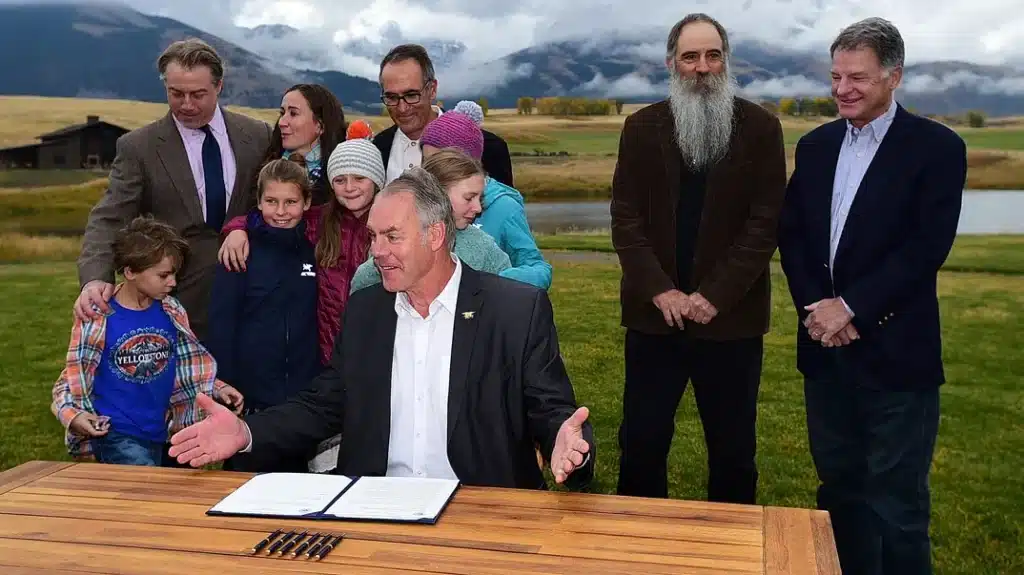
Zinke knew from polling that halting potential mining near Paradise Valley was a good political move because Montanans were vocally opposed—not different from how most Minnesotans, tourism officials and national sportsmen’s’ groups are to mining near the Boundary Waters. Would Zinke enthusiastically back the Twin Metals mine if it were proposed near the border of Glacier National Park?
In 2025, when national resistance erupted over US Sen. Mike Lee’s bill to divest millions of acres of federal public lands, Zinke, who stood in opposition, co-founded the bipartisan House Public Lands Caucus and is a member of the Congressional Sportsmen’s Caucus, stated this in a press release: “I follow the Theodore Roosevelt motto that public lands are ‘for the benefit and enjoyment of the people,’ and that means making sure we both conserve and manage those lands to ensure public access for the next generation. Public lands aren’t red or blue issues, it’s red, white and blue. The bipartisan Public Lands Caucus brings together lawmakers who don’t agree on much, but we agree on and are ready to work together to promote policies that advance conservation and public access.”
When he was Interior Secretary, before he resigned under pressure, Zinke backed Twin Metals. Today, while protecting the Boundary Waters is a patriotic position, conservationists are worried the Kawishiwi River, where the mine is proposed mine one day yield flows running orange with acid mine drainage.
While Zinke was at Interior, the Theodore Roosevelt Conservation Partnership, then under the leadership of Whit Fosburgh, blasted the Trump Administration as it tried to expedite approval for Twin Metals. “It is a truism that politicians try to have it both ways, telling constituents and donors just what they want to hear while their actions tell a different story,” Fosburgh and Spencer Shaver wrote. “In this case, the U.S. Department of Agriculture [parent of the US Forest Service] has made and broken commitments concerning an important environmental review of the proposed mine, which has limited the use of science, the public’s input, and the ability of federal land management agencies to affect the outcome of the project.”
In 2016, as the presidential race between Donald Trump and Hillary Clinton was heating up, Ted Roosevelt IV co-authored an op-ed with the late Vice President and former US Sen. Walter Mondale of Minnesota for The New York Times. “Conservative thinking dictates that we manage the Boundary Waters under the ‘precautionary principle.’ If we err, it must be on the side of environmental safety. We must risk no harm to a pristine environment,” they wrote. “There should be no copper mining anywhere near the Boundary Waters Wilderness, today or ever.”
Zinke is accused of speaking out of both sides of his mouth and not acting on principle but pandering to whichever side embellishes the image he choose to assume, be it devout conservation or devoted servant of President Trump.
Intriguing is the Congressional Review Act, now at issue, was signed into law by Bill Clinton. It was, however, written by US Rep. Newt Gingrich, a Republican from Georgia who became speaker of the House of Representatives after GOP candidates notched a landslide takeover in Congress in 1994. Gingrich used it as a lever for killing regulations the GOP didn’t want passed or implemented by Democrats. Normally, the law gives Congress 60 legislative days to veto any new regulation enacted by a federal agency and seldom has it been invoked to block public land resource issues as part of management plans for executive orders, including mineral withdrawals.
In the past 30 years, the CRA has been invoked just a handful of times to review executive orders. But the Trump Administration in its second term, and in league with members of Congress has invoked it dozens upon dozens of times in 2025 alone, using resolutions, to undo regulations that either forbade resource extraction activity and/or mandated public and scientific review of proposed projects.
According to one analysis, “Out of the 47 rules targeted by CRA resolutions, 22 are primarily environmental or climate rules, and 17 are consumer protection or financial rules. These two categories alone account for almost 73 percent of regulations.” And it adds, “Powerful special interests are the ultimate beneficiaries of this assault on our regulatory system. Financial disclosure data retrieved from OpenSecrets.org reveal that the sponsors of this year’s CRA resolutions received significant campaign contributions from the very sectors that are set to benefit the most from these rollbacks. These contributions do not necessarily prove the existence of an explicit or implicit quid pro quo, of course. But the appearance of impropriety they create risks further undermining public confidence in the integrity of our governing institutions.”
Just a few weeks ago, in February 2026, in wake of Zinke and Stauber moving HJ 140 through to passage, TRIV was joined by three relatives in writing a letter to GOP members of the Senate remind them that Teddy would be appalled.
Still, in using his soapbox in the House to muster support for Twin Metals, Zinke said, “I think probably I stand on the conservation side as much as any member. But I’ve actually read the mining plans. I have a degree in geology and look closely at it and you know what? There are good projects and there’s bad projects and we don’t mine like we used to. When a mine is not located in the wilderness, is not located in the buffer, it’s located in a Forest Service holding, which by nature, by law, is multiple use. And mining is an appropriate use.”
Critics say Zinke’s insinuation that by his possessing an undergraduate degree in geology, therefore making him, in his own mind, an expert in gauging the complexity of concerns about Twin Metals’ plans, demonstrates a shallowness of analysis—a bit like a student at Montana State getting an undergraduate degree in physics and believing he can provide reliable advice on the safety of nuclear weapons.
“I think probably I stand on the conservation side as much as any member. But I’ve actually read the mining plans. I have a degree in geology and look closely at it and you know what? There are good projects and there’s bad projects and we don’t mine like we used to. When a mine is not located in the wilderness, is not located in the buffer, it’s located in a Forest Service holding, which by nature, by law, is multiple use. And mining is an appropriate use.”
Congressman Ryan Zinke of Montana, a fulcrum in trying to get the Twin Metals mine approved near the Boundary Waters
Congressman Stauber claims that halting the mine is anti-labor and therefore anti-union but he has a mixed record on supporting unions himself. A Harvard economic study said that over time a safeguarded BWCAWA is worth far more, to a lot more people, than proceeds netted from a mine. For his part, Zinke is chairman of the House Public Lands Caucus that he claims “champions conservation.”
“He’s advocating for this mine, not just staying neutral. He’s advocating, saying this is a great idea. How can you be a chair of a caucus and say ‘I’m against the sale of public lands’ and then be willing to defile them on an issue like this?” Land Tawney, co-chair of the group, American Hunters and Anglers, and former CEO of Backcountry Hunters and Anglers, told reporter Laura Lundquist at the Missoula Current. “There’s a $77 million outdoor economy based on the Boundary Waters— that is sustainable. Why would we jeopardize that, especially for a foreign-owned mine and minerals that are going to go over to China. When I hear them say ‘energy dominance,’ that’s not energy independence. That just means a short quick buck, and we know very well in Montana that boom-and-bust cycle. There couldn’t be a worse place for a mine because it’s all water. Why are we doing this in a place that’s so sensitive?”
There’s a larger context. In the peer-reviewed journal Science, a study was published in September 2023 titled “Impacts of metal mining on river systems: a global assessment.” It found that, worldwide, around 300,000 miles of river channels and 63,200 square miles of floodplains have been exposed to mining contamination and that areas affected by deliberate or accidental discharge of mining wastes into rivers is almost 50 times greater than the number of miles affected tailings dam failures. North America is the most affected region in the world in terms of negative impacts from active and inactive mines on flowing waterways. The study said that in the future increasing numbers of flooding events related to climate can result in “augmented erosion and sediment-associated metal remobilization from recently and historically contaminated floods.” The implication is that irregular flushing of water through landscapes triggered by heavily precipitation events represent a threat of mobilization mining wastes that not fully entombed and rendered inert.
Roosevelt once remarked: “The nation behaves well if it treats the natural resources as assets, which it must turn over to the next generation increased, and not impaired, in value.”
One wonders if the current president of the United States is capable of comprehending—and appreciating—the kind of priceless aesthetic wonder that still exists in the Boundary Waters and lakes of northern Minnesota? Has he ever stepped into a canoe, listened to a loon, and sat quietly without surrendering to mindless chatter before a sunset without pondering how it might be monetized? TR did. One wonders: what is preventing Congressmen Zinke and Stauber from being advocates for safe-keeping a place that holds exponential meaning for people now and in the future, far beyond a few thousand jobs that will be gone in another generation?
One wonders: what are the values of US senators from the West if they can’t grasp the enduring, accruing worth of inviolate places and the fact that, if Twin Metals doesn’t happen, Minnesotans will not be the worse for wear.
Some of these senators—James Risch and Mike Crapo from Idaho, John Barrasso and Cynthia Lummis from Wyoming, and Steve Daines and Tim Sheehy (a Minnesota native himself and recent Montana transplant)—all claim to be acolytes of Theodore Roosevelt. How they vote on mining near the Boundary Waters, observers say, will prove whether they are really like Teddy, or identify with a closer kindredness to the industry titans he protected America’s public lands against.
Also view, and read: