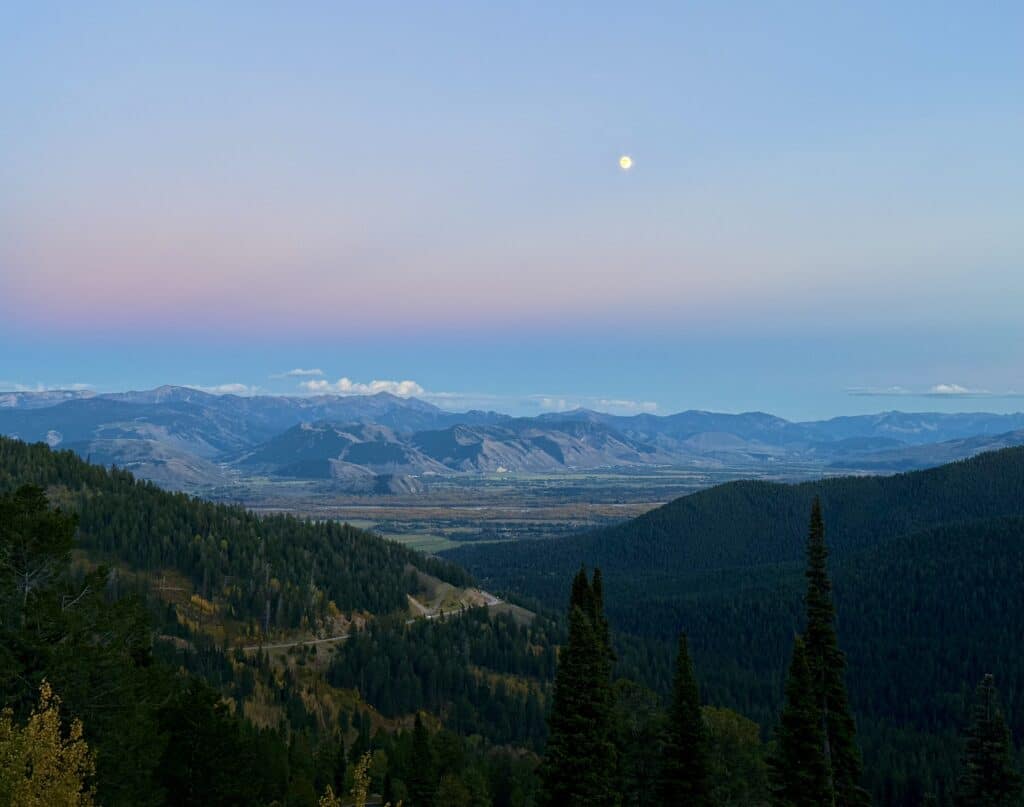

EDITOR’S NOTE: We admit upfront that Jonathan Schechter is a longtime friend of ours, a person whom we’ve engaged in lots of mind-provoking conversations over the last few decades. He lives in Teton County, Wyoming, the richest per capital county in the US and which also happens to be renowned for its scenic beauty and wildlife. But with the massive infusion of financial wealth that has poured into Jackson Hole, much of it driven by liberal tax laws, both working class people and wildlife are paying a high price for high-end development pressure. In addition to being the founder of a think tank, Charture Institute, Schechter is a re-elected member of the Jackson Town Council and reflects often on whether Greater Yellowstone’s nature of place can endure within a plan to secure its ecological integrity. Not long ago Schechter was featured in a business profile about Jackson Hole’s challenges featured by the financial cable network Bloomberg Television on its regular segment Wall Street Week. Below is a short introduction from Schechter that sets up that piece titled “Jackson Hole: Billionaires, Cowboys and the Wild West of Wealth.” You can watch it below. It’s gone viral. Peruse the hundreds of comments that viewers have left. What are your thoughts? We’d love to hear them. You can pass them along by clicking here.
by Jonathan Schechter
Every summer, the Philadelphia-based Global Interdependence Center holds a conference in Jackson Hole. Two years ago, I was asked to address it. I happily agreed to do so. Unhappily, I thought I bombed.
So much for my ability to read a room. Instead of bombing, the GIC folks liked my talk so much that they invited me to speak again this summer, which I did in July.
One of the attendees was Michael McKee, the International Economics and Policy Correspondent for Bloomberg TV and Radio. A month later, Mr. McKee interviewed me for a 12-minute Wall Street Week story about Jackson Hole. It ran in late August, and you can watch it below.