
By Dorothy Bradley
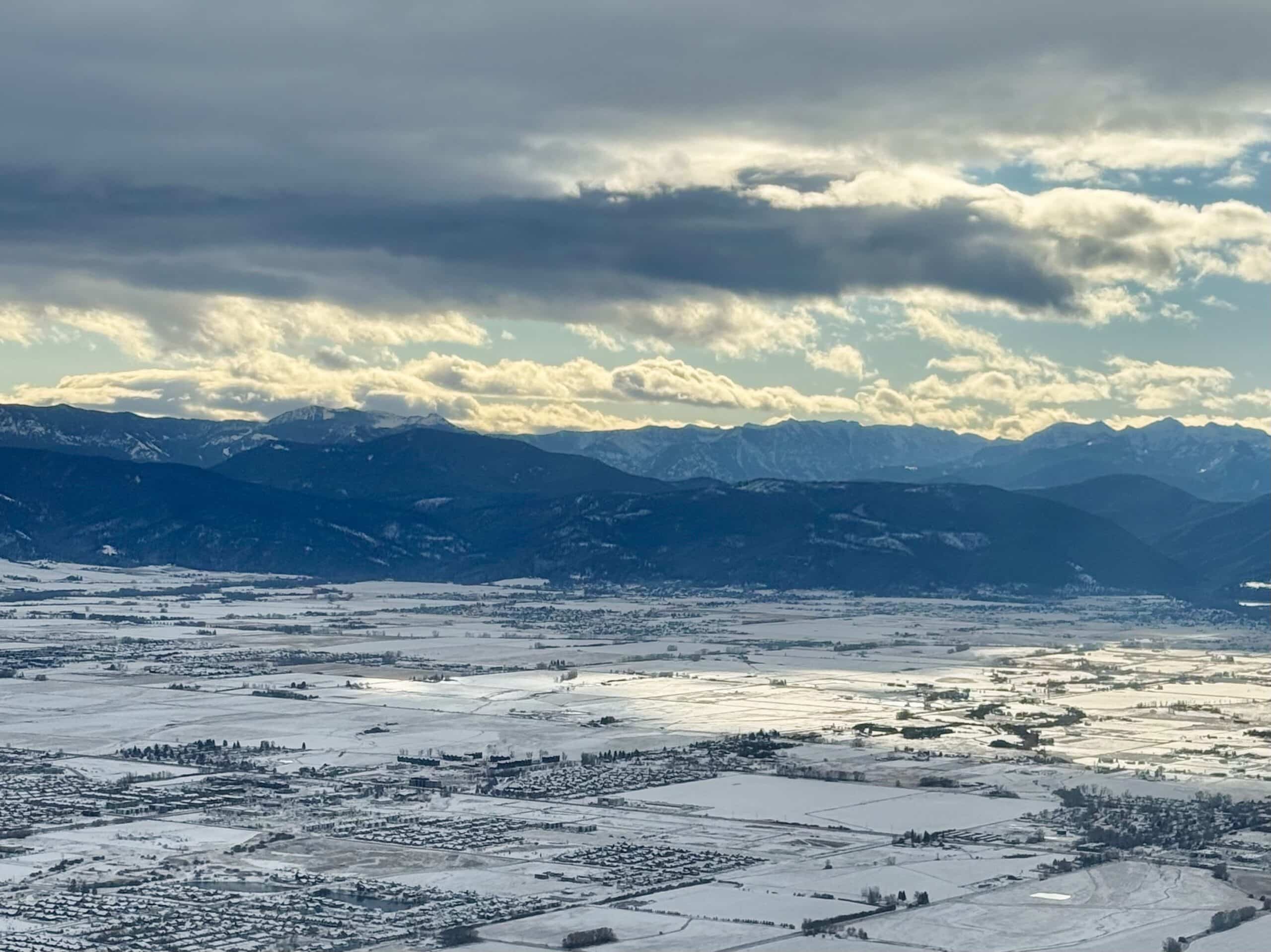
I was one of the lucky ones – a child in Bozeman in the 1950’s and ‘60s. The best adventures were in Hyalite Canyon. That is where we learned about Hyalite opal, basalt columns, hanging valleys, Fairy Slippers, moonlight skiing, Wood Thrushes, sleeping on the ground, skinny dipping, and moose.
One of my lessons included telling my father at a snowy upper Hyalite Lake, that my shoes were too wet for the final ascent of Hyalite Peak. I would just go barefoot. He said, “OK.” Five steps ended that idea.
On our first “kids only” camping trip, I found all these red-banded trees near Hyalite Reservoir, and in a frenzy to save them, I pulled the plastic bands off as many trees as I could and buried them. For the next three weeks I lived in abject terror thinking the police would find the buried bands and I would be sent to the reform school in Miles City, the threat of which kept us more subdued in our early teens.
No better childhood. None.
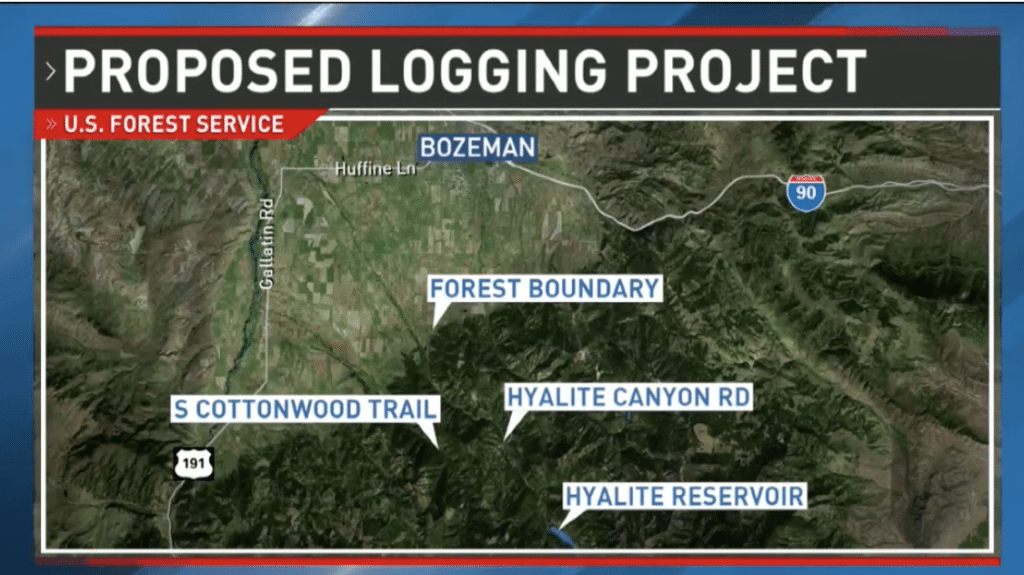
Not long ago, 9000 acres of this larger Hyalite and South Cottonwood drainage were recently authorized by the Custer Gallatin National Forest for logging and burning. It is one piece of an even greater clearcutting project south of Bozeman. This is a bad idea. It is not only unpopular and based on questionable science but is being slipped through the process with little community involvement.
It is home to some off the last old-growth trees in the northern Gallatin Range and species that depend the habitat they provide.
In the late 1980s, when this area was previously proposed for heavy-duty logging by Plum Creek, a private logging company, a group of neighbors called Concerned Citizens of Cottonwood helped advance a land exchange to reduce checkerboarding and protect the land and wildlife through transferring ownership of the area to the US Forest Service.
This led to a land exchange in 1993 with the visionary leadership of Senator Max Baucus and the late Congressman Pat Williams.
Here it comes again: in 2026 Hyalite and Cottonwood are targeted by timber interests, though this time touted by the Forest Service and with minimal public involvement. It would involve bulldozing eleven miles of roads, logging old growth forests, and devastate more of the wildlife habitat. Yet another bite.
A lawsuit has been filed, and again a local petition has been circulated signed by an amazing 1200 people. “I would like to be a voice for South Cottonwood Canyon. It is a wilderness and doing just fine. Please leave it alone.”
There is a time when human pressure becomes the straw that breaks the health of the ecosystem. Each day we feel these people pressures asserting themselves in unexpected ways. Who would have imagined that we would have poisoned fish in Montana? Just a week ago a friend was held up for two hours by a no-visibility dust storm outside of Glasgow.
In addition, and front and center, we are in a major drought which, in this year of no winter, is, frankly, scary. What is worse, looking ahead: this drought will persist.
It is time for us to think anew. The only scientifically proven way to protect homes from wildfires is called home hardening where you start at a home by having a nonflammable roof and deck and remove all vegetation within five feet of a home. Then homeowners need to trim low hanging branches 30 to 100 feet from a home. The Forest Service’s controversial Hyalite-Cottonwood project calls for logging miles from homes and won’t do anything to protect homes from wildlife except give homeowners a false sense of security. It ignores the well-documented fact that many of the biggest fires were not halted by “thinning” but driven by dry conditions and high wind.
If we put three factors together – hot, dry, and windy – we have the worst possible conditions for wildfires. In this drought and increasingly dry conditions, we are going to see more fire and smoke no matter what, but these clearcutting projects for so-called “forest health” only make forests unhealthy. If our intention is to protect the wildlife, water quality, and habitat, leaving the Hyalite and Cottonwood forests intact, to absorb more carbon, is the best we can do.
If I wished for one thing for all the kids of Montana, it would be that they could roam in a still-wild place like Hyalite, intact and thriving.