
By Brad Orsted
This is the summer of historic commemorations largely reflected upon in time across half-century increments.
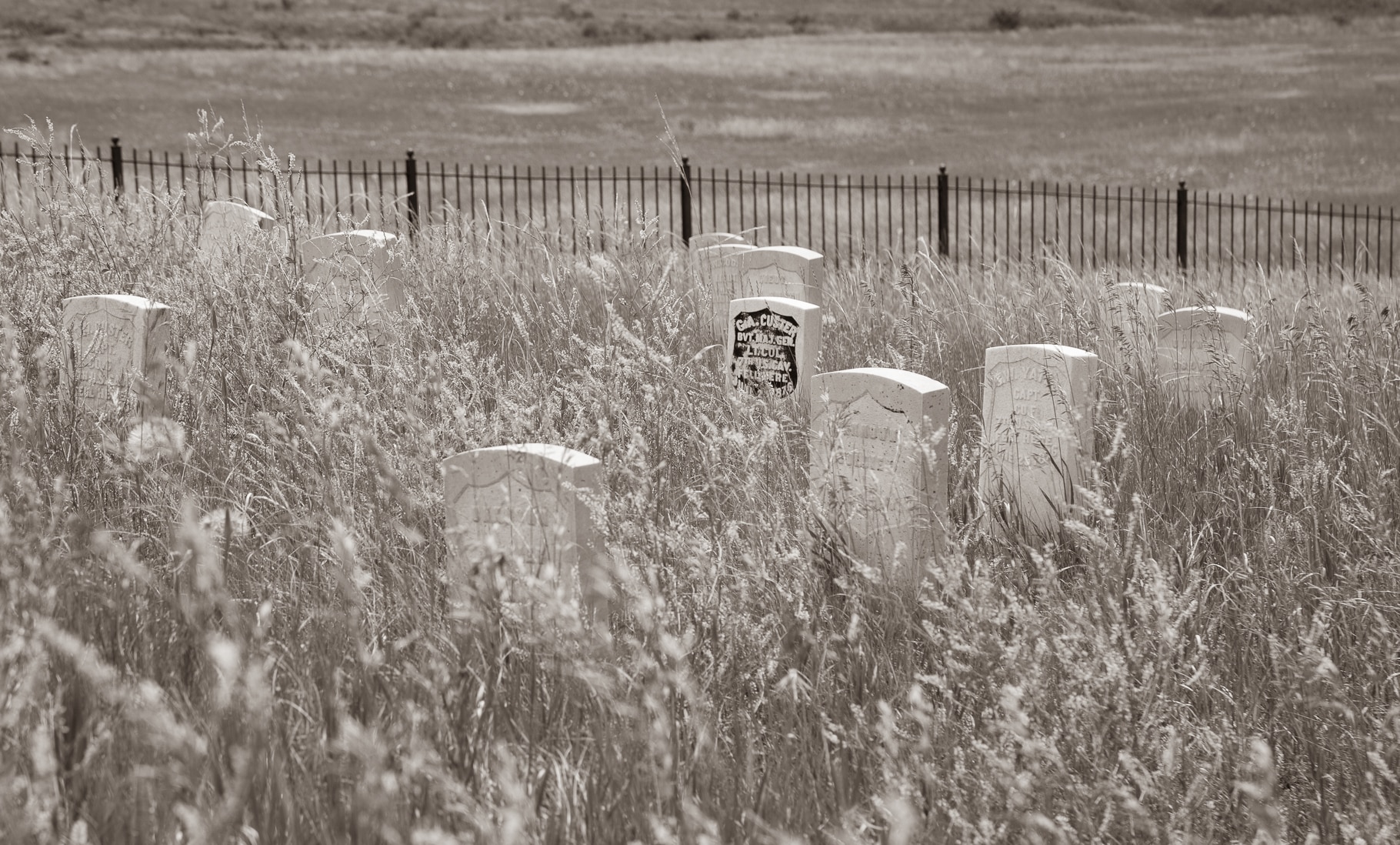
On June 25, 2026, I visited the Little Bighorn Battlefield in Montana on the day that marked the 150th anniversary of arguably the most famous military engagement ever fought in the West. Many know it by the overdramatization of “Custer’s Last Stand,” but to the indigenous people who were attacked that morning in their homeland, it will always be the Battle of the Greasy Grass.
I had been hesitant to visit on the actual anniversary date because of the sure-to-be-overwhelming tourist presence. But while hiking my dogs an hour away from the historic site, I decided to go brave the masses and see if I could be a part of it, perhaps even capturing some images with the lens.
So off we went to Crow Agency, Montana. My goal was standing where Lakota, Northern Cheyenne and Arapaho warriors stood 150 years ago defending their way of life and trying to feel in the land for any lingering stories.
Word of what happened during the two days of fighting on June 25 and 26, 1876 slowly crept eastward. It wasn’t until July 4 and 5, as Americans were celebrating the Centennial of the signing of the Declaration of Independence that the first accounts were published in major newspapers in New York, Philadelphia and Washington DC, to the shock of readers.
The West, as it existed then, was indeed considered a different world.

I’m somewhat familiar with the layout of Crow Agency on the Crow Reservation and the history behind the battle. Long before I was graciously taken in by an Apsáalooke family more than a decade ago and began spending time at Crow Agency, learning some of their ways, I had been blessed to be invited to Pine Ridge Reservation in South Dakota several times by my Oglala friend.
Reading Black Elk Speaks in high school is what originally piqued my interest in native ways. That, and the blatant hypocrisy of the religion I was born into.
To be able to spend time on Pine Ridge while in my formative 20’s with direct descendants of Black Elk, the Lakota holy man, and to hear the elders speak, to smoke and pray was, and still is, a very powerful time in my life. It was an exceptionally rare gift for a white kid from Indiana.
We spoke of the Battle of the Greasy Grass during my visit, although I was still too young to appreciate what was being shared with me. Another dear friend of mine is Northern Cheyenne, and I know he tempered it every time because he respected my connection to a Crow family, but he still expressed his decades-old contempt and vowed to never step foot on the land of a neighboring tribe, a people I have a deep respect for. Some of whom I consider my family. I considered him my brother, too. I always felt so empathetic and wanted to help heal the relationship, but it wasn’t my place.
As a non-native with a foot in several camps so to speak, I was able to glean from many perspectives some of the animosity that still exists between these sovereign nations over among other things, the circumstances surrounding the Battle of the Greasy Grass. It always hurt my heart to hear there were still such hard feelings over many issues that to me seemed so far in the past, but to them seemed as recent as yesterday.
Being non-native, I never felt comfortable to do more than listen and maybe ask a few questions over coffee; however, it is still very sensitive and not a good subject to dwell on, especially as an outsider. But more than that, I loathed the colonizer government for what they did and still do to indigenous people.
I felt like if tribes continued to hold grudges against each other and not work together to fight the government as one, they were actually doing the government’s work for them. The same colonizer “divide and conquer” tactics that have been used globally for generations to eradicate indigenous people everywhere and wipe out any signs of their cultures ever existing.
As I stood on the earth near where the battle took place, the National Park Service had been under orders, just months earlier, to strip signage that spoke the truth of what happened at this very battlefield — language about broken treaties, about what was done to children forcibly taken from their parents and sent off to “Indian Board Schools” in the name of “restoring truth and sanity to American history.”
The Northern Cheyenne Tribal Council said no. It took the American Indian Movement’s protest in 1976 and fifteen more years of fighting just to get Custer’s name off the front gate. The battle, of course, was about far more than his folly.
The fight to tell the truth here never really ended. How it’s possible that a government of broken treaties and genocide is qualified to singularly dole out “truth and sanity” is beyond me.
Even with all of that weighing on me, I kept coming back to the people I love who carry these wounds indelibly in their cultural memory. Over the years, I’ve had numerous discussions with my indigenous friends from different tribes concerning how to reconcile the hurt between the nations so they can come together in healing and solidarity. We saw this happen at Standing Rock in 2016, but how can the Crow, Lakota, Northern Cheyenne, Arapaho and others begin to move past the finite clash at Greasy Grass and other differences?
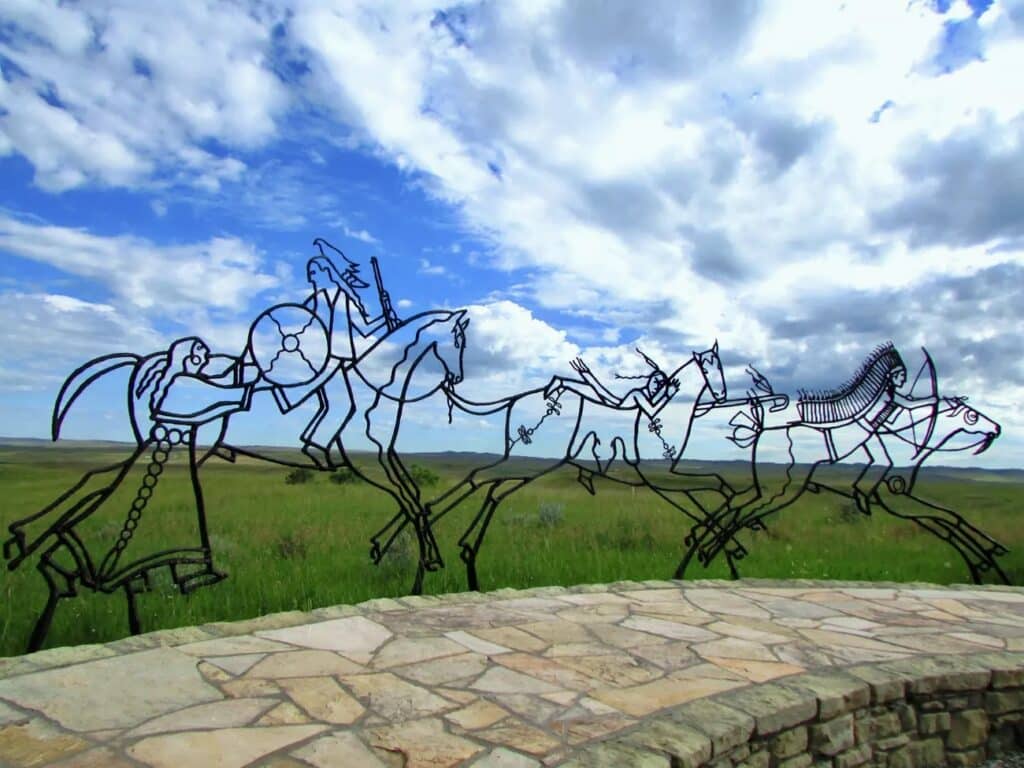
As I was nearing Crow Agency mid-morning under partly cloudy skies, it came to me that 150 years ago, by that same time in the morning, the battle, that started shortly after sunrise that fateful day, was already mostly over by 10am. Custer and his 7th Cavalry had paid dearly for his hubris and miscalculations. It was said by Two Moons, the Cheyenne chief who fought there, that “the battle didn’t take any longer than it took a hungry man to eat his dinner.”
Turning east onto US Highway 212, at “The Warrior’s Trail,” there were hundreds of vehicles and traffic control everywhere. Cars, trucks, RVs, motorcycles parked along both sides of the road, and all the way along the battlefield entrance, parking wherever someone could squeeze in, made it look like another great battle was happening.
Moving through the people, I began to see the colorful flags of the many indigenous nations that were represented there. I had already admired the Lakota tipis in formation camped on Crow land. I saw Crow and Northern Cheyenne flags being presented side by side on horseback. So many tribes under their flags moving in unison. I could see over the river valley to where Sitting Bull and the Hunkpapa were camped 150 years ago, peacefully minding their own business that morning of June 25. Nearby, on that day, Crazy Horse was asleep in his tent.
Flash forward. My heart felt good to finally observe with my own eyes so many people from different communities in the land of their ancestors all coming together under the prairie sky with drums and songs and trills and war whoops, eagle feathers, brightly colored beads, ponies, and a shared sense of pride and honor to be indigenous. Two things that have been stolen from them as well, along with the land and culture, being renewed by beautiful people.
I saw the silken braids, smooth and shiny black like raven’s wing, swaying in the breeze, bareback riders silhouetted on the ridge top near Last Stand Hill. Swirling blue and purple satin ribbon skirts, black jeans against the green hills. What struck me more than anything I could frame in a lens was the mixture of not only many different indigenous tribes but also the rich dynamic of people of all color and creed coming together, honoring the brave and fallen, all of Creator’s children there under the heavens and sun, recognizing, healing, celebrating, together. It was a sight to behold.
I closed my eyes and prayed that the sacred hoop can be repaired between all of the nations.
We are at a crossroads and us non-native people need to look to our indigenous leaders, poets, storytellers and scholars more than ever. We need a return to the old ways, to a life closer to the earth, and in harmony with nature. Our indigenous leaders retain that knowledge. The stories, the medicine, the codes to live by — they’re still here today, carried by the very communities who showed up at the Greasy Grass to make sure the world knew they were still here too. We only need to heed the lessons of our wisdom keepers. Indigenous leaders uniting around the globe may be the only way out of this mess we’ve created on planet Earth. If all of us who stand against tyranny, fascism, and oppression of any kind, anywhere, rise up against injustice everywhere under one encompassing flag and ride, we have the numbers to win. We have the numbers.
Soon we’ll be marking another episode of history that happened in Philadelphia and will be celebrated with fireworks, feasts, talk of patriotism, pride and, supposedly an extraordinary oneness of freedom, liberty and equality. When we gaze into the reflecting pool that stretches down the middle of the National Mall from the front of the Lincoln Memorial, what do we see?
I kept looking from several different angles, thinking about how I would photograph it all — the vibrant colors, the horses, the people, the faces, the setting so real yet surreal at the same time. In the end, I never took my lens cap off. The whole event seemed to pulse with sacredness.
To photograph would be to betray the sanctity of my revelations, a breach, maybe even taking something that wasn’t mine, from a holy place and a holy people no less. The same way I began to feel about photographing grizzly bears in the wild. It felt wrong. I stowed the camera, breathed it all in, and said another little prayer before walking the land where so many have walked proudly before me.