by Todd Wilkinson
As a land grant campus of higher learning, Montana State University in Bozeman has tried to position itself at the forefront of thought leadership in pondering this amorphous thing called “the New West.”
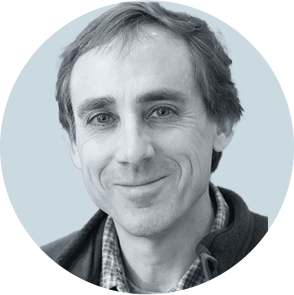
Over the years, faculty from differing disciplines have advanced discussions about the human interface with nature, wildlife, wildfire, climate change, sprawl, and ongoing threats to other things, such as the survival of rural communities. One of the scholars has been Dr. Jerry Johnson, now professor emeritus in the Department of Political Science.
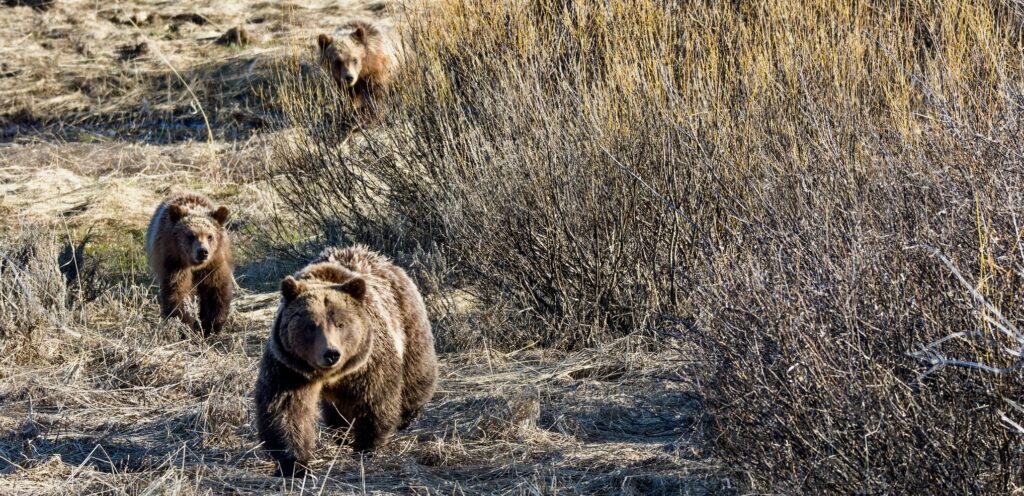
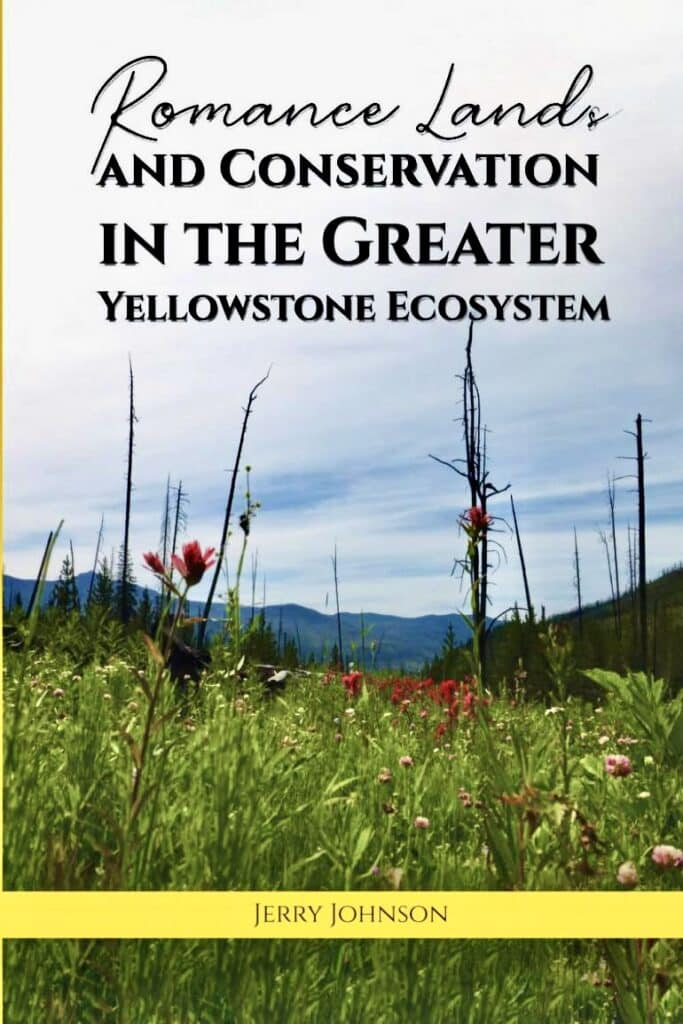
In his book, Romance Lands and Conservation in the Greater Yellowstone Ecosystem, Johnson delivers a no-hold’s barred perspective on a region that has been both a focal point for teaching university students to think big and, for him personally, a playground. As a researcher, Johnson spent a lot of time exploring the “romance lands” of Greater Yellowstone, on skis, fat tires and with paddle in hands—places unsullied by human domination—that still persist, somehow, even in a social media world that affords no public land safe haven from the growing masses. In his book, he uses the plight of grizzly bears as a bellwether for assessing whether we’re on the right path of conservation.
You could even describe Johnson as a proto-funhog who remembers the era when mountain biking had, at most, a fringe presence in the frontcountry and none in the backcountry—certainly not one when aggressive adherents went out blazing new networks of trails. One still can call him a person who is gungho about the outdoors but these days he’s more of an evangelist trying to save the best wild country that remains. His is not an uncommon lament.
Often fond of referencing ecologist Aldo Leopold, he notes there’s a passage in A Sand County Almanac—a regular requirement on his students’ reading list, that goes like this: “All conservation of wildness is self-defeating, for to cherish we must see and fondle, and when enough have seen and fondled, there is no wilderness left to cherish…A thing is right when it tends to preserve the integrity, stability and beauty of the biotic community. It is wrong when it tends otherwise.”
Self-restraint among individual users of public lands, and limiting numbers of humans in mass, Johnson is convinced, are the only obvious and simplest solutions to preventing Greater Yellowstone from losing its spirit of place.
Johnson came to teach at MSU and accepted a lower salary offer, he said, because Bozeman afforded him and his wife easy access to the outdoors “and it was a nice place to raise his family.” They found a way to get by while feasting on a different kind of sustenance.
He was one of those guys—along with his friend, Dr. Ray Rasker, founder of the independent and still-ongoing thinktank Headwaters Economics, and Dr. Tom Power, noted natural resource economist at the University of Montana—who examined the factors involved with the shift occurring between the traditional natural resource-extraction economy of old and one rooted today in people seeking a higher quality of life. Both involve resource consumption.
As a kid, Johnson grew up in North Idaho where silver mining and logging accounted for lots of jobs and a legacy of polluted rivers and leveled forests. He long believed that a move from extraction to outdoor recreation was a good thing. What he didn’t expect was how the outdoor recreation economy also supercharged the speculative real estate and development industries that, in many ways, have accelerated sprawl and its own kind of ruination, especially on private lands linked intricately to the health of public lands.
Trees found a way to grow back but subdivisions are forever.
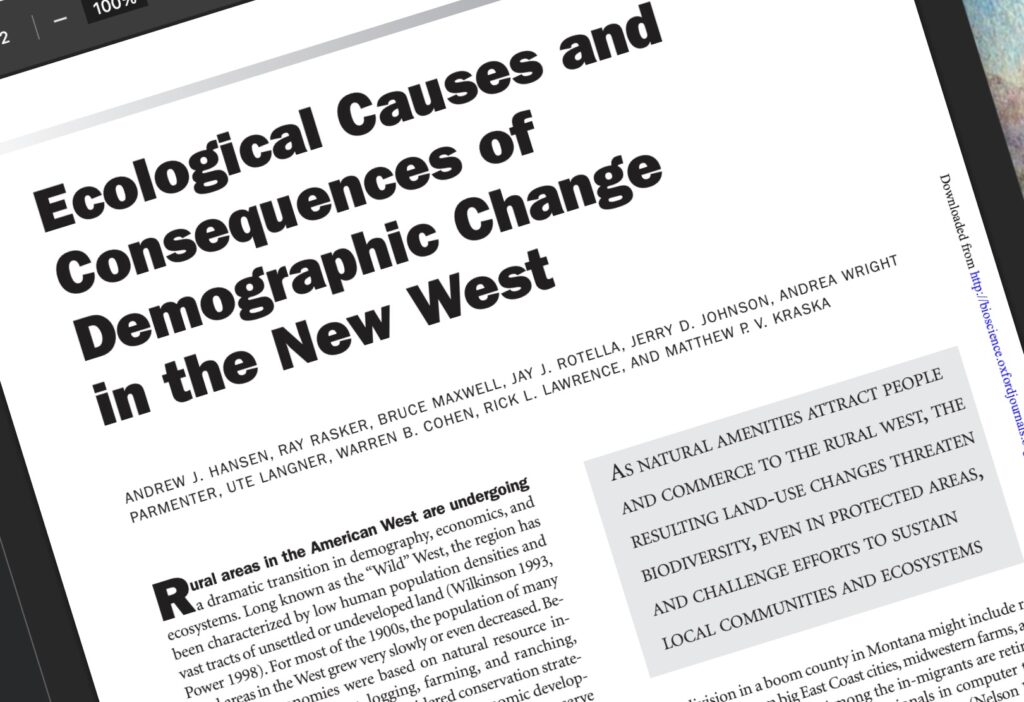
While at MSU, Johnson contributed to several different peer-reviewed analyses looking at growth trends and impacts of large numbers of humans descending on the Northern Rockies. Reflective of his own avid interest in skiing, he also has been a co-author of several papers looking at human behavior and avalanche danger.
All the while that he was delivering lectures to students and having his manuscripts published in peer-review journals, Johnson noticed how the academic environment, too, was undergoing what he calls “a big chill” influenced, in part, by a state legislature that didn’t want scholars documenting impacts of climate change nor warning about development impacts and thorny topics like the need for land use planning and zoning.
Today, he says that politics in Helena, the state capital, driven by what he calls false narratives driven by libertarian free market economists, are behind efforts to hamstring land use planning in towns and counties, to the detriment of historic neighborhoods, wildlife habitat, the protection of ag communities and the pocketbooks of taxpaying citizens. The chief motivation: greed and no reflection on how that resulted in the Front Range of the Colorado Rockies and Salt Lake Valley losing their soul to growth.
Johnson says he never felt that he could wholly speak his mind. “It’s so patently obvious, we are not going to grow ourselves out of problems created by a lack of coherent strategy for thinking about growth and the crazy ideas that putting blind faith in market forces are superior to land use planning and where, necessary, zoning to protect the things we love,” he says. “Market forces exploit the things we love and they accelerate the loss by selling the fable that voluntary conservation is as effective as deliberate enforceable conservation. This was true in the 1990s when the first major wave of lifestyle migration began in Greater Yellowstone and it’s more obvious than ever today.”
Not long after Johnson retired in 2024, he published a book, Romance Lands and Conservation in the Greater Yellowstone Ecosystem that could not be more timely. It highlights the amazing conservation status of Greater Yellowstone but also notes many of the negative head spinning tectonic forces at play

The Yellowstonian Interview With Dr. Jerry Johnson
Yellowstonian: When did you come to Greater Yellowstone, and how would you describe the ongoing transformation? Where are the changes leading us?
Jerry Johnson: As a kid, I was raised in Idaho. When the Hebgen Lake earthquake hit, my dad, the science teacher, trundled us off to see the aftermath and go to the national parks. I also grew up with Glenn Exum as a close neighbor and he inspired me to move to Jackson Hole in the 1970s. To those who aren’t aware of him, he was a famous mountaineer and founded a climbing school in the Tetons. For a while my wife and I lived out of the country. When we decided to move back to the States in 1989, I had an offer at Montana State University— the lowest paid one of three. It wasn’t even close in the decision we made, between making more money to living in a community where there are things in the landscape money can’t buy.
Yellowstonian: And the college town of Bozeman in those days—what was it like?
Jerry Johnson: At that time there was a small boom going on here. I started some research on tourism impacts and growth and, like virtually everyone else, I thought this New West thing might provide some diversity to the economy of the region and be a good thing. And, like everyone else in the cheerleading class of academics and nonprofits, I was dead wrong. On balance the phenomenal real estate and population boom in the region is a net loss for our quality of life and the environment. Unless something changes, we and nature are toast.
Yellowstonian: Elaborate on that for those who claim that unless a boom is happening a community is “dying.”
Jerry Johnson: I used to think that places like Big Sky and even the Yellowstone Club could produce net gain for nearby communities. I’m not talking about wealthy part timers supporting the United Way or creating a performing arts center. I mean people who live there truly getting behind land conservation. But most of the conservation being promoted is a kind of greenwashing. Today, we see a full array of negative impacts of these destination resorts, with more on the way. Housing and labor shortages downstream, culture clashes, more deadly accidents and wildlife roadkill on US Highway 191, diminished quality of life for many, and severe water impacts on the Gallatin River. We are, as Montana Gov. Greg Gianforte likes to put it, an easy product to sell. And, with his help, we are doing our level best to blow it out to the highest bidder. Our own US Senator Steve Daines can’t even be bothered to support a modest river protections bill in his own backyard.
Yellowstonian: It’s important for readers to realize that in some ways you’re like a jazz musician who has been playing in a band and evolving with your skillset. In your case you’ve been an academic in the political science department at Montana State University pondering what has come to be known as “the New West.” Your book Romance Lands and Conservation in the Greater Yellowstone Ecosystem delivers us to the here and now of that amorphous realm. Thematically, tell us a bit about the theme.
Jerry Johnson: Thanks for the allusion to jazz. My whole career has been a series of riffs on what interests me and I tend to follow that to the next intellectual concept. I’ve had great collaborators. Most of that time has been spent chasing the themes of prosperity defined as quality of life, conservation, and wild places. In the book, I use the restoration of the grizzly bear in Greater Yellowstone to make the point that what was, and is, good for the bear is invariably good for humans. If bears can thrive in the GYE and we can learn to tolerate them it seems that we can live prosperous lives in the same habitat but humans need to recognize what bears need. Not all good things go together, though, and now we are victims of our own success and wildlife is taking back seat to our own well-being. That is wrong. I think that will be the next book.
Yellowstonian: Let’s state this fact so that readers don’t think of you as some kind of mere policy wonk who sat in the Ivory Tower of academe. You like to get out and play. You love the outdoors but you’ve expressed concerns that outdoor recreation has become an industry based on false assumptions. You say that in many ways, we’re approaching our extraordinary wild county as an outdoor gym and not with reverence. You say that recreation is a consumptive industry and like all industries its impact needs to be assessed and regulated in how it’s ‘consuming wildness’ and displacing wildlife. Most recreationists are in denial. What has caused your thinking to shift?
Jerry Johnson: I did my doctoral research on the Nepalese tourism economy of the 1970s. Back then it was very small but there were some emergent impacts. By 2000 the boom had significantly affected local communities, the labor force, forest and water resources, and the country was overwhelmed by trekkers and large expeditions looking to buy/sell an experience with no real understanding of the local culture and how they were impacted. I see the same thing happening here in Greater Yellowstone. Unless we as recreationists get our shit together we really are going to love this place to death. I never used to think that, now I’m sure of it.
Yellowstonian: You’re a road cyclist and a mountain biker who has come to reside in the camp that says the conservation movement has oversold outdoor recreation as a benign alternative to natural resource extraction.
Jerry Johnson: As part of the mass tourism boom, technology changes have made outdoor sports increasingly accessible to everyone – ice climbing is mainstream! Some of this technology – particularly mountain bikes—bring significant physical impacts but something psychological too. I’m not talking about soil erosion on trails but people flooding into public lands, expanding legal trails and building illegal ones with little awareness or regard about what happens to wildlife and sense of solitude.
People seem to think that since they can do the activity easily, then they should be allowed to do it anytime and anywhere they like – no limits, and people who do speak of limits are portrayed as being their enemy. Rivers, rocks, trails, are all crowded and those that aren’t yet, will be, especially when they’re promoted on social media. The worst impact of course is the tourists’ desire to have a home in the mountains and that of course is what destination resorts are all about.
Yellowstonian: You’ve been sounding the alarm about growth for a few decades. You worked on a growth study of Teton County, Idaho with Bruce Maxwell, Richard Aspinall and others in 2002, you published another paper in 2003 and several more. You speak of us now rapidly approaching a point of no return where the character of southwest Montana and Greater Yellowstone changes and we’ll never be able to get it back.
Jerry Johnson: Covid exacerbated it when people fled to rural places like Bozeman, Jackson Hole, Big Sky and Livingston. People tend to follow the crowd and so they bunch up at convenient trailheads, go to popular places, and generally just take the outdoor resources for granted. That’s a recipe for overuse and too much dog shit.
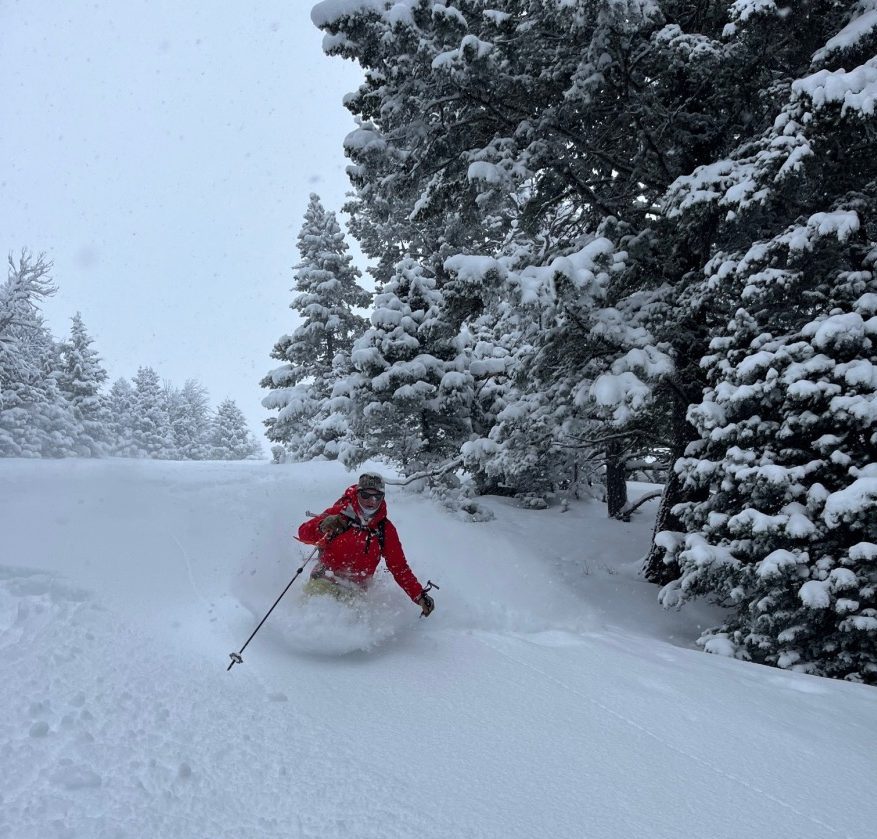
Yellowstonian: There are conservation groups out there promoting “trail of the week” and state tourism offices spending millions on promotion. Travel writers claim to be uncovering “secret places” no one has ever heard of that don’t remain that way for long. Meantime, national parks are hitting record visitation, the Bozeman airport has raced through two million enplanements annually, tourist seasons are expanding to become year-round, new guest lodges are opening and rivers are getting increasingly crowded but because outfitters and guides refuse to accept limits, no one is willing to say “enough.” Is that an accurate portrayal?
Jerry Johnson: You could go on listing a lot of growth trends related to negative impacts on public lands and loss of private natural lands. Many of the impacts are permanent, but it’s the cumulative effects we need to be worried about. Talking about them requires urgency. The conservation movement is sleepwalking through the growth issues and not fostering the kinds of bigger discussions that need to be happening. And, we’re all contributing to it. Social media and the people who call themselves “product or online influencers” sell the Instagram moment without serious reflection on consequences. And then there’s the glorification of outdoor recreation by the outdoor recreation industry and the cultural effects of the me-first Peter Pan Syndrome.
Yellowstonian. Okay, you’re a self-described funhog and, over the years, you’ve pointed fingers at some brand ambassadors who tell young people that wild country is their oyster, it’s theirs for the taking. Expand on that.
Jerry Johnson: We hold the iconic funhogs and adventure athletes up as heroes without holding them responsible for the cultural arrogant attitudes they have created in others who emulate them. And they never acknowledge the downsides because in some cases they’re probably being paid to be promotors. I hate to sound like the old guy here but I’ve seen the evolution in all these sports and they have all taken the same path. The problem is especially bad in mountain towns because so few people understand the importance of public lands for wildlife and water quality. It is a classic Tragedy of the Commons problem where the public owns the lands but users assign the blame to everyone else. I’m only half joking that I’m waiting for Trump to blame it on DEI initiatives.
“We hold the iconic funhogs and adventure athletes up as heroes without holding them responsible for the cultural arrogant attitudes they have created in others who emulate them. And they never acknowledge the downsides because in some cases they’re probably being paid to be promotors. I hate to sound like the old guy here but I’ve seen the evolution in all these sports and they have all taken the same path. The problem is especially bad in mountain towns because so few people understand the importance of public lands for wildlife and water quality. It is a classic Tragedy of the Commons problem where the public owns the lands but users assign the blame to everyone else.”
—Jerry Johnson
Yellowstonian: For decades, I, as a journalist, have been following your academic work beyond teaching in the classroom where you have collaborated with colleagues in the earth sciences, economics and sociology department in examining the loss of the Northern Rockies’ rural character. You, too, were involved decades ago in local planning efforts in southwest Montana counties, with colleagues like Dr. Bruce Maxwell at MSU, but they failed to gain traction. Why?
Jerry Johnson: It is too easy to say politics. The real reason is lack of good data and good people who are willing to act on it. That’s called leadership and we have very little of it at multiple levels. I worked with people in many different departments because most problems are multidimensional. In that respect I am a social scientist that can understand geography, economics, policy, psychology, etc. Well-designed research that comes from several angles can and does generate well-rounded data that can inform policy makers. That only works though if the people in power are honest brokers and will consider data that doesn’t align with their personal biases and/or hidden agendas.
Yellowstonian: Explain why being an “honest broker” matters.
Jerry Johnson: First, too many people get into local politics in order to represent narrow interests— real estate, developers, main street business, and yes, progressives do it too with identity politics and little empathy for wildlife, ecological planning or historic preservation. We see that writ large in Bozeman and we’re all dealing with obvious problems that are growing out of control.
The concept of public service and vision among elected officials with guidance from planners and nature advocates seems lacking to me in many political institutions. I can think of one Gallatin County commissioner in recent years— Jane Jelinski—who understood and practiced true public service. She was my definition of an honest broker. She would study the data and base a decision on that most of the time. She took the long term view, made decisions that may be unpopular but represented the public’s best interest. Most of the rest are just politicians hoping to be liked and everything that implies. But being liked doesn’t mean you’re doing the right thing.
Yellowstonian: You said there are two things involved with being an honest broker.
Jerry Johnson: The other is a barrier and it involves limited time to act, which is growing short. Most local governments are typically behind the curve when it comes to problem solving. One example is growth in Bozeman and the larger valley. I think a freeze on development would give decision makers a chance to catch up with impacts but that returns us back to the first problem – honest brokers.
Yellowstonian: We’ve discussed the extraordinary loss of wildlife habitat around Big Sky and the Gallatin Valley south of Bozeman and that your multi-disciplinary work with Bruce Maxwell in projecting growth patterns for Park and Madison counties two decades ago were bold but are actually proving to be conservative. You’ve said that “it’s not like elected officials and planning staffs weren’t aware of where we were headed and were not warned.”
So why has there been so much inertia? Not only inertia but there are legislators in Helena right now, who despite public opinion polls saying citizens think growth is out of control in western mountain valleys, are working on behalf of the real estate and construction industries to gut planning and zoning. What’s the disconnect?
Jerry Johnson: I’d have to say that is mostly a function of what I just said above. By the time there is a crisis of water, land, housing, and soon, losing the function of wildlife or whatever, they can’t then take the time to make a comprehensive study; so they take the easy way to avoid accountability. They turn, instead, to hiring consultants, often outside consultants who don’t understand the nuances of Greater Yellowstone, who have a feel-good product to sell. Too often that product they deliver is finding ways to accommodate more growth and claim it will result in lower taxes or affordable housing, but that isn’t what happens.
“By the time there is a crisis of water, land, housing, and soon, losing the function of wildlife or whatever, local elected officials and planning staffs can’t then take the time to make a comprehensive study; so they take the easy way to avoid responsibility. They turn, instead, to hiring consultants, often outside consultants who don’t understand the nuances of Greater Yellowstone, who have a feel-good product to sell. Too often that product they deliver is finding ways to accommodate more growth and claim it will result in lower taxes or affordable housing, but that isn’t what happens.”
Yellowstonian: You and a wide range of other experts on growth issues have noted we don’t need more studies; we have all the information we need before us, along with some amazing local scientists, to help make better decisions. What we need is the political will, the courage to take on developers and have elected officials admit they are forcing citizens to subsidize the profits of developers who claim that property rights, freedom and liberty should allow them to do it.
Jerry Johnson: From where I sit this is the story of Bozeman for the last 30 years – constantly playing catchup because there is a true lack of leadership and quality administration. Can you imagine the current mayor of Bozeman making the decision, as Ken Weaver did in 1985, to remove the Mystic Lake Dam today because it posed a potential flooding threat and cost the city some of its water supply? It wouldn’t happen. Or holding firm on the downtown height restrictions because it protects the aesthetic character of our historic downtown?
The mayor won’t do it, and the developers wouldn’t let it. The current crisis of growth in Jackson Hole with its spillover effects on Teton Valley, Idaho and valleys to the south is just plain old greed and that is a hard one to solve. We will see what happens in Livingston and Ennis. Gallatin Gateway is becoming the poster child for how not to plan if protecting nature and community matters.
Yellowstonian: What role should academia be playing, in particular the land grant institutions? What I’ve been hearing for years from faculty friends is there’s a chilling of academic freedoms with professors in some departments weary about interference from department heads and others who insist they not talk about things like climate change, the negative impacts of sprawl and need for planning and zoning because it might rile the building and trades industries or legislators. So much for academic freedom if true.
Jerry Johnson: It isn’t. University administrators and faculty are some of the most risk-adverse people you will ever meet. Montana State University is no different but it has gotten worse, in my opinion. Upper administration is afraid of everything – losing budget, losing students, angering legislators, losing prestige, even losing football games. They are afraid of losing the flow of right-wing money that endows buildings and programs. There is no doubt in my mind that the chilling effect on certain policy areas comes from the top and that fear drives it. There is a reason we don’t have a research center focused on something called “the environment.” They are afraid of that word.
Yellowstonian: If this is the kind of teaching atmosphere and environment that ostensibly is preparing students to be open-minded problem-solvers and critical thinkers for society in the future, what are the consequences?
Jerry Johnson: It’s obviously not good and the fact that no one is willing to lead public discussions about an obvious problem means it will only get worse. But both sides of the political aisle share blame for advancing agendas that shut down discussion of important issues, rather than solving problems that can make people feel really uncomfortable but tackling those things is what benefits society. Oddly, a university is an ideal place for those conversations but again, fear prevents it.
Yellowstonian: We’ve chatted about MSU’s golden opportunity to tout itself as the university based in Greater Yellowstone. The campus has an incredible setting, straddling a globally-renowned ecosystem for wildlife, wildlands and working ranches and farms. That it could be a leader in teaching what co-existence between human footprint and nature really looks like in application. But you’ve been disappointed. Why?
Jerry Johnson: Many years ago, I talked to a past MSU president about something called The University of the Yellowstone. MSU copyrighted that idea. They have done nothing with it because administrators can’t take the time to understand what it even means and the opportunities that could come with it. They don’t see any money in it so it is a nonstarter. We have a center called the Institute on Ecosystems. They were afraid to use the more descriptive “Environment ” because conservatives in Helena might not like it. There are those willing to document the effects of climate change but very few who will hold the university accountable for its own actions. The Montana Climate Assessment is long on assessment and laying out implications but short on policy prescriptions and there is a reason for that. There are people who don’t want the science applied. There are some who would rather the topic just went away.
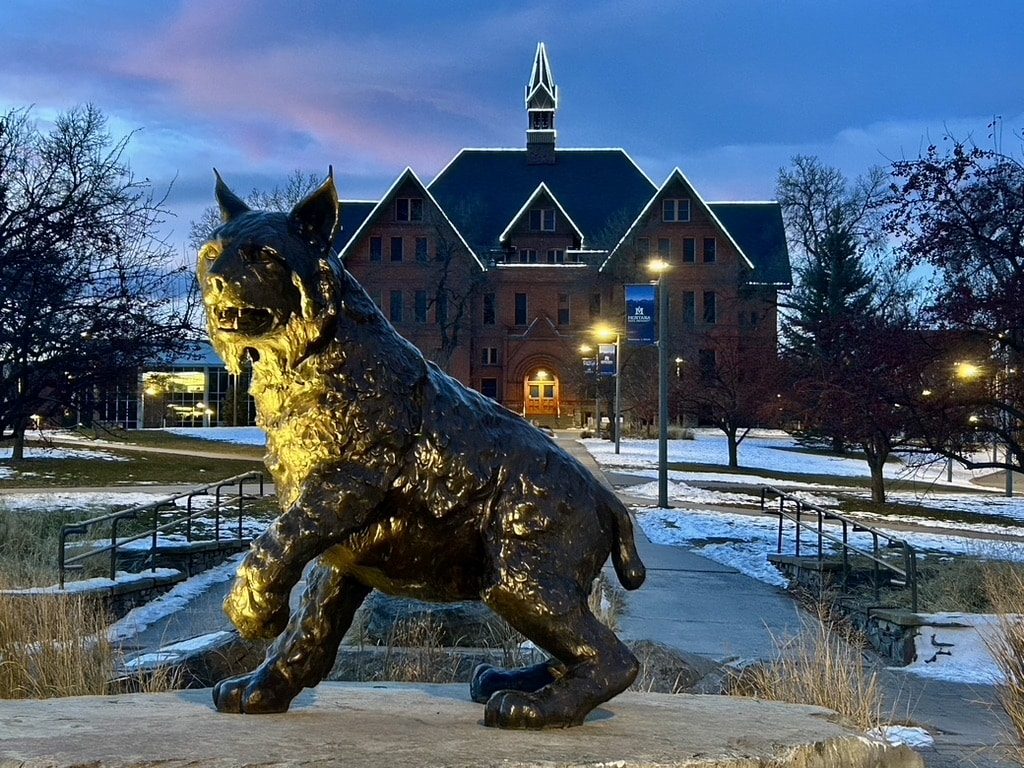
Yellowstonian: I was invited to participate in some of those early conceptual discussions for MSU being the “University of the Yellowstone” and it was intriguing. I was disappointed when it was abandoned but what does it say when a university that claims to be teaching the skills of innovation is afraid of being innovative?
Jerry Johnson: In the ideal world, a university, especially a land grant, would expand knowledge in all parts of their mission. It seems to be the case, however, that they do what is safe and easy and mainstream. MSU follows the crowd and does what every other small regional uni does in terms of programs and agenda. The fact is that because of our location we attract some world class faculty. I mention a few in my book. They carve out interesting niches in spite of the university not because of it. Because of inherent barriers they tend to not work across departments and colleges in ways they could that would inform regional issues. Many find it easier to work with people at other universities and not attract local attention. They think they need to keep their head down because of fear they’ll catch flack from the university president, administrators, and legislators.
Yellowstonian: As a social scientist, why do you think it is important for the younger generations to understand the history of conservation and how we got here? What should we be talking about that we’re not?
Jerry Johnson: I am a mountain biker. So let me return to the topic of mountain biking impacts because it illustrates a point. Among some—not all—backcountry bikers there is a movement called “wilderness light” where they argue for bike access on some wilderness trails. It makes me wonder if they have even read the Wilderness Act and understand why it exists. Maybe they simply have no appreciation of the meaning and perceived value of wild places and that maybe crashing along the trail doesn’t represent those values. Maybe no one ever taught them. Maybe they don’t care about wildlife and its history. Maybe they don’t appreciate the special care that is necessary for how we humans engage this one of a kind region in the Lower 48. Whatever their excuse, being ignorant is wrong. In the Tetons, backcountry skiers whine because some of the range is off limits to protect winter range of bighorn sheep.
Again, do they not understand or care that recreation can stress these animals during the toughest part of their year? So, a little understanding of the roots of the wilderness movement or basic ecology seems to be lacking. For that I blame the adventure media and its lack of reflection on its roots. By the way, the clothing company Patagonia often makes a good effort in this respect but even there, there is often a disconnect between the impacts of industrial recreation vs fish and wildlife. Most of the industry just pretends it doesn’t exist.
“I am a mountain biker. So let me return to the topic of mountain biking impacts because it illustrates a point. Among some—not all—backcountry bikers there is a movement called “wilderness light” where they argue for bike access on some wilderness trails. It makes me wonder if they have even read the Wilderness Act and understand why it exists. Maybe they simply have no appreciation of the meaning and perceived value of wild places and that maybe crashing along the trail doesn’t represent those values. Maybe no one ever taught them. Maybe they don’t care about wildlife and its history. Maybe they don’t appreciate the special care that is necessary for how we humans engage this one of a kind region in the Lower 48. Whatever their excuse, being ignorant is wrong.”
Yellowstonian: Why is there such a gap, a lack of what some would call “ecological literacy” and sensitivity for wildlife among outdoor users?
Jerry Johnson: I really believe most people living or moving here do not have a very good grasp of where they live. Media like Yellowstonian, Wyofile, and Daily Montanan do a great job but are limited in what they can do. I know of no environmental nonprofit that actually teaches curious newcomers about the region. They are very good at asking for money to support their programs and large staffs, but they are very bad at telling newcomers why it matters, except if they’re interested in playtime. How many conservation groups out there are involved with planning and zoning issues in the counties where sprawl is having the greatest impact of anything on wildlife?
Yellowstonian: Not many.
Jerry Johnson: Certainly few if any of the well known ones in Bozeman. MSU could be doing more to study and prepare students to think about this important real-world issue but doesn’t. That’s unfortunate because the lessons are applicable in all walks of life. I once proposed teaching a core class where all the readings would be focused regionally and ecologically— DOA.
There really is a need to deliver some good basic knowledge to new residents of places like Big Sky, which is a dead zone for impactful journalism. Maybe shared knowledge—and a willingness to have newcomers and visitors offset harm could overpower some of the gross political tribalism of the “New Montana.” I’m hopeful, but it will require action, science-based decisions and courageous discussions happening in place of apathy and fear. It will also take new leaders in all the institutions we’ve mentioned.
Yellowstonian: In this day and age when rural people decry subsidies that go to urban Americans and yet some states in the rural West are heavily subsidized by federal money, few citizens probably reflect on the fact that they are paying, in a number of ways—in higher taxes, disruptions in their daily lives and loss of community—to pad the profits of developers who aren’t paying the full costs of doing business.
Jerry Johnson: There are hundreds of reports on something called “cost of services studies” as they relate to growth and development. Virtually every one of them documents that the type of growth in places like Bozeman and Jackson simply does not pay for itself when we consider all the increases in services like sewer, public safety, road maintenance, healthcare, etc. I would think a well-run city or county might want to conduct those studies periodically and assess their growth plan accordingly. They don’t because they either don’t understand the linkage, they are willfully ignorant and they are afraid of upsetting developers with whom they’re friendly. Taxpayers who shoulder increased costs might be surprised at what growth is costing them.
Yellowstonian: Even incumbent Sen. Jon Tester in his unsuccessful re-election bid raised the issue of rich outsiders coming to Montana and fundamentally changing the state, and not for the better. Again, there are also a number of polls, conducted by firms across the political spectrum, that show citizens are hugely frustrated by the impacts of growth.
Jerry Johnson: Yes, that, to me, was a heartbreaker of how the politics of his own party let him down, and his replacement has already failed in his leadership role. The rightward swing to Montana being a blood red state is an impact no one saw coming. It is going to have huge negative impacts on our wildlife and communities, and not in a good way.
Yellowstonian: You’ve noted in the past that ideologues would rather force citizens to keep subsidizing growth than giving locals relief by imposing higher impact fees on large developments, imposing a real estate transfer tax like other states do on large properties or luxury real estate valued over a certain amount, or taxing tourists. Some of the proceeds could support the work of land trusts.
Jerry Johnson: It’s just so obvious what the state needs to do but provincial small mindedness still prevails. Here in Montana the costs imposed on local people by growth are exacerbated because we, or at least the current governor, refuses to consider a modest sales tax that would be directed at the many millions of visitors who are coming here and burden our infrastructure. In a state with a tourism economy worth billions of dollars, I’d like to know what playing host to visitors costs the average Montana taxpayer. These are data that are easy to compile and easy to present to residents. Most people can readily understand them and maybe some would make decisions based on data rather than political tribalism. Maybe they would call the governor. Maybe he would listen, but I doubt it.
° ° ° °
Also read: