by Todd Wilkinson
For years, the three states which converge to form the Greater Yellowstone Ecosystem——Wyoming, Montana and Idaho—were praised for being in the vanguard of modern American wildlife management. From reviving decimated populations of elk, moose, bighorn sheep and mountain goats to setting the standard for how to sustain wild, cold-water trout, and recovering imperiled mammals and birds, that triumvirate demonstrated how science-based conservation was supposed to work.
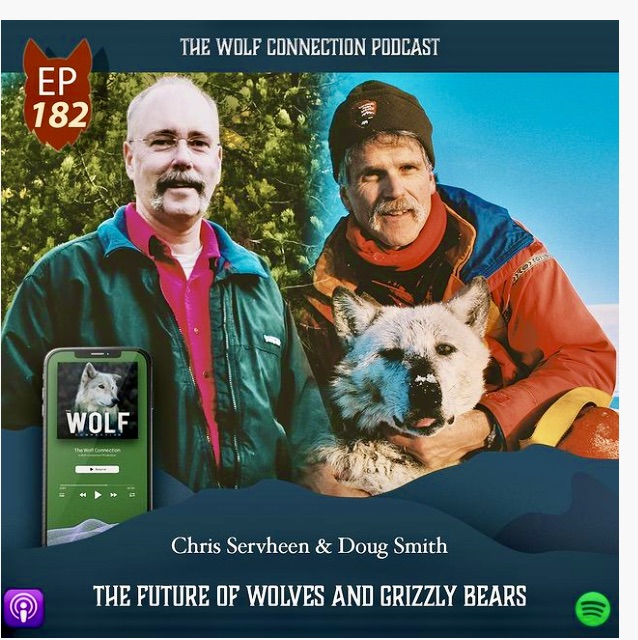
But today, Drs. Christopher Servheen and Douglas Smith say what used to be management driven by professional biologists and data has been usurped by politicians, many of whom either don’t understand science or willfully ignore it. Servheen spent 35 years overseeing the US Fish and Wildlife Service’s national grizzly bear recovery efforts in the Northern Rockies, and Smith just joined Servheen in retirement after leading wolf management in Yellowstone National Park for decades.
Not long ago, they wrote an exclusive critique for Yellowstonian about why they believe those states cannot be trusted to assume management of grizzlies if bears ever are removed from federal protection under the Endangered Species Act and then hunted to reduce their numbers. They point to anti-carnivore attitudes aimed at wolves as evidence of how ethical, fact-based management has been replaced by what they call “backward attitudes” better suited to the 19th century.
Indeed, morale in many of those agencies is in a downward spiral and veteran biologists are leaving the ranks because, they say, heavy-handed political agendas being applied by governors and legislators have destroyed their once-proud tradition of stewardship backed by science.
The piece by Servheen and Smith published in Yellowstonian struck a chord. Titled “Will Two Of The World’s Greatest Wildlife Conservation Success Stories Be Unwritten?”, it gained widespread circulation and generated hundreds of thousands of reads, shares and comments on social media.
Now, as a follow up, Servheen and Smith were recently featured on The Wolf Connection podcast hosted by John Calfa, who also steered listeners to the essay in Yellowstonian. The conversation with Calfa, The Future of Wolves & Grizzly Bears, is both enlightening and hard-hitting. Click on the link below when you have time to give it a full listen. Best when on a roadtrip or relaxing over your favorite morning or evening beverage.
Episode #182 Doug Smith & Chris Servheen – The Future of Wolves & Grizzly Bears