By Todd Wilkinson
Jeff Laszlo is well read and a deep thinker. He’s a fan of the American Founding Fathers, one of whom, Thomas Jefferson, acting as President, dispatched Meriwether Lewis and William Clark to map and survey, as best they could, the topography and varying contents of indigenous homelands found between the Mississippi River and Pacific Ocean.
They and their Corps of Discovery reached the origin of the Missouri River in southwest Montana, borne as the convergence of three mighty mountain fed streams—the Jefferson, Madison and Gallatin. Those, in turn, are products of tributaries with their tendrils beginning in the most remote areas in that part of the Greater Yellowstone Ecosystem.
Jefferson, whose thinking was rooted in the European Enlightenment, was a disciple of Cartesian order; in particular, he saw value in organizing cities and towns into geometric grids of streets and creating jurisdictional boundaries of government. Humans, Jefferson believed, could impose structure upon Nature and harness it efficiently to their benefit.
Often, Nature has other ideas.
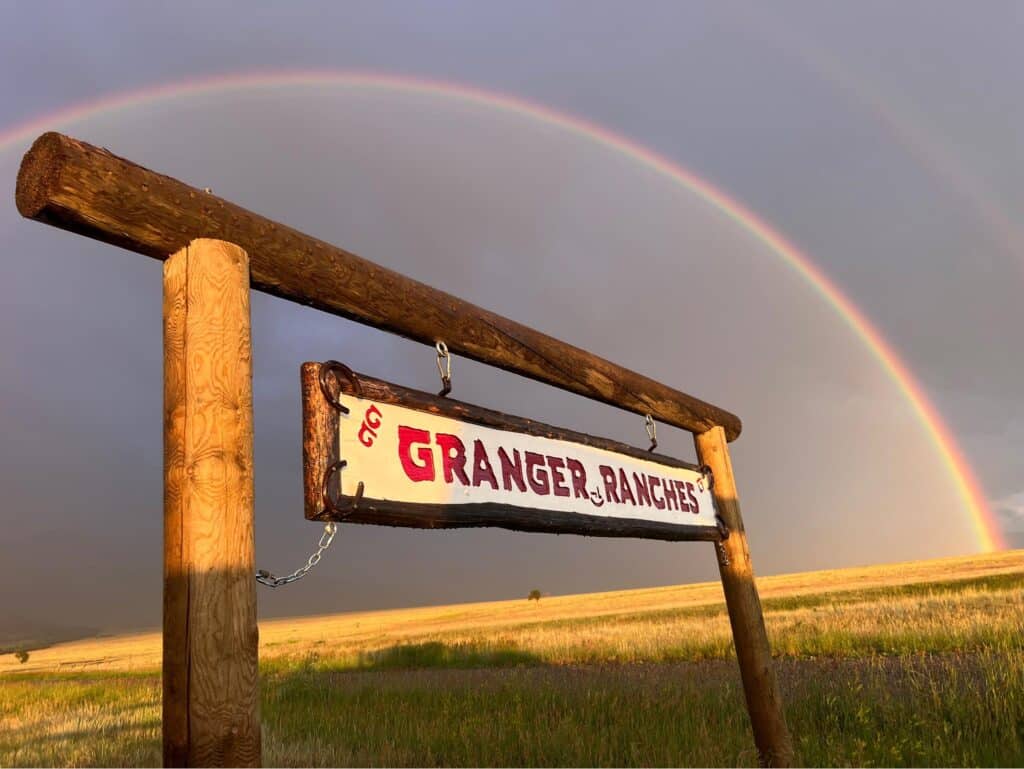
When he was a boy visiting the 13,000-acre Granger Ranches, owned by his grandparents, in the Madison Valley, Laszlo remembers how the wends of some creeks were turned into straight lines, with ditches diverting water out of them to irrigate alfalfa crops and feed cattle in the valley. Accompanying those aquaducts, efforts were sometimes made to drain wetlands so that more hay and more livestock could be raised to pay for operations.
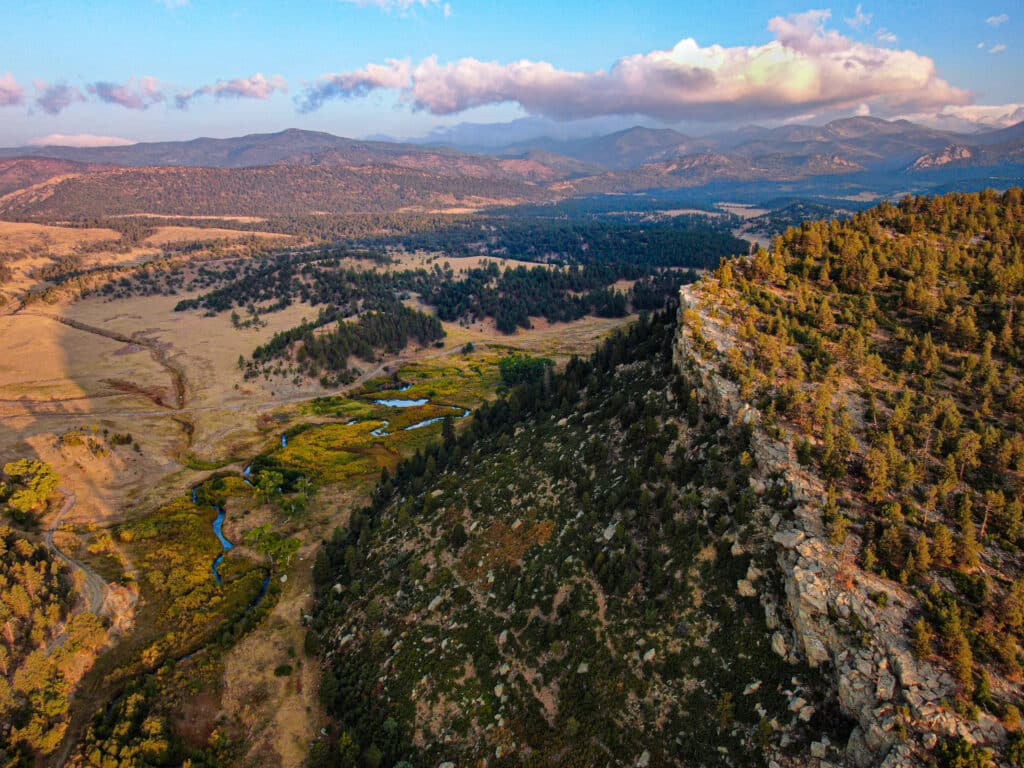
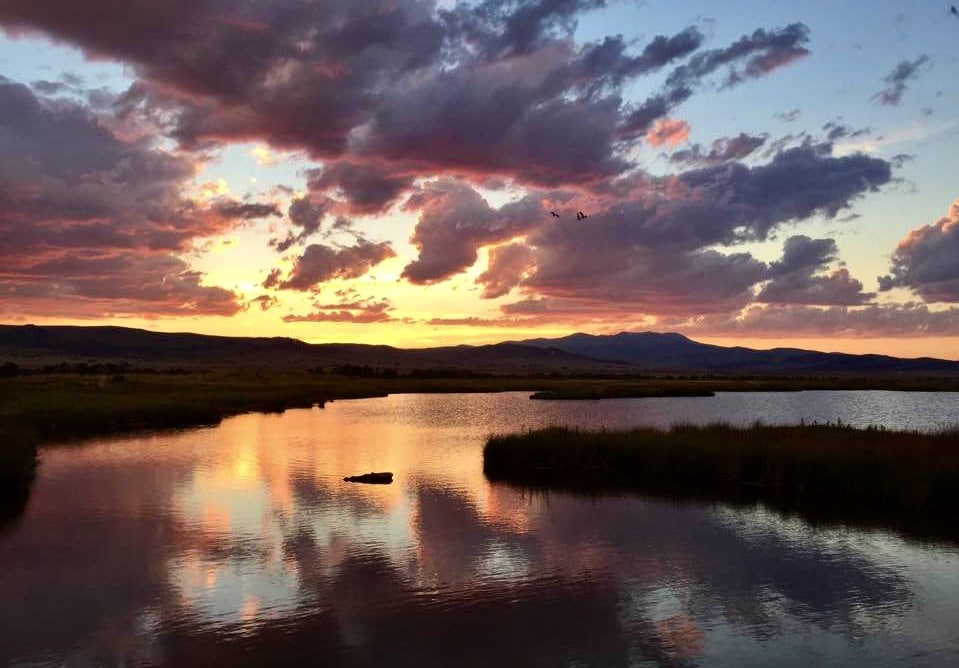
One of the lifelines that got straightened was O’Dell Creek on Granger Ranches and its interconnected 6,000-acre abiding wetland complex that not only provided liquid sustenance but was an important refuge for spawning trout, and served as breeding grounds for a diverse array of birdlife.
Several years ago, Laszlo, realizing the magnitude of what had been lost to landscape manipulation, decided he wanted to attempt a revival. It happened around the same time that conservationists were talking with neighboring ranchers about protecting the rural character of the Madison Valley, forevermore, by putting conservation easements on their land to limit sprawl. The intention, using tax incentives, was to not only keep rural people on the land but protect this awe-inspiring dell which cradles the Madison River, open space, world-class wildlife migration corridors and, of course, biodiversity.
The restoration of O’Dell Creek ranks as one of the largest wetland revitalization projects in Montana history and the capstone of the work was Laszlo safeguarding its reversal of fortune with a conservation easement arranged through the Montana Land Reliance. Elected officials from across the political spectrum, rancher’s groups, conservation groups and civic organizations have taken tours to see the results firsthand.
The late Alex Diekmann, a senior conservation specialist with the Trust for Public Land, called the endeavor, which involved an amalgam of different players, one of the most important re-wilding projects he had ever been a part of, which is saying something because Diekmann’s portfolio of successful projects was extraordinary.
Beneficiaries have been wild cold-water trout, charismatic megafauna, and many of the 130 species of birds in the Madison Valley, including bald and golden eagles, trumpeter swans, American white pelicans, white-faced ibis and Great Blue herons. Recently, among several awards he received, was the Wildlife Conservation Award from The Wildlife Society. Granger Ranches will never be covered by residential subdivisions.
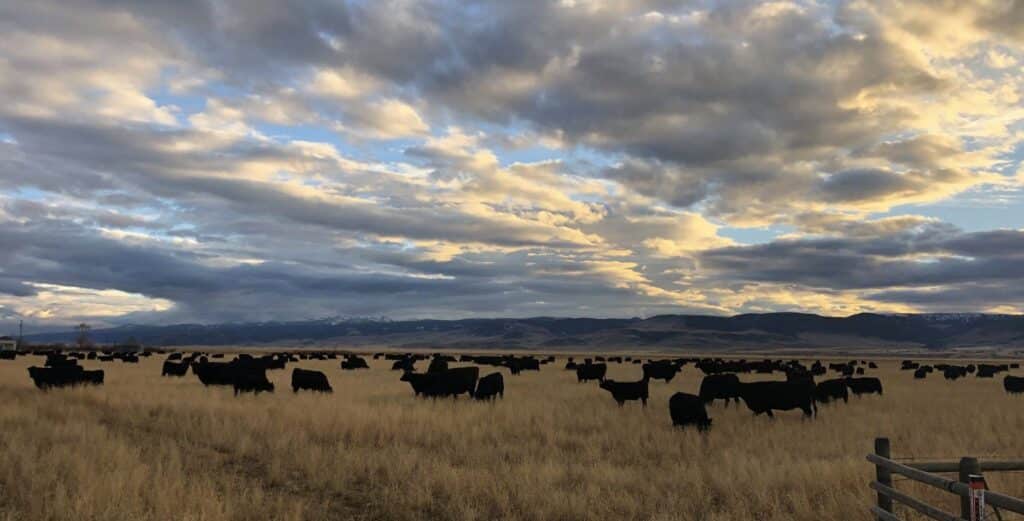
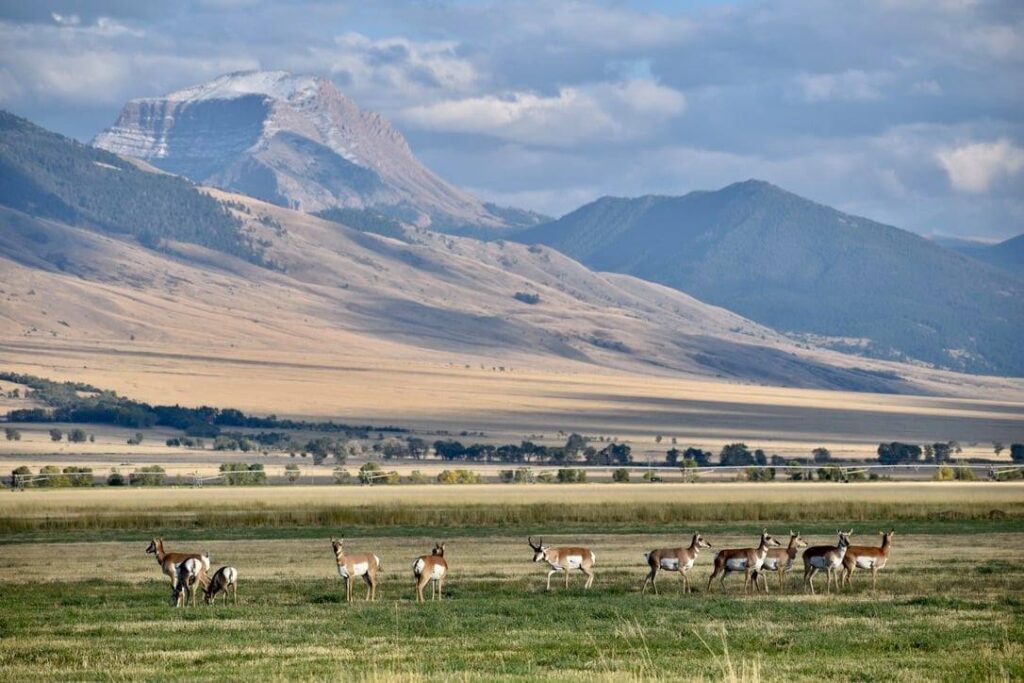
“I think ranches as a whole desire to be a part of the community more than people may realize. Even in Montana, the rural/urban divide is real, but all the ranches that I know want to be an asset to their communities either through helping to protect and provide for a great landscape, helping to fill freezers during hunting season, providing opportunities for youth hunters, protecting our watersheds and fisheries, and trying to protect and add to the quality of life that all the residents of the community hold dear,” Granger Ranches manager Billy Whitehurst, told The Madisonian newspaper.
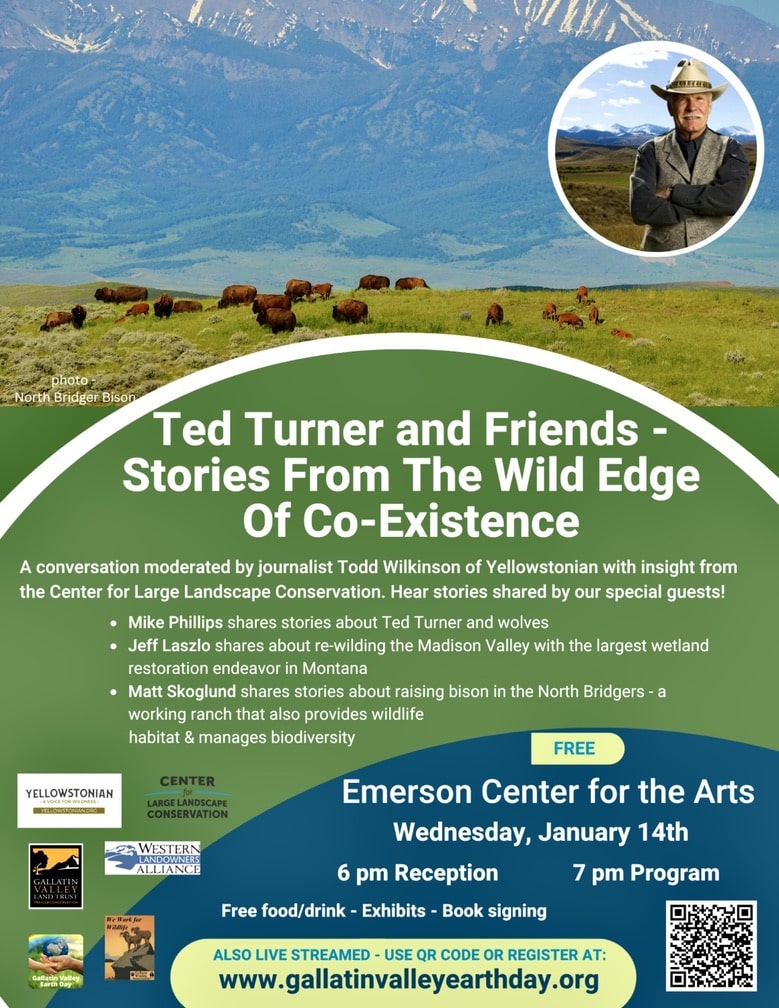
Not only did Laszlo put a conservation easement on his ancestral Granger Ranches, but today he is hailed a national example of what’s possible when the private and public sector work together. Laszlo is one of three featured panelists appearing as part of a public event, “Ted Turner & Friends: Stories from the Wild Edge of Co-Existence.” it starts at 7 pm on Jan. 14 at the Emerson Cultural Center in Bozeman and there’s a special reception you can attend that has a dozen tables staffed by notables conservation organizations and bison chili provided courtesy of Ted’s Montana Grill restaurant.
For those who cannot make it in person, the event will be live-streamed. Hundreds from across North America and beyond. Be one of them. You need to sign up. Click here on the link.
Much is at stake for mountain valleys throughout Greater Yellowstone and the Rockies. Be inspired by the stories of people who are trying to make aa difference, influenced by the example set by Greater Yellowstone resident Ted Turner.
The Yellowstonian Interview with Jeff Laszlo of Granger Ranches
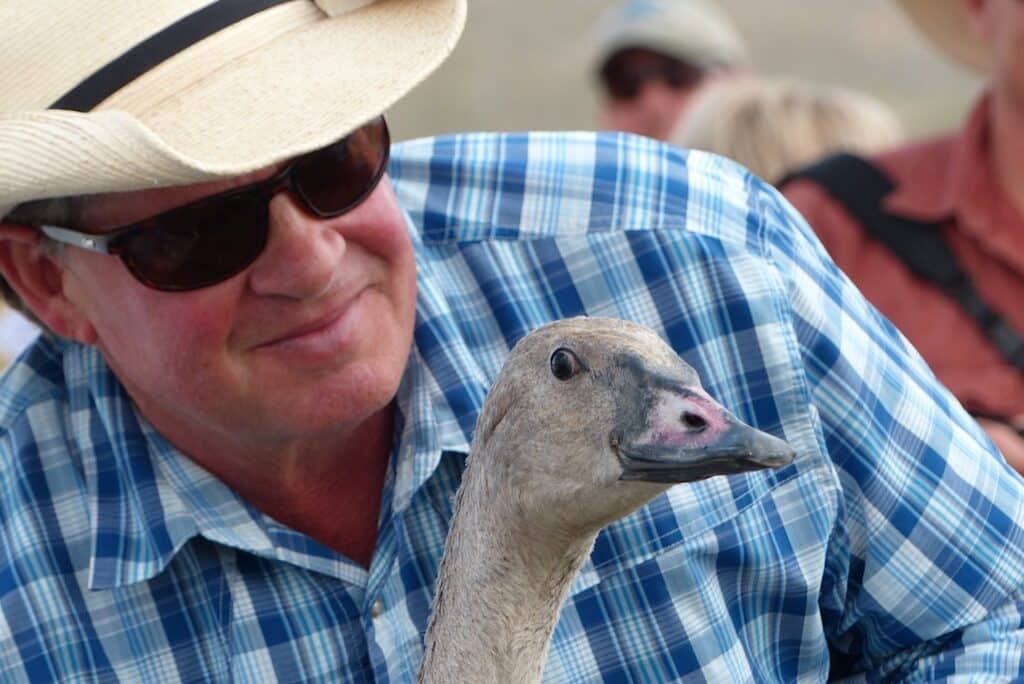
Todd Wilkinson: For me, you’ve been a living reference point, demonstrating through who you are, the kinds of conversations you’ve helped foster as being a trustee of the Western Landowners Alliance, and, profoundly with your ongoing efforts of restoring O’Dell Creek and safeguarding wildlife passage across your ranch in the Madison Valley. When the term “land is legacy” gets mentioned, what comes to mind for you?
JEFF LASZLO: The land tells so many different stories. It offers so many lessons. What we choose to do as stewards of land determines those stories and lessons. One needs to be observant and have a long term view. I think there is a great opportunity to work with nature, to learn from it and listen to its stories. If there is such a thing as legacy it is based on that.
Tw: O’Dell is a visceral, often cited example of how a stream and wetlands, harshly manipulated and degraded over time to serve human needs in the moment, can be resuscitated to re-achieve its ecological function. Some all this rewilding. What’s been the biggest, humbling joy of carrying out this work when, in the beginning, some thought it radical or asked, “What’s the point?”
LASZLO: So in 2005, the first year of the project, one of our first tasks was to fence off 400 acres or so. We had agreed to keep the cattle off this area for 15 years. The contractor doing the work, literally asked me what I hoped to get out of this. I was stunned but knew he wouldn’t understand if I did my best to explain. Truthfully at that point I had no idea what the outcome might be. I had the vaguest idea of why I was doing this. We did not know it would continue for over 20 years. Owning something is not enough. One has to work at making it whole, productive, ethical. One has to work at honoring the past and imagining a positive better future.
Tw: Something folks might not know about you is that your late dad, András László, (Andrew Laszlo) was an immigrant from Hungary who became a renowned cinematographer and worked on such films as Last Blood, featuring Sylvester Stallone as John Rambo. But your dad and especially your mom, Ann Granger, had a deep connection and sense of respect for ranchers. You yourself could’ve taken a very different successful course in the world, far away from Montana, but you’ve found meaning here. What kind of land ethic was passed along and how has your confidence as an advocate grown and shaped you?
LASZLO: I remember summers visiting my Grandparents on the ranch. My Grandfather was proud and meticulous. I think he had a deep connection to the land and its history. My mother had a deep love for the ranch and was very dedicated, working well into her 90s. My father was extremely creative and talented. He was a man of vision and was often frustrated that the ranch just existed and functioned below its potential. I think my land ethic is a combination of those things. I consider the ranch a work in progress that has been in progress for 100 years or so. The basic principal of steady growth and improvement with a focus on land and natural resources is my ethic. I love that the ranch is home and habitat to so many living things and I along with our amazing team do what we can to care for that.
Tw: You’ve collaborated with a lot of different entities to achieve renowned outcomes on the Granger Ranches and O’Dell. Among your partners have been Northwestern Energy, the Trust for Public Land, Montana Land Reliance Trout Unlimited, the Madison River Foundation and some remarkable individuals including Craig Mathews and Yvon Chouinard, founder of Patagonia. It’s been a long journey. What are the important lessons?
LASZLO: I guess patience including with oneself. Keeping an open mind. I have heard the expression Beginners Mind which I think is Zen. Doing things a certain way because that is the way they have always been done is a trap. Many are afraid of change especially as it relates to relationships in the community and with neighbors. Doing something different implies others may be doing it wrong which of course is not true. My two biggest lessons have been to reach out to people, find what we agree on, not what we do not agree on. Collaboration has been key. This simple idea is transformative and I have watched change a landscape and change hearts and minds.
Tw: Among the things that the Western Landowners Alliance (WLA), led by Lesli Allison has done, is be a clearinghouse for data and research to advance better land stewardship and protect private property rights. It also has showcased the work of its members who are held up as conservation heroes for society, their community, and most importantly, their loved ones. For those who don’t know what it does, why did you join as a founding board member?
LASZLO: WLA had a meeting in Ennis and they asked me to do a presentation. I was asked to join the board after. I was hesitant but in the end decided to join because I thought I might learn some new things, interact with new people, and get out of my comfort zone a bit. It has been all that and more. It’s also provided me with some inspiration and encouragement learning that there are high energy dedicated people out there doing great conservation work. That and the sharing of knowledge have been invaluable.
Tw: You wear your love for the Madison Valley on your sleeve and many of your neighbors have come together, through conservation easements, to safeguard a huge sweep of the valley and yet unprotected lands are vulnerable to scattershot sprawl, including trophy homes lining the Madison River . Your work, and that of Ted Turner, serves as a counterpoint to the kind of real estate speculation and land monetization that has exploded, pretty much, unchecked in nearby Big Sky. What’s at stake for the Madison?
LASZLO: The good news is that 60 percent of the Madison Valley is protected by conservation easements. The bad news is that 40 percent is not. I worry about development, degradation, fragmentation of this landscape and over use of its resources.. Our proximity to Big Sky is a worry. The Madison River is the goose that laid the golden egg but it is being loved to death. I think the idea that everything is here to be used until it’s used up is troubling. but that is not new, its just that it is recreation now instead of mining or logging or some other extractive enterprise. Ranching is evolving quickly to incorporate management of natural resources so in a way it is ahead of most other uses.
“The good news is that 60 percent of the Madison Valley is protected by conservation easements. The bad news is that 40 percent is not. I worry about development, degradation, fragmentation of this landscape and over use of its resources. Our proximity to Big Sky is a worry. The Madison River is the goose that laid the golden egg but it is being loved to death.”
—Rancher Jeff Laszlo
Tw: I don’t mean for this question to be political, and it’s certainly not intended to inflame any partisan divide. You and I were close friends with the late land conservationist Alex Diekmann, who completed important conservation land deals for the Trust for Public Lands in Montana and Wyoming. Alex’s ashes were spread in O’Dell. His widow, Lisa, is CEO of Yellowstone Forever. Their two now grown sons are conservationists and adroit fly-fishers. You identify as a traditional conservative and you share the conviction of Alex and Lisa and Matt and Sarah Skoglund that conservation needs to encompass a broad tent where everyone feels welcome to make a difference. How can we better come together and rally to protect the wonders of Greater Yellowstone and the wild West.
LASZLO: I am actually not that conservative but my approach has been to respect the traditions that are ingrained in communities and people. I shy away from popular concepts like re-wilding or sustainability. I would rather work on those things and allow the outcomes to define themselves.
Management and protection of the GYE I think will take all oars in the water rowing in the same direction. It will take compromise and identification of what we value, what has value, economic and otherwise. Unfortunately at the end of the day this will be an economic problem to solve.
——————————————
Readers are invited to attend the live public event “Ted Turner & Friends” at the Emerson Cultural Center in Bozeman, Montana on Wednesday, January 14. It features a discussion with Mike Phillips, Jeff Laszlo, Matt Skoglund and Liz Fairbank with the Center for Large Landscape Conservation. It is a celebration of private land stewardship. The event starts at 7 pm but get there early and you can converse with the panelists and meet representatives from a dozen different conservation groups doing great work in the Northern Rockies. You can even enjoy a bowl of bison chili courtesy Ted’s Montana Grill restaurant in Bozeman. Note: if you cannot physically make it to Bozeman, you can tune in via a free livestream by clicking on this link. It is important that you sign-up beforehand. Please let your friends know.
For more reading: