For Alison Sweeney, a sixth-generation Montanan, rescuing Bozeman's "Sense of Place" means safeguarding its historic neighborhoods, protecting its world-class natural setting and guaranteeing that working stiffs like her can still live in the community
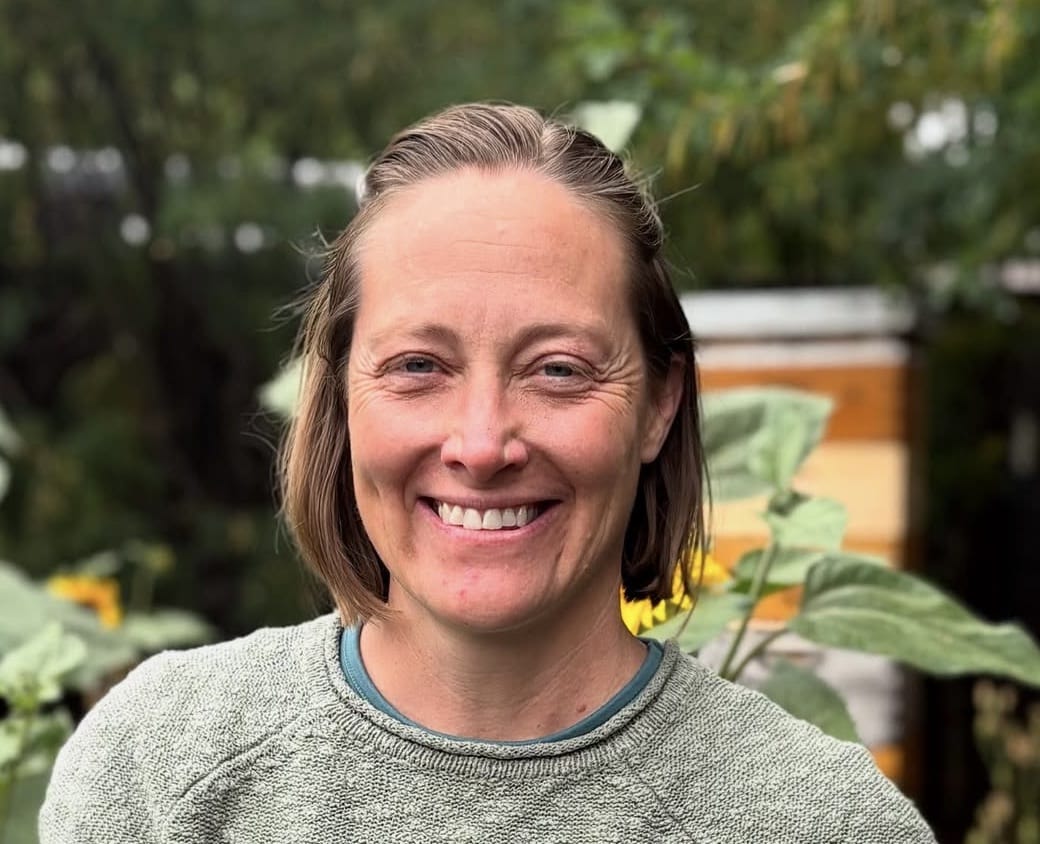
Alison Sweeney, whose journey to become an elected official in Bozeman, Montana started with frustration about policies resulting in the loss of historic neighborhoods, natural lands and a means for locals to remain living in their hometown
NOTE: Short on time? You can read the package below in two parts.
Part 1: The Myth of Building Up To Prevent Building Out: Why the development boom in Bozeman, Montana is neither protecting historic neighborhoods and providing huge amounts of affordable housing nor sparing from sprawl the countryside where world-class wildlife dwells
Part 2: The Yellowstonian Interview With New Bozeman City Commissioner and Allison Sweeney who discusses why she became advocate for protecting Bozeman’s historic down, its historic neighborhoods, working class people the the rural countryside where state laws have hobbled sensible land use planning and zoning
Or, you can read both parts, together, below.
——————————————————
by Todd Wilkinson
A core tenet of populism is that politicians must heed the sentiments of common local people, especially those who have had a long tenure in a given place.
Of anyone in recent decades elected to serve on the Bozeman City Commission, Alison Sweeney’s ancestral ties to this town founded in 1864 and to the surrounding Gallatin Valley, may be unprecedented. Six generations strong, Sweeney’s perspective is informed by history—and it’s Bozeman’s reverence for history, a central part of its charm, that, in addition to natural setting, has given it a high profile in the so-called New West.
Read Yellowstonian’s interview with Sweeney below that happened before she became a new member of the city commission in January 2026. The issues she addresses, however, are not novel to Bozeman; they’re part of deepening tensions found in every attractive mountain town in the West.
But before you heed her point of view, consider this: there’s a not so subtle populist stirring happening today in Bozeman, a community that, in recent years, has gained notice as one of the fastest growing micropolitan—small cities—in America.
“The history of the West is a history of natural resource extraction. First, mineral wealth was extracted, then agricultural wealth, and now the resource being extracted is our quality of life, and our access to intact landscapes, waterways, and wild areas. The rate of extraction has intensified in lock-step with the amenitization and commodification of this place.”
—Newly-elected Bozeman City Commissioner Alison Sweeney
While manifestations of that growth are most visible in the way jarring sprawl has overtaken former farmland in the Gallatin Valley, sent wildlife roadkill counts soaring on major highways, and created subdivisions crowding stream corridors, peppering the flanks of mountain foothills and public lands rimming the valley, something else has happened inside Bozeman itself.
At the same time the pastoral character of the countryside increasingly resembles that of, say, Fort Collins along the Front Range of the Colorado Rockies, an array of head-spinning development is transforming humble working-class neighborhoods located in close proximity to Bozeman’s downtown Main Street. They stand in sharp contrast to an ethic of historic preservation that safeguarded the appeal of Old Bozeman through height restrictions, stylistic architectural consistency and even deference for humility over audacity. Those street blocks, lacking pretension, once symbolized a town that never had to declare what it wanted to be because it was in plain sight.
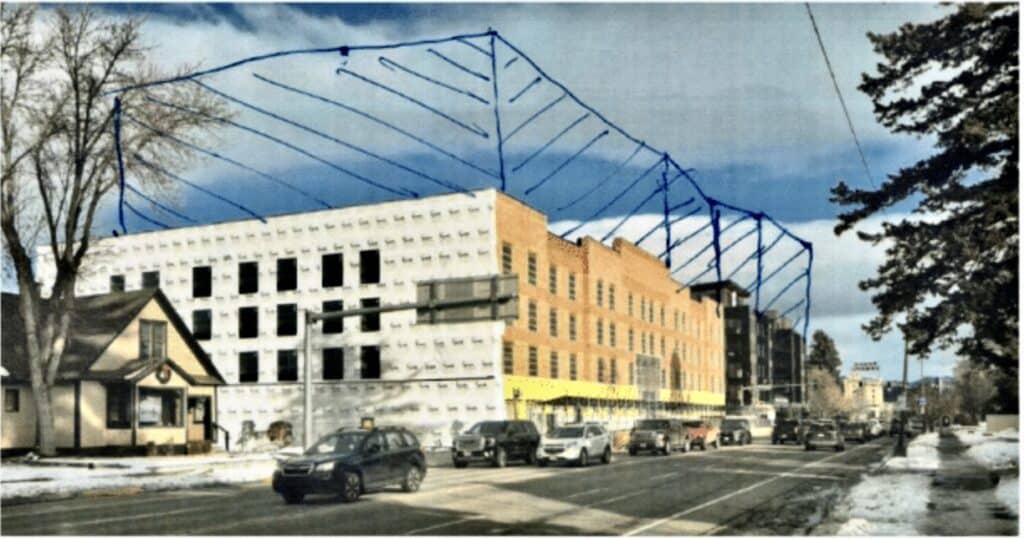
At this very moment, drastic changes could be in store for Bozeman’s downtown skyline that visually has offered a connection from Main Street to the Bridger Mountains. With little public awareness, developers have aggressively pushed to expand the current height restriction on buildings in the central core from 70 to 90 feet. State law demands a minimum height of 60 feet. This comes at a time when neighboring towns, like Livingston, have aggressively held the line on height restrictions, saying they are vital to maintaining the historic integrity of their downtown.
There is little evidence to suggest that the historic height limit in downtown Bozeman has curtailed “prosperity,” or that it has cost jobs, or that going higher with buildings will enhance dwelling affordability for locals earning modest wages. Nor is there any sense that citizens have adequately been apprised or made aware of the significant permanent impact that would forever alter the visual ambiance of downtown. Smart, long-time, well-informed citizens say it’s yet another example of the city failing to articulate the implications of its actions.
And it’s merely the latest manifestation of change happening like a multi-headed Hydra that began at the dawn of this new century, and accelerated during the Covid years when Bozeman became “discovered” by capital investors like never before, just as nearby Big Sky did. Bozeman has been viewed as a place where opportunistic developers are able to exploit weaknesses in local planning and, in some cases, move to undermine zoning. While the moniker “Bozangeles” is often invoked in describing the sprawl, a better term for historic Bozeman may be its architectural “Big Sky-ification”—and that’s not a compliment.
———————————————————
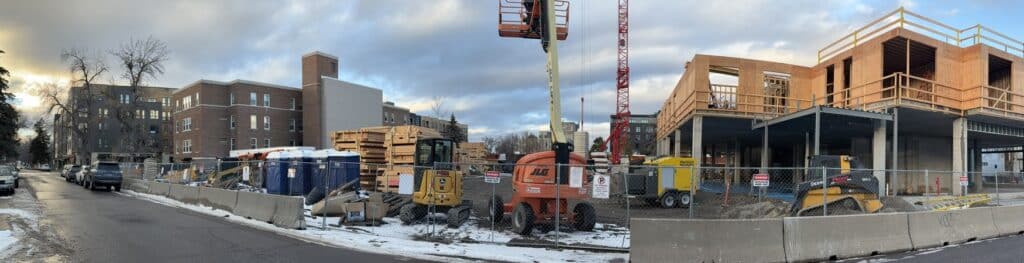
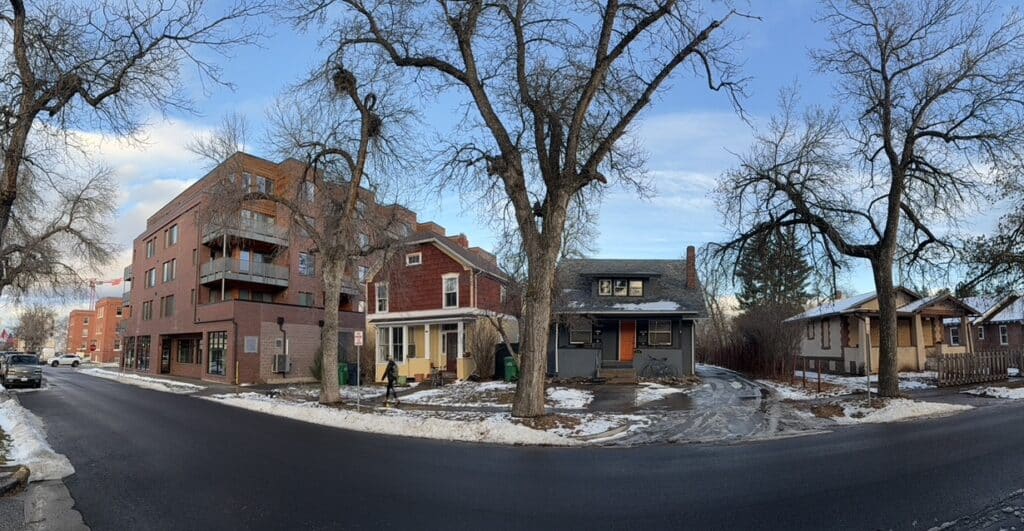
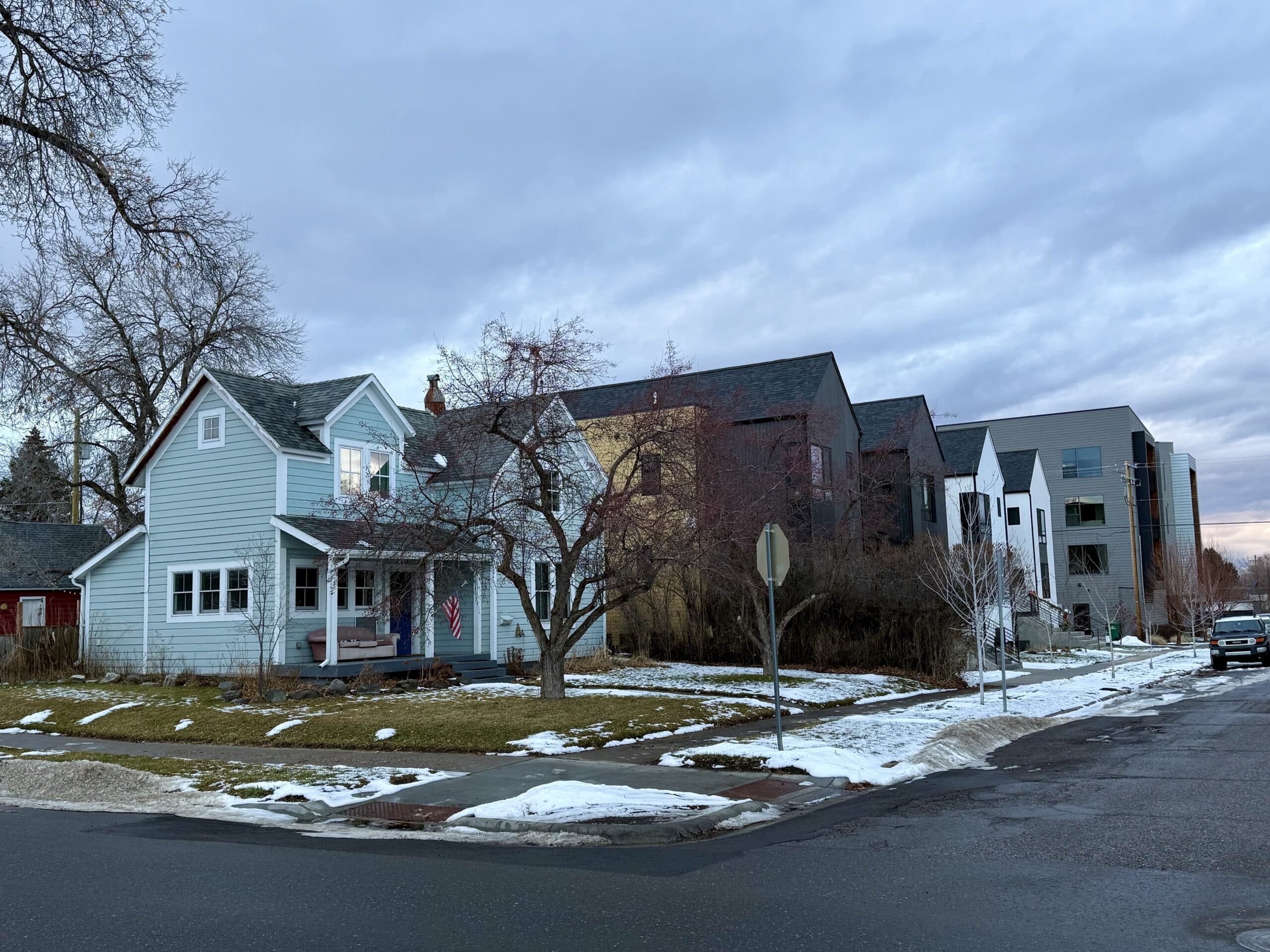
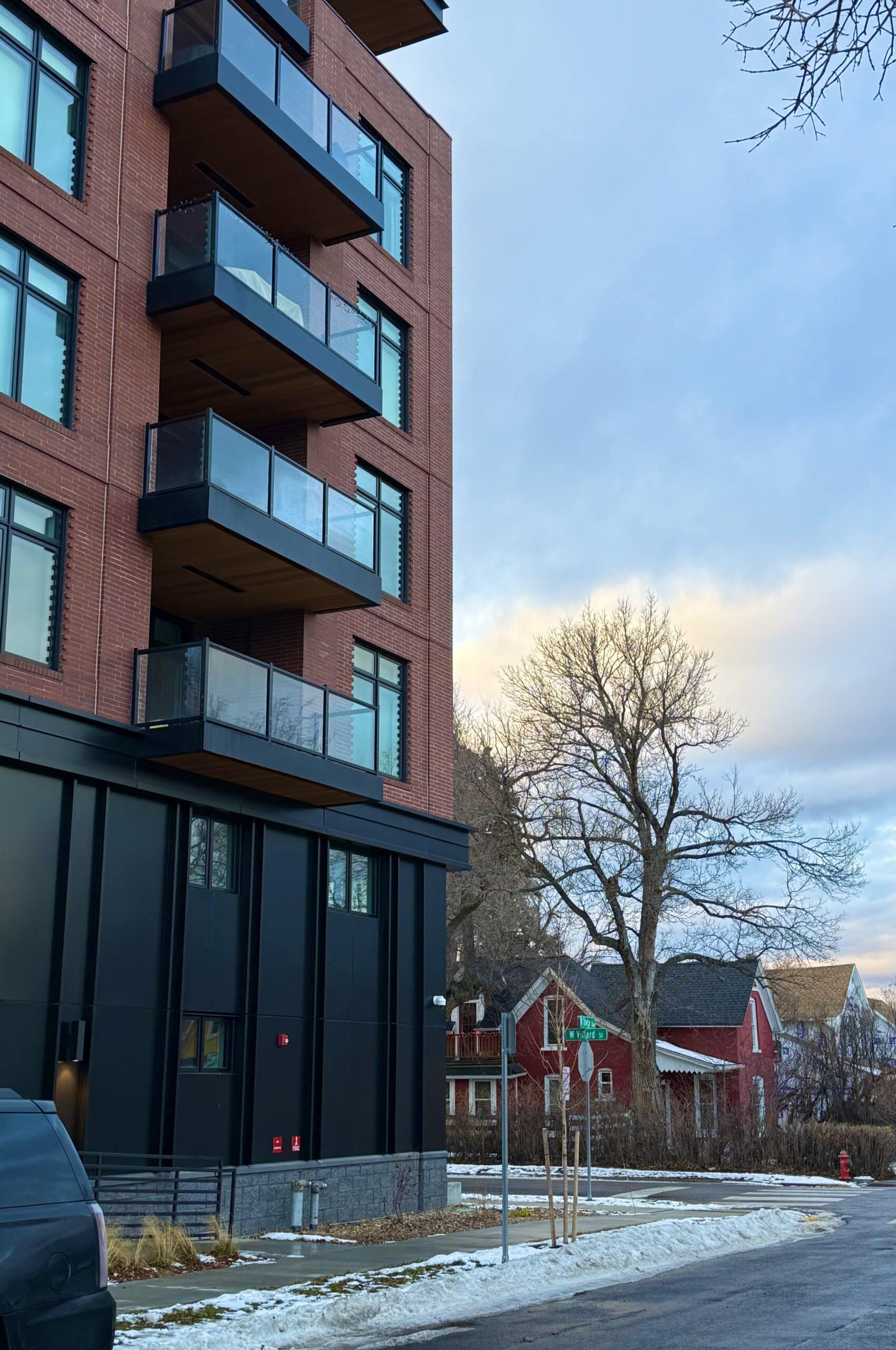
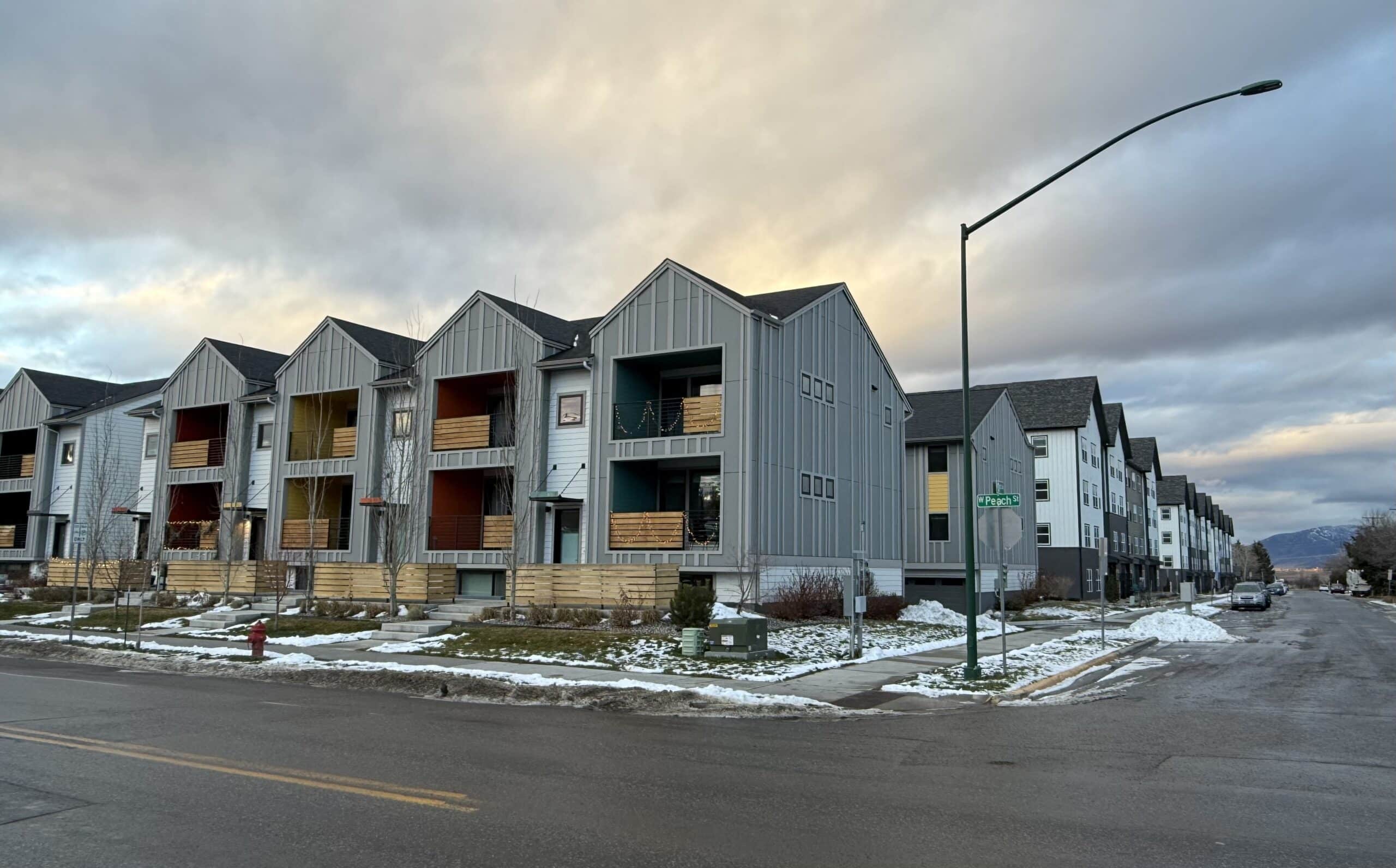
This is not a composite photo but a panoramic, showing the edge of a historic neighborhood encompassing a few square blocks being transformed into luxury high-rise apartments, unaffordable to most working-class people in Bozeman. If architecture is part of a proud tradition of bringing additive character to a place that accrues aesthetic and social equity over time, then what message is it sending about the values of New Bozeman rapidly replacing the old? Photos by Todd Wilkinson
—————————————
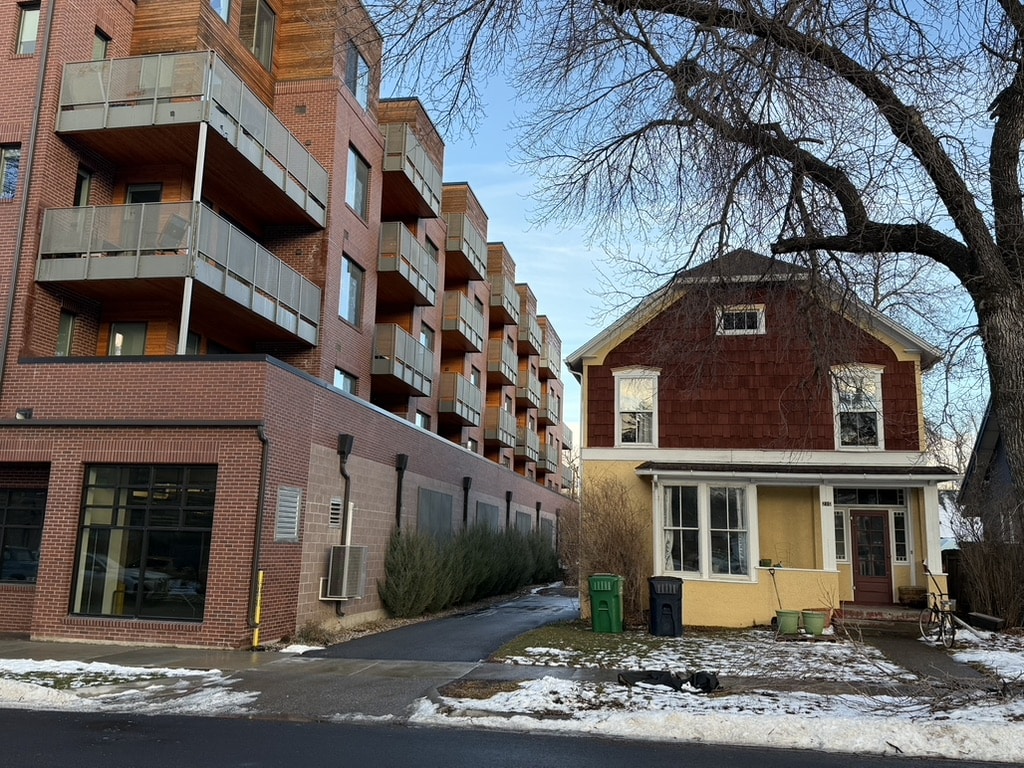
If one visits inner Bozeman today you will find blocks of multi-story structures flanking Main Street, some of which appear, in their neo-modern blandness, as if they were designed by urban planners who have no understanding of the novelty of Bozeman. Generic, unimaginative, stark of palette and consistent with any found in any city in North America, they are displacing welcoming low-slung edifices that housed working class folk. The paradox is that Bozeman’s North Side, pictured in photos above, was historically a place where the so-called toiling underclass could afford to live yet forces in recent years, claiming to be driven by “Smart Growth” but in name only, have preyed upon its vulnerabilities.
As one example, a trailer park and its residents of single moms with kids, veterans with disabilities existing on Medicare and others holding multiple jobs to make ends meet, got supplanted—read permanently uprooted— by new duplexes sold to newcomers for six and seven figures each.
Nearby, luxury apartments rent for between $2500 and $4000/month—or between $30,000 and $48,000/year for rent. This in a town where, according to the US Census Bureau and other sources, per capita income is around $50,000 and median household income around $80,000.
Median household income by age group breaks out this way (as of 2023): under 25: $37,155; 25 to 44: $91,000; 45 to 64: $107,000; and 65 and older: almost $69,000 (which often is a blend of social security and interest on retirement). Nationally, the primar formula for gauging housing affordability is that total monthly housing costs (mortgage or rent, taxes and insurance) should not exceed 28 percent of gross monthly income.
Once upon a time Bozeman’s historic downtown was, foremost, a hub to which locals felt belonging, but now it caters to short-term passersby or new arrivals with significantly greater means. Some of the owners of “upscale, luxury” apartments, shops and eateries are actually people who have second homes in Big Sky or Paradise Valley or even Jackson Hole and who want to have a place where they can have fun strolling Bozeman’s main drag before flying out in the morning on their private jets.
The late Tim Crawford, who was among the first to restore a beloved historic building on Bozeman’s Main Street, and believed in rallying behind it when developers and big box corporate juggernauts in the 1990s were blazing strip malls into former farmlands along North 19th Avenue, often said towns are destined to change and grow but not in dumb ways. Crawford, who before moving to the Gallatin Valley served on the Ketchum Town Council in Sun Valley, Idaho, had soft spot in his heart for Bozeman’s working underdogs. He penned regular letters to the editor of the Bozeman Daily Chronicle and wrote a column for a publication that I founded but am no longer affiliated with. Crawford and his wife, Kathy, owned a farm in the rural outskirts of Belgrade along the Gallatin River and put it under a conservation easement with the Gallatin Valley Land Trust.
One of Crawford’s columns, a symbolic one, drew attention to the sale of a trailer park. We walked the site as the mobile homes were hauled away. Crawford’s essay was titled “Remember 2018 When ‘Creative Destruction’ Leveled A Bozeman Trailer Park To Create ‘More Prosperity?” It was subtitled “Tim Crawford wonders how much empathy the new Bozeman has for those that prosperity sent packing.”
Crawford’s conclusion: not much. Several trailer parks have disappeared, social service needs for struggling families and individuals have soared in general and landlords of businesses and apartments have, invoking the term, “market forces,” raised rents. One of his favorite charities was a private, non-profit group called HRDC that serves as a safe place for people facing tough times.A major HRDC thrust is providing food and shelter for the poor. (You can read Crawford’s essay about the trailer park in its entirety by clicking here. It is still remarkably timely, compassionate and prescient).
Tim Crawford’s essay was titled “Remember 2018 When ‘Creative Destruction’ Leveled A Bozeman Trailer Park To Create ‘More Prosperity?” It was subtitled “Tim Crawford wonders how much empathy the new Bozeman has for those that prosperity sent packing.”
Crawford’s conclusion: not much.
Something worth pondering is this: what happens to a metaphorical Bedford Falls when its civic locus of gravity becomes less and less relevant to those of modest means who gave blood, sweat and tears to creating a community worth living in across generations? Who are the protectors of community and who profits most from their exploitation?
Much transfiguration has happened in the neighborhoods and hinters around Bozeman because developers, many of them representing outside capital investment firms, today wield far more power. They claim that by taking advantage of incentives, seeking variances to local codes, and flexing legal muscle, as they’ve done in other places, and using it to have more intimidating sway in determining the fate of traditional neighborhoods with single-family homes, more density will appreciably address a serious lack of affordable housing. That promise of significantly more affordable housing hasn’t materialized.
But this, of course, isn’t only a vexing problem endemic to Bozeman, for it afflicts most mountain towns in the Rockies and burgs across the country. In Jackson Hole, where Teton County has 97 percent public land and three percent private, that ratio is blamed for hyper real estate values fueled by limited supply and demand from a continuous inflow of multi-millionaires and billionaires who also take advantage of Wyoming’s liberal tax codes.
Bozeman is an acute example of something a little different. It’s not about a shortage of developable real estate. It is owed to a much larger inflow, in number, of affluent retirees, well-paid newcomers who work here remotely, youngish trust fund and tech hipsters, the proliferation of legal and illegal vacation and short-term rentals, and escalating property taxes causing older residents to sell. Like a wildfire whipped by winds that create its own incendiary weather, there’s been a form of extreme real-estate speculation that has put the city and Gallatin County into a reactionary posture of being overwhelmed and just trying to keep up. What is the source of the big money that’s been poured into Bozeman development? No one fully knows but there is a lot of real estate in Bozeman and the Gallatin Valley being sold by firms based in Big Sky.
Libertarians and their think-tanks continue to promote the unproven trope that packing neighborhoods with density—i.e. treating it as a simple supply-demand dynamic— will achieve economic affordability. The irony is they have found a strange marriage with social justice activists on the political Left, those organizing tenants’ rights organizations and spouting the so-called rhetoric of Woke, that portrays historic preservation, traditional land conservation and those who support it as being the alleged domain of exclusion-minded racists, NIMBYs and homophobes.
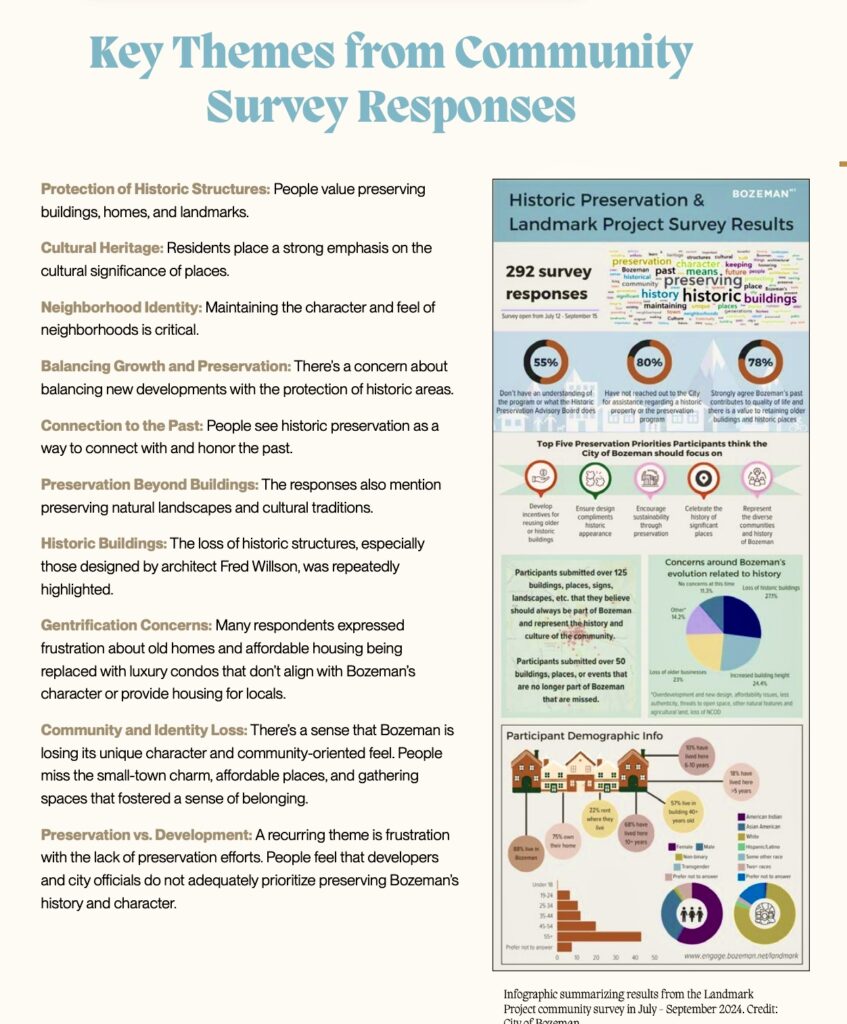
Not only is the latter unsubstantiated, but it is deeply offensive to compassionate residents in the middle normally sympathetic to the cause of equity. This kind of miscalculation helps explain why Democrats have lost credibility and ground in the state legislature which itself has been overtly hostile to sensible planning and zoning. Homeowners living in the historic Centennial, Bon Ton, Cooper Park, Lindley, South Black and South and North Tracy neighborhoods have been disparaged as NIMBYs and “obstructionists” for opposing five or six story structures invading their peaceful confines. Ironic since a recent public involvement process, led by consultants and highlighted in a survey and report shows strong citizen support for the very kinds of historic values residents have fought for— to protect against ruination by development.
Throwing intrigue into the mix are the ongoing anonymous commentaries of an entity called The Gallatin Valley Sentinel that says it is a watchdog of local government and a conservative voice for land use planning and culture. Over the years it has highlighted alleged alliances between the far political right and left, publishing some of its opinions in places like Bozeman Magazine.
Meantime, the state continues to heed the recommendations of free market ideologues advising Montana Gov. Greg Gianforte and forcing neighborhoods to incur more density against their will. Never mentioned is how some pushing that agenda happily dwell themselves in exclusive gated subdivisions with single family residences where homeowners’ association covenants protect their quality of life by mandating larger lot sizes and quasi-government regulations that prohibit the kinds of lenient maneuvering they want builders to enjoy in the historic neighborhoods of others.
One of the governor’s staunch allies in Bozeman is Mark Egge who has found his way onto a seat on the Bozeman Community Development Board that has played a key role in municipal code revisions. He also served on Gianforte’s Housing Task Force and has been a consultant to a libertarian think-tank called the Frontier Institute connected to many other free-market organizations pushing limited government, anti-regulation and property rights first agendas. Egge, the Frontier Institute, and the Housing Task Force have unabashedly pushed to reduce or eliminate regulations that impede development.
Egge, who ran unsuccessfully for a seat on the Bozeman City Commission in 2019, has co-opted Woke language by calling regulations that limit what kind of housing neighborhoods can have as “discriminatory.” He wrote a guest column that appeared in the Bozeman Daily Chronicle in 2024 and his arguments were challenged by the paper’s editorial board. “’We must build, build, build’ to bring down housing costs, [Egge] argued,” the editorial board wrote. “Egge blames Bozeman’s severe lack of affordable housing on zoning that prohibits high-density multi-unit construction in traditional single-family neighborhoods and on regulations, such as parking requirements, that drive up costs for developers. Egge disparages those who oppose the invasion of their neighborhoods with towering, out-of-scale apartment and condo monstrosities. He calls these citizens ‘NIMBY disbelievers’ who fail to understand that Bozeman’s high housing costs can be remedied by the simple law of supply and demand.”
Former Bozeman mayor and city commissioner Steve Kirchhoff remembers how Gianforte in 1997, long before he was a Congressman and governor, joined neighbors and sought, as a self interested citizen, to prevent a neighboring landowner from exercising his right to put in a large and dense residential subdivision near his home off Manley Road along the East Gallatin River. It was a bold expression of not-in-my-backyard thinking. When Gianforte failed to prevail, he told Gail Schontzler, reporter for the Bozeman Daily Chronicle: “There’s 10 houses on Manley Road now; this permits 290 … on what is essentially a swamp. This did not factor in our concerns [presented to the city]. It’s completely inconsistent with the surrounding property.”
These days, the urban and rural land use policies Gianforte champions seem to allow for development that also isn’t consistent with the desires of neighbors and surrounding properties nor respectful of sensitive environments.
Kirchoff notes how “Gianforte’s hypocrisy” didn’t stop with his own situational NIMBYism.
Montana Gov. Greg Gianforte is an enthusiastic proponent of preventing citizens from fighting the state mandate imposing more density and development in their neighborhoods. But former Bozeman mayor and city commissioner Steve Kirchhoff remembers how Gianforte in 1997, long before he was governor, sought as a self interested citizen to restrict density requirements that would have allowed more residential development near his own home in a zoned area of Bozeman. And Kirchoff notes how “Gianforte’s hypocrisy” didn’t stop with his own situational NIMBYism.
The governor claims to be a champion for affordable housing, but what happens if developers don’t want to build it? In 2021, Gianforte signed a bill banning the cities of Bozeman and Whitefish from implementing inclusionary zoning that requires developers to create affordable housing before their projects can win approval. The governor claims he is a reformer yet the net effort of the Montana Land Use Planning Act he signed into law in 2023 is to radically weaken scrutiny and oversight of proposed developments. It streamlines permitting for commercial and residential development by eliminating local design review by volunteer boards.
Gianforte’s support of unchecked growth stands in contrast to the sentiments of Montanans, as measured in ongoing surveys from the University of Montana. Three quarters of respondents say lack of affordable housing is a serious problem. At the same time, about three of every five Montanans in 2024 said the rate of growth and development in their local community is happening too fast. The number of citizens who think sprawl spreading across farms and open lands is a serious problem is rising, too, and they say it is changing the character of their state for the worse.
Independent and government planners I spoke with suggest that, in the name of giving landowners and developers wider latitude to build more homes allegedly to fix affordable housing, Gianforte’s policies represent a new accelerant for rural sprawl, which is already problematic, and will only hasten the loss the western mountain valleys of more wildlife habitat, open space and create more worries about water pumping, individual wells drying up and a future with more failing individual septic systems.
Read about a landmark victory in Broadwater County notched by a group, Upper Missouri Waterkeeper, that challenged government approval of a subdivision allowing developers/homeowners to pump water without first identifying its source, level of abundance, and impacts of aggregate water use. This is mentioned to illustrate the kinds of problems occurring with recent gutting of regulatory oversight.
—————————————
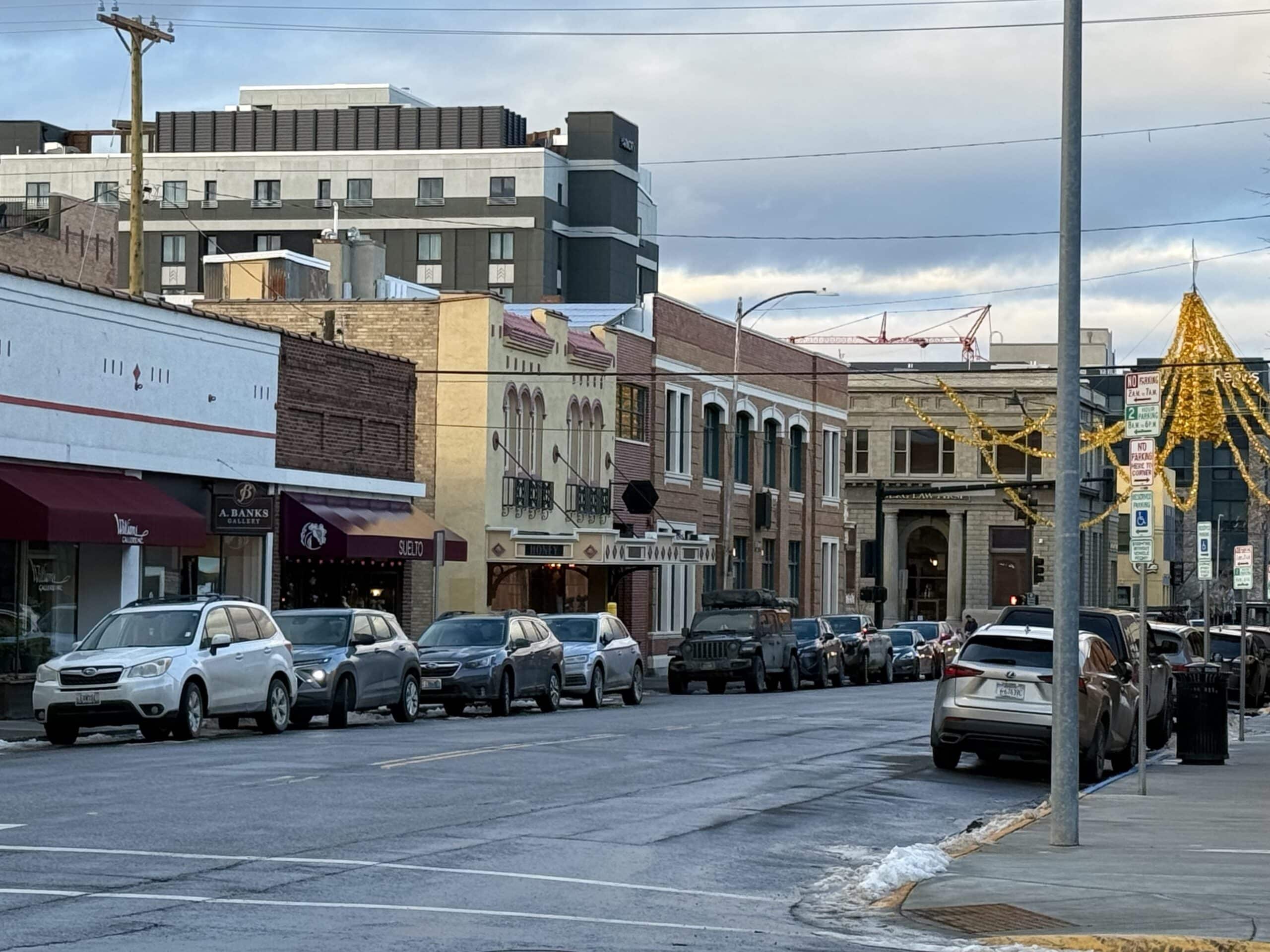
A cornerstone of Bozeman’s allure is its downtown area and down to earth scale, with Main Street and side streets being a line of low slung restored historic buildings. But recently a group of developers succeeded in getting the City Commission to allow height limits to grow from 70 to 90 feet. It portends huge changes in Bozeman’s skyline. More structures like the Kimpton Armory Hotel, which many say is out of character and incongruent with Main Street are expected to tower. While some city commissioners claim the public was given sufficient notice to contemplate the changes, buried in the new Unified Development Code, a huge percentage of citizens were unaware. It begs the question: for such a momentous change affecting the heart and soul of the center of Bozeman, why wasn’t more effort made to inform the public and provide visuals showing how dramatic the changes will be? Photo by Todd Wilkinson
————————————
The citizen revolt in Bozeman has done nothing to chasten developers, at least so far. An illustration of how emboldened some have become, a realtor and owner of an architectural design firm in Bozeman, who is pushing to build a controversial boutique hotel downtown, chastised local citizenry. He took aim at those who have been tenaciously watchdogging the city commission, the city planning staff, and the Community Development Board (comprised mostly of people in the development industry) who have backed dramatic changes in local residential zoning.
Here, verbatim, is the public statement made recently by real estate developer Matt Paine, who is aiming to erect a boutique hotel in close proximity to Bozeman Creek which flows through downtown. He is among other developers seeking relaxed height restrictions on downtown structures. He made the following comment on November 3, 2025 before the Bozeman Community Development Board and may have found a sympathetic ear in Mark Egge. Paine’s irreverent remarks speak for themselves but it’s pertinent to mention that, as a white male himself, he resorted to playing the race card, directed ageist scorn at elderly citizens and chastised neighborhood advocates for showing up to meetings.
“We have roughly 60,000 residents within the city limits of Bozeman. And we have 50 of those [neighborhood advocates] show up here time and time again trying to hijack the agenda, trying to enforce their own opinion on the citizenry,” Paine declared. “Most Bozemanites are busy working around the clock, trying to make their mortgage payments, trying to take their kids to soccer tournaments on the weekend, and maybe go skiing every now and then. I think 850 comments, the majority of which were written by a select few, is exactly one percent of the citizens. That goes to show how involved the majority of our citizens are with this process, how indifferent actually they are, for better or worse. But we have 50, mostly old retired white people, the most privileged contingent of Bozeman residents showing up here time and time again. The very definition of privilege. I better be careful here; I am just a few years away from 50 myself. We can count a handful of people below 50 here. These are people established in the neighborhoods and they will never be happy until we have absolutely zero growth and Bozeman is restored to the day they fell in love with it. I too live in downtown Bozeman. Nobody loves change. Everyone is resistant to it as much as anyone else. But the reality is it is here. The UDC (unified development code] as it is today is a disaster and this one is imperfect, I won’t argue with that. And a lot of the imperfection comes from change foisted onto it by these hobby planners, hobby architects that are hanging out at home and in coffee shops and trying to come up with these comments making everything worse. I’m not just talking about the financial implications of this but also the planning implications, the construction and the complications that are very difficult to express.”
“…we have 50, mostly old retired white people, the most privileged contingent of Bozeman residents showing up here time and time again. The very definition of privilege. I better be careful here; I am just a few years away from 50 myself. We can count a handful of people below 50 here. These are people established in the neighborhoods and they will never be happy until we have absolutely zero growth and Bozeman is restored to the day they fell in love with it.”
—Comments from developer Matt Paine, promotor of a new boutique hotel downtown, disparaging advocates of protecting historic neighborhoods at a recent public hearing on the city’s new development code
There is much inaccuracy to unpack in what Mr. Paine said, according to those who witnessed it firsthand, and apparently also a lack of awareness with his own irony, relating to the fact that it’s not citizens who stand accused of hijacking the city agenda but developers and members of libertarian think-tanks. Paine stands to benefit financially from the changes in code he is promoting, including the rescinding of former height restrictions on downtown buildings.
A recording of his remarks is now in wide circulation and they’ve only fueled populist ire. Paine attempts to minimize the presence of 50 neighborhood advocates consistently attending multi-hour meetings and seems to poo pooh the importance of 850 public comments (which is actually significant) submitted by citizens insisting that the city be held to account. In addition, his suggestion that citizens aren’t showing up in mass to meetings because they are “indifferent” has no basis. A better term is that many citizens feel not listened to and they are exhausted.
In fact, advocates who were at that meeting say most residents not in attendance assumed their elected officials would vigorously defend Bozeman’s character. It’s safe to say that most Bozeman residents, who don’t subscribe to the local newspaper and aren’t reached through the city’s poor community outreach efforts, weren’t aware of pushes to allow buildings to be 20 percent higher.
————————————
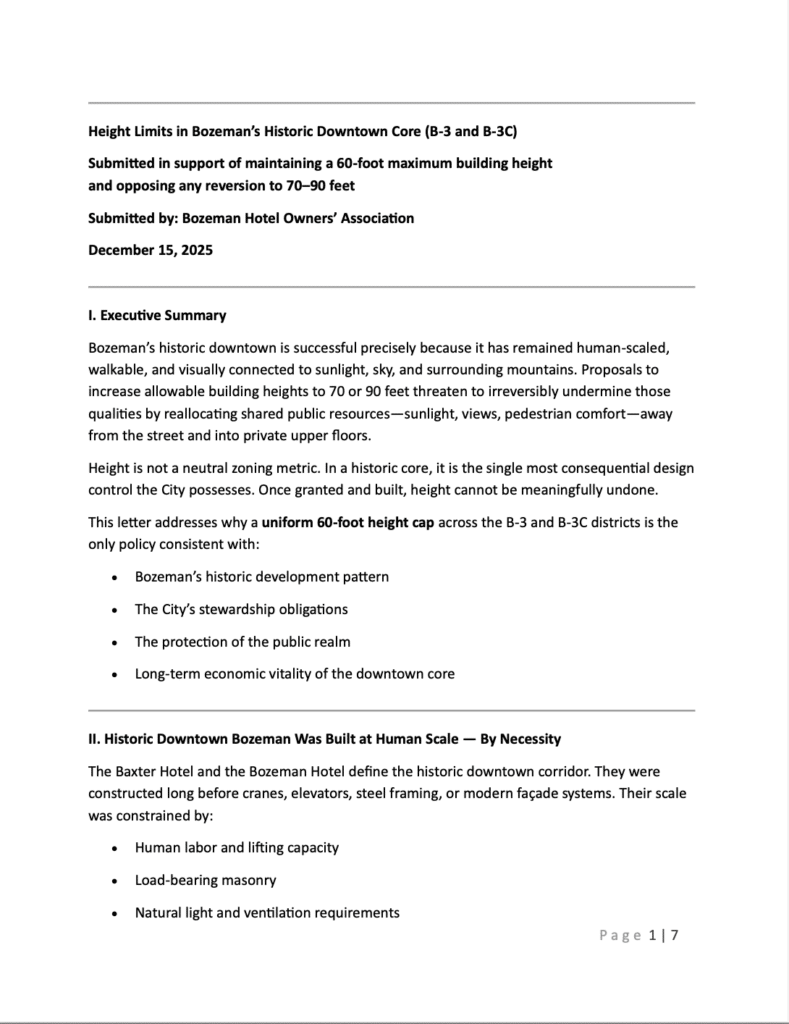
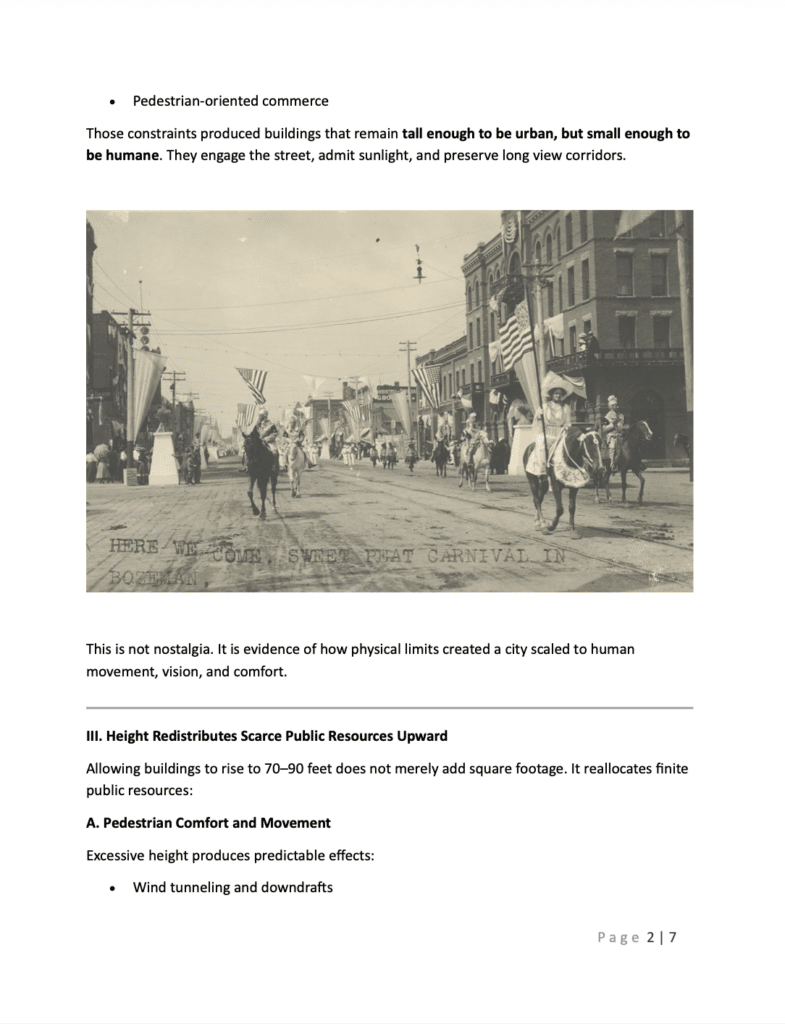
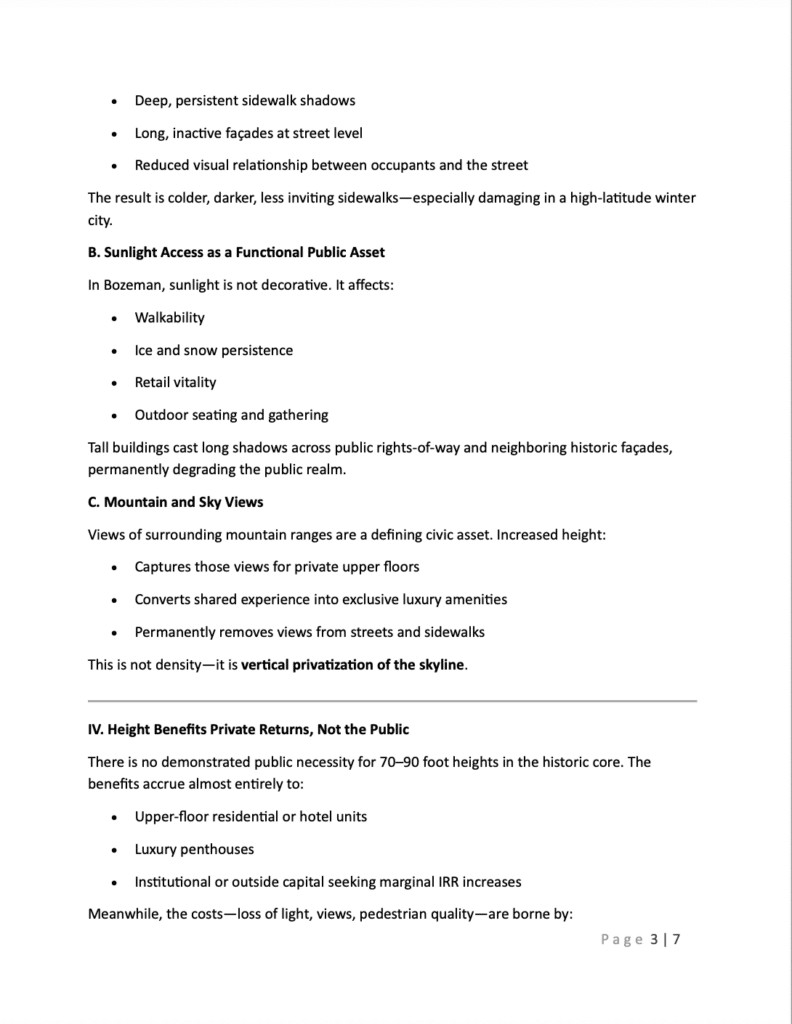
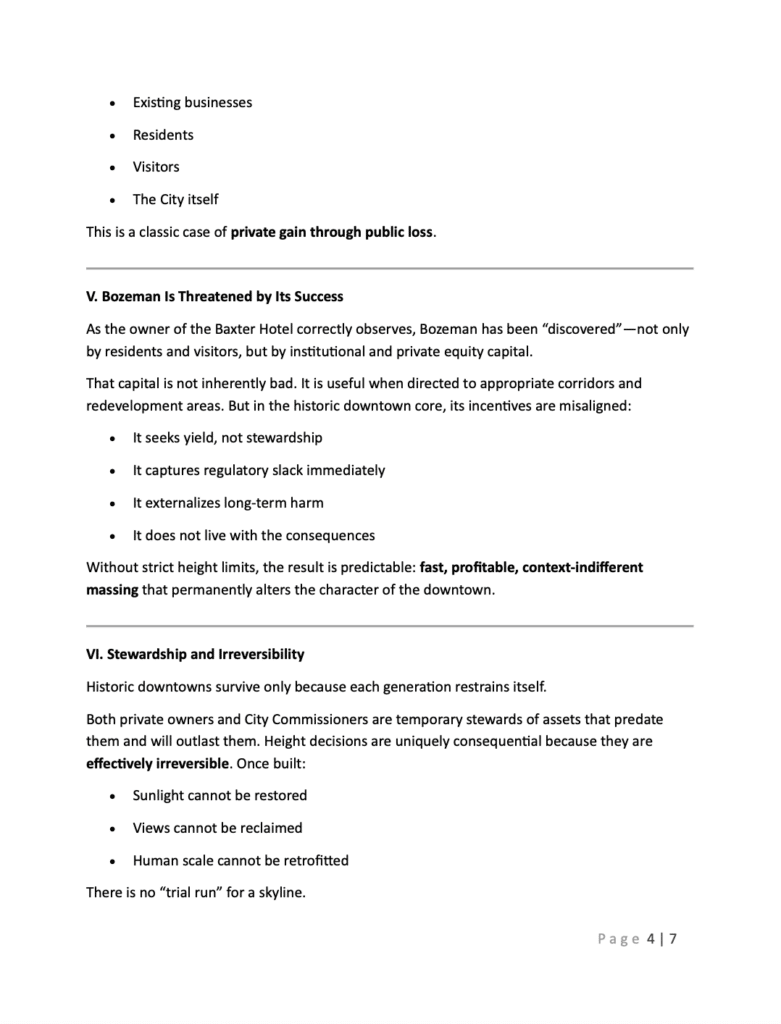
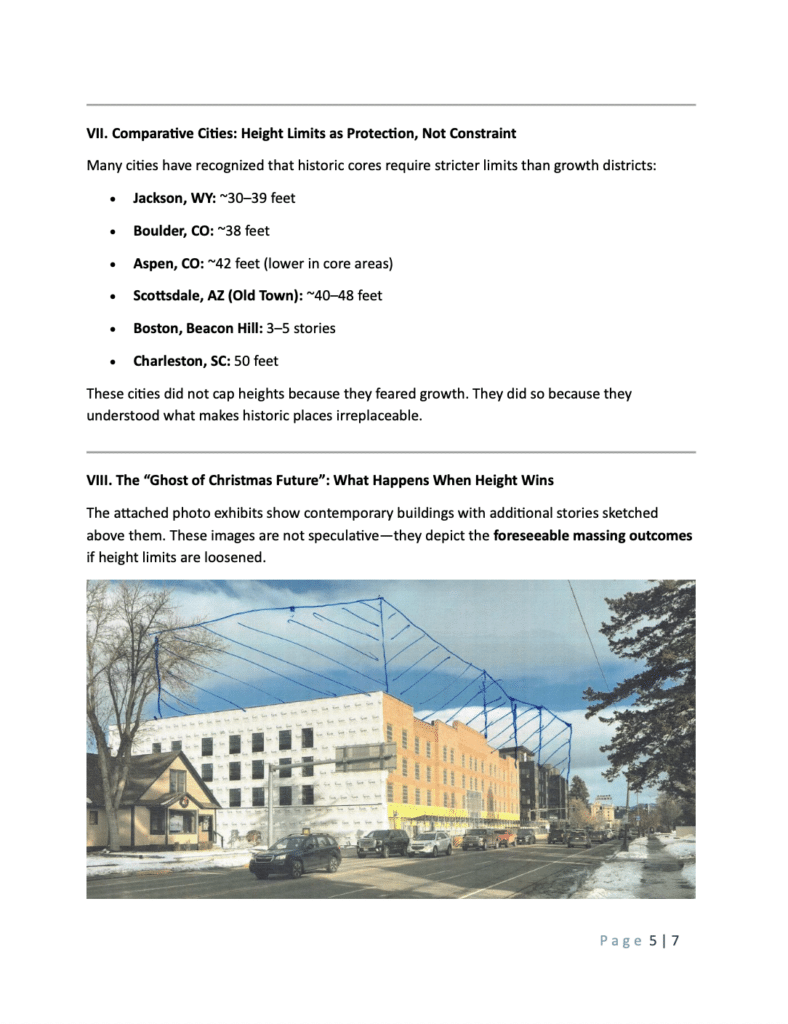
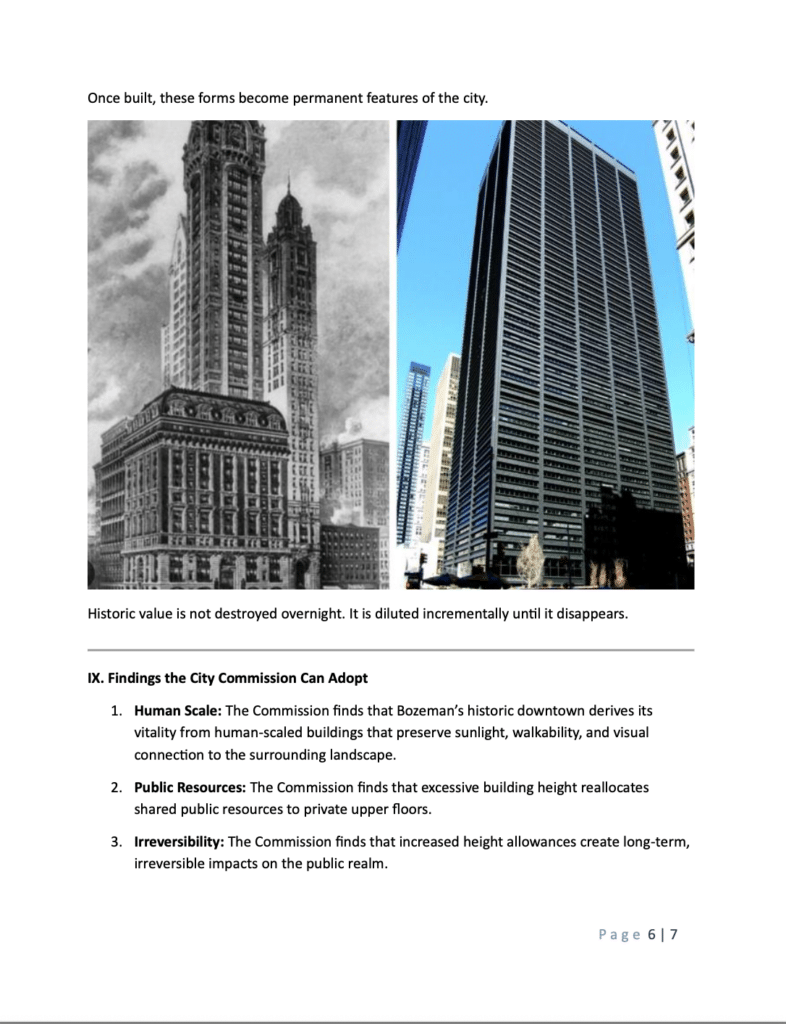
This graphic, submitted by two downtown property owners opposing the City of Bozeman’s move to replace old height restrictions on buildings in the core historic district around Main Street, is intended to show how dramatic the changes would be. Critics say they would block views of the mountains, create more wind canyons that have less sun and, negatively transform its charm. Few of dozens of residents we’ve spoken with were even aware that such giveaways of allowable vertical height were even being considered. The City Commission late in 2025 voted 4 to 1 to allow the restrictions to move from a cap of 70 to 90 feet. You can read the seven-page document opposing the changes submitted to the city below.
————————————
Paine points to community advocates as allegedly being “the very definition of privilege,” but what is privilege? One wonders: how would he categorize his desired clientele who will be frequenting his self-described “boutique hotel” or, more broadly, how would he describe the economic level of residents buying or renting “luxury apartments” built by other developers?
Paine delivered his blistering remarks right after Marcia Kaveney of the Bozeman Tree Coalition spoke about nature protection not being adequately made a priority in Bozeman’s revised code, and Sweeney spoke about how neighborhood concerns were ignored. You can listen to their comments leading up to Paine’s remarks in sequence by clicking here. They begin at the one-hour, 24-minute mark.
As developers and architecture firms champion zoning that allows multi-story luxury apartments to invade neighborhoods and they seek to clear away height restrictions downtown, old guard residents of Bozeman are standing in opposition. They consider the relentless pushes of developers to be brash and disrespectful of the legacy of their beloved downtown.
Pushing back, they say rescinding the height restrictions represents a point of no return that will, if allowed to proceed, destroy the sense of scale that made the downtown Main Street area aesthetically appealing. And, they note, that by allowing structures to block views of the Bridger Mountains, it degrades Bozeman’s sense of place and will, in no way, create more affordable housing. In a recent 4-1 vote, however, just one Bozeman City Commissioner, Jennifer Madgic, a professional planner, dissented.
During the summer of 2025, Madgic expressed sympathy for neighborhoods facing one battle after another. “I think it’s clear people in established neighborhoods don’t want dramatic change, and I don’t blame them, based on recent examples of considerable change on the north side. Some amount of that change can be good, and that’s the needle we’re having to thread,” she told a Bozeman Daily Chronicle reporter.
————————————
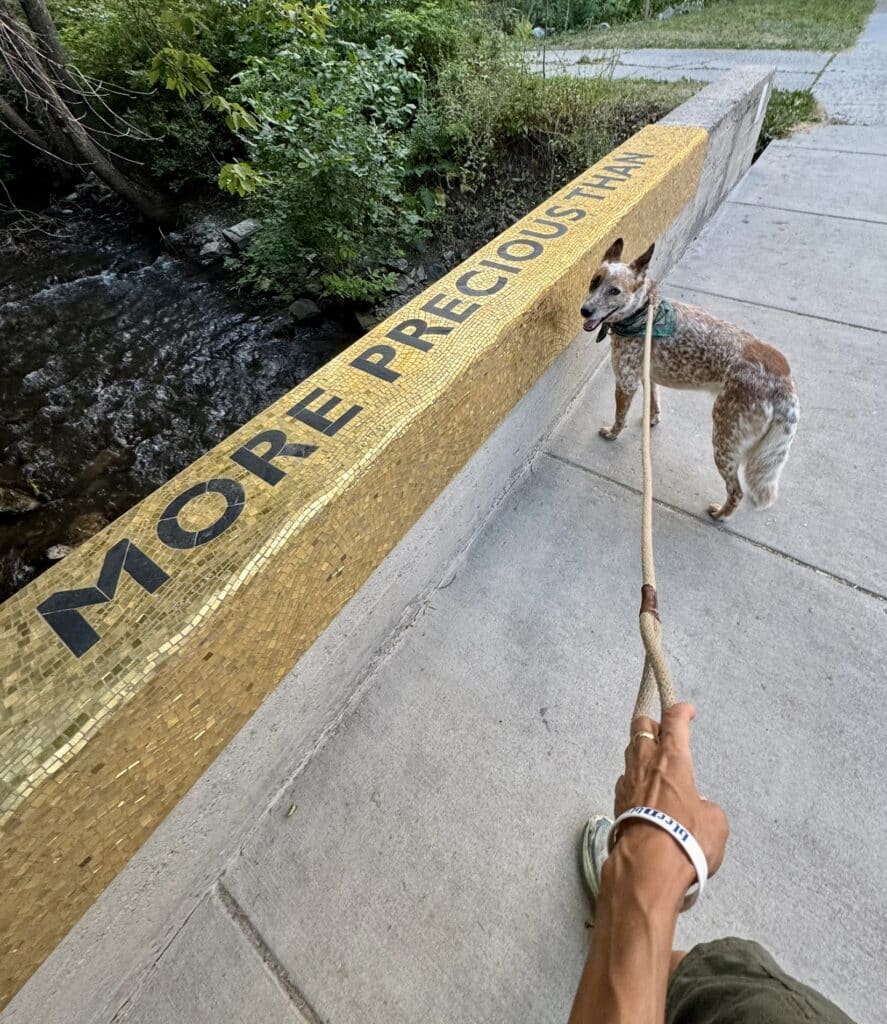
The City of Bozeman has partnered with the nonprofit Mountain Time Arts, Gallatin Watershed Council , the Extreme History Project, and conservation minded businesspeople and citizens to bring more respect and attention to the plight of Bozeman Creek which flows through downtown right by City Hall, in fact. Last summer they unveiled an art installation titled “More Precious Than” on bridges over there creek that remind citizens it is a natural life force. Over the years, the creek became smothered by development that literally was built over the top of its course and recently there’s been a campaign to give the creek a wider birth. A recent proposal to build a boutique hotel, however, would result in a new multi-story hotel doing just the opposite, critics say. Photo of Rudy the Wonder Dog checking out the Mountain Time Arts installation along Bozeman Creek courtesy Kelly Mieszkalski (kellymieszkalski.com).
————————————
The height restriction controversy, however, isn’t about threading a needle. It’s a test of the values the City Commission claims to represent and history will remember the way each commissioner voted. In a guest column that appeared in the Bozeman Daily Chronicle, Michelle Osman, who became interim chair of the Better Bozeman Coalition after Sweeney resigned before assuming office, put the move the City Commission on height restrictions in context. “Other cities such as Charleston, S.C., Burlington, Vt., Boulder, Colo., Old Town Alexandria, Va., Jackson, Wyo., Aspen, Colo., and many others protect their historic districts with much lower height limits ranging from 30 to 50 feet,” Osman wrote. “The Bozeman City Commission’s decision to increase heights to 90 feet is two or three times the height allowed in these other historic districts. These increased building heights could be further increased by another two stories (30 feet) under the city’s affordable housing incentives resulting in 9- to 11-story buildings 120 feet tall.”
Telling is that two of the owners of the two tallest buildings that serve as bookends in traditional downtown Bozeman —the Baxter Hotel on the western side of Main Street and the Bozeman Hotel on the eastern edge— sided with historic preservationists and neighborhood advocates. Read their comments submitted to the city on height restrictions at the end of this story. Their entity, called the Bozeman Hotel Owner’s Association, also sued the city after the commission last summer gave approval for Paine’s six story boutique hotel project after it earlier had been rejected.
Madgic and outgoing Mayor Terry Cunningham were the two who voted against approving Paine’s boutique hotel in its second attempt at approval because they believed its presence intruded too closely upon Bozeman Creek, itself the focus of ongoing restoration efforts.
During the summer of 2025, Cunningham made this public statement about the city’s commitment to revive the fortunes of Bozeman Creek after a century of abuse. “In the last 200 years, we have tried to change its wild nature,” Cunningham said. “We have tried to bring it to heel. We have tried to make it our servant, and we have tried to hide it away. Now’s the time when we say enough. That was then, this is now, and we have a new vision for this creek.”
So it’s a least ironic that Cunningham’s colleagues on the city commission approved a project that seems to contradict the city’s alleged promise to be a better protector against the onslaught of development. Many citizens are wondering whether the city can be trusted to protect the historic charm of downtown, of beloved historic neighborhoods and natural landscapes under constant relentless pressure.
In the interview with Sweeney before she took office, she offered a rebuttal to Paine’s characterization of advocates. “There is a culture within the organization of the City of Bozeman—and amongst the paid and unpaid satellite participants that influence policy— that anything that hinders growth and development is inherently bad,” she said. “But I don’t believe that is the position of the vast majority of Bozeman residents. We are constantly confronted with the accusation that we don’t want anything to change, that we want to put everything under glass or encase it in amber. Of course, that’s false and the truth is much more nuanced.”
What more is behind the backlash to the lack of coherent growth policies in the city and county? Citizens of Greater Bozeman have watched as stretches of urban forests, home to wildlife and shade, have been razed by developers to create more spec homes with little scrutiny coming from the city planning departments. (This served as a spark for some citizens creating a grassroots group called The Bozeman Tree Coalition).
—————————————
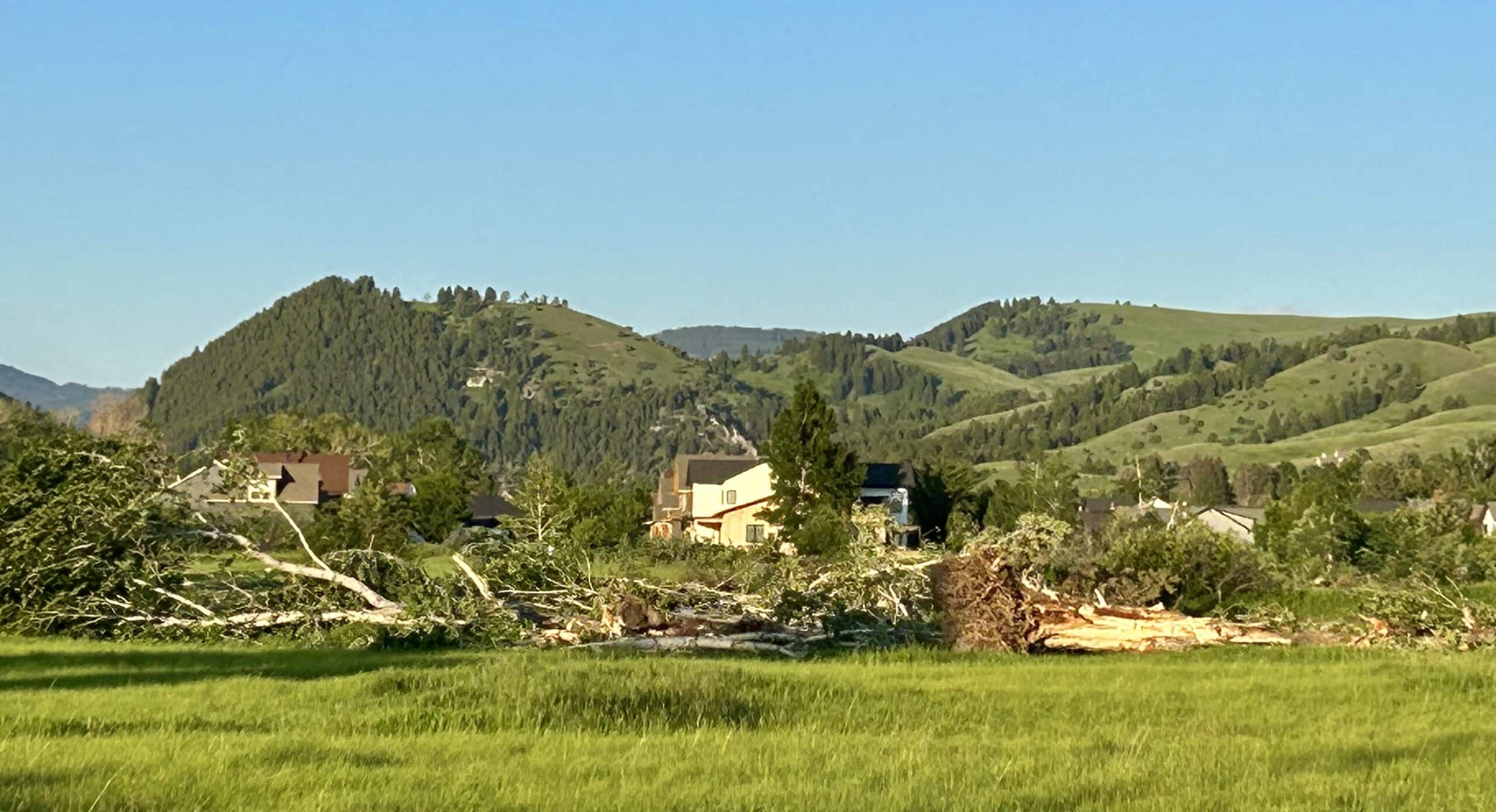
They speak for the trees: The grassroots group called the Bozeman Tree Coalition and an ally of the Better Bozeman Coalition, had its genesis in 2023 after a series of urban forests were either chopped down or proposed for removal to make way for luxury housing and roads. At the site near Bridger Creek, above, nature advocate Marcia Kaveney said, mature cottonwoods were felled in summer as nesting birds were raising young in the trees. A major criticism of the City of Bozeman and Gallatin County is that they have no permanent staff ecologists on their planning staffs who advise elected officials on the ecological impacts of proposed development. Most important, members of the Bozeman Tree Coalition say, is that those scientists be able to conduct reviews without fear of interference from planning officials sympathetic to the wishes of developers. Photo by Todd Wilkinson
—————————————
Locals also point to new housing being built inside sensitive stream corridors prone to flooding. They note how multi-story structures have soared next to century old homes, overshadowing them and literally blocking sunshine from reaching their backyards where formerly residents grew vegetables plants and enjoyed solace without having people on elevated patios hovering over them.
They cite the fact that the City of Bozeman’s Historic Preservation Advisory Board, comprised of citizens who championed the city’s historic integrity, has had its influence diminished because developers didn’t want it to have a watchdog function. And citizens highlight how the recently created Community Development Board has emerged, in contrast to the weakened Historic Preservation Advisory Board, as being allowed to hold more sway in promoting the agendas of developers.
Many longtime residents of Bozeman are today becoming active in pushing back and challenging the claim that destroying Bozeman’s sense of place is a necessary sacrifice in order to achieve better socio-economic parity. Many are concerned about the problem of high real estate and rents but they say enabling the free market to undo codes has not made the problem better, but far worse, and it has left devoted citizens, who over decades have given much back to the town through civic engagement, feeling angry and alienated.
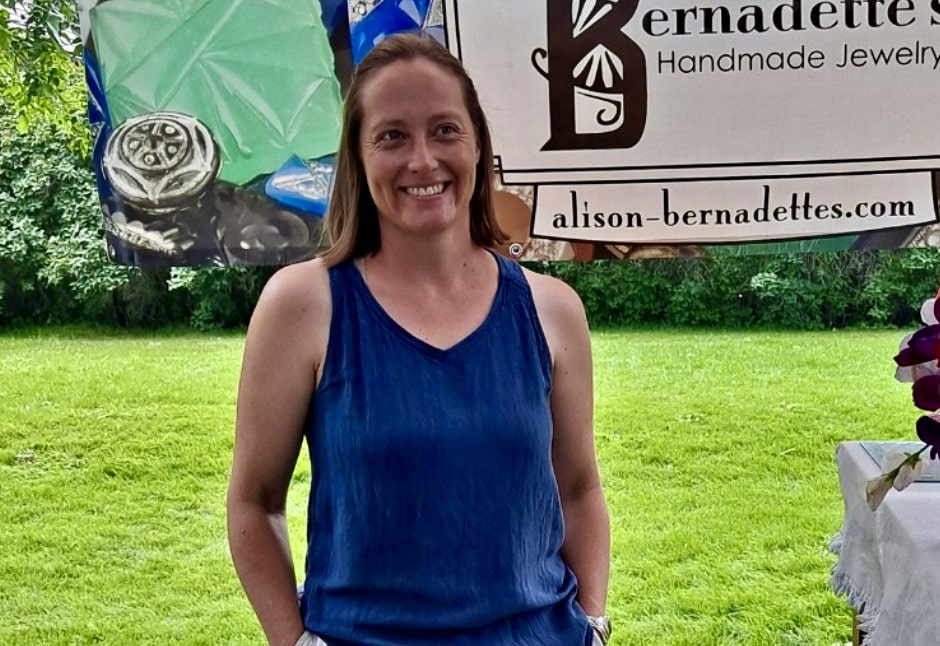
One of those citizens is Sweeney, a resident of the unpretentious southwest side. She and her family have roots in Bozeman going back to its creation in the 1860s. A jewelry maker by profession—she owns Bernadette’s Handmade Jewelry— Sweeney founded a grassroots group called the Better Bozeman Coalition in response to a growing groundswell of citizens who say the city has done a poor job of communicating with citizens, has in some cases treated their concerns with hostility, and often sides with developers in decisions claiming local codes are insufficient to say no to their sometimes controversial proposals.
After she won a seat on the city commission—read her explanation for running—she resigned from that organization but the values BBC defends are core as serves on the five-member commission. There’s never been anyone like her but behind her is widespread support from longtime Bozeman residents who party identities stretch across the spectrum.
The Yellowstonian conversation with Alison Sweeney
Alison Sweeney, newest member of the Bozeman City Commission
Todd Wilkinson: You’re a sixth-generation Bozemanite, an artisan and a person who is keenly sensitive to the desires of people, especially young working people, to still be able to live in the town where they grew up. Please describe the sense of the angst that exists relating to newcomers with means, having immediate access to living here but locals with deep roots feel alienated and driven out.
ALISON SWEENEY: Well, the first thing I would say to that, is that I was always very proud of my heritage here in this valley, though it is a complicated history. I grew up very close with the Crow people, so I was never ignorant to the fact that the reason my ancestors could come here and homestead was because of the systematic removal of a people and the forced assimilation, which resulted in basically state-sponsored cultural genocide. That is real. And yet, when I think of my ancestors, the individuals who homesteaded, what they left were arduous desperate lives without opportunity. Leaving everything you know behind, and taking a huge leap of faith to travel to the other side of the world—that takes a courage unimaginable to me. What they came to in this valley in 1863 was no less arduous, maybe more so, but there was a sense of opportunity if you had the mental, emotional, and physical strength to make a go of it. A feeling that if you worked hard, and got lucky, you could better your circumstance. The epitome of the American dream, right?
TW: Please delve into that more. You’re progressive minded and you have the experience of being an unprivileged, up by the bootstraps business entrepreneur who practices fiscal responsibility. You also have an inherent sense of patriotism and belief in civic duty. How does that color your own notion of the American dream?
SWEENEY: I think the essence of being an American is acknowledging these two opposing circumstances of exploitation, on one hand, and opportunity, on the other, and going forward with dedication to constantly do better.
Young people across the country feel that American dream becoming more elusive, and in some places unattainable. I am almost certainly the last of my siblings to own a home here in Bozeman. My husband and I are working class, and we bought our home 20 years ago, right before the 2008 crash. He is a roofer and I’m a jeweler. Like so many Bozemanites we would never be able to buy our home now.
“Young people across the country feel that American dream becoming more elusive, and in some places unattainable. I am almost certainly the last of my siblings to own a home here in Bozeman. My husband and I are working class, and we bought our home 20 years ago, right before the 2008 crash. He is a roofer and I’m a jeweler. Like so many Bozemanites we would never be able to buy our home now.”
—Alison Sweeney
TW: A common, prevalent complaint is that longtime residents and common folk feel the city hasn’t been listening and has treated advocates for maintaining community character as nuisances who should just step out of the way and let developers do whatever they want.
SWEENEY: The word “alienated” is really interesting. When I started participating in city government, mostly reading plans/reports, trying to track the evolution of the development code update, and giving public comment at commission and advisory board meetings, hoping to affect local policy, I learned very quickly that the people in this sort of inner-circle of city policy largely did not grow up here. They held a certain level of distain for those who did and for other long-term residents who have given their life to cultivating Bozeman as the desirable place it is today.
TW:That’s ironic given that the rhetoric flowing down from the governor’s mansion in Helena and aligned conservative state legislators is that they value multi-generational heritage and the concerns of local people.
SWEENEY: I learned within a few months to never reference my heritage at public meetings, because it immediately turned the “decision makers“ against me. It gave them a reason to dismiss me. There is a culture within the organization of the City of Bozeman—and amongst the paid and unpaid satellite participants that influence policy— that anything that hinders growth and development is inherently bad. But I don’t believe that is the position of the vast majority of Bozeman residents.
We are constantly confronted with the accusation that we don’t want anything to change, that we want to put everything under glass or encase it in amber. Of course, that’s false and the truth is much more nuanced, but again this narrative is used to dismiss the idea that we should grow carefully with intention and respect for our heritage. Heritage meaning cultural, architectural, and also the natural environment.
—————————————
The controversial high-rise known as “Black Olive” located at the corner of Black and Olive streets, served as a spark for the anger of historic preservationists and neighborhood advocates. Ironically, Black Olive is located across the street from the City of Bozeman’s Planning Office, which, to this day, stands accused of being insensitive to the values of historic neighborhoods and has been utterly unprepared to deal with the macro trends of growth in Bozeman. High rises, due to upzoning or zoning emanating from an earlier time in Bozeman, jut abruptly over adjacent historic homes—in the case of the 47-unit Black Olive it offers commanding views of the Bridger Mountains while blocking the mountain views of nearby homeowners. Instead, it gives them glimpses of Black Olive denizens looking down at them in their backyard from elevated patios; to say nothing of lost privacy. As an FYI, according to online listings, one and two bedroom Black/Olive apartments (between roughly 820 and 1300 square feet) rent for between $2250 and $2500/month.
—————————————
TW: Indeed, what’s emerged is a strange dynamic that didn’t exist before and it involves people in neighborhoods believing they have to act in defense of policies and actions being undertaken by the city.
The city has seemed to be influenced by a mixture of libertarian and anti-regulation technocrats who have cleverly co-opted some on the Left, making them believe the free market has their best interests at heart. Almost never has the free market without inducement, created affordable housing. I say this with a tinge of sadness: the local newspaper and its young reporters, while talented, don’t seem to have a deep grasp of Bozeman’s community values that are under siege and, as a result, they report “facts” only superficially, without asking tough questions and giving readers context for how dramatic the changes are. And, there’s an arrogance among hipster developers, who have little reverence for history, and love to portray longtime residents as uninformed local yokels.
SWEENEY: For quite a while, I started to feel bad about being from this place. But once I really got out on the campaign trail I experienced a totally different attitude! People were excited that I grew up here, amazed even. It was really comforting, and empowering. I now recognize that it’s not something I need to hide, and it actually gives me a really unique insight into how we can grow, and still stay Bozeman.
From my personal experience, I think the largest source of the angst is economic as you say. People have always made sacrifices in order to live here. Bozeman was never an easy place to live. My mother worked two and three jobs for most of my life, but it was doable. If you could get a job, you could spend your off time raising a family or enjoying the outdoors. Now you work two or three jobs just to tread water. No home, no family. Why is that? What changed?
TW: And the answer is…?
SWEENEY: The resource being extracted changed.
The history of the West is a history of natural resource extraction. First, mineral wealth was extracted, then agricultural wealth, and now the resource being extracted is our quality of life, and our access to intact landscapes, waterways, and wild areas. The rate of extraction has intensified in lock-step with the amenitization and commodification of this place. I first became aware of it after A River Runs Through It [the film adaptation of Norman Maclean’s novella] was released in 1993. Since then, we’ve had a major movie or TV series every decade, coupled with the ability to remote work, and the global shift in housing as a corporate level investment. It’s the perfect storm, making the most beautiful places in the world unlivable for average working people.
What can we do? Well, we can start by recognizing that our heritage—cultural, architectural, and environmental—has value and is worth protecting for everyone, regardless of economic standing, and for posterity. We must recognize that we humans are not the only land users, or water users. Only then will we be able to manage growth intentionally. Only then will we be able to say, “No, that is not worth selling to the highest bidder.” Its value is for all.
—————————————
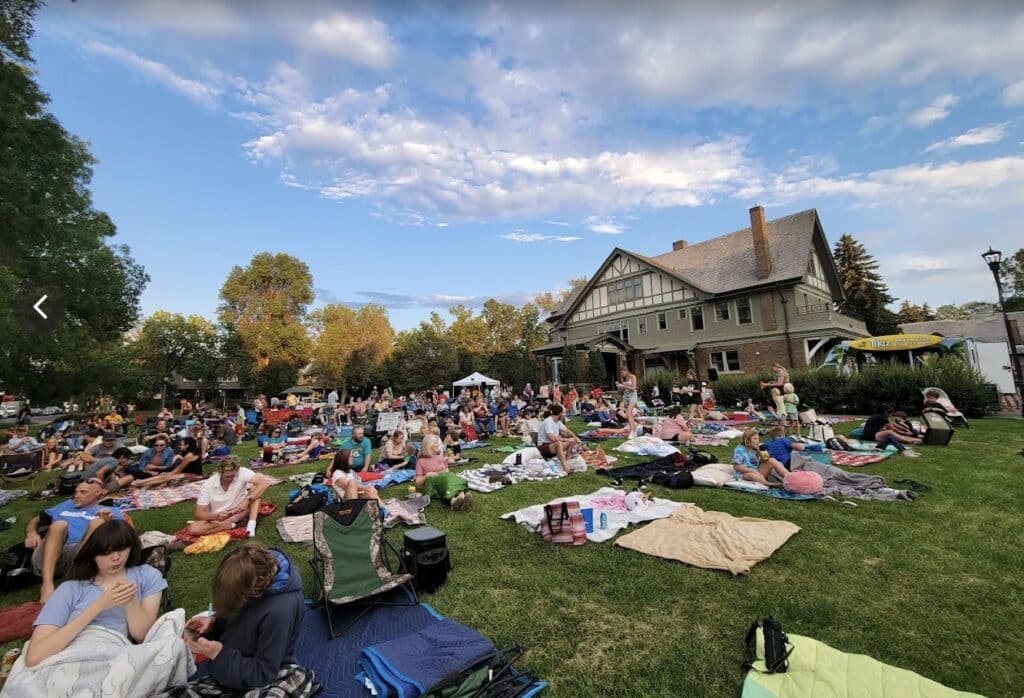
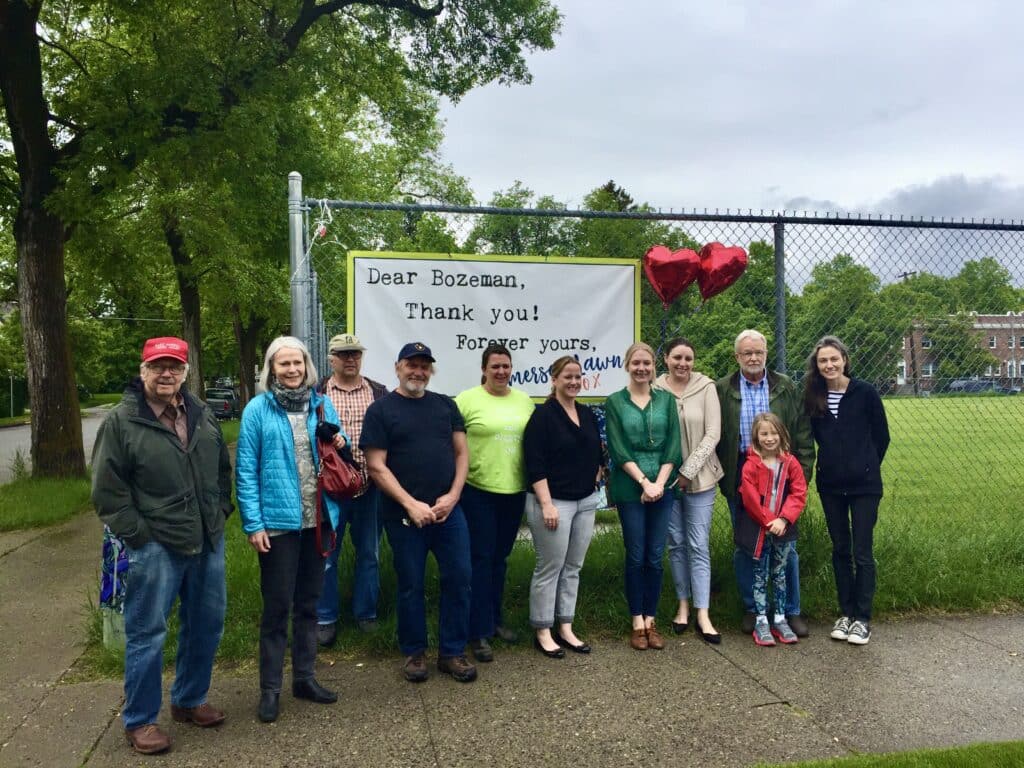
Historic preservation has been both a civic virtue and a hallmark of Bozeman’s attractiveness as a community, yet there has been tenacious, ongoing pushes by real estate developers to capitalize on its appeal for personal profit. Top photo: few newcomers and younger residents of Bozeman remember that in 2003 the Bozeman Historic Preservation Advisory Board led a grassroots effort to save the Story Mansion, which was being used by the SAE Fraternity, from being razed and its square block turned into upscale homes. In fact, a Bozeman mayor connected to the construction industry infamous said, in gest, that “it would be better to just pour gas on the building and burn the f-er down.” The volunteer historic preservation advisory board enlisted more than 75 citizens from all walks of life to testify on behalf of getting the city to acquire the mansion and grounds for $1.3 million and today it is much beloved as a true public asset for the community. A key supporter of protection was then city manager Clark Johnson. In the aftermath, a non-profit group sprung up, called Friends of the Story Mansion, would welcome angel philanthropists in the community who could help renovate the second and third floor of the mansion and adjacent carriage house to achieve the dream of it being a center for cultural and public engagement. Photo of summer community event at the Story courtesy Erin McKenna, via Facebook.Few also remember that in 2018 members of the local Bozeman School Board pushed to sell the lawn of the Emerson Cultural Center, and potential privatization would have allowed developers to cover the green space with high-end condos. A community rally, however, yielded a successful $2 million fundraising effort to keep the lawn in public hands. A quiet 11th-hour contribution of $1 million by Kathy and Tim Crawford, at far left in red hat, prevented it from becoming luxury infill. Crawford said green spaces enable people to breathe, unwind and play and it’s cheaper to protect them before they are gone than after the fact. To its credit, the school board selected the offer from community advocates. This photo by Todd Wilkinson was taken the day that the Emerson announced the lawn was saved.
—————————————
TW: As someone—I’m speaking personally here—who was involved with historic preservation in Bozeman going back to the days when the Story Mansion and the original historic Armory Building were rescued— and who sees the parallel with wildlife preservation, conservation of nature and culture of rural people—there seems to be a shift that’s happened. Growth, as you note, has been embraced at almost all costs over the willingness to vigilantly protect the essence of this place—as if destroying beloved parts of the community is inevitable. The Better Bozeman Coalition doesn’t believe that. Please share the genesis of the BBC and what prompted you to become more formally organized as a private citizen—and, in galvanizing a groundswell of like-minded people who gravitated toward what you’ve been doing.
SWEENEY: The Better Bozeman Coalition was born out of the City’s update to the unified development code (UDC) in 2023. I think it was a reaction to the story we were being told, not matching up with the observable reality on the ground.
It was actually at one of the municipal candidate forums in the fall of 2023 at a place called Break Room (Now College Street Taproom) where several of us hatched the idea for the Better Bozeman Coalition together. Soon after we met at the home of our first chairman to workshop our mission. It was a really productive meeting with a profound sense of urgency, and it resulted in what I think is still a robust and meaningful mission:
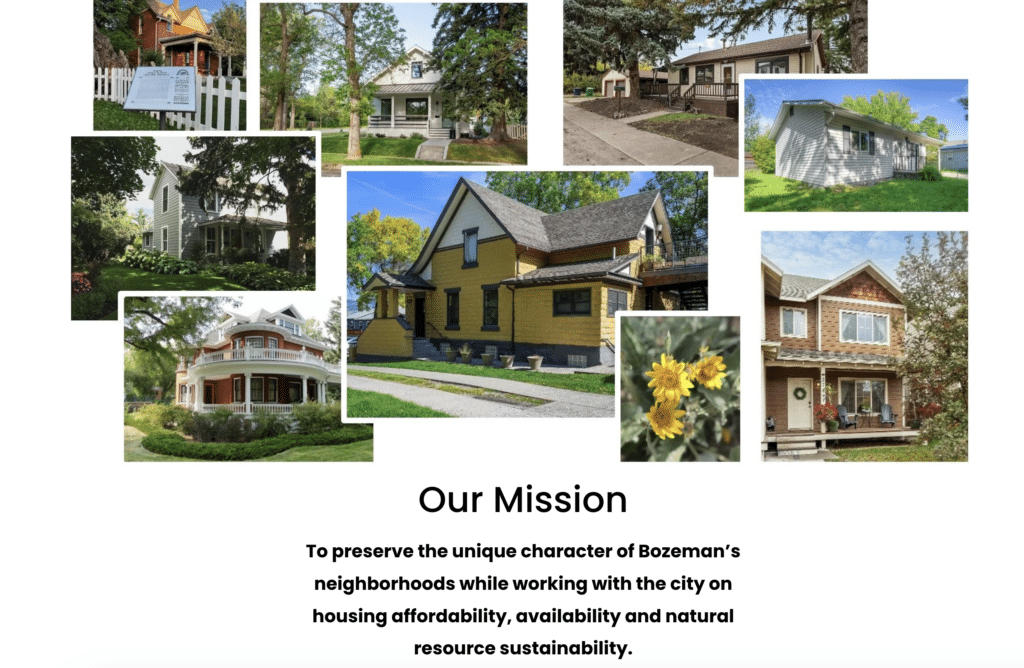
“To preserve the unique character of Bozeman‘s neighborhood while working with the city on housing affordability, and natural resource sustainability.”
—————————————
The image that greets visitors to the Better Bozeman Coalition landing page. Noteworthy is that the BBC was founded and led by young people but today enjoys a growing continent of supporters that include former mayor and city commissioners, former city planners, businesspeople of all stripes, and young parents with families.
—————————————
TW: It seems that the creation of BBC served as both a wake-up call and a place where the silent majority of residents, who have not been happy with the way both the city and county have dealt with growth issues, finally felt as if there was a group advocating on behalf of their concerns, yes?”
SWEENEY: I think a lot of people across different neighborhoods had been observing the economic displacement of the last 10 years, resulting from the redevelopment and gentrification of our historic neighborhoods. It’s continuing to happen right now. A small older home will be purchased by someone from out of state and torn down. A new fancy mansion, or condo complex is built in its place. And often these new structures are not occupied year round. We lose neighbors, we lose historic character, and we are actually losing economic diversity in our core neighborhoods because of this redevelopment process.
Many people who’ve joined the Better Bozeman Coalition saw the proposed upzoning of the 2023 UDC draft as expediting this process of gentrification and displacement. By allowing eight units on every lot in town, the new regulations would essentially throw water on the grease fire of land-price inflation, and increase the rate of redevelopment, exacerbating the displacement. With our historic preservation program having been systematically dismantled over the last decade, redevelopment will not even respect historical character.
TW: What were some of the first steps the BBC took?
SWEENEY: We began to execute our mission by breaking up into teams assigned to research different topics. We delved into critical questions. How did our historic preservation program become ineffectual? Why are local policy makers believing the narrative that redeveloping already expensive land will somehow result in affordable housing, when what we see time and time again is exactly the opposite? A $700,000 home is torn down, but replaced with five $1.2 million condos. How do we actually get affordable housing built? How do we strengthen code to protect our urban forest, and our watercourse infrastructure as we grow?
Through the exhausting effort of dozens of our most active members, our coalition partners, and our broader subscriber base, over the last two years, I do think we’ve achieved some good outcomes in the recently adopted UDC. That can only be the result of research and observable fact becoming more accepted by policymakers, rather than just swallowing the spoon-fed national narrative of upzoning, density, and supply will fix affordability. It won’t. We know that now. It is observable. And I think more people are accepting that reality.
—————————————
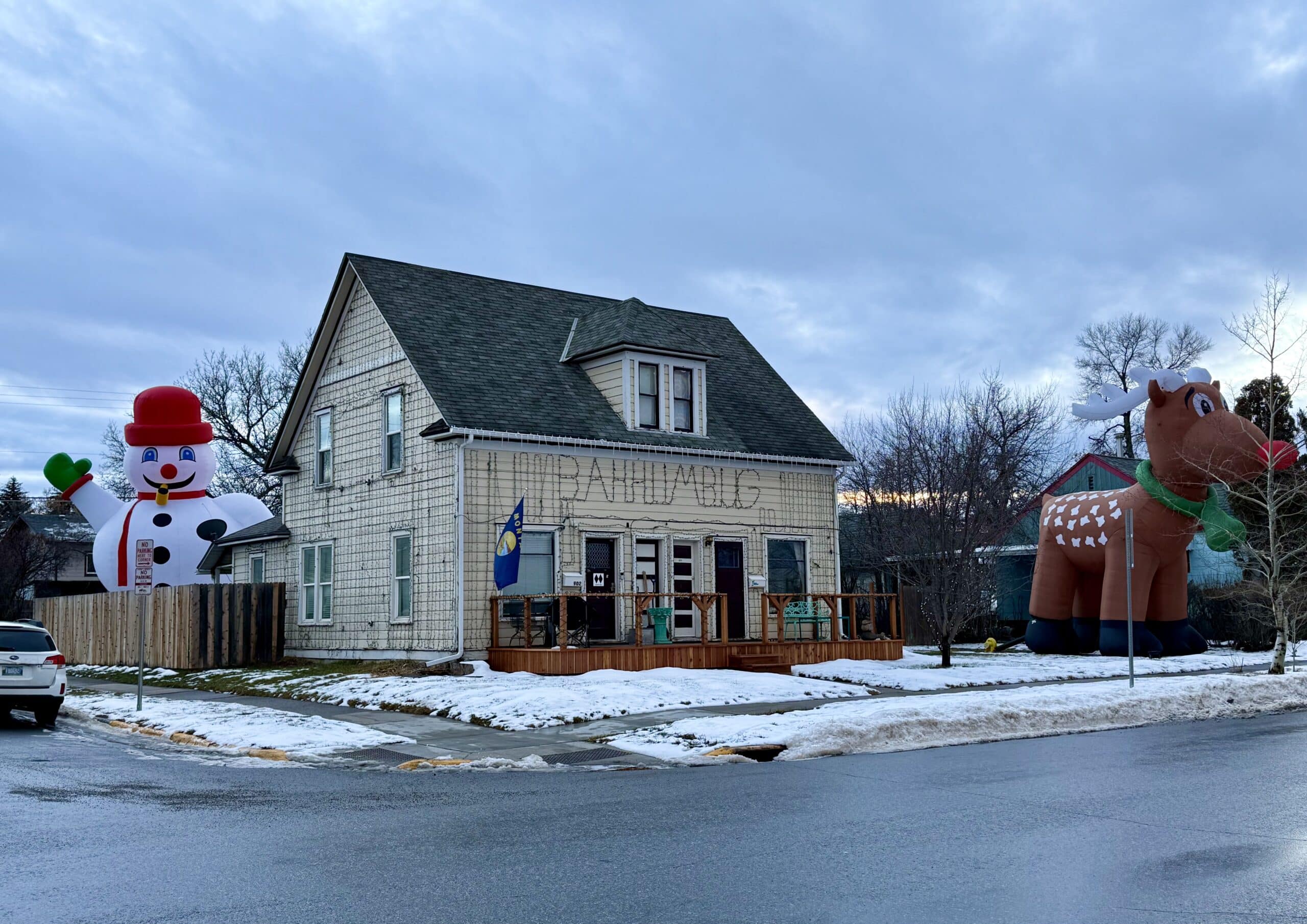
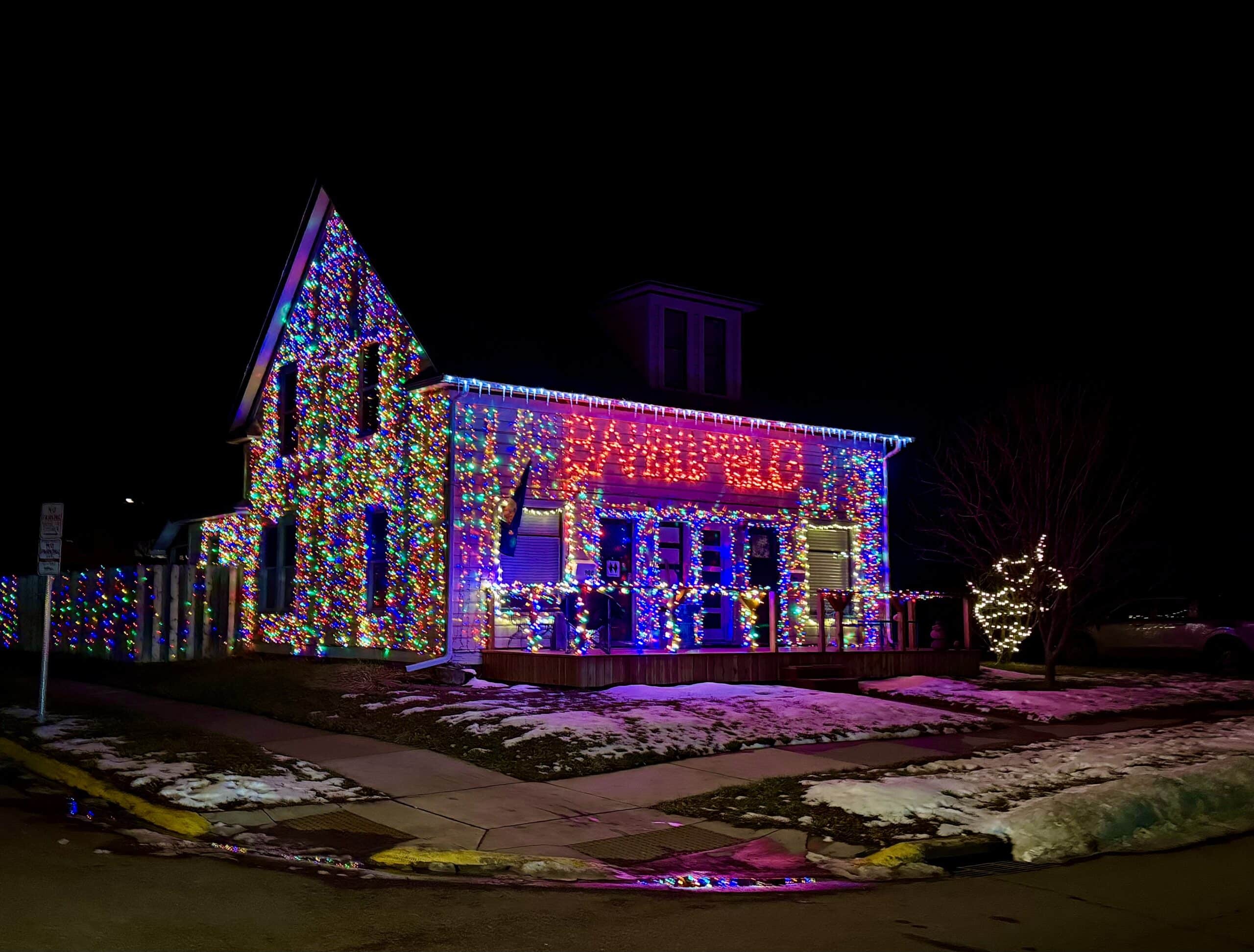
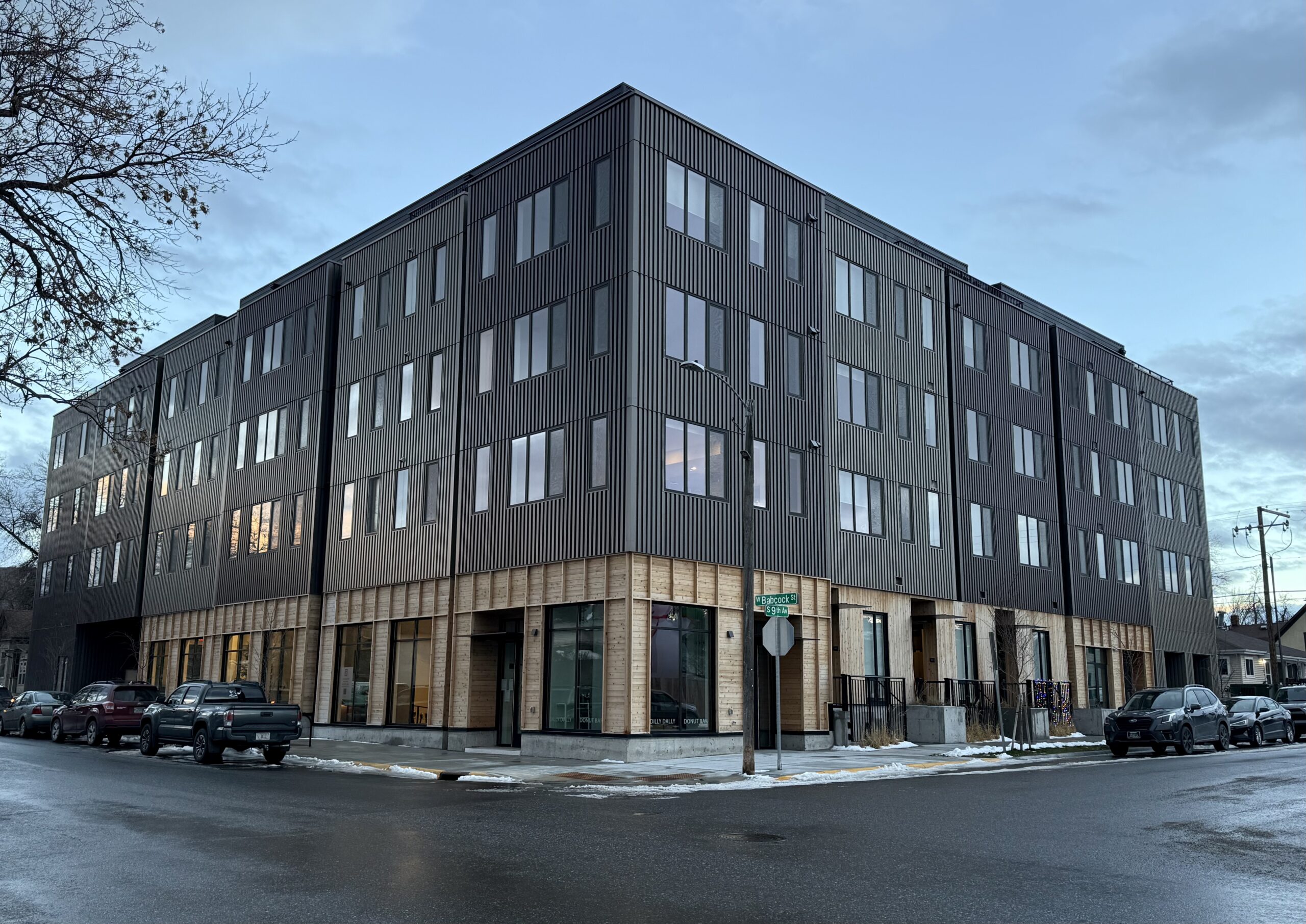
What speaks more to the lively spirit of a town? Above: two views taken from the same intersection near the Community Food-Coop in Bozeman. At top: to the southwest, the famous “BahHumbug House” that over the years has been home to local ski bums and and self-proclaimed dirtbags and at night sparkles with festive holiday lights and this year a blow up snow person and reindeer. Just across the street from BahHumbug at the southeast corner of the intersection is this four-story apartment that rose after lots holding residential homes were purchased and cleared. Called “The Cooper Bozeman,” the “luxury amenty” apartments cater to remote workers moving to Bozeman and boast of “stunning mountain views” which also block mountain views of neighbors. Units rent for between $2000 and $4800/month. What kind of architectural legacy is being created by structures like this? Photos by Todd Wilkinson
—————————————
TW: No one I know is unsympathetic to the lack of affordable housing, and let’s note it has not been caused by overregulation, nor has the free-market solved the issue. It’s clear the land rush mentality, which includes developers based in Big Sky bringing their methodology here, has focused on aggressive monetizing of square footage. And yet, de-regulation and relentless pushes to upzone are not appreciably fixing affordable housing but also destroying the character of historic neighborhoods once considered safe. You were elected on a platform of being an advocate for citizens who feel that developers have hijacked the conversation. What will your role be on the City Commission?
SWEENEY: Yes, growth has not only been embraced, but actually incentivized by the organization that is the City of Bozeman, at the cost of everything else.
TW: One of the problems with disorganized and unscrutinized urban planning, when unintended consequences are not factored into short-term decision making, is that mistakes can continue to mount. For example, when a high-rise apartment is allowed to invade a residential neighborhood, it changes the neighborhood forever. It negatively impacts the solace of adjacent property owners and they may stop maintaining their home or begin exiting the neighborhood one after another, with developers then scooping up those parcels and aspiring to put up more high rises. The City of Bozeman—which is to say, people representing the city—have allowed buildings to dwarf adjacent 19th century Victorian homes with no height transitions between old and new. The free-marketeers and libertarians tout “property rights” but what about citizens being protected against having your quality of life and neighborhood destroyed? It’s created adversarial relationships. These longtime residents never thought they’d have to fight to protect their quality of life.
SWEENEY: Decision makers all over the country are seduced by the seemingly simple solution of deregulation in order to spur housing creation, with false belief placed in something called “filtering,” a narrative crafted by the development industry itself.
—————————————
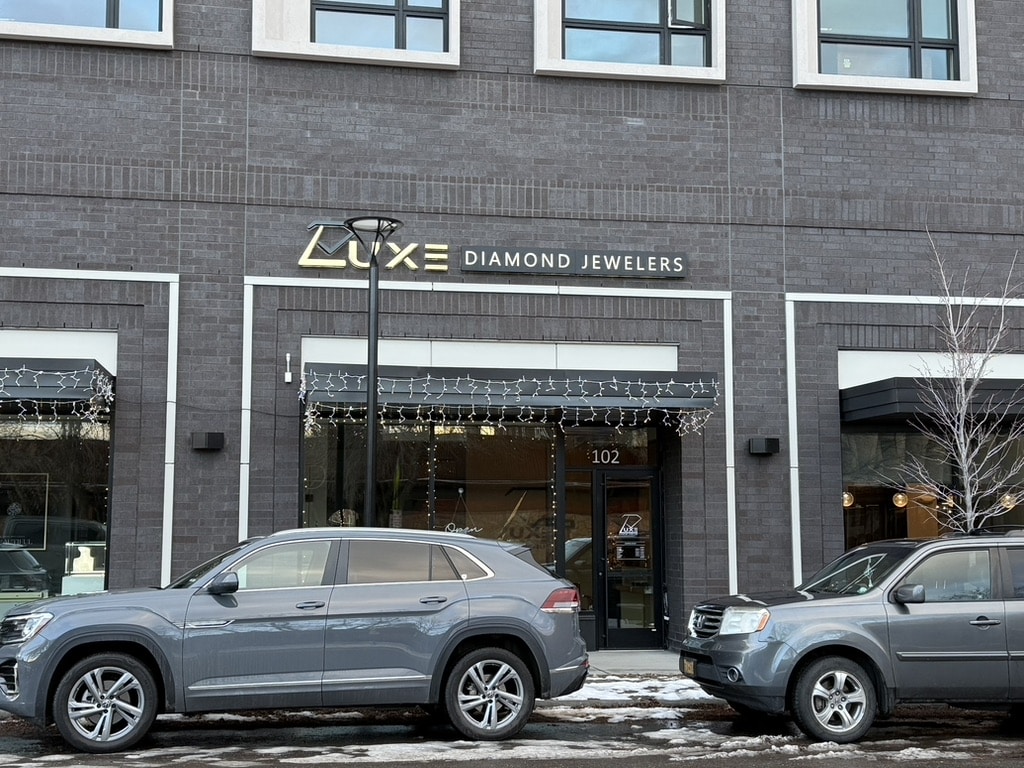
After a while, most of the new luxury apartments do not stand out as being noteworthy expressions of aesthetic taste that will be emulated, but they look pretty much the same. The new Freestone luxury apartment complex along Main Street, at top, has 121 units with a sign that says “Welcome to Modern Mountain Living.” Apartments range from $1775 for a 600-square-foot studio to $3000/month for a 1240-square foot two bedroom, with penthouses also available. In photo just above, this is the ground floor tenant of yet another multi-story luxury apartment complex in a formerly modest North Side neighborhood. It speaks to the potential material desires of tenants dwelling inside, not to the daily needs of locals.
—————————————
TW: Regarding the theory of “filtering,” the administration of Gov. Greg Gianforte and some state legislators have stood accused of proposing reckless anti-regulation policies to accommodate developers. But Democrats don’t have answers either. Many, blindly, keep pushing the narrative that it’s only a supply issue and they’ve been meek or weak in defending historic neighborhoods. I just read a story in The Aspen Timesabout efforts in Colorado to deal with mandates handed down by Gov. Jared Polis, a Democrat, and the legislature.
An expert named Margaret Bowes, who is executive director of the Colorado Association of Ski Towns and represents 30 different mountain communities, including Aspen, Steamboat Springs and Vail, warned that a one-size-fits all approach doesn’t work.
In the story, Bowes told the reporter, “Some of the bills…seemed to indicate that building more housing would bring down the cost of said housing, and that argument just doesn’t hold in resort areas. More housing without any affordability provision will just result in more investment properties, short-term rentals and second homes.” Bozeman and Jackson Hole may not be the same kind of “resort town” that Big Sky is, but Bowes’ overview applies here and there, too. How does this relate to “filtering?”
SWEENEY: Filtering is the idea that if you build luxury, people will upgrade, and free up less expensive housing units, making those more affordable units available to other people who want to upgrade. This may work in a closed system. In other words, a place with no net in-migration. But that has definitely not been the case in Bozeman.
The Federal Reserve in Berkeley among others have released reports that suggest filtering happens on the order of about 50 American years. Some of the housing we’re building now will be slums in 50 years, because it’s not quality, so yeah, I guess it’ll be more affordable. But is that what we really want?
In a place with low or no net in-migration, new housing actually won’t be built even at the top. Take the native communities in Montana, for example. There is a real housing shortage on many of our Reservations. But because there is not the profit potential, housing is not being built. It has nothing to do with regulation or filtering.
—————————————
So-called “new urban architecture” often detracts from, rather than blends in with the neighborhoods it invades and negatively impacts forever. And, often, community advocates say, the developers exploiting the neighborhoods don’t themselves live in them and likely, if they have any respect for neighborhood values and history, would never wish to live next to the structures they are proposing. Photos by Todd Wilkinson
—————————————
TW: Often, developers and realtors who are making a killing here claim to be concerned about working people—to the extent that the city needs low wage workers to clean hotel rooms, wait tables, and professionals who work for the fire department and teach in schools. In other words, treat them with dignity only if they are a useable human resource. What’s forgotten, or underestimated, is how working class people are also the backbone of volunteerism—helping the elderly, coaching sports teams, showing up to make the Sweet Pea Festival happen and so many other things.
With regard to Indian Country, if developers were really sincere about affordable housing, they could be demonstrating their magnanimous spirit there, but, for the most part, they’re not. They’re building condos to sell for $1 million in Bozeman. A few years ago, my friend, the late Tim Crawford who was a major supporter of HRDC, built affordable housing in Belgrade near Bozeman just to prove true affordable housing could be done, within budget, though profit margins were lower. Before he passed in 2022, he said government regulation isn’t preventing quality affordable housing from being built, greed is.
SWEENEY: Bozeman is engaging in the type of capital “A” Affordable housing that has become an extremely profitable industry through the use of economic constructs like the Low Income Housing Tax Credit, which actually incentivizes projects to become more expensive so that the tax credits are more valuable for sale on the tax credit market. Plus, Tax Increment Financing guarantees a developer a higher rate of return to the point that in some places nothing will be built now without a TIF gift from the public to the private developer. When I say it’s a whole other can of worms, I mean that it’s an incredibly complicated thing. Bozeman is doing this, just like the rest of the country, and it is giving into or fueling the non-profit industrial complex which actually amenitizes poverty.
—————————————
There are places on the North Side of Bozeman where density and more affordable two-story housing has been built without coming at an imposing expense and impact to historic neighborhoods. Photo by Todd Wilkinson
—————————————
TW: That sounds like we’re subsidizing development. It’s important to note that other parts of the country have government involvement in providing a lot more subsidized housing allowing people to gain equity, and they have rent control and better renter’s rights, and higher impact fees on things like big box stores to generate revenue. There’s also a false assertion here that luxury condos in Bozeman are preventing sprawl in the countryside, but there’s no evidence of that. It certainly won’t happen in the absence of Gallatin County implementing enforceable zoning that protects ag lands, wildlife habitat and open space. Experts in land use planning say we’re witnessing the degradation of natural lands and historic neighborhoods simultaneously. The source of both is anti-regulatory, anti-government proponents of a laissez-faire free market
SWEENEY: If people are concerned about sprawl, they have to recognize that luxury density in Bozeman doesn’t prevent it. Kardashian condos do not prevent the next unaffordable subdivision. If we want to preserve our agricultural heritage and our natural environment, we have to turn to zoning, regulations, and conservation easements.
TW: You and experts that the Better Bozeman Coalition have brought in to give public talks have burst the bubble of another common myth—that we’ll build our way out of the jam we’re in. And that we can have it all—prosperity for all, sprawl, and maintain our sense of place. You say there isn’t a supply problem. Instead there is a vacancy rate problem tied to affordability in Bozeman. Luxury units driven by market prices are sitting empty while residents lose housing.
SWEENEY: If we’re concerned about affordability, we have to increase non-market housing for rent and ownership, because market rate housing alone won’t do it for us. It’s part of the equation, but it is not the solution. As we have seen in the last decade, where Bozeman has built housing at one of the fastest rates in the country, simply building more doesn’t give us affordability into the future. We also need time for wages to catch up with the cost of living. Hopefully with the projected slower growth rate we might have time for that to happen. It’s also my belief that we should be encouraging our local, small manufacturing industry, and startups, rather than just courting the hospitality and service industries.
TW: I’ve lived in Bozeman for nearly four decades and raised two now grown kids. You’re the first candidate in recent years who regularly touts the interconnection between healthy natural lands, Bozeman’s high profile role in Greater Yellowstone, how it shapes our community character and identity, and, in turn, how all of that translates into a higher quality of life. You make the links tangible. What kind of a voice will you be on the Bozeman City Commission?
SWEENEY: My role on the commission—well, I’ve obviously been thinking a lot about this since the election. I’ve heard so many people express dissatisfaction with the status quo, and yet, when we had a chance to elect up to three new members, I am the only new face, the only new voice. I think my role, when the commission examines policy, will be to constantly ask the question, “Who benefits?” I hope to bring a sense of stewardship to the city commission. Stewardship of our heritage. Cultural, architectural, and environmental heritage. Something we say at the Better Bozeman Coalition is, “We can meet the challenges of our growth without destroying the things that make Bozeman unique.”
“I think my role, when the commission examines policy, will be to constantly ask the question, ‘Who benefits?’ I hope to bring a sense of stewardship to the city commission. Stewardship of our heritage. Cultural, architectural, and environmental heritage. Something we say at the Better Bozeman Coalition is, ‘We can meet the challenges of our growth without destroying the things that make Bozeman unique.'”
—Alison Sweeney
TW: Communities across the country and across the Greater Yellowstone Ecosystem and Rocky Mountains are all struggling with an affordable housing crises. If we’re sincere about finding a solution, it seems the only places where some progress has been made is through government involvement in providing subsidies to working class people who rent or want to buy and move up the equity ladder. It also seems that the singular argument, whose assertions are unproven, is that market-driven supply will fix the mess but lacking in that conversation is the impact on community character, landscape in the city and county, wildlife, parking etc. In addition, there’s the very real possibility we may never solve the affordability disparity as an inward flow of newcomers with money continues to surge. Are we chasing an answer for an unsolvable wicked problem? Your thoughts?
SWEENEY. Well, we definitely know market driven supply will not address inequality. It mostly results in expensive housing in desirable markets, not the much needed shelter from which the middle class can build a life. And as you say, it often destroys landscapes, natural resources, and community character.
We are living in a time of late stage capitalism, where all of the economic wealth is being funneled to the top in a crazy cycle of speculation and collapse. The last time we found ourselves in this situation as a country, was at the end of the 19th century. It was called the Gilded Age. That led to the labor movement in which workers unionized in order to advocate for their interests and enjoy more of the productivity of their efforts. We are now seeing tenants unions across the country forming, in order to advocate for their collective interests, because their productivity is being extracted by corporate landlords through exorbitant rents manipulated by algorithms.
TW: One of the arguments, or one might call it excuses, towns and counties routinely use for not demonstrating better leadership and accountability on growth issues is that the state legislatures have hamstrung their ability to do the right thing. But it needs to be pointed out that towns and counties largely refrained from adopting ecologically-minded planning and zoning long before the legislature started carrying out their radical anti-regulation agendas.
SWEENEY: The Montana state legislature is actually one of the biggest barriers to the larger cities in Montana regulating their own growth and affordability. Montana outlaws rent control, inclusionary zoning, and a host of other tools. The state wants us to build build build, because they get a lot of tax revenue from our growth. It’s my belief that we as a city need to build municipally-owned mixed-income housing for rent, that cross subsidizes tenants from different economic backgrounds, while covering the cost of construction, maintenance, and taxes. mixed income communities are the most vibrant and healthy communities. We also need to create a public developer that builds and sells housing at cost with deed restrictions for permanent affordability. These are really big, visionary goals, I know. If we manage to do both of these things, we might be able to keep more of our working class living in Bozeman in a generation.
TW: Growth has been described by some planning experts as a kind of Ponzi scheme. New growth must constantly be approved to generate tax revenue to foot the bill for previous growth that isn’t paying for itself. What else is on your radar?
SWEENEY: You’ve mentioned parking. The state legislature took away the ability for Bozeman to require parking in most housing developments. This means we have to regulate density according to infrastructure capacity, because we have the highest rate of car ownership in the country. We cannot increase density in areas where there is a very high rate of on-street parking utilization.
TW: Some high-profile developers in earlier years, in trying to win approval from the city commission and not have to create parking spaces, said they were providing free bicycles to their tenants and that it would result in fewer cars on the road. That may be true on the island of Manhattan in New York, but it’s an absurd premise. No one is riding their bikes with skis on a rack in January a dozen miles to a trailhead or to a ski resort.
SWEENEY: Most Bozeman residents have cars because you can’t take the bus to go fishing, hunting, snowmobiling, mountain biking, hiking or many of the other outdoor activities people like to do here. There is public transportation to the ski hills and on routes in town, but that’s it. A parent is also not going to walk or bike their kids in the winter at frostbite-temperatures when it’s snowing sideways. I’ve been very honest in communicating to people that I believe we will move to electric vehicles before we abandoned personal vehicles entirely.
—————————————
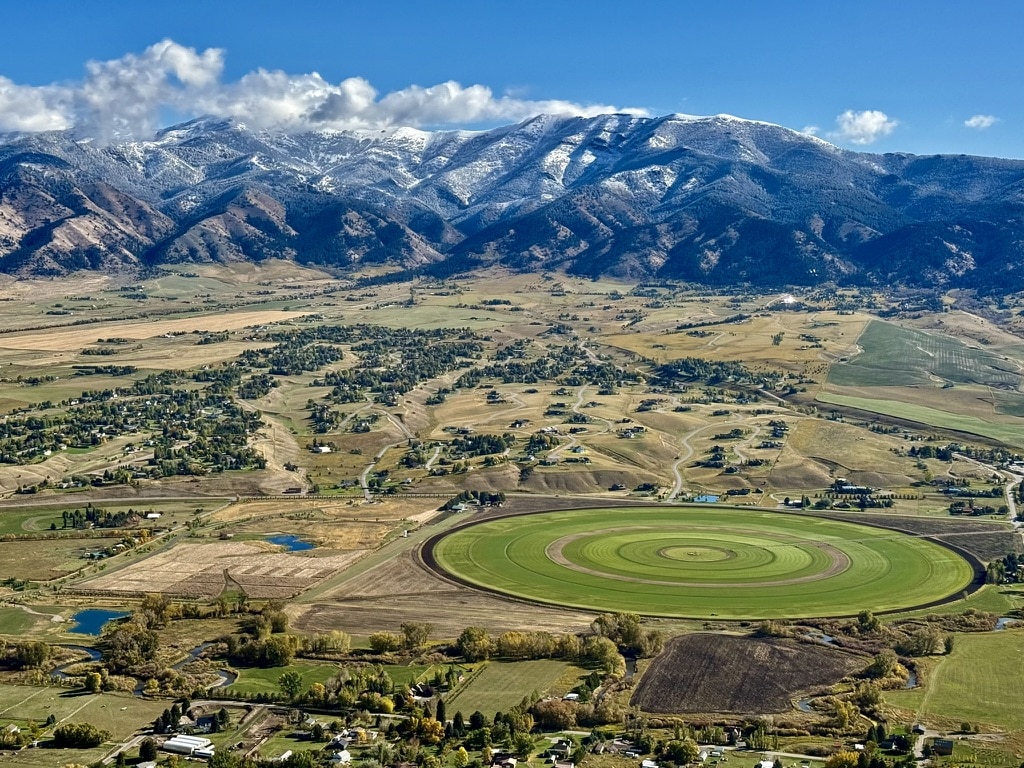
The flanks of the Bridger Mountains north of Bozeman where there’s a bull’s-eye on remaining ag lands as sprawl continue to proliferate, displacing wildlife and erasing the valley’s rural agrarian character. Despite what developers in Bozeman say, there’s little evidence to support their contention that more luxury apartments is causing sprawl to abate in rural Gallatin County. Photo by Todd Wilkinson
—————————————
TW: Personally, there’s something spooky about Waymos. But, moving along, you’ve publicly made a stronger case for protecting our wild and pastoral countryside than many paid environmentalists have—people who work for major groups here but who have been reluctant or too afraid to talk about the need for enforceable land use planning, zoning and limits, which, it should be noted, exist in most other corners of the country. The record shows that voluntary conservation is not keeping pace with the amount of land being lost to sprawl.
SWEENEY: As far as protecting our natural environment as we grow, that is a bit more in our hands. But we have to decide we want it! I will advocate for an update to our Growth Policy, but I need two other commissioners to agree. Bozeman’s City Commission operates on a majority. You need three commissioners to get anything done. According to state law, cities must be guided by their Growth Policy, which will now be called the Land Use Plan. Bozeman has had one for a while, but it’s a very pro-density document in the false hope that density alone will somehow provide affordability and save our agricultural farmland and wildlife corridors.
“…I think most of our mayors, particularly in the last decade, have been focused on growing Bozeman into a high density big city like Salt Lake, Boise, Denver. Current city plans talk about the area between Belgrade, Four Corners, and Bozeman having 400,000 people in it! For me that’s a nightmare, but… a lot of people in that sort of inner circle I mentioned before think that would lead to a lot of economic prosperity and be good for the population overall.”
—Alison Sweeney
TW: And there’s the matter of what, or whom, serves as the consciousness of environmental decision making. Not only do the city of Bozeman and Gallatin County not have a trained permanent ecologist on staff—a person who is able to operate without distraction or pressure applied by planning departments who often are sympathetic to developers—but most other locales in Greater Yellowstone don’t either. Thus, the most consequent decisions shaping Greater Yellowstone—stewardship of private land—is not informed by coherent scientific expertise. And there’s a parallel. In addition, in Bozeman, a previous city manager carried out actions that markedly weakened the ability of the city’s Historic Preservation Advisory Board to review proposed developments deemed harmful to historic neighborhoods. In other words, the city’s commitment to upholding historic preservation has arguably gone backwards, even as the value of historic preservation has risen.
SWEENEY: Consultants recently recommended that we add a historic preservation chapter to our Land Use Plan. We don’t currently have one. No wonder our city pursues density at all costs.
I would like to title a new chapter, Heritage Conservation. In this new chapter, we can identify fundamental resources which include cultural resources like neighborhoods and legacy businesses, natural resources like landscapes, waterways, wildlife corridors, view sheds, and historical resources like archaeological sites, specific buildings connected with early Bozeman, agricultural settlements, etc. if we ascribe value to these fundamental resources in our Land Use Plan, we can make policy to safeguard them as we grow.
TW: You’re aware of this but I find it stunning that not a single Bozeman mayor in their state of the city address has ever touted and prominently elaborated upon Bozeman’s status as the main gateway to the only ecosystem that has our first national park at its heart and is home to all of the major wildlife species here in 1491, before Europeans arrived on the continent. The rhetoric instead frames Bozeman as just any other livable place, but it’s not. When people fly into Nairobi they’re reminded how it’s a gateway to the wildlife-rich Serengeti. Why hasn’t Bozeman fully embraced the distinction it has and imparted a message to residents that we all have a shared responsibility to safeguard an ecosystem that is rare, fragile and world-renowned?
SWEENEY: That is a terrific question for which I do not have an answer. I haven’t been paying attention at this level for long enough to say for sure, but I think most of our mayors, particularly in the last decade, have been focused on growing Bozeman into a high density big city like Salt Lake, Boise, Denver. Current city plans talk about the area between Belgrade, Four Corners, and Bozeman having 400,000 people in it! For me that’s a nightmare, but… a lot of people in that sort of inner circle I mentioned before think that would lead to a lot of economic prosperity and be good for the population overall.
—————————————
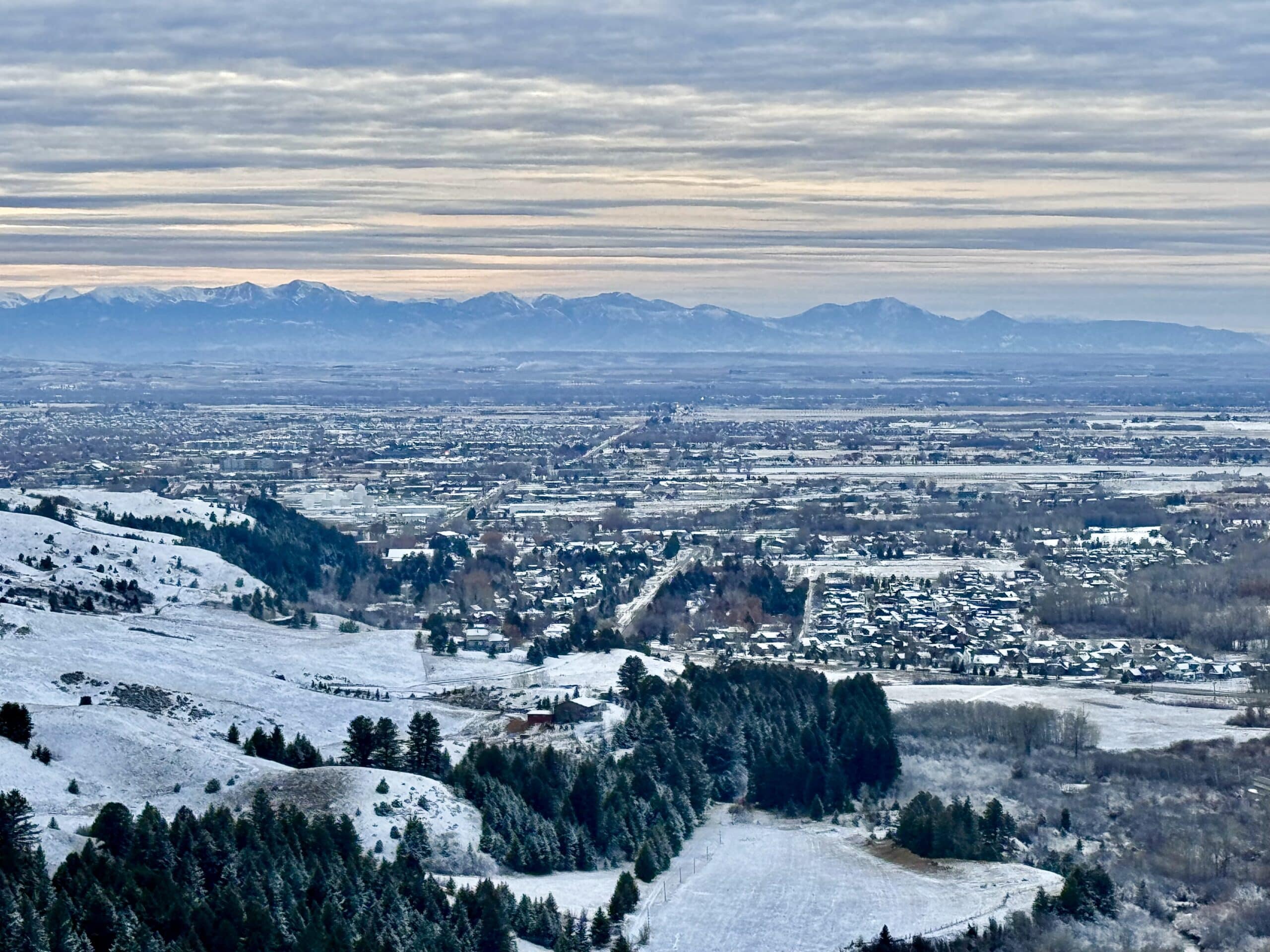
The sanctity of both historic neighborhoods and Greater Bozeman’s special sense of nature are being squeezed by unfounded claims that density will solve the affordable housing problems and prevent sprawl in the countryside, and radical laws passed by the state legislature and Montana Gov. Greg Gianforte that hobble the ability of towns and counties in Montana to adopt sensible land use planning and zoning. As critics say, not only is the free market the source of the problems but the anti-regulatory push by opportunistic developers will destroy the character of the Gallatin, Madison and Paradise valleys. Photo of Bozeman looking west toward the Tobacco Roots by Kelly Mieszkalski (kellymieszkalski.com)
—————————————
TW: Yes, it’s a strange perception, it seems, that we have to grow big to become a legitimate place on the map and its pursued without any reflection on the fact that people want to come here because our natural sense of place is different from everywhere else where wildlife, wildness, wild rivers and pastoral landscapes have been lost to either myopic or ignorant thinking.
SWEENEY: I hear people talk about Bozeman becoming “a regionally important city.” Well, what does that mean? I think they’re talking economically, not environmentally. Though the two things should be considered in tandem more often. With the new era of extraction being focused on quality of life and access to natural “amenities“ the two are definitely linked! We have a new mayor taking the reigns, Joey Morrison, who is young and from Miles City. He may be different.
TW: If he does, he’ll make a name for himself. You’ve traveled around the world for your jewelry business. What are the things you love most about returning to Bozeman, the Gallatin Valley and Greater Yellowstone Ecosystem?
SWEENEY: I’ve traveled to over 20 countries, maybe as many as 25. Since my husband and I both own our own businesses we used to travel every winter for about two months at a time—not for business, that’s US based. That type of travel stopped for me in 2023 with the City’s proposed UDC update and the formation of the Better Bozeman Coalition, and now because I will serve four years on the city commission. That is not conducive to two months travel every winter. I love other cultures, foods, history, traditions, methods of craftsmanship etc. I did study metal engraving in both Thailand and Morocco.
But I love this place. It’s home. I love our culture and history as well. When I visit the graves of my pioneer ancestors, I feel that keen sense of duty and stewardship to preserve the link with the past, so that future generations may know our shared history. When I spend time with my Crow family, or in my garden, or hunting, or tending my bees, I feel that fundamental truth that all of our prosperity and blessings come from our great mother, the Earth, and all creatures upon it.
It’s time to devote some of my energy, productivity, and love, to safeguarding this place as we grow. I’ve seen places that have been loved to death, and it is not a fate I wish for Bozeman, the Gallatin Valley, or the Greater Yellowstone Ecosystem.
“…I love this place. It’s home. I love our culture and history as well. When I visit the graves of my pioneer ancestors, I feel that keen sense of duty and stewardship to preserve the link with the past, so that future generations may know our shared history. When I spend time with my Crow family, or in my garden, or hunting, or tending my bees, I feel that fundamental truth that all of our prosperity and blessings come from our great mother, the Earth, and all creatures upon it.”
—Alison Sweeney
TW: What’s been important in your own evolution of thinking about real stewardship and co-existence between nature and human communities?
SWEENEY: When you see how other places do it, you recognize the things that Bozeman has done well and the things Bozeman could do better. First of all, I have to say we [the US] have the best plumbing in the world! I’m not just saying that because I’ve done plumbing work, we really have the best standards and equipment. So I like coming home to my plumbing, ha!
In all seriousness though, we also have the best drinking water! Maybe the only other place I’ve been with comparable drinking water from the tap is Scotland. Bozeman is currently working on updating the integrated water resources plan (IWRP) and the focus has been how to find more water to sustain more growth. Personally, I hope we never adulterate our beautiful snowmelt surface water supply with potentially contaminated ground water.
TW: Hunting, for sustenance and as a way of connecting with the land, has been part of your family history. How has that informed your thinking?
SWEENEY: The fact that we have wild animal populations that will support a managed system of hunting is reasonably unique in the world. And that doesn’t happen by accident. That happens because of habitat conservation, and hunters are actually a large part of that conservation effort. I grew up in a hunting family, and normally hunt every year. This year I was too busy with the election, but plan to go out again next year. Antelope and deer. Elk are too much work, ha ha. I’m out to fill the freezer, not put heads on the wall.
“Something Bozeman has not done well as we’ve grown is protect our sense of place. We need more agricultural land in conservation easements. We need stronger historic preservation to protect our neighborhoods from speculative development that destroys character and heritage. I have high hopes for the landmark program that will take form this year. We need wilderness policy that protects our wildlife from the insatiable appetite of the recreational industrial complex. And we need more new neighborhoods that create affordable places for people to build community and a life, not more soul-crushing boxes to store humans in.”
—Alison Sweeney
TW: You’re a believer that our ability to savor the night sky is reflected in how well we approach the ground we’re standing on, and that Dark Skies are one of the greatest assets of the Northern Rockies that we take for granted. Terrestrial light pollution, however, does them in.
SWEENEY: As I travel across the country to different art shows in big cities I always appreciate coming home to the vast open space of Montana and the Gallatin Valley, though that is disappearing rapidly. I remember as a kid driving out to the Hot Springs in Gallatin Gateway, and there were no lights beyond the Gallatin Valley Mall.
I hope we can implement some more Dark Sky regulations in our municipal lighting code in the future. Though the county is a big player in open space, and dark skies. The sky and mountain views from almost anywhere in town are what truly make me feel at home. They are a major component of how I identify with this place. Those are disappearing for average people as well, especially near our historic downtown, where the canyons of the north side blot out the sun and sky for high density luxury condos and hotels. Soon only the wealthy will enjoy the views we have all shared, unless we take ownership of our viewshed.
TW: Again, you positioned yourself as a commonsense alternative to the status quo boomtown mentality but you really think it’s about returning to a center based on community values shaped by Bozeman’s uniqueness on the planet. It’s reminiscent of the kind of thinking of former Missoula Mayor Dan Kemmis who wrote books and essays about how protecting sense of place was a high civic virtue.
SWEENEY: Something Bozeman has not done well as we’ve grown is protect our sense of place. We need more agricultural land in conservation easements. We need stronger historic preservation to protect our neighborhoods from speculative development that destroys character and heritage. I have high hopes for the landmark program that will take form this year. We need wilderness policy that protects our wildlife from the insatiable appetite of the recreational industrial complex. And we need more new neighborhoods that create affordable places for people to build community and a life, not more soul-crushing boxes to store humans in.
I am under no illusion that all of this is possible. My father always says, “You can have anything you want, but you can’t have everything you want.” I also believe that if we each do one thing, we do a lot. Bozeman is full of intelligent, community minded people. We can do hard things, if we put our mind to it, if we give each other a little grace, and if we prioritize evidence over national narratives. If we do right by our community and this place, “Who benefits?“
—————————————
NOTE: Below are comments submitted by the Bozeman Hotel Owners Association (created by owners of the downtown Bozeman and Baxter hotel buildings) to the City of Bozeman on proposed loosening of height restrictions on buildings downtown:
Todd Wilkinson, co-founder of Yellowstonian, has been an award-winning American journalist for almost 40 years, known foremost for his writing about the environment and his knowledge of the Greater Yellowstone Ecosystem. In addition to his books on topics ranging from scientific whistleblowers and Ted Turner to Grizzly 399 (that book featuring images by photographer Tom Mangelsen) and coffee table volumes on a number of prominent fine artists, Wilkinson has written for National Geographic, The Guardian, The Washington Post, Christian Science Monitor and many other publications. He started his career as a violent crime reporter with the City News Bureau of Chicago. He is also a writing fellow of the Northern Rockies Conservation Cooperative based in Jackson Hole.
Black bears in the Rockies, Dorothy Bradley writes, are turning up everywhere in mountain towns, the result of failed berry crops. And we all know what the cause of it is, but why can't people speak the truth?
Brad Orsted says that forests uninvaded by tire tracks, logging trucks and throttling wheels opened up new avenues of thinking. And it's foolhardy, he writes, to squander them now
New film "Preserved” by Ben Clark highlights what late Bozeman media mogul/bison rancher sought with re-wilding and landscape restoration. Screening at Ellen Theatre Friday, Aug. 28 followed by panel discussion. Public invited, tickets required