by Todd Wilkinson
American-style wildlife conservation, distinct in how it continues to evolve, has been emulated around the modern world. There’s a reason why the Greater Yellowstone is considered the cradle of both the ideal of paying forward healthy landscapes to the future, and its application.
Many foundational aspects of it were born here:
The first national park—Yellowstone—representing a seed for what has grown into a vision of public land protection we know today;
There’s also the first national forest (the Shoshone);
And, enactment by Congress of the Lacy Act to punish poachers but it was first conceived to protect the last Yellowstone bison from local poachers;
And creation of special wildlife refuges (the National Elk Refuge for wapiti, Red Rock Lakes to protect trumpeter swans and Henry’s )
There’s the momentous wildlife research and ongoing recovery of imperiled species involving grizzlies, wolves, wolverines, wild trout, bighorn sheep, lots of birds and others;
There’s the forerunning thinking about Wilderness as envisioned by the Muries in Jackson Hole Ellers Koch in Bozeman and further north, Bob Marshall;
There’s the genesis of the national wild and scenic river movement as envisioned by Frank and John Craighead who also conducted grizzly bear research and helped initiate modern ecological thinking;
There’s the invention and implementation of conservation easements to reward to private land protectors, with one of the boldest illustrations in the country being ranches in the Madison Valley and Ted Turner’s Flying D Ranch;
And, there’s the more recent dramatic understanding of terrestrial wildlife movements thanks to the Wyoming Migration Initiative, University of Wyoming and USGS and advancements in designing bridges across roadkill laden highways owed to research carried out by Greater Yellowstone-based Center for Large Landscape Conservation and the Western Transportation Institute at Montana State.
Many more examples contribute to the puzzle of amazing pieces. One more truly momentous idea borne in Greater Yellowstone, yet implemented nearby on the eastern horizon and succeeding against huge odds is American Prairie. The organization’s founder, Sean Gerrity, is a native Montanan who had the audacity to dream big. Partnering a quarter century ago with a scientist, ecologist Curt Freese, it is an American touchstone for restoration.
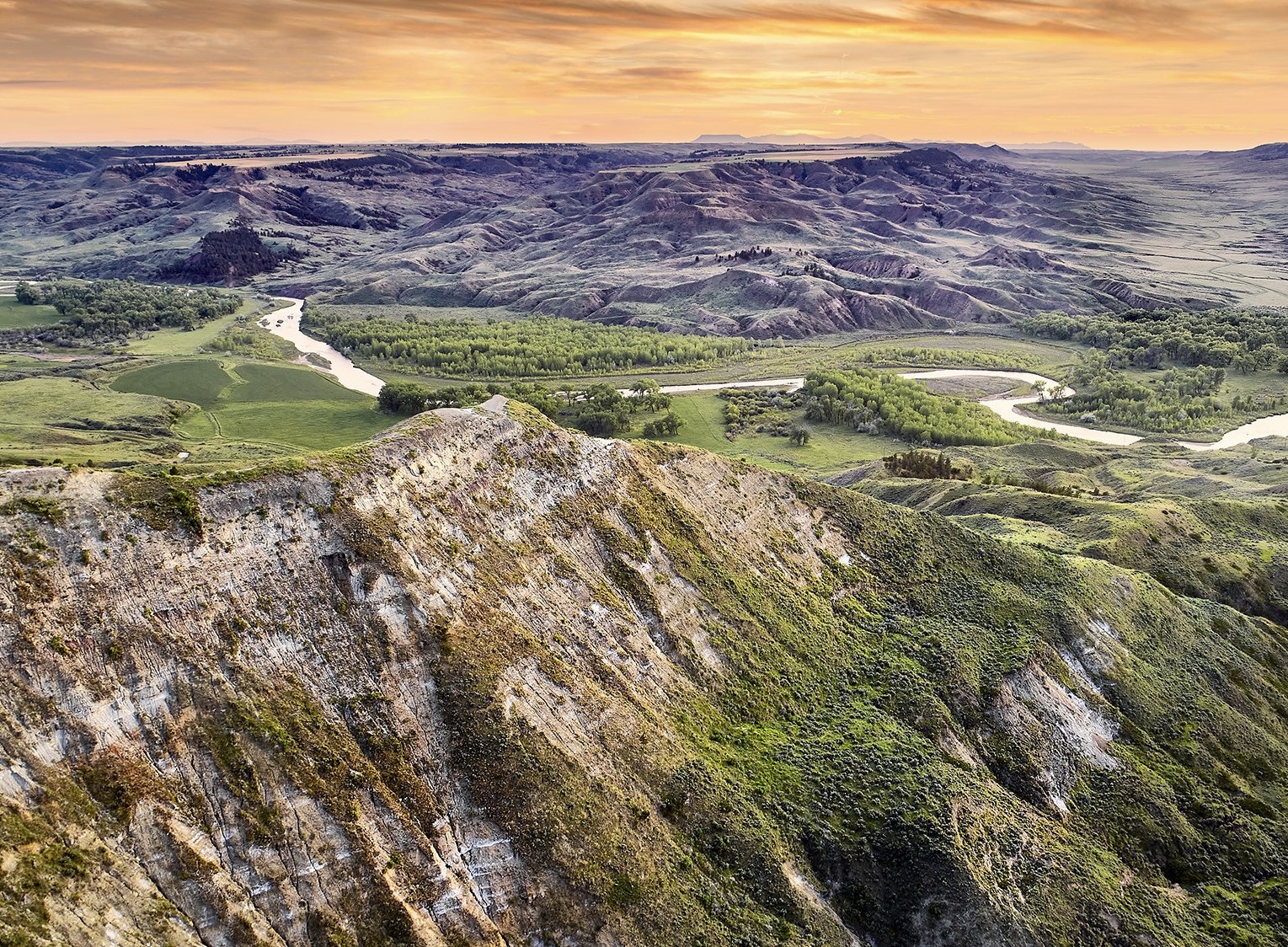
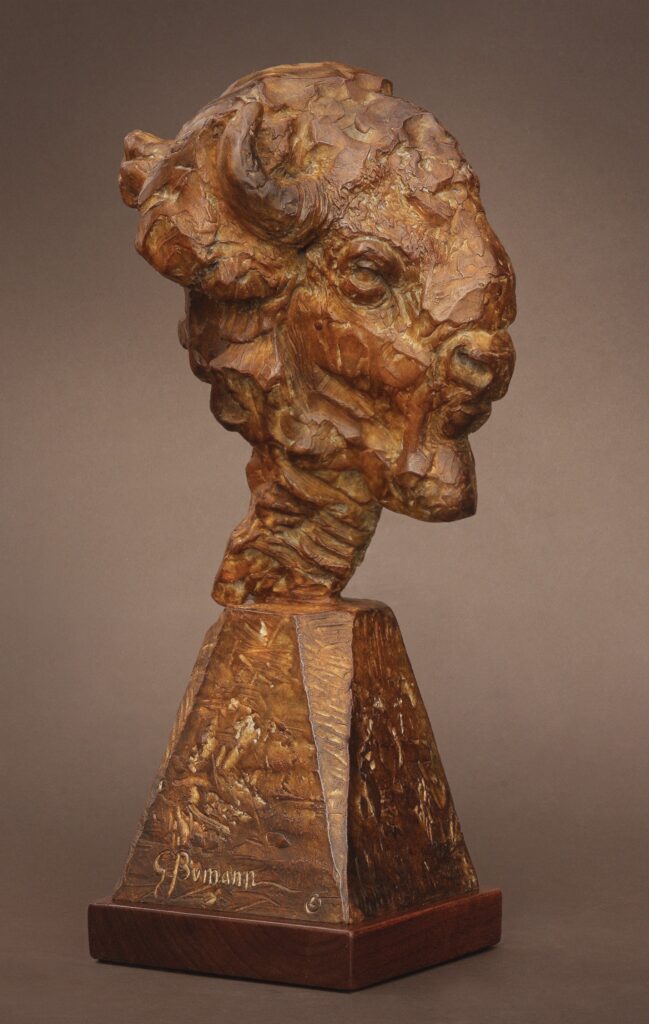
What once seemed like a boulder being pushed up a hill caught traction and has snowballed into a global reference point for re-wilding. Located in east-central Montana and headquartered in Lewistown near the Upper Missouri River, American Prairie is anchored by efforts to bring back the ecological function of three keystone habitat creators: bison, prairie dogs, and beaver.
American Prairie aims to restore a swath of the largest biome in the Lower 48 that, when completed, years from now at 3.5 million acres, will be 1.5 times larger than Yellowstone Park and foster the recovery of hundreds of plant and animal species.
Aldo Leopold famously wrote: “One of the penalties of an ecological education is that one lives alone in a world of wounds.” American Prairie has risen as an example of healing.
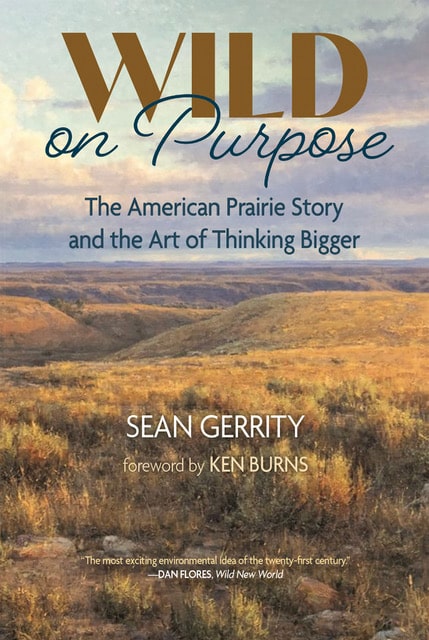
Gerrity has just written an inspiring memoir titled Wild On Purpose: The American Prairie Story and the Art of Thinking Bigger.”
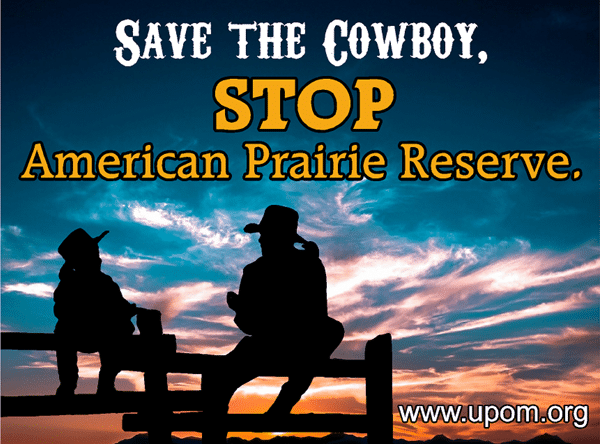
American Prairie has indeed encountered resistance, as in the expression of “Save The Cowboy: Stop American Prairie Reserve” which in its rhetoric bears a striking resemblance to the slogans of neo-Sagebrush Rebels who tried to halt the establishment of Jackson Hole National Monument a century ago and subsequently Grand Teton National Park.
The only problem is that when fact-checking is required, the most formidable existential threats facing cowboys on the prairie are not conservation, but market forces affecting commodities, including the impetuous implementation of tariffs, rising costs of production, the challenges of raising beef and crops on landscapes becoming even more arid, technology reducing human laborors, the rising average age of farmers and ranchers and elders seeing their kids leave and not return, and an increasingly urban American populace that doesn’t seem give a damn about the hardships of people growing their food. There’s genuine heartache on the prairie and the hosts of AM radio love to concoct scapegoats and conspiracies, be they American Prairie, bison, wolves, communists flying in black UN helicopters and plotting to rob property owners of their liberty or illegal aliens.
Riling up local people using fear mongering might serve short-term interests of members of Congress, governors seeking election and groups with agendas that aren’t fully transparent or attentive to facts, but the rhetoric has done nothing to change the trajectory of the macro issues above. Honest discussion is the only way forward and hard-working citizens of America deserve nothing less from our leaders.
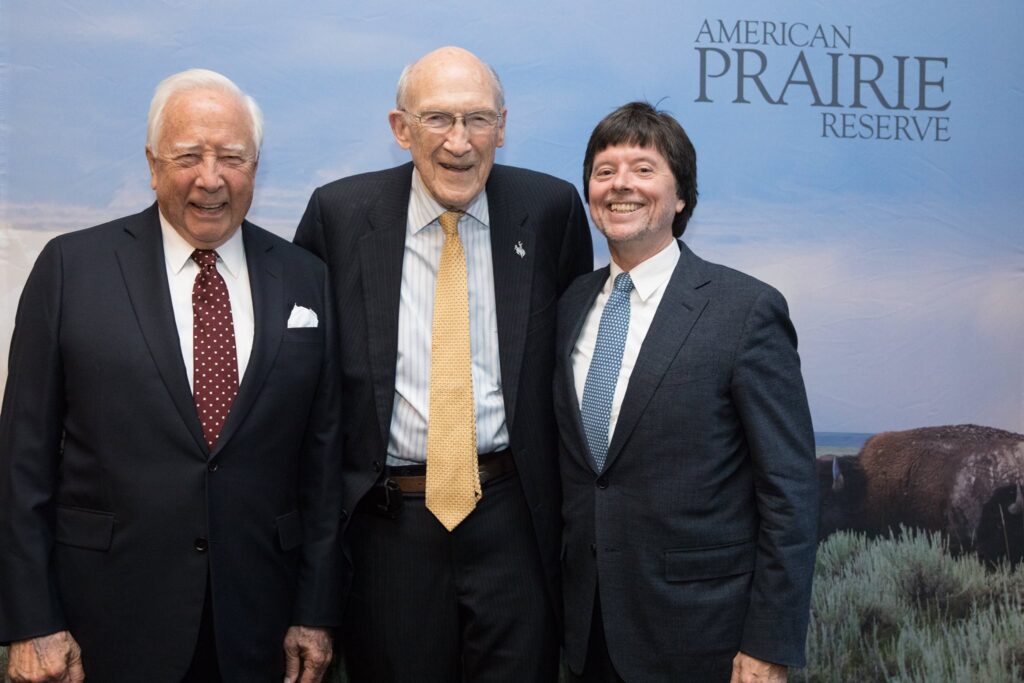
Gerrity’s book pays heed to those challenges with a tone of empathy, and he presents conservation—and promoting better co-existence between agriculture and nature—with unflagging optimism. Historian and filmmaker Ken Burns, who wrote a foreword to Gerrity’s book, writes: “I’ve always believed that one of the many factors that contribute to America’s uniqueness is our long history of people pursuing exciting, inspiring and lofty ideas, and then, through ingenuity and perseverance, bringing them to fruition in ways that strengthen us as a nation.”
Yes, rallying around the protection of Nature, that delivers compounding dividends at every turn, can be an example of that.
The following conversation may open your eyes and change the way you think about what’s still possible is saving an important piece of America’s shared national natural heritage, which does not connections to the Greater Yellowstone Ecosystem.
The Yellowstonian Interview With Sean Gerrity, Co-Founder of American Prairie
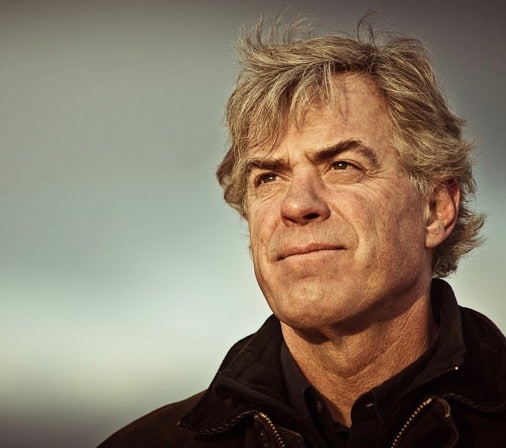
Todd Wilkinson: American Prairie is a flashpoint. It reminds me of the history of both Yellowstone and Grand Teton national parks whose creations were fought by locals who claimed they would destroy the economy and were a conspiracy against private property rights yet in hindsight they’re regarded as actions of courage and profound foresight.
American Prairie has been praised as a genuine “big idea” in modern conservation. Among your biggest fans is historian and filmmaker Ken Burns, after whom the organization has named an award given to dauntless visionary thinkers. Do you remember when exactly the concept behind began to take hold in your imagination and what were its catalysts?
Sean Gerrity: In the late fall of 2000, while returning from a four-day road trip through a big grassland portion of northeastern Montana with four friends, one of them, ecologist Steve Forrest, told me of a nascent idea to create a large wildlife reserve along the lines of the Serengeti. I was skeptical to put it mildly.
Some weeks later he introduced me to Curt Freese who had been hired by World Wildlife Fund-US to investigate a variety of organization and financial models to somehow move forward on such an idea. Curt, who had relocated to Bozeman, invited me to travel with him to attend various meetings where people were discussing possible approaches to executing a real plan to do it.
“I remember feeling such a sense of relief when we finally managed to acquire our first 22,000 acres of private and leased lands. 48 acquisitions later, there is now roughly 606,000 acres of total habitat. That’s about 950 square miles on which to enhance wild species abundance and visitation opportunities for the general public; and next year and the year after, there will be more.”
—Sean Gerrity
At first it seemed too far-fetched to me, but over the course of some months and lots of conversations, the project began to make more and more sense as a workable possibility. But I had to start by first better understanding what used to be there, wildlife-wise, until very recently when it was all wiped out. Then I had to learn from Curt and others about what conditions would need to be in place to have any chance of having that wildlife back. Then I had to try to imagine how long it all might take, what it would cost and what sort of an organization would need to be formed to drive it forward over the long term. This all took time.
Throughout winter and spring of 2001 these discussions continued, and somewhere in the summer of that year something shifted in my gut. I remember the intellectual, cerebral cautionary thoughts slowly subsiding—kind of on their own—and being replaced by these weirdly attractive feelings and emotions of alignment among all parts of my being. There were huge holes in the plan on paper—like how to personally make a living at it—but it didn’t matter; it simply became the right thing for me to try to do. I recall that by mid-summer 2001 I was all in. Things began moving quickly after that.
TW: The wildlife cornerstones of prairie restoration are bison, prairie dogs and beaver, three keystones. The first—bison— were annihilated to make room for domestic livestock and to subdue indigenous people by decimating both a vital protein source and creature of spiritual reverence. The second are animals—prairie dogs— still being targeted for eradication and treated as vermin pests yet they’re essential to the survival of, for example, black-footed ferrets. The latter were exploited to near total extirpation for their fur and now are viewed as natural rallies, even to ranchers, in holding water on the land longer in times of climate change and they too are habitat creators. Do you think we’ve fully come to terms with the native thinking of our ancestors in killing off what they didn’t understand?
GERRITY: I don’t think in the US. most people have any idea of what we did to the continent-wide wildlife abundance that use to be here. I myself didn’t fully grasp it until I invested significant reading time on the topic. Today, books like Beloved Beasts, Wild by Nature, and Vanishing America all tell similar stories about what European settlers did to obliterate—at extraordinary speed— the once spectacular wildlife abundance across our nation. Back From the Collapse by Curt Freese is another good one. The best recent book I have read on the subject that encompasses what we did nation-wide——is Wild New World by Dan Flores.
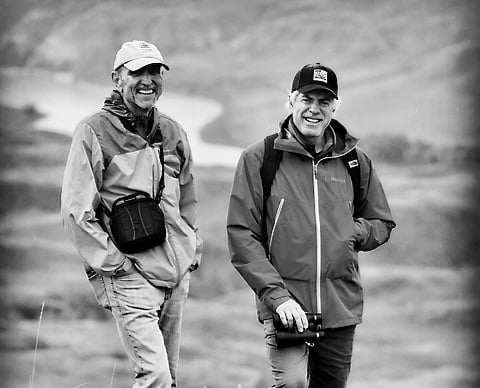
NOTE: Read the lengthy Yellowstonian interview with Curt Freese by clicking here.
TW: What do you think are the most salient take homes, especially in the books by Curt and Dan?
GERRITY: Flores explains in well-researched detail what was here for thousands of years and how—in only the past few hundred years—what we as relatively newly arrived, often undocumented western European immigrants, went about totally slaughtering for sport and profit perhaps 95 percent of it—and that may be underestimating it.
You can also find indications of what happened—and how some people felt about the situation— scattered throughout other written history. For instance, the now world famous landscape and cowboy painter, Charlie Russell, had first come to Montana from St Louis in 1864 at age 19. He wanted to be a cowboy and ended up working as one in northeastern Montana for most of the next twenty or so years. But by the early 1900’s he was lamenting the changes happening on the range that resulted in less need for cowboys, mostly due to the fencing of the territory into large cattle pens.
Having transitioned to being a cowboy artist, he was quoted in speech he’d been invited to give to the Montana Pioneers Association civic booster’s meeting in the 1920’s: “I have been called a pioneer. …in my book, a pioneer is someone who comes to virgin country, kills off all the wild meat, cuts down all the trees, grazes off all the grass, plows the roots up, and strings ten million miles of barbed wire. A pioneer destroys things and calls it civilization. I wish to God this country was just like it was when I first saw it and that none of you folks were here at all.”
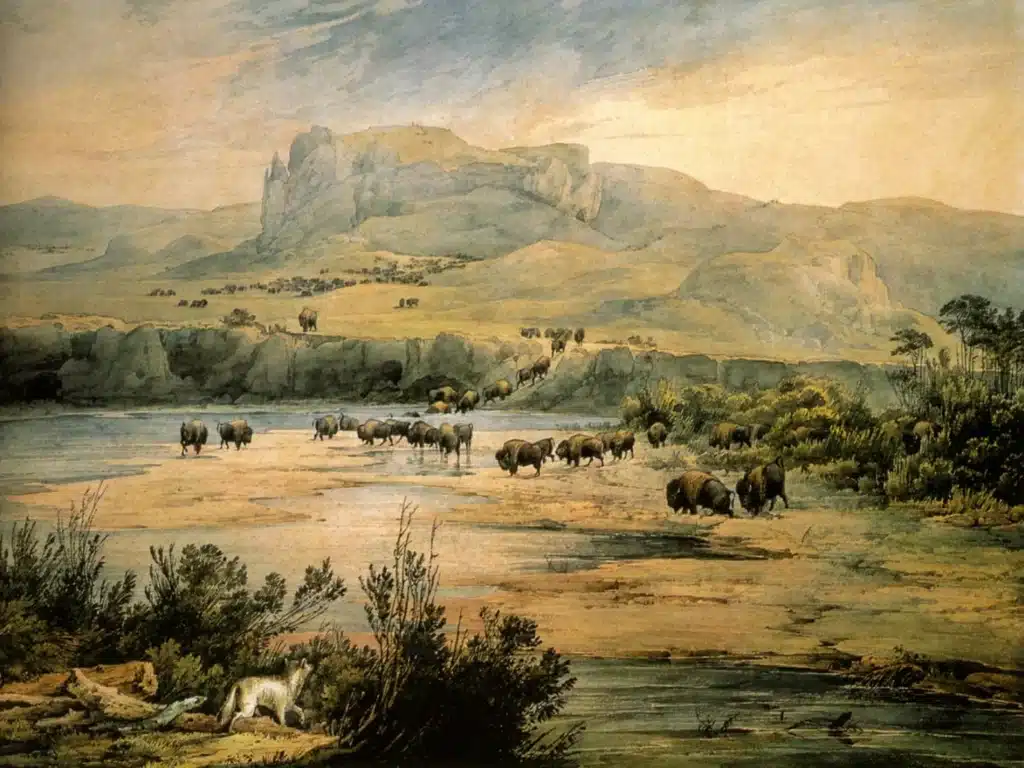
TW: In many ways, Charlie Russell, who has a wildlife refuge named after him along the Missouri in the American Prairie project area, was a conservationist. There’s also the CM Russell Museum in Great Falls. While painters George Catlin and Karl Bodmer who came up the Missouri in the first half of the 19th century and documented wildlife and indigenous human culture, Russell was the one who seemed to really grapple with the final gasp of different kind of relationship with the natural world being lost.
GERRITY: When people read corroborating history on this topic, they are often surprised and appalled by the descriptions of our reckless, wholesale destruction of wildlife populations that still today have never come close to recovering. This deep-time history is not being taught in our public schools.
To your question, Todd, I think that these days few adults make the effort on their own to read this history, so they don’t know the bigger, rather shocking story and therefore can’t really come to terms with something they don’t know about, nor understand. I find myself wishing some young Ken Burns-type documentary film makers would focus on this key American story. It might dramatically accelerate the rather lackluster rewilding movement in this country.
TW: So, let’s return to bison: why is bringing back bison such an uphill climb when these are animals venerated in art by people we admire, adorning collectible coins, used as the symbols for government agencies and state flags, and designated by Congress as our official land mammal?
GERRITY: I think one editorial in the Lewistown Argus Newspaper from some years ago summed it up pretty well. I’m paraphrasing, but the writer basically said the reintroduction of bison to the grasslands is wrongheaded. Like the dinosaurs, the bison had their time, and we’ve moved on. He went on to say that this region of the Northen Great Plains is now best suited for people and agriculture, and in particular cattle ranching.
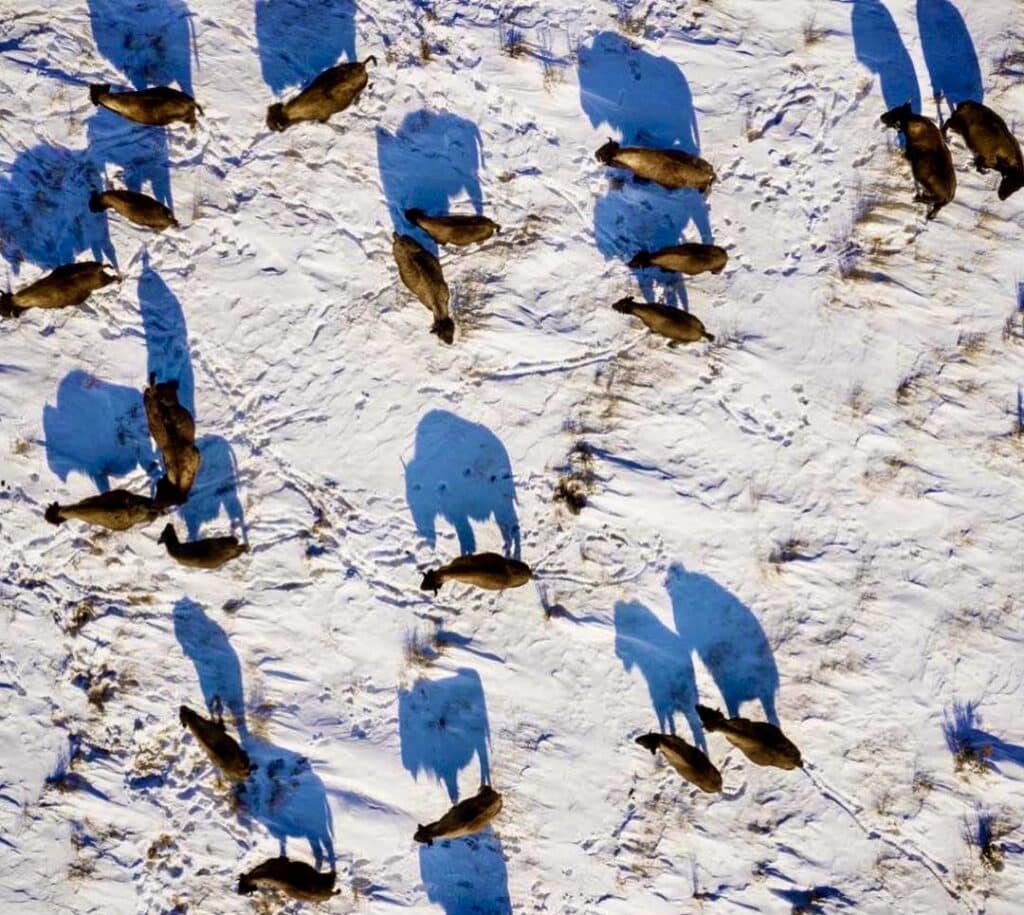
In other words, buffalo no longer fit in today’s world. For instance in the seven county region where American Prairie is operating there are roughly 420,000 beef cows which were originally brought in from Europe. For a certain, small but vocal contingent of people, having 5000 to 10,000 buffalo in those combined counties doesn’t make sense anymore—it is assumed they won’t fit, physically or culturally—nor will historically abundant populations of elk, bighorns, pronghorn, lions, wolves, grizzlies etc.
I of course think there is a way to do it without anyone losing out in the process. For instance, through American Prairie’s Wild Sky Rancher Program they have discovered that there are many local cattle ranchers that are more than open to that possibility as well. I think that is a key point here, the success of the Wild Sky program—where ranchers make additional money by running their cattle operations in ways that are wildlife, nature and biodiversity friendly—works for three reasons. It is a clear and understandable structure to step into, there’s lots of help available to ranchers to learn how to live once again with wildlife abundance, and ranchers can make meaningful amounts of cash for doing so.
In my opinion– informed by my experience–many ranchers are often thoughtful, generous, open-minded people who are more than willing to entertain a different relationship with nature. That assumes that they can get some help with transitioning from what they might have grown up with, to how things can be done with far more mutuality in today’s world.
TW: As part of that mutuality, I know that American Prairie has made a conscious effort to direct its business toward local communities, be it buying equipment or telling visitors to, where they can, frequent local restaurants and motels. You’ve injected tens of millions of dollars into the economy. Give us a few examples of American Prairie’s success on the ground?
GERRITY: Well, still being around after 25 years, still getting big and important things done, remaining strong and solid financially and still attracting great people who want to come work there is a success.
Another key measure of success in my opinion is for 20 years adding continuously to American Prairie’s habitat base and not stalling out on that task, which some people predicted we would do. I remember feeling such a sense of relief when we finally managed to acquire our first 22,000 acres of private and leased lands. 48 acquisitions later, there is now roughly 606,000 acres of total habitat. That’s about 950 square miles on which to enhance wild species abundance and visitation opportunities for the general public; and next year and the year after, there will be more.
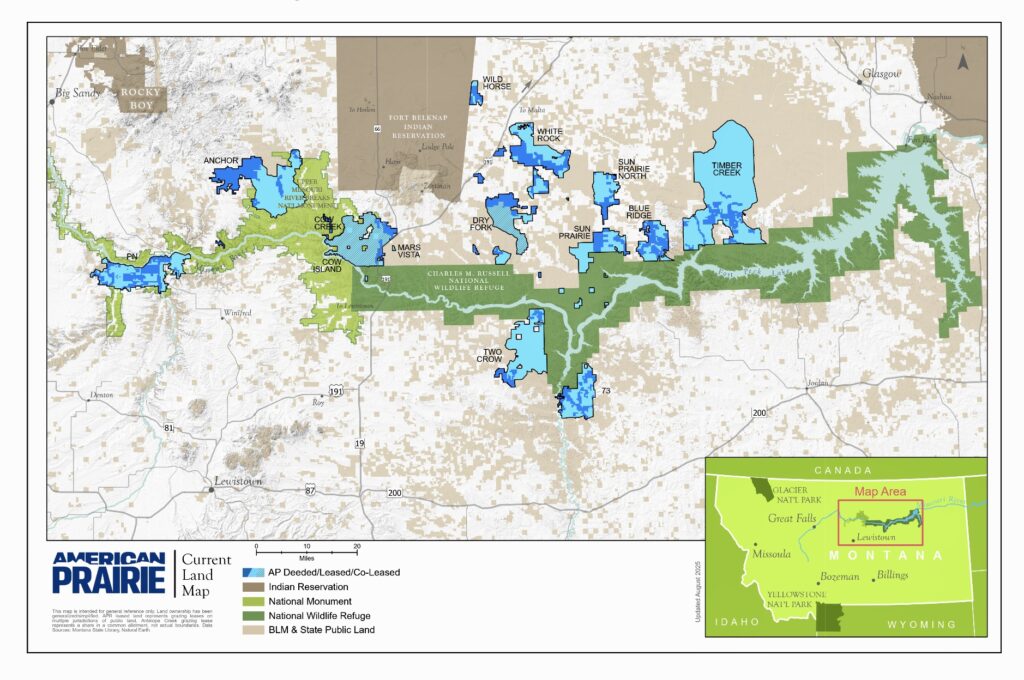
Another I believe is the increasingly positive relations with the local Aaniiih and Nakoda tribes, and with youth throughout the region by way of the American Prairie field school for local public schools.It is really important to me that our Wild Sky Rancher program continues as an expanding success after ten year in operation. Currently 25 ranching families are enrolled in the program where they receive financial benefits each year for conducting their ranching operations in ways that allow for more abundant wildlife on their private acres. The program is proving that people will indeed consider a different relationship to nature if there are significant upsides to doing so and when periodic inconveniences occur, they get helpful assistance in learning how to mitigate it.
TW: And what’s happening with your bison herd, the criticism of which is hard to understand?
GERRITY: We’re getting a pretty good starter population of buffalo back on the landscape and allowing them to live out their lives as naturally as possible—with no negative affects to local cattle ranching operations— feels like a big success to me.
I am particularly pleased that through perseverance and an adherence to the value of continuous improvement the American Prairie organization continues to get stronger all the time, fundraising keeps improving, and press stories about the AP vision and its methodology for building the reserve are generally much more positive than in the past.
Mostly though, I feel one of the biggest indicators of success is that increasing numbers of young people have taken notice of our progress and are hopefully feeling like even in these times, regular people can launch an idea like this and, if they take the long view and stay guided by a really compelling vision— big, positive mutually beneficial efforts can indeed still succeed in this country.
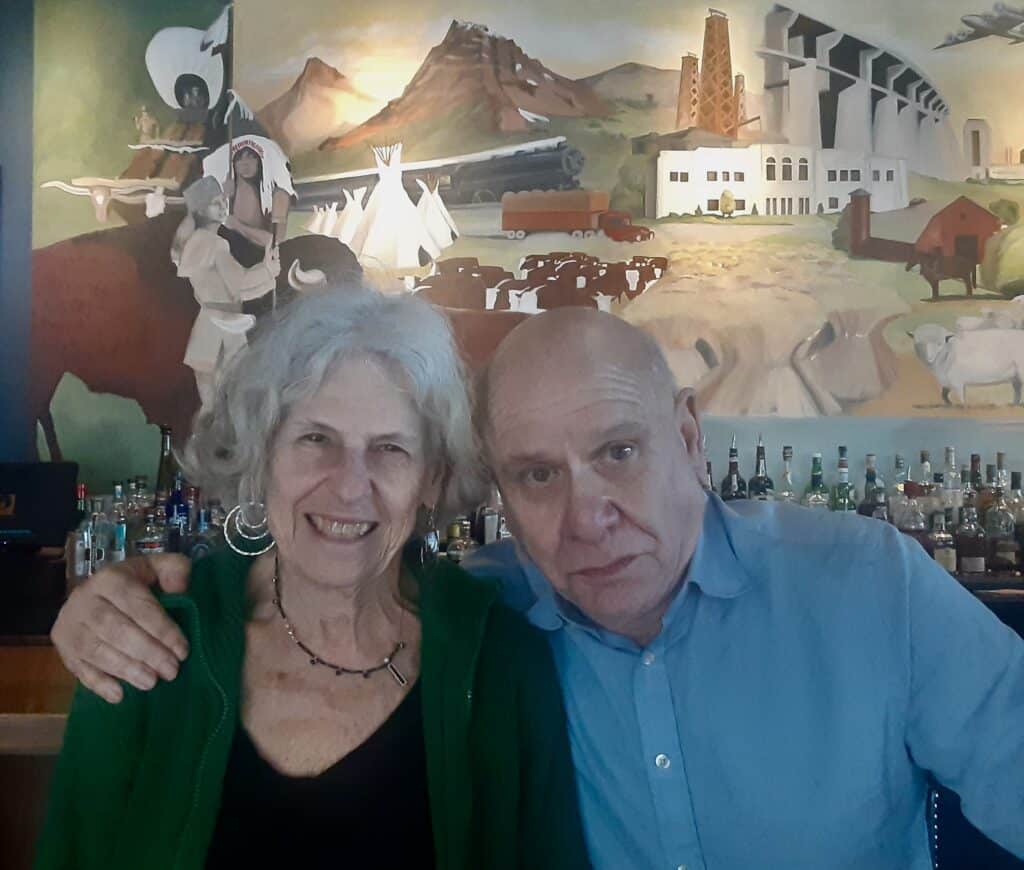
TW: I would be remiss if I didn’t ask you about the influence of Frank and Deborah Popper. How did their promotion of the Buffalo Commons influence you and was its publicity helpful or burdensome as you set out explaining to others what you intended to do?’
GERRITY: I didn’t really look much into the history of the Poppers until the late 1990’s. I eventually learned they were demographers from Rutgers University trying to point out long term trends happening in various parts of what used to be the native grassland-based Great Plains. Their point was that rural areas of the Great Plains had been steadily losing human population for many decades, staring just after World War One. They noted that similar situations were happening all around the world. Advances in mechanization and constantly improving agricultural techniques since the early 1900’s had— decade by decade— led to less and less need for both ranch and farm laborers. Those unneeded workers predictably headed to more urban areas seeking more diverse economies that offer broader job opportunities.
The Poppers suggested in one paper that a possible outcome of this would be a lot of plains-based agricultural land might one day revert to wildlife habitat, and once again become home to native prairie species: from grassland birds to reptiles to ungulates, predators etc.—and buffalo. They coined the term “Buffalo Commons” to make this overall phenomenon easier to remember. It definitely stuck.
Learning about their work was valuable to me because it pointed out one of many likely-to-continue long term trends that could affect our future work and, more importantly, it accurately explained for me the underlying economic and sociological forces driving that particular trend.
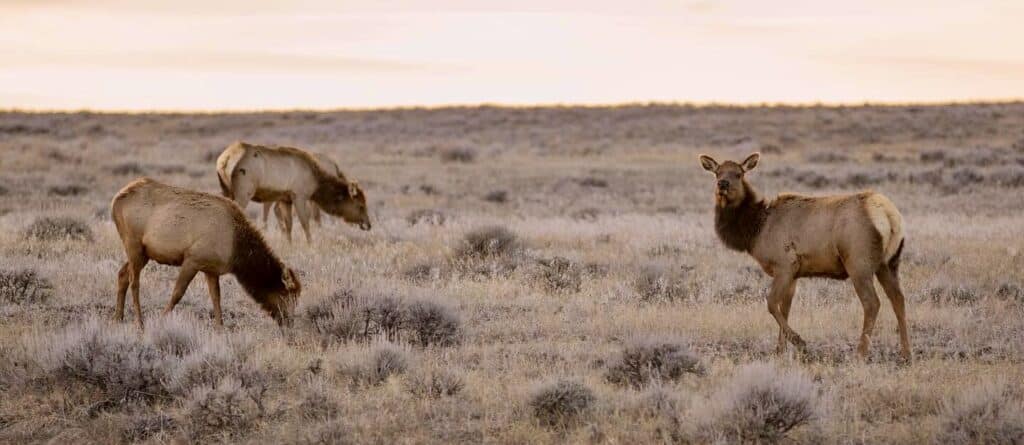
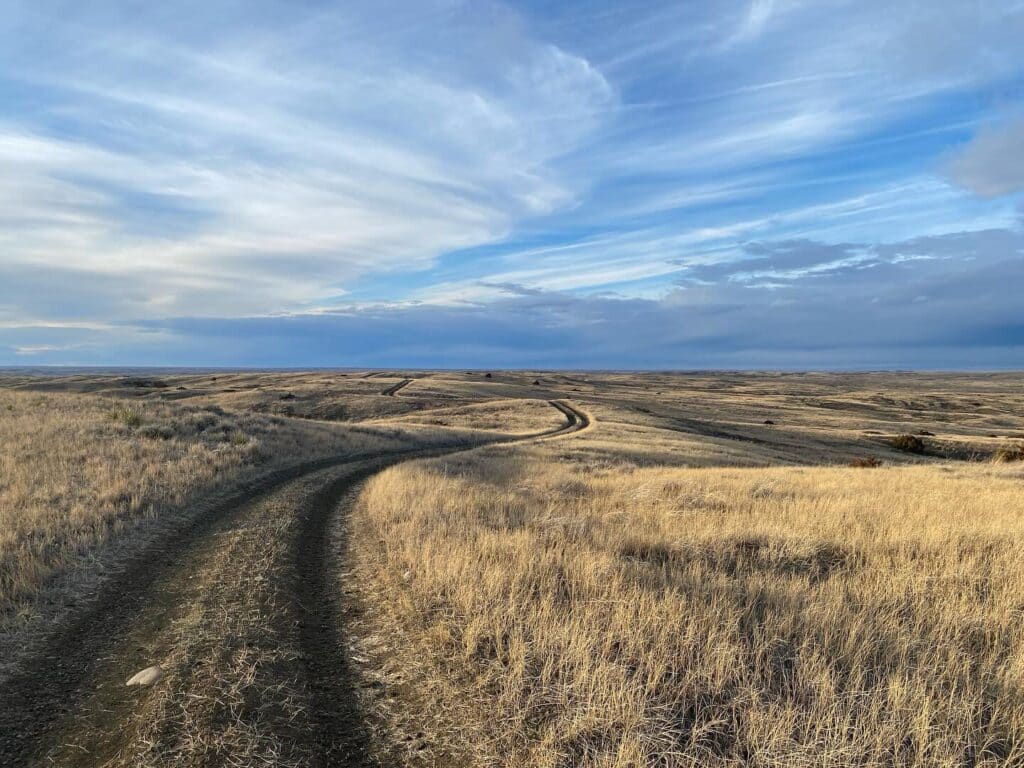
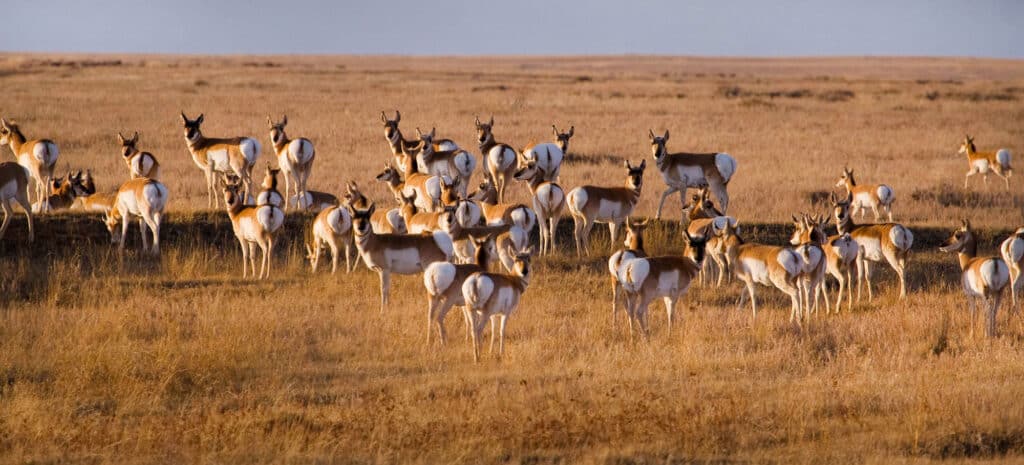
TW: One of the things about the mostly treeless prairie is its psychological dimension and the effect that vast open space has on the human mind. Let’s be blunt: for urban and forest dwellers, stepping into the maw can be daunting, overwhelming and leave a person unaccustomed to it vulnerable and exposed. How do visitors overcome it?
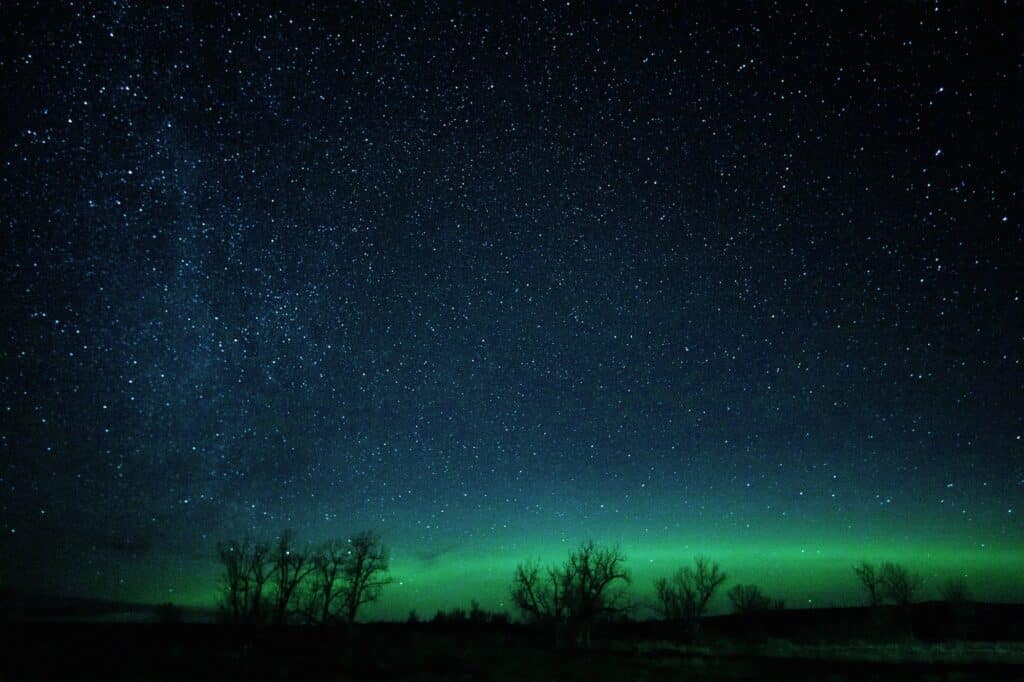
GERRITY: I have taken many visitors out there, some of whom in the first day or two, are off balance due to all the open space, how surprisingly far one can see, the millions of visible stars at night, and the extraordinary quiet. It can certainly be overwhelming for someone who just arrived from a crowded, noisy environment where some of them are from.
However, in every tour I have done I notice that by the second evening or so, the benefits of being out there soon replace the initial discomforts. They begin to report getting back in touch with what is lost in our lives by rarely having such immense quiet and to be immersed in so much space, with little to no other humans in site. References to being out on an ocean occur often, as well as comments –often during long evenings of stunningly dark and clear star gazing—about how healthy it is to have the experience of feeling very, very small as compared to the vastness of the cosmos.
So they overcome it simply by logging some time in a place that moves you, by feeling less like a fish out of water like they did on the first afternoon, to experiencing a relaxed sense of belonging, reverence, peace and connection. I never tire of being together with people as they are moving through that transition—because every time it helps to rejuvenate me as well.
TW: On the other hand, among the humans who dwell there, and have had contact with it for thousands of years, how is their perspective different from people in other bioregions?
GERRITY: The Afterward in my book was written by my friend and Aaniiih tribal elder, George Horse Capture Jr. In it he writes, “In this place you can walk with the Tribes, homesteaders with the buffalo, …you’re walking where so many have walked before, and you become a part of that. There is so much hope out there on the prairies, on the mountain tops. It’s well worthwhile—it’s a good thing. Come and see.”
I think Junior and his people—who have lived there far longer than anyone else, see it as a place where you can be revitalized; to come back to center as a person…to rediscover what it feels like to” fit” in this world; what it feels like to belong.
“In this place you can walk with the Tribes, homesteaders, with the buffalo…you’re walking where so many have walked before, and you become a part of that. There is so much hope out there on the prairies, on the mountain tops. It’s well worthwhile—it’s a good thing. Come and see.”
—George Horse Capture Jr., Gros Ventre (Aaniiih)
TW: Fascinating. On a couple of occasions years ago I floated down the Upper Missouri in the company of folks like western historian Herman J Viola of the Smithsonian and noted historian and art scholar George Horse Capture Sr. who played a central role in establishing the Museum of the American Indian in Washington DC. You and American Prairie board member Clyde Aspevig are best friends. Clyde, who grew up in north central Montana the same as you, is known for being one of the foremost contemporary landscape painters in America. His wife Carolina Guzman is a hell of a nature artist. Together, Clyde and Carolina coined the term, “land snorkeling” which alludes to the fact that the richness of this bioregion can be akin to diving on a coral reef and encountering its ecological richness. You’ve become a painter. How has painting informed your thinking about nature.
GERRITY: For a few decades now both Carolina and Clyde have positively altered and enhanced my relationship to nature. Over the years both of them have watched me try to become a better painter and they always wisely suggest, “Remember what it is like to sit, stand or walk through this place that you are trying to paint. Recall the aroma of sage, the temperature and feel of the breeze on your skin, the nature of the light at that particular time of day, the sounds all around as you paused for a moment to tune in to them.”
Whenever I’ve remembered to do all of that, it has affected how I chose a particular composition, how I go about mixing colors, and how I chose to adjust– over and over again– what is appearing before me on the canvas. Their admonition to resist looking at things as objects but instead as shapes that have soft or hard edges, that cast certain kinds of shadows, that are affected by light that has bounced off of something else etc. affects how I see all kinds of things now.
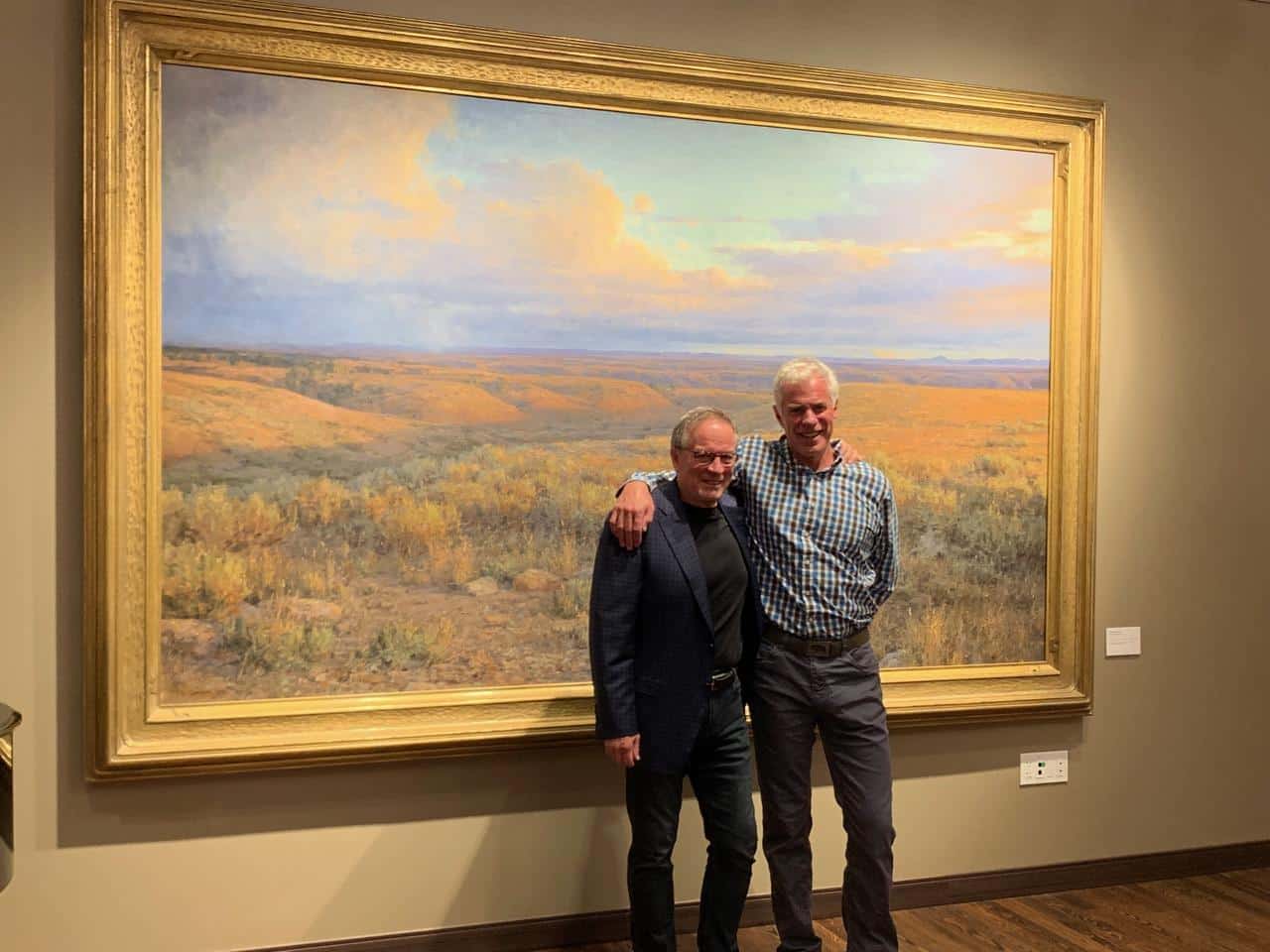
Most important, I guess, is trying to capture memories through being out there in nature so that I can improve as an artist, has deepened my understanding of why I chose to get involved with the AP project. I am motivated by the idea that others who may visit long after I am gone will also learn to slow down, to listen, to smell the sage, the soils, and whatever’s in the wind, and will have a chance to be completely present for a few moments—-present in a way that gets them reacquainted with their senses, and affords them some brief pleasure, satisfaction and feelings of gratitude.
Hundreds of hours of trying to practice these things has changed what I “see” when I am out on the prairie, but also while underwater somewhere in the Philippines, or circumnavigating the gorgeous topography and foliage of El Salvador. It changes the quality and details of my memories as they are laid down in my brain.
TW: In your research, and in your role as, now, founder emeritus of American Prairie, you visited other grassland bioregions, noting how much are under threat. What from?
GERRITY: Well, in my opinion there is no one existential threat, but many separate ones that don’t seem so bad individually, but that together add up to a lot of damage occurring.
When I was born there were roughly 3.5 billion people in the world. Today we are approaching 9 billion. The physical space our current lifestyles require is crowding out nature and our species population continues to grow.
In the early 1800’s, the world’s population finally hit one billion, after staying under that number for tens of thousands of years. At that time, it is estimated that the total mammalian biomass on the planet was comprised roughly 85 percent wild mammals, and 15 percent humans and our livestock. By 2018,—at a human population of over 8 billion– it was estimated that humans and our livestock were at 93 percent and wild species were down to 7 percent. That is an astronomical rate of change over a very short time. This trend is continuing. We are still plowing up and taking what little remains of wild habitats to grow even more food for our livestock and ourselves. Wildlife, (and nature in general,) continues to be forced into smaller and smaller places around the world and yet is still often seen as an intolerable inconvenience, nuisance or outright threat by humans.
TW: Often, we point fingers at different resource extraction industries and ponder ways of moderating impacts but there’s one that often flies under the radar and it’s central to the complicated circumstances American Prairie is working in—the importance and yet the impacts of growing mass quantities of food.
GERRITY: Our homes, roads, factories and airports and oil and gas fields certainly take up room on the land, but it is how we do our agriculture in order to feed ourselves and our livestock that, by far, requires the destroying of wild habitat. It is not agriculture that is the problem, the problem it is how it is still being done in some areas of the world.
The really good news is there are terrifically innovative, well proven examples of how to grow more than enough food for homo sapiens– and our livestock— that require far less than 50 percent of the land and ocean area than we are using now.
TW: You mentioned this at your excellent book reading and discussion with Clyde at Country Bookshelf in Bozeman. Please share that perspective here.
GERRITY: If we adopted highly effective techniques from places like Singapore, South Korea, Finland, Denmark, the Netherlands and other countries, we could return an extraordinary amount of land and marine areas to nature. But in many countries—including the US—such wholesale changes in agriculture are not happening fast enough, or at all, so the threat is continued plowing, cutting down of forests, destructive mining techniques etc. Ironically, while the answers are indeed out there on how to do better for nature, the space needed by wild species to flourish continues to shrink.
People first gaining the knowledge of how to do our ag better is step one. Providing incentives for them to move faster on adopting these new practices needs to come next. Unfortunately, potentially powerful incentive machines like the U.S. farm bill policy package does just the opposite; it incentivizes people to stick with our anachronistic US. ag techniques. Maybe one day we will have a critical mass of new, centrist politicians with the smarts, knowledge—and maybe most importantly these days—the collective courage to try to set us on a better path.
TW: Could you please also delve into the symbolic and tangible role American Prairie represents for the US and other parts of the world closely watching what’s happening there?
GERRITY: I get asked this question quite a bit. Here is some of what I hope people take away from the AP example:
Getting big, important and valuable things done is still absolutely possible today. The US is about the most contentious place one can imagine as far as attempting some new and audacious rewilding project, particularly in the lower 48 states. But American Prairie is working!
Second, yes, ambitious, exciting and meaningful things can still be launched by a small group of committed, regular, non-wealthy, poorly financed, and not particularly well-connected people.
Third, you don’t necessarily need to first acquire expensive and time consuming advanced degrees to begin. What is required is ingenuity, perseverance, optimism and excitement about a wildly attractive, compelling vision. In many instances it may also require the willingness to quit your more comfortable, more predictable day job and take the risk to join something based on an awesome idea, and to settle in for the very long haul. Most of what I just said there is about attitude and a belief in one’s potential to make an impact, not your own personal net worth, possession of numerous educational degrees or an impressive personal network.
Lastly, fundraising can of course be really hard but take heart that the money for what you want to do is out definitely there. However, to compete for it effectively you need present your ambitions in a way that is inspiring and believable. You also need to somehow convince people you can execute; that you are likely to deliver on what you say you are going to do, without excuses, and with a promise that they will find their lives becoming richer and more satisfying by being connected to your effort. That satisfaction and feeling like their life is enriched actually has to occur for them if you want them to support you, year after year after year.
What you want to do will require hard work and sacrifice, but the rewards —assuming you can keep things moving forward—can be well worth it, particularly if you are working on something that will have true, lasting value. If you can tell yourself truthfully that future generations are going to be appreciative of what you and your team did way back when—even though they probably won’t remember your names—you are potentially on to something where the benefits may well outweigh your memories of the intense struggles you endured while you were at it.
Don’t wait for better times. This may be the best set of conditions you are going to enjoy for a very, very long time. Decide to move now. Act now.
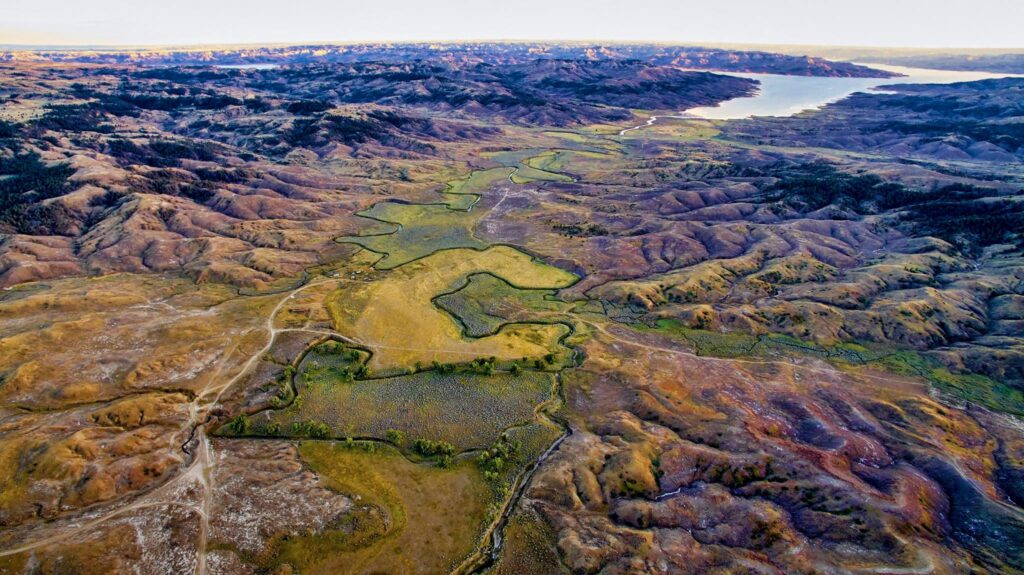
TW: Throughout your book you write as a Montana native empathetically of people working hard to make a living. These are existentially-challenging times for rural people. When you think decades ahead and ponder the difficulties facing people in eastern Montana, how would you describe them? And whether American Prairie existed or not, those troubles would still be present, right?
GERRITY: A big challenge confronts younger people— not just in eastern Montana but in similar places over the world—when there is one dominant industry in a large geographic region. That industry might include commercial logging, fishing, livestock ranching or farming, or automobile manufacturing. Over time, this dominant industry will experience steady advances in efficiencies due to new techniques and innovative applications of new technology.
As time marches on, one effect of this phenomenon is that the industry’s productivity and output steadily increases, while the need for human beings decreases. As a case in point, the cattle industry in northeastern Montana is doing quite well in terms of annual output and profits.
There are far more cows on that landscape now than ever in history. Conversely, the need for humans to help run that cattle industry has steadily declined for the last 100 years or more. And as long as cattle ranching remains the single dominant industry, the need for humans will continue to decline; the current situation will continue to get even worse for young people.
All around the world the answer to this dilemma has been to seek out, welcome and embrace— rather than shun and oppose—opportunities to diversify the overall economic situation in these areas. Sometimes though, in some places, change is not seen as a good thing, so the hunt for economic diversity ideas can be slow, halfhearted and lackluster—all the while, more and more young people justifiably depart in search of places where economic diversity does exist and they can prosper economically.
TW: These are obviously heavy uncertain times for everyone. At your book event in Bozeman, you spoke of how hopeful you are, for younger generations and for the recovery of biodiversity. What’s the source of your optimism?
GERRITY: My optimism is reinforced by a combination of things. One example is my podcast, The Answers Are Out There, which keeps me in touch with people from around the U.S. and the world who are making terrific progress on really meaningful projects. Sadly their inspiring stories rarely make it to the regular news which is so often focused on negative events. When, during our live podcast conversations, I hear about the range of visions that are being pursued, the thoughtfulness and cleverness of their approaches, and the enthusiasm in their often young voices, I hang up from each call thinking, “Wow, that is the coolest thing I have heard about for quite some time, and I bet anything they will eventually succeed!”
I am also heartened to hear from some readers of my new book that as much as they appreciate the American Prairie origin story, that they are more taken by the personal advice I give in the second part of the book. The advice focuses on how they might think about making a similar move into something that feels more meaningful and rewarding, (like I did,) at some future point in their lives.
I’ve had people tell me they are re-reading that part of the book because they are stopping to make so many margin notes and to reflect on their own situation. The way this this feeds my optimism is it confirms for me there are people out there waiting in the wings so to speak; that are tantalized about making the jump into helping make the world a better place for wildlife, biodiversity and nature. All they lack maybe are better tools on how to find vocations that align with their sense of purpose and values, how take intelligent personal risks and how to navigate tricky and intimidating life transitions, all of which is in that section of the book.
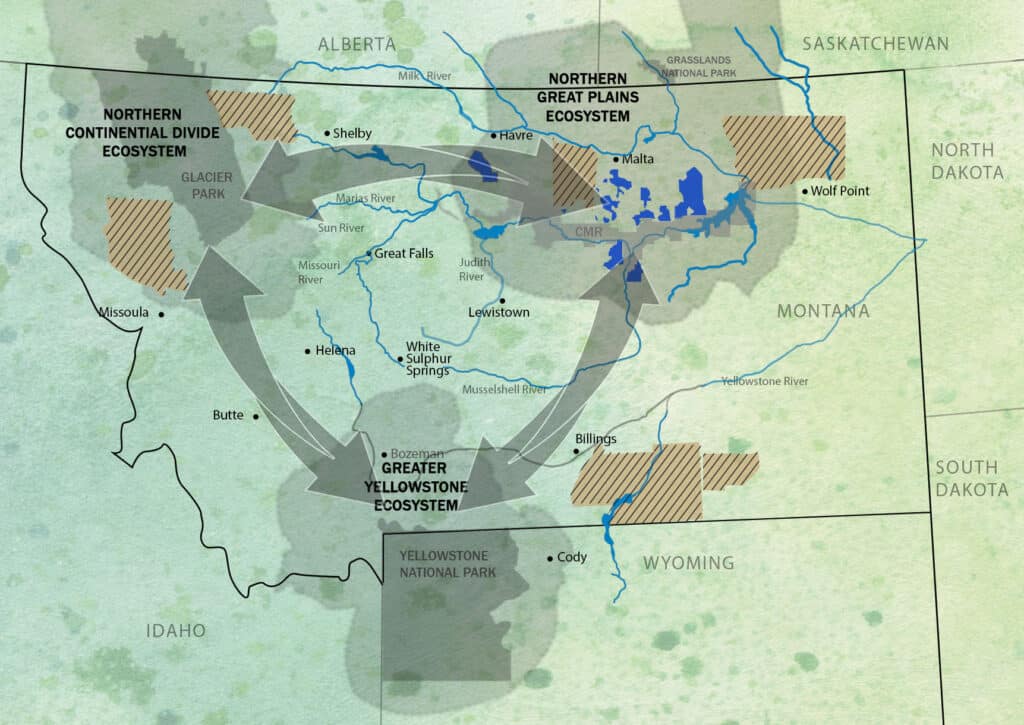
TW: Let’s talk about the dividends. You presented a slide at your book talk in Bozeman that is, frankly, stunning. (See above) You call it “the Triangle” and it shows the interrelationship and synergies that get created when larger different landscapes become re-connected. They create a sum greater than its parts. Without assistance grizzlies are finding their way back to the mostly treeless Upper Missouri Basin and what you call the Northern Great Plains Ecosystem. It’s a go-between and spillover area for species like grizzlies mixing between the Greater Yellowstone and Northern Continental Divide ecosystems. [Readers: check out this new essay from grizzly bear biologist Dr. Christopher Servheen]. Of course, if wildness of the Earth is going to be saved or resuscitated, which in turn brings huge rewards for wildlife, the economy, cleaner air, water, and carbon sequestration, it must happen at scale.
GERRITY: My optimism is also buoyed by the knowledge that 193 of 196 countries have signed on to try to achieve the targets focused on saving 30 percent of the earth’s land and water for nature by 2030. I am not optimistic that this milestone will be a wild success because there is less than five years left to do it, and it looks like we will come up short for sure on total worldwide victory.
But people are scrambling to try! And the actual long term goal—set forth by a number of people— including Dr. E.O Wilson in his book Half Earth—is to save 50 percent for nature by 2050. Five years from now the 2030 tally will occur and immediately afterwards people in countries all around the world will dive headlong into the effort to do better; this time to achieve 40 percent by 2040, and I bet it willall go a bit better. And during the ten years between 2040 and 2050, I think it will go better still.
TW: Younger generations have been vocal and active in promoting healthier food systems and being active with outdoor recreation, but, frankly, they have not been showing up, as previous generations did, to advocate for wildlife and wild places. Why is that. You can’t blame it on the elders.
GERRITY: I think many young people who aren’t yet aware of this phenomenon will eventually discover it, realize how rewarding it might be to be a part of it, they’ll find a way to join and will jump into the boat, grab and oar and start pulling. With more volume of people, a movement will form, and when enough people choose to join, collective progress will accelerate and the chances of success will go up. That’s my prediction anyway.
The main take away here is to stay optimistic and hopeful, you have to curate your own balanced news, rather than passively drinking from the depressing fire hose of if-it-bleeds-it leads news stories shot at you from you name it: Fox, NPR, The Guardian, The New York Times, Reddit, etc. You have to look for yourself about what is really going on in the world. Sure, much of it is maddeningly frustrating, unfair, egregious and incredibly sad, but there is far more astoundingly good stuff happening out there than you know of and that is not making it to your feed. Devote some time to creating a new lens for yourself through which to see the world, like reading Yellowstonian, and you will find yourself being much more inspired and motivated to find a way to help than you’ve ever imagined.
NOTE: We at Yellowstonian encourage you to go land snorkeling, whether it’s picking up a copy of Sean Gerrity’s new book or exploring American Prairie firsthand. Nowhere else can you take a deeper dive into the wonders of Greater Yellowstone, our corner of the wild West and the forces shaping it than at Yellowstonian. We don’t dumb down our content; we aim to elevate the depth of our reporting. Print magazines will charge you hundreds of dollars for a subscription and newspapers have much of their content behind a paywall. As part of our mission to keep you informed and inspired, we provide our stories free and they are accessible to all. We’d love nothing better than to keep delivering you offerings like this and to do more. Your support is the only thing that makes it possible.