Interview with Keith Shein by Todd Wilkinson
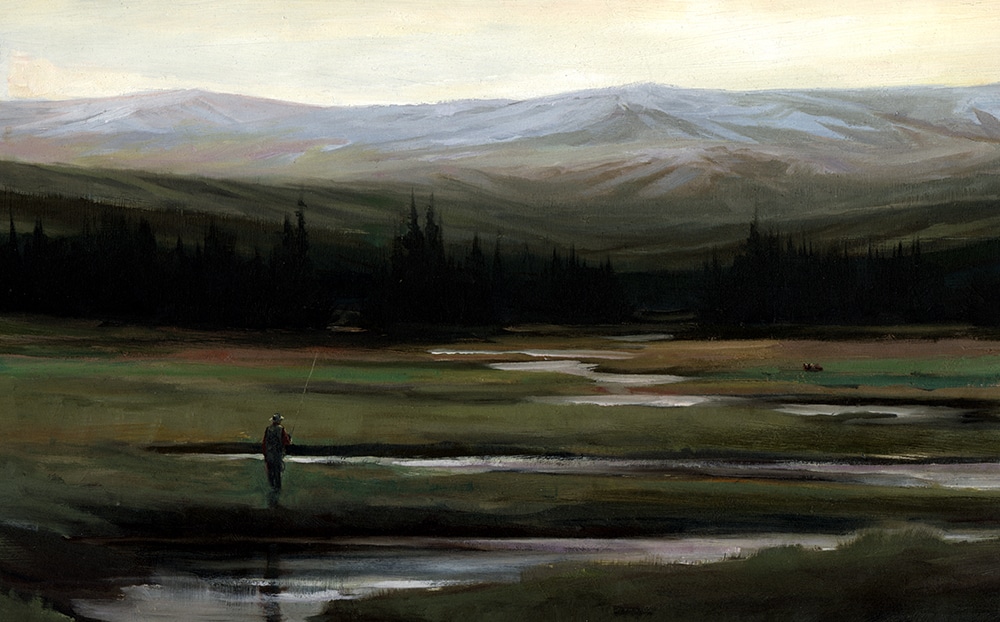
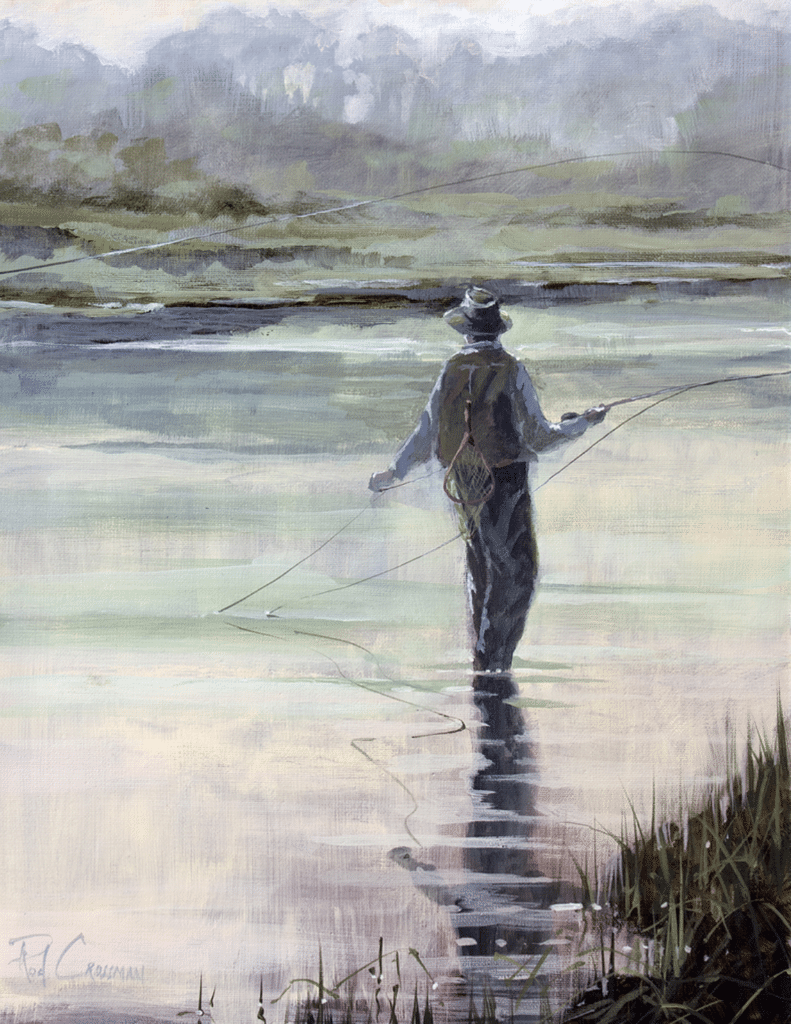
Art by Rod Crossman
Almost four decades ago when Keith Shein came to Montana’s Madison Valley, it was a different place. The film adaptation of Norman Maclean’s novella, A River Runs Through It, had not yet hit big screens, popularizing flyfishing as a cultural phenomenon in ways it never had been before, and along with it, made Montana’s blue ribbon trout streams points of pilgrimage.
This was before the real big boom of real estate development in Big Sky, before angling ranchettes starting dotting former cattle pastures near the Madison River, and before Baby Boomers started retiring in mass.
Shein wasn’t just a fisher. He was a naturalist taking note of everything surrounding the wetting of a line, including how the river is lifeblood, and he’s a caster for words. As a poet, he has several volumes to his credit, including two recent collections that are largely set in Madison County yet evoke reflection on any still-natural place in Greater Yellowstone or the Rocky Mountain West.
Rumors of Buildings To Live In was a finalist for the PEN/Faulkner Award. For a few years Shein was the poetry reviewer for the San Francisco Examiner and today splits time between Northern California and Montana. Deeply concerned about growth transforming the rural character of Madison County, he has been a board member of the Madison River Foundation and has been a supporter of Preserve Raynolds Pass.
Even So They Reach was published in summer 2025. Mining the Light is also recent but the older of the two—a collection of 30 years of fishing and outdoor poems, mostly written in Montana. Both are being considered for inclusion in the Trout and Salmonids Book Collection in the Special Archives of the Montana State University Library.
At the end of our interview, below, soak in the impact of a Shein poem, Blood Sport, which is his rumination about a young person’s rumination about the fact that angling sometimes leaves the object of the pursuer’s affection, dead.

A Conversation With Keith Shein
Todd Wilkinson for Yellowstonian: Some refer to you as an “angler-poet.” How does one relate to the other?
Keith Shein: Likely, poet should come first in this dynamic, as I don’t write exclusively about fishing. However, fishing has been and remains a deeply important part of my life and, as such, it makes sense that angling and the outdoors get into the poetry. “Mining the Light” came together as a book not because I set out to write one about fishing and the outdoors, but because, incidentally, over the years I’d written so often about these subjects. I saw that there was enough material for a book, and I’d been urged to put one together.
That said, as my recent work has shifted to focus on the outdoors, I’ve also come to understand that being in Nature, particularly a place as grand as Montana, urges me to poetry. I write when I’m taken out of myself, and the power, scale and grandeur of the Montana landscape never ceases to open my eyes.
Yellowstonian: What I personally enjoy about your books is the poems are not lyrical epics but speak to momentary and yet timeless reflections, kind of like a good black and white landscape photograph. Why does this approach work better for you?
Shein: Various things urge a poem. It can be something I hear, or a memory, or a deep feeling, for example. But for reasons I can’t explain, most often it’s something I see or encounter. It doesn’t have to be something big or with clear portend. A couple of butterflies flying in synch can do the job, a twig blowing down a path, or a bird looking down at me out of one eye and a cocked head. I can’t predict it, and I certainly don’t go out looking for it. But such an encounter, usually days later, will work itself into a poem. For that, most of my poems are “occasional,” records of events that came to me and which proved important, though often the meaningfulness is only discovered in the making of the poem.
Yellowstonian: Who are the other nature poets who have most influenced you?
Shein: Whitman is the obvious answer, but if I’m honest, though his work opened the possibility of the seriousness and beauty of a poetry about Nature, as its scope is epic and the focus toward the transcendental, it overwhelms me. I don’t want something that large running over the page, and I’m always skeptical of using Nature symbolically, as if a mirror to the human. So, really, the Chinese poets like Li Po and others were initially the ones that were most influential: short, quiet poems that show human emotion through and alongside clear images of the natural world.
Otherwise, William Carlos Williams remains a big influence. Though not considered an “outdoor” writer, he was a poet who insisted on using the natural world objectively, not symbolically.
Yellowstonian: In our exchange, you noted that “Even So They Reach” steps into a current of reflection beyond ruminations on angling. You said “it’s concerns are different than the first book, wanting to address a wide range of the terms of human interaction with Nature, some of them awkward, some dangerous, some confused, given, for example, the human tendency to read ourselves in to landscape and natural processes.” Okay, please riff on what you’re saying here.
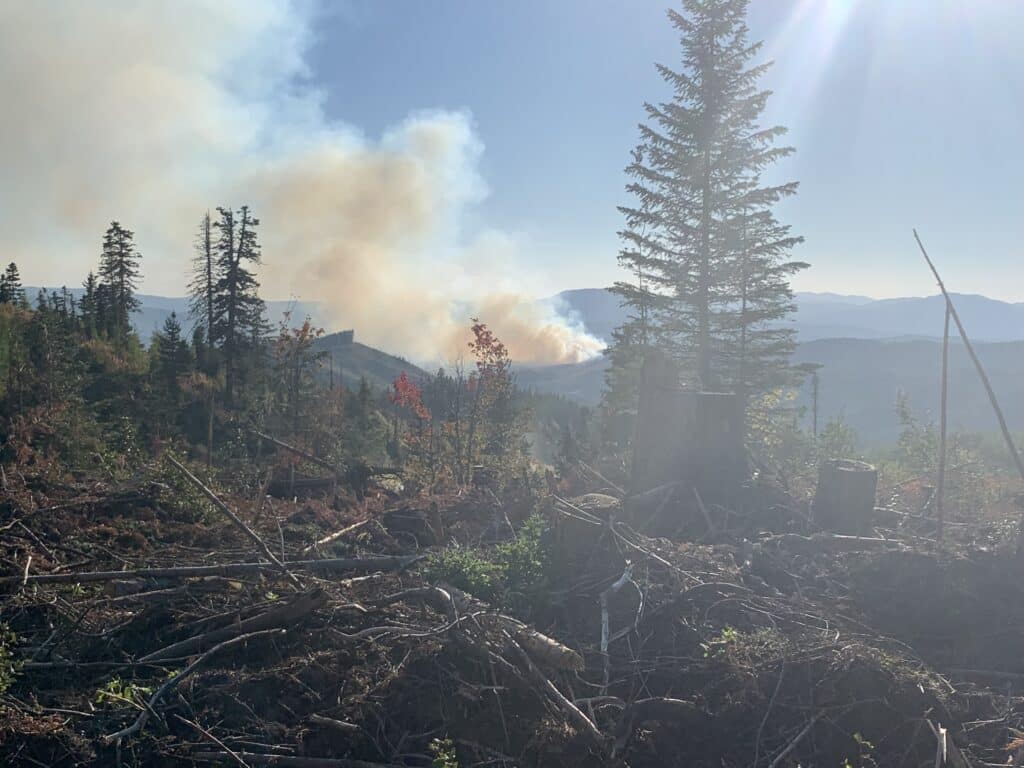
Shein: I’ve written my share of poems celebrating the beauty and grandeur of Nature. Living in it, as I do now in the Madison Valley, doesn’t change that appreciation but it does provide a different perspective. Less than a half-mile from our house, grizzly bears and mountain lions are regularly picked up on game cameras. And it can get very cold in the mountains, with white-out blizzards. We have forest fires that have nearly forced us to evacuate.
Yellowstonian: Moving in your translation is empathy and compassion for the creatures who are not emphemeral, but intrinsic, their presence inseparable from the spirit of land you’re bringing to light.
Shein: Clearly, we’re visitors on the land even if we live there. Even when young, I intuited that humans are of Nature but not fully in it. Consciousness separates us from the animal kingdom, even though we’re animals. I’ll never walk the prairie like a deer or an elk. This cleavage can be painful to humans. I believe religion is born out of this void. And our very vocabulary shows that we yearn to overcome this separateness. Cliffs have “faces.” Rivers “run.” There are “bodies” of water. People “flock” to see a new film. Such language is not entirely innocent, for if we anthropomorphize Nature, we’re also inclined to believe it’s there to serve us, resulting in the “Myth of Human Supremacy,” as the writer Derrick Jensen phrased it. So, in my last book, Even So They Reach, I wanted to write out of that imbalance and uncertainty, loving Nature but coming to see that even the very idea of Nature defines humans as apart from it.
Yellowstonian: You’ve spent a lot of time in the Madison Valley making direct daily observations and you have a perspective of change that comes from leaving for periods and returning. One perspective is conducive to absorbing the slower, more nuanced delights of nature; the other, amid an expanding footprint of human structures, can deliver a more jarring feeling of time speeding up. How do you this with your poetry?
Shein: This may be apocryphal, but a famous poet, Louis Zukofsky, is to have said that we write the same poem all our lives. I think there’s truth to that. Not that I understand what it is I’ve been writing my whole life, though I’ve got some miles on me. But despite changes in my life and my body, changes in friendships and homes, and changes in the politics in our country, what brings me to the page doesn’t change. It’s still a necessity in my life.
I’m still awed by the seriousness of it. I’m daily amazed at the great adventure of it, having something come out of me that I don’t will or intend but am obligated to get right. That’s the poetry. As to my alarm over what’s happening to the land and the ecology, including threats to the Madison River and Valley, that’s addressed and fought for on the ground.
Yellowstonian: Your works speak to this but please finish this sentence: “The Madison Valley is special to me because…..”
Shein: …because it captured my heart nearly four decades ago and won’t let go.
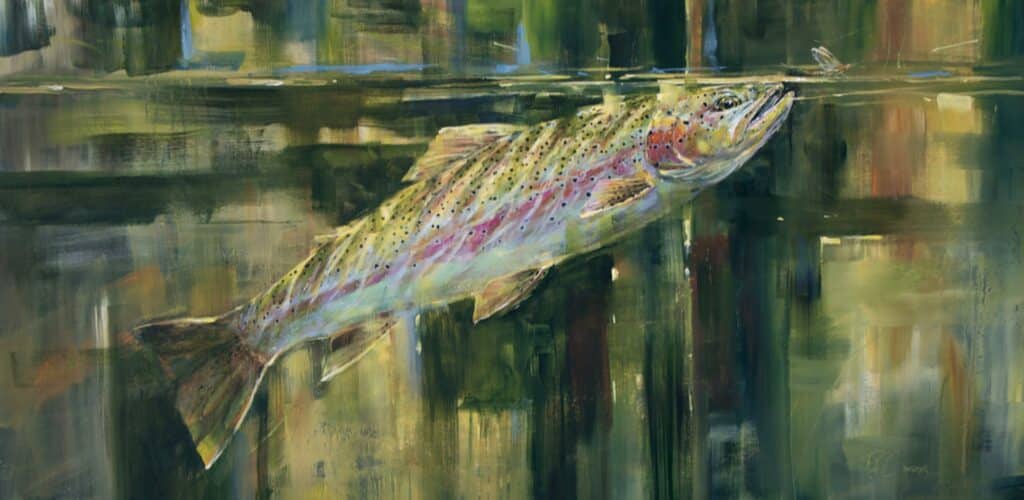
Blood Sport
By Keith Shein
She wonders why anyone
who loves fish would hurt them,
hooked to be released.
I’m older, and she knows
there’s blood on my hands.
I hold up my hands,
each one held by another man
and another in turn to make a ring
around the rivers we love.
Bloody, she says, regardless.
She’s young, angry and right.
If I were young, I’d take her hand
and walk down to the river,
show her the stream the way a fisher
sees it, the pools, the cut banks
where the trout hold, the seams
where fast water meets the slow.
Tell her about the last hour
before dark, the clouds
of caddis hatching, the silence
of ten thousand wings, the wade
into the river, the current’s pull,
casting, reaching, the connection
when the line comes tight—
and trust my heart to that ardor.
But I’m silent and look away.
To the river which owns my heart,
to the hope that when I go down
trout will be rising,
that each hour on the water
shapes a better man, in love
with creation, waist deep in it, thirsty
for the wild, its mystery, who can do
more than look at his hands.
A better man will know what to say.
NOTE: Look for more poems by Keith Shein coming ahead in Yellowstonian. Also read: