By Brad Orsted
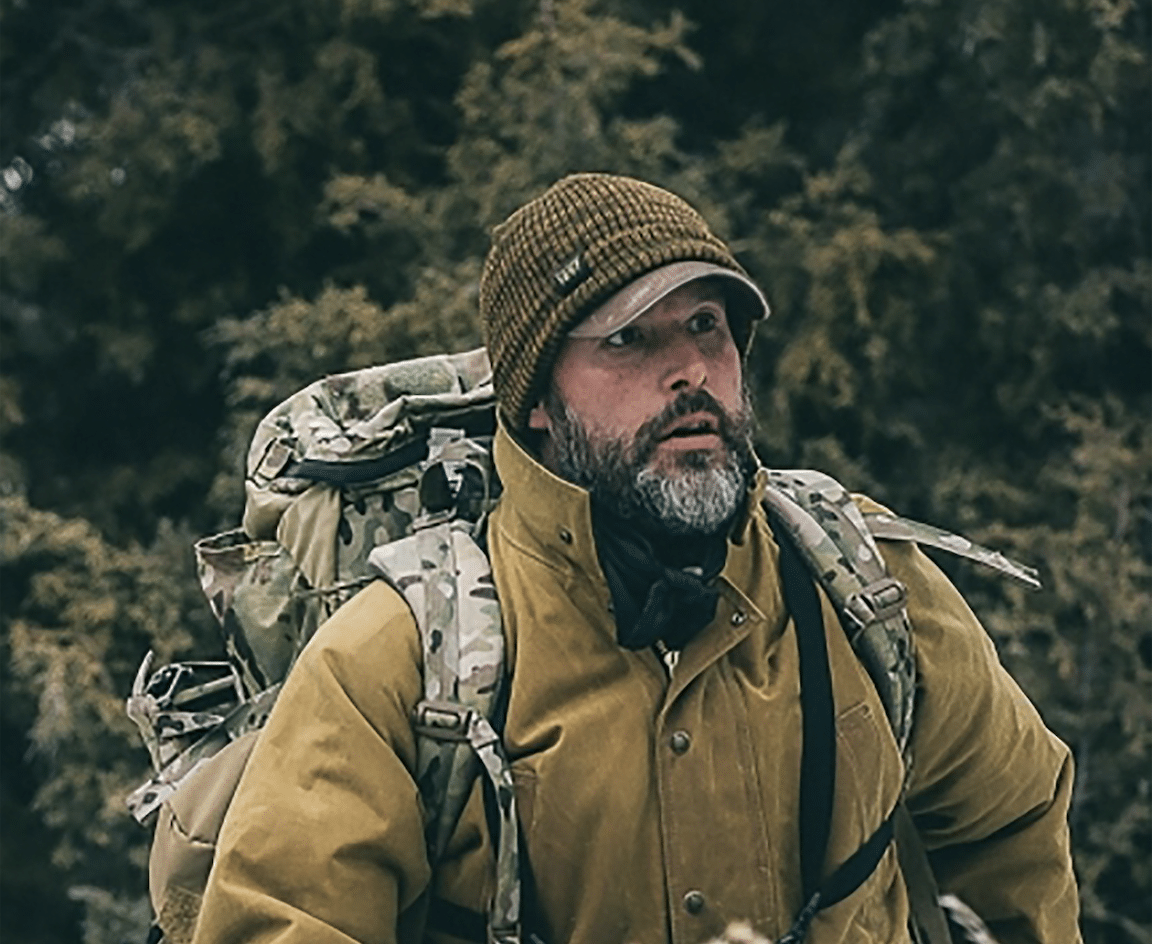
One step into the wild and my mind is a wreck. Two steps in, a dozen mostly meaningless thoughts clutter my contemplations. Three steps in I’m still riddled along a Bighorn sheep trail cut deep into the Black Canyon of Yellowstone. I hike on.
The pain and horror of the past courses through my veins and looms headlong into the future. I’ve come to the mountains to escape my sorrow, but after an hour of trekking along a narrowing sheep trail with a five hundred foot fall to my right, and a canyon wall going straight up to my left, I still feel like shit. It’s so narrow in places that it’s one foot directly in front of the other, or else.
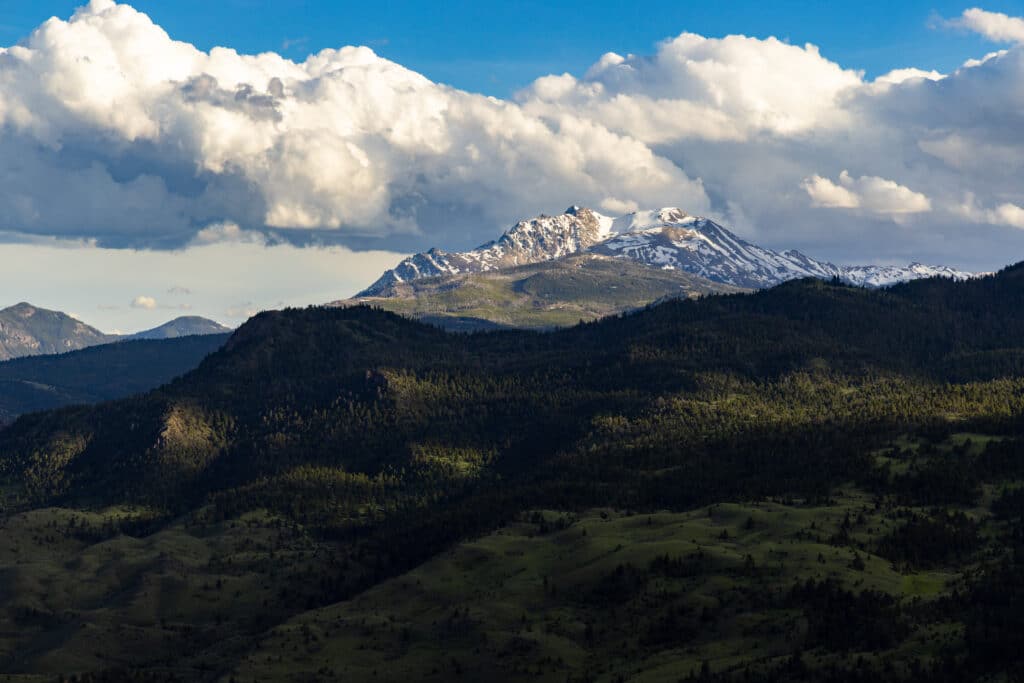
The topography is crumbly and precarious; volcanic till cooked to perfection during the last eruption of the Yellowstone volcano. I can see eagles and osprey gliding down the river corridor far below me. It’s a bright sunny day but I feel like crying. Like screaming. I’m reckless, taking chances I shouldn’t this far into the backcountry by myself. It’s not on purpose. My mind is somewhere else. Oscillating between the immutable past and certain dread of the future, I’m doing my best to just stay in the moment and keep going. One foot in front of the other.

A few miles in, where junipers cling to life along desperate and jagged terrain, I sweat, and my mind begins to clear. It’s a gorgeous day after all. I can smell the rocks heating up in the sun and notice a yellow-bellied marmot scurry across a scree slope only to disappear into the boulders on the other side. I pause to take a few deep breaths at an outcrop. My senses come alive. My thoughts begin to settle. I’m home. Alone in the wilderness, again.
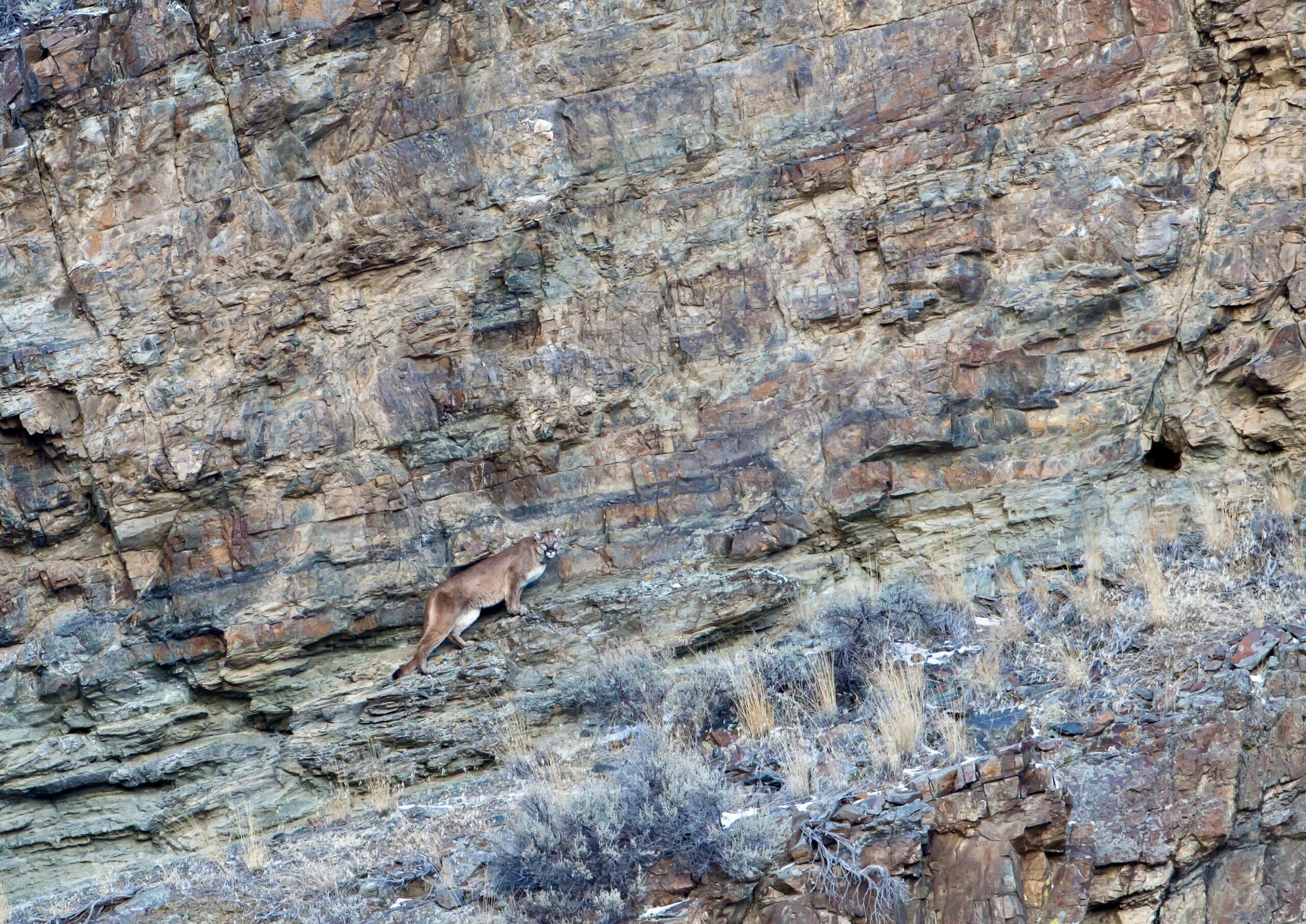
Starting back up the sheep trail, I notice a familiar track. The chunky table grape shaped toes pressed into old mud tells me who it is. A ghost. Most people can hike their entire lives in the Rocky Mountains and never see one. Although it’s seen you. An animal that strikes both terror and fascination. Puma Concolor —mountain lion. A male from the looks of the day or so old tracks. Probably hunting deer or Bighorn sheep along this same trail.
Mountain lions used to be more wide spread in Yellowstone. But when the wolves were reintroduced, it’s speculated that they drove many of the lions to areas wolves don’t like. Rugged, crumbly, desert-like canyon country littered with prickly pear included. A cat’s balance, grace, and agility make it perfectly suited for this environment. Deer, elk, and sheep also frequent these heavily exposed routes through the canyon. Which is why I’m here too. I need ancient game trails to follow.
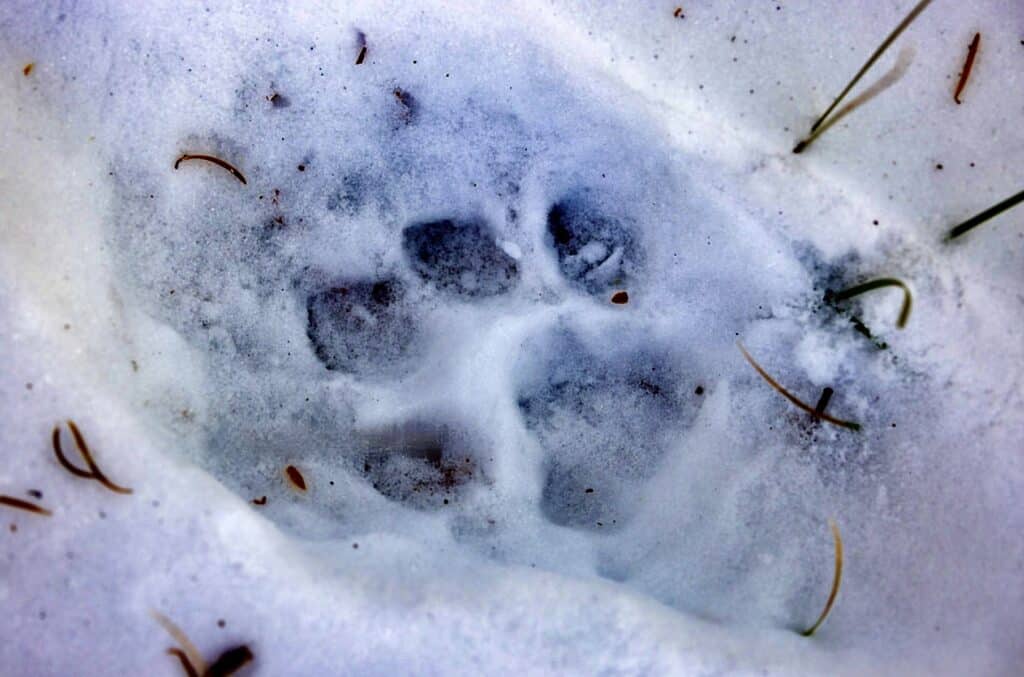
Backtracking to where I found the first lion track, I realize he dropped down onto the path a hundred yards or so back down trail. Locked in my doldrums I was actually stepping in and over his tracks for the length of a football field without ever noticing. As a person who used to make a living finding and filming mountain lions, it’s a little embarrassing and disturbing. My mind is a mess most days, like wild horses charging over the prairie. I’m just along for the ride.
Time to be still. Resting against a boulder, I drop my pack and grab my water bottle. I pour a little out as an offering for those who can’t drink anymore and guzzle a big swig for myself. Closed eyes, I try to focus on my other senses. I hear mostly just the wind, but there’s a faint alarm call from another marmot ahead of me. I wonder what’s got him so uptight. Whiff of rock, juniper, and sagebrush scent the airstream howling down the river corridor. There’s a peace, a stillness in my heart. Just breathe. Concentrating on only the wind and breathing, my central nervous system begins to settle in the sunshine. The breeze is cooling my sweat soaked shirt and the combination of feeling both hot and cold at the same time tightens the flesh and mind.
Replacing my water bottle and shouldering my pack against a wet back and pale sun, I continue to climb where animals and humans alike have ascended for centuries. Tukudika, a band of the Sheep Eater tribe, utilized these same sheep trails for the same reason the mountain lions do – to eat. Tukudika’s hunting blinds, comprised of stacked rocks, still exist to those who know what to look for. I imagine I’m part of a Tukadika hunting party in pursuit of big rams, high up where the spirits still live, and move accordingly.
Wilderness doesn’t erase suffering. Instead, it helps to release it in a safe place, sometimes masquerading as a sheep trail in the Black Canyon. The wind and wild gives me agency over my trauma. A place to grieve, make peace, and move on. It’s the only anti-depressant I know of without side effects.
Wilderness doesn’t erase suffering. Instead, it helps to release it in a safe place, sometimes masquerading as a sheep trail in the Black Canyon. The wind and wild gives me agency over my trauma. A place to grieve, make peace, and move on. It’s the only anti-depressant I know of without side effects. The trauma isn’t going anywhere. It’s mine for as long as I walk this Earth. I know because it always returns. So, I return, again and again, to nature. As a child leaving church, I always felt loved, safe, and connected to something larger than me. Decades later, it’s the sanctuary of wilderness where I now find my holy spirit and those same feelings of peace.
Following the lion tracks along a sub-trail, they come to a rocky outcrop high above the river below. I’m cliffed out. It’s a dead end for me. But not for the lion. In one leap, he went up and over. I can tell by the deeper impressions of his back feet in the dried mud where he loaded up like a back cast and sprung with the ease of a deep breath. I’m reminded of my humanness. No matter how much time I spend in the wild, I’m no match for those that call it home.
Coming down the mountain, I feel like a different person than went up the mountain. A shuffling benediction, aware of birdsong, of the shifting winds that smells like rain, and the all-knowing beetle that crosses the path ahead of me. I am connected. To what I’m not sure, but I feel less alone.