By Dorothy Bradley
Recently I had the honor and the immense responsibility, of helping eulogize one of Montana’s legislative pioneers and conservation leaders who served in the Senate around the 1970s. He was a dairy farmer from Great Falls with Scottish roots so deep you could hear the bag pipes. Fifty four years ago Senator Harry Mitchell was the keynote speaker at Montana’s first Earth Day, which I helped organize. From that time on he was a friend and inspiration.
In preparation for his memorial, I worked my way through a lot of Congressional records, articles, and correspondence. Reading that information made me realize what a privilege it was to look back at this amazing piece of Montana history.
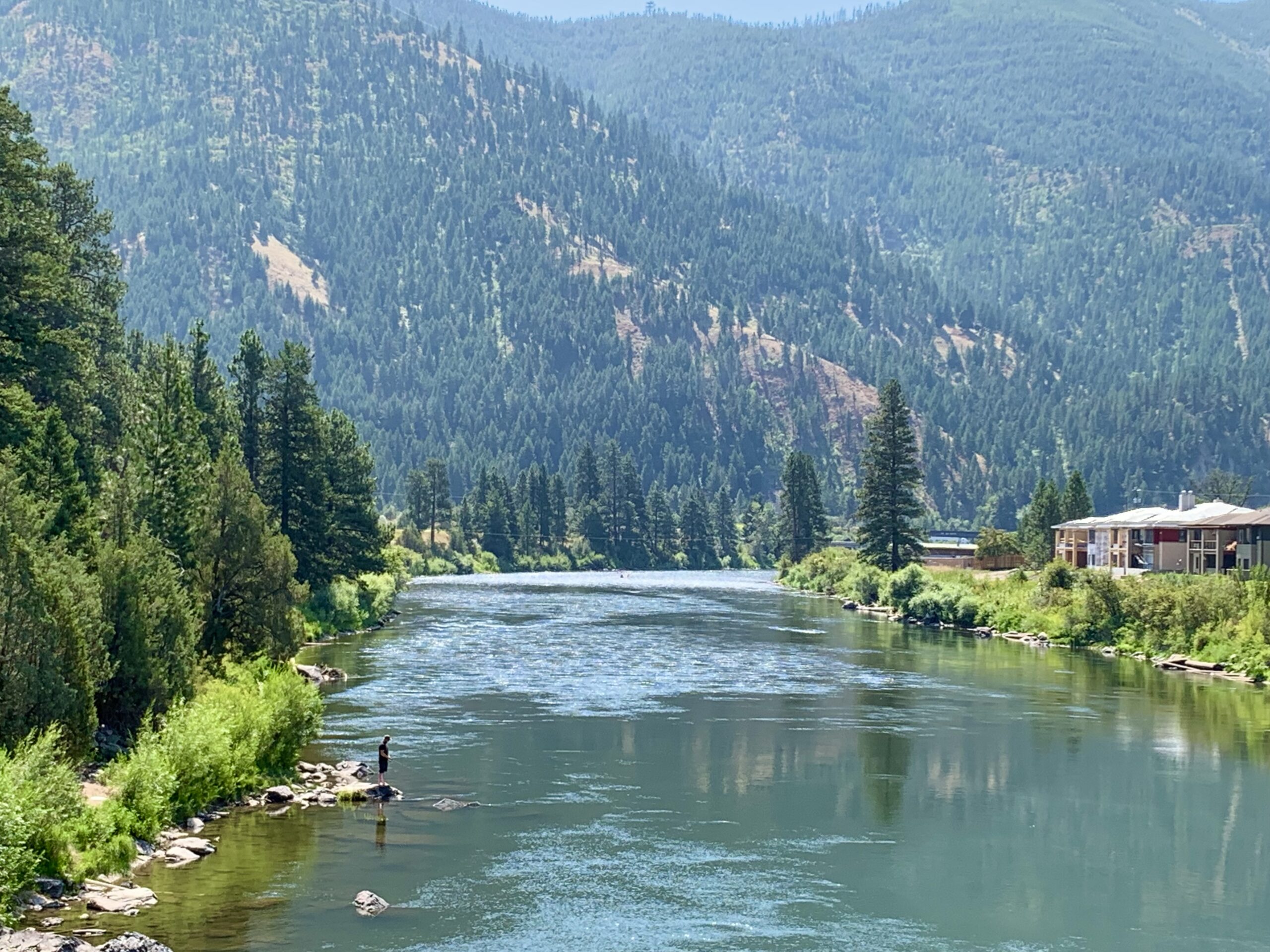
In the late 1960s, with a lot of road building and the beginnings of the Interstate system, fish biologists produced hard evidence that turning meandering rivers into straight ditches wiped out fish. They wrote their first plan on a napkin, probably in an anglers’ bar on some beautiful river—“pay attention to the water channel, water quality, and water quantity.” That pretty much says it all.
They also made a list of—and coined a term for— the best of the best waterways: “Blue Ribbon Trout Streams.” This blueprint and slogan led to the Montana Stream Preservation Act, which required constructing new meanders to accommodate their loss when straightening a stream was necessary. Most of this history is forgotten, but you can see its lasting impact when driving on the interstate from Butte to Missoula.
The interstate between Garrison and Missoula was built before the interstate between Butte and Garrison. Beautiful meanders on the Clark Fork helped make up for the straightening between Garrison and Missoula. But most amazing, besides being the first law of its kind in the country, is that it was hugely popular and passed with bipartisan support. Harry was a sponsor.
“I ask myself the obvious. Where has this Montana spirit gone? We no longer have this kind of statewide affection and pride for our rapidly depleting wild lands and degrading streams. And we no longer have crusades that are bipartisan, unanimous, signed by the governor, and topped off with senate hearings in Montana bringing us all together. Did this custom disappear with the ‘70s?”
—Dorothy Bradley
He also played a big role in turning the Lincoln Back Country into the Scapegoat Wilderness, and protecting the longest remaining 175 mile stretch of the Missouri River to be forever free-flowing.
Harry’s political process was the standard playbook of the day— bipartisan resolutions moving out of the Montana legislature with unanimous votes, signed by the governor, and entered into the Congressional Record during Montana hearings held by Senator Lee Metcalf.
I ask myself the obvious. Where has this Montana spirit gone? We no longer have this kind of statewide affection and pride for our rapidly depleting wild lands and degrading streams. And we no longer have crusades that are bipartisan, unanimous, signed by the governor, and topped off with senate hearings in Montana bringing us all together. Did this custom disappear with the ‘70s?
Harry always did a disappearing act, ducking out of acclaim and applause. Where are leaders like that who made public service so honorable? And particularly now – at a time when a changing environment is increasing the challenges of survival for our wildlife and fish – why are we dividing instead of uniting? When the child is sick the family is supposed to all come together, right?
A few weeks ago I heard a radio discussion where school children in North Carolina were enraptured with, and betting upon, animals in Alaska’s Fat Bear Contest. The teacher said that these children can’t even imagine what a landscape looks like that can be the home of these amazing mammals. My heart sank.
Our Montana children do know what that kind of landscape looks like. It is our back yard. Isn’t this a goal which could bring us together – providing as much natural habitat as possible so that even kids from North Carolina can come visit? We need to pass forward this wildlife gift that the huge, huge majority of American children no longer has.