by Dorothy Bradley
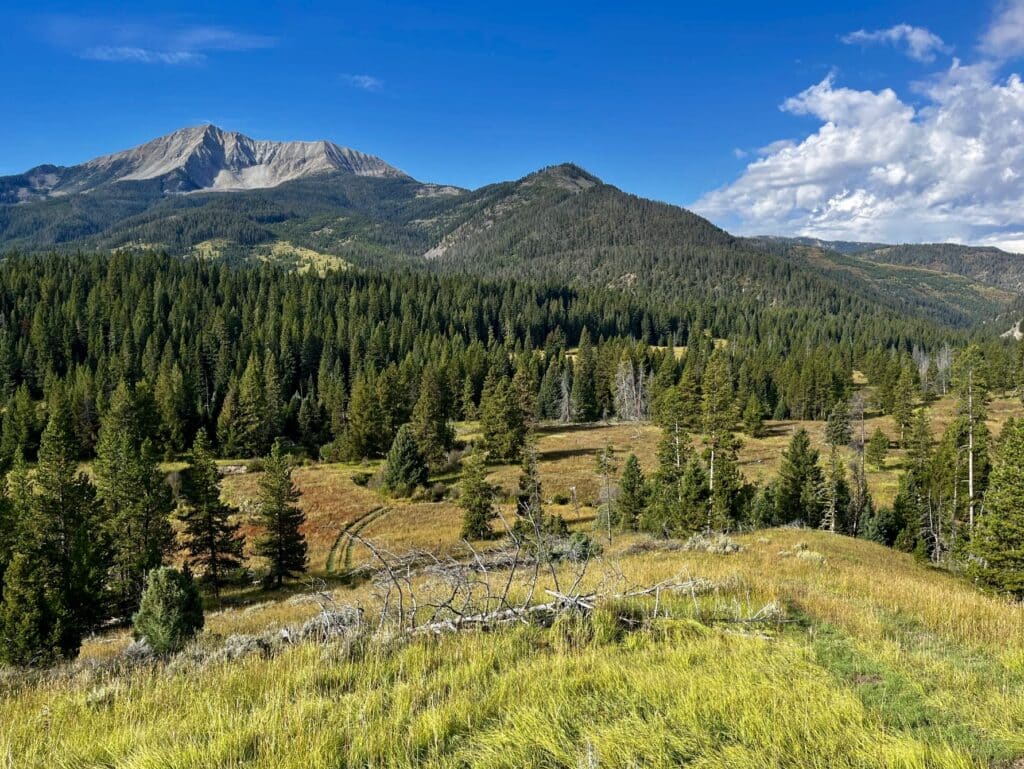
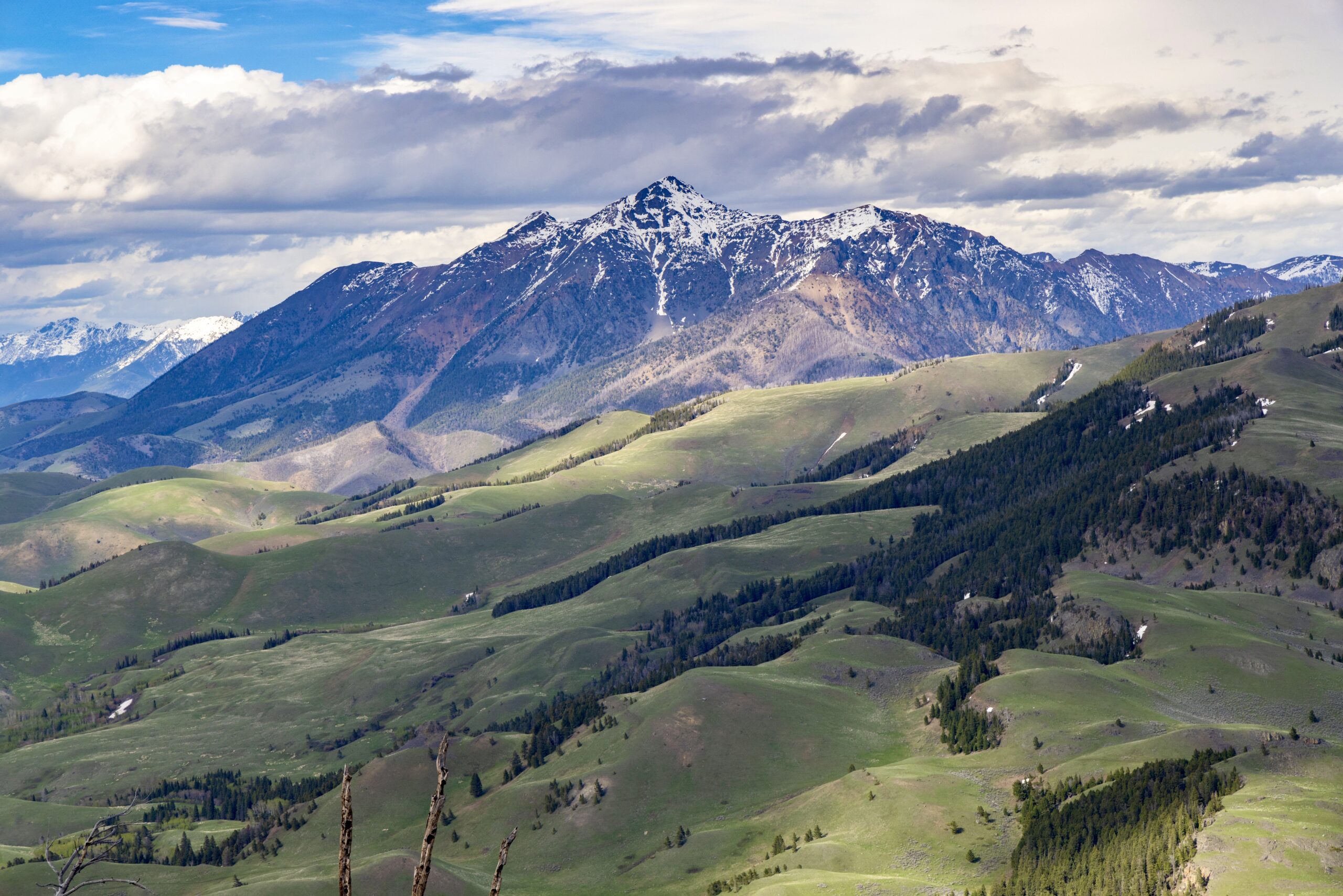
Walking on a trail in the Absaroka-Beartooth Wilderness in August, I was stunned to see that its popularity had necessitated side-by-side trails — one for people going up, and one for people returning—both a constant stream.
No one is arguing these days that we have too much wilderness. It is only because of their large acreages that one can still find solitude and wildlife can still survive. Bless those people who had the foresight to understand the need, and the commitment to create their protection.
Amazingly, it was within my lifetime. It appears, however, that the future of the Custer-Gallatin National Forest is becoming front and center on the public lands agenda. A proposal that has been been around for a while, now renamed the Greater Yellowstone Conservation and Recreation Act, is being touted once again as a fair and timely compromise. The problem is two-fold.
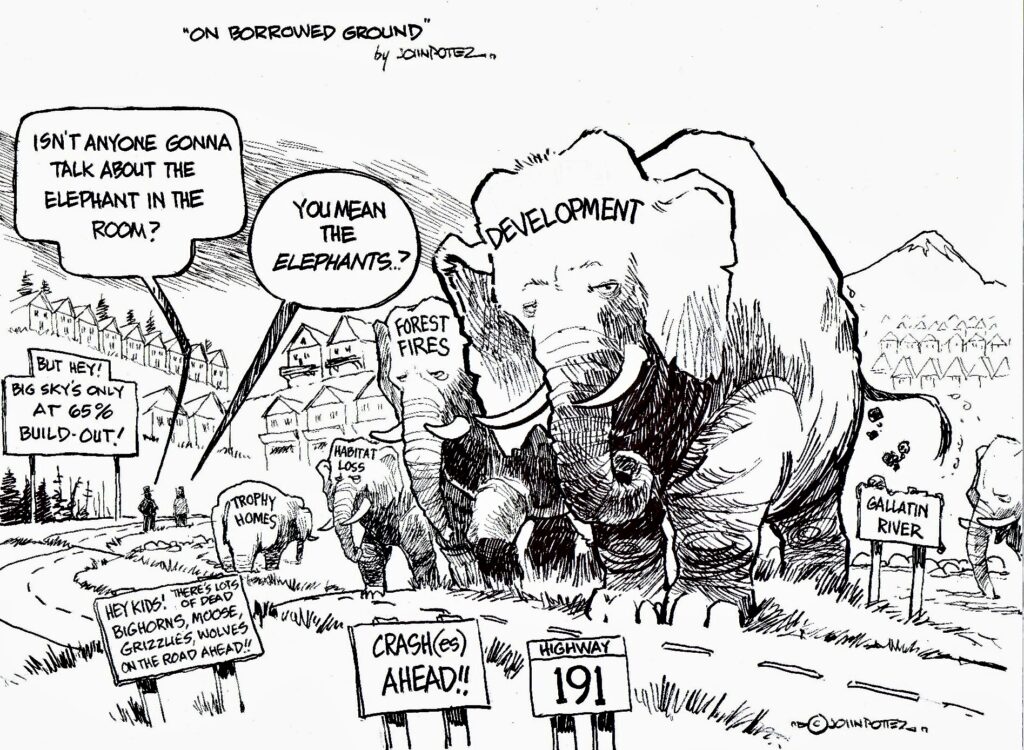
One: its chief proponents were probably not around when the first fair compromise, a huge one, presented a trade-off: development green-lighted on the west of the Gallatin River—Big Sky—and designs for maximum protection of maximum acreage on the east side in the Gallatin Mountains.
The east side included the modest 155,000-acre Hyalite Porcupine Buffalo Horn Wilderness Study Area along with some other smaller and particularly special acreages. Now, seeing the colossal size and spillover effects of Big Sky never envisioned 50 years ago, the acreage to the east is all the more vital.
More poignant; not less poignant, for wildlife that has been forced to give up so much.
Secondly, the “Greater Yellowstone Recreation” proposal—which doesn’t even mention wildlife by name— skips all consideration of climate change. YooHoo — is anyone watching the tragic disasters all over our county and the globe, exacerbated if not caused by climate change? Are bells ringing?
It is hard to see supporting this recreation proposal without consideration of this reality. It is time to try to bring the conservation community together again in support of maximizing wilderness in the Custer-Gallatin National Forest.
We should should start by designating all of the Wilderness Study Areas established by US Sen. Lee Metcalf, including the Hyalite-Porcupine-Buffalo Horn in the heart of the Gallatin Range, as wilderness. It would be such a gift for all “Gallatin Forest lovers” to honor Senator Metcalf’s legacy.
In the meantime, there are so many things we can do together to help this beautiful landscape by working together in the context of the latest climate and wildlife science, which supports full protection of these rare and world-class caliber wildlands in the Gallatin Range.
Some of us, fueled by the discussions of the new organization “M4WW” (Montanans for Wilderness and Wildlife) have put together an action plan that we call “THE FIVE.” It has a solid foundation of five principles and takes into account existing human pressures and how they will continue growing in the future.
The Five Guiding Principles Emerging From M4WW Discussions
1. Serve as a Nexus and Place to Enlist and Give Voice to Scientists Who Have Earned Wide Respect for Their Thinking about Ecosystem Protection;
2. Remind the Public Why Enforcement of Existing Rules and Land Use Regulations is Vital;
3. Create a Volunteer Community of Wildlife Advocates and Experts, and Develop Specific Projects with Emphasis on the Enduring, Time-Tested Value of Protection and Restoration;
4. Recover and Rehabilitate Damaged and Misused Wilderness Lands;
5. Study the True Best Options, Informed by Science and Love of Wildlife, for Permanent Protection;
This isn’t a cause involving only one generation. These ideas need young leadership and committed citizens who understand the urgency to implement them. My goodness, if only I still had a decent back (my spine of conviction, fortunately is still intact), what I wouldn’t give to join together to help restore some of the damage to the trails, campsites, streams, and marshes of the Gallatins owed to over-tourism and past and ongoing abuses.
My best vision at this late date, when we still have the opportunity to safeguard these amazing mountains for wildlife and solitude that proclaims the best of the Greater Yellowstone Ecosystem, is that we work together on constructive visionary projects. If we look ahead 50 years, do we think anyone will thank us for one more places overrun with people and their mechanical toys? There are plenty of those kinds of places already.
Knowing how grateful we all are for the wilderness areas we have in our own Montana, Wyoming and Idaho backyards, I know future generations will be grateful if we have the foresight and love of this place to pass on something valuable, unique, and — once lost — impossible to recover. We’ll be sharing more about M4WW in the coming weeks.