EDITOR’S NOTE: The following is an opinion written by Mason Parker and Katie Bilodeau of the non-profit public land protection group, Wilderness Watch. While the views expressed below do not reflect a formal position of Yellowstonian, they do speak to factual arguments supported in many investigative reports published here (and shared below) noting how the scientific evidence of negative impacts brought to wildlife by industrial-strength outdoor recreation is persuasive and crystal clear.
By Mason Parker and Katie Bilodeau
In the final hours of the 118th Congress, the Senate took up and passed the EXPLORE Act, which former President Biden signed into law on January 6, 2025. Some of our members at Wilderness Watch reached out, confused after seeing other conservation nonprofits urging support for this bill, even as Wilderness Watch opposed it.
News articles covering the EXPLORE Act suggested it could be a blueprint for conservation moving forward. But the EXPLORE Act has stirred fundamental questions about conservation, specifically, whether public lands like Wilderness should be protected for their own intrinsic value, or if their value lies solely in what we can extract from them.
As Howard Zahniser, author of the Wilderness Act of 1964, said, “The purpose of the Wilderness Act is to preserve the wilderness character of the areas to be included in the wilderness system, not to establish any particular use.” Wilderness is a priceless place to recreate—it provides us solitude, a chance for reflection, and an opportunity to experience a world we don’t manipulate and control. But, as John Muir once said, “Nothing dollarable is safe.” This includes Wilderness.
Wilderness is a priceless place to recreate—it provides us solitude, a chance for reflection, and an opportunity to experience a world we don’t manipulate and control. But, as John Muir once said, “Nothing dollarable is safe.” This includes Wilderness.
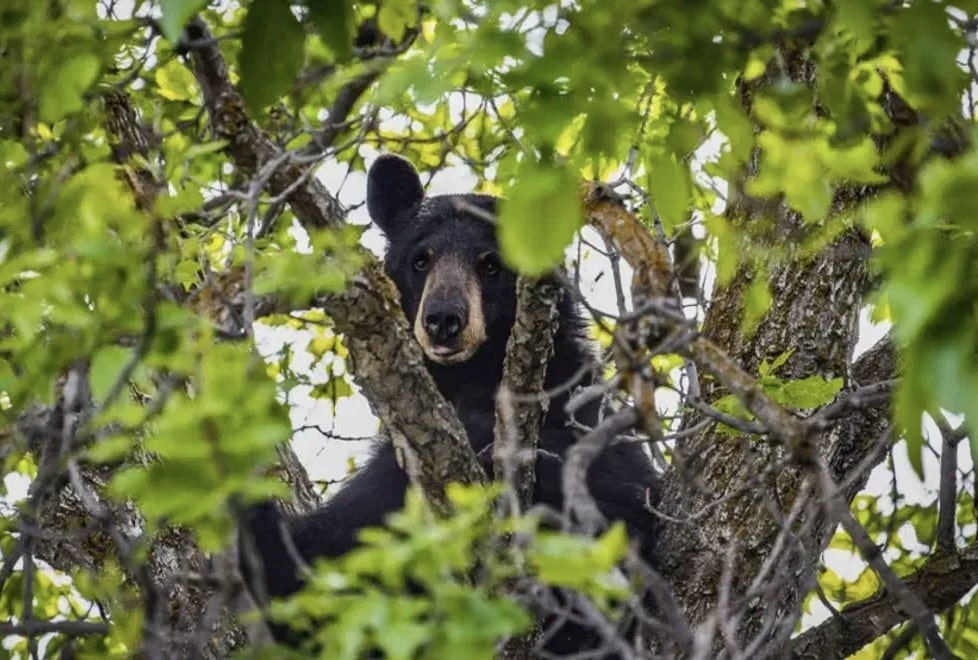
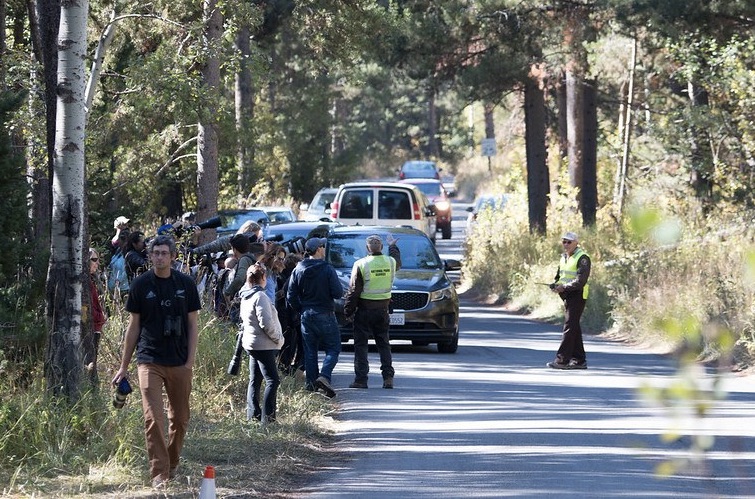
Consumptive activities include mining, logging, grazing, drilling, and, yes, recreating. While logging litters stumps and slash piles across clearcuts, and mining strips away soil, recreation consumes the space and security of plants and animals. Recreation can destroy habitat, and displace or habituate wildlife. Human presence can drive wildlife to ecologically inferior habitats where food may be in short supply and predator risk is higher. It can also physiologically stress animals, making them more susceptible to disease. High-use and concentrated recreation areas, such as climbing spots, can decrease the nesting success of birds.
To top it off, recreation contributes to the introduction and spread of invasive species. These pressures influence whether individual animals produce offspring, affecting broader population levels. For these reasons, we must consider limits and restraint on our recreation impacts.
Some conservation groups supported the EXPLORE Act because of provisions aimed at expanding access to public lands, especially for broader socioeconomic groups. While that’s a worthy goal, the bill gives the National Park Service discretion to install cell towers in backcountry throughout the National Park System, including within designated, potential, recommended, or eligible Wilderness. The EXPLORE Act also increases mechanized and motorized access on public lands; upgrades cabins, campgrounds, and resorts; loosens restrictions on commercial filming; and reduces the public’s ability to review outfitter impacts to wild places on all public lands, including Wilderness.
Alarmingly, the EXPLORE Act makes the first ever exception for a nonconforming recreation activity in Wilderness by allowing climbers to hammer fixed anchors into rock faces. Wilderness cliffs of gneiss and quartzite, limestone and slate, once untarnished by evidence of recreation, can now bear permanent proof of human presence. Moreover, the installation of permanent, fixed anchors will inevitably draw more climbers to what were once quiet wilderness cliffs.
Politicians driving the EXPLORE Act didn’t attempt to veil its purpose. Bringing the bill to the floor for a vote, Senator Joe Manchin—who caucused with the Democrats—said, “We have made a focus of supporting our public lands and the outdoor recreation economy, which is the fastest growing element of our economy in every state.”
His Republican colleague, Senator John Barasso, said, “It is a first-of-its-kind recreation package, and it will boost our nation’s outdoor economy…Outdoor recreation added over $1 trillion to our national economy in 2023—$1.2 trillion. That is 2.3 percent of our entire gross domestic product…This is a big deal.”
Yes, this is a big deal, but one where humans aren’t paying the price. Dwindling populations of flora and fauna foot the bill through increasing habitat destruction and biodiversity loss. And contrary to Senator Barasso’s claims, the EXPLORE Act is not “a first-of-its-kind recreation package.” It’s only the latest in a long line of bipartisan legislation that has conflated recreation with conservation—slowly chipping away at protections for the wild.
Before the EXPLORE Act, it was the 2023 Outdoor Recreation Act. Before that was the 2019 John Dingell Act. Maybe next year we’ll be fighting the Wealth and Income Landscape Development Act—the WILD Act—because America’s leaders can’t resist a quippy acronym when weakening environmental protections for profit.
By design, the EXPLORE Act is human-centered and extractive—what can nature do for us? But anthropocentric utility was never the reason for protecting Wilderness. This reality is at the core of why Wilderness Watch and our members—who sent thousands of messages to Congress—so strongly opposed the bill. Conflating recreation with conservation causes untold harm to the wild. Perhaps this conflation is based on the myth that recreationists are, by default, conservationists—though there is little evidence linking these qualities, and emerging research suggests the opposite. Anecdotally, we’ve just observed a vocal subset of the climbing community lobby for recreation over preserving Wilderness. More so than individuals, however, capitalism fuels this conflation.
The bipartisan introduction the EXPLORE Act received on the Senate floor wasn’t rooted in equity—it was rooted in money that the recreation industry can generate if turned loose on public lands. Even if recreationists are the foot soldiers, at the end of the day, those who provide goods and services will profit the most from the EXPLORE Act. It’s certainly not groups of veterans or disadvantaged youth who profit financially from constructing cell phone towers, modernizing cabins, or selling bikes, climbing hardware, and ATVs.
In an economic system where industry is controlled by private ownership, where self-interests and me-firsts feature prominently, and where gains are measured in dollars, it’s not surprising that the common value assigned to public lands extends only so far as who can profit from them. The bipartisan introduction the EXPLORE Act received on the Senate floor wasn’t rooted in equity—it was rooted in money that the recreation industry can generate if turned loose on public lands. Even if recreationists are the foot soldiers, at the end of the day, those who provide goods and services will profit the most from the EXPLORE Act. It’s certainly not groups of veterans or disadvantaged youth who profit financially from constructing cell phone towers, modernizing cabins, or selling bikes, climbing hardware, and ATVs.
With less than three percent of the Lower 48 designated as Wilderness, does capitalism not consume enough space already? If you drive through the endless agricultural development of the Midwest—essentially clearcuts of the native prairie—you become acutely aware of how much “progress” has shaped and terraformed our corner of the planet. In the urban sprawl of American cities and their suburbs, you have to wonder if there is any space we don’t feel entitled to, despite the history of overconsumption and ecological destruction that feeds civilization. Or, perhaps we’re suffering from a collective cultural amnesia—we’ve forgotten that these places used to be wild and can’t imagine what they once were like.
In the urban sprawl of American cities and their suburbs, you have to wonder if there is any space we don’t feel entitled to, despite the history of overconsumption and ecological destruction that feeds civilization. Or, perhaps we’re suffering from a collective cultural amnesia—we’ve forgotten that these places used to be wild and can’t imagine what they once were like.
Upon witnessing how rapidly industrialization was chewing through the wild over a half-century ago, a few visionary women and men—with the help of an overwhelming majority of Congress—laid the groundwork for a more ecologically ethical future. In the Wilderness Act, they developed a new idea to counter the threat of expanding settlement and growing mechanization. That new idea was Wilderness, and Wilderness offered something invaluable in the face of unprecedented and unrelenting development—it offered domains of respite for the natural world.
Conflating recreation with conservation completely fails to preserve Wilderness. A mountain goat and her kids crossing the steep terrain of the Northern Rockies, as goats have done for eight million years, will never generate profit like the climbing industry. The wilderness idea means protecting the intrinsic value of Wilderness and all of the life it safeguards, regardless of utility to humans or profit capacity. While recreation was always meant to be a part of Wilderness, elevating it to an all-consuming priority will trammel the natural world. Only when we step back and allow space for the more-than-human will we see the wilderness idea fully realized.
NOTE: If you have thoughts on the issues above, please send them along and we may publish them below. Please keep your comments on point, civil, respectful and based in fact. Send them to us by clicking here
For further reading:
Wreckreation And Our National Obsession To Love Wild Places To Death