by Dorothy Bradley
It was heart-wrenching to watch the high-stakes poker game being played with our country’s public lands in June, but the bizarre, dark-of-night debate in Congress seems to have moved on to other equally huge topics.
We must step up our vigilance. Montana has too many gems to be lost in the shuffle.
When I was working at the Gallatin Canyon 320 Dude Ranch in my high school years (the most fun job of my life — but that is another story), I would help the dazzling ranch manager, Patty Goodrich, take guests to church at Soldiers Chapel on Sunday mornings. There stood the chapel, as solitary as a blue heron, in front of the glorious Lone Mountain.
Nothing else. There was no “Big Sky” then, other than a beautiful book by A.B. Guthrie.
That was 60 years ago. Today you can barely make out the chapel, buried in a vast sea of condos, gas stations, luxury hotels, golf courses, ski lifts, McMansions, parking lots, convention centers, real estate offices, and restaurants.
In the years after my stint at the 320 Ranch, a series of land exchanges took place to consolidate the checkerboard land ownership. One of the goals was to allow the consolidation of private lands to the west, and public lands to the east.
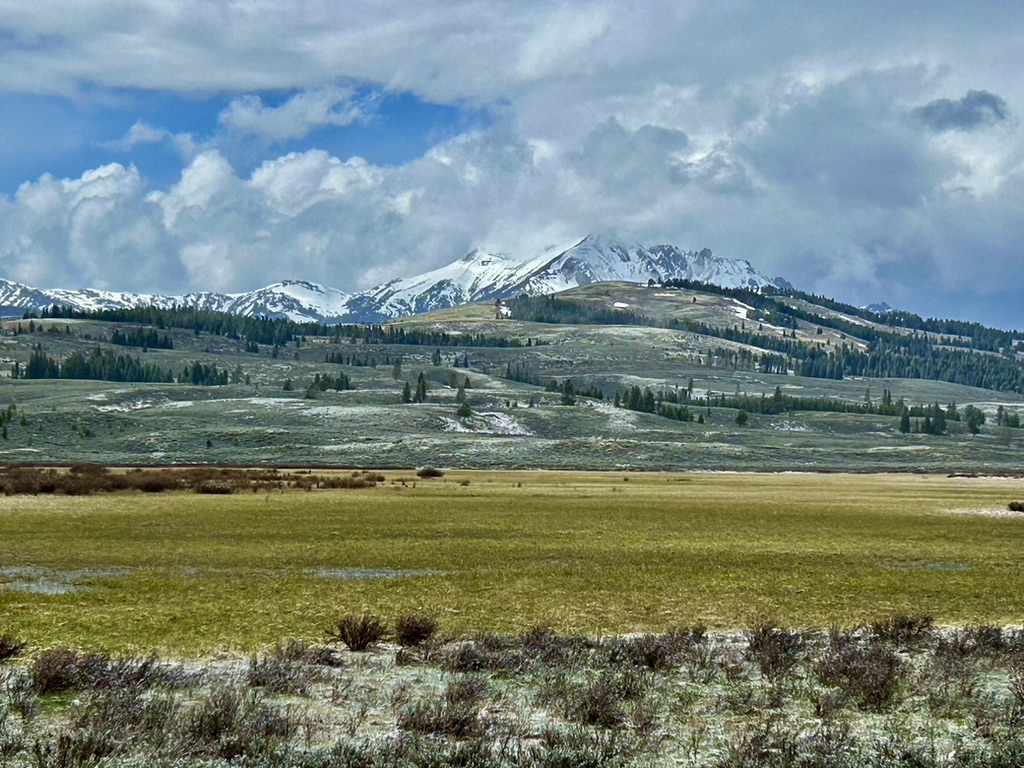
The private consolidation was with the understanding that Chet Huntley would be able to build his family ski area; and the roadless lands—including a 155,000-acre Wilderness Study Area (WSA) called the Hyalite-Porcupine-Buffalo Horn in the Custer-Gallatin National Forest—would protect the public wildland base to the east.
The rest is history. But the original bargain should not be forgotten.
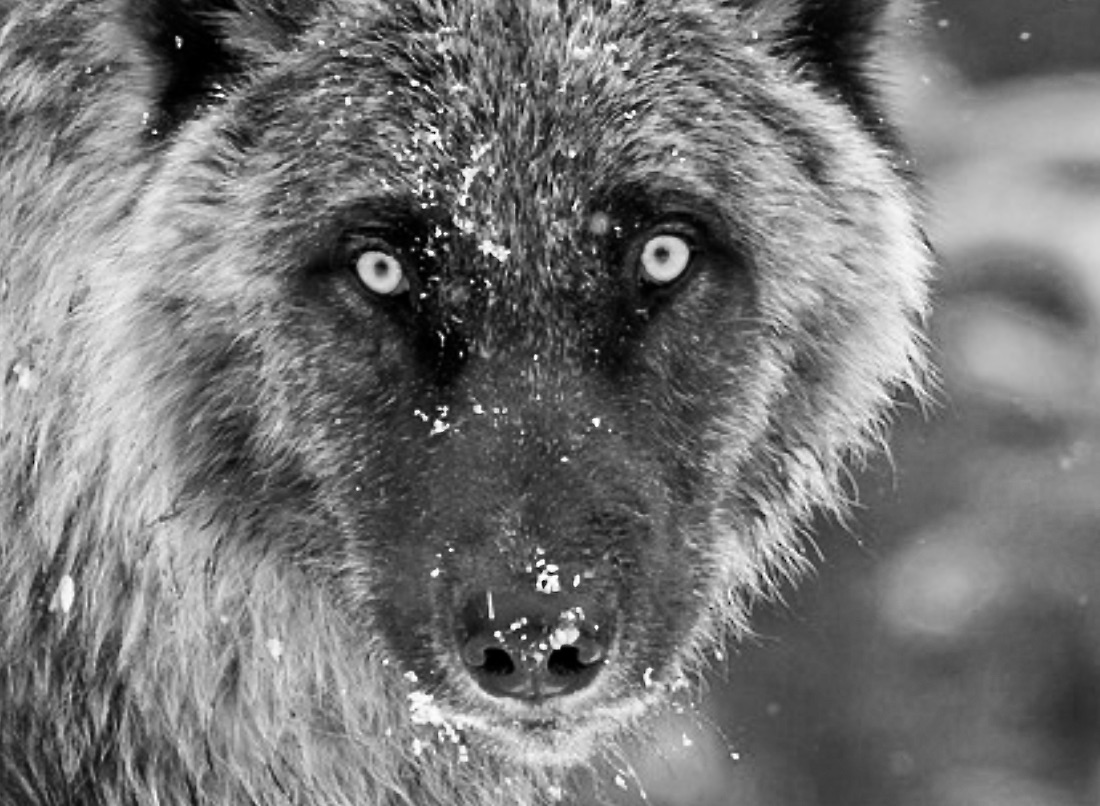
Today, the land to the east contains among the most diverse, intact cross-section of wildlife in the lower 48 states—from the largest wolf and grizzly carnivores to the smallest martins and elusive wolverines. Let there be no doubt: the future of this animal kingdom in the Greater Yellowstone Ecosystem is in our hands.
In truth, this is the central issue before us. The issue is not about mountain bikes versus dirt bikes versus e-bikes. It is about wildlife.
Today, the land to the east contains among the most diverse, intact cross-section of wildlife in the lower 48 states—from the largest wolf and grizzly carnivores to the smallest martins and elusive wolverines. Let there be no doubt: the future of this animal kingdom is in our hands. In truth, this is the central issue before us. The issue is not about mountain bikes versus dirt bikes versus e-bikes. It is about wildlife.
With the pressures of urban sprawl and industrial-strength recreation, the future of viable wildlife populations is hanging in the balance. Capping it off, in glaring prominence, is the challenge of our day, climate change.
While we can come inside to escape the heat and smoke, and pick up groceries at the store, the wildlife need space to roam, adapt, seek refuge, or die.
Our most hopeful guarantee of continuation of this animal kingdom is creating land protections comparable to wilderness or national park designation. This is the question: will we have the courage to use these tools to pass on this wildlife?
We received this gift, thanks to the visionary and dedicated generation immediately preceding us. Will the next generation look back at us with such gratitude? That we still have these animals in our backyard is something of a miracle.
But miracles have run out.
A group of arrayed conservation groups and mountain biking interests, the Gallatin Forest Partnership, may re-promote its proposed legislation called the Conservation and Recreation Act, arguing that their compromise is our only hope. But in its willingness to eliminate 40 percent of the WSA, this division of the wild landscape will sacrifice the wildlife.
Wildness that supports world-class wildlife cannot survive on postage-stamp parcels in the middle of intensive recreation going far beyond the shoes, hooves and tents of present day users.
In his early days as an avid game hunter, Aldo Leopold, the subsequent writer of the “land ethic” encouraging humankind to live in harmony with the land community, killed his last wolf, thinking fewer predators meant more deer and more hunting. But as he watched the “fierce green fire” go out of its eyes, he realized that the vitality of the natural world requires a full cross-section of wildlife, including predators.
When the universe gives us a glimpse of the fierce green fire, one must have a mind open enough to receive the message.
This green fire is beaming its light at us today, if we have a mind open enough to receive it. The future of this animal kingdom is ours to make.
Our actions will be forever. Will those who believe our world can no longer accommodate our predators, please stand up.
The debate will begin.