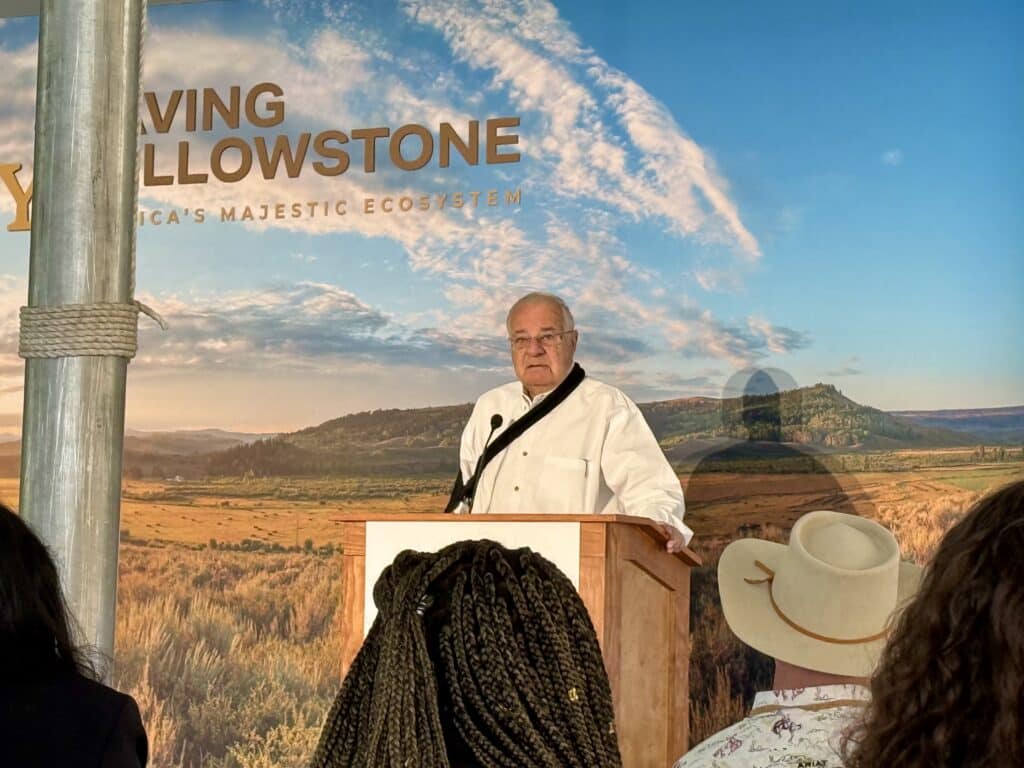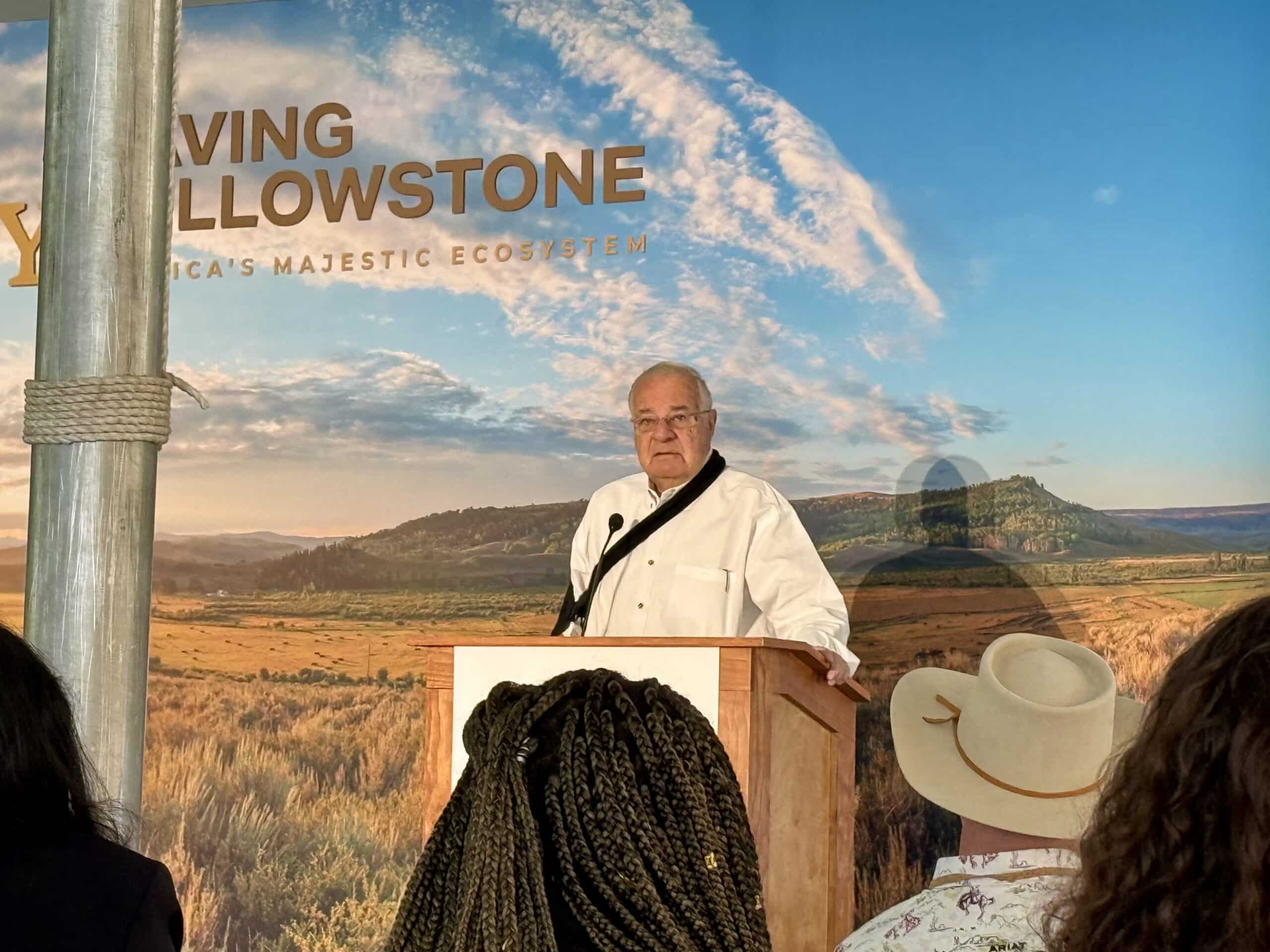
EDITOR’S NOTE: American businessman, philanthropist and Wyoming ranch owner Joe Ricketts is best known for his building of TD Ameritrade into an influential financial services company assisting customers making investments in their retirement, and for his family owning the Chicago Cubs. One of his sons is a current US senator and former governor of Nebraska. In late August, Joe Ricketts hosted an unprecedented conservation gathering at his ranch in Bondurant, Wyoming. The event, titled the “Saving Yellowstone Summit,” also served as a springboard for him announcing creation of new Saving Yellowstone Foundation devoted foremost to rallying together private property owners around the ecosystem to protect the region’s world-renowned wildlife migrations and biodiversity while there’s still time. Todd Wilkinson, writer, investigative journalist and founder of Yellowstonian, was asked by conference organizer Doug Smith to deliver the opening keynote address that, in straightforward terms, laid out what was at stake and the major threats.
In order for a campaign to succeed, he said, based on conversations with scientists, it comes down to these vital focal areas if the private landscape of Greater Yellowstone can avoid the same pattern of destruction and loss of wildlife diversity that have already occurred along the Front Range of the Colorado Rockies and the Wasatch/Greater Salt Lake Valley. First, he said, a shared vision that has a clear-eyed focus on habitat protection and acknowledging that quality habitat is finite. Second, having ways to raise an enormous amount of money to incentivize private land conservation and help cities and counties deal with ecologically-destructive growth. Third, unprecedented unity arrayed around common goals among landowners, conservation organizations, federal elected officials and local governments. Fourth, a wider array of tools than are currently being considered, ranging from voluntary conservation to science-informed planning and zoning that rewards the private sector for protecting nature, keeps rural people on the land and yet prevents the most destructive kinds of development. Given the focus of the conference, he did not address the numerous threats affecting the integrity of federal public land.
Below, as it appeared in print, is a recap of the summit written by senior environmental journalist Brett French of The Billings Gazette. We reprint it here with the permission of both The Gazette and its author. Having quality daily journalism matters in our society. Here is how you can subscribe to The Billings Gazette where great writers like French doexcellent work. Also read a profile of Joe Ricketts in the new edition of The Land Report.
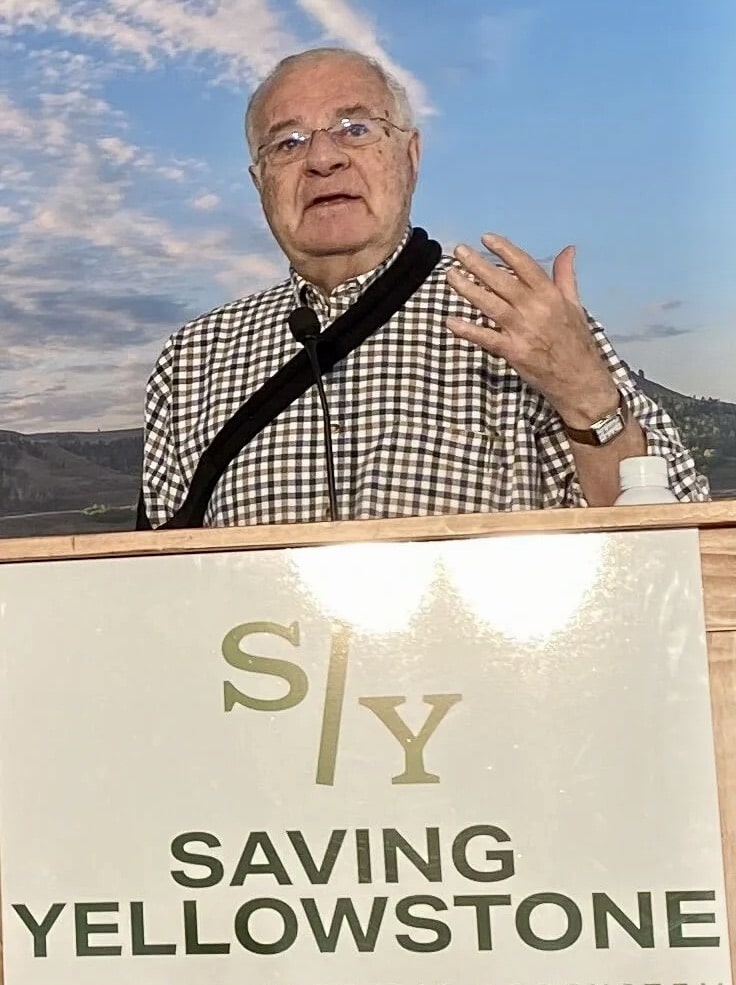
by Brett French/The Billings Gazette
At 85 years old, the founder of an online stockbroking company is making a daring bet on preserving the 34,000-square-mile Greater Yellowstone Ecosystem.
Joe Ricketts, who founded what would become TD Ameritrade in 1974 and sold it in 2020 for $26 billion, has funded collegiate scientific research in the region as a basis for his new venture. Called Saving Yellowstone, Ricketts is seeking a CEO and an executive team to lead the ambitious work.
“It’s a multi-year job,” he told a recent gathering on his Jackson Fork Ranch near Bondurant, Wyoming, wedged between the Salt River and Wind River mountain ranges along the upper Hoback River. “It’s a big job.”
Working with landowners
A Nebraska native, Joe Ricketts made his wealth after founding TD Ameritrade and selling it. One of his efforts now is to advance conservation across the Greater Yellowstone Ecosystem.
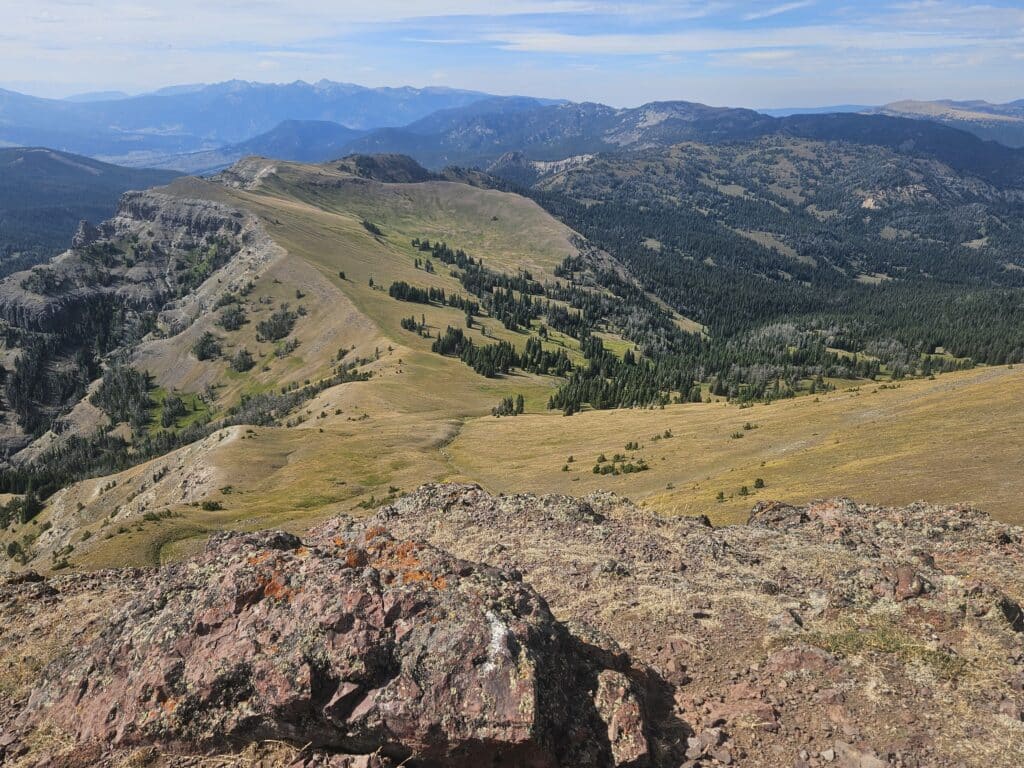
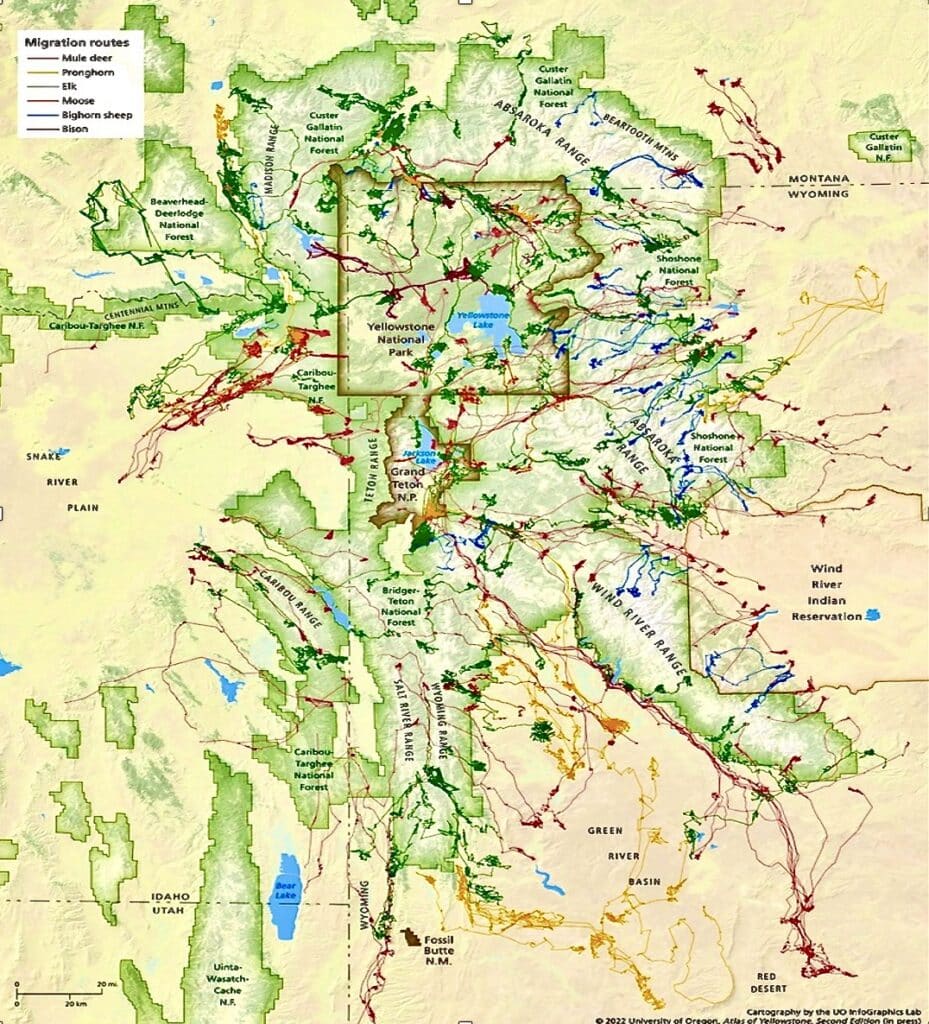
One of Ricketts’ goals is to work with private landowners in the three-state region — Wyoming, Montana and Idaho — to preserve a mosaic of lands that knit together Yellowstone and Grand Teton national parks and the five national forests surrounding them.
Preserving the ranches and private lands, however, doesn’t mean halting all development. Instead, Ricketts is a believer in finding ways to combine conservation and business demands.
“It’s a very attractive place to live, so people will come now that they can get Starlink, and they will have their jobs here, or they may … have a job outside of the home, working in the tourist industry,” he said from his sitting room overlooking a lush wetland. “We need tourists. We need the dollars, but we don’t want that to overcome the conservation efforts.”
“We need to take a whole new idea of how we look at conservation.”
For Ricketts, the goal is to abandon the past habits of American industrial development that relied on extractive industry to the detriment of the environment.
“When I mention that to other people, especially people that are interested in conservation, they’re stunned that I would even bring up commercial development,” he said. “But you’ve got to have the commercial development to help support the cost of keeping the ecosystem.”
As examples, Ricketts has invested in a nearby ski area and hotel and is building an “upscale resort” designed to introduce its guests to the Yellowstone ecosystem through guided trips and conservation education.
Team Yellowstone
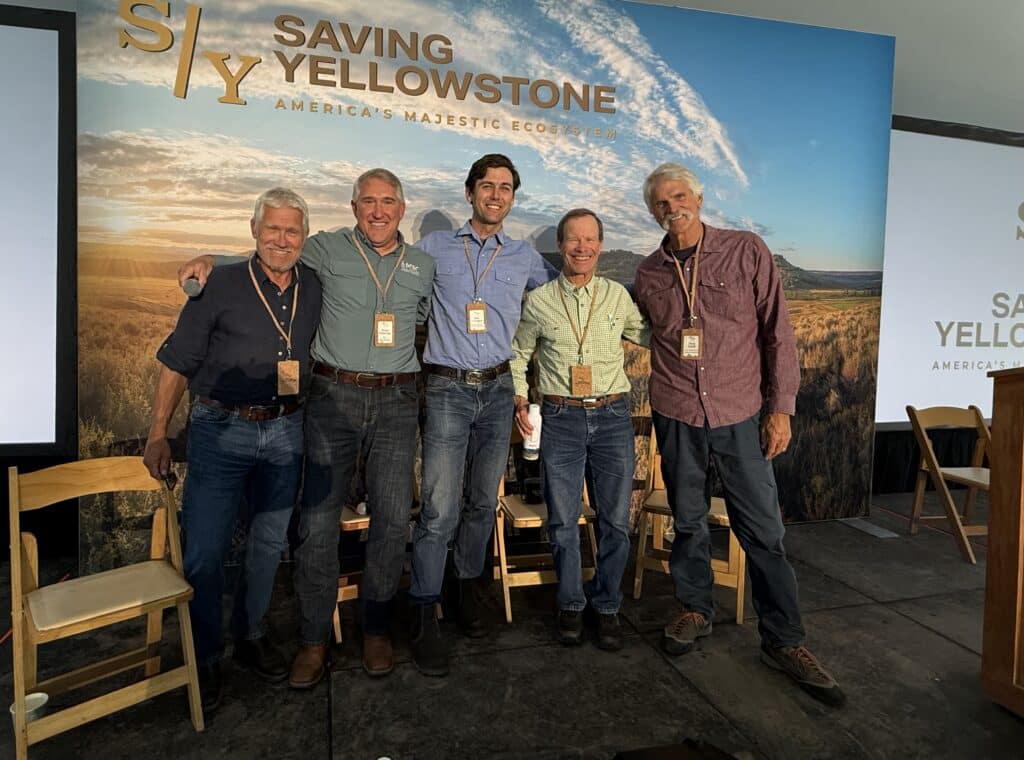
To advance Saving Yellowstone’s mission, Ricketts has enlisted A-listers like Doug Smith, former Yellowstone wolf biologist, to guide investment in student science through the Ricketts Conservation Foundation and to help coordinate this year’s gathering.
Smith emphasized Ricketts’ “strength as a visionary” in organizing the event, spread over three days, that attracted representatives of well-known nonprofit groups, area politicians, federal and state wildlife biologists.
Montana journalist and author Todd Wilkinson gave the opening night’s keynote speech, highlighting his conversations with Ricketts since last fall about an attempt to make history in the “cradle of American conservation.”
“We’re here experiencing the last great functional bioregion still standing in the lower 48, and one of the greatest in the world,” Wilkinson said. “We’re in a place that emanates outward from what was once a radical idea, Yellowstone.”
Wilkinson acknowledged that what Ricketts has proposed sounds impossible to some and that the future of the region could be that of the “naturally diminished” western cities of Salt Lake City or Denver, “which squandered its ecological richness.”
“Every other corner of the lower 48 is forced to ponder the cost and controversies of rewilding, all we have to do is not dewild,” Wilkinson said.
Engaging with landowners
Shari Meeks, associate director of the Ricketts Conservation Foundation, was called by one member of the conference “the secret sauce,” capable of pulling off the bold endeavor of engaging private landowners.
A South Dakota native, she also helps run Meeks Brothers Outfitting with her husband—a Jackson Hole native. Her background in rangeland science made her a natural local hire for her job promoting Ricketts’ investment in promoting virtual fencing.
With electronic collars attached to cattle, ranchers can virtually map grazing lands that allow more frequent movement of cattle with less effort. The maps can also keep livestock out of waterways, away from irrigation equipment and canals limiting damage to the infrastructure.
“With virtual fencing, the pasture is no longer fixed, but constantly reimagined with a few taps on the screen,” a promotional video from the foundation touted.
Such GPS and cellphone technology, somewhat comparable to the invisible dog fences suburbanites install, can lead to a lessened need for fences that can restrict wildlife movement, as well as require continual and costly upkeep.
Some of the collars also alert ranchers if a specific cow hasn’t moved, allowing them to investigate the cause. One Idaho cattleman discovered his immobile cow had ingested a poisonous plant, and he was able to revive it.
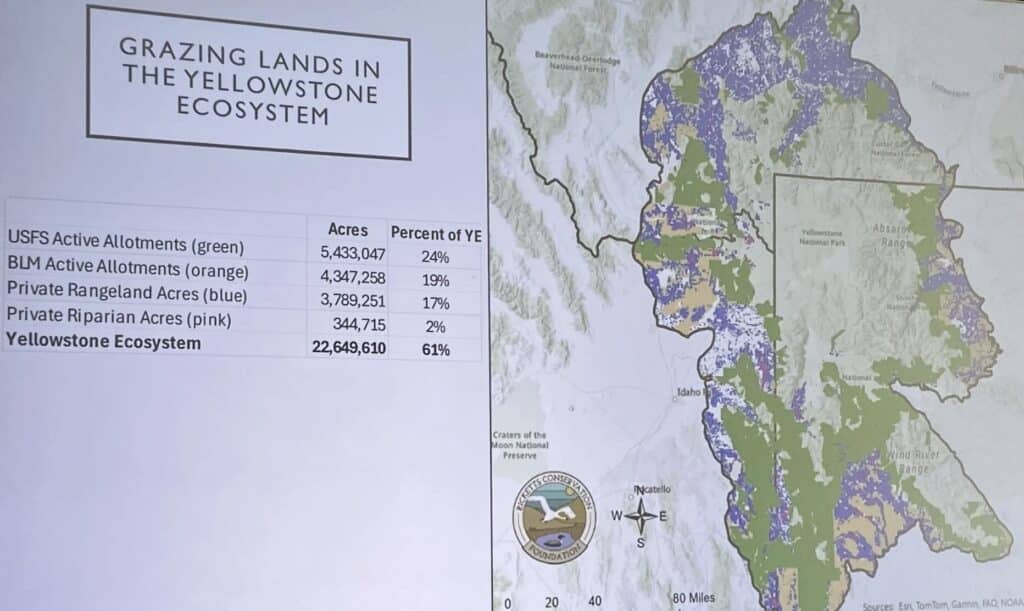
The issue is important to Meeks and the Ricketts Conservation Foundation because 61% of the Greater Yellowstone Ecosystem is agricultural land, and large sections of the five surrounding national forests are leased for livestock grazing.
“So we see that agriculture and ranching are central to the success of saving Yellowstone,” Meeks said.
Since 2024 the virtual fencing effort has enrolled more than 595,100 acres that graze 7,800 head of cattle at a cost to the foundation of $717,900.
“So for every dollar we’ve invested, somebody’s come to the table with $3.25, and that’s pretty profound,” Meeks said. “Who leverages that kind of dollars?”
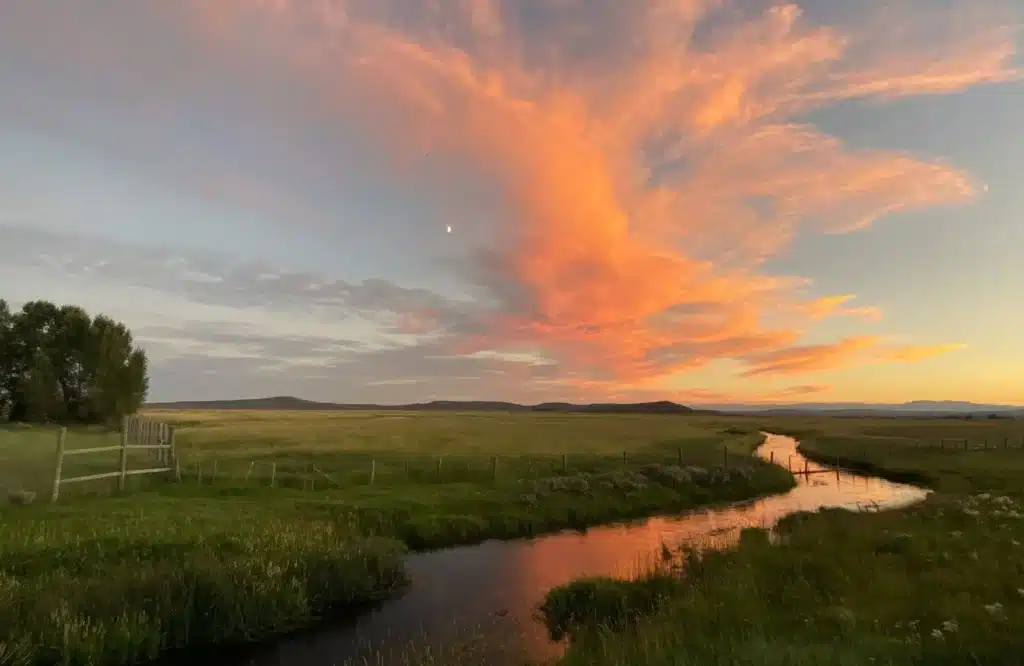
What about subdivisions?
To Wilkinson, the greatest threat facing the region is housing development. Projections that his hometown of Bozeman could gain more than 64,000 residents in the next 20 years had him reference “taboo” words like taxes and zoning.
A real-estate transfer tax on larger properties, excluding agricultural operations, could build a war chest to benefit the ecosystem, Wilkinson said. Likewise, a national tax on outdoor gear — like that already paid by anglers and hunters — could help fund conservation work.
When it comes to zoning, Wilkinson is advocating more concentrated housing development. He noted some subdivisions already contain restrictive covenants to protect private property rights, which are more rigid than city and county zoning laws.
Educating everyone
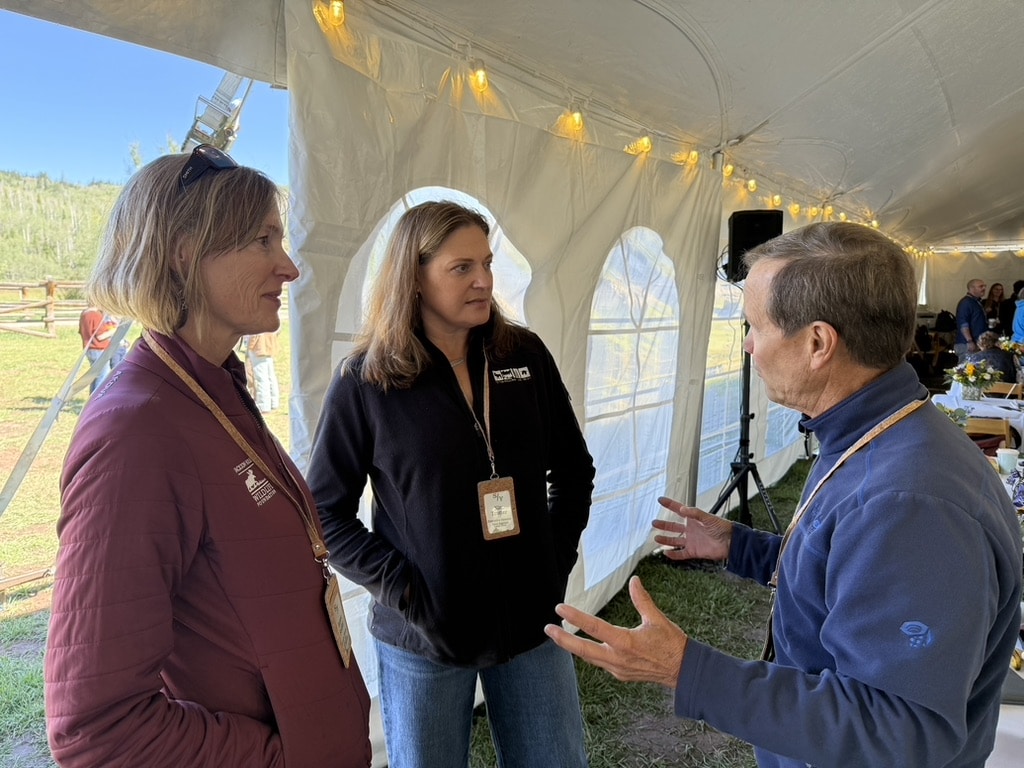
Guests of the 2026 Saving Yellowstone Conservation Summit gather after a day of student science, expert and panel presentations at the Jackson Fork Ranch.
At the root of Ricketts’ bold effort is science and education.
“I think people moving in to enjoy the ecosystem may not realize that they may be part of what is destroying the ecosystem, and so we have to let them know,” he said. “We have to make them aware. We’ve got to make the whole world know, especially the continental United States know, that the ecosystem has to be preserved, which means human beings have to take action in order to preserve it.”
Funding scientific studies is important to let people know what is happening in the region and why conservation is important, he said.
Beyond education, Ricketts’ foundation is also striving to connect the many existing conservation groups, federal and state agencies to coordinate their actions.
A Call to Real Action
So it made sense to end the conference with a talk by Jonathan Schechter, a Jackson Town Council member and executive director of the Charture Institute, a “Wyoming-based think tank focused on growth, change and sustainability,” according to its website.
In his “call to action,” Schechter suggested the conference attendees leave with a “shared sense of purpose, a shared idea of what we can do together to improve the chances of saving Yellowstone.”
Yet, he also asked the group: what does it mean to save Yellowstone; what would they be saving Yellowstone from; and how will they know if they succeed?
Based on these questions, Schechter wrote a statement: “We’ll know we’ve saved Yellowstone when the Greater Yellowstone Ecosystem is hallmarked by viable populations of all its native species and by the full and proper functioning of all its natural processes, including migration, reproduction and evolution.”
Schechter sees the statement as aspirational and actionable, a way to judge if the work is succeeding.
Setting a deadline
In the year 2072, Yellowstone National Park will celebrate its 200th anniversary which should be a deadline to assess whether Save Yellowstone has succeeded in protecting the region, Schechter suggested.
“How in the world are we ever going to do something so profoundly audacious?” he asked.
To answer, Schechter suggested thinking of the region as a mosaic – many small pieces creating a larger design.
In 2008, an inventory cataloged about “250 nonprofit, governmental, and educational organizations, which self-identified as being involved in conservation-related activities” in the Greater Yellowstone Ecosystem, Schechter said.
Collectively, the groups and their staff have the potential to do more than they can individually, he proposed. By thinking of their actions as part of a larger whole, Schechter said the groups could see where there are gaps and what efforts demand the highest priority.
Between these groups, their constituencies and the millions of people who visit Yellowstone and Grand Teton parks every year, Schechter said there is already a large base from which to launch Ricketts’ plan.
“If we can raise the consciousness about what’s actually going on in all these efforts and how much people care, then my hope is that over time we will move things along,” he said.
Wilkinson said the Wyoming “gathering is an unprecedented opportunity to do something as momentous as setting Yellowstone Park aside the first time around and establishing national forests and wildlife refuges, and land trusts, and protected species, and rivers, and farms, and ranches.”
“Mr. Ricketts believes in creating an aspirational campaign, a future-minded movement so virtuous and inspiring that people will want to join and not be left out.”
Inspired by a snowmobile trip
A Nebraska native, Ricketts discovered the Yellowstone region when he went snowmobiling decades ago. In 1999 he purchased the 1,300-acre Jackson Fork Ranch.
What started out as a playground for Ricketts’ children and grandchildren – a place to hike, fish and horseback ride – has now evolved.
“Both my kids and my grandkids say, keep the ranch,” he said. “But if we’re going to keep the ranch, we’ve got to do something relative to both ideas: economic development and conservation.”
Despite today’s divisive political climate and the Trump administration’s push to ease regulation of extractive industries like mining and logging on federal lands, Ricketts said he sees his efforts as “something that would bring people together.”
“I think people have a natural inclination to want to maintain a wonderful ecosystem,” he said.
“If you don’t try, you’ll never know.”