By Brad Orsted
In 2012, someone offered me a way out of my own life, and I almost said no.
The offer was Yellowstone—a chance to spend real time in the wild, doing photography work I’d normally have killed for. I didn’t want it. I wanted the Upper Peninsula of Michigan instead. Somewhere flat and gray and far from anyone who’d notice how far gone I’d gotten. I had already decided how the story ended, and Yellowstone was inconvenient to that plan.
I went anyway, half out of obligation, not conviction. What I found at the end of the gravel, where the road stopped being a road at all, was something I didn’t have language for yet. No cell signal. No stimulation. Nothing left to argue with, negotiate with, or drown. Just wind, and elk, and a nervous system that had run out of places to hide.
It didn’t save me that day. It took years. But it started exactly there—at the place the pavement gave out.
By the time I arrived in Yellowstone, I was already a hot mess. Loss of a child under any circumstances can buckle a man, but mine were severe. I was a full-blown alcoholic, deep in the throes of depression, grief, and guilt. I couldn’t find peace from the looping hell in my head, and it fed my ideations too. I had no delusions of healing in Yellowstone; I was merely looking for a better place to die. I knew at some point I would either take a one-way trip into the backcountry or not wake up from the lethal concoction of benzodiazepines I’d been prescribed and cheap vodka I chose to wash them down with nightly. After a nearly two-year nightmare, I was ready to check out.

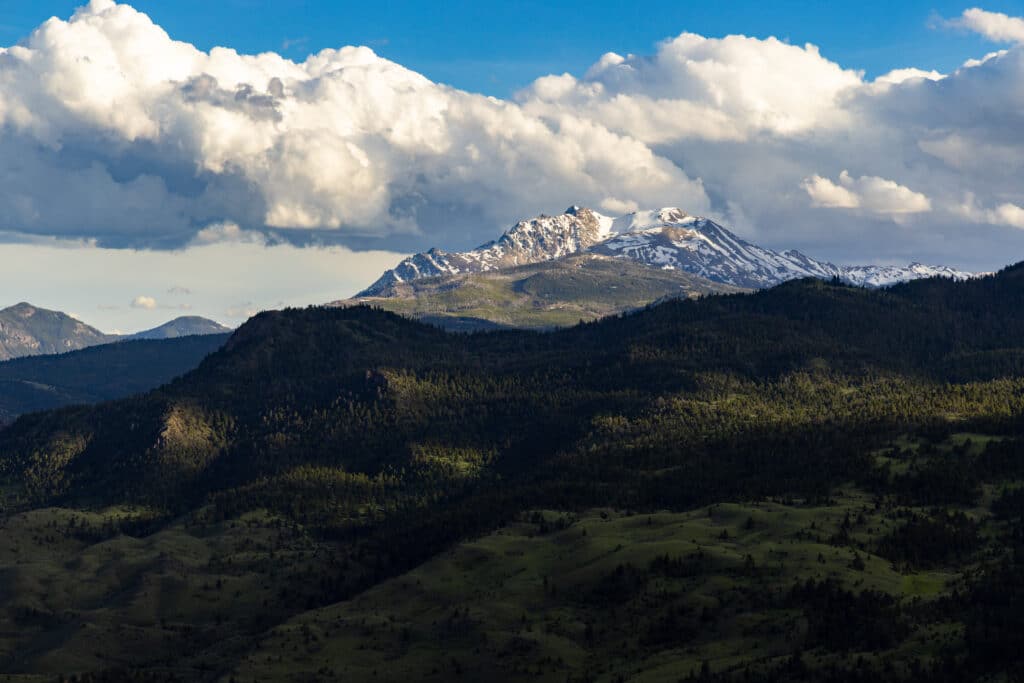
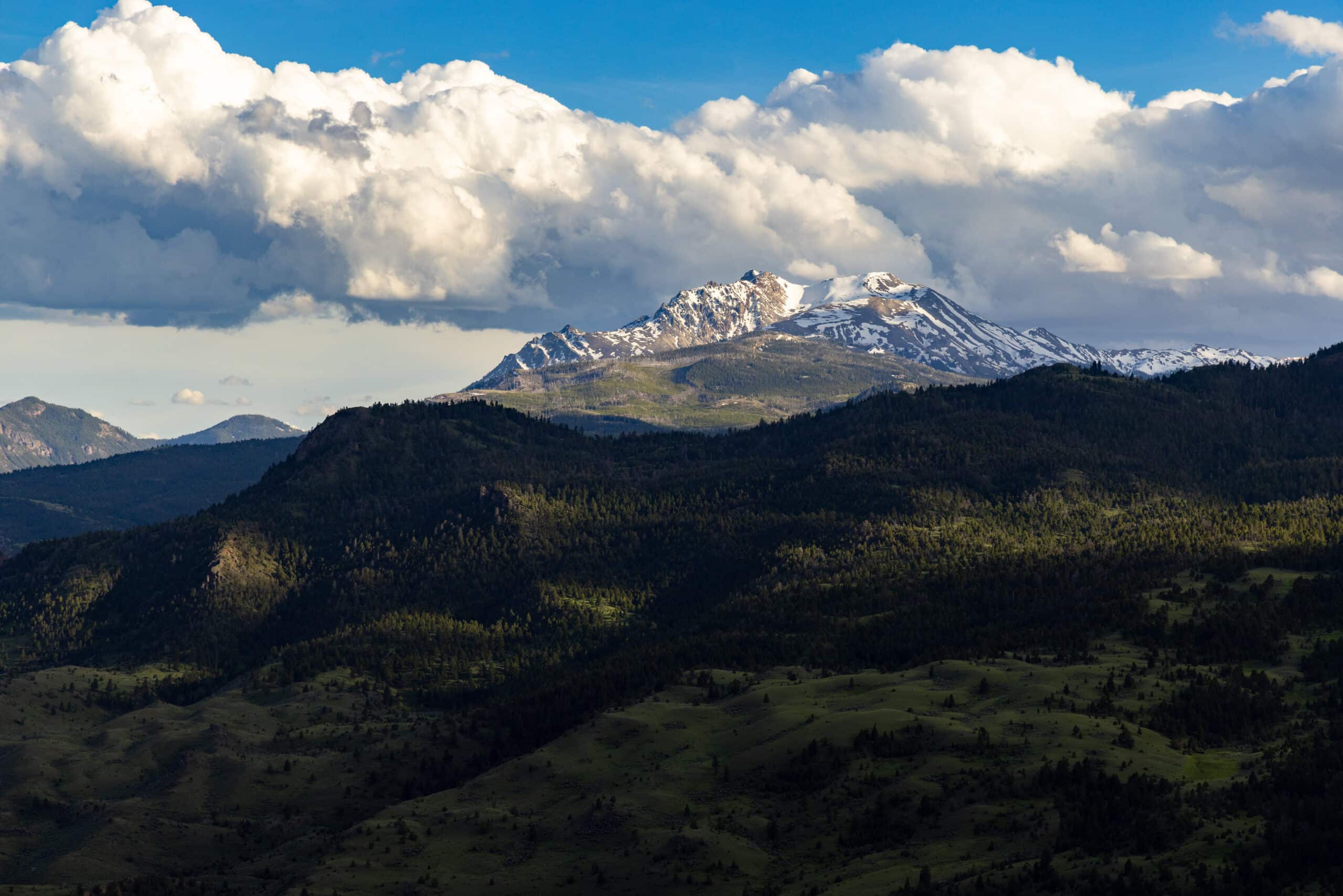
One morning, waking up ashamed and hungover yet again, I decided it might be time for that journey to the backcountry that didn’t come back. As I wandered out into a sea of gray-green sage steppe, with the snowy peaks in the distance my final destination, I felt so alone and ready. Ready to go find my daughter. Ready to end the horror my life had become. Ready to move camp from this world. I was out of tears, out of patience, and out of time. Then it appeared.
A grizzly bear.
Way too close, moving through the waist-high Wyoming big sage right in front of me. It lifted its head and looked right into me. I froze. The bear sniffed the air, stomped his back feet, lowered his head, and kept moving. I couldn’t. I couldn’t move. My ears were buzzing, and besides feeling sick from booze, I was now dizzy and in shock. One thing I knew was I definitely didn’t want to die anymore; I just didn’t know how to live yet. It’s also when I realized wilderness was medicine, and everywhere the grizzly bear walks is holy.
I’m not the only one the wild has pulled back from the edge.
One in three veterans lives with some degree of PTSD. One in three also lacks adequate access to mental health care — meaning for a lot of them, the gap between the wound and the treatment is where the drinking starts, where the ideation starts, the same road I was on. The VA has started to notice what a lot of us already knew standing in it: a growing body of research now shows wilderness-based therapy measurably reduces PTSD symptoms, anxiety, and depression in veteran populations. One study followed veterans on a four-day wilderness rafting trip — no formal therapy, no clinical intervention, just the river and each other — and found real drops in hyperarousal, sleep disturbance, and the flashbacks that don’t let a man rest. Something as simple as sustained time outside did what months of talk therapy hadn’t.
I’ve seen this up close.
I was asked to speak to groups of disabled combat veterans with TBIs through Will’s Hope — some groups all men, some all women, the results always the same. Before I went in, I was warned. These vets wouldn’t open up to me. I hadn’t served. I hadn’t seen combat. I had no business expecting them to hand me anything real.
Then I told them what I’d been through — having to identify my daughter’s body. A soldier looked at me and said that was as bad as anything he’d seen in combat. The room leaned in.
After that, the walls came down on both sides. We traded stories about the only place any of us had ever felt safe — not a house, not a hospital, not a support group in a flickering fluorescent-lit room, but outside. Birds. Running water. No cars, no traffic, no people. Just sunshine and acceptance. For some of them, wilderness wasn’t a nice place to visit. It was the only thing they had left to hold onto, the only place they could stand to be. We shared food, hugs, tears, community — confirming something I’d only ever known anecdotally until that room: nature heals.
These were men and women who fought with their lives to protect my right to stand in a roadless wilderness and feel the wind. What we’re talking about taking away isn’t scenery. It’s the last safe place some of them have. Now it’s our turn to defend that right for them too.
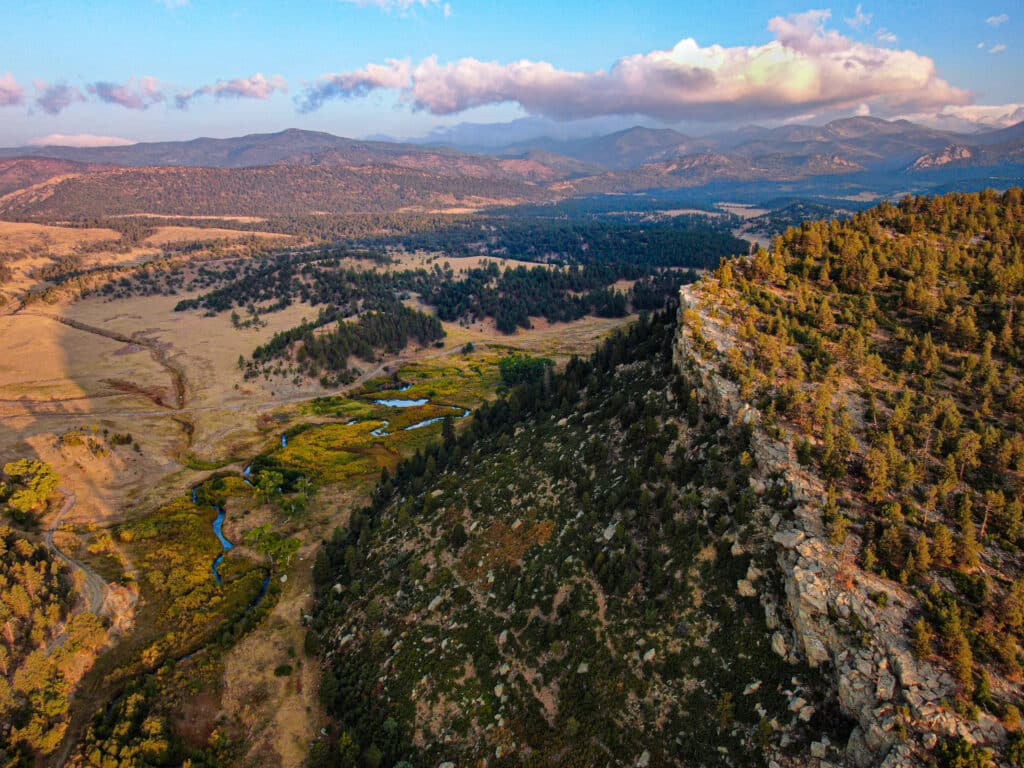
What I’m describing isn’t esoteric—it’s medicine and home to thousands of species — some endangered, some we may not even know exist yet. It’s not a view from a scenic pullout or a backdrop for a photo. It’s 45 million acres of national forest—nearly a third of the entire National Forest System — currently protected from roadbuilding, logging, and mining under the 2001 Roadless Rule. In Montana alone, that’s 6.4 million acres. Country like the Absaroka-Beartooth, the ground I got sober on, a sacred place for many, sits inside that protection.
The Trump Administration wants to rescind it entirely. On August 18, 2026, the US. Forest Service filed the paperwork to do exactly that, framing it as wildfire management— a way to give local forest managers the access roads provide to fight fires and thin overgrown stands. It sounds reasonable until you look at what actually burns. A 2026 analysis by The Wilderness Society found wildfire density is lowest in wilderness and protected forest areas, and highest in the land near roads. Roads don’t stop fires. Roads bring the things that start them.
This isn’t a fringe position. When the government opened public comment on this same proposal last year, it received over 625,000 responses — more than 99 percent opposed to rescinding the rule. A February 2026 poll found 76 percent of likely voters, across the political spectrum, want the Roadless Rule kept in place. This is one of the only things left that nearly everyone agrees on, and it’s being taken apart anyway.
When the government opened public comment on this same proposal last year, it received over 625,000 responses — more than 99 percent opposed to rescinding the rule. A February 2026 poll found 76 percent of likely voters, across the political spectrum, want the Roadless Rule kept in place. This is one of the only things left that nearly everyone agrees on, and it’s being taken apart anyway.
Roadless areas make up just 2 percent of land in the Lower 48 states. They provide habitat for 57 percent of the country’s most vulnerable species. That math doesn’t work in favor of more roads.
Wilderness saved my life. It sat with veterans who couldn’t sit with anyone else. It doesn’t ask what you did, or what happened to you, or why you can’t sleep. It just holds you until you can hold yourself again. That’s not a resource. That’s medicine, and it’s holy the same way anything is holy that comes from Creator.
It doesn’t belong to us. We didn’t make it, and we can’t remake it once it’s gone — not in our lifetime, not in our children’s. A road can be built in a season. A roadless forest, the kind that produced the silence I needed and the ground those veterans needed, took centuries to become what it is. We didn’t create it, and that means we have a responsibility not to destroy it — you don’t get to demolish what you didn’t build and call it management. We are not owners here. We are leasing this land from our children, and right now we’re voting to strip the terms out of the lease before they’re even born to read it.
I don’t know how many people this land has kept alive. I know it kept me alive. I know it’s still keeping people alive in rooms I’ve stood in, holding hands with men and women who bled for the right to stand in it. That’s not something you pave over because a road might make a fire easier to reach. Some things are worth being hard to reach.
The public comment period on this rescission closes September 21, 2026. That’s it. That’s the whole window left to say something before this decision gets made without you.
You can submit a comment directly through the Federal Register at regulations.gov (remember docket FS-2025-0001), or through the Forest Service’s own page here. It takes five minutes. You don’t need to be a policy expert. You don’t need perfect language. You need to say, in your own words, that this land matters to you and why — because that’s what moved the needle last time. Over 625,000 people did exactly that during the last comment period, and more than 99 percent of them said the same thing I’m saying now: leave it alone.
I am not a policy expert. I am a man who was standing in a sage flat with a loaded plan and an empty tank, and a grizzly bear and an unpaved road gave me back my life instead. I don’t know what that’s worth in board feet of timber or miles of fire access. I know what it’s worth to me, and to the veterans I’ve sat with, and it isn’t negotiable.
Go stand in it while it’s still there to stand in. Then go tell them not to bulldoze it.