by Todd Wilkinson
Almost 35 years ago, a group of scientists, citizen conservationists and economists from the West began testifying in Washington DC on behalf of a bold and unprecedented bill aimed at safeguarding federal public wildlands.
Called the Northern Rockies Ecosystem Protection Act, or “NREPA” for short, the legislation they promoted was first introduced by Congressman Peter Kostmayer of Pennsylvania on Sept. 15, 1992. Subsequently, House and Senate versions have appeared in every session of Congress since, and as a public land protection bill, remains unrivaled in the scope of its vision. In the US Senate, the bill is S.1198 and in the House of Representatives it’s H.R. 2420.
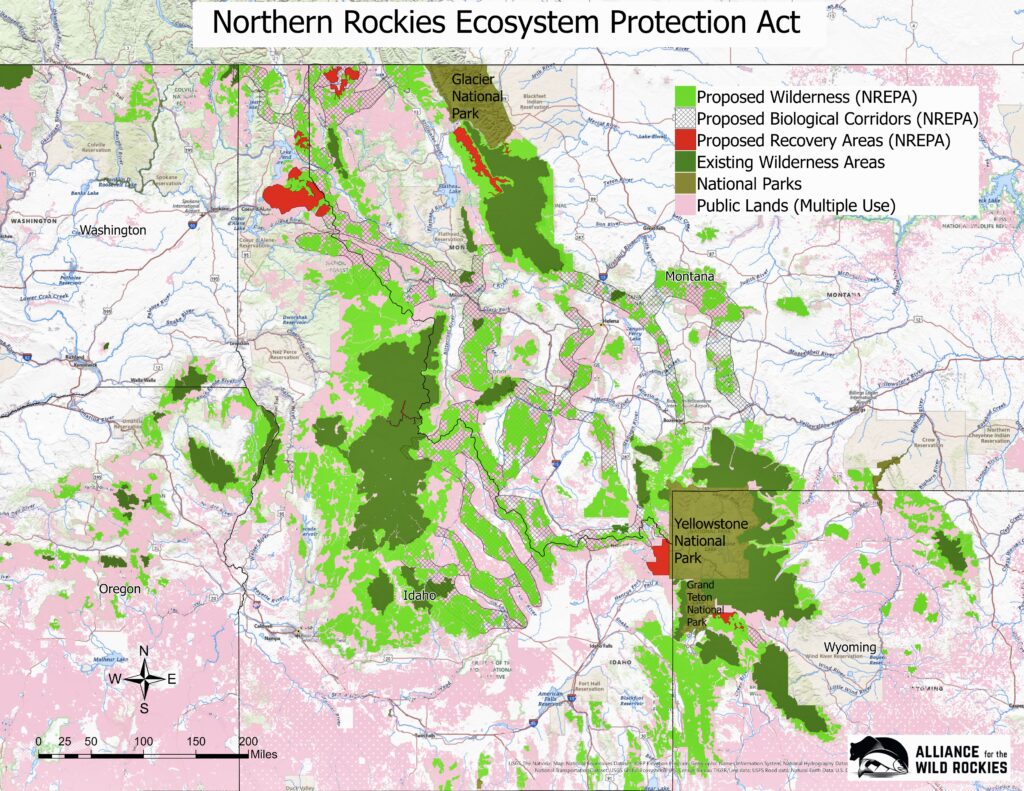
NREPA seeks to designate more than 23 million acres of US Forest Service roadless areas and other public lands as wilderness, noting that such protection is crucial to maintaining biological connectivity and high habitat quality for wildlife, is integral to preserving watersheds vital for clean water, tourism, agriculture and municipal uses, and, last but not least, central to the identity of local nature-loving communities.
Today, NREPA figures in the middle of discussions surrounding climate change and “ecosystem services,” i.e. recognizing the ability of healthy landscapes to store vast amounts of carbon dioxide, a greenhouse gas that is contributing to the interior West getting hotter, drier and more prone to wildfire.
Some may wonder: what’s the value of an underdog bill that prioritizes the well-being of nature vs. a mindset of monetizing its individual parts for profit, and yet, to date, has never come close to enactment?
One answer, its supporters say, is that NREPA stands as a stark contrast to efforts being made by the Trump Administration and MAGA-identifying lawmakers who have unleashed a wave of executive orders and bills to abolish protection of roadless areas and thus undermine the chances of those public lands ever achieving wilderness status. Labeled the “gold standard” for wildland protection even by the living great grandson of Theodore Roosevelt himself—Republican businessman and sportsman Ted Roosevelt IV—wilderness ironically is under attack by both traditional resource extraction interests and the supposedly-green outdoor recreation industry that labels it a barrier to both fun and commerce.
Michael Garrity, executive director of the Alliance for the Wild Rockies, chief proponent of NREPA, says there need be no apology for seeking to protect nature and wildlife for its own sake. Notable, he adds, is there’s little evidence that conserving a wild ecoregion has ever caused significant economic downsides while despoliation exacts huge costs. His first point of reference is Greater Yellowstone, the vaunted “cradle of American wildlife conservation” knitted together in a mosaic of public and private lands and today hums with billions of dollars in annual economic activity related to the appeal and value of conserved lands itself.
A fifth-generation Montanan, Garrity is a natural resource economist by training who studied under Dr. Thomas Power, former chair of the Economics Department at the University of Montana and one of the giants who ushered forth honest discussions about the myths and failures of extraction economies. As studies by Bozeman-based Headwaters Economics have shown, communities in the West with higher levels of protected public lands around them are not liabilities; they often have higher per capita incomes and they attract entrepreneurs who start businesses there because there’s a higher quality of life.
“Proposals to extend official wilderness classification to new lands are regularly criticized on economic grounds. Regardless of justifications on ecological, cultural, and moral grounds, wilderness designation is always perceived as having significant negative economic consequences….,” Power wrote in an analysis circulated 30 years ago, among many he authored that attracted national attention. “These arguments or assumptions are false as are the economic conclusions drawn from them. They conflict with empirical, economic evidence. Once these errors in economic argument are corrected, it becomes clear that substantial additional wilderness protection can contribute directly to the economic well-being of local residents and to the vitality of their economy.”
The idea that the timber industry can or should be revived under the guise of halting wildfires, being fiscally responsible and making forests “healthier” is absurd and does not reflect reality.
Power, who supported NREPA, presciently noted in the 1990s that “the commercial extractive uses of wildlands being considered for wilderness protection are usually marginal at best, being tied primarily to the uncertain development of speculative mineral resources or the harvesting of timber from low-productivity, high-cost sites. This type of extractive industry does not offer rural areas a reliable source of additional jobs and income,” he noted. “It has become a shrinking part of almost all areas’ economies that are also plagued by fits of boom and bust. The future of our nonmetropolitan economies lies elsewhere.”
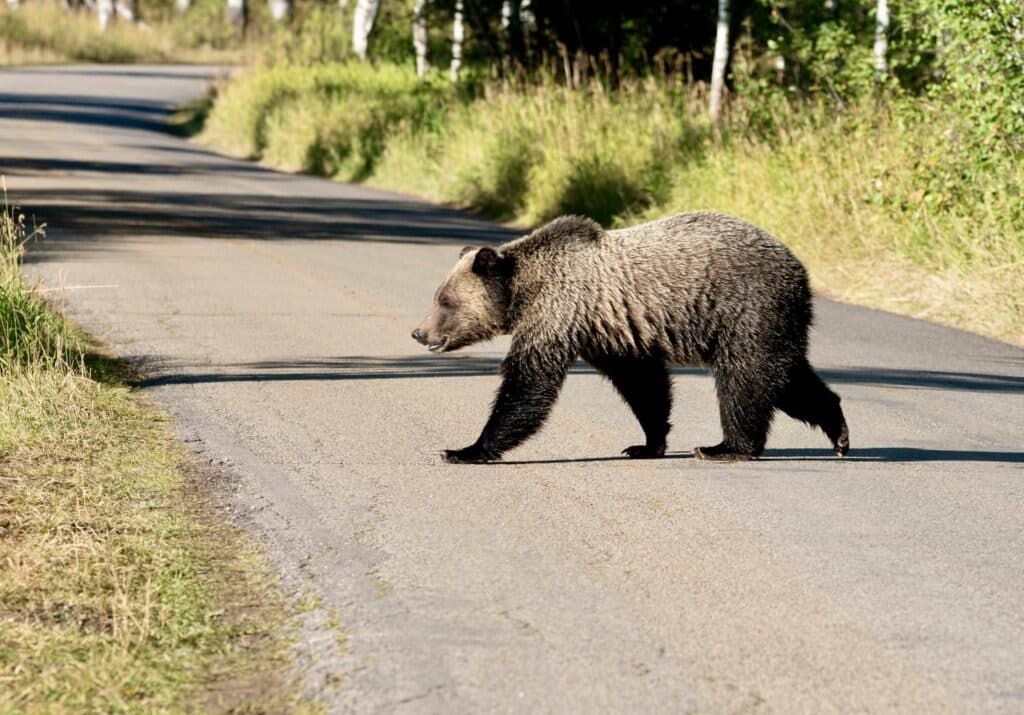
In terms of numbers, NREPA would elevate existing wilderness study areas and other roadless lands to wilderness—about seven million acres in Montana, 9.5 million acres in Idaho, five million acres in Wyoming, 750,000 acres in eastern Oregon and 500,000 in eastern Washington. This includes safeguarding the Gallatin Range between Bozeman and Yellowstone National Park that is a vital wildlife corridor and place of refuge for species like grizzly bears. In contrast to a bill called the “Greater Yellowstone Conservation and Recreation Act” drafted by an entity called the Gallatin Forest Partnership, NREPA is informed by a depth of scientific analysis.
“There are psychological benefits to human beings of vast, wild places. They replenish the human spirit and give us sanctuary from an increasingly stressful world. Wilderness stops time. We need more, not fewer, places where we can stop time.”
—Legendary American songwriter Carole King, longtime advocate for passing the Northern Rockies Ecosystem Protection Act
Among NREPA’s biggest high-profile supporters, besides renowned conservation biologists and economists, is perhaps an unlikely champion—legendary American singer/songwriter/musician Carole King, who is also a rarefied inductee into both the Songwriters and Rock and Roll Hall of Fame. Considered a national treasure herself, she has been awarded the Library of Congress Gershwin Prize for Popular Song (the first female ever to be awarded it) and has been honored by the Kennedy Center. The appeal of her songs hasn’t waned. Millions of vinyl albums, eight-track tapes, cassettes and CDs have sold, but poignantly there have been 1.32 billion streams of her music on Spotify and counting.
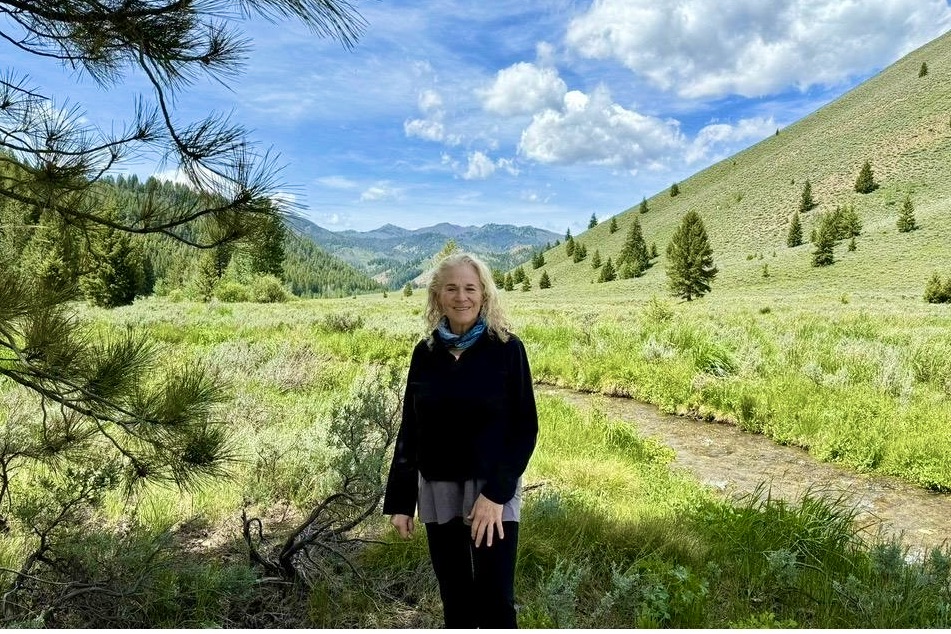
While regarded as one of the most talented American songsmiths who ever lived, King, who for 50 years has had a home near Stanley, Idaho, is also the real deal when it comes to speaking passionately and being knowledgeable about the science of wildlife conservation.
During the early 1990s on the evening before she testified in favor of NREPA on Capitol Hill—among several regular appearances she has made over the years—I was in the nation’s capital and had a lengthy interview with her. King left a big impression then, not because I was starstruck but for her unassuming demeanor and ability to articulate concepts about ecology and the enduring benefits of large landscape protection.
King has been a tenacious advocate for NREPA and because of her beloved standing in modern American culture, has inspired notable figures in the arts and business world to take notice. You can read testimony she delivered in 2009 carrying an endorsement for NREPA from former President Jimmy Carter by clicking here.
While she grew up in New York City and lived for 10 years in Los Angeles, King moved to central Idaho to find solace. “There are psychological benefits to human beings of vast, wild places,” she said 25 years ago. “They replenish the human spirit and give us sanctuary from an increasingly stressful world. Wilderness stops time. We need more, not fewer, places where we can stop time.”
In her home state of Idaho where politicians have tried to inflame fear about the presence of grizzly bears and wolves and exaggerated their impacts on livestock and big game populations, King has highlighted the science that refutes those claims. In fact, most people in Idaho, Montana and Wyoming like living in states that are still wild with those animals and take pride in showing, by example, how co-existence works.
King has pets and visiting grandkids and she takes responsibility for teaching them how to wisely conduct themselves in untamed places. Once, she recalled an experience out her back door: “I woke up to see a family of gray wolves 50 feet from my window: a male, a female, and two pups. It was unnerving, magnificent, and a vivid reminder that it was I who moved into their neighborhood and not the other way around.”
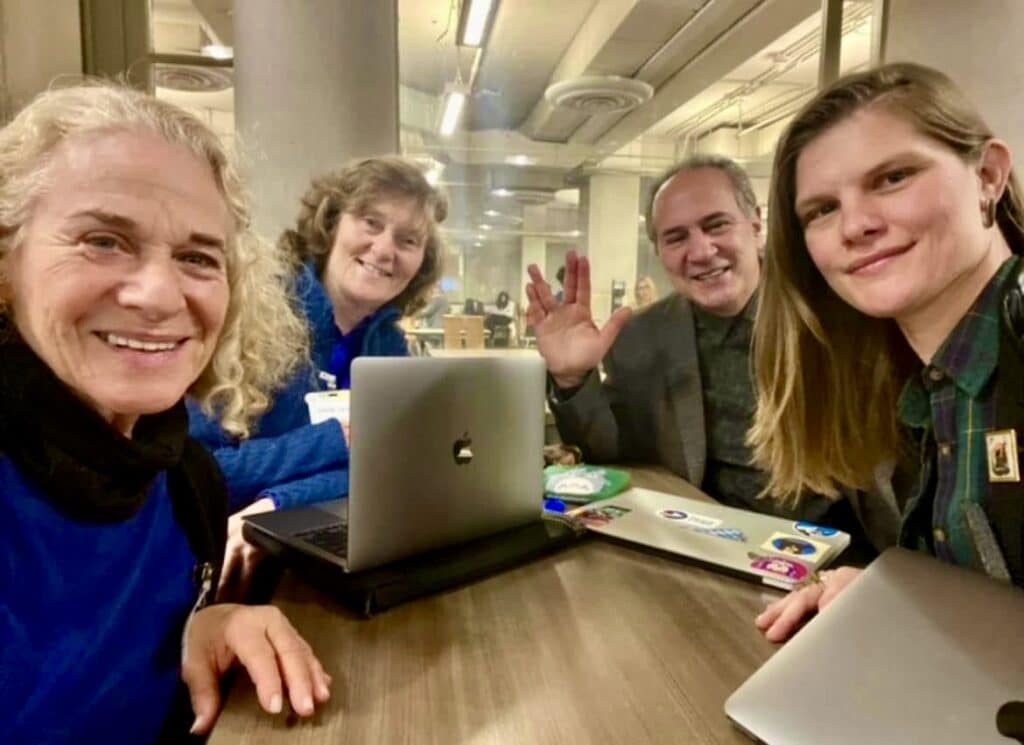
Recently, she told me: “I’ve lived with forests as my neighbors in Idaho for nearly 50 years—and I’ve been an advocate for the Northern Rockies Ecosystem Protection Act for more than 30 years. For decades, Congress has been allocating billions of our hard-earned tax dollars to the US Forest Service for words like ‘strategic treatment,” “fuel reduction,” and other euphemisms that mask the agency’s facilitation of clearcutting on public land for industry profit,” she said. “With our children and grandchildren ever more anxious about climate, and with independent scientists reminding us that unlogged forests are the most effective way to store carbon at the lowest cost—$0. It’s time to enact the Northern Rockies Ecosystem Protection Act.”
While it’s true that some celebrities who get involved in environmental, social and political causes (no matter what side of the aisle they are on) can be vacuous, King exudes depth and poise. Conservation is part of the same kind of her vocabulary as keys on a piano.
There are few Americans who haven’t been exposed to King’s music; it has been part of the tapestry of our lives. Her message is positive and accessible. Her songs speak truth and honesty, and she brings the same kind of sincerity to conservation. For her, it’s personal, it’s about her own connection to the Earth and, like an extension of song, she uses her voice to advocate for wildlife and the habitat it needs that also translates into a better quality of life for people.
Like lyrics in a song, she knows how words have the power to influence people’s hearts and minds—and she chooses hers carefully. “Wilderness” is one that for her possesses magic.
King’s ability to speak about issues with intelligence is genuine. She can be compared to that of others who also are conservationists by conviction. The list includes part-time Jackson Hole resident Harrison Ford, Bozeman-based actress Glenn Close, the late Robert Redford, Paradise Valley, Montana inhabitant Jeff Bridges, Leonardo DiCaprio, Jane Alexander and musicians James Taylor, Jackson Browne, Neil Young, Willie Nelson and Dave Matthews, among others. King was joined in her advocacy for NREPA by the late Bob Weir, founding member of The Grateful Dead, and Gloria Estefan.
In their unapologetic advocacy, Alliance for the Wild Rockies staffers over the years have riled other groups and politicians, and been accused of not playing well with other conservationists in the sand box. To which Garrity says the lack of boldness is exactly why the environmental movement today is getting steamrolled by the Trump Administration. The closest that NREPA has ever gotten to reaching a President’s desk was in the early days of the George W. Bush administration when it garnered 185 co-sponsors in the 435-member House of Representatives. Here’s a partial list of the diverse network of conservation and business organizations that support NREPA.
King remains undeterred and says NREPA is not based on lofty idealism but a forward-thinking perspective not stuck in rear-view mirror glimpses of the past but anticipating what the needs of humans and wildlife will be. Where some public figures cower, too afraid to advocate for nature for fear it might negatively affect their Q score or re-election chances, King has no such reservations. If the late Jane Goodall had been a pop singer, her friends say, her presence would’ve been like Carole King.
While touting the virtues of NREPA, Garrity, King and others criticize the rationale behind the Trump Administration’s push to rescind the Forest Service Roadless Rule to open up, potentially, tens of millions of acres of untouched wildlands to roads and clearcut logging. It represents the biggest giveaway of wild country to motorized recreation interests in history. “I’m a snowmobile rider and an ATV user,” King said during an interview with the National Public Radio news program Talk of the Nation. “I just don’t think I need to go everywhere.”
There are few Americans who haven’t been exposed to King’s music; it has been part of the tapestry of our lives. Her message is positive and accessible. Her songs speak truth and honesty, and she brings the same kind of sincerity to conservation. For her, it’s personal, it’s about her own connection to the Earth and, like an extension of song, she uses her voice to advocate for wildlife and the habitat it needs that also translates into a better quality of life for people.
The NPR interviewer asked King to respond to the (false) claim that NREPA is a product of “coastal elites who have never been to the mountain west imposing restrictions on a culture they don’t understand.”
“I can answer that very easily,” King responded. “The bill was drawn up by local scientists, local economists. It is supported by many, many people in the region. But you have the louder voices of the industrial interests that feel threatened by it, which is I think almost always the case of why people, you know, oppose—not all people— but there’s a group that would be a primary kind of opponent.”
Such opposition is not unprecedented, King said, as it has existed historically with resistance to big ideas that eventually become embraced as bedrock visionary contributions to American identity. Two examples of that are the creation of both Yellowstone and Grand Teton national parks that were, in the beginning, fought by self-interested people who tried to block them from becoming national crown jewels.
“Our grandparents saw this when the national parks were first created. Ken Burns has this wonderful documentary, “The National Parks: America’s Best Idea,” in which he points out that it took 100 – over a century to get the national parks designated,” she said. “And it was the same kind of opponents, similar opponents. And then once those national parks were designated, people loved them, the same people. You know, the people in the local communities, they do business in those national parks.”
In a world of dwindling wildness that supports charismatic wildlife, larger biodiversity and all that goes with it, that caliber of public lands becomes ever priceless and irreplaceable, she added.
“People come and spend their dollars in those adjacent communities. And that’s what is true about NREPA. So, it does kind of, you know, frustrate me that it’s called an elite bill. It’s not,” she said. “It’s really for people like my neighbors in a county in central Idaho who, you know, who will do so much better when this bill is passed because there will be economic input. It’ll be an economic engine for generations.”
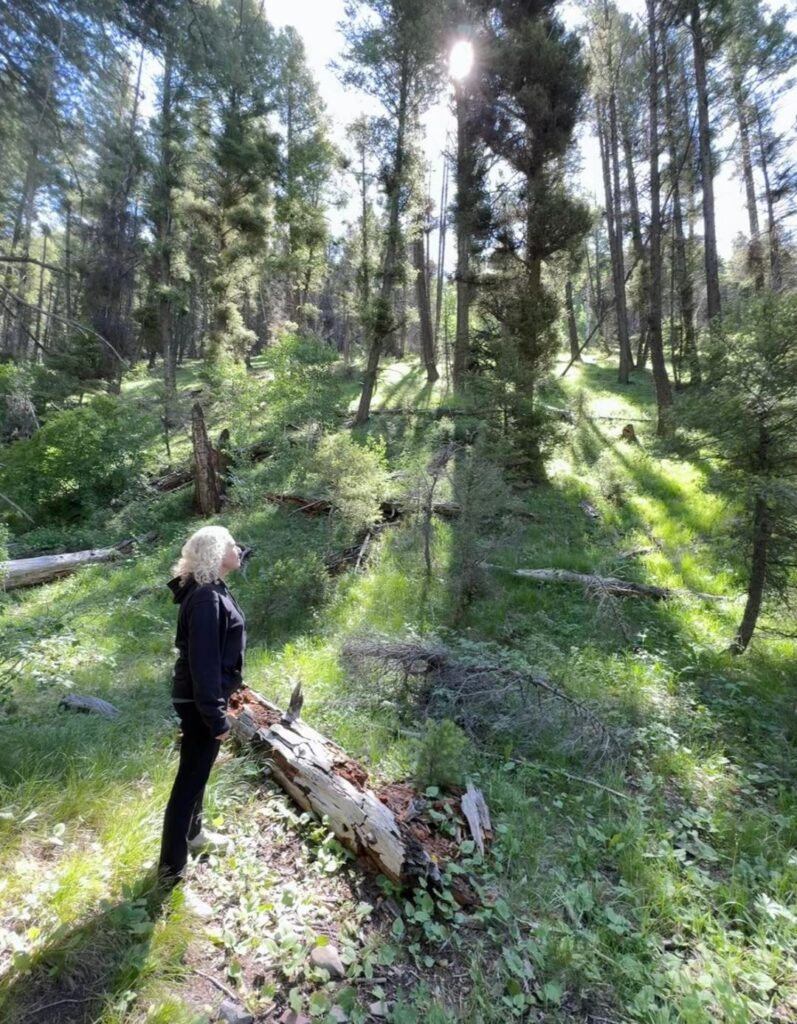
Mike Bader, former executive director of the Alliance for the Wild Rockies, laid out in 1992 what he said was a compelling economically conservative case for NREPA tied to the kind conservative ecological principles championed by Theodore Roosevelt.
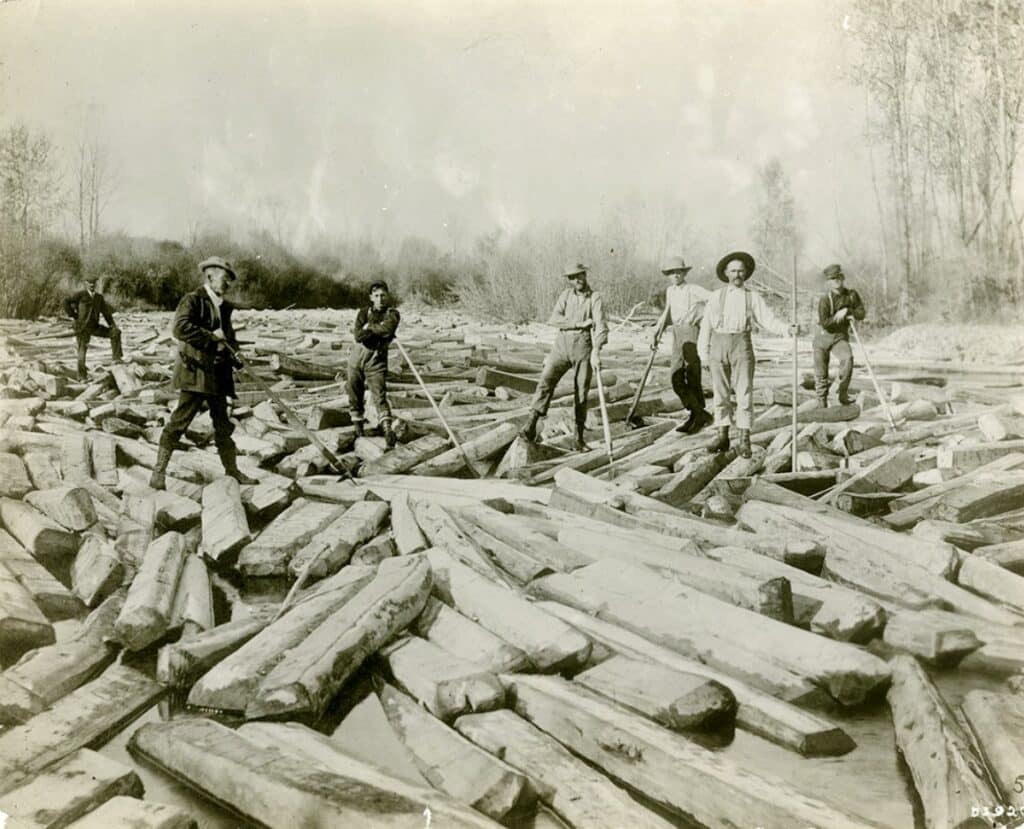
After decades of landscape and water degradation caused by unsustainable logging and expensive publicly-subsidized roadbuilding, far more was being spent by taxpayers to clearcut forests than was being generated by timber sales. Plus, forestry practices were wreaking havoc on habitat for imperiled species ranging from grizzly bears to native fish. Ironically, neither did those clearcuts of yesteryear result in fewer fires that grow big not because forests weren’t logged but owed to dry conditions and high winds.
Back in the days when it was written, architects of NREPA said $100 million could be saved by eliminating those practices and putting people to work instead fixing the damage, like a modern version of the Civilian Conservation Corps. At the time, it was estimated that 2,300 jobs would be created. Today the savings realized from not engaging in below cost timber sales and roadbuilding is estimated to be much larger— a third of a billion dollars, at least.
“When you cut down forests in Montana, it takes another 110 years before they can be cut again,” Garrity says. “The argument that roadless areas need to be logged and roaded and that it will result in less wildfire is not only questionable, but it means forever disqualifying these lands from becoming wilderness. And wilderness is the gold standard for wildlife and watershed protection.”
Along with protecting the best wild country that remains, NREPA would make restoration a priority on over a million acres that have been roaded and clearcut. Over 6,400 miles of old logging roads, many that are dangerous and in disrepair, would be decommissioned.
On Capitol Hill, joining Garrity and Bader over the years in making the rounds to generate support were King, the late legendary grizzly bear biologist John Craighead, and noted ecologist Dr. William Newmark, among others. Newmark is author of a landmark study and updates showing that even big national parks are not big enough to sustain healthy populations of wildlife and critical is having high quality habitat protected beyond park boundaries that is best represented by wilderness.
Craighead and Bader penned the first draft of NREPA along with an array of colleagues, including resource economists and esteemed members of the Society for Conservation Biology who have influenced the more recent groundbreaking work of the Wyoming Migration Initiative, the Center for Large Landscape Conservation, and approaches to re-wilding.
Newmark, when he testified, said he supported the bill because, as the Earth enters the sixth period of species extinctions, the bill serves as a countermeasure to buy wildlife time and space. He noted how the US became a global conservation pathfinder with the creation of Yellowstone in 1872 and the national park idea expanded to 140 counties. But 21st century science shows that to support persistence of species humans need to think at the ecosystem level—of connecting Greater Yellowstone, for example, to wilderness in central Idaho, to the Bitterroot Mountains, the Northern Continental Divide Ecosystem and mountain ranges straddling the US and Canada. NREPA provides a framework for doing that, he said, and it would demonstrate America taking the lead again in safeguarding biodiversity.
Opponents of NREPA claimed that protecting roadless lands and designating more wildernesses would result in economic calamity. Garrity welcomes having a public debate. Over the last few decades, the number of timber industry jobs fell sharply, mills shuttered and operations consolidated, the result of diminishing supply of big trees and technological advancements in cutting and processing which requires fewer workers.
Garrity says most of the merchantable old growth timber in the Northern Rockies has been felled and the roadless lands that remain neither hold vast volumes of board feet nor easy to access without bulldozing roads into steep and fragile terrain. Moreover, he points to scientific studies, cited by a number of Forest Service chiefs and experts in wildlife, that roads increase the likelihood of fires starting from human causes, rather than preventing them.
Ironically, many of those inventoried roadless lands identified in NREPA were included in the Forest Service Roadless Rule protections enacted in 2001 that the Trump Administration is moving to overturn.
Besides advancing NREPA as an offensive gesture, the Alliance for the Wild Rockies has also played defense, Garrity says, filing lawsuits that challenge the rationale of proposed timber sales by the Forest Service often not having a firm scientific baseline or inattentive to cumulative effects. By his estimate, the Alliance has filed 100 suits to challenge roadbuilding and clearcutting, winning 80 percent of the cases and not on mere administrative technicalities.
“A charge that gets leveled at us by the timber industry, politicians and political appointees in the Forest Service beholden to resource extraction is that we’re abusing the Equal Access to Justice Act in order to win monetary settlements for ourselves. Not true. Any money many awarded to us goes to our attorneys,” Garrity says. [View the debate that occurred in the House Natural Resources Committee over EAJA by clicking here]. “The fact is that 95 percent of Equal Access to Justice lawsuits are not filed by environmental groups, but by groups that represent Social Security and Veterans’ benefits. Previous generations of politicians from both parties passed laws that allow citizens to scrutinize land management agencies like the Forest Service for a reason, and it is to hold them to account, and sue, if necessary, to comply with laws designed to prevent destruction to public lands and the public trust that happened in the past.”
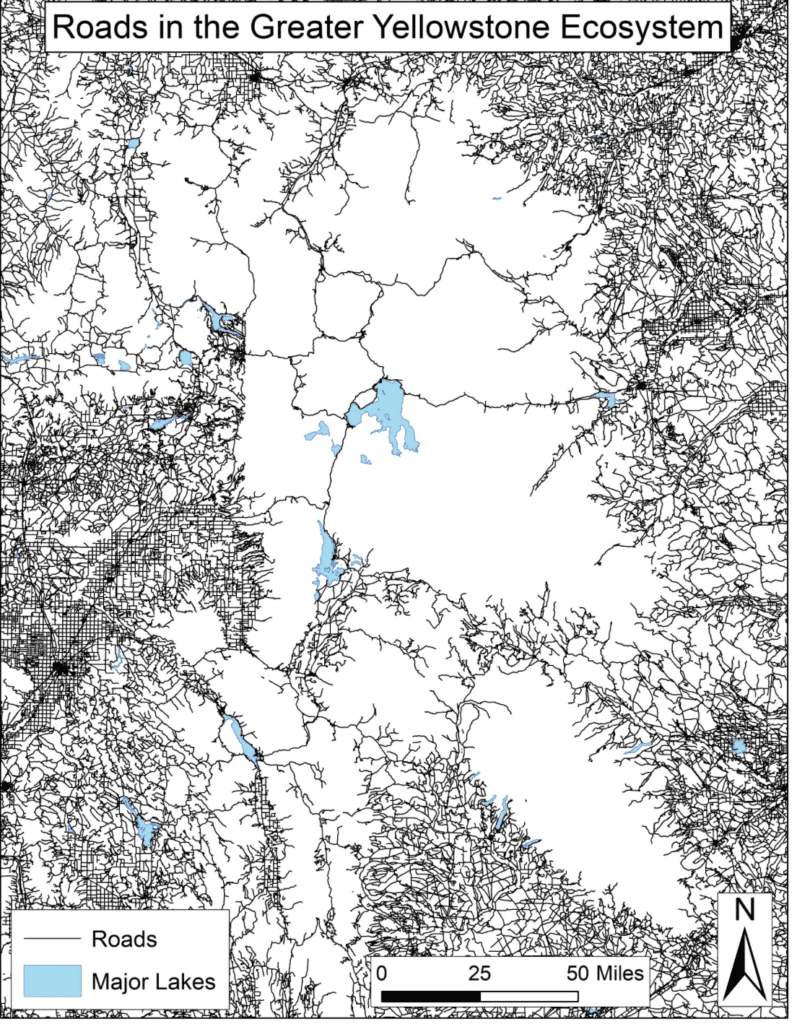
Legislation called the “Fix Our Forests Act” has been promoted by industry as a sanguine solution. And it makes logging and expensive road building a cornerstone of its strategy to allegedly reduce wildfire danger and revive the timber industry. Economists say it is expected to cost far more than it generates through timber revenues. It also allows the Forest Service to evade complying with environmental laws, weakens the ability of the public to have a say and ignores a significant body of scientific evidence that says it won’t work. Plus, it is accompanied by executive actions that will not only allow motorized recreation to proliferate in ways it never has before but allow ATVs, motorcyclists and mountain bikers to ride cross country off of established trails. Roadless lands are finite, they are rarer than ever and if they are treated with the same regard as “multiple use” lands of the past, wildlife will suffer.
“I find it interesting that advocates for off-road vehicle use say ‘lock up’ when they talk about wilderness and ‘lock in’ when they talk about off-road vehicle trails. And they have co-opted the word ‘recreation.’” King said. ‘The ‘recreation community’ is widely understood these days to mean motorized trail users. But use doesn’t have to be motorized to qualify as ‘recreation.’ Hunters, anglers, hikers, skiers, people on horseback and other non-motorized users will still be able to enjoy their preferred methods of recreation in NREPA’s designated wilderness areas with respect and minimal impact without fear of being interrupted by the sound of a motor. If we don’t protect the Northern Rockies ecosystem against such incursions, then motorized wilderness—an oxymoron, to be sure—will be the only kind of wilderness we’ll have left.”
In reflecting on the assertions made by some conservationists that NREPA is “politically impractical,” Garrity reminds that landmark civil rights achievements, including guaranteeing everyone the right to own property and vote, were dismissed as radical, not politically acceptable and took generations before they succeeded. In recent years, renowned conservationists like the late E.O. Wilson (promotor of the Half-Earth Project), Dr. Reed Noss, and Harvey Locke, a co-creator of the Yellowstone to Yukon Conservation Initiative in 1993, have said strategies for protecting large landscapes from degradation need to be bigger, not smaller. They are not “anti-human,” Wilson once said, but an act of faith to future generations, promising that we will leave them a planet inspiring to inhabit.
EDITOR’S NOTE
You may also enjoy: