by Todd Wilkinson
As a young person coming of age, Jim Engell was never mesmerized by all of that apocryphal, 19th-century, Horace Greeley kind of crap. You know, the stuff in which Greeley allegedly wrote this nugget in a New York newspaper column:
“Washington [D.C.] is not a place to live in. The rents are high, the food is bad, the dust is disgusting and the morals are deplorable. Go West, young man, go West and grow up with the country.”
While the reference to human behavior in the nation’s capital seems well, eternally true and priceless, the part about going West and finding one’s destiny isn’t something that Greeley, a newspaperman and Manifest Destiny “expansionist,” ever claimed to have written in The New York Daily Tribune or anywhere else.
Engell is a thinker who appreciates accuracy and metaphor in American literature and, again, regarding the way he got here—to Bozeman, Montana—where he’s found reinvention as a wilderness advocate, these two facts are worth noting. No, he didn’t head to the wild Rockies to sow his wild oats, and neither did he and wife, Ainslie Brennan, move to the interior because they were undergoing mid-life crises.
They came, in fact, as retirees, to live closer to their offspring and grandkids. Engell, who spent his career as a professor at Harvard, did now and then repair to the west side of the Boston metro area for some day hiking around Walden Pond in Concord where Henry David Thoreau wrote passages in his journal that became his famous book about communing with nature and ruminations on why it’s sometimes imperative to engage in civil disobedience.
Engell is an outspoken defender of the humanities—in particular the value of students attaining a well-rounded Liberal Arts and Sciences education that includes coursework in civics, the arts and sciences, history, philosophy, business, the Constitution, and as a form of public service volunteering time to one’s community. These are the skills that equip young people to develop critical free-thinking perspectives, be better writers, and become more empathetic and compassionate citizens.
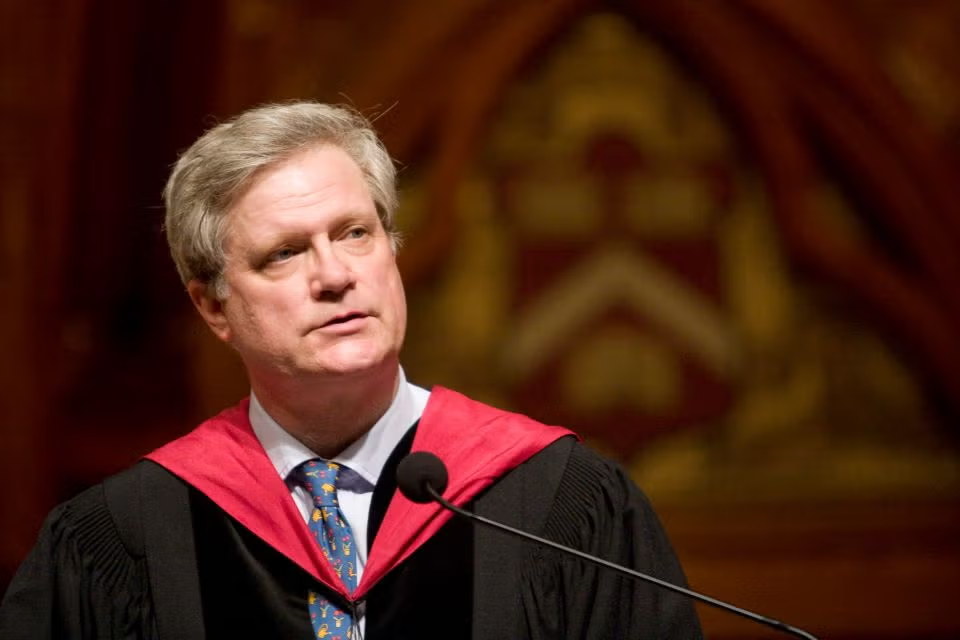
Engell, whose official post at Harvard was Gurney Research Professor of English Literature and Professor of Comparative Literature, taught literature and environmental courses in Cambridge from 1978 to 2024, and chairing the Department of English for several years. He is a faculty associate of the Salata Institute for Climate and Sustainability and a Fellow of the American Academy of Arts and Sciences. He also has had front row seat to seeing how social media, the Covid shutdown and young people relying on digital search engines, instead of seeking out source material on topics, has affected their grasp of knowledge.
Engell’s HarvardX online course on rhetoric has, to date, enrolled 900,000 learners. Author or editor of twelve books and more than four dozen articles and chapters on Romantic and eighteenth-century studies, as well as on environmental issues, he has received several teaching, advising, and publishing awards. He was actively involved with the Harvard Center for the Environment.
Ainslie Brennan, his better half, is a writer, photographer and equestrian author.
These days, Engell is a volunteer at the helm of a new group called Montanans for Wildlife and Wilderness comprised of scientists, writers, retired land management leaders, longtime conservation advocates (professional and volunteer) who collectively have centuries’ worth advocacy under their belt, and an assortment of others. Their goal: better protecting, while there’s still time, Wilderness and Wilderness Study Areas, and especially a stretch of mountains called the Gallatin Range found between Yellowstone National Park and the Gallatin Valley in Montana, one of the fastest-growing rural dales in the country.
Montanans for Wildlife and Wilderness believes the public has a deep yearning for inspiring conservation ideas, as noble as the creation of Yellowstone, Grand Teton and public lands themselves. It says that a proposal put forth by an entity called the Gallatin Forest Partnership (comprised of the Greater Yellowstone Coalition, The Wilderness Society, Montana Wild, and mountain bikers in close consultation with the Forest Service) is neither bold, visionary nor does it adequately safeguard Greater Yellowstone’s world-class wildlife.
While the Gallatin Forest Partnership has tried to paint the future of the Gallatins as a backyard issue that should be decided by southwest Montanans, Montanans for Wildlife and Wilderness says because the Gallatins are found on federal public land—the Custer-Gallatin National Forest—and hold higher diversity of large mammals than is found in most other states and vital to the health of Yellowstone Park, it’s an issue of compelling national interest
Today Yellowstonian is engaging Engell in a conversation. The intent is not only to explore what makes him so passionate about being in the West, and the degree of deep thought that he and his colleagues are devoting to wilderness, but we get at the question of why are so many young people are missing in action when it comes to caring about wildlife? As a bonus, readers (of all ages) at the end of this interview might pick up great insights—not to mention, a mother lode of excellent books, recommended by a professor emeritus from Harvard to enhance your reading this summer or all year long.
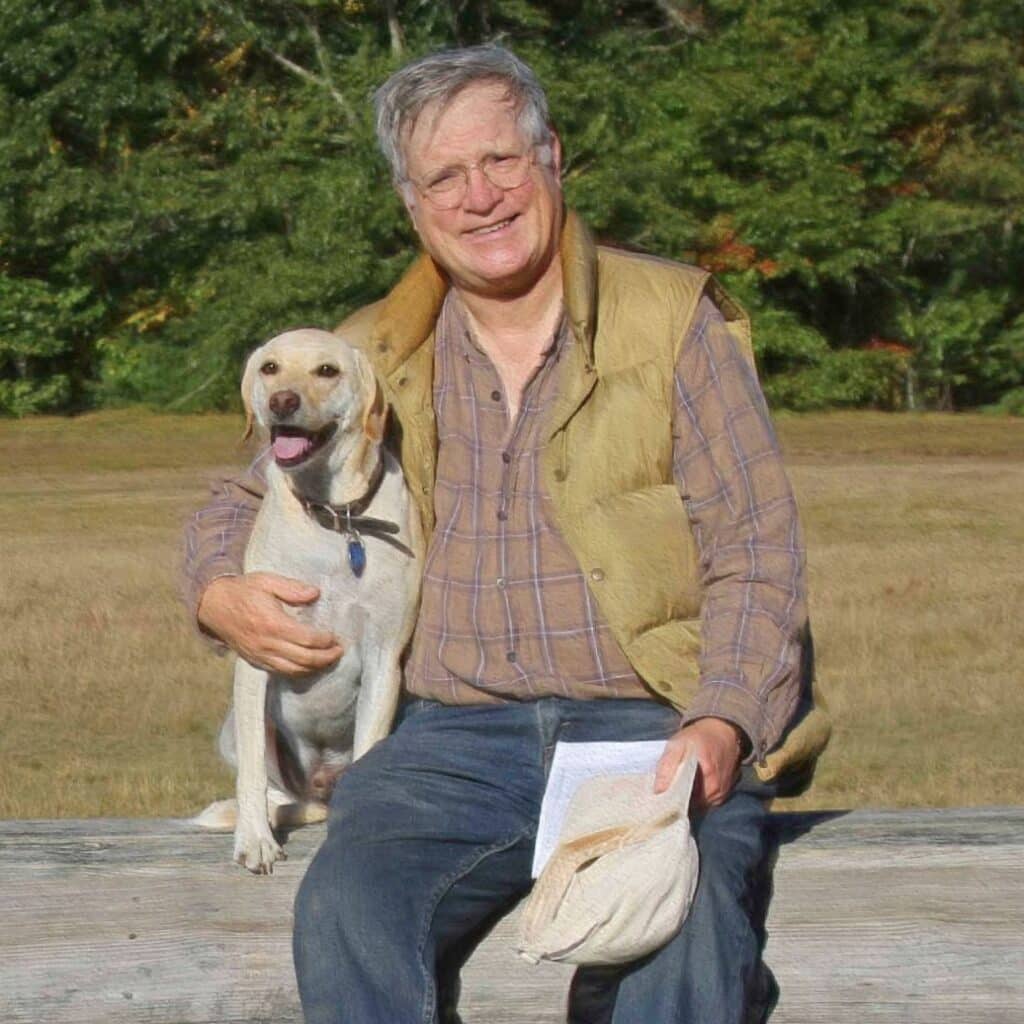
The Yellowstonian Interview with James Engell
Todd Wilkinson: Let’s start by mentioning some of your areas of specialty for which you were well known as a professor of English and Comparative Literature who often made works by great naturalists and American conservation writers part of your core curriculum. How does your interest in Romantic literature and poetry influence the way you think about living today in what remains of the wild West?
JIM ENGELL: My teaching and reading have had a wide scope, and when young I lived in Kansas for a few years, visited the Rockies, worked in the Colorado mountains one summer while in college, and have hiked in the Rockies several times. So, the West hasn’t been a new experience for me. But living in the Greater Yellowstone Ecosystem has been. I confess that my reading and previous mountain adventures did not prepare me for the richness and splendor of this area. My strongest reaction is wonder. Or maybe it’s actually gratitude, just plain thankfulness that it’s still here and intact.
Wilkinson: You have chosen not to fade into a quiet retirement. You are now, in Bozeman, a leader in a new grassroots group, M4WW. It comprises a broad and growing cross-section of scientists, professional conservationists and citizen advocates, retired civil servants, members of the business community and, poignantly, many former staffers and board members of the Greater Yellowstone Coalition, Wilderness Society and Montana Wild. By its name, M4WW gives prominence to wildlife protection. What impresses you about the group?
ENGELL: Well, first, they’ve led me, and I’ve learned a lot from people who have made conservation their professional and personal life’s work. What’s most impressive about these wonderful folks is that each one of them cares so deeply about the land, the creatures living on it, the forests, rivers, and plant life that make up this rich and spectacular region, a region under increasing human pressure and development. These folks aren’t in it for any self-interest, save the self-interest of trying to make certain that all our children, grandchildren, and great-grandchildren can enjoy the same natural world and its creatures that we have, so far, been blessed to be able to enjoy. And that’s not guaranteed. It’s in danger. Two of Montana’s venerated US senators, Lee Metcalf and Mike Mansfield, knew that, and the situation today is more precarious.
Wilkinson: There’s a strong sense, in my interactions with members of Montanans for Wildlife and Wilderness, that elements of the so-called “mainstream environmental movement” have become meek, ruddlerless and lost the stiff spine that used to define their work—that they’re more about promoting industrial recreation and being willing to compromise away the integrity of wildlands just so they can claim victories to win more support from funders. But, in fact, they’re not even holding the line. Montanans for Wildlife and Wilderness was formed to demonstrate that there is a bolder, more inspiring and more visionary alternative that’s actually driven by science. Is that an accurate depiction?
ENGELL: Montanans for Wildlife and Wilderness is diverse, as you’ve noted: life-long, sometimes professional conservationists, scientists, businessmen and women, lawyers, writers, a few widely-respected retired professors, a former Yellowstone Park superintendent, former local, regional and national politicians, and citizens concerned about preserving our incredible heritage of wildlife. There’s nothing like else like Greater Yellowstone and this vulnerable corner of it in the Lower 48—and it’s land that is truly wild, places either legally designed Wilderness or Wilderness Study Areas. The two are connected: wilderness is the gold standard for wildlife—and it’s vital for clean water and clean air, too.
Wilkinson: The Gallatin Forest Partnership has claimed that it is the only voice. However, many of the people who came together to form Montanans for Wildlife and Wilderness felt they were shut out of discussions and that concerns about wildlife were discounted. There’s also a widely-held perception that the Partnership did not want to anger mountain bikers or the Forest Service which, in the Custer-Gallatin’s case, has a track record of not defending the Hyalite-Porcupine-Buffalo Horn Wilderness Study Area as well as having a succession of forest supervisors, going back half a century, who tried to minimize the amount of land protected as Wilderness. This isn’t conjecture. It’s part of the administrative record. Can you expand a bit more on the diversity of interests that are now coalescing around Montanans for Wildlife and Wilderness?
ENGELL: Some people in Montanans for Wildlife and Wilderness hunt, some don’t. A lot of them hike. Some ski. Some ride horses. Some mountain bike and trail run. Several are excellent world-class wildlife photographers. One of our members helped build up Big Sky and is today devoted to safeguarding the Gallatins as a result of Big Sky’s rapidly expanding human pressures. One of our scientists is a nationally-recognized expert on climate change and a member of the National Academy of Sciences. The knowledge of others ranges from biology and botany and ornithology to overseeing national grizzly bear recovery to regional history to how to tie a good slip knot. In general, they’ve spent a lot of time outdoors and a lot of time reading about the outdoors and showing up at meetings, trying to hold the line. And they’re not “radical environmentalists” either. They want to preserve the relatively few places that the public—every citizen of this country—can call wild. That’s not “radical.” It’s conservative. They want to make certain that elk, wolverine, trout, moose, bighorn sheep, and so many other animals make it through the gauntlet that humans have increasingly constructed for them to pass through, not just today, but in future generations, too. It’s a privilege to work with these people.
Wilkinson: One of the vexing questions involves the engagement of young people not only in general, but here in Greater Yellowstone and the wild West. Many naturally are involved in outdoor recreation but they have minimal knowledge about wildlife and the importance of secure habitat. In fact, some conservation groups stand accused of falsely portraying outdoor recreation as being a form of wildlife conservation. Some say a growing disconnection is owed to social media transforming the way people of younger generations live and interact. You have engaged some of the brightest young minds in the world and you don’t approach the challenge from a dreamy, head in the clouds perspective. Gray hairs get castigated with the assertion “Well, you need to make things relevant.” Our parents didn’t need to make things relevant or preach at us in order to care about the survival of other beings. What’s going on?
ENGELL: A lot of things are going on. The world is changing faster than ever, and that places enormous pressure on the natural world. Human beings now dominate every ecosystem—every patch of life—on the planet. So, the more change, growth, pollution, and material disruption that we create, the more that the natural world and all its biodiversity is squeezed. And then, yes, media, social media, and new media—and now AI, too—all these jockey for everyone’s time, including the time of young people. It’s well documented that children and teenagers spend less time outdoors, on average, than a generation or two ago. As a percentage of total population, more people world-wide and in the US are now living in cities than in rural areas.
And what are we teaching students in school? Not enough about the natural world and how we are, in the end, dependent on it, dependent on the natural world for medicines, for food, for decent air and clean water, for many kinds of recreation, for a sense of connecting with some of our primal instincts and abilities, and for our collective economic well-being. We need to overhaul our curriculums, from K-12 up through higher education. We need to highlight the interdependent nature of human enterprise and the natural world, put biology together with economics.
Wilkinson: Yes, and however, in these days, some conservation organizations and the outdoor recreation industry place economics, pursuit of rational self-interest and short-term thinking as the highest priorities. There isn’t much reflection on impacts.
ENGELL: Caring about the natural world is part of caring about ourselves, our health, our prosperity. When we don’t care about the natural world, the deficits at first might be small, things get chipped away and we don’t notice the little subtractions. But over time when biodiversity is reduced, when pollution mounts, when the climate changes quickly, when it gets harder and more expensive to grow food or to raise livestock, then most people suffer, prices go up, and health goes down.
We’re stewards of the natural world, it’s in our hands, and almost every religious tradition in the world teaches that we need to take that ethical responsibility seriously: conserve and protect, husband and honor the land and all natural resources so that the next generation (and the ones after that) have the opportunity for a life as bountiful as ours. That’s “sustainability” in a nutshell. It’s not some “radical environmental” position. It’s good, long-term management.
“We’re stewards of the natural world, it’s in our hands, and almost every religious tradition in the world teaches that we need to take that ethical responsibility seriously: conserve and protect, husband and honor the land and all natural resources so that the next generation (and the ones after that) have the opportunity for a life as bountiful as ours. That’s ‘sustainability’ in a nutshell. It’s not some ‘radical environmental’ position. It’s good, long-term management.”
—Jim Engell
Wilkinson: Where does technology fit into thinking about prosperity, abundance, freedom and liberty, unconstrained?
ENGELL: Technology has always helped us use the natural world to our advantage: the invention of modern fertilizers, the Green Revolution in certain staple crops in certain regions of the world, drip irrigation, improved breeding, better mining techniques, cheaper solar panels, you name it. But there are trade-offs for all these advances and there are often diminishing returns.
Some young people understand all this, but a lot of adults don’t, or at least they act as if they didn’t. There’s always the temptation for short-term gain. To use a stock market analogy, to “pump and dump,” to exploit some resource quickly then pull out, leaving others to clean up the mess.
Wilkinson: Like the apocryphal advisement of Horace Greeley, the West is today a realm where those in the upper crust not only escape here, but they bring their development mindset that destroyed other places with them, of seeing unexploited natural lands as there for easy taking. Some view those who speak of conserving natural lands as being fools.
ENGELL: The very wealthy will always be largely protected from damage done to the natural world, but they’re a small fraction of our population and an even smaller one of the world’s population. If we want the benefits of a commonwealth, some common goods (such as clear air and water and public lands), some public spirit—in short, if we want a democratic republic—then we can see that civic education is vital, too. To put it in a short-hand way, it means being willing to help your neighbor because at some point you’re going to need your neighbor’s help. But we don’t always act that way. Today the highest suicide rates in this country are among veterans and farmers, two groups of people who earn their livings by serving other people, protecting us and feeding us respectively.
Wilkinson: I’ve worked with plenty of editors based in New York City and the other coast over the course of my career. While they’re great people, they don’t understand the nuances of the West—how our orientation to it is shaped by a different language of place and an adapted culture and way of being. Nor do they really grasp large landscape conservation because it’s not part of their lived milieu. Why do you think some folks living on the coasts and in urban environments don’t fully appreciate what it means to be closer to landscapes that really are wild, based on the kind of creatures that still hang on here?
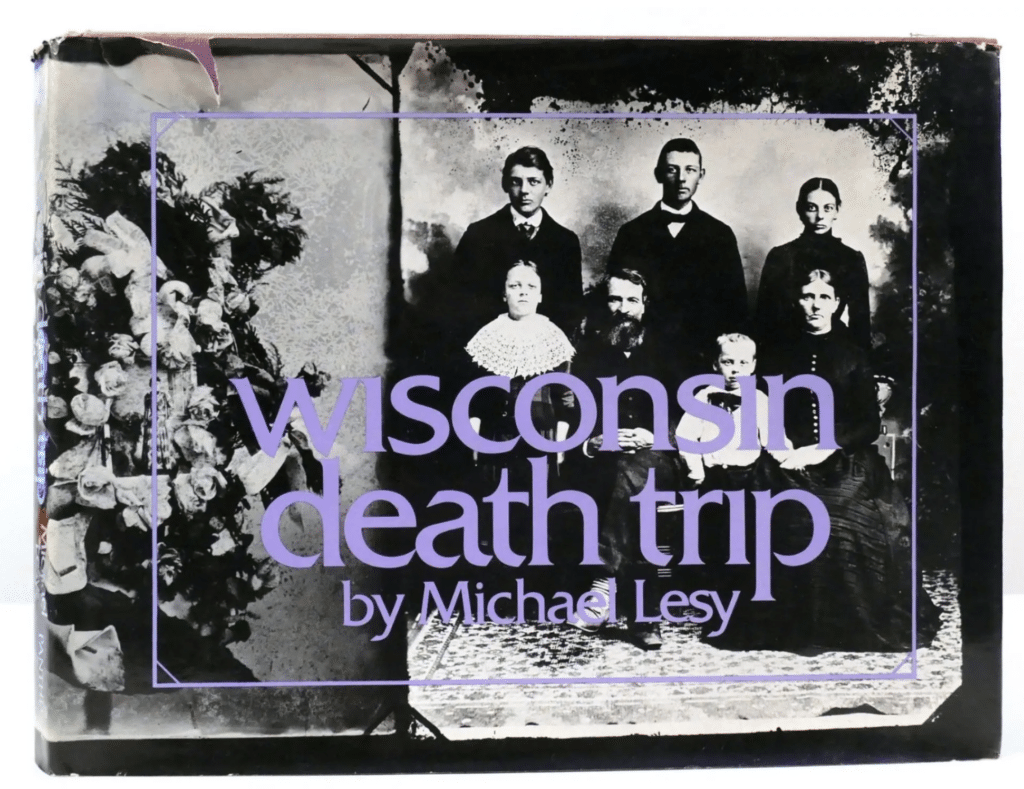
ENGELL: First, let’s start with the end of my last answer. Helping your neighbor as an active virtue, no matter who your neighbor is or what your neighbor thinks: that’s part of what used to be called the pioneer spirit, part of the West. It was really hard. All one needs to do is read a book like Wisconsin Death Trip to realize how desperate some people were, or read journals of folks who lived through the Dust Bowl. Just to survive was an effort. And it still can be. Large landscapes and open spaces change attitudes. I taught literature for a living. Wallace Stegner’s Angle of Repose left a deep impression on me. It’s in large measure about western versus eastern sensibilities. I’d invite people to read it if they haven’t, no matter where they come from.
Wilkinson: Cities are places where skyscrapers assert an attitude of human dominance. The prairie and mountains can quickly grind down human hubris and attitudes of defying nature. Humility is the only thing that will save wildness.
ENGELL: My first impression is that many people on the coasts haven’t traveled a lot in the West. Sure, maybe trips to Yellowstone or other national parks, but by traveled I mean get off the plane, get off the Interstates, and settle in for a little while, go into small towns, talk with people who’ve lived in the West a long time and actually immerse themselves in nature.
Second, the history of the West has long been romanticized and stereotyped by movies, westerns, TV shows, and some popular novels. It’s obviously more complex and richer than that. Third, “wild,” “wildness,” and “wilderness” are not entirely unknown to people on the coasts, of course, but those landscapes, and experiences in them, are less common, less intimate, and less proximate, at least in most cases. To be more specific: worry about rain and enough water? Hunt to eat the meat? Drive two hours to see a doctor at a clinic? Listen to the Ag report every morning? These are pretty rare experiences for the vast majority of people who live within 100 miles of our four coasts (Atlantic, Pacific, Gulf, Great Lakes). And that’s 70 percent of our population or more.
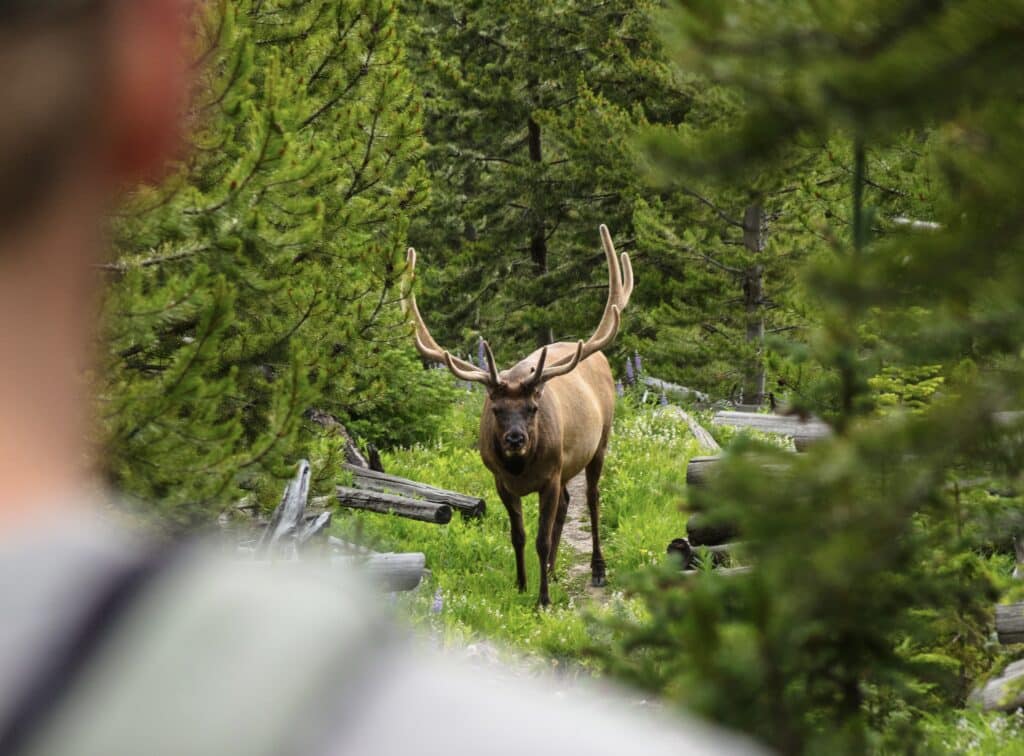
And, yes, “the creatures that still hang on here.” When I tell Eastern or West Coast friends that I’ve seen moose less than 100 yards from my house, mountain lion tracks in the snow all along my street, and not far from my home pronghorn, black bears, and lots of bison, including outside Yellowstone, not to mention elk herds, and that wolverines live less than five miles away from my front door, they are amazed. And I haven’t even gone into the fish and fowl. Some people elsewhere in the country may be used to coyotes, foxes, deer, even alligators, but in the West the variety of species and their number are astonishing.
“The history of the West has long been romanticized and stereotyped by movies, westerns, TV shows, and some popular novels. It’s obviously more complex and richer than that. Third, ‘wild,’ ‘wildness,’ and ‘wilderness’ are not entirely unknown to people on the coasts, of course, but those landscapes, and experiences in them, are less common, less intimate, and less proximate, at least in most cases. To be more specific: worry about rain and enough water? Hunt to eat the meat? Drive two hours to see a doctor at a clinic? Listen to the Ag report every morning? These are pretty rare experiences for the vast majority of people who live within 100 miles of our four coasts (Atlantic, Pacific, Gulf, Great Lakes). And that’s 70 percent of our population or more.“
—Engell
Wilkinson: So true. It’s not just a misperceived view from afar but when some folks move here they don’t adapt to landscape or let it change them. They bring attitudes of fear of nature, manipulation and taming with them. They can’t “see” what’s here, and that’s a huge problem because, by remaining unconscious, they are contributing to the erasure of wildness without knowing it. How to open eyes?
ENGELL: Suppose with the wave of a wand we just made disappear, as a magician would, most of the elk and bison, bears and pronghorn, too, and did away with the wolverines, the pikas, and the wolves and coyotes, just made them vanish. I think we’d feel a sense of emptiness, of sterility, and the West would be a whole lot less inviting.
But we are waving that wand, we’re waving it right now in slow motion, and we’re doing it not by going out and killing these animals consciously, the way people shot millions of bison in the nineteenth century (read the novel Butcher’s Crossing by John Williams, or see the movie by that name), but by reducing their habitats inch by yard by mile, building more roads and fences, knocking them off on highways, logging and mining sometimes without due consideration for negative effects on wildlife, foolishly thinking we won’t harm a species if we harm where it’s living, its habitat. That’s like thinking we won’t hurt a family by knocking down half their house.
There are heartening stories, though. Look at the restoration of the wolf in Yellowstone. The return of beavers. The continued attention paid to bison. In the end, despite arguments and law suits and squabbles over management plans and how to count animal populations accurately, there is significant public concern over wildlife and the health of wildlife—I mean in the West. Because it’s part of the landscape, part of us, and because wildlife and the landscapes and the wilderness that wildlife depends on also play a vital role in our economic and recreational life, as well as in our delight in creatures other than ourselves. There’s just less of that on the coasts, for all sorts of historical reasons. Not that this bond with and concern over wildlife doesn’t exist there, of course it does, but it’s not as intense, not as pervasive, not as constant.
Wilkinson: It’s interesting that you mentioned Wisconsin Death Trip. I’ve been thinking about that book and how it chronicles mass hysteria that occurred in a small Wisconsin town in response to hardship. Desperation springs forth from humans being under enormous stress and not knowing what to do, with the structure of civil society pushed to the breaking point. We live in a time of stress with tension levels inflamed by social media. Aspects of nature provide opportunities for returning us to a real sense of connection. For example, poll after poll shows that Americans across partisan and socio-economic divides value wildlife. Do you think shared concern can pull us closer together?
ENGELL: Yes, almost any shared concern has the potential to pull us closer together and to prevent us from dividing into groups that are suspicious of each other, or even hate each other. A shared concern implies a shared problem or challenge. A lot of disagreements, political and cultural, aren’t over ends but means; they aren’t over the fact that we have shared concerns but over how to address them, how to solve problems. Concern for wildlife is something that people with very different backgrounds do share. You have hunters and anglers being concerned about game populations or stream temperatures. You have so-called “radical” environmentalists being concerned about exactly the same thing.
Now, they all might not agree on how to address that concern, but if they talk with one another then there’s the chance of coming up with something workable. It might be a compromise, yes, but compromise is—or should be—built into our system. Democracy demands compromise. Yes, at a certain point, groups may say, we’ll go so far in compromising but not father. OK, fair enough. Then there probably need to be more negotiations, and more elections. In the end, in matters of policy, voting is essential, and so is protecting the right of everyone to vote who legally holds that right.
Wilkinson: In this case, there’s a synergy, is there not, and also a paradox in that how we forge a more thoughtful, respectful and nurturing relationship, for nature benefits “the human community.” That’s Wendell Berry and Robin Wall Kimmerer, if not classic Aldo Leopold.
ENGELL: Most people inherently know that the health of wildlife is connected to human health. Sick wildlife, species nearing extinction, wiping out large populations of creatures: very rarely are those good things for human beings. Even though humans now exert influence—and often great control—over most ecosystems, that doesn’t mean we can just do what we want for short-term gain. “Ecosystem” is just a word that means the connected lives of plants and animals, and water and weather, that creates a web of relations and lets those plants and animals have a chance to survive. We’re part of that web. As a global species, humans are part of many ecosystems. Concern for wildlife is an intrinsic good but also something good for us humans, too. From a religious perspective, the world’s great religions all instill a sense that creatures come ultimately from a creator and that they deserve our awareness, even our reverence. Yes, we may harvest plants or eat animals, but that fact only increases our connection with them and underscores our dependence on them.
Finally, there is an instinctive bond or at least appreciation between human and animal. As one example, do we think that one political or cultural group loves their pets more than another group does? Of course not. And no political or cultural group seems to love wildlife more than another group either.
Young folk, children, need to learn about wildlife—books, field trips, zoos, movies. Once young minds begin to realize the miracle of wild life (intentionally, as two words), it will lead them to deeper awareness and appreciation of what an amazing world they live in. This can happen in a city park, a marshland, a backyard, even a garden plot—or it can happen on a hike in wilderness.
Wilkinson: Another thing I’ve been ruminating on, as a journalist, is the notion of “competition.” In recent years there’s been a shift away from it, in some corners of academia moving away from grades; in youth athletics with kids getting “participation trophies” just for showing up rather falling down, dusting themselves off and developing inner confidence.
Some of competition avoidance is driven by concern about bias or worry that some kids will have their feelings hurt if they aren’t recognized as those at the top are. Within conservation there also seems to be an aversion to conflict and yet every gain we’ve seen in land protection and wildlife conservation has come from competitions of values and sometimes heated disagreements between those who want to exploit nature for personal gain vs. those without profit motive or selfish reasons but altruism and the public good. What are your thoughts—as a college professor, as a dad, and a reinvented wilderness crusader?
ENGELL Part of the compromise that I mentioned earlier can involve confrontation, challenging the views of others, though being willing to change your own, too. So, yes, there’s often conflict. Regarding wildlife conservation, it’s important to have science as a significant foundation. Without peer-reviewed science, any view becomes suspect. It might not be wrong, but if it lacks evidence, then it almost certainly is wrong. Sure, science evolves, and good scientists can hold divergent views on certain questions—usually questions on which they agree more research is required. But science progresses, and we’re far better off with it than without it. And you can’t selectively choose which science you like by, say, citing one article or one study. You can’t cherry pick. That’s not science, that’s not what science does. You need to become acquainted with a field, with multiple studies or experiments, and with the most recent work, too.
I’d be careful about the dichotomy your question implies. To put it another way, people can and should exploit nature—we need to do that to survive, always have. And that includes personal gain as one of the motives. But it’s all in how it’s done. That’s why we need regulations and laws when it comes to mining, agriculture, air quality, and water use. The profit motive doesn’t present a problem if there is enough awareness of other factors and the decency to respect those factors. It’s when the profit motive, especially the short-term motive, crowds out all the other motives that we get into trouble. That has happened a lot in the past and is happening again. How many times do polluters really end up paying the cost of the damage they’ve done? Often not, and often only when governments strictly enforce pollutions regulations, or when groups of people sue. And, on the other side, sometimes there are misguided efforts by those who think they are doing something for the public good, for “nature,” or just because it seems a nice idea. Like introducing rabbits to Australia.
“Part of the compromise that I mentioned earlier can involve confrontation, challenging the views of others, though being willing to change your own, too. So, yes, there’s often conflict. Regarding wildlife conservation, it’s important to have science as a significant foundation. Without peer-reviewed science, any view becomes suspect. It might not be wrong, but if it lacks evidence, then it almost certainly is wrong. Sure, science evolves, and good scientists can hold divergent views on certain questions—usually questions on which they agree more research is required. But science progresses, and we’re far better off with it than without it.”
—Engell
Wilkinson: Agreed. The previous question wasn’t intended to be binary. I’m thinking of the observation by Max Planck that “a new scientific truth does not triumph by convincing its opponents and making them see thee light, but rather because its opponents eventually die, and a new generation grows up that is familiar with it.” For example, the way society ponders extinction is different from our ancestors. Attitudes that prevailed in the West, favoring economic exploitation, nearly resulted in total annihilation of buffalo and other species and it seems evident again in the utilitarian attitudes toward, say, roadless lands and uncut forests.
ENGELL: Times do change. In 1900 it might have been a good idea to dam a river. In 2026 very possibly not, even if it’s the same river. Historical facts and trends always come in to play. Today solar power is cheaper than coal, even cheaper than natural gas. And, contrary to what is often said, just as reliable if not more so. There are batteries now that can easily store solar.
The present trends of human exploitation of nature cannot be sustained in the directions that exploitation has taken since the Industrial Revolution. For example, we can’t continue to encroach on wilderness by increments—little steps, small compromises, one piece of legislation after another—and expect that we’ll have much of any wilderness left. Same with wildlife. A line needs to be drawn: no further.
Wilkinson: Ah yes, limits. Still a taboo word. Thou shalt not discuss any kind of limits, whether it’s development and resource consumption, family planning, the size of the military budget, or even the expanding footprint of industrial outdoor recreation and what it means for wild places.
ENGELL: As humans have multiplied and gained great technological prowess, we’ve needed to exert greater care and vigilance in how we use nature, how we influence it, and how our actions affect wildlife, often in ways that seem secondary or tertiary. For example, pollution from smokestacks or farm runoffs can affect wild and marine life hundreds of miles away from those sources. And these effects can accumulate over time. The oceans can’t contain endless plastic, but it’s mounting up fast. We can’t expect wildlife to enjoy a sustainable habitat if we build a lot of roads, drive vehicles through their habitat, make a lot of noise, and cause more wildfires. Three-quarters of all wildfires at least are caused by humans, and climate change exacerbates every wildfire.
At a certain point, in certain areas, after a series of compromises historically has been make, it may become necessary to say, ok, no more compromises, hands off. Otherwise, we’ll lose, permanently lose, what is valuable.
Wilkinson: The Trump Administration is maneuvering to weaken legal protection of Wilderness and Wilderness Study Areas. At the same time, some voices on the political left claim that “wilderness” is an invented concept, though every word we humans use for referencing things and places is subjective and invented. It seems kind of strange how the Left and the Right are seeking to dismantle the highest levels of protection but approaching it from different angles.
ENGELL: I know, Wilderness is sometimes called a “construct.” There is no place in the nation that hasn’t seen some human influence, hunting, and habitation, if only temporary. But indigenous peoples largely respected the wild quality of lands because they knew that future generations depended on sustaining what was there. Sure, some indigenous societies made mistakes, for example, in some locations there was too much deforestation. But we’re learning that most of the time when their settlements collapsed, it was because of change they could not control, such as a change in climate, a prolonged drought of several centuries, a crop pest or disease they could not combat. Or other humans came along and slaughtered their main source of protein and other valuable materials, as white folks slaughtered the bison, or as the Conquistadors ransacked and ended the Incan civilization.
Wilkinson: You bring a perspective formed by how the way we conceptualize nature continues to evolve and it’s not in the direction of trying to over-simplify but recognizing the fragile complexity. That preserving places of wonder for the common good of present and future generations is one of the noble things we can do.
ENGELL: In his essay “Huckleberries,” Henry David Thoreau proposes that each community set aside some land for the common good. Public land. With rules about its use. Why? Because if all of nature is divided among us as individual private property, then there is no sense of any land having a common value. Imagine if we divided up air that way? To some degree we’ve divided up water that way, but at least with some sense that everyone needs water. Well, everyone needs land, too, in the sense that we all need what comes from the land, food, and we benefit from being able to be out in communally held land, to hunt, fish, walk, hike, and to witness the nature that we’re a part of—in the end we’re inseparable from it.
The irony is, the United States is so blessed with such amazing places that we can have the luxury of setting aside significant areas for public ownership and public use, and we can determine that some of those lands can have certain uses, and some of that land can have limited uses, for example, no mechanized or motorized use, no drones, no permanent habitation, in short, legally designated Wilderness.
Wilkinson: Still, we humans want to consume ever more slices of the finite pie.
ENGELL: If someone says, well, 18 percent of federal lands are designated as Wilderness and that’s a lot (even though it’s less than one-fifth), the answer is, yes, that figure is correct as far as it goes. But if you ask what percentage of federal lands in the lower 48 are designated as Wilderness, the answer is less than half that, about 8% with Wilderness Study Areas adding maybe another 6 percent. Are we willing to set aside one acre out of every seven of federal lands in the lower 48 for our commonwealth, for a legacy that will be perpetual for all future generations? Or do we want to chip away at it, chip, chip, chip, as our population grows, as pollutions persists, and as the climate changes, all of which add adverse stress to that Wilderness and its wild inhabitants?
“To young people: this is your inheritance. Do you want a landscape where everything looks increasingly the same, with few if any places left to confront and enjoy the natural world directly and deliberately? The natural bounty of this continent is not inexhaustible. If each generation reduces it by only a small fraction, eventually there’ll be very little of it left. One thing technology and AI cannot do is to recreate the natural world in all its variety and glory. If you’re a spiritual person, you recognize that the natural world is a gift of God’s creation, and God expects us to be good stewards not just for ourselves but for the future.”
—Engell
Wilkinson: We live a time when our society seems lost and overwhelmed in a flood of constant “information” and mass levels of attention-deficit disorder and mental fatigue.
ENGELL: Another way to put all this is to ask, “What does it matter? And who cares?” It matters because the natural world can take only so much human development, extraction, pollution, and alteration before it’s permanently diminished: only a few chopped up wild spaces left, if any; no way to escape noise and motors; dirtier air; water shortages; more wildfires because of climate change; more species made extinct and more threatened—in short, the United States losing what has made it unique among many nations for generations, a natural inheritance that has proveneconomic value in giving us cleaner air, purer water, tourist and commercial value, and agricultural benefits.
And who cares? To young people: this is your inheritance. Do you want a landscape where everything looks increasingly the same, with few if any places left to confront and enjoy the natural world directly and deliberately? The natural bounty of this continent is not inexhaustible. If each generation reduces it by only a small fraction, eventually there’ll be very little of it left. One thing technology and AI cannot do is to recreate the natural world in all its variety and glory. If you’re a spiritual person, you recognize that the natural world is a gift of God’s creation, and God expects us to be good stewards not just for ourselves but for the future.
Engell Shares Part Of His Reading Curriculum At Harvard To Help
Young People Understand Their Role As Stewards, Not Just Users, Of Wild Nature
Wilkinson: Thanks, Jim, for this much welcomed conversation. Alright, as mentioned at the start, let’s enter the bonus round with suggestions from someone who has set generations of young people down the path of disappearing into nature-oriented prose and poetry. Please offer some thoughts and a reading list for how people can find inspiration and perspective.
ENGELL: In teaching and writing I began by concentrating on literature from about 1725 through the end of the Romantic Era, about 1835. This is the time of Watt’s steam engine, the Industrial Revolution, growth of factories, the rise of scientific agriculture, and two of the world’s great revolutions, the American and the French. It’s also the time of slavery and, in Great Britain and its colonies, its abolition by 1835. It’s also a time of rising natural history, botany, geology, and astronomy—the awakening of modern science to new relations and to a new sense of the human place in the cosmos and on Earth. There are glimpses of evolution (from Charles Darwin’s grandfather, Erasmus Darwin, among others). In the US, Eunice Newton Foote in 1856 posited that increased carbon dioxide might warm Earth’s atmosphere and change our climate.
Many writers turned to the human relation to nature, Henry David Thoreau, of course, but also Goethe, Gilbert White, who wrote natural history, and poets such as Charlotte Smith. Goethe’s science was at times so advanced that Edwin Land, inventor of Polaroid film, said that Goethe’s study of colors, especially black and red, helped him achieve his own famous twentieth-century inventions.
In English, one writer who utterly revolutionized the attitude of society to the natural world was William Wordsworth. Poems of his such as Tintern Abbey, Nutting, and his long chronicle of personal consciousness, The Prelude, aroused in people a sense that human beings might live in harmony with nature rather than regarding nature (or fearing it) as something always to be conquered, subdued, and exploited. Wordsworth and others realized that human health—mental and physical—ultimately depends on a sustainable natural world filled with diverse creatures, clean water, clean air, and places for all those many different creatures to thrive without being, one after another, pushed to extinction.
Either in their own day or very soon, all these writers became popular. Their work informed later writers who addressed environmental concerns, writers such as John Burroughs, John Muir, and Aldo Leopold (who for a time worked for the Forest Service), and of course Rachel Carson. The list is long and includes Robert Frost, whose poems demonstrate keen knowledge of natural processes, and, of course, Rachel Carson, who was an English major in college before switching to biology. Government policy has been profoundly affected by such writers. For example, Teddy Roosevelt’s creation of national wildlife refuges, national parks, national monuments, the federal bird reserve system, and other conservation actions all owed a great deal to Roosevelt’s own experiences in nature but also to his deep reading, as well as personal friendships with writers and poets.
Literature is sometimes conceived of as almost exclusively fiction, novels or plays, but its reach is the full range of human experience and its relation to the natural world, with special attention to language that’s evocative and memorable. Few people end up reading technical, scientific papers. As time passed, it became clear that to inform and arouse a public about the scientific basis of the natural world in relation to human health and society, it would be necessary to write for a larger public, and to do so in language that’s exciting, open, clear, but also accurate. Aldo Leopold’s Sand County Almanac (1949) is one example. Silent Spring (1962), which examines of the effects of heavy pesticide use, is probably the most influential book on environmental issues written in the last 75 years, though Carson also wrote fascinating books on the sea.
As early as 1750 writers, were noticing that advancing industry, trade, population, manufacturing, and pollution were topics that must be addressed. Benjamin Franklin, the most famous American of the eighteenth century in Europe, gained his reputation not only for experiments with electricity but for the invention of the Franklin stove, which had enormous implications for deforestation (his stove, more efficient than others, used less fuel), domestic comfort, economics, and pollution (he invented ways to reduce smoke coming from a stove, a huge pollutant in eighteen-century cities). The point is, these writers are not just old “authors” studied in literature classes. Knowledgeable and far seeing: each one of them looked into the future to see where things were heading. They had a sense of the interconnection of things. They thought ecologically, though that word didn’t come into use until the late nineteenth century. Sometimes they sounded alarms. John Ruskin did that in his Storm Cloud of the Nineteenth Century (1884), which speculated how industrial pollution was affecting weather and the atmosphere. About 100 years later, Bill McKibben wrote the first book, The End of Nature(1989), to alert a wide audience to the fact that Earth’s climate is indeed changing (as it always has, over time), but that humans are now causing that change to occur about 250 times faster than it ever has in the great span of geological time, except when an asteroid slammed into Earth about 65 million years ago and wiped out the dinosaurs.
The Romantics have become the Classics of the modern world. They helped to establish values that recognize the need for human society to co-exist with a natural world over many, many generations into the future. They didn’t use the word sustainability, but that’s what many had in mind, a sense of stewardship for the planet. Many of these writers held deep religious and spiritual beliefs, not always orthodox, but venerating what they considered God’s creation, a vast set of interconnected miracles that human beings increasingly were impinging on, even disrupting, and increasingly becoming responsible for their continued miraculous operation—or for their destruction.
More recent writers such as Robin Wall Kimmerer, Terry Tempest Williams, Elizabeth Kolbert, and Robert Macfarlane descend from a line of writers going back more than 200 years. The line of literature works on a long wavelength and will continue to play a crucial role. It continues to report on scientific advances, it embraces the personal and emotional as well as the factual side of human experience in nature, and it presents possible values for us to consider, debate, and perhaps adopt as we peer into the future, a planet with almost nine billion human souls, all interdependent with many, many more billions of other creatures and plants, from the tiniest one-cell life to the blue whale.
Related: