,
by Yellowstonian
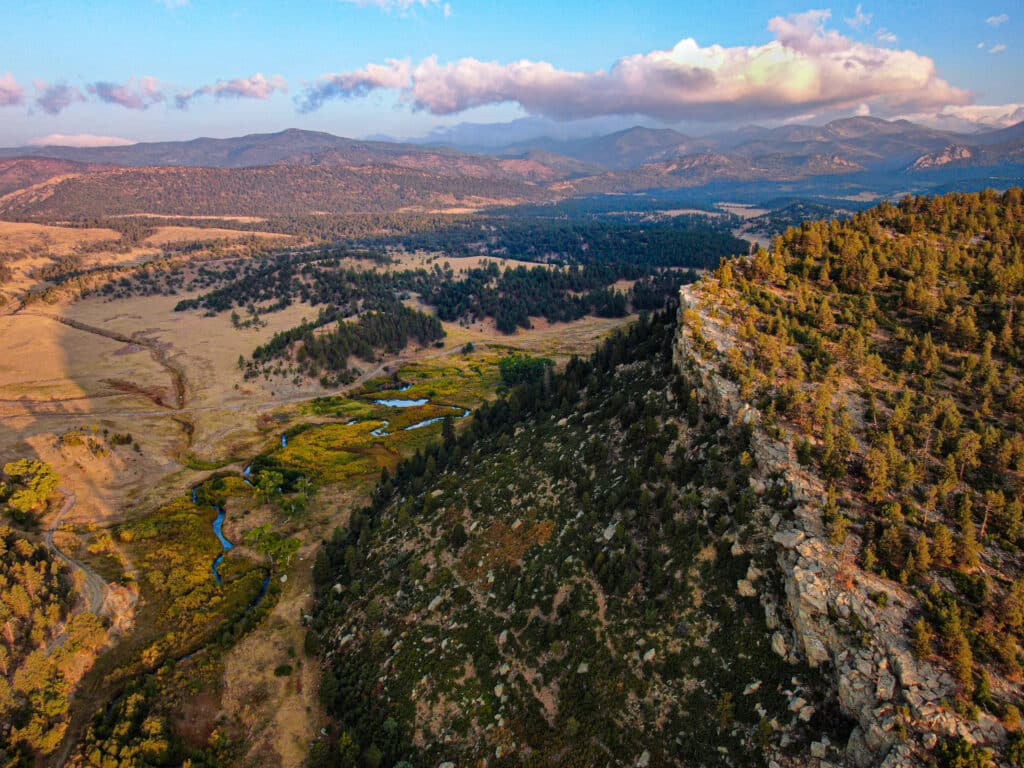
We landlubbers in the Western interior have our own daunting, inspiring and capacious version of the sea. It’s called the prairie and it is the traditional home, since the glaciers receded of one of the richest and most diverse grassland biomes. Today, it and the species it supported are among the most imperiled—not just individually but as part of a larger web.
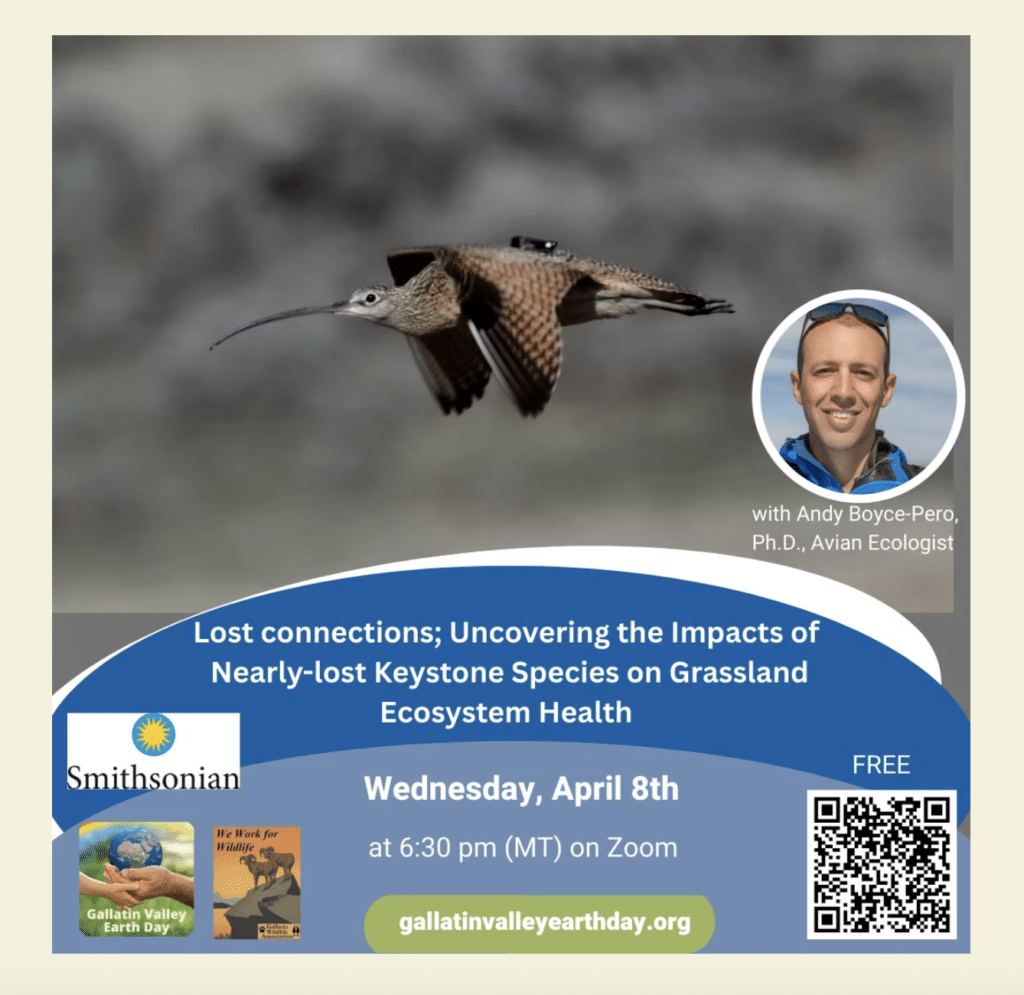
Dr. Andrew Boyce-Pero, who goes by “Andy,” and is a research ecologist with the Smithsonian Institution’s Great Plains Science Program, is giving a live stream Zoom talk you don’t want to miss. Part of Gallatin Valley Earth Day’s 2026 speaker series, Boyce-Pero’s talk on Wednesday, April 8 at 6:30 pm is titled “Lost connections: Uncovering the impacts of nearly-lost keystone species on grassland ecosystem health.”
It’s notable that Smithsonian, one of the leading scientific institutions in the world, operates a field station near the Missouri Breaks in Montana in partnership with American Prairie.
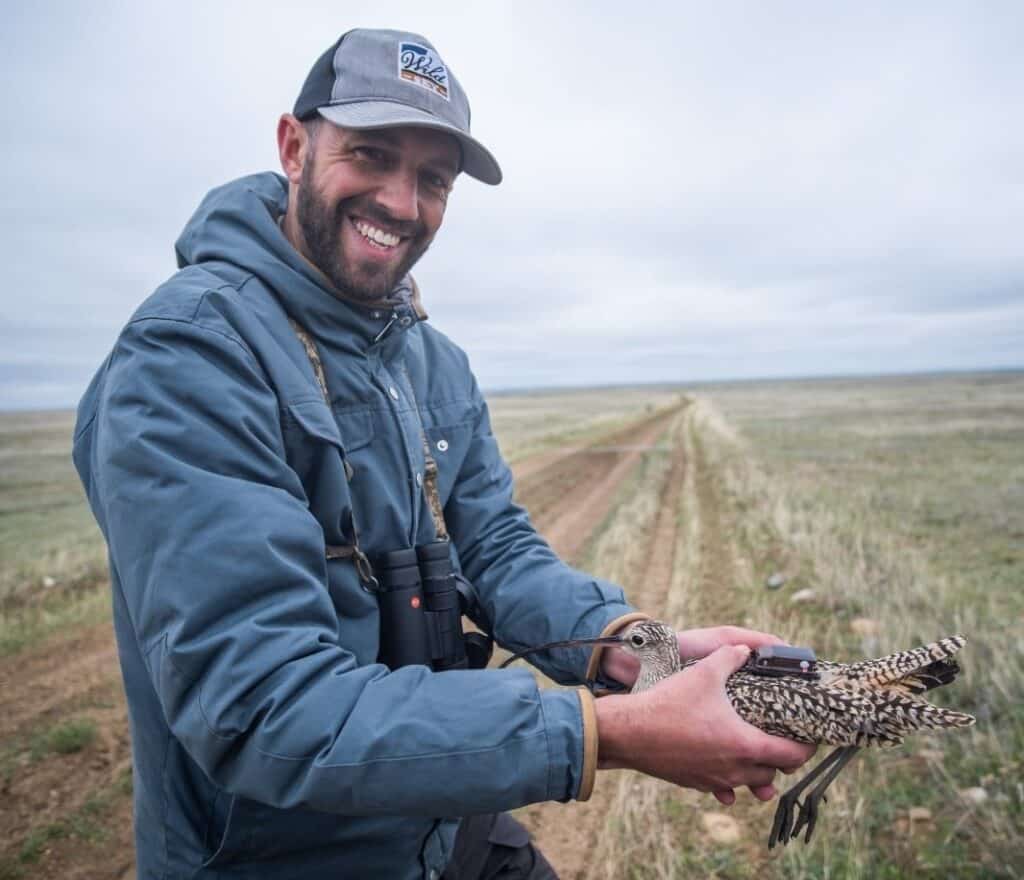
Boyce-Pero says his work focuses on one overarching theme—understanding how to most effectively conserve imperiled grassland birds and their habitats. Sometimes this takes the form of cutting-edge tracking studies, old school point counts and nest searching, or even piloting remote-controlled badgers to understand how birds respond to potential predators. In addition to his research, he is also a faculty affiliate at the University of Montana. He received his bachelors degree in Ecology and Evolution from the University of Colorado, and his PhD in Wildlife Biology from the University of Montana.
Yellowstonian readers are invited to tune in free. All you have to do is sign up by clicking here. Share the link with your friends. Meantime, we had a recent chat with Pero-Boyce. Enjoy.
Yellowstonian: Our friend at Yellowstonian, the conservationist Kris Tompkins, has a keen fascination with the prairie biome because she says its status can teach us a lot in our thinking about biodiversity. She says that landscapes devoid of their native species are empty of a big part of their spirit and co-evolutionary essence. What got you interested in the grassland ecosystems of North America?
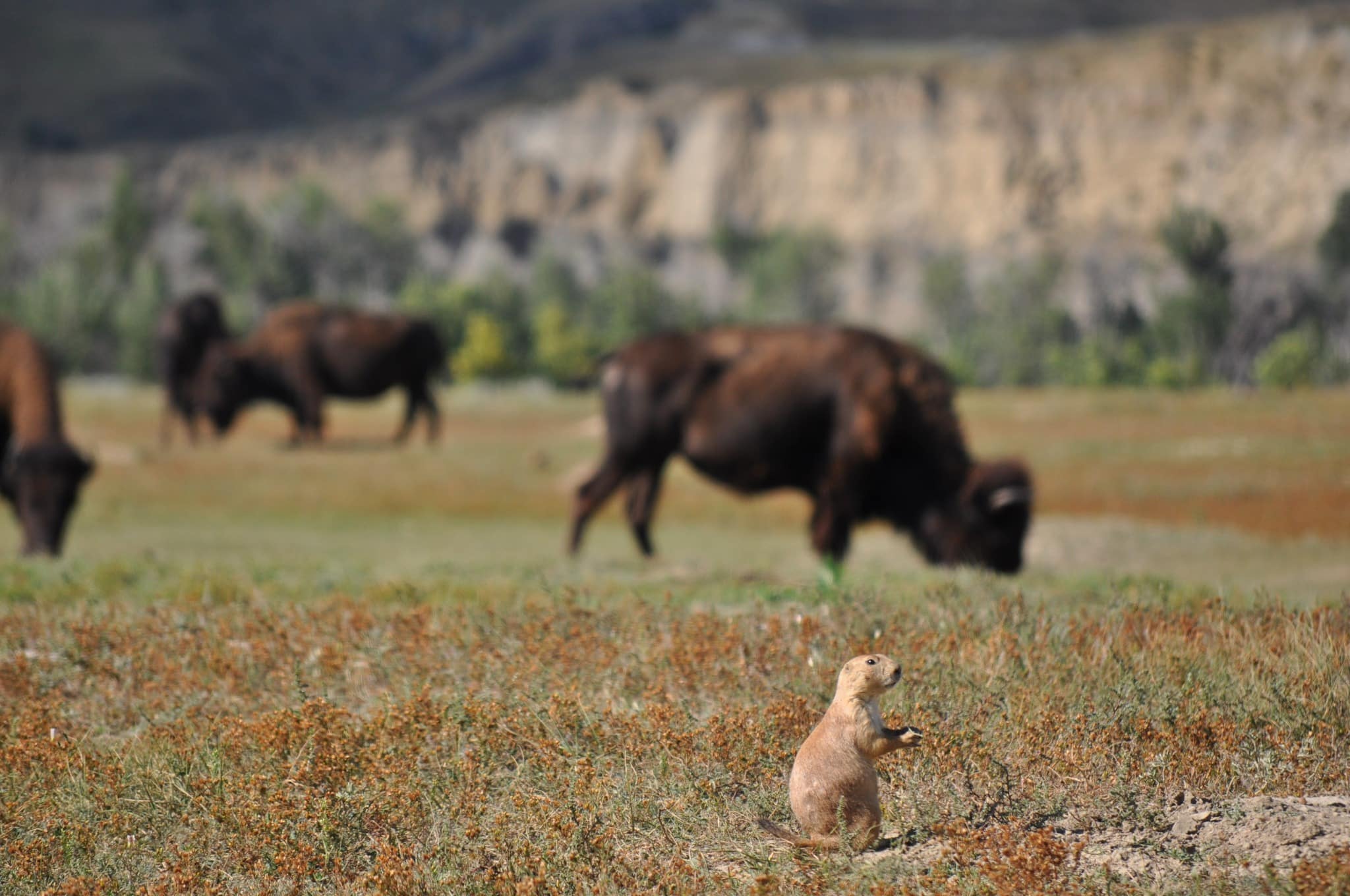
ANDY BOYCE-PERO: Before I joined the Smithsonian in 2018, my work was really focused on tropical birds living in forests in southeast Asian and the neotropics. My real interest and appreciation for grasslands started in mid-July, 2018, when I arrived at American Prairie in northcentral Montana in my Subaru, with all of my worldly possessions and my dog Otus. It was truly jumping straight into the deep end, but I think starting my grassland journey in a place with Bison, prairie-dogs and an incredibly diverse bird community really shaped my way of thinking from that moment forward.
Yellowstonian: The title of your talk for the Gallatin Valley Earth Day event is Lost Connections; Uncovering the Impacts of Nearly-lost Keystone Species on Grassland Ecosystem Health. It’s a great provocative title. What have you found to be the most compelling ways to get people to care, especially people who enter into the vast openness and see it as empty?
BOYCE–PERO: A couple different ways that are really quite different. On one hand, I challenge folks new to grasslands to join me in big expanses of grassland in northern Montana in May or June, when all of the birds are going absolutely bonkers and tell me they feel a sense of emptiness. Between the curlews, godwits, prairie-dogs, longpsurs and pipits, the sound is so intense and beautiful that emptiness will be the last thing on your mind.
I challenge folks new to grasslands to join me in big expanses of grassland in northern Montana in May or June, when all of the birds are going absolutely bonkers and tell me they feel a sense of emptiness. Between the curlews, godwits, prairie-dogs, longpsurs and pipits, the sound is so intense and beautiful that emptiness will be the last thing on your mind.
On the other hand, I think you can kind of shock people that might think they already know grasslands. You can show them a small prairie stream, grass all the way up to the edge, a couple big mature cottonwood trees nearby and ask them, isn’t this great, isn’t it beautiful, well let me explain to you how utterly different, degraded, and ecologically depauperate this place is compared to what it’s capable of. In a different scenario there would be dense willow thickets around that stream, beaver slapping their tails at us as we approach, smoke from a grass fire rising on the horizon and grizzly bears picking at a Bison carcass up on a ridgeline. I want people to have that possibility in their mine every time they visit a grassland. So to sum up, for some people it’s about showing them the hidden beauty they didn’t realize was there, and for others it’s shocking them with all that’s been lost that they never realized.
Yellowstonian: Smithsonian has taken a keen interest in the prairie with AP serving as a touchstone and basecamp. What are some of the fresh scientific insights being divined about this natural system, its fragility and resiliency in a time of climate change.
BOYCE–PERO: In the context of climate change I think are biggest insights have centered around streams and rivers, and keeping water on the landscape. We found that when you compare areas grazed year-round by bison versus seasonally by cattle streams and riparian vegetation are healthier and more biodiverse where Bison graze. This isn’t by some sort of magical relationship, its simply because Bison are vastly more heat and drought tolerant than cattle, and they spend much less time in streams, ponds and wet meadows than cattle do…especially when it gets hot.
In the context of climate change I think are biggest insights have centered around streams and rivers, and keeping water on the landscape. We found that when you compare areas grazed year-round by bison versus seasonally by cattle streams and riparian vegetation are healthier and more biodiverse where Bison graze. This isn’t by some sort of magical relationship, its simply because Bison are vastly more heat and drought tolerant than cattle, and they spend much less time in streams, ponds and wet meadows than cattle do…especially when it gets hot.
Yellowstonian: Fortunately, we have the art of George Catlin and Karl Bodmer that provide an illustrated glimpse of the Missouri Breaks set in the middle of the prairie and the visibility of indigenous human residents who have never left their home ground. How has the worldviews of the tribes influenced your perspective as a scientist?
BOYCE–PERO: The fact that indigenous people are still here, speaking their languages, telling their stories and living their lives is just a stark reminder of something that’s easy to forget – this incredible legacy of vibrant and biodiverse North American grasslands isn’t gone, its still here, and if we work hard and live our values as a society, we can turn the dial of grassland health and biodiversity in a positive direction, we’re not in a hopeless state of inevitable decline.
Yellowstonian: We’re looking forward to your talk. Please share a couple of your personal epiphanies and what has caused you personally to feel humility in the middle of the prairie panorama?
BOYCE-PERO: I don’t know if this is an epiphany or just humility, but spending time in some of the most remote parts of the Montana prairie, where a couple hours of rain on mud roads means you’re literally stuck for the next 24 hours has a way of making me feel small, and not in control. I think for many people that sounds terrible but I find it incredibly liberating and it’s one of my favorite parts of living and working in a real wilderness.
Also read: