EDITOR’S NOTE: These days there is much revisionist history and unfounded mis-assertions being made about the intent of the Forest Service Roadless Rule. The most virulent place for false information is social media which did not exist when scientists and policy makers began making their assessment in the late 1990s about the value of public lands free of roads, logging and industrial outdoor recreation to wildlife, water quality, hunting, fishing and emerging nature-tourism economies.
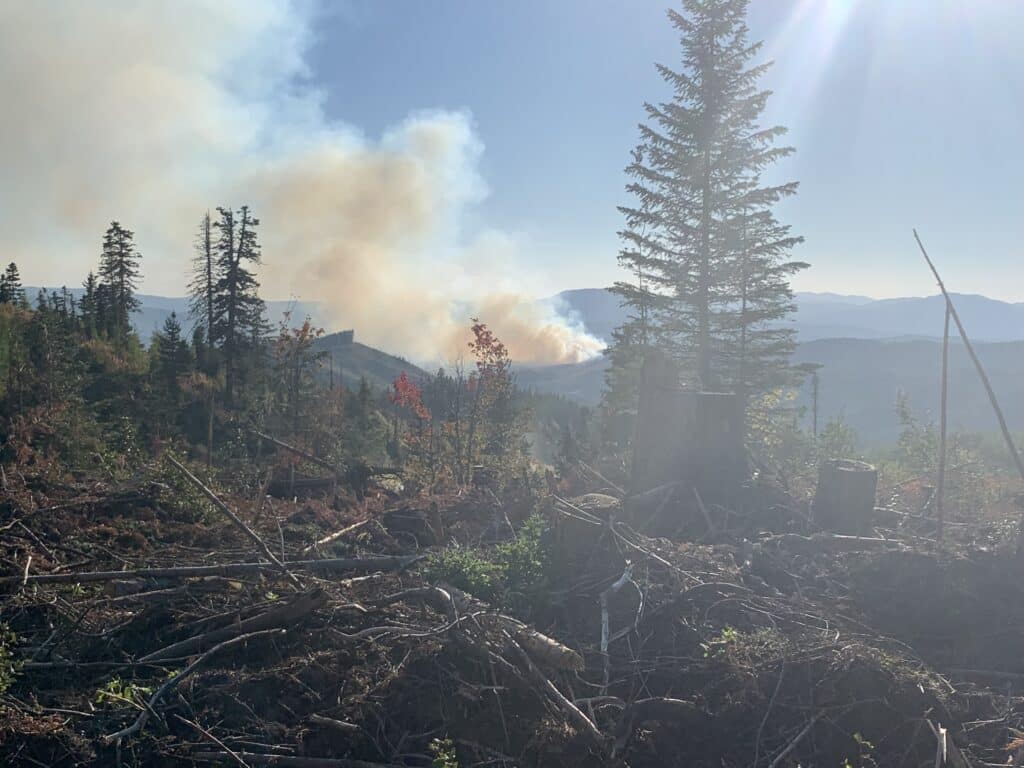
It followed several decades in which logging, both ecologically and economically unattainable, had caused destruction of of fish and wildlife habitat, watersheds, and visual blight. Taxpayers subsidized the construction of hundreds of thousands of miles of roads, some of which were built across unstable terrain and resulted in landslides. Meanwhile, as timber volumes and cutting of old-growth forests proved unsustainable, another under-reported fact is that many timber industry jobs were being lost to mechanization, a trend that continues in all resource extraction industries.
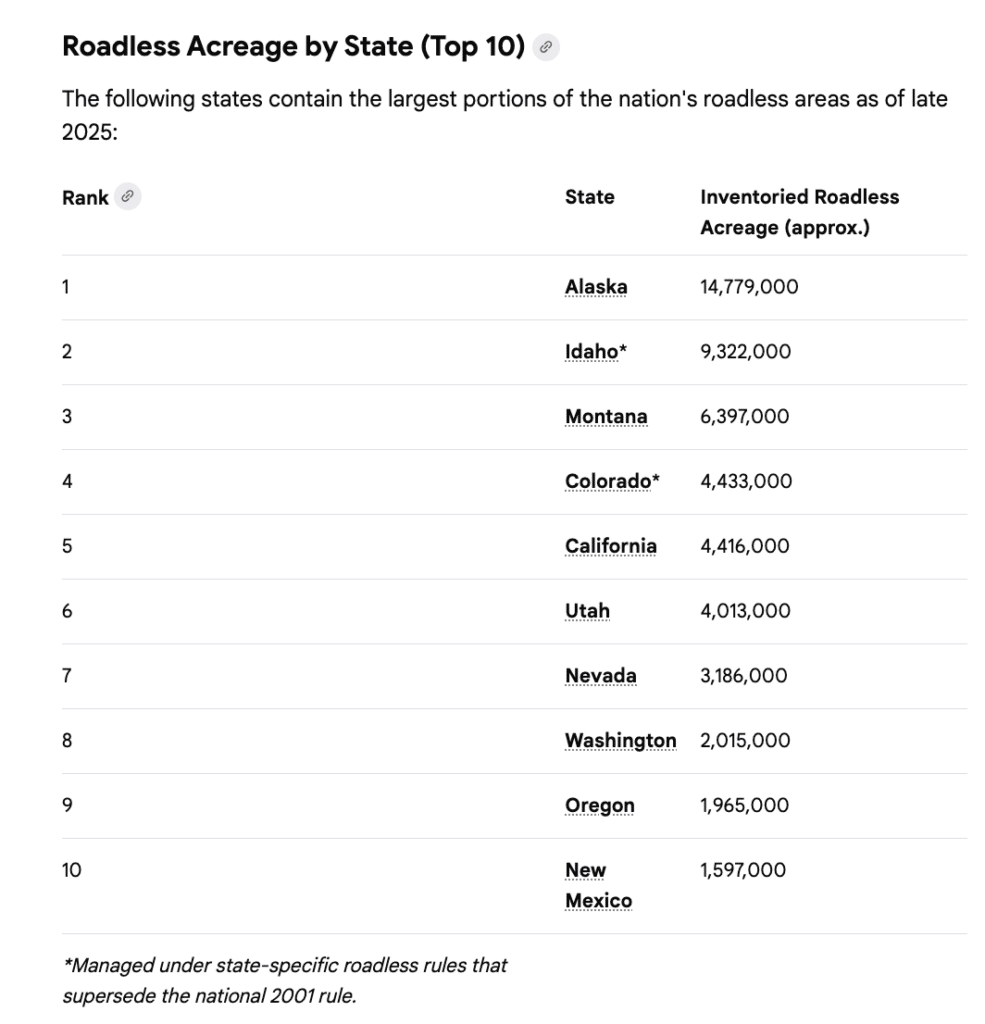
Today, the US Department of Agriculture and the US Forest Service, the bureau under its command, stand accused of failing to hold public meetings to make the case for why it is proposing undoing protections for more than 40 million acres of federal forestland encompassed by the original rule that applied to 58.5 million acres.
In the years after this memorandum was written and signed by President Clinton, the USDA/Forest Service under helm of Forest Service Chief Mike Dombeck held over 600 public meetings nationwide with 34 in Montana alone. More than 1.6 million public comments were received, the most of any modern public land issue and 95 percent favored the rule to protect roadless lands.
Flash forward: recently, during the public comments period for Agriculture Secretary Brooke Rollins’ announcement that the Roadless Rule would be rescinded, over 625,000 comments poured in over a span of just a few weeks and more than nine in 10 commenters said they were in opposition to what the Trump Administration is proposing, according to John Todd, executive director of Wild Montana. Roadless lands are deemed critical to the ongoing health of species ranging from ungulates and native cold-water fish to grizzly bears, plant diversity and the last remaining old-growth trees often found only in wilderness-caliber lands.
Memorandum on Protection
of Forest Roadless Areas
October 13, 1999
Memorandum for the Secretary of Agriculture
Subject: Protection of Forest “Roadless” Areas
by William Jefferson Clinton
President
At the start of this century, President Theodore Roosevelt dedicated this Nation to the conservation of natural resources—our land, our water, our wildlife, and all the other precious gifts nature had bestowed upon us. One of America’s great central tasks, he declared, is “leaving this land even a better land for our descendants than it is for us.”
In pursuit of that goal, President Roosevelt established new protections for millions upon millions of acres across America. His remarkable legacy includes 5 national parks, 18 national monuments, and dozens of wildlife refuges. Among his most notable conservation achievements were the consolidation of 65 million acres of Federal forest reserves into the National Forest System, and the creation of the United States Forest Service to ensure wise stewardship of these lands for future generations. In this effort, he was guided by Gifford Pinchot, the first Chief of the Forest Service and a founder of America’s conservation movement.
Today, the National Forest System has grown to 192 million acres of forests and grasslands in 46 States and territories. These lands provide a broad array of benefits to the American people. They support rural industries, sustain fish and wildlife, generate drinking water for 60 million Americans, and provide important recreation opportunities to an increasingly urban population.
Over the years, unfortunately, our Nation has not always honored President Roosevelt’s vision. Too often, we have favored resource extraction over conservation, degrading our forests and the critical natural values they sustain. As the consequences of these actions have become more apparent, the American people have expressed growing concern and have called on us to restore balance to their forests.
My Administration has made significant strides in improving the management of our Federal forestlands. Beginning with the adoption of a comprehensive, science-based forest plan for the Pacific Northwest, we have sought to strengthen protections for wildlife, water quality, and other vital ecological values, while ensuring a steady, sustainable supply of timber and other commodities to support stable rural economies. The new forest planning regulation proposed last month represents another major step in that direction.
It is time now, I believe, to address our next challenge—the fate of those lands within the National Forest System that remain largely untouched by human intervention.
A principal defining characteristic of these lands is that they do not have, and in most cases never have had, roads across them. We know from earlier inventories that there are more than 40 million acres of “roadless” area within the National Forest System, generally in parcels of 5,000 acres or more. A temporary moratorium on road building in most of these areas has allowed us time to assess their ecological, economic, and social values and to evaluate long-term options for their management.
In weighing the future of these lands, we are presented with a unique historic opportunity. From the Appalachian Mountains to the Sierra Nevada, these are some of the last, best unprotected wildlands in America. They are vital havens for wildlife—indeed, some are absolutely critical to the survival of endangered species. They are a source of clean, fresh water for countless communities. They offer unparalleled opportunities for hikers, campers, hunters, anglers, and others to experience unspoiled nature. In short, these lands bestow upon us unique and irreplaceable benefits. They are a treasured inheritance—enduring remnants of an untrammeled wilderness that once stretched from ocean to ocean.
In weighing the future of these lands, we are presented with a unique historic opportunity. From the Appalachian Mountains to the Sierra Nevada, these are some of the last, best unprotected wildlands in America. They are vital havens for wildlife—indeed, some are absolutely critical to the survival of endangered species. They are a source of clean, fresh water for countless communities. They offer unparalleled opportunities for hikers, campers, hunters, anglers, and others to experience unspoiled nature. In short, these lands bestow upon us unique and irreplaceable benefits. They are a treasured inheritance—enduring remnants of an untrammeled wilderness that once stretched from ocean to ocean.
—President Clinton in 1999 about the need to protect Roadless Lands
Accordingly, I have determined that it is in the best interest of our Nation, and of future generations, to provide strong and lasting protection for these forests, and I am directing you to initiate administrative proceedings to that end.
Specifically, I direct the Forest Service to develop, and propose for public comment, regulations to provide appropriate long-term protection for most or all of these currently inventoried “roadless” areas, and to determine whether such protection is warranted for any smaller “roadless” areas not yet inventoried. The public, and all interested parties, should have the opportunity to review and comment on the proposed regulations. In the final regulations, the nature and degree of protections afforded should reflect the best available science and a careful consideration of the full range of ecological, economic, and social values inherent in these lands.
I commend you, along with the Undersecretary for Natural Resources and the Environment, Jim Lyons, the Chief of the Forest Service, Michael Dombeck, and the entire Forest Service for your leadership in strengthening and modernizing the management of our Federal forests—lands held by us in trust for all Americans and for future generations. With the new effort we launch today, we can feel confident that we have helped to fulfill and extend the conservation legacy of Theodore Roosevelt and Gifford Pinchot, and to ensure that the 21st century is indeed a new century for America’s forests.
WILLIAM J. CLINTON