EDITOR’S NOTE: Yellowstone and Grand Teton national parks are home to the best wildlife watching opportunities, especially for large mammals, in the Lower 48. With the proliferation of cell phones, social media posting and digital nature cinematography, it is also a competitive environment for humans trying to get personal commercial images. This is one reason why the National Park Service has a permit system but that does nothing to address aggressive human behavior toward wildlife and sometimes toward each other as some try to assert their claims on turf. This column by Brad Orsted offers insight into a dust-up that happened on social media.
By Brad Orsted
Recently, a friend and colleague of mine was unjustly accused of pressuring animals, wolves in particular, in the backcountry of Yellowstone during a filming project. The accusation was made by a specific group of “wolf watchers.”
It isn’t the first time something like this has come up.
While I was filming and working for Casey Anderson, the host and filmmaker, from 2014 to 2018, I would catch wind of the snide, roadside comments from some “wolf watchers” in Yellowstone after one of our episodes would air.
“Wonder if that animal is still alive after you filmed it,” I would hear from another wildlife watcher, sometimes whispered, sometimes snickered out loud.
“Must be nice to go back there (referring to the backcountry of Yellowstone) and do whatever you want,” one frequent visitor I knew by name said to me with a sweep of his arm pointing towards the Lamar Valley.
What were the motivations for the remarks?
Such comments have been a thorn in my side, since those initial insinuations a decade ago, and to hear it’s still happening is disheartening— to be nice about it.

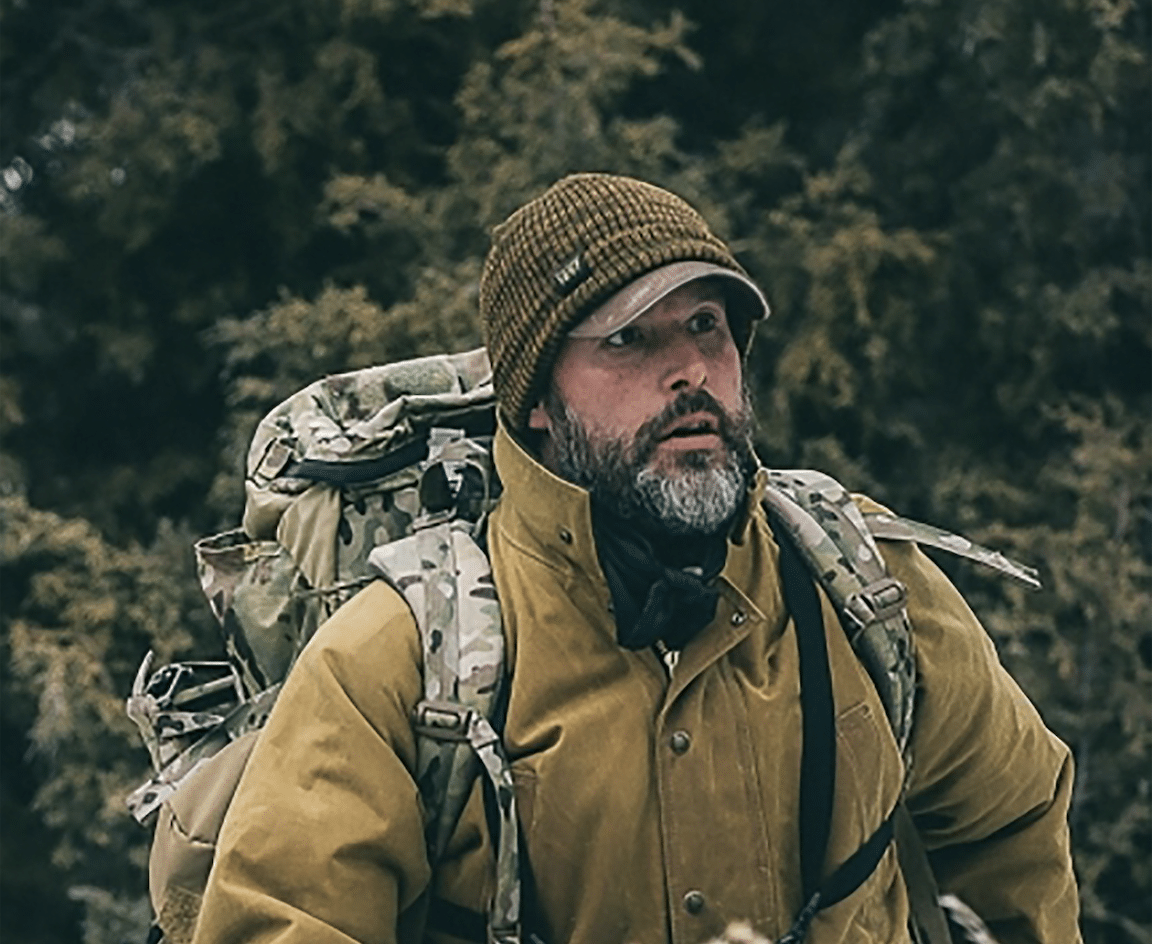
After years of trying to keep up with Anderson and his filming in the wilds of the Greater Yellowstone Ecosystem, here’s what I can tell you firsthand. He is among several wildlife filmmakers and photographers who have the best interests of wildlife in mind and their mission is to educate the public, so that it builds respect.
In Anderson’s case, he routinely creates informational posts to counteracts irrational fear, which is often used as an excuse to put animals down or remove them from the wild, but another emphasis is on giving them space, and that means using longer camera lenses.
Understanding how wildlife moves through landscapes is crucial and that comes from untold hours of observation.
There was never any reason for us to push boundaries or break laws, with any animals, inside or outside of Yellowstone; and dozens of reasons for us to be respectful and earnest. Here’s just a few:
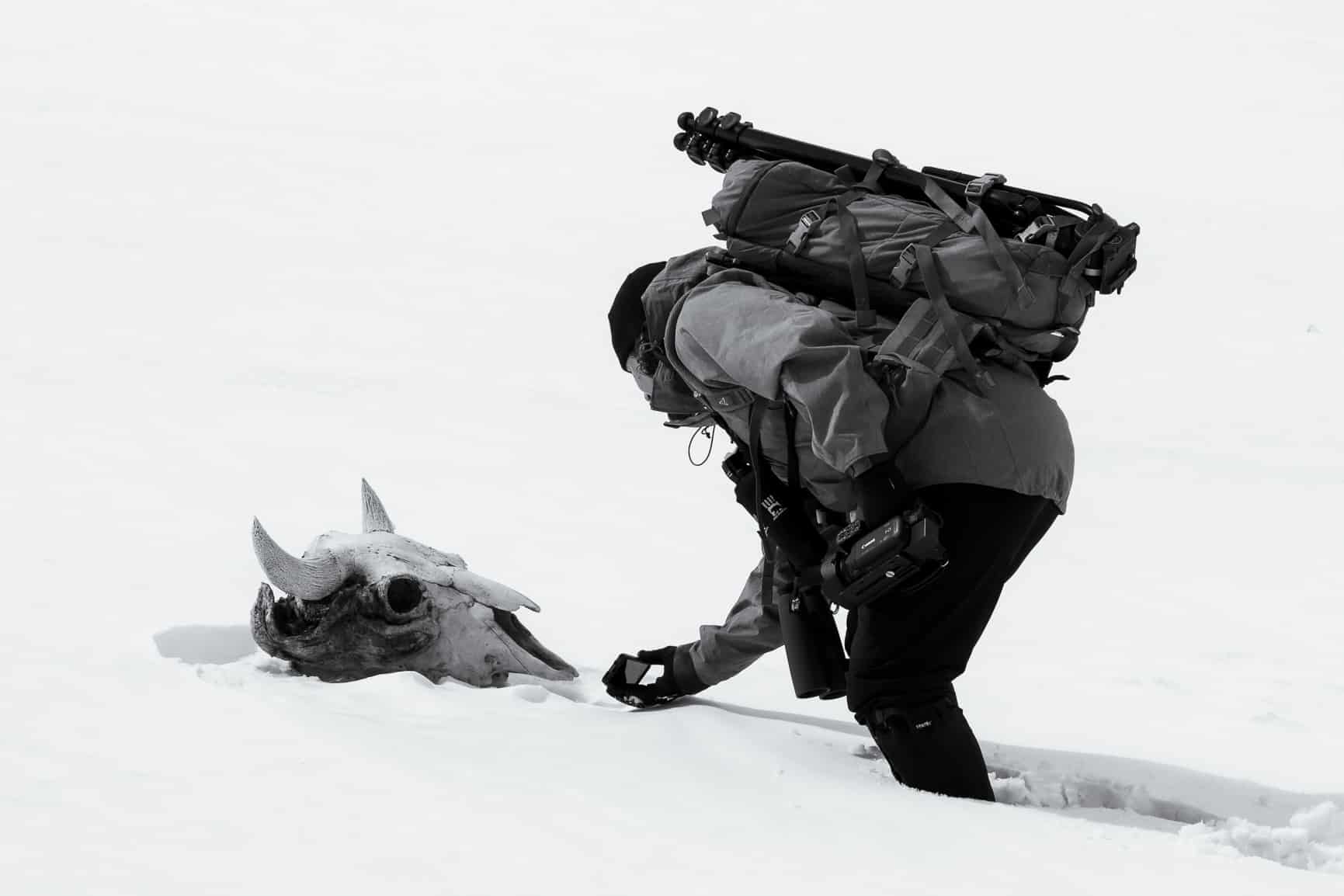
We spent hours, days, and sometimes weeks planning, tracking, and looking for animals, mostly apex predators, to film. It was incredibly hard and physical work. Some days, and in fact most of my days, consisted of lugging heavy backpacks full of film gear and tripods through the most rugged and remote terrain in Greater Yellowstone while trying to keep up with someone who is half mountain goat, and finding nothing to film.
Most of true wildlife filmmaking, in my personal experience, is planning, tracking, hiking, waiting, and seeing very little. It’s a ton of leg work and a logistical nightmare if you’re doing it right.
So, by the time we finally got binoculars on whatever animal we’d been burning thousands of calories a day trying to find, be it grizzly, wolf, or mountain lion, the absolute last thing we wanted to do was frighten it away.
This wasn’t roadside wildlife cinematography where grizzlies are fine with hordes of people and diesel trucks going by, these were true back country animals who made a living everyday avoiding trouble and spooked very easily.
We were looking for our favorite animals doing normal things, where we could hunker in, film, observe, and learn, without the crowds. We worked hard and hiked further than anyone I knew to find those moments of solitude and beauty where we could capture animals being animals— as much as possible. Why on Earth, then, after all our planning and extensive effort would we intentionally scare away the very thing we were hoping to film? It makes no sense.
We were looking for our favorite animals doing normal things, where we could hunker in, film, observe, and learn, without the crowds. We worked hard and hiked further than anyone I knew to find those moments of solitude and beauty where we could capture animals being animals— as much as possible. Why on Earth, then, after all our planning and extensive effort would we intentionally scare away the very thing we were hoping to film? It makes no sense.
Yet another practical reason to not “push” or “bump” the animals while trying to film them is no outlet wanted to buy blurry footage of scared animals running away from us. The “market” is already saturated with bad imagery.
Animals looking right down the barrel of a camera lens, but you can see the fear in their eyes – they’re frozen in terror. It doesn’t sell, or land well. We never wanted to see or film that behavior.
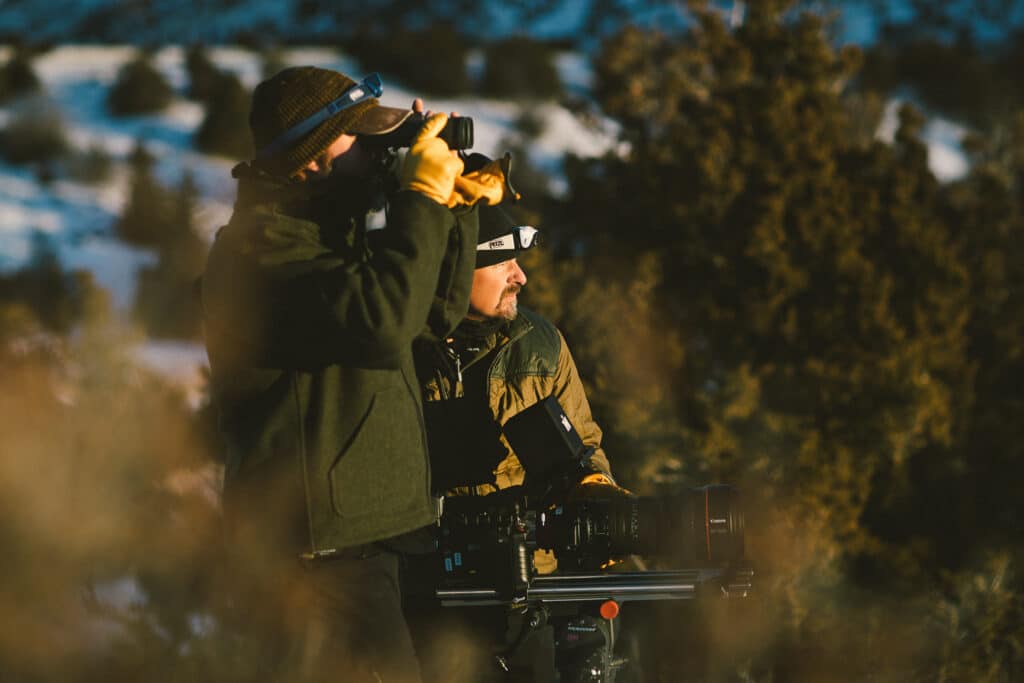
Terrified predators running away from me was never on any of my shot lists from Yellowstone to Africa. That’s why we mule-packed giant lenses up mountainsides; so, we didn’t have to get close to the animals, giving us the best odds of them sticking around.
The third and most important reason is we have a deep respect for the land and the animals that call it home. We were driven by a sincere desire to not only film these predators, but to try to understand them, and in our cinematic pursuits, we learned compassion, respect, and coexistence in nature.
For several years, we spent more time with animals in the backcountry of Greater Yellowstone than we did with our own families. It was the place we felt alive and connected. We got to know specific deer, birds, grizzlies, and lions. They became part of our wild family, and we did our best to respect their lives and existence, while also getting the footage we needed to tell their stories.
We felt a kinship with the land and animals, and to offend them by altering their behavior would not only be unethical, but rude.
While it’s frustrating to hear ignorance is still alive, it’s not surprising. I feel the same way today that I did ten years ago when I heard similar rumors about us running feral in the backcountry breaking rules to get our footage.
It’s nonsense and jealousy. Plain and simple.
Any one of those pullout chatterboxes would have gladly traded places with me, to be truly wild and free in Yellowstone. To be miles and miles away from the nearest road, following fresh wolf tracks, senses alive, breathing hard under the weight of your pack and adrenaline, until the final reveal and reward for all the dedication: a glimpse of wolves being wolves in a mountain meadow.
To settle in slowly and spend the day alone with the wolf pack, far, far away from the gossipy, spotting scope cluttered pullouts. That’s what the critics and cynics really want, is to be undomesticated too, but because of ability or ambition, they are stuck to the road, glued to the radio, never really having a wild experience, and they know it. It was hard for me to get mad at such naysayers, because I was seeing way too much beautiful amazingness to let it bother me. But it’s damaging and hurtful to someone who has made a life and career telling wildlife stories in an ethical and responsible way.
For every honorable and decent wildlife filmmaker, and there are many, I’m sure there’s a handful of those who are not. I’ve been privileged to work with some of the best and heard horror stories about the rest. Wildlife filmmaking is highly competitive, and networks always want more. More paws and claws and for filmmakers to push the boundaries of principled filmmaking.
I can say unequivocally, that during my time working with Casey Anderson, more than once we backed out of a situation because it was too risky for us, the animal, or both, footage be damned. If our presence filming was going to have an adverse effect on the animal, we bagged it, no matter how far we’d hiked that day. There was always tomorrow.
Also read: