EDITOR’S NOTE: For former Yellowstone “winterkeeper” Steven Fuller, who spent more than half a century in the middle of the park, reflections on the very beginning of his tenure there, is indeed the very best place to start. Henceforth, more will be coming under his column heading at Yellowstonian, “A Life in Wonderland.”
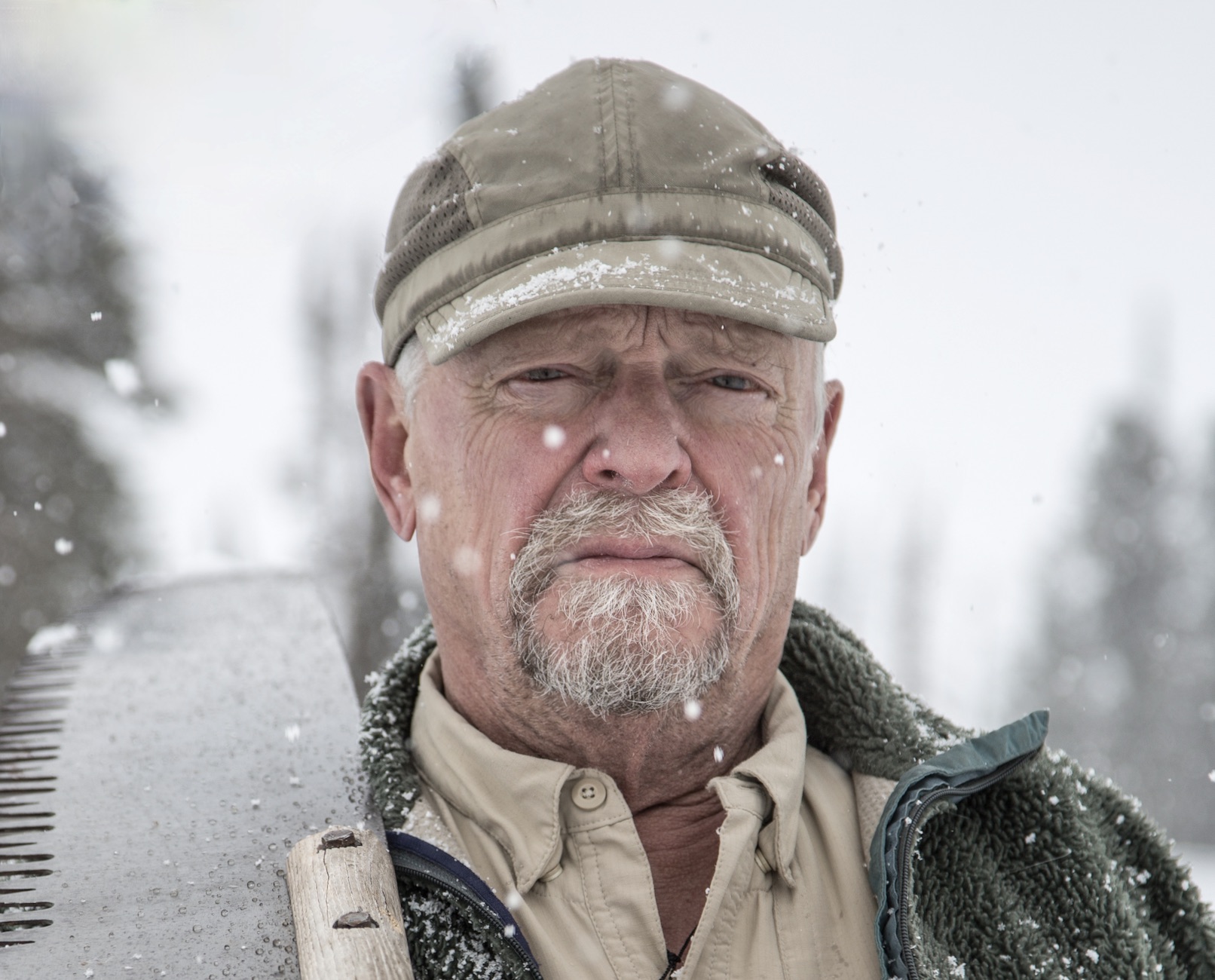
By Steven Fuller
Monday, the first day of October 1973, and Yellowstone was a ghost park when we drove 40 miles into the interior to move into our “new home,” the Canyon Village winterkeeper’s’ house which was then the oldest structure still standing.
The summer season was long passed. Tourist facilities, including gas stations, were closed and boarded up. The traffic on the drive in was infrequent.
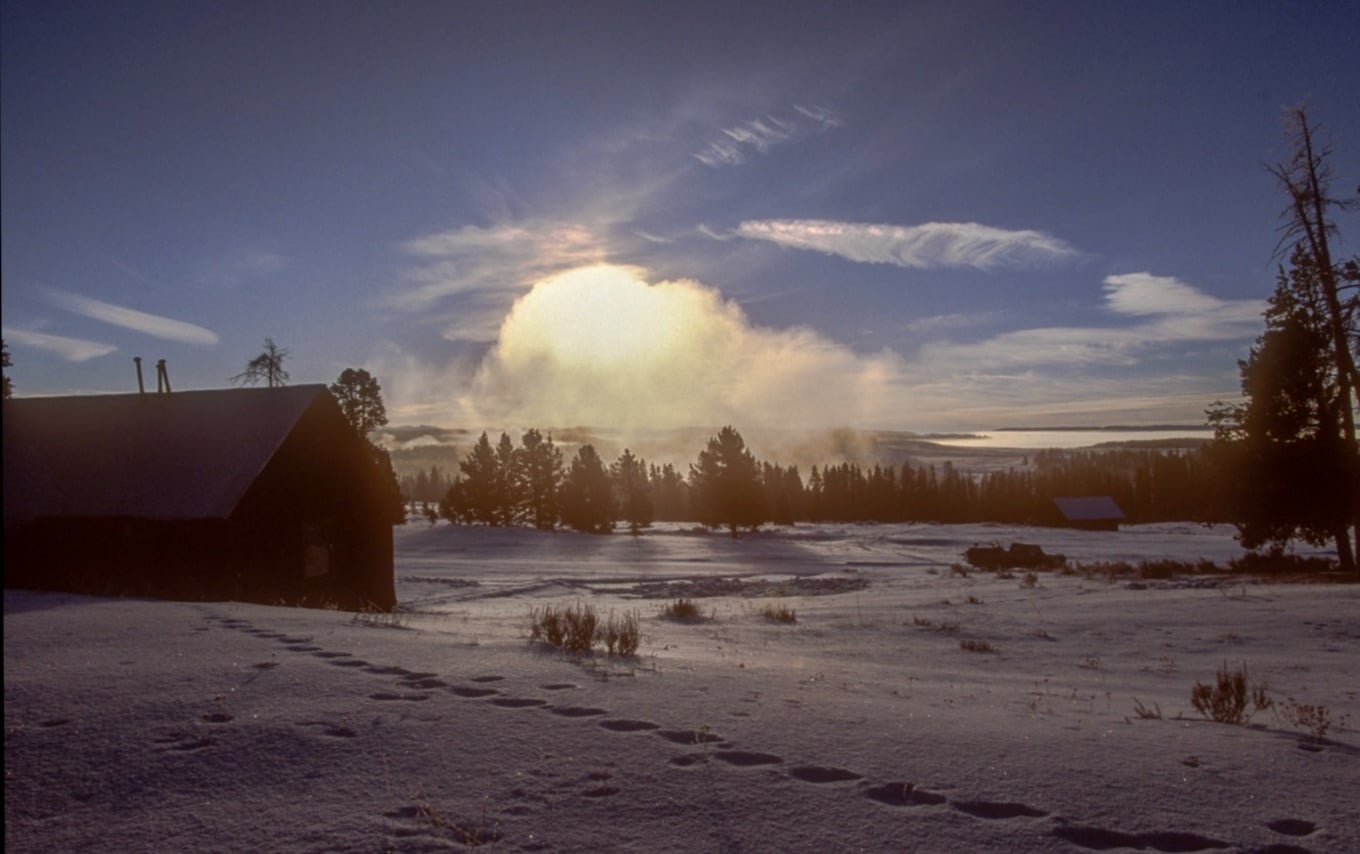
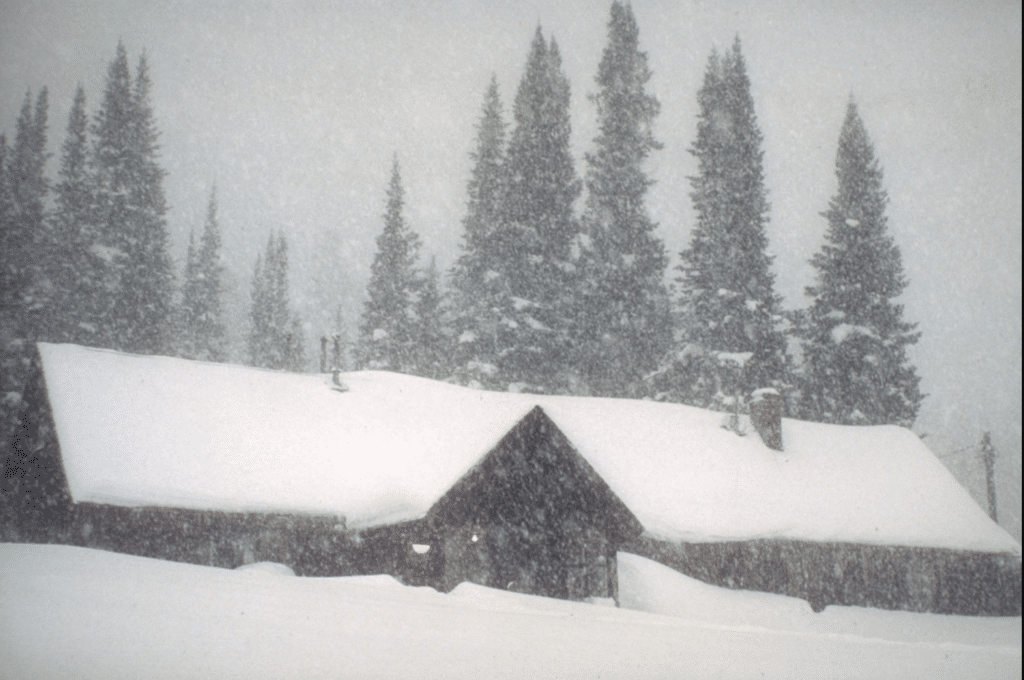
Our destination sat a few miles from the geographical center of Yellowstone National Park. That day, 52 years ago, the solitary house was 62 years old, a single-story frame house clad and roofed in cedar shingles, rustic, weathered, and neglected. (See a glimpse of it, above). At first sight I knew I had found the place I had been looking for after years of global wanderings.
We were young, not searching for our life-long “professions.”
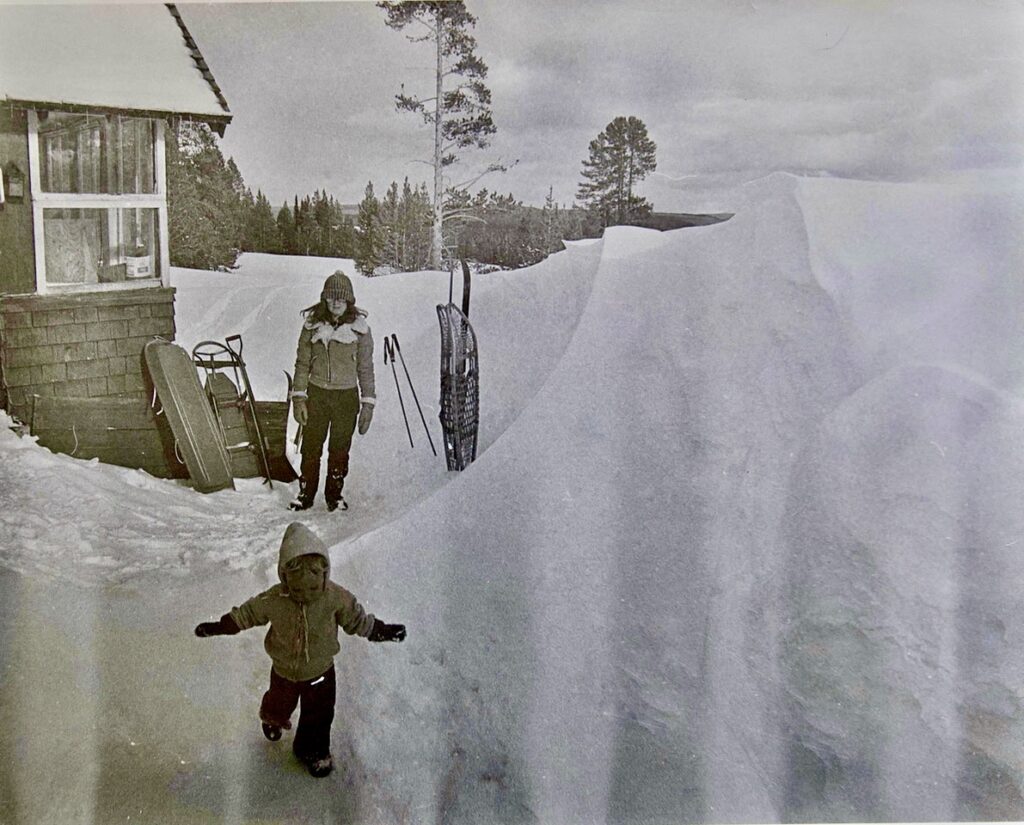
“We,” our little family of homesteaders, included my posh English wife schooled to life in unconventional places, our 18-month-old daughter, and myself. Our nearest neighbors, sheltering on the shore of Yellowstone Lake 16 miles upriver, totaled four people, a ranger who even then was legendary amongst his peers, his wife (a nurse) and two other winterkeepers, one of whom was near the end of his 25 years as the Lake winterkeeper and the other, seldom seen and known as “Silent Joe.” Otherwise, our nearest neighbors were 36 miles north or 40 miles southwest.
Our nearest neighbors, sheltering on the shore of Yellowstone Lake 16 miles upriver, totaled four people, a ranger who even then was legendary amongst his peers, his wife (a nurse) and two other winterkeepers, one of whom was near the end of his 25 years as the Lake winterkeeper and the other, seldom seen and known as “Silent Joe.”
When I was hired, only because I was the only applicant for the job, I was told by my Yellowstone Park Company boss in no uncertain terms that once we were snowbound we were not to leave Canyon until the snow plows cleared the highway in the park in mid-April next spring.
More usefully I was orientated at the Canyon house for a couple of days by my predecessor, a Montana local, who had done two resentful winters as the Canyon winterkeeper only because there were no other job options. He told me expectations of The Company, the “YP Company,” were simple: Don’t allow any of the 75 buildings for which I was responsible to suffer any damage due to winter snow loading. If I lost any buildings, end of job. In the course of our conversations it never occurred to him, nor to me, that the job came with any glamour or romance, just hard work in a hard place.
On the second day, as we became more comfortable with each other, he advised me to be wary of the YP Co company and how to poach a local mule deer for my winter meat which was traditional due to the poor wage, the isolation, and the harsh life. The wage was minimal ($13.25 a day) but so too was the rent. The job included all utilities, and most importantly came with a homely homey historic house set in a spectacular space. We embraced the bargain.
After he left, my orientation complete, the three of us explored the amenities of our new home and discovered three big old chest freezers out-back, meant to store our winter meat, a deer or two. And, in the kitchen a kerosene powered refrigerator similar to the one I had lived with for a few years in East Africa. Settling in prior to getting snowed in we put-in supplies for six months, bread flour, dried stuffs, powdered milk, rice, sprouting seeds, home-brew makings. We bought everything by the bag and by the case.
On cold days, in the course of that first October, steam revealed previously unseen hot springs in our expansive viewscape and we became accustomed to the soft roar of the postcard famous Lower Fall directly in front of the house. On stormy days we watched the snow line move down the local mountains until it surrounded our wintercreeper’s’ home. By mid-November it was obvious the time had come to take our car down to Montana 40 miles and 3000 feet below for storage until Spring.
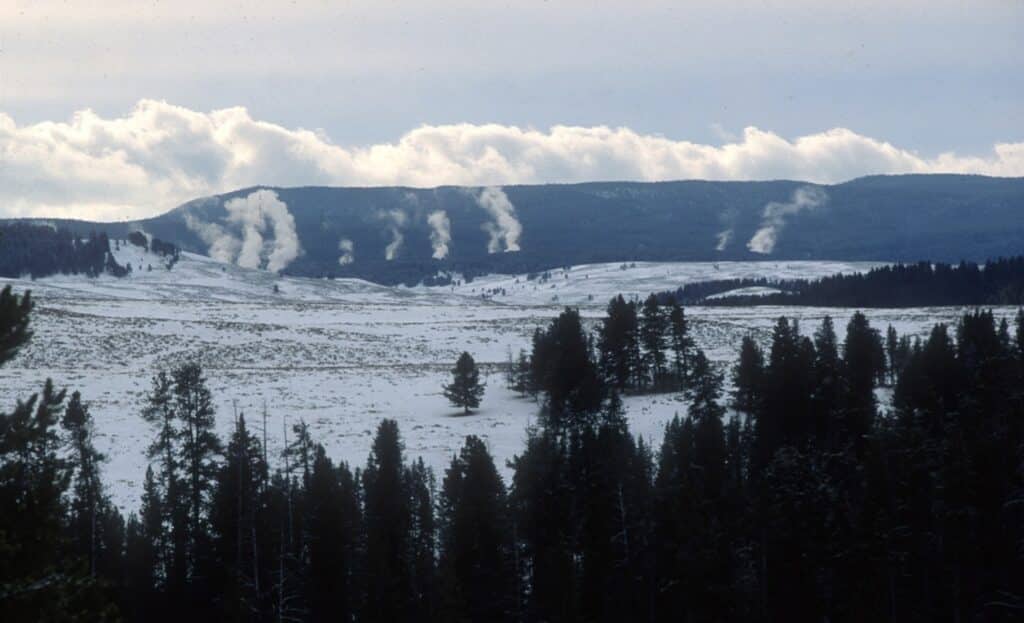
With the car gone, other than the landline telephone, the tether to the outside world was severed. It was a relief to be snowbound, to be isolated from and forgotten by the aggravations of the outside world and most profoundly to have that world eclipsed by the realities of the wild natural world atop the central Yellowstone Plateau.
That November, as our first winter closed in, the night surround all round our house was cold and dark. There were no lights but for a small cluster unseen sixteen miles south of us. We were happily marooned in the heart of this remote winter wild and unpeopled “Big Empty.” The relief was heavenly though in time the life was to be leavened with a few unforeseen trials. But, we had come to rest and found a home in a wild place.
Winter was coming.
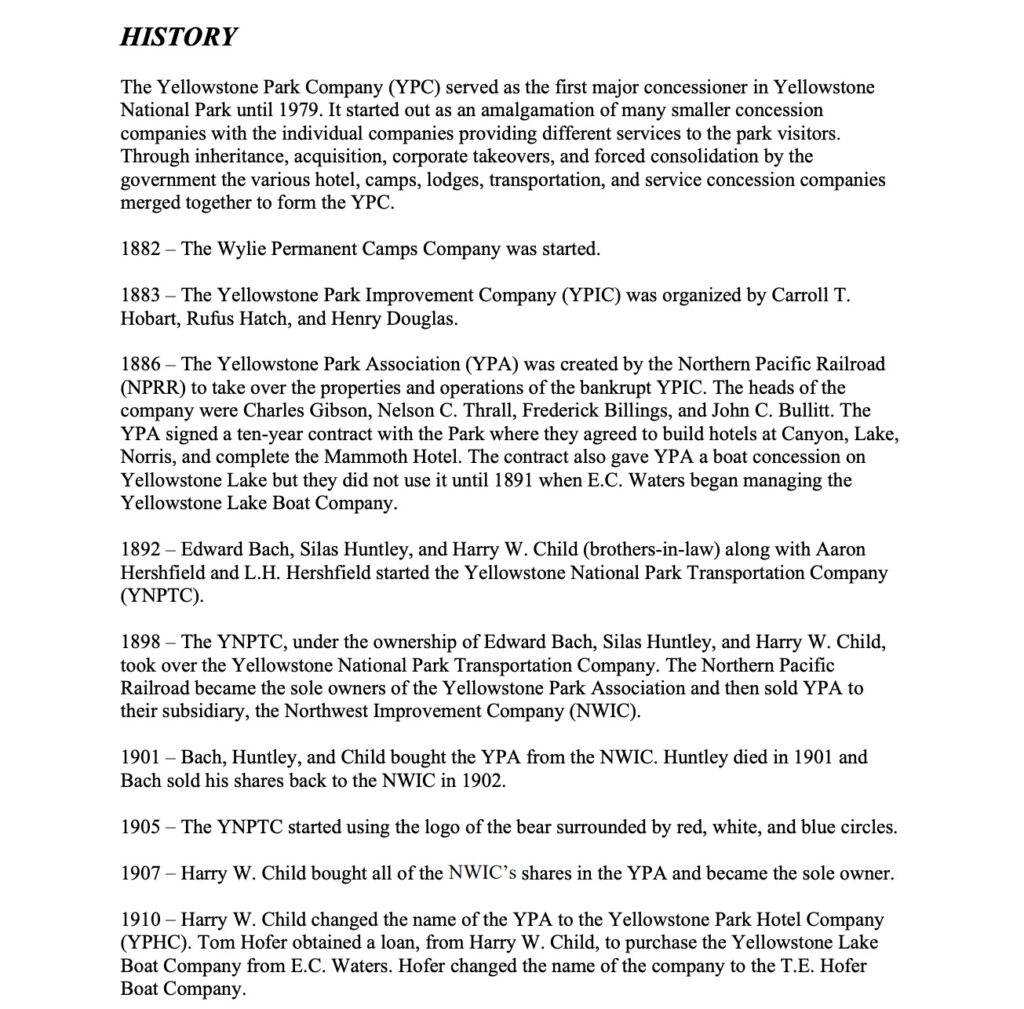
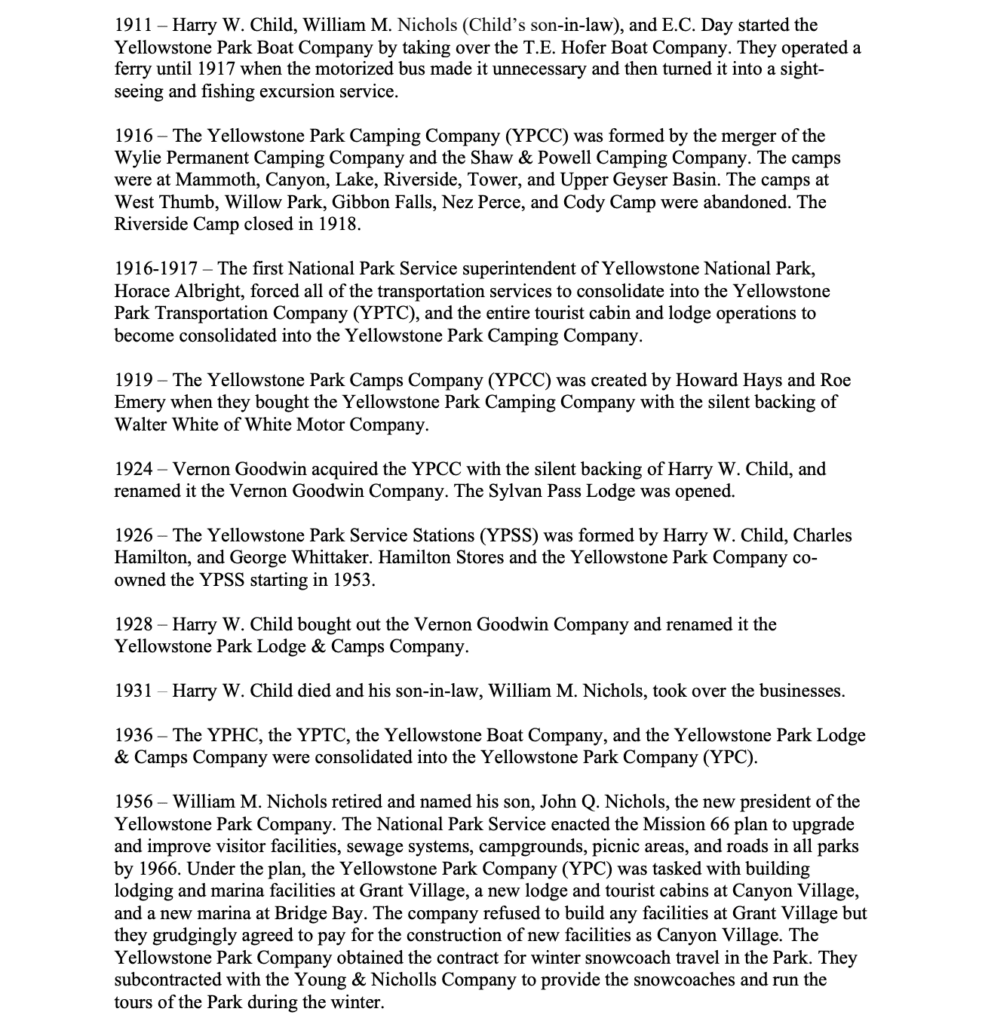
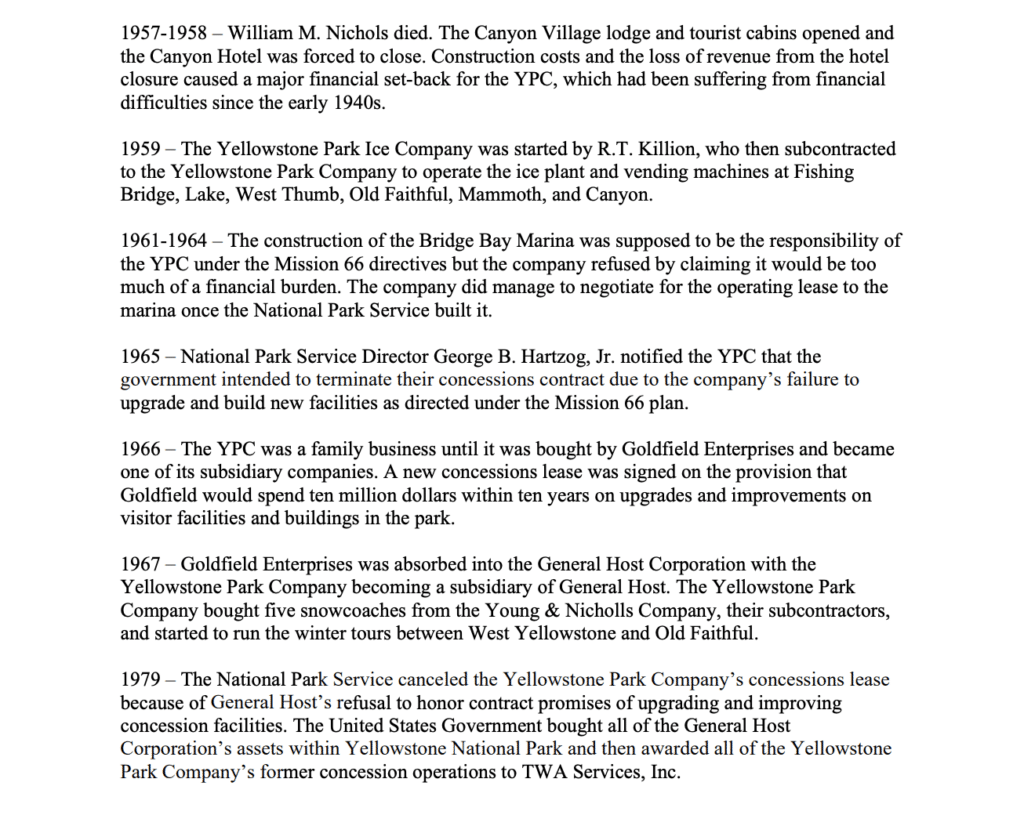
POSTNOTE: Over the years, the private companies delivering concession services in Yellowstone (lodging, food, gift stores, guided trips) have evolved. When Steve Fuller arrived at Canyon, the main company in the park overseeing accommodations was the Yellowstone Park Company, mentioned in his column, above. Below is a brief overview of the “YP Company” that was terminated by the National Park Service in 1979. The narrative is in the Yellowstone National Park Archives and was written by Lee Steiner, Cara Bertram, Clay Skaggs and Kimberlee Roberts