By Ted Williams
Writers on the Range
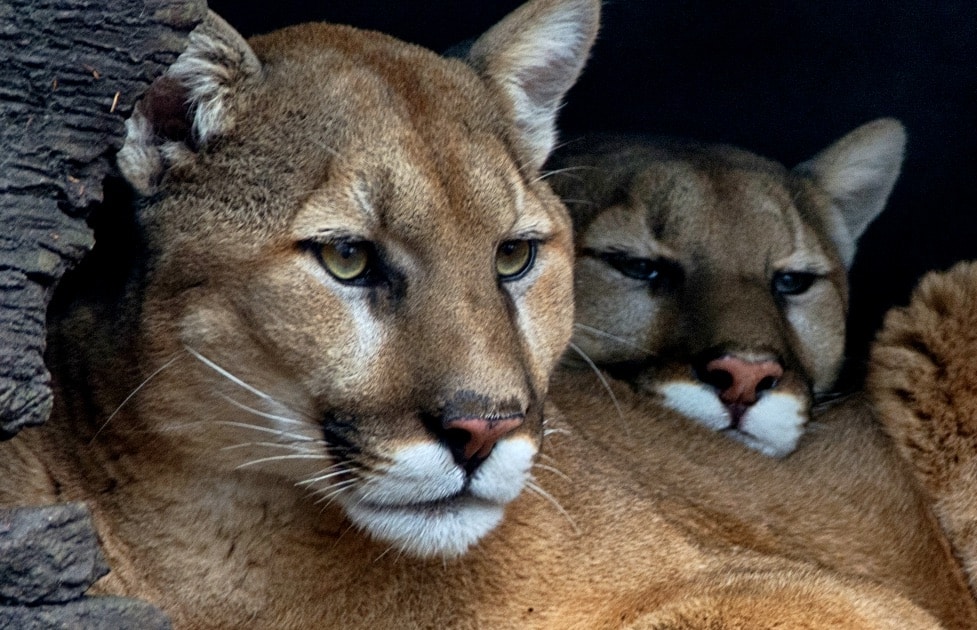
This year, in what it calls a “study,” Utah’s Division of Wildlife Resources is killing off mountain lions in an effort to increase mule deer herds. It has hired trappers from the Utah Department of Agriculture and Food, authorizing them to dispatch lions with any method, including banned traps and neck snares.
The study, covering roughly 8.6 million acres in six management units, will run for at least three years with the goal of indiscriminately exterminating “as many (lions) as possible.”
Buying into this ancient predator-prey superstition are the nonprofits Sportsmen for Fish and Wildlife and Utah Wild Sheep Foundation. Each has contributed $150,000 to the cull.
Wildlife managers have no idea how many mountain lions roam the state because estimating populations is essentially impossible. Lions are solitary, elusive and range over vast territories they defend. Unlike ungulates that compensate for mortality with fecundity, predators don’t “overpopulate,” and they’re much slower to recover from culling or hunting.
I asked veteran mountain lion researcher Dr. Rick Hopkins, board president of the Cougar Fund, what science supports a claim that killing mountain lions generates more deer. “None,” he replied. “For years, agencies have made such claims, but when pushed to provide evidence, they can’t. Predator control has never worked anywhere.”
“I asked veteran mountain lion researcher Dr. Rick Hopkins, board president of the Cougar Fund, what science supports a claim that killing mountain lions generates more deer. ‘None,’ he replied. ‘For years, agencies have made such claims, but when pushed to provide evidence, they can’t. Predator control has never worked anywhere.'”
—Ted Williams
Utah’s Division of Wildlife Resources estimates the state’s mule deer population at 295,200—73 percent of the “long-term goal.” That goal is based more on desired hunting-license sales than science. Still, considering the natural ebb and flow of deer populations, 73 percent isn’t bad.
Mountain lions have little or nothing to do with the decline of Utah’s mule deer. Predator populations are limited by available prey. What we learned in Biology 101—that predators control prey—is incorrect: Prey controls predators. Utah has experienced prolonged drought, which peaked in 2022. Reduced forage starved female deer so that fewer fawns were born, and those fawns were sickly and therefore less likely to survive winters. When record-breaking snowfall occurred during the winter of 2022-2023, there were massive mule deer die-offs.
Utah’s mountain lion cull follows hard upon a 2023 state law that opened up year-round, mountain lion killing without requiring permits. Both this law and the current cull outrage environmental and animal wellness communities. The Western Wildlife Conservancy and Mountain Lion Foundation have filed a lawsuit (ongoing), asserting that the law violates the state’s Right to Hunt and Fish Act, which requires a “reasonable regulation of hunting.”
The Mountain Lion Foundation dismisses the mountain lion cull study as a “lethal program without rigorous science,” and reports: “Decades of peer-reviewed research across the West show that intensive predator removal rarely delivers sustained or landscape-scale recovery of prey populations. Instead, it often destabilizes predator populations, leading to younger, transient animals, increased conflict and little long-term benefit for deer.”
And this from Wayne Pacelle, president of Animal Wellness Action: “The science shows that healthy lion populations create robust and healthier deer herds, with lions selectively removing deer afflicted with the 100-percent fatal and highly contagious brain-wasting scourge known as Chronic Wasting Disease (CWD) caused by malformed, self-replicating proteins called ‘prions.’”All threats to mule deer pale in comparison with CWD. The Theodore Roosevelt Conservation Partnership, a hunter-support group, calls it “the number one threat to deer hunting.”
Mountain lions have little or nothing to do with the decline of Utah’s mule deer. Predator populations are limited by available prey. What we learned in Biology 101—that predators control prey—is incorrect: Prey controls predators.
In Utah, CWD has been detected in 356 of the few mule deer checked. Symptoms include fearlessness and loss of coordination, behaviors inviting lion predation, and thereby removal of disease vectors.
What’s more, mountain lions are resistant to CWD. They deactivate prions through digestion, removing them from the environment. That further protects mule deer as well as possibly protecting people. In 2022, two hunters who ate venison from a CWD-ravaged deer herd in Texas died from prion disease. Given the rarity of human prion infections, this seems an unlikely coincidence.
The Idaho Capital Sun quoted Dr. Michael Osterholm, director of the Center for Infectious Disease at the University of Minnesota, as follows: “We are quite unprepared. If we saw a (CWD) spillover right now, we would be in free fall. There are no contingency plans.”
Dr. Mark Elbroch of Panthera, a nonprofit dedicated to conserving wild felines, told me this: “Heaps of science show the beneficial contributions of mountain lions. Humans are healthier when we live with mountain lions.”
So are mule deer.
° ° ° °
Also read: