Yellowstonian
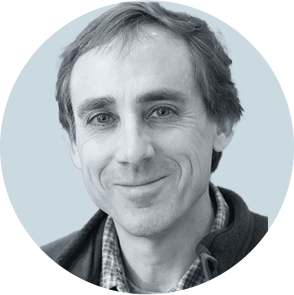
If you’re looking to find a compelling example of next generation thinkers pondering how we hold large landscapes together in the face of changes brought by humans and climate, you could do no better than having a conversation with Liz Fairbank of the Bozeman-based Center for Large Landscape Conservation.
While her organization is headquartered in Greater Yellowstone, its influence and expertise extends around the world. We at Yellowstonian, for example, attended a presentation featuring CLLC founder Gary Tabor and colleagues in Abu Dhabi during autumn 2025 at the IUCN World Conservation Congress. Scientists and NGOs from every still-wild corner of the globe, grappling with the same kinds of issues we see in Greater Yellowstone, were part of the discussion. Greater Yellowstone is a reference point for the world. Not long ago, the CLLC produced a report now in wide circulation across the US titled Integrating Connectivity Into State Wildlife Action Plans that is intended to be a guide for how states can be more conscientious in thinking about highways and their impacts on nature.
Closer to home, Fairbank has been a researcher on the front lines of assessing how highways are impacting the region’s world-renowned highways but it’s also tied to land use. Related issues include human safety, property damage, the impacts roads and development on wildlife migrations and animal behavior, and how and why species choose given routes through the ecosystem. As a member of the CLLC’s Corridors and Crossings Team, she has devoted a lot of time to pondering crossings along US 89 Highway in Paradise Valley, Montana between Yellowstone National Park and Livingston; Interstate 90 over Bozeman Pass; and US Highway 191 through the Gallatin Canyon which has a high wildlife roadkill rate related to traffic coming and going from Big Sky. The same questions she is examining exist throughout the Rocky Mountain West and sometimes overpasses and underpasses are the only remedy for trying to fix blocked passageways.
How did Fairbank arrive in her current position? While in Missoula attending the University of Montana, she “fell head-over-heels with the Northern Rockies landscape—the amazing places, tight-knit communities, spectacular wildlife, and abounding recreational opportunities,” she says. Since graduate school, her work has been focused on habitat connectivity and road ecology research.
Fairbank previously worked for the Western Transportation Institute at Montana State University for several years, during which time she contributed to road ecology research projects in Montana, Idaho, Wyoming, and Nebraska. She then spent two years working for the Jackson Hole-based Northern Rockies Conservation Cooperative researching the impacts of roads on ungulate migration routes in western Wyoming.
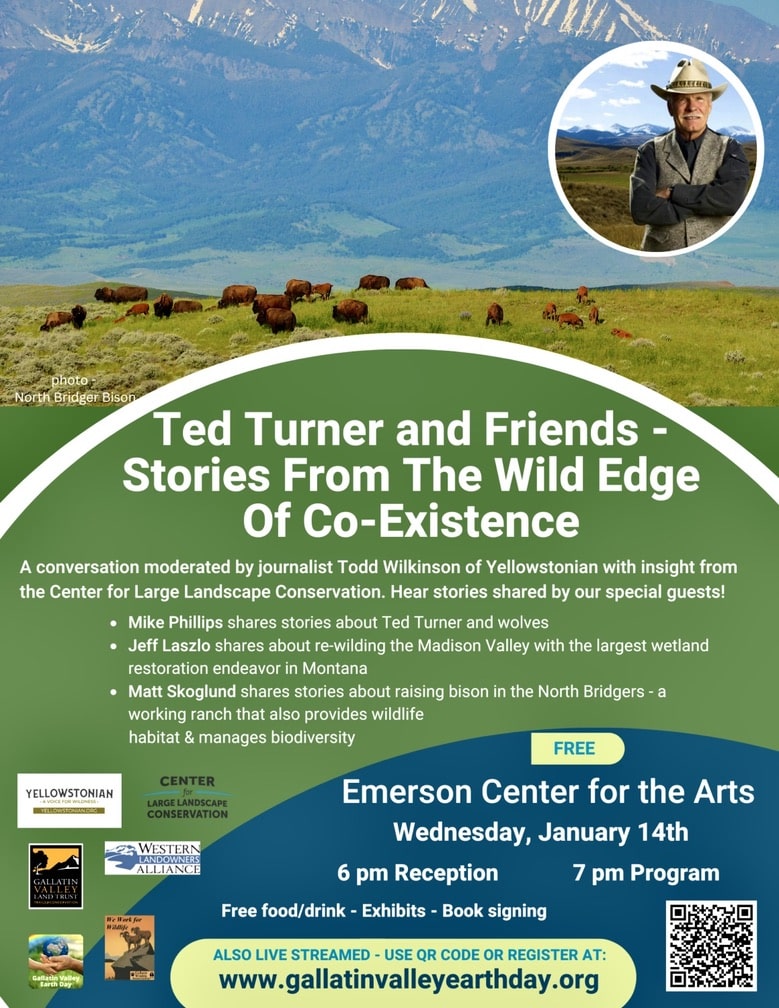
Fairbank was tapped to join the discussion at “Ted Turner & Friends: Stories from the Wild Edge of Co-existence” co-hosted by Yellowstonian and Gallatin Valley Earth Day.
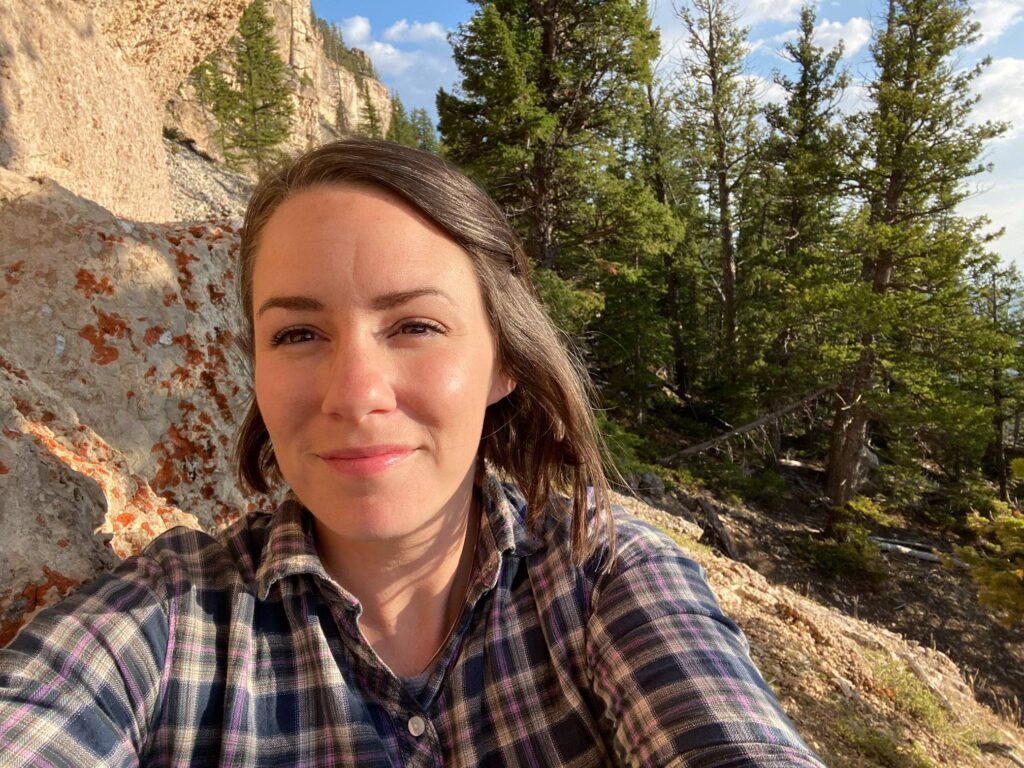
The Yellowstonian Interview With Road Ecologist Liz Fairbank
YELLOWSTONIAN/TODD WILKINSON: You are a scientist specializing an area that is a product of the modern age. Your title is “Road Ecologist.” What is that? Please explain the special relevance of the position in the Rocky Mountain region of the West.
ELIZABETH FAIRBANK: Yes, as a road ecologist, I study the impacts of roads and traffic on wildlife and ecosystems. I started working on this issue in graduate school where I worked as research technician for the Western Transportation Institute doing the post-construction monitoring of the wildlife crossing structures on the Flathead Reservation in northwest Montana. This type of work is especially critical in the Rocky Mountains where we have wide-ranging and migratory species that need to travel long distances and, in doing so, need to cross our many busy highways.
YELLOWSTONIAN: The Center for Large Landscape Conservation, the NGO for whom you work, is based in Bozeman. It has earned a global reputation for assessing biological connectivity in landscapes of all sizes and is known foremost for evolving the use wildlife crossings—overpasses and underpasses. It’s vital to point out both the CLLC and the Wyoming Migration Initiative, which has a global reputation for mapping wildlife migration, have their roots in Greater Yellowstone. Share a bit of insight, please, of how the science-driven insights divined by both entities are shaping the way we thinking about landscape intactness and fragmentation.
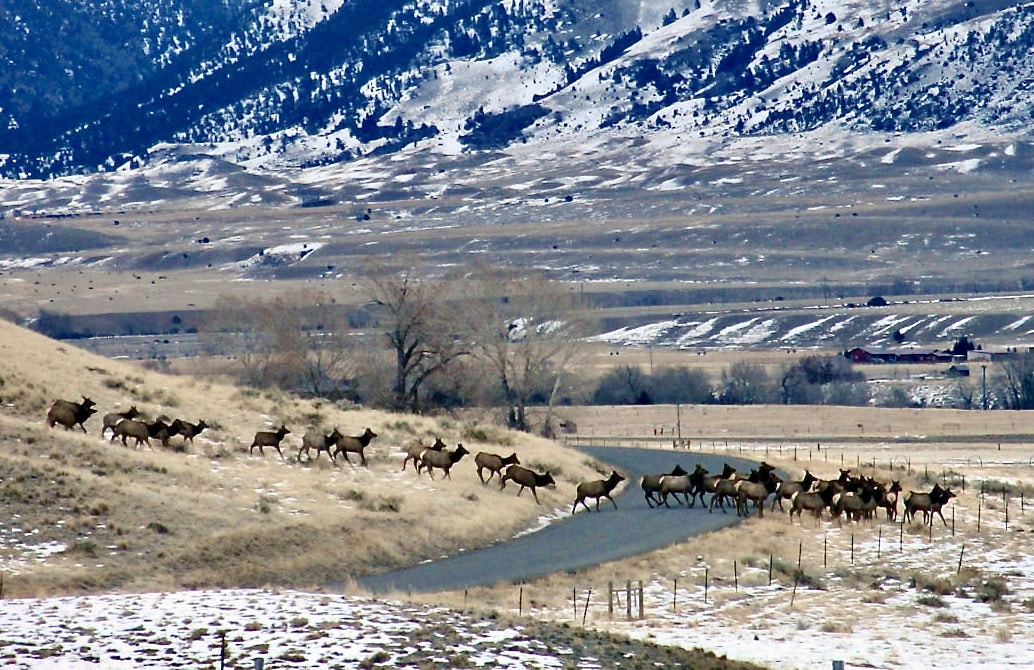
LIZ FAIRBANK: I cannot overstate the importance of the work of the Wyoming Migration Initiative in illustrating the need for connectivity across the large landscapes of the West. The data that they have collected using GPS collars and the beautiful mapping work that they have done show how migratory ungulates need to traverse long distances literally one step at a time. These movements cross public and private lands, they cross jurisdictional boundaries, and they cross a whole matrix of roads and highways. CLLC’s work seeks to build on that knowledge, assessing connectivity needs for a broad range of species and habitats and identifying barriers to movement. From there we can identify actions needed to protect or restore connectivity ranging from land conservation to infrastructure to reconnected habitat fragmented by roads.
“I cannot overstate the importance of the work of the Wyoming Migration Initiative in illustrating the need for connectivity across the large landscapes of the West. The data that they have collected using GPS collars and the beautiful mapping work that they have done show how migratory ungulates need to traverse long distances literally one step at a time. These movements cross public and private lands, they cross jurisdictional boundaries, and they cross a whole matrix of roads and highways. CLLC’s work seeks to build on that knowledge, assessing connectivity needs for a broad range of species and habitats and identifying barriers to movement.”
—Liz Fairbank
YELLOWSTONIAN: For those hearing more and more about overpasses and underpasses, what is important for the public to understand about the promise they represent, not only of course in dramatically reducing human death, vehicle damage and wildlife roadkill in areas where they are deployed, but a bigger purpose that isn’t visible or known to the people who visually see them. We’re talking here about ecological sinuosity, enabling populations of animals that need to migrate seasonally, to continue doing so, as it’s vital to their resiliency and health on a landscape.
LIZ FAIRBANK: Wildlife crossing structures combined with fencing can reduce collisions with wildlife by over 90 percent when designed and placed appropriately, which is an amazing return on investment for both human and wildlife safety. In addition, these structures stitch back together habitat fragmented by roads, restoring connectivity and allowing wildlife to move safely across roads that may otherwise be a barrier. This is critical for migratory species that must be able to move back and forth between their winter and summer ranges to survive.
YELLOWSTONIAN: So far, in southwest Montana, northwest Wyoming and the eastern Idaho portions of Greater Yellowstone like Island Park, there have not yet been high profile examples of wildlife bridges over or above highways. But their necessity is increasing. In the case of Interstate 90 on Bozeman Pass, between Bozeman and Livingston, west to east, and the northern Gallatin/Absaroka mountains the Bridger-Bangtail-Shields Valley areas south to north, work by the Craighead Institute has highlighted the need for decades not only because or collisions and roadkills but how the Interstate and sprawl on both sides of it impedes movement. Please explain for our readers why that stretch of highway is important in thinking about linkage.
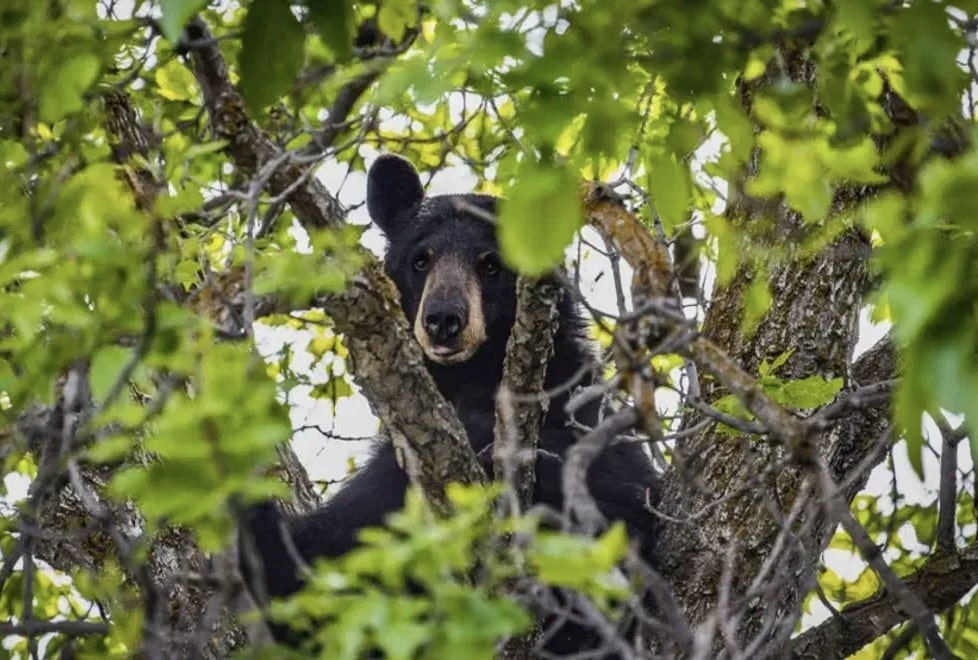
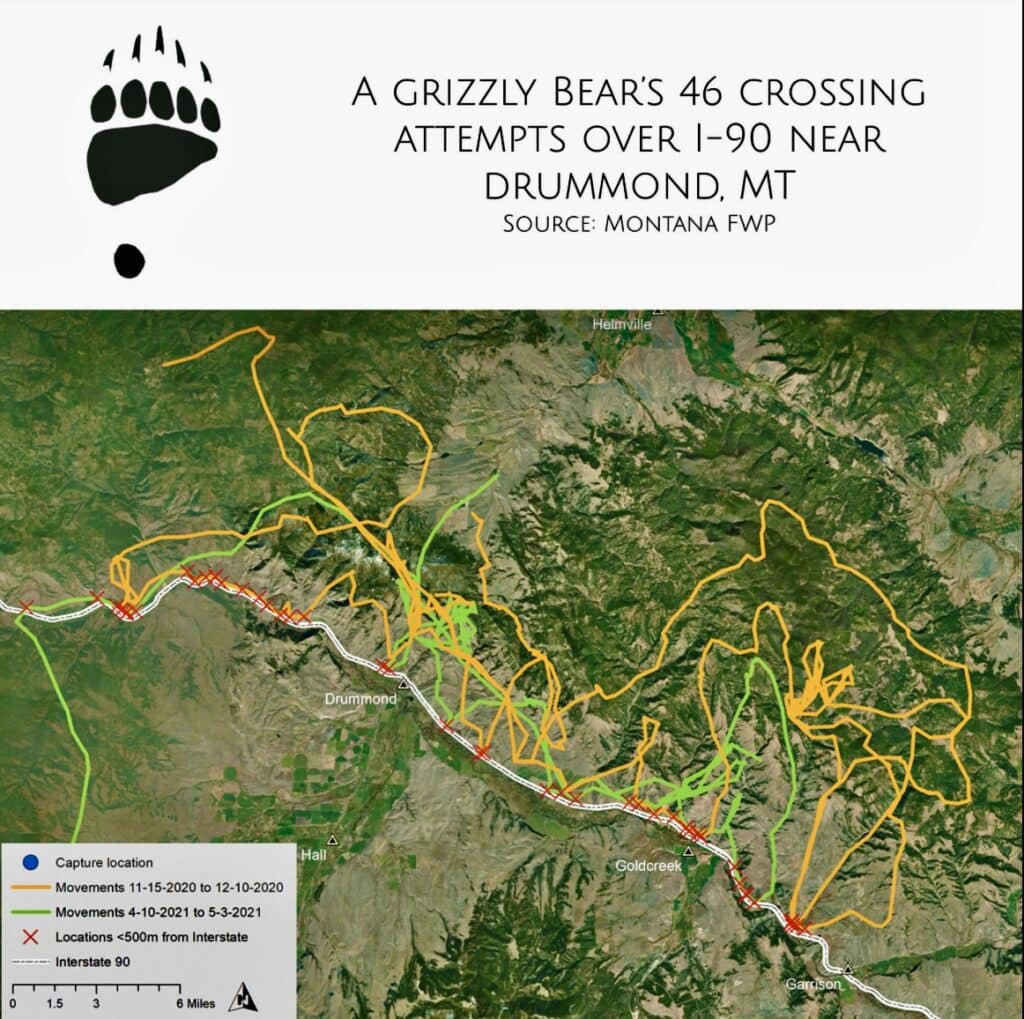
LIZ FAIRBANK: That stretch of I-90, with very high traffic volumes is a near-complete barrier for most wildlife and especially for sensitive species such as grizzly bears. That area is in a linkage zone for potentially reconnecting Greater Yellowstone and Northern Continental Divide grizzly bear populations, which is an essential recovery goal.
YELLOWSTONIAN: Of course, the most visible work you and the CLLC have been involved with, in our part of the world, involves US Highway 89 in Paradise Valley between the Absaroka and Gallatin ranges and Yellowstone National Park to the south and the town of Livingston to the north along the Gallatin River. There’s a group, Yellowstone Safe Passages, working on it. The other is US Highway 191 stretching from the Gallatin Valley to West Yellowstone, but the most critical stretch is between Gallatin Gateway and the environs around Big Sky. The Center produced a report that serves as a foundational reference point. You were a lead author of a report that’s well worth reading and that identified different locations for potential overpasses/underpasses. What can tell us about those efforts and is there any progress to report?
LIZ FAIRBANK: We do have a few different projects moving forward as a result of the wildlife and transportation assessments carried out by CLLC and the Western Transportation Institute. The Montana Department of Transportation (MDOT) and CLLC applied to the Wildlife Crossing Pilot program for our top priority site on 191 between Gallatin Gateway and the mouth of Gallatin Canyon. While our project was highly recommended for funding we ultimately were not successful given that the funding requested during that round was nearly five times greater than the amount that was available.
YELLOWSTONIAN: Where are things now and moving forward?
FAIRBANK: We plan to reapply during the next funding cycle. We have also been working with MDT on the design on the Spanish Creek bridge that will be replaced in the next few years, ensuring that it is designed with wildlife needs in mind so that it can function as a wildlife crossing structure. On US 89, Yellowstone Safe Passages, a coalition of which CLLC is a founding member, recieved funding through the Montana Wildlife and Transportation Partnership to do an engineering feasibility study for wildlife crossings and fencing just north of Yankee Jim Canyon. The feasibility study should be complete in early 2027.
——————————
Readers are invited to attend the live public event “Ted Turner & Friends” at the Emerson Cultural Center in Bozeman, Montana on Wednesday, January 14. It features a discussion with Mike Phillips, Jeff Laszlo, Matt Skoglund and Liz Fairbank with the Center for Large Landscape Conservation. It is a celebration of private land stewardship. The event starts at 7 pm but get there early and you can converse with the panelists and meet representatives from a dozen different conservation groups doing great work in the Northern Rockies. You can even enjoy a bowl of bison chili courtesy Ted’s Montana Grill restaurant in Bozeman. Note: if you cannot physically make it to Bozeman, you can tune in via a free livestream by clicking on this link. It is important that you sign-up beforehand. Please let your friends know.