by Todd Wilkinson
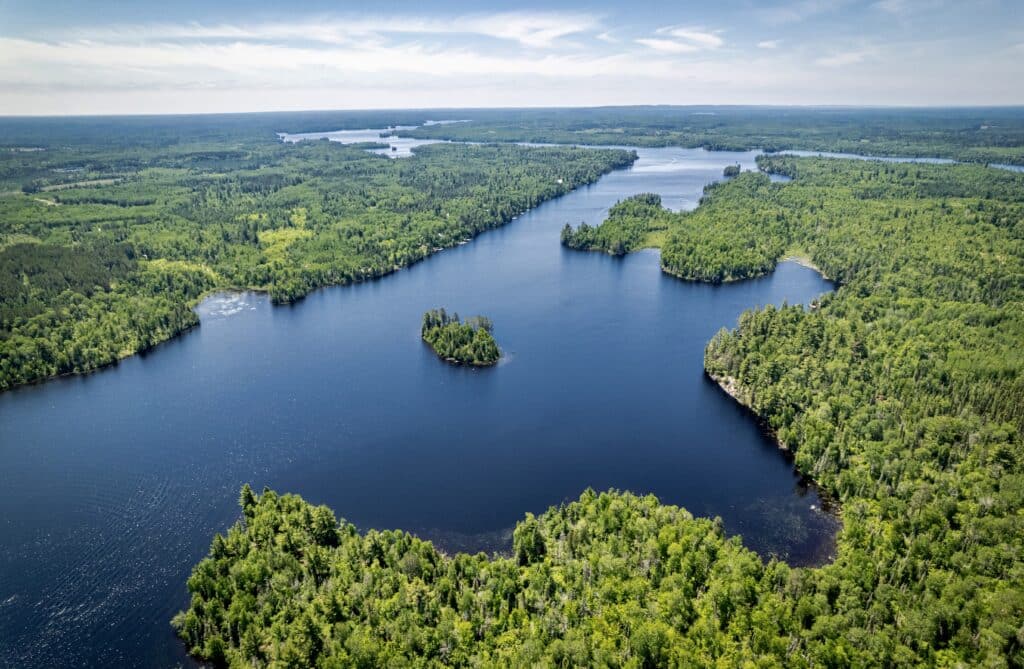
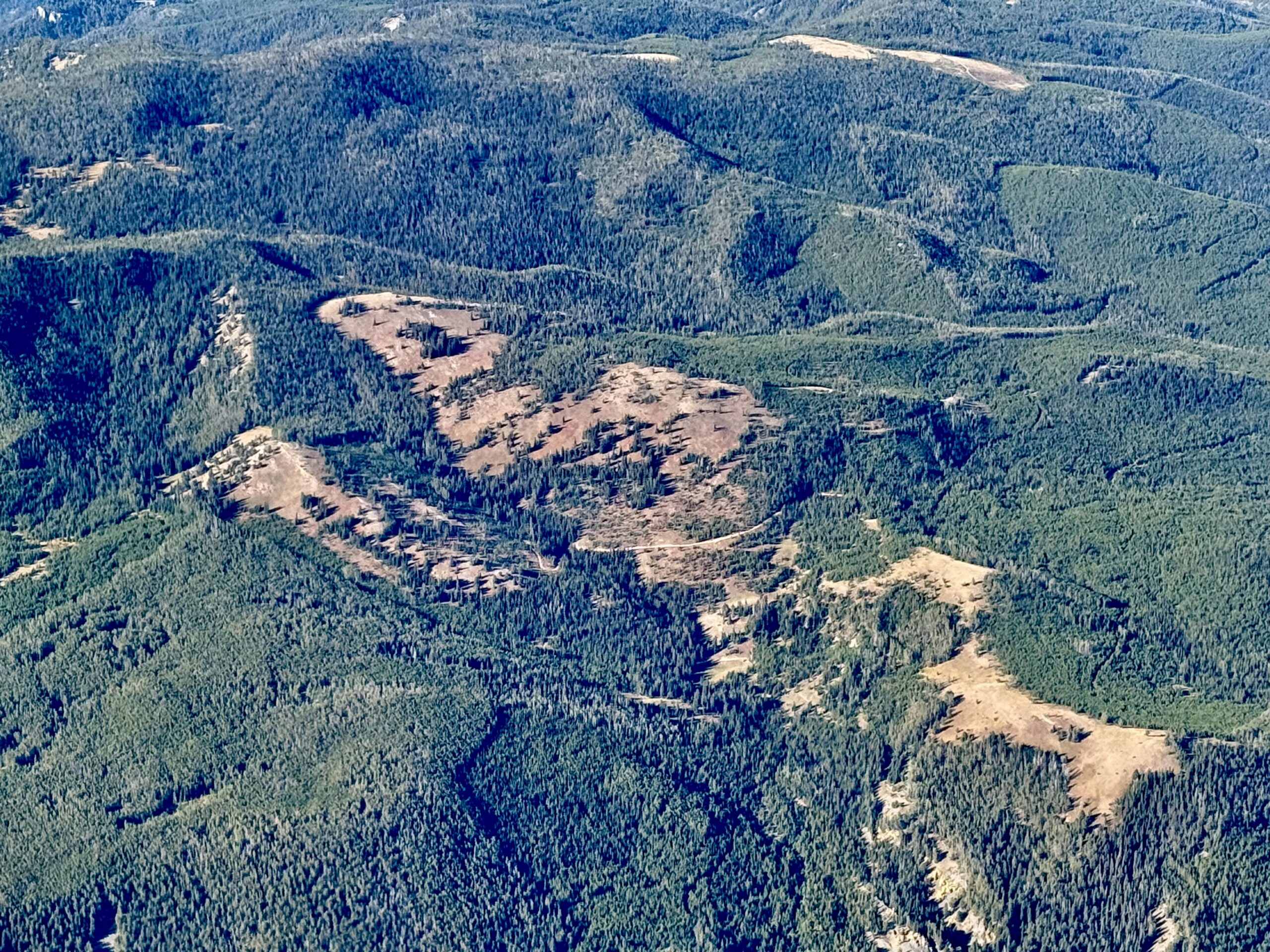
All of us can get better at “reading landscapes” as we float above them during travel. What’s present in this scene, above? A lot.
Here we’re high above the Custer-Gallatin National Forest and near lands managed by the state just south of Bozeman, Montana. These are so-called “multiple use” lands that, in the case of the Forest Service, are managed differently from roadless lands, especially those roadless lands that are part of Wilderness Study Areas and protected by the “Roadless Rule.” The combo of federal and state lands being present side by side on maps exists throughout the American West.
In this photo you can see a mosaic (a maze) of national forest land that has been clearcut and roaded and is open to a wide array of mechanized outdoor recreation, which results in displacement of wildlife from secure habitat. US Agriculture Secretary Brooke Rollins wants to rescind the Forest Service Roadless Rule so that lands now protected as roadless (free of roads) can be accessed by new roads and so that so-called “forest thinning” can occur to allegedly stop wildfires, which are not a product of “too many trees” but trends involving dry, hot conditions often inflamed by strong winds. Ironically, these lands that were previously logged may, in the future, also need to be “thinned.”
The Forest Service, observers watching the agency say, would love to use “providing new recreational opportunity for ATVers and mountain bikers” along with proposed thinning done in the name of fire prevention, as an excuse to open up public lands to roads. These are rare areas of landscape which—it’s important to note—have never seen a human road since forests first emerged on those lands since glaciers retreated many, many millennia ago and, notably, were not during that time, intensively “managed” by humans.
Of historically footnote, it’s important to point out a parallel. The US Army Corps of Engineers and US Bureau Reclamation used similar rationale during the 20th when they it invoked “providing new recreational opportunity” as a strategy to make the public believe that damming wild rivers (which blocked salmon runs and wreaked ecological havoc) to provide publicly-subsidized irrigation and hydropower was a “win-win.”
Roadless lands provide some of the best (highest-quality) habitat remaining for the full assemblage of species that make Greater Yellowstone a rare vestige of full biological diversity, which sets it apart in the world. Because these are national forest lands what happens to them is not just a backyard question for those who live in the region but keeping them naturally functioning homes to wildlife is a matter for all citizens of the US to consider. (And it is an important part of the economy and the values of people in the region who live here).
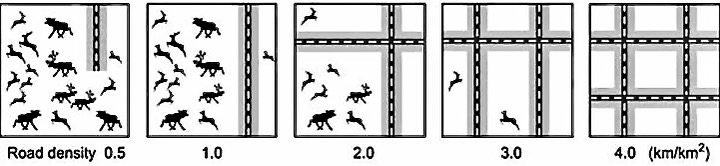
The negative impacts of secondary roads on wildlife are well documented. Widely respected conservation biologist Reed Noss has written extensively about how they degrade habitat quality on public lands. The Federal Highway Administration refers to them in the chapter titled The Ecology of Rural Roads: Effects, Management and Research that is part of a handbook written Tony Clevenger and Marcel P. Huijser of the Western Transportation Institute at Montana State University. The chapter includes the diagram, below from S.K. Luell, showing what happens to wildlife as road density increases.
Yellowstonian just attended the IUCN World Conservation Congress where conservation-minded government agencies, business people, sustainable tourism promotors, NGOs and citizens gathered. Guess what? Greater Yellowstone is held up globally as an example of foresighted conservation and it is recognized as a region under intense transformative pressure from development and unmitigated industrialized outdoor recreation. In Abu Dhabi, where the IUCN gathering was held, everyone from cabbies to royalty were familiar with Yellowstone National Park; while some dreamed of one day visiting others said America’s management of the ecosystem that encompasses it sends an important signal.
Will we squander it? Do we have the caliber of leadership required? Protecting what it still has can only be achieved by adopting a cohesive vision that breaks down current narrow-minded silo thinking, of which rescinding the Roadless Rule is an example, scientists say. Protecting what still exists will require courage. See some of Yellowstonian‘s stories on why these issues matter below. Thank you for reading us.
Some of the reads mentioned above. What conclusion do you have after seeing the big picture?