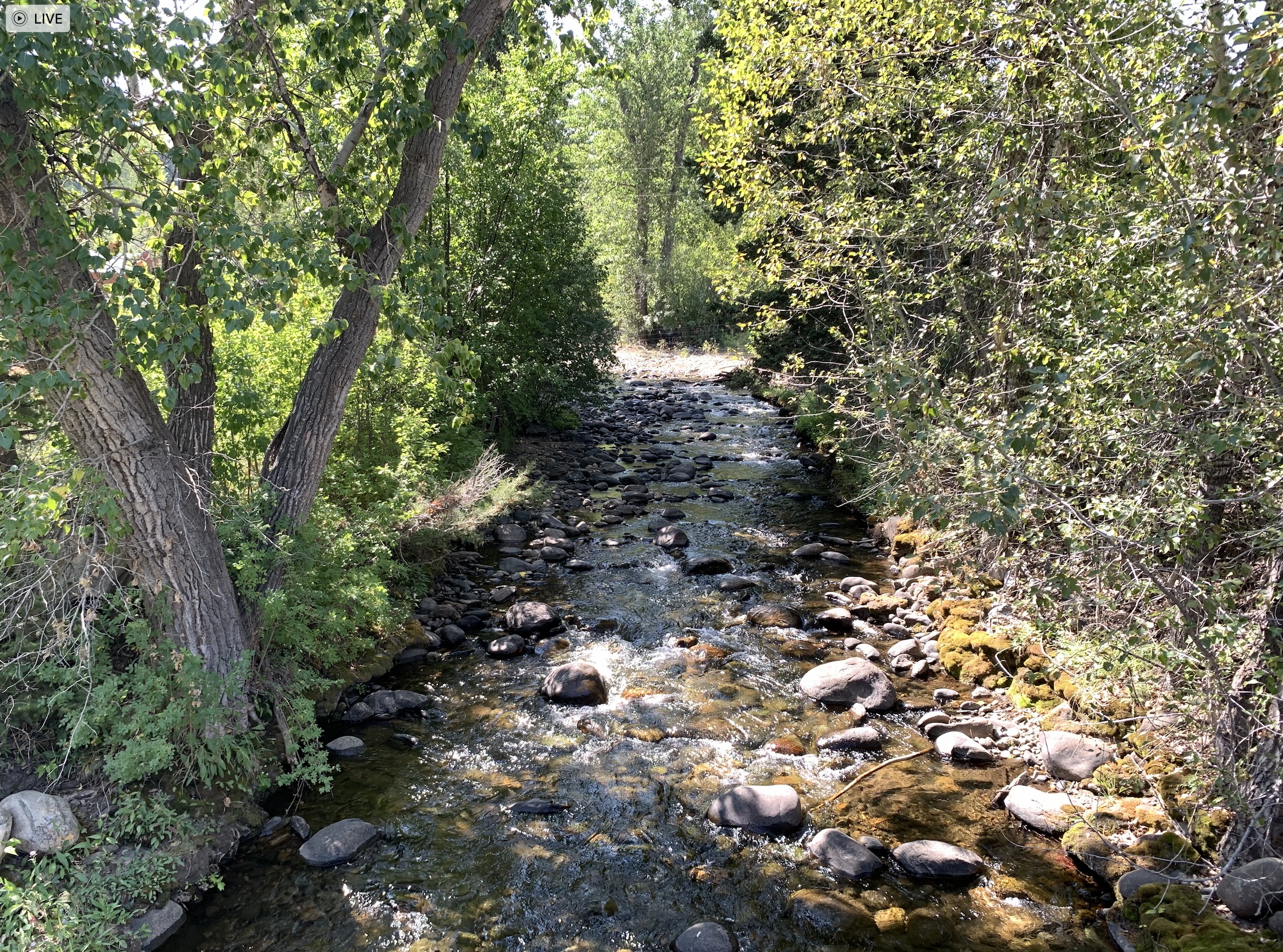
EDITOR’S NOTE In addition to being an attorney, a former state legislator re-elected to multiple terms and a gubernatorial candidate who nearly became Montana’s first governor, Dorothy Bradley was director of the Montana Water Center at Montana State University. Today, as a resident of Clyde Park in the Shields Valley, she lives on the front lines of a water dispute involving Crazy Mountain Ranch, owned by the Lone Mountain Land Company (the most prominent developer in Big Sky) that has generated controversy for watering 35 acres and its new golf course by diverting water from a stream without gaining prior approval of state regulators. It is unknown if any studies were done to gauging the impacts of the course on wildlife living in an important corridor linking Greater Yellowstone northward to the Northern Continental Divide Ecosystem. Here is an overview of the dispute published by MEATEATER. Click here to read about an agreement with the state struck in late July. As many land use planners say, the availability of finite water is considered a major limiting factor when it comes to sprawl that is harming wildlife, habitat, open space and making it increasingly tougher for ranchers and farmers to operate at scale. Below is a recently penned op-ed by Ms. Bradley not specially about the dispute in her home valley but the issue of water rights in general.
By Dorothy Bradley
After 50 years of solidifying Montana’s ability to protect water users, it seems we are now caught stunningly unprepared for today’s controversies. It is time we provide a mechanism to assure compliance with those water rights by the state, and relieve individual water right holders of that responsibility
When the Montana Constitution passed in 1972, the water rights section created intense discussion. It begins: “All existing rights to the use of any waters for any useful or beneficial purpose are hereby recognized and confirmed.” It concludes charging the legislature to provide for administration, regulation, and centralized records.
A few years later the legislature created the Water Court to adjudicate and record people’s rights. While pre-Constitution records were stored in shoe-boxes in county courthouses, impressive digital maps are now easily accessible. Although Judge W. W. Lessley, our respected but irascible first Water Judge, said he could complete the adjudication in a few years, the process continues with its fourth Water Judge. The annual appropriation has little opposition, because everyone is assured it is necessary to protect our water from greedy downstream states in the Missouri River System who want it to float their barges.
But now –we discover that the enemy is within.
Since water law is “self-enforcing” by those with water rights, neighbors still must fight for their water. But some of the new neighbors in our western valleys have deeper pockets than ever imaginable, and seem confident that they can pay their way out of any legal pickle. In my own Park County, Montana, I hear such comments as, “Well, if they are going to steal our water we should at least angle for some of their money.” Or, “Maybe it is not worth responding if it is not hurting anyone.”
This tragically misses the point. We are a system of laws, and if they are worthy laws they should be enforced. And ,while we have a respectable system to describe water rights, we do not have one to enforce them. By hiring an “expert,” a normal person can wipe out his/her retirement account in a month.
For years I have asked myself, “What is the difference between stealing water, and stealing, say, a tractor?” When I asked a county attorney, I was told that his office was not paid or staffed to prosecute water theft. Can, it could be argued, but won’t.
For years I have asked myself, “What is the difference between stealing water, and stealing, say, a tractor?” When I asked a county attorney, I was told that his office was not paid or staffed to prosecute water theft. Can, it could be argued, but won’t.
What about our system of appointing water commissioners and ditch riders? This is a fascinating system of local users paying for the appointment of trusted persons to protect senior water rights holders by cutting off junior users when the stream is getting too dry to accommodate everyone.
In spite of the complexity, many basins use it effectively. One shortcoming is that it does not protect senior ag users from consumptive uses way upstream in unadjudicated tributaries, nor does it prevent the complete dewatering of a stream. But some rivers like the West Gallatin have irrigators who go to great lengths to cooperate with each other and maintain a minimum flow.
One fabulous Commissioner of days gone by, Dave Pruitt, would describe his neighbors, upon hearing his voice on the phone, as saying, “You sure know how to make a grown man cry.” And they would go out and drop their own head-gate.
What about the state as a means for enforcement? The Department of Conservation and Natural Resources has a lot of authority regarding changes of use, changes of place of diversion, and the use of restraining orders and fines. But it, too, lacks sufficient resources for enforcement.
Montana needs to establish a system to enforce water disputes. “MONTANA WATER LAW,” the state’s manual published in 2021, stated in its conclusions that, “. . . at the very least water distribution controversies should be resolved by decision makers with expertise, such as the Water Court.” This is an interesting idea since our 50 year old Water Court is established, equipped and up-and-running. It has amassed outstanding water professionals who, with a little shuffling, could be expanded into an admirable brain trust.
It might be time to consider funding county attorney offices to prosecute water offenses by increasing fines for stealing water. Because of the complexity of water law, the responsibility could be in designated regions rather than every county. And if not settled, the disputes would be resolved by our existing Water Court.
Also read and listen to this podcast from Friends of Park County featuring Guy Alsentzer, an attorney with Upper Missouri Waterkeeper