EDITOR’S NOTE: The following is a new release issued by Montana State University on behalf of its renowned Center for Science, Technology, Ethics and Society; the Ivan Doig Center for the Study of the Lands and Peoples of the North American West; and its American Studies Program.
BOZEMAN—Authors with wide-ranging perspectives on ecological, social and economic issues related to land use and planning in the growing American West will participate in a panel discussion Wednesday, Sept. 3 in Bozeman hosted by a pair of Montana State University academic centers.
The discussion will be held at 5:30 p.m. at the Bozeman Public Library, 626 E. Main St. The event is free and open to the public.
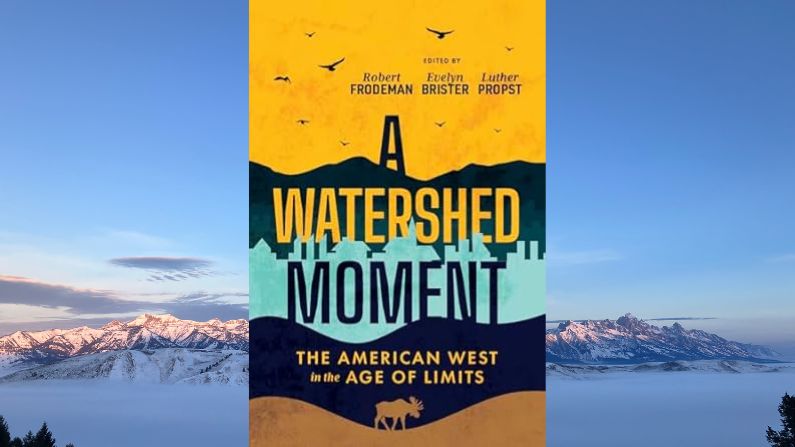
The panelists are all contributors to “A Watershed Moment: The American West in the Age of Limits,” a recently published collection of essays on the tensions between the culture of economic growth and personal freedom and the ecological, economic and social constraints set by community values and the land itself. The audience will have the chance to ask questions and discuss sustainability and policy related to land use and planning.
The public is invited to this free event at the Bozeman Public Library on Sept. 3 at 5:30 pm. The catalyst is a new book, “A Watershed Moment” featuring many authors from our region. Bring your passions for community, wildlife, the great outdoors and yearning for a deeper connection to the land
The book was co-edited by Evelyn Brister, Robert Frodeman and Luther Propst. Not only has it been well received but it’s been the catalyst for more than a dozen public discussions across the West. Frodeman, a philosophy professor and Propst, an elected Teton County, Wyoming commissioner and well-known community conservationist, are both residents of Greater Yellowstone.
The list of book contributors include Brister, Propst, Frodeman, Betsy Gaines Quammen, Grady Gammage Jr, Wellington Reiter, Josiah Heyman, Todd Wilkinson, Jonathan Thompson, Jared Talley, Shawn Hill, Joan May, Kristal Jones, Jennifer Wesselhoff, Robert Liberty, Crystal Carr, Andrea Christelle, Regina Lopez-Whiteskunk, Drew Bennett, Travis Brammer, Hilary Byerly Flint, Monte Mills, Kekek Jason Stark, Emily Reed, Matthew Kauffman, Stewart Brock, Paul Rogers, Bonnie Baxter, Nawaraj Shrestha, Nancy Glenn, Carlin Girard and Seth Arens.
“Given the rapid growth we have experienced in Bozeman, it is important to identify concrete strategies for ensuring the sustainability of communities and natural resources,” said Kristen Intemann, director of MSU’s Center for Science, Technology, Ethics and Society, which is co-sponsoring the event with MSU’s Ivan Doig Center for the Study of the Lands and Peoples of the North American West and American studies program.
Panelists include Brister, who specializes in ethics and policy on environmental conservation, land use and sustainability; rural sociologist Kristal Jones, a research scientist for the National Socio-Environmental Synthesis Center; and journalist-author Wilkinson, of Bozeman, who specializes in conservation issues in the Greater Yellowstone Ecosystem.
“This conversation is essential for anyone who loves the West and cares about our shared future,” said Daniel Grant, Doig Center director.
About the book and for further reading: